Taking Spider-Man’s villains down the science holes: SpudCell, axolotl mucus, brain-machine interfaces, and why campfires lower your blood pressure.
episode description
Substack, Apple, Spotify, YouTube, Amazon
Episode 77 Transcript
In Episode 77: The Mini, Joe, Nick, and Georgia recap Episode 76: Spider-Man: What His Villains Reveal About Him— the third and final part of their Spider-Man villain series featuring guest Alex Hanes of the YouTube channel Hanes for Heroes (@Hanes4Heros).
The crew briefly revisits the episode, speculates about which villains might show up in the new MCU Spider-Man: Brand New Day film, and Joe adds a thought that Captain America might have the closest hero origin story and moral struggles to Spider-Man’s. Georgia gives her opinion about Spider-Man’s most memorable moment is the Iron Man embrace in Infinity War.
In the Science Holes, Joe talks about:
A NYTimes report about ChatGPT near-fatal health advice lawsuit.
The idea of prediction betting on drug trial results and FDA decisions.
Connecting Doc Ock’s tentacle arms to real brain-machine interface research and a new study revealing how individual neurons build sentences one word at a time.
And at the buzzer, Joe sneaks in the SpudCell — the first fully synthetic artificial cell that can feed, grow, and divide. And Georgia thinks conspiracy.
Georgia discusses the axolotl, whose skin mucus shows early promise against drug-resistant bacteria and cancer cells.
Nick backs up his campfire claims with actual research showing fire lowers blood pressure and reduces stress — a teaser for Episode 78’s dive into the science of nature.
In the Media Holes:
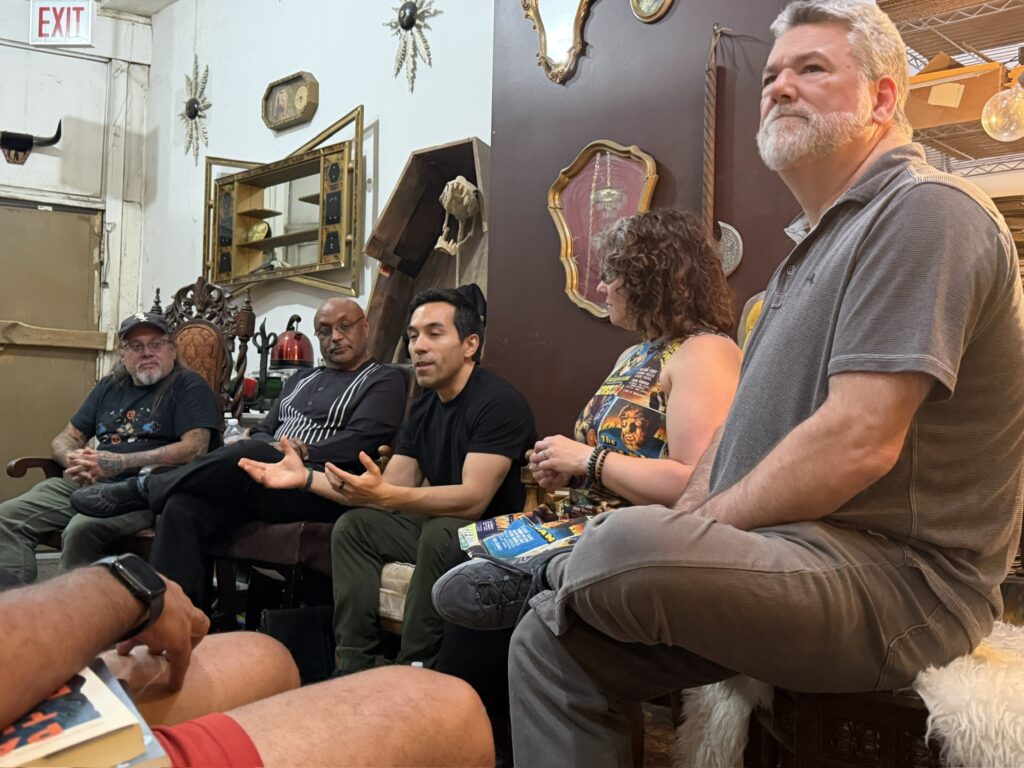
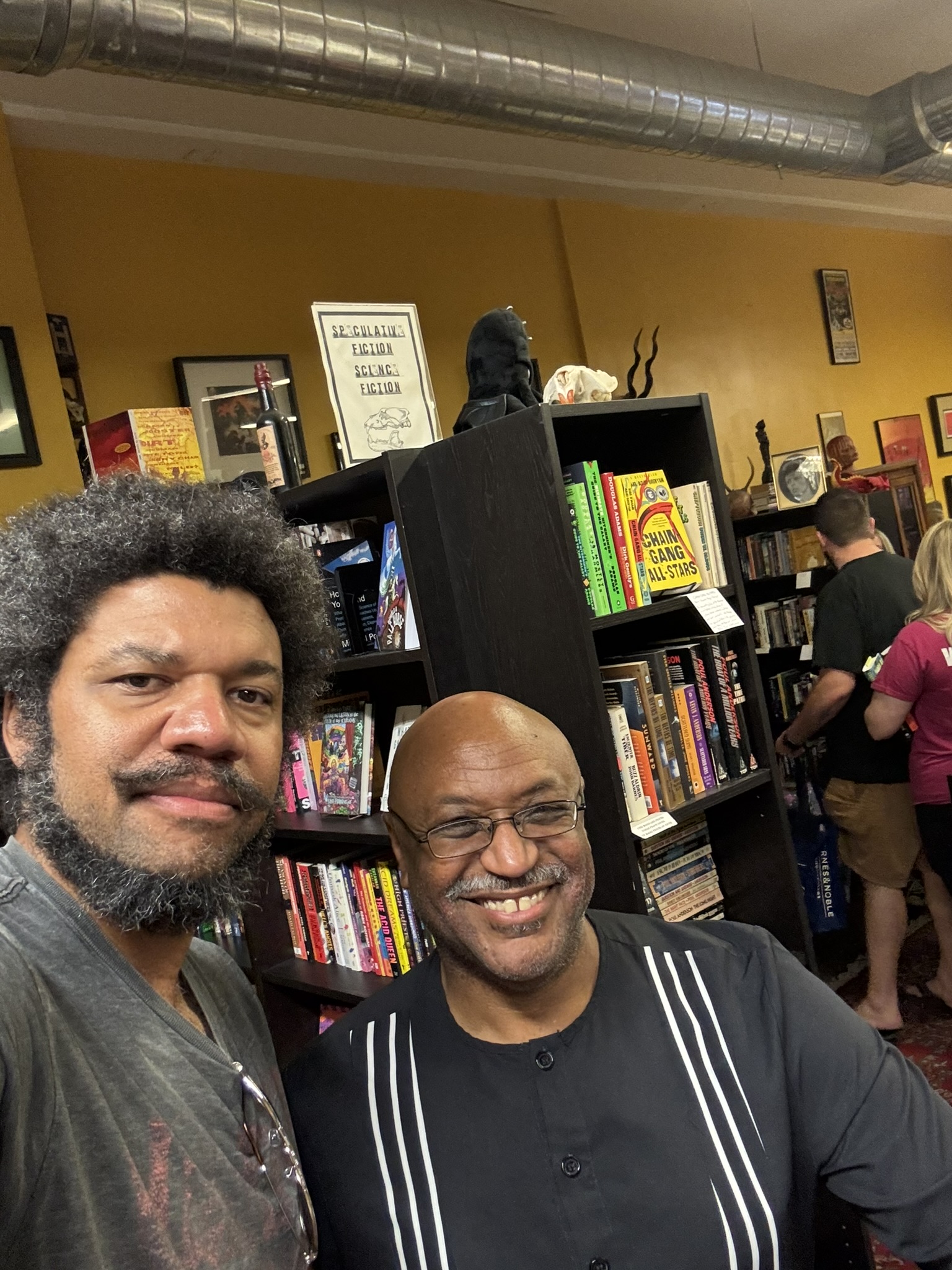
The crew discusses the media they have been digging: Maximum Pleasure, Trying, Obsession, My Favorite Thing is Monsters by Emil Ferris, Pimp My Airship by Maurice Broaddus, and Palworld’s 1.0 update. Joe and Georgia also talks about the author event at Bucket O’Blood in Avondale with eight horror authors.
Order the Touch of Noir 2027 Wall Calendar by Jim and Georgia—
12 months of all-original art by Jim and Georgia; pre-orders open now, with mailing expected in September
Words // Friends Aug 26th at 7pm CST:
Joe will be reading with four other authors on a Zoom hangout. Register now!
Listen to the complete 3 parts of the Spider-man Villain Series: Episode 72, 74, and 76:
EP 72: Spider-Man villains part 1: Lab Safety
EP 74: Spider-Man villains part 2: Scorpion and the other Chimeras
EP 76: Spider-Man villains part 3: What His Villains Reveal About Him
Check out what the RHR crew is creating:
Joe:
- Named by the Guild Literary Complex as one of the 35 Writers to Watch!
- Red Line: Chicago Horror Stories Anthology featuring a new story by Joe!
- Joe’s Sci-fi physiological thriller Novel: Will You Still Love Me If I Become Someone Else?
- Essay by Joe: From Beyond Press: Specific Knowledge: Jotham Austin, II, PhD on Transformations in Fiction
It’s science for Weirdos
Want to support the show? Tell your friends. Follow us on social media, Discord, share the podcast, and let us know what topics you are excited about. And to see all the content (studio images and artwork) subscribe to the Rabbit Hole of Research newsletter!
Stay curious, stay speculative, stay safe, and we’ll catch you in the next rabbit hole. Love Y’all!
Future Events to Hang with the Crew:
Podcast Cross-Appearances
- Watch Joe on Joe Compton’s YouTube channel 21Grams
- The RHR crew on Ben Tanzer’s This podcast will change your life: episode three hundred seventy-nine
Events & Conventions:
- Words // Friends Aug 26th at 7pm CST: Joe will be reading with four other authors on a Zoom hangout. Register now!
- Dragon Con – Atlanta, GA (September 3-7, 2026) – Joe attending as Professional
Upcoming Episodes
*The Mini will now be every other episode!
- Episode 78 – Briar East Woods – Urban DeforestationGuest: Anne Sedlacek and TJ. Gaertig
- Episode 80: Magic: the Power and Cost of Magic SystemsGuest: B.L.Mostyn
- Episode 82: Climate Change and Data CentersReturning Guest David Pincus PhD (episode 13 climate change and episode 39 on Johnny Storm)
What the Crew is Digging, Links, Resources, and Topics Mentioned in mini and/or full episode:
Links & Resources:
- Video Nick mentioned on YouTube: THE SPIDER WITHIN: A SPIDER-VERSE STORY
- Bucket O’Blood Books & Records — Avondale, Chicago
Science Holes:
1) AI Health Advice Problems
ChatGPT Led to a Man’s Near-Fatal Health Crisis, Lawsuit Claims
— New York Times
Appears to be the first lawsuit arguing that someone seeking medical guidance was led astray by ChatGPT. Rather than directing the user to seek professional help, the chatbot reassured him everything was fine — repeatedly. The crew discusses AI safety guardrails, legal liability, and Georgia draws a parallel to reference librarians who are trained to refer medical questions to authorized sources rather than advise directly.
Answer to Nick’s question: Yes, giving medical advice without a license is illegal — called the unlicensed practice of medicine — and casual advice can also create legal liability if someone is harmed.
2) Prediction Betting
Kalshi to Offer Betting on Drug Trial Results and FDA Regulatory Decisions
— Apple News
Prediction platforms are expanding, and Kalshi now wants to let people bet on FDA drug approvals. Joe raises concerns about insider trading risk and whether this is science engagement or just gambling with extra steps.
3) Brain Computer Interface
Mind-Reading Devices Are Revealing the Brain’s Secrets (2024) &
How the Brain Builds a Sentence (2026)
— Nature
Joe connects Doc Ock’s tentacle arms to real brain-machine interface research already helping people with paralysis move prosthetic limbs and communicate. A side benefit: researchers used that same neural data to discover that individual neurons in the frontotemporal cortex act as specialized linguistic building blocks — some only fire for nouns, others only for the end of a phrase — overturning the assumption that language is a diffuse whole-brain phenomenon.
- Georgia remembered the connection between thumbs and language development in the brain: Thumbs and Language — Communications Biology (2025)— Nature
- Nick Asked about Neuralink clinical trials, they did receive FDA approval and have had several successful trials
4) Axolotl Skin Mucus
Axolotl Skin Mucus as a Potential Weapon Against Multi-Resistant Bacteria and Cancer (2025)
— Phys.org
Identification of antimicrobial peptides from the Ambystoma mexicanum displaying antibacterial and antitumor activity
—PLOS
Researchers identified 22 promising antimicrobial peptides from axolotl skin mucus that destroy drug-resistant bacteria like MRSA by punching holes in cell walls. Three also triggered programmed cell death in breast cancer cell cultures without harming healthy cells. Joe notes Dr. Connors should have been studying axolotls instead of reptiles. The axolotl is native to Mexico and is currently threatened with extinction.
5) Artificial Cells, Life!
This Cell Feeds, Grows and Reproduces. And It’s Manmade
— New York Times
SpudCell Research Group Website
A team at the University of Minnesota built SpudCell — the first fully synthetic artificial cell that can feed, grow, replicate, divide. Unlike previous minimal cell research that started with living cells, SpudCell was built from scratch.
6) Campfire Health Benefits
Hearth and Campfire Influences on Arterial Blood Pressure
— NIH/PMC
Why Being Outside Around a Fire is Good for Your Physical and Mental Health
— The Woodee
Nick came back with the research to back up his campfire claims. Studies show fire lowers blood pressure, reduces stress, and makes harder conversations easier. A teaser for Episode 78’s deep dive into the science of nature. And Solo Stove, the crew is still waiting on that sponsorship.
Science Terms
- Antimicrobial peptides (AMPs) — small proteins that bind to and destroy bacterial cell walls, and in some cases trigger cell death in cancer cells
- Apoptosis — programmed cell death triggered by the axolotl AMPs in breast cancer cell cultures
- Brain-computer interface (BCI) — implanted electrodes that decode neural activity and translate it into commands, restoring movement and communication in people with paralysis
- Connectomics — the effort to map every neuron and connection in the brain at high resolution
- Frontotemporal cortex — the brain region where language-specialized neurons were identified
- MRSA — methicillin-resistant Staphylococcus aureus, a drug-resistant bacterial infection and major healthcare problem
- Representational drift — the phenomenon where individual neurons can change their roles over time
- Synthetic biology — the field focused on designing and building new biological systems, including artificial cells like SpudCell
Media Holes: What the Crew is Digging:
TV and Film
- Maximum Pleasure (Apple TV+)
- Trying (Apple TV+)
- Obsession
Books
- My Favorite Thing is Monsters by Emil Ferris (2017) — graphic novel set in Chicago.
Video Games
- Palworld — Nick jumped back in after the 1.0 update dropped, noting significant changes to the game.
Live Music
- Nick saw Local H at an outdoor show.
Literary Events
- Joe and Georgia attended the Carry Me to Your Bookshelf Tour at the Bucket O’Blood Books & Records in Avondale, Chicago Authors in attendance:
- Christopher Golden, Maurice Broaddus, Nick Medina, Christina Henry, S.A. Barnes, Jonathan Janz, Daniel Kraus, Gus Moreno, and Theodore Van Alst. Several are contributors to the End of the World as We Know It anthology and the Red Line: Chicago Horror Stories anthology (Joe is in this one). And hopefully we will have many of them on the RHOR Podcast!!!
“Stay curious, stay safe… Love Y’all!”
Join Rabbit Hole of Research on Discord: https://discord.gg/2nnmKgguFV
Subscribe and Share our Substack newsletter to get email updates, never miss an episode, and spread the word!! Don’t forget to give us 5 stars or a like!
Transcript
joe: [00:00:00] Hey, welcome back to the Rabbit Hole of Research down here in the basement studio
Nick: Reason Studio
joe: We got the echo.
Nick: Sorry, Joe. I don’t know what happened
joe: know what happened. No, no worries. You’ve you’ve got me, Joe.
Nick: Yeah, I mean, yeah
joe: Yeah, you’re there. We’ve got Nick. Georgia.
Georgia: Georgia
joe: And we’ve got Georgia here for the mini.
Nick: Many
joe: Yep. Last episode, we talked about Spider-Man and his villains, and looking at Spider-Man through the lens of his villains and what that revealed about him.
We had a guest on, Alex Haynes from the YouTube channel Haynes for Heroes. So that was a really interesting,
Nick: It was a really fun episode.
joe: episode. Yeah.
Nick: I enjoyed just us talking about Spider-Man
joe: It
Nick: and just all three of us geeking out. [00:01:00] Oh,
yeah, unfortunately, Georgia wasn’t on this episode. Were you, Georgia?
Georgia: I wasn’t.
joe: messed it. She had to work
Nick: Right
Georgia: you’re excited about the Spider-Man movie coming out, huh?
Nick: I was so excited. I think I’m going on Wednesday night, which is the day this episode drops.
joe: Mm-hmm. Yeah, right. Going to see a premiere?
Georgia: Right. They, it doesn’t come out till Friday, does it?
Nick: A buddy of mine got tickets, so yeah, he gave one to me,
Georgia: Oh,
Nick: and I’m going, yeah, early screening
Georgia: Okay
Nick: Or not early, but a couple days early.
Georgia: You didn’t tell your daughter that, did you?
joe: Mm-hmm.
Nick: I need to go see it first. That way when she does get to go see it,
joe: Mm-hmm.
Nick: I can leave if she needs to.
joe: Right, right. That makes
Georgia: that’s
A good idea.
joe: That, that’s a good idea Mm-hmm. Very good idea
Georgia: Yeah And then you’ll know if there’s, like, some scary spots and stuff
Nick: Exactly. – it’s her first movie. I can’t just, throw her in and hope [00:02:00] she stays the entire time.
Georgia: Right.
joe: Yeah
Right.
Should be fun
Nick: Yeah, unfortunately this episode’s coming out before we’re able to go see it.
joe: Yeah, and talk about it. Yeah, ’cause we had planned originally the original release date, we would have seen it f- before this mini recorded and could have talked about it, but-
Georgia: was close
joe: Yeah, I mean, they changed the date
Georgia: So do you guys, and you guys might have talked about this episode and so, but do you know which villains are in the movie?
joe: We, well- Or-
Nick: I don’t
joe: We don’t. I don’t. We didn’t talk about that in the episode, and I don’t really… People have been speculating, but I don’t know. I, it could be-
Georgia: So it’s been kept as a secret, huh? For the
joe: secret, huh? For the most part, yeah.
Nick: I think,
joe: Do
Nick: I feel like they, there’s been stuff out.
I, I also don’t watch the trailers,
so I refuse
doing that
Georgia: give
joe: I guess, yeah, I haven’t watched any trailers either, but the ones I’ve seen, there was no real indication [00:03:00] of heroes and things like that, or villains, sorry. Or whether the heroes will be in there, right? I mean, I think that’s still
Georgia: up
joe: up in the air
Georgia: Yeah. Speculating
joe: It’s like-
Nick: I think the only one I’ve heard confirmed is Frank Castle
joe: Yeah. I heard, yeah. Or Daredevil might be in it, but I, yeah
Nick: Yeah. So
I don’t know and not even gonna look it up until I go see
it.
joe: Be surprised. Yep. I was gonna add one thing I didn’t mention in the episode was that I thought Captain America probably has a hero origin story similar to Spider-Man in kind of his goodness. That we talked a lot about what makes you good and that line if you do it, but I think he also has that ability to sacrifice himself, you know?
A
Georgia: little bit of innocence.
joe: Right, and that, yeah, that, that innocence. Yep that’s a perfect way to put it.
Nick: I wanna say that [00:04:00] in most stories you’ll see that Cap relates to Spider-Man because of their background
joe: Yeah. But yeah
Georgia: I just think the most, and you guy, the most touching Spider-Man moment was when him and Iron Man were embracing
joe: Mm-hmm. Yeah, we mentioned that.
Georgia: You mentioned that Yeah. I just, that’s the one that really sticks with you.
Yeah. You know?
Nick: I think we did have some theories about the movie, so, but
joe: Yeah
Nick: going forward,
joe: Right.
Nick: and it’s like I, I can’t wait to see how close we are. I mean, everyone who listens to this might already be like, “Oh, I already know.” But yeah,
we’re from the, the past.
Georgia: you can talk about it at the next mini, right? Yeah.
joe: Yeah. Right? Yeah. Yeah, there were some even further out to the Dune movie and things like that. So some reoccurring Spider-Man behaviors, I guess. Yeah. So we’ll see. Yeah, you gotta listen to the episode. [00:05:00] Go
back- Hey, everyone … out episode …76
Georgia: probably obvious that I haven’t listened to the episode, but I have a good reason. I’m in the throes of summer reading, and I… It’s been crazy, and I only have two programs left, and that’ll be it for summer reading 2026
joe: There you go. Go to your local library and get the finale of summer reading.
Georgia: That’s right
joe: That’s fun.
Nick: The values I’m already eating
joe: Cool.
Georgia: There’s still time
joe: still time to do it. Everyone can do it.
Nick: Go read your books.
joe: Reading is good.
Georgia: It is good.
joe: Yeah, so that’s that was that episode. Go check it out if you haven’t already. Go check out the newsletter. We break a lot of stuff down in there, the science and things like that. And with that, we can move right along to our science holes.[00:06:00]
Nick: Scientology. Wow.
joe: We are
Nick: That the… What’s our theme song for that?
joe: I don’t know. I’m not doing it
Georgia: Going down the science hole
joe: right.
Nick: No. I…
joe: Yeah, doesn’t sound right.
All
Right. I had, I mean, not quite a science hole, but something that I think this was interesting. It was an article in The New York Times, and they were covering the story about how ChatGPT led to this near fatal incident health crisis, and this man has filed a lawsuit against the company.
Nick: Oh, damn. Really?
joe: yeah. So
Nick: I feel like they’ve been coming out a lot more often in our minis.
joe: Yeah, so this a- appears to be the first case that argues that someone seeking guidance about a medical condition was led astray by the chatbot, ChatGPT bot. And it’s just really fascinating ’cause they do put in all these safety features which encourage users [00:07:00] to go find a professional and to end the conversation when there’s kind of signs of a true medical crisis.
But unfortunately, in this case because the conversation, the way it went the ChatGPT agent just kept going in circles like, “Oh yeah, this is what’s happening to you. Don’t worry about it. I- we know. Just get some
Georgia: So it was like a rogue chat.
joe: Yeah, I mean, it’s just the idea about it where, there’s some talk that maybe he was using an older version. Like we said, the AIs, they the, especially the earlier chatbots really were designed to please, to be pleasing, and to make you
Georgia: Oh no, you’re gonna be okay …
joe: And so that was the that was the issue there.
And now they’re trying to roll out these health, , ChatGPT Health and things like that. , how are the guardrails? Can they be broken? Can they miss emergencies? So it’s just a fascinating article about that. And once again, if you’re having health issues, , go seek professional help, like an actual human.
Nick: I thought it was against the law to [00:08:00] give un you know, unsolicited medical advice or something like that. Or,
joe: I don’t know if
Nick: Now, what is it called? You can’t give un- just medical advice out ’cause then it could come back to you. So like that’s– who does it go back to?
joe: Yeah, the company, I guess. That’s the
lawsuit- That’s who’s
Georgia: sued,
joe: who’s being sued, so that
Georgia: the,
and there’s no- Reading about it … no, no decisions yet, right? It’s
joe: this is new. Yeah. Yeah. So just
Georgia: I know it’s like working in a library and doing reference, you have to be really careful if people ask about any medical.
And we have a couple different, like, authorized medical websites that we can refer people to, and about medication and also about different conditions. But obviously we can’t give any-
joe: Yeah. Yep
Nick: Yeah, you’re not telling people how to diagnose… You’re not diagnosing anyone
Georgia: Right. Right Yeah, I don’t know what the rules are that ’cause you can tell a friend, [00:09:00] “Oh, I
joe: Yeah, I don’t know what the rules are at, ’cause you could tell a friend, “Oh, I think it’s just a sprained ankle. Take some ibuprofen.” I mean, and you give that advice and someone takes it, and then it’s wrong.
Georgia: I mean-
joe: I don’t- Right … I don’t I don’t know what the law around that. I gotta look that up now.
Yeah, okay. Right. Different rabbit hole.
Georgia: But it does seem like this tool that you’re using for information and it’s giving you that, it does seem like there has to have- Yeah … some responsibility, the person, like, providing that tool.
joe: I think at some point, if you were there talking to someone, giving them your, what you feel is the right advice, at some point you’ll go, “You know what?
Maybe we should go get a professional. , maybe we should go to the hospital. Maybe we should do something and go there.” But yeah it wasn’t even a matter that he didn’t have insurance or things. I think he did. He could have went to the clinic and got looked at, but- Yeah. Right … The AI just said, “No, you don’t have to.
Don’t worry about it,”
Georgia: it.” So. Go see a
Nick: You’re kind of wrong, though.
joe: Yes. Yes. right. Rub some dirt on it, Jimmy. Excellent. Yeah, so that was a s- that was fascinating. Another [00:10:00] fascinating one, not quite the, the science hole, but related is , about these prediction betting sites now.
And so they’re gonna start offering betting on drug trial results and FDA regulatory decisions. And so you can make bets if a drug is gonna be approved or not approved. So it’s just this whole slippery
Nick: Such a… Yeah.
joe: Yeah. Yeah. Yeah. Yeah.
Nick: as all get out
Georgia: Yeah, give me a break …
had it
joe: it where you could predict words in like the president’s speech. and a teleprompter operator had made tens of thousands of dollars ’cause they were taking the bets, they knew, ’cause they could read the speech before they uploaded it into the teleprompter, how the bets were gonna go.
So kind of all this regulatory stuff, there’s gonna be betting on like, delay, flight delays. Like they’re trying to get to all this stuff. So yeah, so- What? Why
Georgia: stuff. So- Let’s regulate that, but not, like, food safety things.
joe: Well, they’re not regulating it. That’s why we
Georgia: funny.
joe: do both, I mean.
Georgia: why would we [00:11:00] regulate it? Why would we regulate anything?
joe: Yeah, so just bet on whatever. So yeah, so you can bet on the next hottest drug, I guess. Yeah, that was in… Those are a couple interesting things. It’s this merge of technology and science, and now you have it where people are betting on, science results and drug trials. But
Nick: Wait, are we in support of this? I’m not exactly sure.
Georgia: even sure. Yeah.
joe: No, I’m not in support of it, no. I
Georgia: I think it sounds horrible
joe: But it sounds warm. Yeah. Yeah
Nick: it does a good thing where it makes people pay attention to science more.
joe: I guess. But it’s just gambling.. Are they really researching it or are they looking for a hot tip? Like, so there’s on Reddit, “Oh, hey, this drug trial’s going well.” And then, “Oh, okay, I’m gonna get on, the, the prediction app and bet money.” So-
Georgia: not to mention buying stock of that company and
joe: right, and company, it’s not separate, but yeah, this is , then how you regulate it. If you work for one of these companies and you’re getting inside do you go and… You know what I mean? , so yeah, it’s just, it has bad written all over it, [00:12:00] but, that said, okay. Well, we can get into some actual, , research holes.
Georgia: I
joe: I had a couple, and I think Georgia had one, so I don’t know if you– I can keep talking
Nick: I do as well
joe: Everyone has one, so I have two. I have one that’s kinda topic related, and then the other one is not top… Well, kind of top. Both are. Okay, never mind. Go.
Georgia: never mind. Go.
joe: wants to go? Jump down a hole?
Nick: Joe, you go.
Georgia: Go ahead,
joe: Yeah. So
this is all about brain machine interfaces, and I-I… It’s related to the topic because we talked about which villain we might wanna be or identify with. It was a fun end cap to the conversation, and I had said Doc Ock and he…
His whole thing, he was making these brain machine interfaces. He had the tentacle arms. And so this is related to that because, they’re making these devices that use electrodes to [00:13:00] implant into the brain, dozens to hundreds of electrodes, that can decode neural activity and restore people’s ability to move, to speak, to control prosthetic limbs type things like that. So it was really interesting and fascinating area of research that’s going on, and that was, I mentioned, I think Doc Ock, he was on that. But then the chip he had malfunctioned and yeah, he became a villain more and probably just needed some help.
So because you have these electrodes and you’re doing this, you’re getting a whole bunch of other data, and you can ask other questions and look at that data and and take that as an opportunity to learn some basics about how the brain works, things we don’t know, and overturning assumptions about brain anatomy and, how jobs are handled in the brain.
And so one, the paper came out, was about how a brain builds a sentence. And,, the short of it is that they found these neurons in the the frontal temporal [00:14:00] cortex part of the brain, that the individual neurons are acting as specialized kind of linguistic building blocks. And so they always thought language was this diffused project, a whole network of…
But really, , you have neurons that are thinking about the noun, the verb, the adjective, and they are, firing as your brain is constructing speech to put together , your sentences and kind of language model there. So it was really just… It was really fascinating at this kind of cellular level.
A couple caveats. One, this was a, temporary snapshot, and so there’s a lot of, evidence already that neurons switch roles. Are they always permanent roles?
And then the other one was that it wasn’t quite clear how you have, this, just a background electrical hum. And so the idea , you could have- one neuron, doing language and the one right next to it is doing something totally else. And so how do you– how is this kind of balance [00:15:00] maintained and things like that.
So yeah, this is really interesting kind of the brain. We’re learning a lot about it. There’s the connectomics projects that are happening to map every cell at high resolution in the brain. Really fascinating work, and that combined with this to give even a higher resolution of the neurons and how they communicate and how they interact.
So yeah, just really– I thought it was really
Nick: Wait, so have they done human trials yet?
joe: Which,
which one?
Nick: For the
joe: So the brain interface, so this isn’t, I don’t know if this is Neuralink, but the brain
Nick: or, uh, you know
joe: the brain computer interface technology, they’re, they are do- using that in patients and things like that. Neuralink, I don’t know.
I don’t follow what they’re doing. Yeah there’s been
Nick: I didn’t– I, I– It was the only thing I could think of the
name for it
joe: Yep. So no there’s actual research people are using to use this technology and to… And this was, this p- this study on how to build a sentence was just they were collecting the data from, , testing these brain computer [00:16:00] interfaces and, that, they said, “What else can we learn from this data?
We’re collecting all this data-” Mm-hmm. “… to do this, but can we use it to learn something else?” And so it’s just kind of asking other questions. Mm-hmm. But, yep
Georgia: It remi- it reminds me of and I’m gonna get this to- like horribly wrong, but about evolution and humans and their use of language because of where we, in the brain, the language center is
joe: Was it because
Georgia: because it was right next to what… ‘Cause w- we use our thumbs and we, and our hands in a certain way, and that’s right next to the language area. And-
joe: may not help
so
Georgia: then that was why humans developed much more language. I can’t remember. Yeah. But then I just think about the more we kind of find out, and then I don’t wanna say mess with it, what else can that lead [00:17:00] to?
I don’t know.
joe: Once you, I mean, like, if you understand how language, then you can make your brain computer interfaces more efficient, right?
So you know exactly where you need to put the electrodes or things like that. Right. So
Georgia: But, like, what could be the next step in, in some sort of evolutionary… I don’t know. I can’t even… My brain, my own- Yeah. My
joe: with other
people,
Georgia: My little puny brain can’t think of what that would be, but…
And the smallest little headways in that type of research could probably make huge differences.
joe: Yeah, especially if you’ve, you’re suffering from one of these disabilities or you have a catastrophic incident that you now need to, you know-
Georgia: And then you think about people that h- have different disorders where they don’t have spoken language.
And then being able to communicate. I could see
Nick: Oh yeah, I didn’t even think about that
Georgia: like a huge effect on that.
joe: Yep. All right.
Georgia: right. Yeah,
joe: put all the [00:18:00] links to all the stuff in the show notes, so-
Georgia: right. Well, I don’t know why I picked this science hole because I have a hard time pronouncing this word. And they give me a hard time about it at my work. But but axolotl. Am I saying it right? Mm-hmm. Oh, wow. The axolotl,
joe: Joe,
Nick: That one looks close enough
Georgia: They found that the skin mucus is actually a potential weapon against multi-resistant bacteria in cancer.
Mm-hmm. They they have been doing this research, Dr. Sarah Strauss,
has found effective an- antibiotic alt- alternatives on the skin of the axolotl, which also fight tumor cells. Mm-hmm. So I don’t know if you wanna enlighten us any more on this, Joe, or-
joe: It was interesting when you sent it my way, but yeah they looked at [00:19:00] thousand or so of these antimicrobial peptides, and they found about 22 which were effective candidates from the mucus.
And, essentially they’re these amino acids, so amino acids make up proteins, with positive charge and have kind of water-repelling components, so… And that’s important ’cause that enables them to bind to the cell wall of the bacteria, poke holes in them, penetrate the cell and bind to molecules within the cell, damaging the cell, leading it to death.
But they also found that these AMPs can also act against fungal and various viruses, so they also have some interaction there. And they found four that had anti-carcinogenic effect.
So in these cell cultures cancer cell cultures trigger kind of a programmed cell death in the breast cancer cell culture that they were using which then would lead to the cells dying,
Georgia: And I think I read something about it’s very effective because it’s can be very [00:20:00] targeted- Mm-hmm … without hurting other beneficial cells- Right … only affecting the cancer cells.
joe: right. Or at least in the cell culture, I think that’s where the studies were at, or at least what I read about it. Mm-hmm. And that’s kind of… Yeah, so limited right now, but, potentially exciting, so- Right
to always
Nick: Yeah, it’s something that can go further
joe: Yeah, exactly.
Georgia: are known, you know, for their ability to grow limbs, organs, and even parts of their brain and heart. So I guess, is that why they were really looking
joe: at-
Georgia: at axolotls in particular?
Nick: are also endangered species as well
joe: That’s right. I was gonna mention that. Yeah, they’re native to Mexico, but they’re threatened with extinction. So I think there’s been efforts to preserve them, but you’re right, their regenerative properties, they’re a model system for that. So- … I think they’re being studied,
Georgia: Maybe similar to a Spider-Man character, right? Yeah. It,
joe: mean, I,
Georgia: who would that be?
joe: talk about was it [00:21:00] Scorpion? Or- King Kong … no.
Georgia: they
joe: liz- the Lizard Oh, yeah ………Dr. Connors
who was trying to regenerate his arm. I always get… They’re kind of all have, yeah, the arm. That’s right. That’s right. Yeah. Scorpion was paid off the, to go through- Yeah … like a radioactive
Nick: I pay you
joe: Yeah. Yeah. The Lizard, Dr. Connors, he actually lost his arm and then he was using reptile DNA, and gamma radiation. It seemed a little hokey, but reptiles, when we talked about that on the ep, reptiles wasn’t probably the way to go. Probably an axolotl was the organism you should’ve been working with and studying and then
maybe not
Georgia: to mention, they’re so darn cute Well, yeah.
joe: So-
Nick: I mean, oh, s-
joe: lizards
Georgia: are- Lizards are cute too. I’m sorry.
Nick: As cute, though. Don’t give up the lizards that much, love.
joe: Yep.
Georgia: Anyway. Yeah,
joe: it was fascinating. No, I think that was really cool. Something I hadn’t heard about, so, mm-hmm.
Nick: All right. My turn, guys?
Is it,
is it,
is it my turn to
go?
joe: have a turn.
Nick: All [00:22:00] right. Well, since we are getting closer to the fall time, and Joe and I were having a fire this past week I had made a comment I just wanted to come and back up what I said to him about how campfires are good for people and stuff, which he should know because he does it all the time.
But apparently it lowers blood pressure and stress and has also been indicated to help with harder conversations.
joe: Mm-hmm.
Nick: It’s just the way that the fire goes with the sounds it makes your brain kind of
Georgia: Huh. And so you found studies that show this?
Nick: Get a nice little recap. I did. And yeah I think it was just like a nice little thing, you know? ’cause
Georgia: Well, Joe’s all behind
that Yeah.
Nick: It’s
a good, unplugging
joe: Yep, and this will tether into our, the little preview of the episode 78, where we get into [00:23:00] nature and the, some of the benefits that nature can provide, so a little teaser here.
Nick: Yeah. You know, it’s,
joe: Which I think we did the fire after recording that episode.
That was
Nick: That was the exact same
episode, yes.
joe: Yep. So,
Nick: Where, you know, ooh, it just had me thinking and I was like, yeah, we is good to unplug every now and then.
joe: now and then Yes.
Nick: get outside
joe: Mm-hmm
Georgia: Get around a campfire around the fire. You don’t need a camp just a
Nick: Got some
joe: the Solo Stove, Not a sponsor yet,
Georgia: I was gonna say you’re still looking for their sponsorship I know,
joe: Solo Stove, hit me up. Rabbit Hole Research.
Nick: Yes, I would like one donated, please.
joe: Smokeless fire pits, so very
Georgia: Smoke I’ll never say anything about the smoke.
joe: smoke reduce. That’s right.
Georgia: very
joe: yeah, very
nice.
Cool. Excellent. Yeah we’ll get those
Nick: So what kind of media have you guys been up to? Watching
joe: I had
Georgia: one more Oh my gosh. sorry. I’m more? One so sorry, Joe my gosh. [00:24:00] Oh, yeah. I’m sorry. One more? One more. One more. So yeah, this one’s- A little one … this one’s kind of… Yeah, it’s, it is a little one. It’s about Spud Cell. Do you guys hear about Spud Cell? No. No. Okay, Sud Spell. It’s Fred McKenzie? despite Mackenzie, no. Spud Cell, it’s what this University of Minnesota team has called their synthetic biologists and, , essentially they’ve m- made the first artificial cell that, that potentially has life.
joe: And to recap what life means biologically, not, , philosophically life usually
metabolism, so living things use energy to run chemical reactions.
Growth and change, organisms can grow larger and adapt to their surroundings.
Reproduction, they create new copies of themselves to keep their species going.
And response, they react to changes in the world around them.
And so synthetic biologists want to create an artificial cell that they can manipulate to make different products or do different jobs that may not oc- occur naturally,
Georgia: [00:25:00] AI.
joe: AI. Well, no, not AI. Life, real life. Oh.
Georgia: I don’t know. They want their
AI more
lifelike, so they’re gonna just make it synthetic fake biology
joe: are you talking about? Okay, stop with the handwavium over there. Yeah, what this
Nick: Oh man, I’m not even there for
this one. I love it
joe: I don’t know what’s happened. It’s like every- AI’s doing everything. Oh let’s just, let’s just- It’s an artificial let’s cool our jets. Yeah it’s an artificial cell but made with bio- biological bits. So what you usually try to do with an artificial cell is you start with a living cell and you purify bits of that, and then you try to recapitulate that and make something that’s living.
What they did here was they said, “Well, let’s do it the opposite way. Let’s get 36, enzymes that work a small genome, make plasmids,” so this is like small bacteria. Use plasmids, they’re like little circular pieces of DNA, and they can do work.
Georgia: So you
joe: Put the DNA in there, and using kind of this very controlled and limited [00:26:00] genome they call it a, a protein synthesis using recombinant elements.
They then can have the– artificial cell make its proteins that it needs to do functional work inside the cell. They figure out a way to have it divide. Most cells need some sort of cytoskeleton or cytoskeletal elements as kind of scaffolding that will help the cells kind of divide.
That’s always been a bottleneck in artificial cells because if they don’t have that, they can’t divide. What they do here is they let the proteins crowd together on the outer membrane, and as they get more crowded, that makes mechanical stress, and then the membranes will split, and you get a duplicate.
They feed the cells with like tiny little liposomes with nutrients, and so they fuse to the– and they make it bigger and bigger. So you kinda have all the elements of kind of life there that, that’s going, and they can sustain themselves do replication, .
So it’s really interesting that they can– they got this to work and can– and has this, [00:27:00] this artificial life in, in a you know, in a test tube. So yeah. So pretty cool. Yeah.
Nick: yeah. I didn’t even think about that being an option for them
Georgia: Yeah, no. So this is,
joe: Yeah, no. So this is, neat. So but yeah, and then they’re… I’ll put the link to their website. They have a paper now going through peer review but yeah they’re just thinking of different things they can do to make the system a little better, a little more self-sustaining.
But it’s interesting. Life finds a way. So cool. So yeah, I thought I’d bring that up, the spud cell. Just kind of neat and probably tethers also to the episode ’cause according to Georgia, you do this, you’ll become a villain. You put AI in it, then, next thing you know, you’re a spud man, woman.
I don’t know
Georgia: Spud man. I don’t know. I just feel like this is how things start.
joe: I don’t know. More than things have already started? This is why we’re talking about it, so people can be aware and know and-
Nick: Wait, is Georgia now the conspiracy [00:28:00] theorist
here?
Georgia: doesn’t know
joe: I’ve been out of the loop years. I know. Yeah, I don’t know what’s happening.
Nick: Normally it’s me. Dang. Georgia, you can’t steal my job.
joe: Yeah, we’re AI
Georgia: Yeah,
Nick: are you, AI?
joe: Yeah, right, there it is. Every- everybody’s AI.
Stop
it
Nick: We good to move on to media hole?
joe: Yeah, sure. Go for it
Nick: What are you, what have you guys been watching? What are you, what’s been good?
joe: What?
Georgia: Well we started the Maximum Pleasure.
joe: Mm-hmm.
Georgia: We’re like on episode four, I wanna say. So not too s- too far in. You finished that?
Nick: Yes. If that was the last episode of the season, then I believe it was
Georgia: Okay, just one season, right?
Nick: Yeah.
Georgia: Yeah, mm-hmm.
Nick: Right now, yeah. We were watching it as it was airing
joe: Oh, wow.
Georgia: Okay. Yeah, so that was, that’s pretty good. Definitely,
joe: Okay. Yeah, so that was, that’s pretty good. Definitely- Mm-hmm. Very good.
Georgia: …definitely tension
joe: baby … So far, Yeah. we’re only a couple episodes in. Yep,
Georgia: [00:29:00] yep. Mm-hmm. Yeah
Nick: ooh
joe: good. Yeah. Yeah, we’re watching Trying, so that’s another one that’s really… It’s got fi- I think the fifth season has come out, but we, I mean, I don’t, didn’t really
worry
Georgia: watching it. We just started.
joe: started it. It’s on Apple+ I believe, and it’s about a couple who are just in a relationship trying to adopt. It’s british, set in London. So yeah, really fascinating, really fun and interesting and
so,
but yeah. Something to check out.
Something a little different
Georgia: But,
Nick: Yeah, I have to check that out. It’s, you like it though?
joe: I do. Yeah, no, I like it a lot. Yeah. It’s really, yeah.
Georgia: It’s light-hearted Yeah Like- Got
joe: some laughs. It tugs on the heartstrings a little bit. I mean,
Nick: I don’t need everything to be just like, “Oh is it gonna be something that makes me cry? Is that what you guys are trying?”
Georgia: I don’t know if it
joe: I don’t know if you’re gonna cry. I mean, you might. I don’t know what your emotional state is.
Georgia: characters are very likable.
joe: Yeah. Maybe if
Georgia: you think?
joe: th- very likable, yeah. Maybe if you’re [00:30:00] AI you’ll cry, ’cause you won’t know. You’ll be like, “I need to cry now.” Do do,
Nick: never know with me. Sometimes I’m AI
joe: what else do you have, Jordan? Or- Oh,
Georgia: you have, Georgia? Oh, I was just gonna say, and then the book I’m reading is the graphic novel, My Favorite Thing is Monsters by Emil Ferris mm-hmm. Right And this has been something I’ve wanted to get for, years. I’m trying to think when this came out. Oh, it actually came out in 2017, and I can’t believe I haven’t read it yet.
So I ended up with a copy of it, and it’s really amazing. And it’s set in Chicago, which I didn’t realize. So yeah, if you haven’t checked that out, it’s really amazing.
joe: Yeah, that sounds really cool.
Georgia: What about you, Joe? Any other books?
joe: I got edits back from
my agent, so, I’ve been working on those.
So after [00:31:00] finishing Pimp My Airship by Maurice Broaddus,
Georgia: Broaddus,
joe: am
Georgia: Who you just- Right … we just got to see- I was gonna
joe: say, I
was
Georgia: an event …active
joe: in the literary community. We went to an event at the Bucket O Blood in Avondale here in Chicago,
Nick: Oh yeah, did you guys have a good
time
there?
joe: a really good time.
Met several, eight- Eight, yeah
Georgia: eight different- Yeah,
they had
joe: were there. Eight.
Georgia: And
joe: Golden, Maurice Broaddus,
Georgia: Golden, Maurice Broaddus, Nick Medina
joe: Medina. Just trying to-
Georgia: Christina Henry.
joe: S.A. Barnes, Jonathan Janz Daniel Kraus, I’ve tried- Oh, he was … I
got to chat with, yeah. Gus Moreno. And Theodore Van Alst. And so yeah, really cool, and it
Nick: Yeah, I am.
joe: fun ’cause Nick and Ted, they had stories in the Red Line, Chicago horror anthology that I have a story in, so it was really neat, And
Georgia: are all, a lot of them are in the,
joe: the, In Stand,
Georgia: End of the World of-
joe: as We Know It.
Georgia: Anthology, so- Yeah … yeah, I think you would … Yeah, if you [00:32:00] check out Nick Medina and,
joe: Yeah. And it was kind of celebrating Christopher Golden’s novel, Carry Me to My Grave, and it was called Carry Me to Your Bookshelf Tour.
So yeah, so and then they
Georgia: And he got all these people together, and then
they- Had
joe: in the- Different … yeah, the End of the World as We Knew It. He was the the editor along with Brian Keene,
Georgia: was really awesome- So,… because I think you could tell most of them knew each other for a while. Yep. Yep.
And they had these panel discussions- … that were really … Yeah.
joe: and I invited a few folks to join us on the podcast. They said they, they would,
Georgia: We’ve asked Daniel Kraus like
Nick: I really gotta read their
joe: Christopher Golden Maurice Broaddus to come,
Georgia: So
joe: Nick ……yeah
Nick Medina,
Georgia: Yeah, that
would be amazing.
Yeah …very interested,
joe: So, yeah, yep. So if they’re listening, hey,
you
know. We’ll you’ll be getting your emails. Season four. We’re hoping.
Yeah, come on out. We had, we have a lot of fun
Nick: And if you can send us over [00:33:00] a copy of a book, that’d be great too
or if there’s any advanced copies
joe: So put a plug in for the library. Go check out at the library. They probably have all these books, and I probably have-
Georgia: did purchase a
few …yeah,
joe: yep, so
a number of their
Georgia: I wanted to buy every book,
joe: Yeah, that would’ve been nice, yeah.
Some of these guys have, like, 20, 20 books. I don’t have all, every book, but- I was like- Yeah … oh, it was so tough to be like, “Oh.” But
Georgia: Some of you guys have like 20, 20. Some have all 20 books. It was like, oh, it was so tough to be like, “Oh, which
joe: we got a few, so enough to get you
Nick: Very cool.
joe: Excellent. Yeah. What else? Anything else you got, Nick, there on the, the media holes?
Nick: What? I know it’s gonna sound bad, but I’m only halfway done with Obsession. I had to stop for the night, but we were watching that earlier.
Georgia: Oh, wow
Nick: It’s really good. I’m enjoying
Georgia: Oh my gosh. It’s just,
Yeah
Nick: I, I think they did a great job with it. It feels like a rom-com that’s been horrified
Georgia: Yeah, it’s just, and-
joe: haven’t seen it.
Georgia: and the main [00:34:00] woman in that show, I really hope she’s up for an Oscar. I really, it’s amazing.
Nick: Yeah. Sh- she’s fantastic.
Well, besides that, I think I’ve been playing Palworld. They just dropped their 1.0 update what, a week or two ago, and I, yeah, jumped back on that. They did a lot of changes in the game. They weren’t bad changes, been playing that. And wow, I feel like there hasn’t been all that much that I’ve been watching lately.
Was able to go see a show this past weekend. Saw Local H and some other small bands for their opener. That was a good time.
Georgia: Very
joe: cool
Yeah, very cool. Yeah. Live ma-
Nick: it was an outdoor one.
joe: Mm-hmm.
Georgia: I
Nick: besides that pretty quiet on my front.
joe: All right. I think that’s yeah
Nick: At the show?
joe: That’s the show?
That sounds like it
Nick: All right.
joe: Well, you [00:35:00] me, Joe
Nick: you got Nick
Georgia: Georgia
Nick: And we went down some mini holes
joe: Stay safe out there. Stay curious. Subscribe. Give us some likes.
Nick: Bye-byeee
