Pave paradise over with a parking lot? Dunes, ecology, nature and neurobiology, and Poison Ivy.
Substack, Apple, Spotify, YouTube, Amazon
Episode 78 Transcript
In Episode 78 of Rabbit Hole of Research, Joe, Nick, Georgia, and Mary welcome guests Anne Sedlacek and TJ Gaertig of Save Briar East Woods to explore the 32-acre dune forest in Hammond, Indiana.
Briar East is the last sliver of a 4,700-year-old sand ridge, an urban forest sitting just south of steel mills and oil refineries, and it’s doing the work of soaking up the stormwater that would otherwise be in somebody’s basement.
The crew talks about how UChicago’s Henry Cowles invented ecology on these very dunes, what Marc Berman’s walk-in-the-park research says about nature and your brain, why fiction keeps casting tree defenders like Poison Ivy as the villain, and what the forest might actually say if we could learn to speak tree.
GeorgIa and Jim’s Touch of Noir 2027 Wall Calendar —
12 months of all-original art by Jim and Georgia; orders are open now, with mailing expected in September
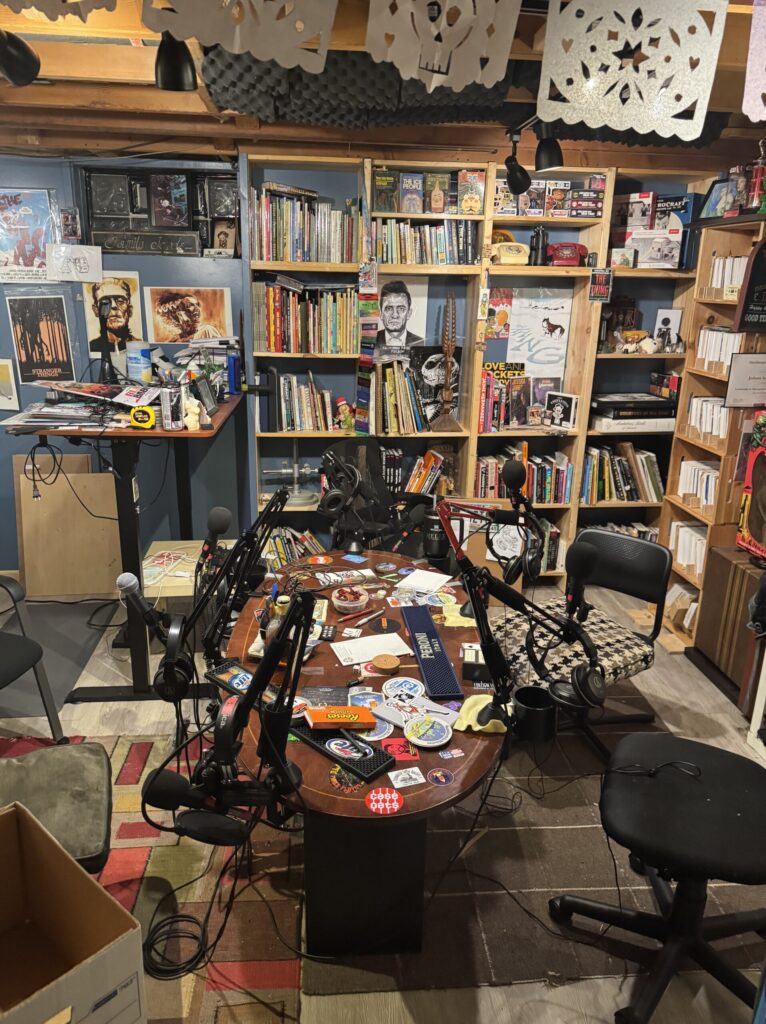
Basement Studio’s New Look:
Check out what the RHR crew is creating:
Joe:
- Named by the Guild Literary Complex as one of the 35 Writers to Watch!
- Red Line: Chicago Horror Stories Anthology featuring a story by Joe!
- Joe’s Sci-fi physiological thriller Novel: Will You Still Love Me If I Become Someone Else?
- Joe’s Rom-Com Novella: Tomorrow May Be Too Late
- Essay by Joe: From Beyond Press: Specific Knowledge: Jotham Austin, II, PhD on Transformations in Fiction
Future Events to Hang with the Crew:
Podcast Cross-Appearances
- Joe on GoIndieNow: 21grams with Joe Compton talking about villains.
- RHR Crew on This Podcast Will Change Your Life with Ben Tanzer
Events & Conventions:
- Dragon Con — Atlanta, GA (September 3-7, 2026) – Joe attending as Professional
It’s Science for Weirdos
Want to support the show? Tell your friends. Follow us on social media, Discord, share the podcast, and let us know what topics you are excited about. Leave a Comment. And for email alerts sign-up for the Substack newsletter and never miss an episode, exciting updates or the bonus images we talk about on the episodes.
We discussed these questions on the episode and now want to Hear From You (leave a comment):
- What’s a movie, show, or comic that villainizes nature, and did you catch it while watching/reading?
- Is there a patch of woods, a park, or a green space that anchors you to where you live? What would you lose if it were gone?
- When’s the last time you were really out in nature? Did you feel the difference?
Drop your thoughts in the comments. We read them all, and your ideas often shape future episodes.
Future Episodes
- Episode 80: Magic: the Power and Cost of Magic SystemsGuest: B.L.Mostyn
- Episode 82: Climate Change and Data CentersGuest: David Pincus, PhD
- Episode 84: ETGuest: Chris Guzman (@theboxinggloveartist)
For more stuff (Images, Episode Highlights, events, etc), subscribe to our Substack newsletter!
Show Notes & Fun facts
Stuff crew said they’d put in shownotes
- Save Briar East Woods — the website (savebriareastwoods.com)
- Documentary: youtu.be/7NFDIby31O4
- Mayor’s Night Out — gohammond.com
- Big Brains / Marc Berman:
- “How to Use Nature to Restore Your Focus, with Marc Berman”
- https://climate.uchicago.edu/news/how-to-use-nature-to-restore-your-focus-with-marc-berman/
- Anne’s Band (Shy Bronco) instagram: @shy_bronco
- Wed, Aug 26 — The Owl, Logan Square (Chicago)
- Sun, Aug 30 — The Cellar Door, Michigan City
Books
- When Trees Testify: Science, Wisdom, History, and America’s Black Botanical Legacyby Beronda Montgomery
Movies
- Avatar
- The Lorax
- The Fog (John Carpenter)
- The Blair Witch Project
- The Wizard of Oz
- Pocahontas (Grandmother Willow)
- Beauty and the Beast
- Killer Piñata (features The Owl bar in Logan Square)
TV
- Harley Quinn (HBO Max animated series)
- Dark Matter (Apple TV+, filmed in Chicago — also features The Owl)
Comics / Characters
- Poison Ivy (DC)
- Ra’s al Ghul (DC)
- Batman (DC)
- Swamp Thing (DC)
- Man-Thing (Marvel)
Fun Facts to Impress Your Friends With:
- Briar East Woods is old. This 32-acre forest sits on a 4,700-year-old sand ridge, an ancient Lake Michigan shoreline that dried out and slowly built itself into a forest.
- Your brain sees a forest in “low-res.” Nature is full of fractals, repeating, scale-free patterns you see in a snowflake, a coastline, or a tree canopy. Your brain processes them easily, like a compressed image file, so a walk in the woods actually rests your attention. A walk down a city street, where you’re constantly labeling buildings and signs, works it harder.
- Eleven trees on your block = a $10,000 raise. UChicago researcher Marc Berman found that adding about 11 trees per city block improved people’s health by an amount comparable to a $10,000 salary bump, or feeling seven years younger. Just put the phone away while you’re out there; the effect doesn’t work if you’re scrolling.
- The U.S. loses about 36 million urban trees a year. A 2018 USDA study found American urban and community areas shed roughly 36 million trees annually — about 175,000 acres, or 1% of canopy every five years — almost all of it paved over. When that study came out, Georgia was the state losing canopy fastest.
Episode Highlights
- 00:00 — Meet the Crew and Guests: Joe, Nick, Georgia, and Mary break in the newly redecorated basement studio and welcome in-studio guests Anne and TJ.
- 01:10 — Joe’s Opening Monologue: Joe rewinds 4,700 years to the moment a Lake Michigan sand ridge stopped being a beach and slowly became the forest we now call Briar East Woods.
- 04:34 — Why Briar East Matters: Anne calls it the last sliver of genuine ancient dune ecosystem left, with plants that are thousands of years old and benefits Hammond’s administration refuses to recognize.
- 07:00 — Bridge Plan Explained: Anne lays out the Governor’s Parkway project — a bridge that would take 12 of the woods’ 32 acres and clear the path for a 68-lot subdivision and two commercial spaces.
- 08:16 — Urban Nature and Health: The crew digs into research showing wooded areas boost the brain, and why urban green space matters most where pollution and truck traffic are heaviest.1
- 6:46 — Fractals and Brain Rest: Joe explains how nature’s fractal patterns let your brain process the world in “low-res,” resting your attention the way a compressed image saves space.
- 20:48 — Trees as Living History: Joe connects photosynthesis to 150-to-200-year-old black oaks that literally hold the history of everyone who’s ever exhaled beneath them.
- 23:30 — Safety Claims Debunked: TJ dismantles the school-safety pitch — the bridge is a mile from the actual train crossing and would send kids on a two-mile detour.
- 33:47 — Flooding and Sewage Reality: TJ describes Hammond’s overdevelopment turning streets into rivers and basements into raw-sewage pools, with Briar East acting as the last sponge.
- 37:50 — Political Pushback Ideas: Mary floats handing out sponges at the Mayor’s Night Out.
- 39:27 — Council Meeting Reality: Mary describes public expression as wailing into the heavens while officials look down at their phones and refuse to engage.
- 39:56 — Project Stalled Timeline: The group confirms the project has sat untouched since June of last year — stalled, by some counts, for going on three years.
- 40:28 — Bears Stadium Politics: TJ suspects a potential Bears stadium could finally distract the mayor enough to let Briar East off the hook.
- 41:56 — Restoring Urban Nature: Joe points to Seoul, where tearing out an elevated highway to restore a stream brought a ~600% biodiversity jump, cooling, and rising property values.
- 44:38 — Can the Land Be Bought: Nick asks whether the group could just buy the land; Anne explains that with a reasonable administration maybe — but…
- 46:01 — Why Green Space Wins: The crew imagines Manhattan without Central Park and revisits Chicago’s Burnham Plan as proof that protected green space can become a city’s legacy.
- 49:17 — Poison Ivy Debate: Joe makes the case for Poison Ivy, a botanist turned defender-villain, and the crew questions why fiction keeps casting nature’s protectors as the bad guys.
- 57:24 — Call to Action Links: Anne shares savebriareastwoods.com and the Save Briar East Woods social handles, and TJ’s simplest ask: just go breathe it in.
- 58:43 — Parks Versus Wild: Mary draws the line between a manicured park and something primal and untouched, with the crew insisting they’re pro-park, too.
- 01:00:40 — Wildlife and Cicadas: Anne talks about the animals of Briar East nesting barred owls, foxes, hawks, bats, bullfrogs. And Joe asks, would you eat a cicada.
- 01:02:06 — Forest Screams and Cryptids: Nick asks if anyone goes out to scream into the trees, TJ admits the woods block the sound, and the need for a Briar East cryptid.
- 01:03:54 — What the Forest Says: Asked to speak for the trees, Anne and TJ answer simply — “I’m alive, I’m still here”
- 01:05:50 — Plugs and Farewell: Anne plugs the merch and her music (Shy Bronco), and the crew signs off with:
“Stay curious, stay safe… Love Y’all!”
Join Rabbit Hole of Research on Discord: https://discord.gg/2nnmKgguFV
Subscribe and Share our Substack newsletter to get email updates, never miss an episode, and spread the word!! Don’t forget to give us 5 stars or a like!
Transcript
[00:00:00]
joe: Hey, welcome back to
The Rabbit Hole of Research down here in the basement
studio
Mary: Fully
Nick: loaded …
joe: loaded.
The new redecorated,
reorganized- Reorganized …
basement studio. That’s right,
yeah.
I
don’t know what the…
Georgia: every
mic is full.
joe: every
mic
is full.
Every mic is full.
now. We had to, we knocked some walls out.
We went Iron
Man-
Nick: This is our cave.
TJ: move,
joe: mo- mode. Yeah,
so
yeah. I gotta
po- post, some pictures.
It really looks different in here.
But we, yeah, we have a great episode planned gonna be great.
Nick: it’s
going, yeah
Mary: Yes,
we
do.
Nick: You wanna introduce yourself
there,
buddy? Hi.
joe: I,
am Joe.
Yeah,
let’s get into it. I am, yeah, I’m Joe.
Nick: You got Nick.
Got
Georgia: Nick.
Georgia.
joe: got Georgia.
Mary: You got Georgia. And You got Mary.
You
Nick: You
Mary: Mary.
Nick: and hey, look, we got some special guests … over here.
Mary: In person, In studio …
In studio.
joe: studio.
Nick: In studio. All
Mary: six mics
joe: Are hot right now, so please.
Anne: I’m Anne.
joe: I’m Anne.
TJ: Okay. And I’m TJ.
joe: TJ, yep. And we are here to talk about Briar East Woods and urban [00:01:00] deforestation.
So yeah, so it’s,
Nick: hits- close to home for all
joe: home, yeah. We’re right here, and probably for a number of people in urban settings that, that have to deal with this, and we’ll get
into
a
lot of that.
Nick: Do, do you have a monologue for us
today, Joe?
joe: I have one. I,
This one touched me a little bit, so
I put
something together for y’all. I’m gonna lay it on you
Nick: I’m gonna start crying.
Mary: I’m
joe: start this episode
millennium ago four thousand seven hundred years ago to be exact.
By this point in
geological
time, Lake Michigan had already spent thousands of years shoving sand inland, building ridge after sand ridge, and then the water receded and one of these ridges dried
out, and this is the point it stopped being a beach and started transforming into something else.
Actually, what happened
next is the only reason there’s a forest in Hammond.
On this dry sand ridge,
marram grass came first and their roots formed a complex network that could hold the sand down so the wind couldn’t erode it back into Lake Michigan.
Over the next centuries,
the grass [00:02:00] dried, rotted and made something you could call soil.
That soil brought
Cottonwoods brought
Pines brought oaks, each one building the ground the next one needed, eventually transforming that sand ridge into a forest.
sure if
you’re keeping count, but to create a forest you need a lot of time.
It took
centuries for Briar East Woods to form.
To put this into context, compared to man-made urban jungles, Chicago burnt to the ground and rebuilt itself in 20 years.
To understand how a forest assembles, a little over a century
ago, a UChicago botanist named Henry Cowles walked these same dunes, noticed that walking inland was the same as walking forward through time and more or less invented the science of ecology.
And that ecology, in 32 acres of original ancient dune that is now a forest sitting in Hammond, like all urban forests, it’s
more important than most people realize. It absorbs storm water
that would o- otherwise be in someone’s basement, it pulls the temperature down a few [00:03:00] degrees on a summer afternoon, and it
does all this without sending anybody a bill.
126 years after henry Cowles worked out
how the dune assembled a forest, another UChicago researcher, Mark Berman, is now working out the positive effects nature and the forest can have on the human brain, calling it environmental neuroscience.
And that’s the trouble. All the benefit the forest does for free never
shows up on a city planner’s budget line, and there’s always an overpass that needs somewhere to go or a project to pave paradise to put it in a parking lot. Preach it, Joni Mitchell.
Nick: And if the
joe: the woods could
Petition politic, they’ll argue on their own the way they’re always doing in fiction, they win every time. But unfortunately, they can’t, so in
this episode, we’re gonna make the case for them.
Nick: Wow, Joe
Mary: That was
great. Thank-
Nick: I think
that was your best one.
Oh. That should be
the end of him.
You it.
Mary: That’s it You
guys heard anything? No,
I’ll see. it. We’re done. Pack it
joe: up.
Mary: Okay.
joe: Yeah,
no, I think
that’s
A, I
liked the, the place to [00:04:00] start.
I named a… went over a few things in there, and we’ll probably d- unpack it a little bit more.
But
I’ll go ahead and let the guests dive into the Briar Ridge,
What it is what it’s
Georgia: Briar East.
joe: Oh, sorry.
Briar R- Briar Ridge?
Is
there
a Briar Ridge?
Is that
something?
TJ: is.
yeah.
There’s a lot of Briars ……like Hammond. Oh, that’s right.
Georgia: a housing yeah. housing development. Oh,
joe: right. I
don’t know why that’s a bad…
Mary: Stop.
Nick: That’s where the rich people are. We gotta get
Mary: Briar East Woods. Yeah.
joe: Oh, this will be edited out.
No,
Mary: Yeah. That’s okay.
joe: Yeah,
just to talk
about
Briar East, yeah, and just
Mary: you’re,
Nick: Briar East, what you guys are doing.
Mary: guys are doing. Yeah.
Well,
Anne: retreat to which you guys went Yeah. Well, I really like the historical perspective you put on that.
And I do think that the image of walking forward
from
the shoreline into
the
land
is so powerful
because
it really is such an ancient
place, and
it pales in comparison to,
you know,
the development that’s come up there over the past couple hundred years.
It’s
thousands of years old, 4,700 years old, as
you said. And it’s basically the last sliver of that
[00:05:00] ancient- dune land left, and it is genuine sand dune ecosystem,
which
makes it unique.
So
Yeah, the plants there, they are ancient plants, and they need to be saved because as you were saying as well,
you know,
even for
the
people who are living there, Hammond is a really industrialized-
…overdeveloped area already,
and the benefits of that forest are not being recognized at all by the administration there-
Yeah
For the people who live around it,
So,
yeah.
TJ: Yeah. I, like you were saying, I think, yeah, for the people of Hammond in northwest Indiana, spaces like this that anchor you to, like, the heritage of the land and,
Nick: like-
TJ: something that is real about where you live and not artificial
is is
really crucial for everyone’s psychology.
And Le- let alone it
being an urban
green space Yeah …for people to… With two and a half miles of trails in it that people constantly use until [00:06:00] the city fences it off. But,
Georgia: know-
And Can you give a little background on what is
happening- And why this is an
issue, Like-
Mary: Well, maybe,
like, l- well,
let’s step back a l- just a little bit even more than that.
Like,
We’re talking about Briar East Woods yeah, we,
you know,
We’re Briar East Woods i- in Hammond, Indiana, so- a- and
so,
How did you all get involved i- with this? How did you get started with this project, Anne?
Anne: Well,
TJ and I got involved at the same time- because we went to a
Hammond City council meeting, and we heard, there’s
a public
expression at every meeting,
and Ken Rosic would speak at the meetings every week. And
so we heard him talk,
And and then after that, we ended up running into him at a bar. And he gave us the whole spiel, and then- …a couple weeks later,
I think, gave us a
tour of the
woods. Yeah. And we were
hooked.
And We were hooked. ‘ cause it was so beautiful
to see it, and the idea of it not being there anymore,
It was really distressing. Yeah.
It was really distressing. And
[00:07:00] So yeah.
But,
Ken has been working… The
project has been in motion
since 2018.
So the city of Hammond
has a
bridge project that they’re trying to build
right through the woods. So it would take up 12 acres of the 32 acres of the woodland.
And it’s a bridge that’s supposed to go over the train tracks, but the way that it’s aligned, it basically clears the way for a path for an entirely new subdivision with 68 residential lots and then two commercial spaces,
which is what was included on the city of hammond’s grant application
to the state. And they used to deny that there was gonna be any housing, and then at some points the mayor, Mayor McDermott of Hammond, has slipped up and said, “Oh, no-” well, There might be or, you know, something like that. So they’re
TJ: would never rule it out. He would never rule it
Anne: he would never rule it
out.
Mary: And
if there
were, then just think how much more everyone else’s property values would go up,
Right.
Anne: Yeah.
joe: yeah. Yeah. If that were to happen. Yep. Yeah, yeah. Sounds like the, uh, plot to Avatar, right? Oh, yeah. Just go… Yeah, right. You know, like- Yeah … you just wanna use the natural resources- That’s right … just to, uh, dig through
Mary: If that were
to happen. Yeah.
joe: Sounds
like the the plot to Avatar.
right?
Avatar,
Nick: was just thinking the [00:08:00] exact same thing. I was
like,
Mary: “Wait, you
Nick: guys, you just wanna use the natural resources just to
say screw
Georgia: it'”?
joe: Cut down
a mother tree
and dig out
Nick: Might as well. Look at all the stuff in
there
joe: There’s gold in them there hills. That’s right. That’s right. All this stuff. We’re gonna make
tons of money. Everyone’s gonna make money,
gonna make money. right?
Yeah, no, I think
that’s
yeah
really,
cool. We were talking about the
kind of impact and the neurological part of it that you go and walking in the woods, there’s a lot of research into that now that having wooded area and people going into nature really has that positive effect on them.
And, just spending time, you have that. But the problem is when you live in urban areas the folks who can get to wooded areas is limited. So having this in an area like in Hammond and having that local resource so you don’t have to travel far. I think that’s another point there. So y- you said there was trails and things like that that- Yeah … crisscross through
Anne: Yeah. It’s super important to maintain that urban green space
and the access to it because it’s not only [00:09:00] beneficial for people, but it’s actually harmful living in an urban environment often- with the noise pollution. the air pollution. It is psychologically distressing as well as physically
distressing. And Living in cities with high amounts of pollution like that is linked to, Cardiovascular disease and anxiety depression, all types of things like that. So to take away urban green space in a place that already place has, like, the heaviest truck traffic in the country-
TJ: is directly south of two steel mills
and an oil refinery.
Georgia: and an oil refinery.
Right.
Right.
TJ: Right.
joe: Right. Yeah.
Right.
Yeah,
so
you have that.
But … the Indiana Dunes is an example where they built up industry and they maintained and preserved the dunes, creating a national park, the Lake- national lake shore in ’66, the Na-national park in 2019.
So you had this,
industry, so really a model exists that you
can- But also-
Georgia: that was because of just specific certain people that fought for [00:10:00] that. Yeah …
That’s right.
Yeah.
yeah. Which-
Mary: Yeah. Yeah. go ahead.
TJ: The,
the model that exists is industry and developers wanting all of it.
Georgia: Right,
Mary: Right.
Right.
TJ: is what’s happening i- with Briar East
Woods.
Right.
Georgia: then
someone standing up and saying, “Wait a second.”
TJ: And then, yeah, people
that live there mobilizing against
that-
that, force.
joe: Mm-hmm.
Nick: So are,
Is
your mission to make it a national park, or- wh-
TJ: what-
Hey,
I’m not against it.
Nick: What
is
Mary: Why
joe: right. Right. Why not?
I
TJ: I
think just
a city park, really.
Anne: Or- Yeah.
Or-
Nick: Or,
TJ: be honest with you- just to leave it alone.
I mean-
Mary: Yeah. Yeah.
joe: But
it is a historical site
though, right?
I That’s the
thing. Like for this- it would-
Georgia: would
be
joe: would be nice if it was actually
Georgia: protected,
which- I don’t know what that means these
joe: That’s right. No, that’s it,
TJ: It doesn’t
carry much weight.
right.
Georgia: So
Anne: You know?
Mary: Right. So-
joe: yeah.
Nick: Just ’cause, with
the dunes being a national park, I didn’t know if that would be a-
…beneficial- goal
or if it’s just-
joe: An extension of the dunes, [00:11:00] like in that-
Yes
its
Anne: It is the
same dune ridge.
Like,
you know. The
TJ: high
tallest in shoreline.
tallest in shoreline.
joe: tallest and shoreline. That’s right. Yeah. So ideally, at the end of the day, it would be part of the national park. Right, right. I think the main goal right
Anne: So ideally, at the end of the day, it would be part
of the national park. But I
think the main goal
right now is to
stop
the
development project-
……which
by
the way is called Governor’s Parkway, and then it
would be
Nick: to- Yeah,
I
joe: like
any kind of-
TJ: it
Anne: and
Make sure that it’s a park, make sure it’s preserved,
you know, not gonna be developed in any way, shape, or form. And then maybe
we
can talk state and national level.
But
Yes.
joe: Yeah.
TJ: I’ll tell you what, something I find really interesting about Briar East Woods specifically, as opposed to protected parks that are across Northwest Indiana, is that it’s not a park,
it’s not protected, it’s just undeveloped land.
Mm-hmm. Which-
Right
lends a very unique character to it.
Mm-hmm.
One where it’s not like they close the doors and
shut the fence.
Georgia: organic. It’s
very
TJ: very organically, yeah. It’s extremely organic.
All the trails are made by the people that live there.
Yeah.
[00:12:00] Nothing is maintained.
It’s
only maintained by people that ride ATVs through there that need to chop up trees to fall on the trails.
And,
Anne: And
us
when we clean up. the and-
TJ: and …us. yes.
Mary: Yes.
joe: you mentioned Ken and his efforts,
right? He was a duster, is that-
what was it called, the,
TJ: Yeah. So- The the Dune
Anne: original name of the group, which is now more formally known as Save Briar East Woods.
it was the
Dune
Dusters- Dusters I think The Dune Dusters sounds cool.
joe: That’s Dune Dusters sounds cool.
TJ: I like a bunch of old guys- The Dune Dusters sounds cool.
Nick: I like that … who like to clean. I kinda wish you guys some… Yeah, right. me. the Dune
Anne: more swaggy. we- still use
Georgia: You could say AKA. say AKA. little icon, You
joe: got a little
icon,
like
a little
guy, like with a little duster kind of going through there.
Nick: Oh, I thought it was just a
jacket. How about Oh, a jacket, yeah.
joe: Not A a show, duster in the Dunes? yeah. like the play the album. A dust- a
yeah.
Georgia: There
joe: Yeah, duster can be
a little woodland creature.
TJ: or- it’s
joe: like, yeah, no. Yeah. No, that’s cool.
No, so that’s how
that all started. Community driven. Ken took the charge
Georgia: Now, You said you, you got involved in 2018. When did Ken
First,[00:13:00]
Anne: Ken first get involved? So the
project itself they City of Hammond applied for funding for it in 2018, and then Ken began organizing
in
TJ: a year
later.
Anne: Yeah.
Around
2019,
Nick: Oh, so you guys were, like, ground floor of
this.
Anne: on this. TJ and I
got
involved- in
- Oh.
So
it- Yay ……Yeah. It was very localized- before then to mostly people in… It’s in the Hessville neighborhood of Hammond.
so very local issue.
And then,
TJ: And then it branched out to people living in South Hammond.
You’re doing here. And
then
Mary: Those interlopers.
TJ: The whole country.
joe: What are you doing
Anne: And the region at
large, and The Midwest- Yes.
and the coal country. Yeah.
joe: The world.
Mary: world. The
Georgia: all
Nick: The world.
Anne: The world even
joe: What I was
gonna say,
I mean,
we- we’re focused on local because we all live in the Northwest Indiana area, and,
This is important. I mentioned about
The kind of storm water and things like that. Clean air, you mentioned noise control. But
I saw this USDA in 2018 paper.[00:14:00]
It was about US urban community are- areas lose approximately 36 million trees a year. About 175,000 acres, roughly 1% of canopy in five years, and almost all of that is swapped for impervious su- surfaces, so pavements, buildings, parking lots.
So you have this.
And I think it- they noted Georgia at the time was the state with the steepest canopy loss.
And so yeah, This is a serious problem
that- Like I
Georgia: when you think of deforestation-
Mm-hmm
you think of like the Amazon.
That’s right.
yeah.
joe: yeah. Cut and burn, that’s what we learn.
Georgia: Far
away.
Yeah. No, it’s happening-
joe: Here yeah.
And we
don’t think about it ’cause we’re,
We’re industrialized, and so we’re just marching forward with our structures, housing. Instead of going vertical, we like to go horizontal.
And I think that’s a,
you know,
The presidential center, Obama Presidential went up, and it’s a vertical structure. And people are like, “Oh, that’s… Why is it vertical?” It’s
like, and they were giving them a hard time, but really, they dedicated a lot of that space to restoring
[00:15:00] the …area around that, …and the
gardens and everything.
So there was some effort
in a
urban area to actually build a struc- build this museum, and then also have,
These structures that benefit the community- The
Georgia: I think that,
joe: and,
Georgia: I think
that also is a matter of
the community too.
Right.
That’s right. Yeah. Because Jackson Park-
has
Very passionate- people- Yeah. wanting to protect Jackson Park, So I’m sure that had a huge-
Mary: And
joe: I’m sure that
had part of it. I’m not saying
Georgia: they didn’t
listen. Right, Right. ’cause obviously, but-
joe: Well,
that Mark Berman, I think that was his… That’s a lot of his research.
The, the famous one was walk in the park experiments, where he had people go on a 50-minute walk through, the park. And their psychology changed. Their attention they could focus. So people with attention deficit, things like that,
they became much more aware, and they could actually focus on things like that.
Yeah, then he’s gone on to do other studies.
Ones where it’s like if you have just 11 trees, like per block, like that’s enough to actually start… That, that’s as [00:16:00] equivalent to a $10,000 salary raise or seven years of cardiovascular health
It’s really like just these
things. So he talks about that in, in spaces and stuff.
Yeah.
Georgia: There’s a great a
Big
Is it called Big
Brains?
joe: Big Brains. That’s right.
Yep,
Georgia: That’s right. Yeah. It’s a podcast from UChicago, and they had one-
…specifically on his
research Yeah. Okay.
So that’s something to check out- ’cause it’s really good … Oh,
Nick: it’s really good … listened to that other podcast. Oh, what was his name again? After you listen to this episode. after you
listen to this
joe: after you listen to this episode.
Nick: you
TJ: podcast. No.
Mary: After that. after
TJ: episode.
joe: Yeah.
right.
Mark Berman. Okay. Yeah, he’s a University
of Chicago, Yeah … faculty member. Yep. Mm-hmm. Mm-hmm.
Okay.
Georgia: And they,
like you said, like even people that don’t like nature-
right. still got a
benefit like-
joe: did. Yep, yep, Yep, yep, That was some of his
research. Yeah.
Georgia: themselves- they still
got
joe: Even if you’re
there. But you can’t, you can’t be… It was really interesting.
You can’t be on like your phone in there. Put your phone away.
Nick: What
about- headphones? Can you- Yeah.
Is head- are headphones allowed? you
joe: no,
You wanna be immersed in nature.
And it was really
interesting ’cause then it was like, “Why?” and some of the [00:17:00] reasons that they had was that when you go through nature the environment is low res, right? So when you go through and they start this fractal idea. So a fractal is this kind of repeating, scale-free repeating pattern.
So like a snowflake, if you look at it, it’s got its shape. If you zoom in, you see the same shape. You zoom in further, it’s the same shape. So that’s a, a fractal. It’s a repeating kind of a pattern.
And when you’re out in
nature the structures, mountains, tree canopy, they have a fractal pattern. And so your brain can just process that, and if you think of it in computer terms one way you can,
Compress images is take
like, 100 megabit image and make it 10 because your brain doesn’t recognize the condensing
Of the pixels.
So
Nick: know a with me more than what you said before.
joe: learned a lot more from you than you said
before.
Oh, that’s what we
do
here. We
try to give a lot of
examples,
make
it work.
And so that’s kind of the idea, that
when you walk through the forest, your brain isn’t processing. Your brain also isn’t labeling everything. It’s like tree,
you know,
[00:18:00] leaf, grass.
You look at grass on the ground, you’re not counting every blade, whereas when you’re in an urban environment, you are processing a lot of language.
What’s this building? What’s this shop? What’s this here?
You’re going through …and your brain is
mentally mapping your environment much heavier
And your focus is really different.
So you have this kind of focus difference that you’re going through when you’re in nature, and that allows you then to, when you come out, you’re actually refreshed ’cause your brain wasn’t heavily worked in this- … this time period. So really it’s this- That’s interesting … it’s really
fascinating
research and
Going through that and how beneficial this is in, in some of the studies.
And then there was even, they tried to do it with pictures.
So would a picture of the farm nature work? And I think some of the re- th- I think
it was like, yeah, it’s just as good, but I think there’s other blind studies that are like,
eh,
you know,
it’s probably
best if you get out
and go. Yeah. But once
again, it’s
TJ: try. It was
joe: it’s
but it’s access, and
They had things where they did
In some of [00:19:00] the The
Projects and things in urban environments. And
They had it ’cause that’s randomized. You’re just put in whatever apartment. So some looked out to green spaces.
Some looked out to non-green spaces. Same thing with health patients. You’re assigned your
room
Georgia: random.
Just Having
windows.
was
joe: Having windows. Right. Having windows looking
out to a green space, that, that improved health recovery. That also led to
conditions in these kind of different homes,
Nick: So
Would having,
like,
those
windowsill plants
Be helpful, in that case, like if you’re in a
higher
floor?
joe: Right.
Right.
Yep. Yep. There was talk,
I mean, that was the other thing. It was about having indoor plants. So let’s say you’re in a space like the Basement Studio. We don’t get a lot of natural … We get
some
Nick: nothing green down here-
Mary: some.
joe: Yeah,
Nick: that is natural
joe: when I
was reading all
this
and doing
Georgia: we’d need, like, a sun lamp or …
joe: I thought you just need,
You need to have plants, have some artificial plants, because the same fractal- Artificial? Yeah, you can have artificial plants and have those in your
space.
Georgia: easier.
to care for [00:20:00]
joe: You won’t,
get the olfactory,
the smell, the, the kind of sensory, but you will get the visual kind of relaxation there. So yeah, that’s
Bringing,
you know,
These ideas
Georgia: tree
In the basement We
joe: tree we
need, in the in
a Basement Studio. We’re gonna
do like a … We need some more
TJ: gonna do, like, a, we need we can get
joe: a tree
and… the, We’ll just get
tree in a basement will plant one Right here in the middle. of the
Nick: desk.
Adopt, middle Adopt,
Georgia: adopt a tree.
for adopt a
joe: tree. Yeah, you’re gonna
We’ll write your name on every leaf or something. I don’t know. Do something. It’s artificial tree, not a real tree.
TJ: Oh.
Nick: Oh.
joe: Yeah. We’re not gonna torture a real tree that way. Oh,
Mary: Oh, yeah.
joe: But
Nick: We are anti-torturing trees.
thank you
that’s
TJ: our whole thing.
Nick: Oh,
is that what you.
g- Wait, are
you guys the pro getting rid of…
joe: you guys the pro game group?
Nick: guys no.
Anne: the pro guinea
pig? guys no. Yeah.
TJ: the pro getting rid of…? Guys, no.
Nick: Yeah.
Mary: You
guys,
joe: You mentioned
The age of some of those trees, and
I
think there’s black oaks, and they’re, like, in the
Hundreds of years
Anne: Yeah, 150, 200.
years old.
TJ: Yep.
joe: and there’s a…
I
talked about this on the mini, but I’m in the middle of [00:21:00] reading this book called When Trees Testify, so
really interesting. Do you know that? Do you… I see you saying,
“Okay, yeah,
It’s really cool.” It’s called Science, Wisdom, History, and America’s Black Botanical Legacy.
Beronda
Montgomery talks about these tree species through America, through the lens of Black America, and how these trees hold history.
And some of it is
just a process of photos- photosynthesis.
Mary: photosynthesis.
joe: Sunlight converting CO2 to sugars and producing oxygen on the back end that we breathe in,
and we
exhale CO2, carbon dioxide, for the plants to have this process happen.
And
the idea then is that
trees take that in. So historically people that were around a tree, you’re walking through Briar East and you’re breathing these trees are making your CO2 that you’ve exhaled, a part of you, molecules that were in your body then become part of this tree, its bark, its structures, its complex structures, its stable structures as it grows.
And so through [00:22:00] history, 150 years of history, that’s a, a century and a half, two centuries, 200 years old, that’s a lot of time and a lot of people who passed through there.
And both the good
And the bad, if we think
Of trees in American history what they were used for. So
it was just really good. And
so when you think of these ancient trees in forests like that, the history
And the things they’ve witnessed- Yeah … is really just powerful, and I think people don’t think about that, so.
TJ: Oh,
yeah. Yeah. I’m sure
there
are plenty of trees in Briar Woods that are
as
old as the city itself-
Oh, yeah if not older,
so.
joe: Yeah.
TJ: And just the individual tree, it’s been there the whole time.
joe: Right.
Right.
Watching,
Like
Like judging.
TJ: S-
soaking it
in. Yeah.
Georgia: Yeah,
and that sense of place. Yeah.
TJ: Yeah. Oh, Yeah,
joe: like, it’s
a place. I mean- Yeah …
yeah.
Yeah. No, Yeah,
Anne: Yeah, they’re like
monuments
in
a way.
Mm-hmm.
And
yeah, you can tell a lot about what’s happened in
an area
too, like from opening up a tree and investigating the inside-
the
core too. So
they hold [00:23:00] onto all of that.
Georgia: that.
It’s,
s- Yeah, seeing the rings and-
the Oh,
joe: yeah.
the age, right,
Nick: forgot about that. That’s why I was like-
“Wait, what are you doing? opening up trees?” “Don’t do
that. We’re saving these
TJ: torturing trees.” We just went over this.
Can’t wait to crack this baby open. Wonder
Nick: your trees. “
We just went
over
this.”
joe: it’s
like-
Nick: a
tree, Nick.
Georgia: that…
Yeah.
joe: Yeah.
Nick: I wonder
how many-
00 was in can make from this tree.
TJ: Oh,
Mary: make from this. Oh, no.
joe: Yeah,
you’re walking through, “Hey, buddy,
you behave,
okay?”
Nick: Joe,
stop Sherman was here. Sherman- is here. Sherman.
Mary: One
of…
And like for Briar East Woods, the justification for cutting down Briar East Woods keeps changing too.
joe: Yeah.
TJ: By the
Mary: way …Right.
TJ: It j- when- whenever you get ’em.
Mary: so what was… So
I became aware of this issue very late in the game, just only in like the,
the last year and a half or so. But what was the ha- like the justification for cutting down Briar East Woods originally
When Ken when Ken got involved with this? Or…[00:24:00]
Anne: this? Yeah.
So,
Hammond is a city, and especially
the hessville neighborhood, there’s a lot of train crossings. And so there was a pedestrian, or not a pedestrian, sorry. There was a fatality that occurred at the Grand avenue crossing, which is a bit east of Briar east Woods. And additionally there was, a public safety crisis where, and proPublica reported on this in 2023, where there’s five schools on Grand Avenue, and children walking to school would get caught by the train, and so they would start climbing or
TJ: through- A, a parked,
train? parked train.
Anne: Parked
Nick: Oh.
TJ: not
a
moving train. When
Mary: they were there-
they were, like
S- stayed still, like standing,
Stopped trains for, were, stopped so long.
TJ: For Hours or
sometimes days. Yeah. Oh. Yeah.
Anne: up to
like three
days I think- was the longest one. So the idea behind the bridge that is gonna cut through Briar East Woods is to alleviate that issue of the stalled [00:25:00] trains, getting around those trains particularly for school children.
Mary: However
Anne: However…
Nick: However…
TJ: We
can dispute
that
point- …
Well ……very
well.
Mary: Yeah. Let’s ta- yeah.
let’s
talk about, yeah.
TJ: Well,
I mean- Yeah … so
the,
th- on Grand Avenue where the
train
was parked and all the kids are crossing and all the schools are, that’s wonderful. We need a bridge there perhaps. The bridge is a mile away.
Mary: The bridge-
Like, The bridge- in Briar East Woods,
right.
Yeah.
Yeah, Briar
TJ: East Woods. Yeah. Right. Briar East Woods-
The trail it would take the kids on-
…is a two-mile
detour.
to
Nick: what- Whoa. So
it’s always easier-
joe: it’s always
Georgia: they were trying to- make this a solution for that-
Yes …when-
Nick: it gonna be any solution at all though?
Like there-
Anne: no- No.
TJ: No. no.
Nick: all. So,
like-
Georgia: So there’s obviously- some- What? … other reasoning behind- Yes.
Yeah.
joe: happening.
TJ: And so- they… And so then the mayor would just keep on, and the city,
would just keep on spitting out different- “Oh, well the woods are [00:26:00] dirty.
The woods have trash
in them.
Anne: Yeah. The emergency vehicles
can’t get around
Mary: of the children. The children need to cross.
Georgia: That makes
TJ: need to cross.
That
makes
Georgia: Won’t
Mary: anyone please think of the children?
TJ: that’s, like- yeah … there are actual problems that- Mm-hmm … could be addressed, and they got grant money to address it
Anne: Yes.
Georgia: And
TJ: they’re using it on, like a housing development project. just, All right, and we have to throw a bridge in
there.”
Anne: Yeah.
Mary: But like,
it’s
like,
Georgia: a bridge that won’t help. the
TJ: a bridge that will not help anyone. It- It’s
Mary: like over a mile away from where,
like the kids would need it to cross, right? So-
TJ: A
Anne: west of Grand Avenue, the train crossing at Grand
Avenue, which is where all of these issues are happening.
Georgia: then didn’t they say something like,
“Well, the kids that walk to school will still have
to…” have this issue.” Yeah. Will still have to, like- It’s like- Yeah. right …wait a second.
TJ: then
joe: not
gonna walk a
mile out their way then to loop…
Yeah.
Yeah.
TJ: I’ll give you
another funny one.
So the second most [00:27:00] popular one that they use is, well, emergency vehicles need to be able to cross parked trains.” And so
What
happens then? So
we’re
like, “Okay, yeah, sure.” But here’s the thing.
order to build this bridge, they’re coming off of the main thoroughfare
that emergency vehicles use to go north-south through Hessville. And so they’re going to close that road and instead take them on a winding journey through Briar East
Anne: East
Through the new
subdivision. Oh
Mary: my God, that’s, That’s
TJ: Are you kidding? Oh my God. That’s, stupid. and
so,
and introduce two new
intersections.
Nick: Yeah. So wouldn’t it make more sense just to have the bridge go over the railroad tracks?
TJ: Yes.
Like
that. That This is such a simple solution. How am
Nick: I the one able to be able figured it out.
Anne: I-
Georgia: …the one that doesn’t seem able to think this out?
Mary: I feel
like you’re leading it…
Like,
like
Nick: one,
Mary: one solution is quick and relatively less expensive.
Anne: Yeah,
significantly.
less
Georgia: it lead to [00:28:00] a
Mary: less. But it doesn’t lead to- Well, I
Georgia: yeah, a …fancy housing
development?
Right.
Mary: like the Compare…
A- And like the comparison of the numbers. Yeah.
Anne: Yeah. It’s hard to
say what the numbers would be now because the figures are so
old. Oh,
Mary: year- It’s been years now.
Yeah.
Anne: I mean, the last figure for Governors Parkway, I think they recently changed
It to 13 million. It was up
to 16 million at one point.
Mary: Oh. okay.
Anne: So now it’s like 13 million.
TJ: Well,
they’re funding it with different sources, too.
Yeah. You know, it’s
…federal
funds and
state
Anne: state, and then
the s- city
pays 20%.
Yes.
Oh, right.
Of the whole cost. So, so taxpayers. Yeah. of Hammond.
TJ: I think they were gonna try and use COVID relief funds for that-
Yeah.
last
time I checked.
Georgia: time
joe: Yeah, right. Is
that account still active?
Can we check it out?
Well, this
reminds me, you guys are talking some of the political stuff. In Mumbai, India, they had did something like that.
The Aarey, the green lung they wanted to build a metro rail
depot.
So and research, like this was in 2019. They felled [00:29:00] about 2,600 trees And one of the, the government’s, their line was an area cannot be a forest just because it has greenery. And so it was this whole
rhetorical-
Nick: Water is not water even though it’s wet …
joe: It’s like, “Oh a
forest just
because it’s green,”
like, “’cause it’s got green space. So y- like you were saying, TJ, you guys were…
It’s, you get these
lines and It’s like what does
that-
Georgia: like what It’s double-speak.
joe: what does that exactly? Like,
you Are we not supposed to think about that?
Nick: It’s so stupid-
that it makes you go, Yeah. it has to be true.
Right? No
one’s this
Anne: right … say
that? But
joe: But
yeah, no, it’s one of these,
Mary: Oh, right. But yeah, no, it’s kind of
joe: interesting things where pol- they give… They say things and it’s
like,
“Oh, yeah, green. What?”
Anne: Well, it’s so
I mean, people do say that all the time.
Yeah, it’s kind of- And it’s not-
I mean, the city doesn’t look at it as a forest. They look at
it
as-
a place where people dump trash, which isn’t even true, but
Nick: and
TJ: place where
kids go to smoke
weed. Yeah. Which is true.
Anne: is true.
But but
they’re gonna do it somewhere.
Nick: place.
Anne: That’s why- Please
Nick: in the good …environment of [00:30:00] nature …
joe: out spaces in there.
Random forest somewhere, not what an urban forest is
TJ: for? Yeah.
Anne: out
spaces.
TJ: have a little
sign
joe: like, you know, “These are our babies. These are our babies.” The, the-
Nick: Oh,
no.
Joe, no. Legit,
TJ: No.
Nick: And
joe: No.
Legit, That gives them, you
know-
Protection
Georgia: Yeah.
Nick: and then clean it up afterwards … clean it up afterwards.
joe: well
Anne: know,
Nick: Come on,
Anne: Come on, kids.
joe: well,
I
They’re planned, maybe not to,
you know,
like-
your
Anne: Oh.
Nick: your
TJ: hey.
Mary: thing or whatever.
joe: Oh,
Why, Why’s
it gotta be,
Georgia: Be-
Anne: why’s it gotta be me? Look, anything could ha- anything could
happen.
joe: Well,
I think-
Um, yes.
Georgia: I was gonna s-
TJ: Your mother, and
I met, in
Briar East Woods.
joe: Yeah, right. Yeah. Can you
tell me the
story again? It is- you tell me the
Mary: It is weird the way,
like, the
city council while They’ll often cite… the, they’ll often say,
Like, the woods are dirty. Yeah. Like,
well, then we could clean them,
You know? I mean,
if they’re…
If,
like, tra- well,
Georgia: trash blows in So
Mary: trash blows
Georgia: are the sidewalks in
Mary: Yeah. like, if trash blows
into your yard,
you don’t burn down your house, you just pick up [00:31:00] the trash. Right? You know? Yeah.
Nick: I constantly do this, mary. I have a
Mary: constantly burning down your house?
Anne: a
Nick: Constantly burning down your house? I have
Mary: You have to move all the time.
Georgia: entire
house. You have
joe: It’s Like,
Nick: My fridge goes out- oof. That house is gone.
But it
Mary: it does feel very much like double speak, like, like the,
like a woods- Yeah …could be dirty. Yeah, It’s such a strange… Yeah. Anyway. Yeah.
joe: I mean,
it’s also a counterargument, people try to make ’cause you go,
you have the woods,” and I’ve brought up all these, these positives. But then people go if
you got woods, then you could have people, like,
sneaking in there, hiding, crime rates.”
The sight lines are wrong, and people are gonna get…
So you
have
Georgia: Surveillance is hard.
joe: try… Right, exactly. Like,
it’s, it’s- Ugh …
Need
more cameras
in the woods. But yeah, no, I
think you have these kind of counterarguments, especially in urban environments where crime crime gets
sensationalized in, in a lot of places
And there’s an overreaction. And if you have wooded areas, sometimes that’s the first place to get attacked. It’s like, “Oh,
you know, aha,
I know what’s gonna stop the crime.”
it’s like, I
Nick: Is it ’cause they’re [00:32:00] doing crimes out there?
joe: That’s right.
Nick: Can I go out there and find them and- be like, hey, I see you doing crimes”?
joe: It’s
like we know where you’re at, but we’re not… We’re just gonna cut it down.
Anne: That’s the thing, though, is There’s never been a crime reported in
Briar woods. Right, That’s the thing. Yes. It’s Like-
Yes okay,
Like,
…ooh,
spooky scary
woods, like
horror movies. yeah. But crimes really- …don’t
…tend to happen- in natural
areas. You
can-
look-
Yeah … I don’t know the statistics- on it, but-
joe: Yeah.
Nick: Yeah. You
can intuit.
Anne: You can intuit.
joe: right.
Anne: you
Mary: yeah. But,
mean, h- yeah, really. Has there,
You know,
you look back,
you know.
yeah, that’s not something…
Anyway,
Yeah.
joe: And you I, just to pull on a thread, ’cause I was gonna get there in a little bit, but you mentioned horror. And in fiction you have woods portrayed a couple wa- ways, right? You have the trees or you have the defenders of the woods,
And that can be a, a positive entity. But you also have, on the horror side you have entities in the woods which are [00:33:00] protective of their space and people intruding in that space. And
I think that’s, we talked here about some of the horror episodes, that horror is a good way to, think about trauma and explore trauma, explore loss-
Mm-hmm
and things like that. And I wonder if that’s,
you know…
Do, do you, you watch some of these and go, oh, yeah
that’s what it would feel like if you lost, you know, this, this wooded space,
Anne: Yeah.
I think
It’s devastating.
It’s very scary to imagine,
like, single family housing going
up =over- …Such an ancient and beautiful
place.
And
Yeah, I mean it is like,
And not to be dramatic, but it’s
really destructive
to tear down all those trees. I mean, it’s beautiful- …natural
area.
They’re,
massacring-
the woods. like Yes.
TJ: Yes. No, yeah. yeah.
Mary: And then there’s consequences for that too, because,
we’re recording this in late July, and just a, a, couple weeks ago we had some really torrential rains- that came through [00:34:00] this area,
About three weeks ago. And I kept thinking, you know, i, as this was, you know- thinking, how much worse it would be if we didn’t have Briar East Woods
to soak up the water.
Mm-hmm.
And it … Yeah. Go ahead.
TJ: I’ve
always had this,
Dream of a
horror movie-
that I
wanted made about Northwest
Indiana
because northwest Indiana used to all be, like, the Everglades of the north. Yeah.
The Grand ca- Key Marsh.
And you just
keep on draining it and that’s something about Briar East Woods is that it is a sponge- For all the water. And So I have … my dream horror movie is that we pave over the last green space in Northwest Indiana and then the swamp just kinda rises out
of the sewers Yeah,
Nice.
joe: Yeah.
Mary: you go. Yes.
TJ: the
entities of
the forest come back-
to- to
reclaim
all of Northwest Indiana. Oh,
Anne: like
joe: There it is. Like, yeah.
Nick: a
man thing.
Like a-
TJ: yeah, I would …I
wanna
watch it. I don’t
know.
joe: John- Carpenter’s
The Fog where
you had that, where the fog that’s ’83-ish
or somewhere in that ballpark.
Yeah. And you have [00:35:00] the fog rolls in, and it’s
the, these … It was about pirates reclaiming their gold, but it was-
it was a town, like,
TJ: Wait.
Georgia: like, you
joe: was Like,
you
Mary: Maybe there’s some pirate treasure out there, yeah.
who
joe: was a natural phenomenon. This fog would- Yeah … kind of roll in, and then they would
Come out the fog and- Yeah
you know,
gotcha.
Um, yeah.
Mary: Uh, yeah Mary was saying though, that is
TJ: kind of- already
happening in Hammond though. Right.
Because when it rains- they’re… Hammond is so overdeveloped. And it is low. It,
you know, it’s the dunes are right there.
So
joe: Yeah …
TJ: people’s basements flood, and it’s sewage. The streets flood.
Anne: The streets flood. The streets flood, …
The entire street.
Nick: flood, …
TJ: You can take-
…a boat down the street- sometimes. But it is literally
Nick: people
TJ: have raw sewage coming up several feet- in their basements. And this is,
like, the consequence- of that, of overdevelopment. …
Yeah.
joe: Yeah.
And we can … I w- I was gonna say, you had the Hurricane Harvey in 2017 in Houston, and because [00:36:00] of just decades of paving over wooded areas and, this, these areas that can act as a sponge and absorb, naturally absorb water, right? Hurricanes have been happening on Earth.
Mm-hmm.
And, you
Georgia: for no cost and that hurricane was
Nick: yeah,
joe: For
now … it, right and it’s yeah, for n- for
free.
And so a lot of the, a lot of people said that the flooding was worse because you didn’t really have these kind of buffers now- Yeah to these natural buffers for these
storm surges and the amount of water there. So that ju- that then just comes into people’s houses. You are now the sponge. So get your sump pump and,
your insurance claims ready because that’s what’s gonna happen. If you lose these natural kind of protectors,
Nick: that
joe: That buffer you against, the environment
And, you know, the other weather events that happen.
So
yeah,
there’s
Real examples of that
TJ: And,
people suffer.
joe: Yep, That’s
TJ: and they, At, the end of the day-
That’s right … it’s people suffer. Yeah. And
the mayor’s solution to that was
well, buy a backflow valve.
Right.
Anne: Yeah, they have no recourse. [00:37:00] Yeah.
Georgia: Or
joe: insurance.
Like,
so you- you’re in areas which are al- already
Economically depressed sometimes, ’cause these are where some of these places go. So you’re taking the last little forest away. So we talk about all the health benefits,
Nick: Do you think that might be part of the plan though?
Georgia: though?
Mary: though? Like,
Nick: it is a low income area, and being, taking out this forest-
having, it take away this, sponge, Mm-hmm …it can end up driving out the
low income. And then- they can go ahead and build Mary’s Bears Stadium.
joe: Yeah.
That’s right.
Nick: Yeah. I,
Mary: stadium.
Nick: Or…
joe: It’s gonna be
named after you, right? …The, the Mary, uh, Stadium. I hope
Mary: oh
Nick: investor, right? Like…
If it
Mary: it
ends up going into Hammond I’m gonna become a Packers fan for life.
joe: Oh, boy.
Anne: an investor,
joe: dun, dun. I
Mary: right? But so yeah,
well, one
of the things that
I would love to do at the, the Mayor’s Night Out in October, which,
i- in October 28th to be [00:38:00] specific. Check gohammond.com.
For your,
But they do these Mayor’s Night Outs. Oh, gosh. the, the,
last one that, w- that happened in the sixth district last year, i- in the sixth district is councilman Scott Rakos’s district, you know, where he represents this area, which includes briar east Woods. And
we, Gosh, I, yeah, all of us, th- there’s, there are lots of people there that wa- wanted to talk to, about Briar East Woods, and the mayor tried to curate the whole event as this is like a done deal and nobody cares about this anymore, when most people wanted to talk about it.
Nick: it.
Mm-hmm.
Mary: So I think for this year, I think it would be nice if if everyone brought a sponge.
Anne: Mm-hmm.
yeah,
Mary: And gave it to Scott Rakos, just, “Here, you might need this
If you foolishly get your way,” you know?
and, you know, maybe that, w- that, maybe that will be like, “Hi, here you [00:39:00] go.”
Anne: Yeah.
TJ: We can give him a sponge full of raw sewage.
joe: Yeah,
That’s right. Oh. Have a little cup, do that. Here you go. you go. You’re gonna have it in a baggie,
Georgia: that’s what’s
Nick: not
just loose in your pocket,
like…
joe: Is
Nick: Is that the drink
joe: mixing up, …
raw sewage at
the bar? No. No, that’s
not,
Mary: gonna
need
some spon- you’re gonna need some sponges if you do what you do- if you do what you do.
So,
Nick: yeah. Maybe
Georgia: a copy
of The Lorax.
joe: A
copy of The Lorax. Yeah, you could do that. Or, I mean-
Yeah.
TJ: I,
think
Nick: love Danny DeVito … it should have been
TJ: to him-
at one of the- city council
Nick: council
meetings at one point.
Anne: Yes.
Georgia: No,
Mary: but they just kinda, they just
check out during public expression. They Make it by design that they don’t interact un- well, unless they want to. But, you know, they don’t answer any questions. It’s just, you just
wail into the heavens kinda thing. Right.
You know?
But- they don’t really have to-
They just,
usually they just look down Yeah, they just ignore you.
Anne: on their phone. Well, I mean- Yeah.
Mary: Yeah. That’s
Georgia: would say it sounds very hopeful though, ’cause it sounds like- [00:40:00] despite how much they are pushing this, they’ve really gotten slowed down at least.
Anne: They
have gotten slowed down. Their project’s been on pause for over a year now.
TJ: Two years, right?
joe: Three years.
Anne: guess technically three?
But like nothing
has happened
on it since
June of last year.
Georgia: And are they hoping that
people
forget and then, “Oh, we’re gonna…”
I don’t know. It’s
Anne: hard to
say.
I mean,
they haven’t
said a word about
it
in over
a year.
TJ: I’ll tell you what,
The-
I think the
Bears stadium will play a big role in that, to be quite honest
with you.
Nick: with you. I agree.
joe: Right,
right.
Because the mayor is, the
TJ: mayor is v-
like
he
w- it was his thing, Briar East Woods and developing
Governor’s Parkway.
And
Anne: he’s very spiteful.
Yeah. It’s a e-
ego thing.
for very
TJ: emotional.
Mm-hmm
Mary: thing for Briar East Woods- Mm-hmm
Nick: Mm-hmm
TJ: he’s-
very angry ……And unstable.
Nick: Yeah.
Mary: Yeah,
he’s
you see he’s definitely
a temper.
TJ: Yeah, ‘
but-
joe: gonna subscribe from this podcast.
Now, I don’t know. Uh, no perspective. Yeah. And
Georgia: And I
TJ: [00:41:00] think,
you know,
My,
my, reason for saying
that is that
he… I think
it’s a lot of emotional labor for him to
dedicate
I’m being serious.
to like, fighting his
residents tooth
and nail-
…to-
right like hurt them.
joe: Right,
TJ: And And so,
joe: Right …
TJ: When he’s got the Bears stadium going on, I think it would w- just be too much for him.
Anne: It would be… Yeah, and it would be a big enough win for him.
Yeah.
Right
to be
joe: say, “We got it.” Yeah.
And people
will be kinda happy. I was gonna say there
s-
Go ahead
TJ: ahead If he,
Mary: So if he the stadium, you think
Georgia: That will be-
joe: Feather in the cap, like- I
Anne: I
think it would be a good thing for Briarwoods, But
then it w- they would probably
develop Wolf Lake,
which is a whole other- issue.
joe: Yeah.
Then you, I mean, you just move it.
I think
TJ: it’s,
You just move it. Just move it, you know. Say Wolf
joe: It’s just moving,
Mary: Save Wolf Lake.
Georgia: You You gotta,
joe: you know, be, you know- Yeah … The duster’s
gotta dust
somewhere else now. Yeah.
Let’s move it on. We’re, packing
TJ: It’s been brought up.
eh?
Anne: Rebecca It, it’s been brought up. But I
joe: but I was
gonna say,
there’s some…
I mean,
I looked it up
And I…
you know, you can get [00:42:00] pessimistic about it, but also maybe examples where people have done things. So one was in Seoul, and they created an overpass similar to this project, a, a six-lane elevated highway,
and
they buried a stream and with concrete
And it was, like,
And then,
some change of,
you know, kind of a
feeling about that, this green corridor was destroyed. They actually restored the stream-
Oh, wow.
And had this come in, and they had
a a
almost a 600% jump in a local bi- di- biodiversity within a few years, local cooling by several degrees, better air quality.
All these things that y’all are talking about with the Briar East and keeping it there in this urban setting, this is one where they saw property values went up, so kind of the, “Oh, property values go up if we do
This, this project.” No,
they’ll go up if you improve this green space, if you put some effort into it, if you actually…
This is here for free. You’re not… Like you said, no- [00:43:00] no one’s doing anything. The trails, every- it’s not being managed.
This is just nature here. It’s just doing its thing, and people love it. People are getting something out of it, and so you have that here,
where
Nick: said that was in Seoul?
joe: In Seoul? In Seoul,
Nick: yep.
yep.
Are there any examples of those in,
like,
the States?
joe: You mean the United States of
America or like other states?
Nick: or like other
Georgia: States.
I mean- you mean
reversing
something like this? I can see… that.
joe: mean,
I’ve seen other
examples. So in,
Nick: in like New York-
will happen elsewhere
Georgia: hopefully it’s not a reverse
joe: great … I know, I’m just saying.
I’m just saying that you have this in other places- Yeah … that they have made these relationships
urban development.
You know,
their…
A lot of these places and countries
Are much smaller than, you know, america. So
I think we have this thing.
We’re in this expansionist mindset mo- going out west and exploring and taking over and,
you know,
make-
Nick: yeah, we still have That manifest destiny- Right.
joe: And I
think that’s still
part of this whole thing, and when people wanna do something great
And leave their legacy, [00:44:00] I think these are the projects they think of. They don’t think of, “Let me preserve… Let me put my name on this f- this forest
and preserve that.” It goes, “Let me build this concrete structure that will be
my thing that people will come and go, ‘Ah,
that’s what I remember.
I remember the great thing that this politician or this person did in their lifetime.'” And
I think we s- that, that mindset still exists. Instead of going,
“Well,
let
me protect this green space.”
And
there are people that, that do that, but I’m just saying that more, we need more people, especially people with means, people with power, political-
Georgia: But we can definitely
look at examples of communities stopping similar
projects. and- no,
joe: at examples of communities stopping similar- Yeah, no.
Right. That’s right. That’s
Nick: So question:
Would it be on the table
for Hammond to sell the land?
TJ: I think that’s
kind of
a big fear of mine, to be honest. with you.
Nick: No.
Hold on.
TJ: Okay.
Nick: What
if…
like, c- can
an
organization like- Oh
yours- go ahead and buy…
Like,
I know It’s A a dollar amount,
[00:45:00] Yes. But w- what do you think they would give you am- an amount for it?
Anne: No.
No.
No.
I think
that if we were dealing with a reasonable- mayor-
and a city administration that wasn’t totally corrupt,
yes. Like,
I know that,
That’s true
like L- Lakeside
Woods,
Save Lakeside Woods,
was a campaign that I think
was in New Buffalo or Three Oaks, Michigan.
They were
able to do that. They were able to fundraise and buy the land from-
whomever it was owned by. I’m not sure.
But again, like we said, like the
mayor,
it’s as
much about the development for him as it is
about his ego.
TJ: Yeah. Yeah. That’s what-
Anne: And
so I think there’s no price he could
possibly put on that.
Unless he gets the Bears stadium, and then
maybe he’d forget about
it,
but-
I don’t know
Nick: I don’t know. Do you think there would be any- It’s kinda
like maybe
Mary: a pacifier,
you know? Or
Put
Nick: But that’s what I’m saying. Like-
Mary: iPad in front of a toddler.
But,
you know,
I was, and
When Joe was talking
he was talking about,
you know,
like I was thinking about [00:46:00] imagine like
how
different Manhattan would be without Central Park.
Right.
Yeah. Yeah.
If they had paved over every last inch of that because
Nick: it,
Mary: the woods don’t- Yeah …make
any money.
Or, Chicago,
But It’s-
Yeah
you know, but,
you know,
a- as you said in your opening,
In,
you know, when you first talk- or read
that out,
you know,
we there is a value in, in leaving it alone.
There, it’s valuable in its
own
right.
joe: Or reclaiming or appreciating it. That was the Burnham Plan.
So Daniel Burnham he designed the World’s Fair.
And his plan for Chicago was to develop the green space. So we think back when the World’s Fair, and, your kinda late 1800s, you had Gary and Chicago were equally sized cities. You can make some argument that the trains all went through Chicago and weren’t gonna get…
But still, they were both industrialized and powerhouse cities. And really it was this, this plan to develop the lakefront and to invest
In… And a lot of industrialists were like, “What are you talking about?
This wa- [00:47:00] This makes us… Lake Michigan, this beach makes us no money. But if we put this mill here, we put this here, then we will.”
And he goes, “Whoa, you know what? Someday people are gonna wanna come here. They’re gonna spend money to vacation and do,”
Kinda take advantage of that.
And Chicago, that was their kind of pivot. If you look at that, the World’s Fair was that pivot that they began to develop and really
Put effort into maintaining green spaces and interconnected parks along the lake.
And,
you know,
and people still defend that when, I think, was it Lucas wanted to put a museum in?
He, they…
people
rallied against that. Obama pres- They, people rallied and said, “Whoa, you can’t put this here.
This is our green space.” And it…
And
as Georgia was mentioning earlier, they really…
There’s a lot of community came in because
They saw the value in that.
And it’s the same thing happened in Hammond. People are seeing the value. The residents are saying, “Hey, this is important to us. Why can’t we develop this and make this destination,” right? That could
be the
Georgia: even develop it, but just protect it. right?
joe: protect it …and
Make it that destination.
Make it something there. Close by is Gibson Woods, right? That’s just not too [00:48:00] far. I mean,
You have these great green space corridors. Wolf Lake in Hammond also,
like, great… And they have made some investments there. But you could.
That’s
the thing that’s missing, this vision. It’s always concrete and steel-
Mm-hmm
…and
Not
kind of
green and,
Mary: but, it, yeah, but it’s,
Yeah, the value comes
In,
in, the green spa- …in the
green space
Yeah,
Nick: I,
TJ: I think isn’t, the Indiana
Dunes, like the
most
visited
national park in- Wow … the Eastern America
or
whatever?
Mary: kidding. Really?
Wow, that’s awesome.
Nick: don’t know. That’s the only one I go to. though.
joe: I know, Yeah.
right. See, right.
Case in point. Yeah. …Case in
point.
TJ: in point.
Case in point.
Mary: Case in
point.
joe: Let’s name
Nick: I don’t know where anyone else
joe: that he… Yeah,
Georgia: a trendsetter,
TJ: national parks in the- I don’t know where, I don’t go to
parks.
You’re a trendsetter, I
Nick: Listen.
TJ: I, remember
seeing
someone at the Dunes and-
At
like the beach kind of dunes.
And
it was in
the parking lot. They were like, “Yeah,
we’re like lost. We’re like looking. We wanna go see some dunes.”
And I was like, “Oh, well, the beach is that way.”
And they’re like, “No, I’m just interested in
the dunes.”
And
I was like,
…”Well, “Let
me
tell you about a little place called
Briar [00:49:00] East Woods.”
Nick: oh, Jesus. Oh,
you gonna be a little weird. Oh, you wanna see some dunes?
joe: But yeah, I was … It was
I, it’s in thinking about all this, and I, we talk about industrialists and stuff, and
I
like to draw people in. But,
you know, on
a podcast, we don’t give DC
a lot of love, and so
I wanna touch upon a DC character
Nick: Oh,
I thought we
were talking about the state.
DC.
and I’m
TJ: Oh,
Nick: no No.
all right, you’re really
gonna
make
a weird swing here, buddy.
Mary: I
TJ: thought you were talking about the a little about- Poison- Yeah.
joe: Yeah. I wanna
talk a little Poison
Georgia: that we don’t.
Anne: me
joe: Poison
Ivy, ’cause I was
thinking …about
defenders who become the villain, right? That you cross a line and you have this.
And so in fictions we talked about the woods kinda defending themselves, trees, and there’s plenty of movies, and,
that happens. Signals go out and people are jumping off of buildings. She’s,
Mary: Don’t give- Mayor McDermott- …any ideas.
He’s gonna
think
TJ: He’s gonna think that
joe: But I was
saying
Mary: That’s what I’m saying … eco-terrorist or
something like that
joe: Poison
Ivy, [00:50:00] yeah, I mean,
that was the … She was this, she was a botanist, scientist, and then became this defender, had an accident, gained superpowers. She could communicate with the plants and control them, and toxins and all this. But then she was just like, she was ruthless about it. It was just like, “Oh, you were…”
Yeah,
Nick: It’s
joe: like,
Yeah,
where’s that Poison Ivy at?”
What? What? I mean- Yeah,
no.
You had that. It’s it’s very
interesting that you have this, you know,
This pull on it. Like, where is that line?
Right? That’s, it’s
A interesting thing. And it’s in- labeled
as a villain,
whereas
you look at it
now, like,
you
Nick: the s- the way
That you’re reading it, like-
Right, right … the
way it’s being written is how you’re
supposed to
be taking it. That’s ‘
cause Batman’s
joe: supposed to be taking it. That’s ’cause Batman’s supposed to be the hero.
Nick: Batman’s a
rich billionaire.
That’s a- He’s an like- Yeah, right,
Anne: He’s a dungeon. Pro industrial propaganda.
He’s,
Nick: the, crimi- ……the-
mentally
ill.
Mary: Aside from
turning into
Poison Ivy, but like,
like,
it’s
like if
somebody was listening
to the podcast
and think
And they’re learning about
Briar East Woods and it’s in
danger, what
[00:51:00] Is there something that
They
could do?
Or
way that they can get involved?
Anne: Yes.
TJ: I like
the Poison Ivy route.
Nick: Thank you. like, Yeah.
Georgia: I wanna-
Nick: Let’s go back to that more point on that-
joe: Yeah …is that,
There’s … I didn’t know this guy, R’as ghul. R’as
Nick: Ghul. Ra’s al Ghul? Yeah, Yeah, right.
joe: He’s also a Batman villain. Yes.
But
he also was, like,
trying to save. His whole thing was, like,
Nick: His daughter gives- Right.
yeah
Dan- Bruce’s
son.
joe: I
know.
I didn’t- I didn’t realize
all the
I
was like, “Oh.”
But it’s once again
Batman versus,
like, an industrialist
versus kind of a naturalist.
…like- kind of That is all Batman is. And
I’ve said it before, I’m not a huge Batman fan for a number of reasons, but this
is … After
researching a little bit of this, I’m like, “You know what?
Industrialists suck.”
Nick: Let’s
do do
joe: a- So
Nick: I can’t wait for our episode on
Batman. I’m gonna tear into him
so
hard.
Yeah. All
the DC. fans are gonna be
upset with
Georgia: now Back to the-
reality.
joe: back to…
yeah.
not
do Poison Ivy style as, Unless
Nick: you get the powers.
Mary: Yeah. we have to [00:52:00] have the powers,
first.
joe: then yes, use them for good.
Yeah. Know- go out against some industrialists.
Well- But
TJ: I’m sorry, I,
Georgia: to being Poison Ivy. What Are some- things that we could- Are
joe: you a fan of Poi- Are
you-
TJ: I
guess I’ve
never seen it, so I was… I
heard what you were describing and I was like, “Oh, I like
her
a lot.”
I,
I guess I
didn’t- … put it
together she’s… oh, she’s actually a villain. Okay.
Anne: she?
joe: is she,
right? You’re
like- I’m saying, yeah but
is
TJ: know. That’s what I’m
saying, I don’t
joe: maybe
an anti-hero.
Let’s give her, you know, like a Wolverine
or something.
Nick: hero,
TJ: yeah.
joe: Wolverine, oh, yeah,
yeah, It’s like, yeah, that’s a… You did what? Who did that? Oh, you know what? I’ma look the other
Anne: you know what? Let’s go help the other way.” I think it’s
interesting, though, like
all
these media comparisons
you’re drawing, like they really do a good job of
job of
villainizing and demonizing the natural world, and I don’t think it’s a coincidence at
all.
joe: and demonizing the natural world. Mm-hmm. Yeah. Yeah. They do. They do. And it’s a nonsense moral. Mm-hmm.
Mary: Yes. I don’t think it’s a coincidence at all. Mm-hmm.
Anne: And that’s why,
you know,
the
city
of Hammond, for example, is
so good at making the
case for that, ’cause people are
alienated
Georgia: those dirty woods.
That’s
joe: right, yeah. And it’s
that whole thing.
I mean, that’s the point. Even the people trying to save the woods, they become, in media as we [00:53:00] think about it where- where’s the posi- I think the Swamp Thing is
A positive
Man Thing.
So …there’s a
few who are in there who like, a little more positive.
They’re
just, they’re true protectors. But you’re right. Usually the woods get framed in that horror kind of idea. Yeah. We talk about the positive benefits, but then you have,
right, Right.
that you go in, you’re gonna
Something bad’s gonna happen.
You’re gonna
come out with a kid,
right?
I mean,
TJ: I mean,
Nick: I mean-
Georgia: So-
TJ: come out with the
miracle of
joe: Yeah, That might be good for some people. …but, no,
it……
You’re right.
I think that’s something and that’s,
you know, kind of
to
br-
Illuminate
that here so as people read
And watch fiction they can think about that as they’re consuming it,
Like,
what, what are they being taught or shown?
Because these are the examples that we’re gonna go and see.
Yeah. So
how do we counter
That,
you know, in,
these things? And who are these positive examples, right? You… And you were just talking about people can become one of the positive kind of champions of the woods.
TJ: Well,
yeah, not
just when you’re reading fiction too.
When you’re reading the
joe: the
news-
You
TJ: Or
reading-
your
joe: not fiction? No.
Nick: It’s [00:54:00]
joe: I’m a little
confused these
TJ: When you’re reading, when
you’re hearing
what your mayor has
to say about a local development
project listen carefully.
Mary: Y-
You know, what? it’s- …When I talk to people ……about stuff like this it seems like
I’m making
it up.
It’s such- He’s such a,
and it’s such,
a cartoonishly
a cartoonishly-
Just evil thing to do to propose a project that costs way more money than it would cost to solve the problem that you say that you wanna solve.
Mm-hmm. If you wanna make sure that kids get to go to school safely, then just why don’t you just build the bridge? Yeah. Or if, like if you need emergency vehicle access, why cut it off?
Anne: Exactly.
Yeah.
If
you
TJ: want
a housing development, say it with your chest,
man. Come on. Yeah.
Mary: Yeah, right.
TJ: Be a man.
Mary: Say yeah. really.
Dig deep.
joe: don’t use the kid- Yeah. Hide behind the kids.
plenty-
Mary: I don’t know, how many kids.
We got plenty
…of vacant houses in- Hammond. Why don’t they just build the townhouses? If the point is to build townhouse but then the,
but then you don’t get to look at the pretty trees outside the window. [00:55:00] right?
Yeah. I
mean-
a, save
a
couple of those, for the…
joe: But But in a new
development,
you can do that, right? I think
The other thing, and
I and it’s mentioned several times, I think everyone at that you have this four, 5,000 old forest that took time to develop.
Mm-hmm. You
just can’t
pave over that and put some trees in, some saplings.
TJ: Yeah. not gonna
joe: have the same benefits. So I think what you wanna do is go ahead… You’re right. Or why don’t you revitalize other areas? But that means displacing people.
That’s a harder political sell. Cutting through a forest with no voice, that’s much easier, right? That’s the
thing.
Mm-hmm.
Really, it’s about voice.
The trees don’t put up resistance or have a voice, so if you wanna bulldoze through, unless
c-
citizens come up and say, “Hey, this is bad,” no one’s gonna stop that because that’s gonna go. But if you go into one of these areas, even if it’s a economically depressed area and you start bulldozing it, you’ll have people, gentrification.
You’ll have a lot of people rally around that to put up all sorts of roadblocks. So politically, [00:56:00] it is, it’s somewhat easier in your head. The calculation you’re making is this is the easier,
Calculus to do it here and take out this forest. It’s 32 acres. Eh, no one… It’s just trees. Let’s take it out.
And forgetting its history, forgetting about the effects on climate the, the sponge kind of effect
On rainwater. So I think you…
That’s what’s happening in this
When you come into these areas that people aren’t thinking.
It’s
kind of,
yeah, you’re right, that would make more sense.
There’s a lot of places, and we can look in a lot of towns and cities and go, “You know what? This area is ripe for some renewal.”
That’s a lot of political capital. It’s weird.
You gotta go in.
There’s historical things. There’s red line.
There’s
all sorts of issues that come in.
Whereas if it’s just some wooded area, you know what? Hey, we can do it right here and do that and-
TJ: Well-
joe: and take it out,
TJ: so
last month Hammond auctioned off, I think it was veterans Park- for housing.
And so it was a park in a neighborhood,
and
then it’s like, all right, that’s gonna
be housing.
Last year, or two years ago, it was clark
Baseball fields.
That’s [00:57:00] housing.
Yeah. And they’re not,
Nick: Are people
moving into these spots as quickly as they’re trying to build
them? Like-
Yeah, and they’re
We’re about to hit- They’re spending- …
some major economic crisis
They’re
TJ: spending $500,000-
on these houses
too.
Wow, Wow. It’s, they’re not- solving the housing crisis.
I know. They’re… They’re solving
some-
Mary: some-
Nick: Yeah
Georgia: make some money in my pocket. kind of thing. Yeah.
Yeah.
Anne: That’s
the thing too,
is like
what Mary’s saying, it’s
like it’s
so
comically
obvious once you’re aware of the basic facts of the situation.
But
they’re relying on people not
paying attention, and not coming
together, and that’s why
I
think the…
The best thing you
can do,
To save Briar East Woods or to just pay
attention to what’s happening
around in the erasure of green spaces, is to
be
informed and,
like, you know,
listen
to
podcasts like this,
And learn about what’s going on.
Go
to public
meetings and stuff and see what’s happening in your
town, ’cause-
if people don’t know about it, they can just
get away
with it, even if it’s so glaringly
Georgia: you guys have a website
and-
Anne: guys [00:58:00] have a website, Yeah. Yeah. So our website is
called
savebriareastwoods.com, and it has all the information about it. And our social media is all- Save Briar East Woods.
Nick: And-
joe: We’ll put links on the, we’ll put links on the
the show notes and have that.
So TJ, you were saying?
TJ: at all possible, go to Briar East Woods.
Yes,
joe: breathe in that.
Yes.
Contribute
your
Anne: CO2
Georgia: CO2 to
joe: the development- the healthy development. benefits.
Georgia: of being out in nature …You’ll feel
joe: You’ll be smarter.
Well-
I don’t know about that,
Nick: Ooh.
Don’t… That’s…
Mary: that’s-
TJ: be
You’ll see some fences that you’ll navigate around,
and then-
Nick: Are
they jumpable?
They’re,
joe: jumpable?
TJ: they’re walk around able. They’re- You You don’t gotta jump.
Georgia: get a little- getting a little
joe: old there, Nick.
Nick: walk-around-able. You
TJ: stair jinx.
You- It’s on Kentucky Avenue
Nick: Yeah. Whoa.
I got
this still. Don’t worry.
Mary: it’s like the difference between
parks and
nature.
Nick: Yeah, It’s, I mean- Yeah.
Mary: parks are valuable.
Don’t get
me wrong.
I love a park. But-
TJ: Yeah
Georgia: na-
Mary: there’s something
just so primal and just so invigorating about-
Let’s park
joe: nature, [00:59:00] too. I don’t wanna- Yeah … I don’t want that message to get out. I think the park is nature. I think the forest.
I think
Nick: pro all pro parks.
joe: Right. We’re all, We’re all we’re not anti-parks.
don’t wanna destroy it. I
don’t want, you
know- Yeah …the mayor calling
up
like, “
Hey, I
heard on Rebel Research that these parks are fair game now.”
Mary: Well, his,
I don’t think his think they are. yeah.
kids- don’t play sports anymore-
so I think the parks are fair game.
So,
joe: Yeah, I’m
just saying that …I think- yeah …green
space
is, green space should be protected especially… Also, we talk about these areas that are economically depressed, and people take that away.
the,
that the parks are, and it, they’re gonna put things like data centers in, right? Which is even, not even a benefit of housing now. It’s just now something else in poor areas, economically
depressed
Georgia: that’s a different,
joe: that’s
a different
Mary: Yeah, whole different e- yeah.
whole other… But It’s like- That’s a whole other episode … public green space, right?
joe: Right? Because no
one’s there to… It’s just, no one’s there. No one’s using it. Why can’t we just use it, right? So I think that’s the same mentality that I think it’s more about
just
Georgia: But I think
Mary’s [01:00:00] saying there’s even something even more- …because it is
that organic-
spot Yeah that’s been untouched.
joe: Yeah,
Anne: Yeah. it’s
that history you’re
talking about, and it’s the things that are there, you know. Like, you think of a park, and you think of, like, okay, this is
like, a nice place I can walk my dog or
play sports. There’s
lawn. There might be like a
little
wild
area.” But
to
experience
the natural
wild
landscape
and like
all that history and all those plants-
and you learn
a lot
about
the place that you’re in, and I think you feel
a real,
that primal connection that you’re talking about with
like being
in nature-
and how it’s calming- …and how it’s like there’s
something so instinctual
about-
joe: All right. So if we’re in, we’re going to Brier East-
Mm-hmm
what animals, wildlife can we expect to see?
Anne: Well,
my
favorite is that there is
Nesting barred owls
there
joe: nice. Yeah. Nice
Georgia: Nice.
Anne: But there’s
all kinds.
There’s foxes.
TJ: There’s
raccoons. Raccoons.
Raccoons.
There’s- [01:01:00] Frogs,
Georgia: right? There bullfrogs.
TJ: There’s bats
Mm-hmm.
Anne: There’s hawks,
red-tailed hawks.
joe: Cicadas …
cicadas, so cicadas everywhere.
Nick: have cicadas everywhere.
joe: Was
right, so they have the cicada
bloom. Was
That
Was
that a couple years ago? You had everyone, there was
like
the yeah … everywhere.
Nick: All over the place, All over so that had to be exciting. Yeah, a lot of folks. And did you eat, did you try the cicada? Did you go
joe: get
TJ: never.
Georgia: They’re- edible. They’re That
joe: edible.
TJ: favorite animal, bro.
joe: That’s what they’re…
Nick: They like, yeah,
joe: no,
they are edible. Like
you can You
can eat ‘
them.
Georgia: doesn’t wanna hear
that.
joe: one
I’m
just saying.
TJ: chorus, bro.
joe: Maybe it’s
nature’s
snack,
TJ: listen to.
joe: Yeah. I
think I’d
Nick: I think I like crickets more than cicadas.
TJ: joking.
joe: Mealworms
Nick: I love the sound
TJ: crickets. I mean,
uh, look,
I love the
joe: sound- Oh, I thought you m-
Anne: They sound great. I
Mary: sound of
Nick: Oh.
Georgia: We
thought you were, we thought you. were talking
Nick: you. No, I
mean-
TJ: talking about eating. No,
Nick: I’m not gonna lie. You know? you just get
a
little-
joe: some mealworms,
like, so
that’s
a, yeah, okay.
I’ve
Anne: I have eaten Crickets.
It’s
joe: It’s the [01:02:00]
Nick: See? Crickets are
e-
Crickets are
edible.
Thank
you. And- It’s
the other
white meat,
joe: right?
So
it’s like…
Anne: So
Nick: question for you guys. You,
said it’s primal, right? Do you guys ever just go out there
and just scream?
Georgia: Like
Nick: top of your
lungs, just-
TJ: I,
normally
scream?
in Bri- in Brier
East Woods. Ah. Like, copy Cat. I’m always screaming. It’s a very loaded
It’s
a very loaded topic
for me.
No rage out. Like, just a good primal
Nick: rage out.
Mary: a
Anne: rage
Nick: let it all
Georgia: And that can make you feel really
good. It does. That’s what… you know,
Nick: We’re talking about,
like, connecting
with the earth
and sometimes just …getting all of it off of
joe: to go. He’s like, “How, how- I
Nick: wanna go scream somewhere … and no one’s gonna hear
joe: I gotta go?
Anne: a good place to do it, the trees
block the sound. See-
joe: Yeah. See, there it …
TJ: it won’t help the
crime happening
in
Briar East allegations, but
joe: Or, It’s a
good place for serial killers. they’re like,
“Ooh, let me write that down”
Nick: start
a horror story about
me
being- stuck out
there.
TJ: one will move-
into a
haunted forest, right?
Nick: I’ll haunt people. I’m cool with it. He’s got the
Georgia: bro.
joe: got the
Nick: done it before.
Georgia: glider right there.
I’ve
joe: there,
TJ: think
[01:03:00] we’re circling
back to the poison
ivy
tactics.
joe: ivy. Exactly.
Nick: I’ll be the Blair Witch of Blair B- Briar Witch.
joe: yeah …Briar East East.
don’t Make
the mistake I,
made.
Yeah, no,
TJ: poison ivy … I encourage people to
live in
Briar
East Woods.
I…
j- Just don’t
build a
house. No,
Nick: just- in the land.
joe: Yeah.
You’re just
TJ: haunt
Briar East Woods.
It if you want to help
Briar
East Woods,
follow
the
joe: guys need a…
TJ: Just- get the yard sign. Yeah. Go live in Briar
East Woods.
I’m so serious.
Nick: Just
joe: think you guys need, you
need,
a cryptid.
Nick: We
TJ: need That
would be
wonderful. You need, like, a
joe: Bigfoot or something.
like-
Bigfoot’s taken, Pacific Northwest.
But you need a-
Nick: Indiana
has plenty of cryptids.
joe: But they need
one in
Briar East.
TJ: to tell. Yeah.
We’ll And that we’ll go over it
Nick: on a different… the woods? Yeah, On a different episode.
joe: That’ll be
in the show
notes
maybe.
Nick’s
gonna get on that.
TJ: That’s on
the mini. That’s…
Nick: It’s…
Mary: mini. It’s…
Georgia: Yeah
joe: I… So yeah, we’re
gonna wrap up here. But
I do, I wanna- Ask this ’cause
We
touched on fiction a little bit
And fiction in particular [01:04:00] about giving trees a voice in different modes, be it positive, be it horror, be it,
or vigilante, but the, the woods have something.
But I just,
You guys are spending a lot of time volunteering your time,
so
this question’s for both of you. What does the forest say? What does Briar East say to you
that you wish people listening to this podcast, people wanting to build a bridge there,
What, what do you want them to hear from the tree?
You’re s- you’re now the mouthpiece of the trees, so
You
got it
TJ: I’m
alive.
I’m still here, baby.
Nick: Yes.
Yeah,
Anne: Yes.
Yeah, like look at me, appreciate me. They’re so overlooked, or the city wants them
to be.
them…
the neighborhood appreciates it
so much.
Anyone who knows about it and who’s been there can recognize that, But, I mean,
they
are alive and they’re …important, and they provide
so much benefit.
they’re
And I
wish that
they could tell people
I [01:05:00]
all about it.
TJ: They
will-
if you go there.
joe: Yeah. Yeah.
Yeah.
We’re just too stupid humans to understand their language, right? That’s what you’re saying?
Georgia: language, right? That’s what
TJ: right
now. Right.
Georgia: they’re
joe: Yeah. Cool.
Well,
yeah,
anyone else you got?
Nick: That’s what
you’re
joe: were
you saying something?
Nick: something? No,
I,
all I
thought of- when they were saying that is the tree from Pocahontas.
tree-
No?
You guys don’t remember the tree from Pocahontas? No.
There was like, it looked like an old lady’s face.
is just like,
And she talks to
her, and she’s just like old and wise.
Remember
the- Come
on, none of you?
joe: Remember the mean
trees from
Wizard of
Oz?
TJ: Beauty and the Beast? I was just
saying, Yeah,
if you go to
Nick: you go to
Briar East
Woods, ………the trees throw
Anne: More anti-nature if you’re industrialist, they’ll know. You it things at you. Only in and it’s
joe: like
it can see
into your heart.
It’s
like
you know, it’s
like a, soul test.
TJ: lately It’s why the mayor wants them
gone.
joe: Do
Nick: guys
have
anything else to plug before we wrap up?
Personal or about the project? Yeah.
Anne: Well,
you should [01:06:00] follow social
media. We do sell merchandise
also, if you visit the website. So if
you want shirts-
Nick: want shirts-
joe: savebriareastwoods.com.
Same.
Anne: savebriareastwoods.com. We
have
cool new Grateful Dead
joe: Oh, nice.
Yeah,
Mary: Sadly you can’t see
There’s no video- but
I’m wearing- We
Georgia: picture.
it. We are gonna take We’ll
joe: take a picture.
Georgia: Yeah. Rock on.
joe: There, you get it.
Yeah. And
Anne, it’s personally though you do music also, right?
Is that,
Anne: I do music
Nick: go ahead and plug that? As well.
joe: Yeah.
Georgia: I’ll
Anne: give a little
plug.
I
make
music
folk music, singer-songwriter, under
the moniker Tera Firma, Tara Firma, which you
can
stream
anywhere
you like.
And I’m also in a new band called Shy Bronco.
We’re a rock band.
We’re playing on
Wednesday,
August 26th at
The
Owl in Logan Square
joe: Chicago.
Oh, yeah.
I like The Owl. That’s with the winking sign?
Uh, yes. Yeah. Oh, I
love that place.
Oh, yeah, talk about… I’ve never been in there.
Anne: I’ve never been in there.
It’s- it’s a nice spot.
joe: I’ll have to put that on
my
Georgia: [01:07:00] featured in What is
it? The, Dark Matter
The Killer Piñata.
joe: Killer
Piñata.
The
Killer Piñata. Oh. That’s
right,
Nick: I forgot about that.
Georgia: has some outtakes-
like of and The Owl is in it.
joe: Anyway.
Georgia: Interesting. Anyway,
I
Anne: We’ll have
joe: Dark Matter too, the Apple- Oh, yeah … Plus TV set in Chicago,
Georgia: they also, you also see in there.
joe: Owl. It’s a great sign. I
Anne: of iconic, yeah.
Georgia: Yeah. So-
Anne: we’re also playing on
Sunday,
August 30th at The Cellar Door in Michigan
City, Hey. And you can follow us at Shy
Bronco,
shy_bronco
Nick: Bronco, @shybronco,
Georgia: Bronco. Very cool. @
joe: shybronco, shy underscore bronco on Instagram. Awesome. TJ, anything?
You play harmonica or something? No, totally.
He said…
TJ: No?
Nick: He’s
TJ: I play the
accordion.
joe: at me,
yeah. He’s like-
Nick: like-
He’s actually gonna be hanging out in
the forest, haunting it from now
joe: be in a
forest. Scooby-Dooing it. He’s gonna have
the
mask
like, “Aha, it’s just
TJ,”
right?
Nick: I
TJ: I did
record I,
I recorded some, like, ambient field recording music in Briar East Woods,
and it was me and my friend recording.
[01:08:00] And it was just,
like,
long drone sounds, and then I would do,
like, bird noises-
with different-
bird calls.
And, and so it
did, it must
have
sounded
like it
was haunted
that day. Yes.
joe: was-
Mary: Woo-woo.
Georgia: it is.
Woo-hoo. Woo-hoo. Yeah,
right, Very cool.
joe: Excellent. All right.
Well,
I think this has been a fascinating conversation.
Nick: you both
so very much. for being here
Anne: you for having
joe: and- You guys
TJ: are so much
fun to hang out with.
Anne: hang out with. Yeah, this was such a great
joe: Yeah.
Well, you guys
are welcome back anytime. You can talk about something else. We can pick another topic,
TJ: Batman. Batman.
Nick: topic,
Georgia: Batman.
TJ: And Northwest
joe: Batman. yeah, yeah. TJ’s gonna
read up
TJ: He’s
joe: Poison Ivy. He’s like,
“I wanna be “
back for the
Poison Ivy
TJ: wanna come back with Poison Ivy.” I’m gonna come out with a Poison
Ivy manifesto.
Watch
Nick: Go ahead and watch
the Harley Quinn cartoon show on HBO Max.
Fantastic. She’s in it.
All right.
Love
joe: Yeah. There it is. So-
That’ll
be your
next merch. Your
merch will
be like, you know, Poison Ivy. See what happens
there.
I don’t, I
don’t
know. It’s
a mixed message there.
Okay. So since we’re at the end.
Yeah,
so you have me, Joe.
Nick: You got You got
joe: Nick. [01:09:00] We got Nick. Georgia.
We got Georgia.
Mary: You got
Mary.
Nick: You got
Georgia: Mary.
Nick: And
we went down some
ho- Nice
joe: safe, stay curious. Go visit the woods. Go
to Brier East. Check it
out. Breathe it in. Love Love it.
Nick: Bye-bye.
