Daylighting a buried creek, ’70s animal environmental movies, terraforming Mars, sperm whales with accents, garbage or rocks, and Spider-Man: Brand New Day.
In Episode 79: The Mini, Joe, Nick, and Georgia recap Episode 78: Briar East Woods and Urban Deforestation, featuring guests Anne and TJ of the Save Briar East Woods organization. The crew ties up a few loose ends mentioned on the episode and some new business: where does Indiana Dunes rank among national parks, a listener comment about daylighting a buried creek in the Dunes, Alex’s 101-word story, and the ‘70s animal horror environmental movies.
Joe quickly covers three Science Holes that caught his eye: a game that lets you try your hand at terraform Mars, sperm whales that have accents (I see you Dory), and what’s a rock. And Nick gets serious with a PSA on science funding.
And we skip the Media Holes and jump right into Spider-Man: Brand New Day, the story, the team-ups, the Handwavium, why it might be the most Spider-Man comic movie yet and the top 5 MCU movie. (We give a warning before we chat, so we don’t accidentally spoil anything).
Substack, Apple, Spotify, YouTube, Amazon
Episode 79 Transcript
Check out and support: Save Briar East Woods
Order the Touch of Noir 2027 Wall Calendar by Jim and Georgia—
12 months of all-original art by Jim and Georgia; pre-orders open now, with mailing expected in September
Words // Friends Aug 26th at 7pm CST:
Joe will be reading with four other authors on a Zoom hangout. Register now!
Listen to the complete 3 parts of the Spider-man Villain Series: Episode 72, 74, and 76:
Spider-Man villains part 1: Lab Safety
Spider-Man villains part 2: Scorpion and the other Chimeras
Spider-Man villains part 3: What His Villains Reveal About Him
Check out what the RHR crew is creating:
Joe:
- Named by the Guild Literary Complex as one of the 35 Writers to Watch!
- Red Line: Chicago Horror Stories Anthology featuring a new story by Joe!
- Joe’s Sci-fi physiological thriller Novel: Will You Still Love Me If I Become Someone Else?
- Essay by Joe: From Beyond Press: Specific Knowledge: Jotham Austin, II, PhD on Transformations in Fiction
It’s science for Weirdos
Want to support the show? Tell your friends. Follow us on social media, Discord, share the podcast, and let us know what topics you are excited about. And to see all the content (studio images and artwork) subscribe to the Rabbit Hole of Research newsletter!
Stay curious, stay speculative, stay safe, and we’ll catch you in the next rabbit hole. Love Y’all!
Future Events to Hang with the Crew:
Podcast Cross-Appearances
- Watch Joe on Joe Compton’s YouTube channel 21Grams
- The RHR crew on Ben Tanzer’s This podcast will change your life: episode three hundred seventy-nine
Events & Conventions:
- Words // Friends Aug 26th at 7pm CST: Joe will be reading with four other authors on a Zoom hangout. Register now!
- Dragon Con – Atlanta, GA (September 3-7, 2026) – Joe attending as Professional
- Here is my schedule of panels:
- Fri 9/4• 10:00 AM – MCU: Wonder Man: Behind the Curtain (M302-M303 Marriott)• 7:00 PM – Spider Noir: Shadows of Justice (M302-M303 Marriott)• 10:00 PM – Long Live the New Flesh: The Rise of Cinematic Body Horror (Peachtree 1-2 Westin)
- Sat 9/5• 11:30 AM – Philosophy in Science Fiction (Embassy AB Hyatt)• 7:00 PM – Yuletide Fear: Unwrapping Wintertime Horror Fiction (Peachtree 1-2 Westin)
- Sun 9/6• 11:30 AM – What Makes Scientists Mad, the Sequel (Embassy AB Hyatt)• 4:00 PM – Welcome to Widow’s Bay: A Fan Panel (Peachtree 1-2 Westin)
- Here is my schedule of panels:
Upcoming Episodes
*The Mini will now be every other episode!
- Episode 80: Magic: the Power and Cost of Magic SystemsGuest: B.L.Mostyn
- Episode 82: Climate Change and Data CentersReturning Guest David Pincus PhD (episode 13 climate change and episode 39 on Johnny Storm)
- Episode 84: ETGuest: Chris Guzman (@theboxinggloveartist)
What the Crew is Digging, Links, Resources, and Topics Mentioned in mini and/or full episode:
Links & Resources:
- Daylighting: Getting Dunes Creek Out of the Pipe : https://www.hmdb.org/m.asp?m=296477
- Alex’s 101-word story, “Universal Ouroboros”:https://101words.org/universal-ouroboros/
- Sarah Palin fruit-fly comment (The Guardian):https://www.theguardian.com/commentisfree/2008/oct/27/sarahpalin-genetics-fruit-flies
Science Holes:
- Can You Terraform Mars? an interactive game — NatureFor humans to live on Mars full-time, one idea is to “terraform” it by altering conditions step by step to make the environment habitable. Nature magazine created an interactive game that lets you try your own hand at it. Choose wisely as not every path leads to a livable second home. (Joe compared it to Oregon Trail without dysentery, and George likened it to the interactive climate exhibits at Science Museums)
- Sperm Whales in the Med Have Accents — YaleEnvironment360Dialect variation in Mediterranean sperm whales shows evidence of cultural evolution in an isolated population — Proceedings of the Royal Society B
Isolated groups of sperm whales in the Mediterranean seem to have developed their own dialects of their species’ main social vocalization. Analyzing 20 years of audio, researchers found whales in the Hellenic Trench near Greece use a faster version of the pattern than whales around the Balearic Islands. - Are These Rocks — or Are They Garbage? — Aeon
As human-made materials work their way into every corner of the planet, the answer to “what, exactly, is a rock?” is getting blurry. Researcher John MacDonald explores a seaside cliff in England asking whether a rock must be hard, big, or natural at all. And the crew asks if future geologists would find our plaster, pottery, and automotive paint fused into the geological record as rocks or artifacts of our time?Science Terms
- Terraforming — deliberately altering a planet’s environment step by step to make it habitable for humans.
- Dialect / vocalization (in animals) — regional variation in an animal’s communication patterns; here, the different click-and-pause rhythms between separated sperm whale groups.
- Seismic surveys — underwater blasts used to locate fossil-fuel deposits, which can damage the hearing of whales and dolphins and cause them stress.
- Anthropogenic geomaterials — human-made or human-altered materials (like industrial slag) that harden over time and take on rock-like qualities, blurring the line between garbage and geology.
- Model organism — a species like the fruit fly or budding yeast, studied because its genetic system parallels ours closely enough to reveal insights into human disease, including autism.
- Epigenetics — factors that turn genes up or down without changing the underlying gene sequence.
- CRISPR — short for Clustered Regularly Interspaced Short Palindromic Repeats; a cut-and-paste gene-editing technology that lets scientists snip out, disable, or swap specific pieces of DNA.
Media Holes: What the Crew is Digging:
TV and Films
- Spider-Man: Brand New Day (2026) — Nick said it was the most comic-accurate Spider-Man movie yet and the entire crew agrees that its a top-five MCU film, even with a little Handwavium around silencing transcription factors.
- Hoppers (2026)
- Thunderbolts* (2025)
- Finding Nemo (2003)—Georgia mentioned Dory, who “speaks whale,” in her own special dialect.
‘70s Animal-Environmental Movies:
- Frogs (1972)
- Food of the Gods (1976)
- Day of the Animals (1977)
- Night of the Lepus (1972)
- Daredevil: Born Again (2025- , Disney +)
Video Games
- Can You Terraform Mars? — Nature‘s interactive game (Nick started playing during the episode).
Listener Shoutout
- “Universal Ouroboros” — listener Alex’s newly published 101-word story (101words.org/universal-ouroboros/).
Love Y’all! Don’t forget to Rate the show
“Stay curious, stay safe… Love Y’all!”
Join Rabbit Hole of Research on Discord: https://discord.gg/2nnmKgguFV
Subscribe and Share our Substack newsletter to get email updates, never miss an episode, and spread the word!! Don’t forget to give us 5 stars or a like!
Transcript
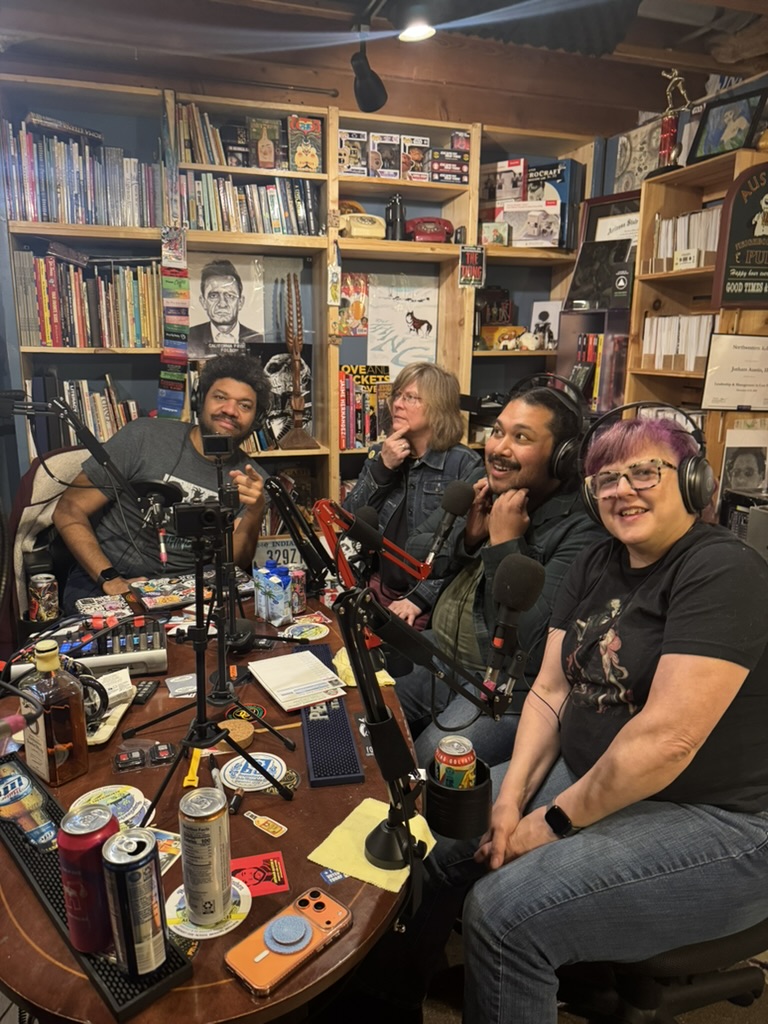
joe: [00:00:00] Hey, welcome back to The Rabbit Hole of Research down here in the Basement Studio for The Mini This here is the mini episode. Last episode we talked about Briar East and urban deforestation.
deforestation.
It was a great conversation with Anne and TJ from the Save the Briar East Woods organization.
georgia: It was very good
nick: Yeah, it was a good episode. I enjoyed this one a lot. I wasn’t expecting us to, go as far as we did with it, and it was just a good conversation altogether
joe: Yeah, it was. Few things just to clean up or things that are mentioned after. So TJ had mentioned the national park ranking of the Dunes National Park, and I wanted to say overall nationally it sits at 13th overall right between the Joshua Tree National Park and [00:01:00] the Hot Springs National Park. East of the Mississippi I think was his comment.
He said thing was the most popular, but actually ranks third most visited park east of the Mississippi River following only the Great Smoky Mountains and the Cuyahoga Valley National Park.
So
nick: I don’t think anyone visits the Smoky Mountains. I think that’s all made up.
joe: I, you know, I’ve actually have visited the Smoky Mountains, so,
nick: Wow,
Joe
joe: So
georgia: And there you have it
joe: There you have it. There you have it, yeah. And beyond its popularity, it’s the fourth most biodiverse national park in, out of all the federal parks, despite its small geographic footprint so
georgia: And for us- Yeah … it’s probably the
closest.
Which is, it is very amazing.
joe: Yep. So,
nick: Pretty often. I thoroughly enjoy going
joe: Yeah. So we had a, a listener from Instagram Denise, sent a comment [00:02:00] and it was in reference to, I had mentioned the project in Seoul, South Korea, where they reestablished a biodiverse area, ’cause they had did a bridge project there, elevated highway. And so o- on the episode I think we said was there any other examples, and actually at the Indiana Dunes,
they
daylighted a creek that had been that had been piped under a parking lot. And so they actually restored it back to nature. So I will put that, a link to that- article and project called Daylighting- And it’s the one that you-
Getting Dunes Creek Out of the Pipe. So yeah.
georgia: and someone let you know. Yep.
about that.
joe: Yep. On Insta, so that was really-
georgia: Well, I th- I’ve,
nick: cool. I like that a lot
joe: Oh, I like that a lot.
georgia: Vote for just, like, let’s not do it in the first place. Yeah,
joe: That would be smart. But
georgia: But-
joe: people need to put their parking
nick: can’t undo what’s already been done. It’s trying now. Like, we don’t need to make a bunch more. We just have to fix up what we already have
joe: Mm-hmm.
And maintain and keep and preserve, right? That’s
georgia: on.
nick: If you’re not gonna maintain it, like why am I gonna, like, buy you a [00:03:00] new one?
If you’re gonna keep breaking it and not fixing it, well, I’m not gonna pay for a new one.
No.
joe: Not paying for a new one. The other thing in the episode I didn’t mention, and I did, I thought about it a little bit afterwards, was the environmental, animal environmental movies of the ’70s. You know, things like
georgia: Frogs, yeah
joe: of the Gods, Day of the Animals, Night of the Lepus.
nick: Still talk about frogs?
georgia: And you think
about
that, you think about that in
relation- The frogs
in relationship to the great scientist R- Rachel Carson. And how big of impact- … like her work had. Right. And then you did have these movies, and that was a big concern. So yeah, that’s really
interesting. Yeah.
joe: upon how the, , protectors usually get villainized all in the name of protection.
So here you actually had the animals rising up and defending themselves- Yeah … as the
georgia: for good reason, that they were having … Yeah
joe: Yep.
nick: I actually saw a movie [00:04:00] recently that was Hoppers that had a lot to do with the environment
georgia: oh, I haven’t seen that yet. I want to see that. Did you enjoy that?
nick: it. We enjoyed it.
georgia: Oh, nice. I really wanna see that
nick: Yeah, it was very environmental forward
joe: Yeah, that’s really cool. But yeah, so that was it with the episode, I think what I got in comments that I saw from it. So thank you for everyone for listening and commenting.
nick: And please support them in their cause
georgia: Right.
Definitely.
joe: Go check out their website. We’ll put the, the links will be on, in the newsletter.
If you’re not subscribed on Substack newsletter. Gets emailed to you every episode. Lot of fun facts and extras
nick: I I think we do have to move on to some old stuff that– old news that we have to do now
joe: Yes, we will. I’m a trying to clear a little business before we get to what I think you wanna talk about.
nick: I don’t wanna clear business. I wanna talk about Spider-Man.
joe: a, I’m gonna give a little listener shout out to [00:05:00] Alex. Alex, he he had a 101-word story published recently. And so we’ll have that link up there for y’all to check that out.
Mm-hmm. So we like to…
nick: Congratulations, Alex
joe: our listeners and stuff, you got good things going on, let us know. We’ll put a little plug in for you. But yeah, we’ll have the link on the newsletter, so check it out.
georgia: Very awesome.
joe: yeah, so all right. That’s all I have. I don’t know, Nick, anything you wanna talk about?
georgia: No, Nick doesn’t have anything to talk about.
joe: So I feel like this goes into movie holes.
georgia: Yeah.
nick: I have Spider-Man. All I have is Spider-Man, Joe.
joe: That’s the movie
nick: talk about Spider-Man now. Is
joe: You wanna do our Science Holes then kind of finish , a- all the
nick: All right, fine. Let’s do s- Science Holes first, and then we’ll talk Spider-Man. Geez Louise.
joe: We’ll rush through it, yeah.
georgia: only reason Nick stayed up
joe: I know yeah. Get everyone excited. All right let’s go. We won’t do the Science Holes jingle or any of that.
georgia: stuff. Aw. [00:06:00] Okay?
joe: Okay. Science Holes, we’re going down the science holes today. There you go.
georgia: Oh,
nick: Look at that hole. It’s a science hole.
georgia: You know what? I’m gonna forego my Science Hole tonight. So I have, like, three interesting things and we don’t, we’re not gonna spend probably a lot of time on them. But one was about terraforming Mars. So it’s this idea that going to a planet and making the environment more habitable for humans.
joe: And so there’s this kind of idea that you can do this and, there’s a lot of different ideas. But one of the fun things this game came out where you can practice or try your hand at trying different things to terraform Mars. And so kind of different strategies and things that you can try to do to make the planet more Earth-like.
georgia: Yeah
or is
nick: name of the game is?
joe: you can
georgia: it- Yeah, on a website.
joe: on a website, yeah. We’ll have the link there.
georgia: Oh, nice
joe: and you can go and
georgia: you can go- Kind of reminds me of …Do [00:07:00] you remember-
nick: game
joe: It’s called Now You Too Can Try Your Hand at Terraforming.
georgia: That is a long title.
joe: know it.
nick: This is a terrible name to that. They really do, need some better marketing
joe: let me-
georgia: Maybe that’s just
joe: Joe Joe being at Ross.
georgia: I was gonna say that reminds me
joe: of- Yeah. That’s, can you tr- terraform Mars is what comes up when you go to… I just clicked the link to make sure, but that was- Okay … yeah,
georgia: And who’s doing this game? Does it say? Like- It
joe: was on Nature.
georgia: And I’m wondering if they’re gonna use some of the information like, “Ooh, that’s a
good idea.” No, it’s- And then- …it’s,
joe: like, kinda Nature the scientific magazine publication. They just consulted with scientists about how to develop different things, and so this is
georgia: so it’s kind of- So is it the kind of thing you pick one thing and they
say- Exactly …
“Whoo, that one works so good.”
joe: Oregon Trail.
georgia: But you know what it reminds me of? Working through? No. When we’re at the museum, and I’m trying to remember.
Was it the [00:08:00] MSI or which museum?
But they do have that, and it’s kind of fun. Like, you do answer
all those- Climate change or- Yeah …something like that? Yeah.
And then it tells you the results at the end. Mm-hmm. And yeah. Yeah. Now you can do it at the comfort of your home.
joe: can. About terraforming Mars.
georgia: True
joe: You know, and
nick: All right. I’m actually looking at the game now. It
joe: Do you have the link? I didn’t even…
Well, okay.
georgia: he Googled
joe: it. Oh, I guess he Googled
nick: I did do it. I
joe: All right. While you’re looking at it and playing around with it, which is, it’s in- interesting, give it a chance.
georgia: Okay.
nick: So much reading.
georgia: are we on number two?
joe: Number two I got three, three quick science holes.
georgia: Okay.
joe: other one was that it was interesting that sperm whales in the Mediterranean Sea seem to have developed their own dialect of their species’ primary social vocalization.
So they have different clicks and pauses, and so they analyzed, 20 years of audio recordings [00:09:00] and found that they have different patterns and, , the whales that were near Greece had different faster versions of the pattern than do whales around the Balearic Islands between Gibraltar and Italy.
So these different groups, they have their own kind of communication within the larger kind of clicks and pauses. So really interesting-
that they’re, you know, these are intelligent
georgia: a development of language
joe: that they have, and they can have different dialects and different, , as they group together, and I think some of this was,
in some recent things that the seismic surveys that they use for looking for deposits of fossil fuels and stuff, that these surveys can damage the hearing of the whales and dolphins and cause stress.
So it was like they had their own language, showing that
these, you these animals are intelligent and, we should, try to protect them.
nick: So cool. Like, to think that whales just talk to each other, like,
georgia: Yeah
nick: in different
[00:10:00] accents.
joe: Right. Right.
nick: I wonder what their Southern accent sounds like.
joe: Yeah, that’s right.
nick: I didn’t wanna do a fake Southern accent with whales ’cause
joe: Yeah, there it is.
Okay
nick: where to begin with that
one
georgia: you know, what’s her name from Finding Nemo? She could talk whale language. She
joe: talk whale. Yeah, what was her name? Oh, I can’t remember now.
nick: Okay.
georgia: Dory, duh. Yes. Moving along to
joe: to my third little
it caught my eye- Okay,
georgia: we’re on the third … because the
joe: and it was Are These Rocks or Are They Garbage? And one of the things is what exactly is a rock? Mm-hmm. And how do you define a rock? And, it must be hard. Does it have to be a certain size? Mm-hmm. Do they have to be natural?
And this idea came because they were in, in this kind of seaside town in England, and they found things that you would go, “This is a rock,” but really it turned out that they were like slag from a long-defunct iron and steelworks that [00:11:00] had now become over time, over the last 100 years, become something that’s more rock-like.
And so this, this article is really interesting as it went through and going and seeing things, plaster and building materials- … pottery materials, things like
georgia: Automotive paint.
joe: That, that now can look like rocks and things like that. And if you’re a geologist, is this now, is it a study of what’s there?
And, geologists in the future looking back, will they see our, waste that’s now incorporated into the environment that’s still natural? A lot these products are natural things. They were minerals. They were things that we’ve taken as humans, made it into different products, and now the waste of that is becoming part of the geological record.
So really it was interesting, so.
nick: Interesting. So
joe: Yeah, yep
nick: I, I– Does it look like every other rock
or
joe: it, yeah. Some of it does. Like, you look at it they have some pictures
nick: I feel like if you look at a rock, you can be like, “Yeah, that’s a rock.”[00:12:00]
joe: Yeah, no, it’s really
cool. You look at the pictures of what they had and-
georgia: many different kinds
joe: You know. yep
Yep
georgia: think maybe Nick might have to li-
joe: take a look at the pictures
georgia: he’ll have to lick some of
joe: Maybe you have to lick some of them You have to lick some of the rocks and see what happens
nick: Olmec rocks
joe: So like, yeah. So this is like- And tell us if it- … like a little
georgia: them. Yeah, lick some of the rocks and see what happens. Yeah, so yeah. This was like- And tell us if it’s like… Oh, wow … plaster. And so- That’s really cool … the
joe: was really cool ’cause so many images you look at and you go, “Oh yeah, that looks like a pebble or a piece of plaster.” And now it looks like kind of the rocks in this little cut out of Earth that they had.
Yeah just really kind of a neat,
georgia: Well, it is an artifact of our time,
joe: It is a hard fact that we’re putting. Indeed. Indeed. So yeah, those are three, that’s kind of quick ones. They’re just
georgia: fascinating- Nothing in depth
joe: right? Yeah. No, I think science is always cool and fun, and , I just find these things just caught my eye as interesting, ?
georgia: so
nick: I– mine is not a science thing, but it is a PSA to science. [00:13:00] I was reading an article earlier that is some labs in the UK are facing closure soon if they don’t get their funding,
And it is a laser facility and a particle accelerator, and I– they need forty-two million in funding, and it is just like a shame that if they don’t get it, like these…
joe: Yeah
nick: I mean, these places that break through in science, it will go under, something fun to see. Like, these are people’s lives, livelihood, and stuff that bring everything that we run and use to new heights and new research and I don’t know. I just think that pe- we need to you know, start being a little bit more science-focused when we’re looking at who we’re voting for and what we’re doing with our [00:14:00] tax money.
Like,
joe: Yeah, no, that’s
nick: I just want people to be more aware of what’s going on, and yes, it’s gonna be a little bit more in the political field, but this take pertains to our everyday lives
joe: Yeah, I know folks whose projects have been put on hold or funding removed or just waiting for, the funding to come through. So there’s folks in those labs whose research now have stopped, paused. They’re looking for new jobs or… You stop research, it’s hard to pick it back up if you dismantle it
georgia: in
joe: in such a way, so fragment it.
georgia: th- I
nick: And plus, if you start defunding things that the, the scientists use, you’re gonna create a super villain.
So stop it.
joe: that’s gonna
go…
nick: This is how they get
started.
joe: Or a- and not even just funding, but, you know, there, there was legislation where political kind of administrative folks would [00:15:00] actually get the final say on funding. So you would have a review
georgia: that has no idea
joe: my God. No idea
they say, you know, they could give their review of the, the science, and then that still has to be approved by someone who is affiliated in the administration to say, “Oh, yeah, you can give money,” or, “You can’t,” or you have to check in with them
if you
georgia: Wasn’t there- … grants or
joe: things like that.
georgia: remember you talking about something about, was it a fruit fly study?
And they’re like, “Why would you wanna study fruit flies?” And then-
joe: you wanna study fruit flies?” And then- When I was touring, that was way back in the Sarah Palin. She was talking about research on autism, and they were using fru- fruit flies as a model system to study some genetic aspect of that.
And, she was making fun of that and just not understanding that, you test some of these genetic models is with a another model organism that has a similar genetic system like humans.
georgia: Like, Right,
joe: it’s kind of this you know, so you find cell cultures or,
georgia: So you’re not understanding- Exactly … how basic research works,
joe: Yeah. [00:16:00] Yeah. Yeah. Yeah.
nick: Yeah.
I, I just, you
joe: to do, is to educate people
nick: I know that everyone that listens to
us is already a supporter of science,
but, just make sure it seeps into your everyday life. Like, let the science flow.
joe: Yeah. Let it flow and, you know, just ask questions about it and be curious about the world around us. So we need more of that. That’s what we’re here for. Like our friendly neighborhood Spider-Man
nick: So question, should we go straight into the Spider-Man talk or should we do our what media we’ve
consumed
first and then do the very end?
joe: It’s Spider-Man. No, n- what else we gonna talk about? No the people here listening to the Media Hole, that’s all they wanna care about. I don’t think, you know, everything else we can hold till next week or two weeks from now. But yeah, so that’s
nick: don’t wanna hear any kind of spoilers, I’d say end it now. Come back after you’ve seen it.
joe: I think
nick: There might be a slip.
joe: Yeah. Yep.
nick: we might have a slip. We’re gonna try to keep [00:17:00] spoiler-free, but
joe: No
nick: holy shit
joe: Yeah I must say it was probably one of the best Spider-Man movies made, and probably top five MCU movie. That’s my,
nick: It is the most Spider-Man, Spider-Man movie they have. Like, he felt
joe: Yep.
nick: very that comic book accurate completely
where,
joe: And I’m coming at it from a entirely storytelling perspective. I thought the story that they told was solid.
It’s like one of those stories… Black Panther, it was just a solid story that, you put superhero aside, it just… it checked all the boxes,
georgia: you know what?
It… Using, like, the technology of, like,
joe: the technology of, like,
georgia: I don’t even know, like the CGI or, you know. But those scenes, like especially those opening scenes- Mm-hmm … with those buildings, I mean, it truly is, like, movie [00:18:00] magic, ? And I think in some ways, like, and I feel this too, like you were feeling really down on, like, technology in some ways, but this is one area where you can say, “I really appreciate the advances in technology.”
You know what I mean?
joe: Yeah, and
nick: Oh, yeah. The filmmaking of this was fantastic. They shot it so well.
joe: Yeah. The angles, and we saw it in the real 3D, and so it was those opening shots were just- Oh … you got a little vertigo. I was like, “Whoa, I’m getting a little nauseous here,” you know? So- But they- Yeah,
georgia: but yet those effects were amazing- Yeah, they were amazing … but they didn’t overpower the story. That’s right. That’s right.
They didn’t. So that, that happens a lot. Like, you’ll have these amazing effects and sets, but then the story doesn’t live up to it. But in this one, the story lived up-
joe: there, yeah. And I- With the- I think from that story perspective, one of the things that were striking, and it took me a little bit afterwards, I was [00:19:00] thinking about what was…
It was the most movies can’t do this, but there was a lot of interiority- Mm-hmm … of the character. It’s almost novel-esque, like, you know, where you’re reading a novel and you get that kind of inside the brain of the character and what they’re thinking. In movies, you usually don’t have that. It’s usually done through dialogue and action on the screen.
But here, you had that, and like you said, very comic book forward, ’cause that’s something in the comic books that happens a lot. You’re getting Peter’s internal kind of feelings on the page and that, that was really it came
nick: They blew it out of the water. A hundred percent love the way they wr- wrote him.
joe: And I will say that our, if you listen to our three-part series we had a lot of, we had a lot of good gems in there.
Like, we were, you
nick: I needed to treat a job
joe: yeah, you know, just not knowing anything going in yeah.
nick: Not knowing the trailers I think I did pretty good on some of my predictions.
joe: And even the, and the, and we had got into the whole [00:20:00] psychology of, Spider-Man and his motivations and things like that, and that, that really came through.
Yeah, I was watching, I was like, “Whoa, hold on. We kinda touched on that and we talked about that. We dipped in there.” And , I will say I had to like, you know, there’s some handwavium. You know, my handwavium sensors were tingling in there with the silencing of transcription factors, the universal gene quieting thing.
I thought that was a little much. And-
nick: I mean, it is very comic
book, like I said, it’s a comic book thing
through and through where
georgia: Here, just put this thing- So I thought they should have
joe: Here, just
georgia: epigenetics, because we talk about that in Rabbit Hole of Research
joe: put this thing- So I thought they should have mentioned epigenetics ’cause we talk about that on Rabble the Research a lot. It’s kind of factors that can upregulate or downregulate genes without changing the gene. So we’ve kind of… And CRISPR technology is coming online, so people, listeners of The Minis probably have heard us talk about that.
But when they were talking about that, I was like, “Oh, that’s what they’re, that’s what they’re attempting [00:21:00] to do.” But this the way they were doing it, it’s a little, it was a little strange. But
nick: It’s okay, Myro. Go ahead and reach out to us. We will be more than glad to talk science with you.
joe: Yeah. So but you just, turn your brain off for a few minutes when they go through that. Like but I can see what they’re setting up. They’re trying to set up probably for other mutants in this universe that you know,
nick: Oh, 100%. He’s doing what Tony Stark did, creating the villains,
joe: Yep.
nick: and it’s– he’s gonna try to fix them.
joe: Yep, that’s what
nick: And I do feel like he will be a big part of the X-Men series moving forward. Like,
joe: Yep. I
nick: he’s gonna be seen a lot
more
georgia: were saying, Georgia? Oh, I’m sorry. It’s not really relate… I mean, it’s not exactly related to the science and the DNA.
joe: mean, I,
georgia: But I was gonna say one of my favorite parts is The Punisher. Yes. Oh my God,
joe: Yeah, that
nick: Oh, their chemistry
georgia: Oh, I love it.
joe: Yep. What’s [00:22:00] in, in, in the comic, there’s a lot of comic runs where they have that same banter and playfulness, like, you know, ’cause you have that serious edge of The Punisher, and then you got the witty sarcastic, , Spider-Man. And
georgia: And you see a little soft side of The Punisher.
joe: yep, yep,
georgia: Yeah. Yeah. Yeah.
So,
joe: yeah
nick: and s- seeing this Punisher versus the Punisher in the shows how well Peter is with the Punisher over Daredevil.
Like,
joe: Yes
nick: guilt-driven, and he makes everyone else guilty along with him. Where Peter is like, “No, you can do better. Don’t worry. Like, just do better.”
georgia: Yeah, he’s kind of the
joe: a
nick: He wants you…
He’s trying to be your friend while talking all the smack with you. And I think that’s where, that’s why Punisher has a better repertoire with Peter than he does with Matt.
joe: Yeah. [00:23:00] Yeah
nick: yeah I thought they did a fantastic job. I, I do have a qualm with the new Black Widow calling Peter small
potatoes.
joe: Yes. Yes, that was funny.
nick: That one irked me a little bit. I’m like, “He has fought so much more than you and much bigger enemies.”
joe: Yes.
georgia: Yeah,
And obviously it was not- It
joe: small potat- …Yeah. Yep. No, that’s … It was
a nod
georgia: added a little, you know.
joe: Yeah. You go visit and you can take it up in the office,
georgia: then.
joe: You know. And then the, quote-unquote villain, I think that’s, I’m not gonna mention any names, but yeah, they did a great job. That was a nice
nick: I thought the Vmax twist was fantastic.
joe: Yes. Oh, yeah. Oh, that was … Yeah. Mm-hmm.
nick: I love that. It
joe: Yeah. It was
nick: so point on for me that I was like, [00:24:00] “This is great.” It… Oh, loved it
joe: Yeah, go, if you haven’t seen it, go see it. It’s it’s worth a watch or go see it, like, four times like Nick. I don’t know. What are you up
nick: I’ve seen it twice.
joe: Oh, I thought you were… I thought you got four times. I
georgia: was gonna say
joe: it a couple other times. All
nick: Not yet. I do
plan on seeing it again
joe: You just go for it. That’s what I’m telling people. I
nick: it was my
daughter’s
joe: it.”
nick: first film, and she absolutely loved it. Ah. did you get any of the specialty popcorn buckets?
joe: I did not, no. No
georgia: Did you?
nick: I did. I spent $50 on the popcorn bucket of his hand shooting the web and there’s a drink in it, and my little one loved it. She filled it up. She was drinking out of it the entire film. She…
Yeah,
joe: No, I didn’t. We just… We had popcorn, [00:25:00] but, and a drink, but that was,
georgia: Just a- Nothing special.
joe: nothing special, no. Yeah. No.
nick: I can’t believe you guys didn’t go
full on to see that the theater was filled. I think every- Yeah, every seat was filled … seat, yeah … So it’s always good to see folks out supporting a movie.
joe: I think it was the, one of the fastest to hit a billion dollars. So it did well in, in the first, yeah. That I think, yeah. Yep, so really good. It was a really good movie. I… Really good story. Go check it out. Like, even if you’re not a big Spider-Man fan or s- a superhero fan it’s worth the watch.
I think you would really enjoy it, so, mm-hmm, mm-hmm.
nick: Now, did you think it was targeting depression and anxiety? Or wh- where did you think it was targeting for Peter?
georgia: I’m not sure if I
nick: Because he’s going through big changes and did you think it was more anxiety or depression based?
joe: Yeah I mean, I would go-
georgia: he was grieving a
loss
joe: and, lonely. I think [00:26:00] just loneliness was it, like isolating. Maybe it’s a reflection of our day where you just, you isolate yourself and you’re just online. You don’t really interact with anyone. Personal interaction, so not digital.
You know, you might text or call, but face-to-face interaction and sharing your ups and your downs, I think that’s what, that, that’s what was on him. So yeah, a little probably depression, but probably depression caused by loneliness and that just trying to hold it all in and not share or, you know, a kind of
georgia: he obviously had anxiety over the situation
joe: But I think, yeah, I think
nick: think the heightening of his senses really just hit on, like, an anxiety attack.
joe: Yeah. Mm-hmm.
nick: coming from someone that has anxiety and has,
georgia: I think both…
nick: gone through an attack of it where it’s just like
georgia: Yeah, I
nick: every– you notice everything. You have a little mental breakdown, and then you try to get your shit back together.
georgia: I think there was moments of both of
nick: Yeah, [00:27:00] 100%.
georgia: Yeah,
joe: Mm-hmm
nick: And, all right, one last thing I wanna talk about, like, on that subject
of mental instability was when he was swinging in the rain and there was that second of him not shooting another line of web and he just started falling. You’re like,
“Oh, that, that was hit, man.”
joe: Yeah. Yeah
nick: I can talk about this movie for another two hours.
georgia: I think that Marvel has done a really good job of that. I mean, because I’m thinking of the other movie the
joe: Force. Thunderbolts,
georgia: and I think that movie really brought in a lot about mental health and I think this and it’s also in quite a few other, and I think that’s really it. That is something.
It’s funny because it’s like a superhero movie, but it puts it in such a more human
joe: Yeah … way.
nick: Yeah, mean, superhe-
super- superheroes [00:28:00] they, the comic books are s- so human-based, and that’s why it felt like a true comic book movie
Like, even with the cameos of all the other heroes, because it is a living world for them, and you get all these other people coming through and because they exist. Yeah, it just hit so many things for me.
joe: No, I thought, yes.
georgia: Yeah,
joe: It was good. Now I gotta get back out and see it again.
nick: Yeah. You wanna go? We’ll go.
joe: Yeah, sure. Yep. Mm-hmm. I’m in
always
I think that’s, we’ll wrap it up here. That’s,
georgia: yeah.
joe: And
nick: And as always, thank you for listening. Thank you for supporting us. Tell your friends,
georgia: Oh, yeah. And if you can give like a rating, those are like super big, right? Yeah.
joe: We’re one– We’re almost 100 subscribers on YouTube. I, you know, so
kind of- Wow … [00:29:00] nice.
Like, for not having video, just a podcast- Yeah … it’s
georgia: like,
joe: oh, there it is. So I don’t know. I don’t know if that’s something special there, but well, okay.
With that
you have me, Joe.
nick: Yeganeh
georgia: Joe.
joe: Got Nick.
And Georgia.
And we got Georgia
nick: we went down some mini holes
georgia: Stay safe,
joe: stay curious. Go see Spider-Man.
nick: Bye-bye.
