Newsletter and Transcript of Rabbit Hole of Research Episode 82: Data Centers

Are We Really Blowing Up the Planet for AI Slop and Porn?

Substack, Apple, Spotify, YouTube, Amazon

Episode 82 Transcript


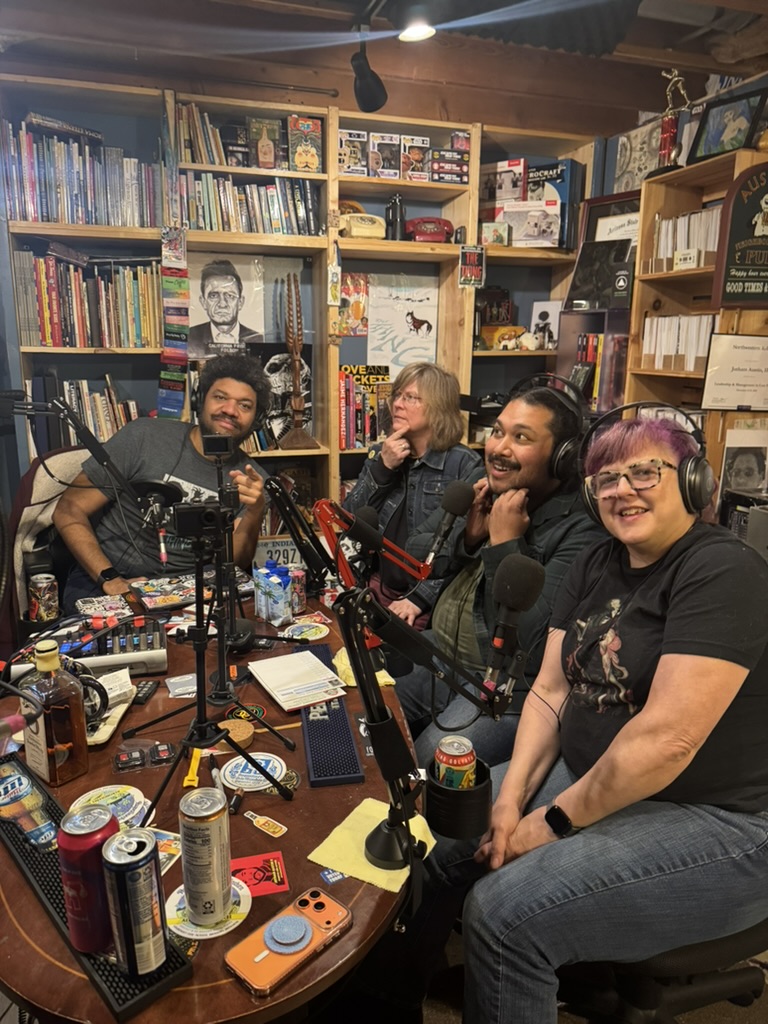
In Episode 82 of Rabbit Hole of Research, Joe, Nick, Georgia, and Mary welcome back three-time returning guest (previously on Episodes 13 and 39) and “Friend of the Pod”, David Pincus, PhD, cell biologist at the University of Chicago, to the Basement Studio to talk data centers.

We dig into the water costs, why your electric bill is going up, whether space-based cooling is science or Handwavium, what cellular stress can teach us about AI resource allocation, should we use human values or cell behavior to guide AI training, and is there anything good that will come out of these Data Centers. And it wouldn’t be an episode with David if we didn’t go down all the unexpected rabbit holes, we talk lobster farms, “data furnace”, olympic swimming pools, and of course, Extremophiles! 


Previous Episodes with David:

Episode 13: Blockbusters and Frozen Landscapes: Climate Change Through the Lens of Pop Culture

Listen nowEP 39: Fantastic 4 series: Johnny Storm and Spontaneous Combustion


Georgia and Joe will be hanging out at DragonCon, September 3-7, 2026, if you are in Atlanta come on out and say hello (I’m sure we will be hanging out in the Westin Lobby)! And Joe will be on seven panels.


Georgia and Jim’s Touch of Noir 2027 Wall Calendar —

12 months of all-original art by Jim and Georgia; orders are open now, with mailing expected in September


Check out what the RHR crew is creating:

Joe:


Future Events to Hang with the Crew:

Podcast Cross-Appearances

Events & Conventions:

Joe:

It’s Science for Weirdos

Want to support the show? Tell your friends. Follow us on social media, Discord, share the podcast, and let us know what topics you are excited about. Leave a Comment. And for email alerts sign-up for the Substack newsletter and never miss an episode, exciting updates or the bonus images we talk about on the episodes. 


We discussed these questions on the episode and now want to Hear From You (leave a comment):

  • Would you want a data center in your neighborhood? What would they have to offer to make it worth it?
  • Should we train AI with human values or cellular values?
  • What, if anything, would you like to see AI used for? Are you optimistic that we will get there?

Drop your thoughts in the comments. We read them all, and your ideas often shape future episodes.

Leave a comment


Future Episodes

  • Episode 84: ETGuest: Chris Guzman (@theboxinggloveartist)
  • Episode 86: Disability in HorrorGuest: Grace Daly (Bram Stoker nominee)
  • Episode 88: CraziesRecorded at Reed’s Local with Melissa and Luc
  • Episode 90: Witch PleaseGuest: Bill Halliar (@skeletongue)

Share

Leave a comment

For more stuff (Images, Episode Highlights, events, etc), subscribe to our Substack newsletter!


Show Notes & Fun facts 

Stuff crew said they’d put in shownotes


Books:

  • The Machine Stops — E.M. Forster (1909) short story
  • The Last Question — Isaac Asimov (1956) short story
  • The Hitchhiker’s Guide to the Galaxy — Douglas Adams
  • So Long and Thanks for All the Fish — Douglas Adams
  • The Emperor of All Maladies — Siddhartha Mukherjee

Fun Facts to Impress Your Friends With:

  1. The human brain runs on about 20 watts — roughly the equivalent of a dim light bulb, or as David put it, a sandwich. A modern AI data center GPU cluster runs on hundreds of megawatts. That’s the efficiency gap that needs to be closed.
  2. The ISS uses radiator panels the size of a tennis court to cool roughly 70-80 kilowatts of heat load. Dumping just 1 megawatt of waste heat in space requires approximately 1,200 square meters of perfect radiator panels, and a modern GPU cluster generates hundreds of megawatts.
  3. Ireland’s data centers consume about 21% of the national electricity supply— and data center energy demand globally has grown ~12% per year since 2017, and projected to equal Japan’s entire electricity consumption by 2030.
  4. Evaporative cooling loses up to 85% of its water to the atmosphere — it doesn’t go back into the water table. The Tempe Town Lake in Arizona evaporates between 390 million and 650 million gallons of water a year that never return to the Colorado River.
  5. The Jevons Paradox — coined by 1860s steam engine engineer William Stanley Jevons found that making steam engines more efficient actually increased total energy use, and the same pattern may apply to AI efficiency gains today.

Episode Highlights

  • 00:00 Basement Roll Call — Full house in the basement studio, almost, David has a legit excuse, “car ownership is a debated thing in families.”01:57 Meet David Pincus — Three-time returning guest and Friend of the Pod, David Pincus, PhD, UChicago cell biologist and expert in cellular adaptation04:19 What The Cloud Is — Joe delivers the monologue: the cloud isn’t wispy and floating, it’s “a giant space heater that computes.”08:28 Energy Demand Surge — Data centers have grown 12% per year since 2017, Ireland uses 21% of national electricity on data centers, and one proposed AI complex would use as much power as the city of Houston.14:52 AI Hype And Jobs — David calls out the circular investment logic: “If they’re really as good as they say they are, they should prove it by not ruining the Earth.”19:11 Curtailment And Duck Curve — Joe explains how AI could modulate its own power use to absorb wasted renewable energy during off-peak hours, turning a climate problem into a climate solution.22:02 Jevons Paradox Explained — David drops the Jevons Paradox: the 1860s discovery that making steam engines more efficient actually increased total energy use — and AI may be no different.23:41 Space Data Centers Reality — Space is cold, but that doesn’t mean cooling is free; in a vacuum, heat can only leave as radiation, requiring radiator panels the size of a small town.25:01 Does Deleting Data Help — Georgia wonders if mass email deletion would make a dent; David suggests she “Marie Kondo her inbox.”30:41 Water Use Headlines — David breaks down the scary headline number: about 80% of reported data center water use is actually from generating the electricity, not the cooling itself.32:41 Cooling Methods Breakdown — Joe walks through the three approaches: evaporative cooling (water-heavy), air conditioning (energy-heavy), and liquid immersion cooling (the newer, more efficient option).38:57 Local Politics And Promises — Mary reports from the front lines on CoreWeave’s Hammond, Indiana proposal: “They’re promising birthday parties, ice cream, and pony rides.”43:20 Promises Meet Reality — The crew debates whether data center companies will ever actually deliver on community promises, or just take the tax breaks and run.43:58 Turning Heat Into Benefits — Joe’s fun list: Microsoft’s 2011 “data furnace” concept, Deep Green’s server racks under swimming pools, the Norwegian lobster farm, and the Paris Olympic Aquatic Centre heated by Equinix’s data center.46:25 Cooling Hacks Underground — From Cold War bunkers in Stockholm to SubTropolis in Kansas City to a functioning data center at the South Pole, weird locations already solve the cooling problem.47:37 Taxes And Lax Rules — Data centers go where regulations are lax; Mary asks why they can’t just be taxed like everyone else.50:09 Military AI And Nuclear Power — David raises the military’s 50-year data center leases; Joe brings up Three Mile Island — now rebranded the “Crane Clean Energy Center” — being restarted to feed AI.53:46 Petty AI Complaints — New segment: Mary does not need AI to summarize her coloring sheets, and Georgia’s voice-to-text still can’t get it right.55:34 Sci-Fi Warnings And Jokes — Joe highlights The Machine Stops (1909) and The Last Question (1956); David adds The Hitchhiker’s Guide to the Galaxy — the answer to everything is 42.57:23 Cells, Budgets, And AI Hunger — David draws the key parallel: stressed cells always slow down and budget their resources — AI systems have no such constraint, and the cost is being passed onto us and the planet.01:00:48 Raising AI With Values — David shares Siddhartha Mukherjee’s NYT essay: training AI is like raising a child — you can only hope you sent it into the world with good values.01:07:46 Regulation And Real Benefits — The crew revisits the Industrial Revolution: you can have regulation and growth at the same time, and we already know what happens when you don’t.01:10:33 Freemium Traps And Libraries — The freemium model is coming for AI just like it came for streaming; Mary and Georgia remind everyone that Kanopy and Hoopla are free with your library card.01:14:12 Wrap Up And Hopeful Outlook — David closes on a hopeful note: “If we can let the science lead, that’s going to help humanity”

“Stay curious, stay safe… Love Y’all!”


Join Rabbit Hole of Research on Discord: https://discord.gg/2nnmKgguFV

Subscribe and Share our Substack newsletter to get email updates, never miss an episode, and spread the word!! Don’t forget to give us 5 stars or a like!


Transcript

[00:00:00] joe: Hey, welcome back to the Rabbit Hole of Research down here in the basement studio. We are all crewed up

[00:00:10] Geo: Full house.

[00:00:11] joe: house … full house. Well, almost everyone’s in the basement

[00:00:14] Nick: someone was supposed to be in the- basement studio,

[00:00:16] joe: yeah, but the wife stole the car- … or

[00:00:18] David: car ownership is a debated thing in families

[00:00:23] joe: So yeah, you got me, Joe.

[00:00:24] Nick: got Nick.

[00:00:25] joe: got Nick.

Georgia. We got Georgia.

[00:00:27] Mary: You got Mary.

[00:00:28] joe: got Mary, and we have

[00:00:30] Nick: Three-time returning

[00:00:33] joe: returning. Choo,

[00:00:33] David: Returning guest, longtime listener, third time guest

[00:00:38] Geo: We’ve

[00:00:38] joe: got

[00:00:39] David: David

Pincus Yeah. It’s great to be back

[00:00:42] Geo: And we w- we wanted to know, Is this the first, third time guest?

[00:00:47] Nick: Is he the three-timer club? ‘

[00:00:49] David: always your first third time

[00:00:51] Mary: three- …the

[00:00:53] joe: club, but I don’t know if you’re the first

[00:00:55] Geo: I can’t-

remember

if there’s been anyone else.

[00:00:58] joe: It’s like Bill Hallier’s [00:01:00] been

on

[00:01:00] Geo: I think he’s only been on twice.

[00:01:03] joe: Oh, I think he’s only been on

[00:01:04] Geo: Anyway, we’ll

[00:01:04] David: I’m

gonna, I’m gonna claim it whether or not it’s

[00:01:07] Geo: We’ll, we’re gonna do-

We’re gonna do some research.

[00:01:10] joe: gonna

do some research. Go down a rabbit hole of research. We’ll do

[00:01:13] David: you say this makes me a friend of the pod?

[00:01:15] Geo: wondering-

[00:01:16] joe: that’s right. That’s right. And, and for those wondering- Sure … that wanna go

back, you were on episode 13, so our first season. So you were here before we were here. Like, you’re

our-

[00:01:27] Nick: was Georgia on that episode?

[00:01:28] Geo: No.

[00:01:29] joe: No.

[00:01:29] Nick: Oh. that was Even before Georgia. jumped back on.

[00:01:32] joe: a day one-er,

[00:01:32] Nick: a day one.

[00:01:34] joe: down

with, the crew.

[00:01:35] Geo: that was a very enjoyable. episode, I remember. And

[00:01:38] joe: then

we had episode 39, Johnny Storm, so that was from the Fantastic Four series.

[00:01:43] Nick: that Last year … that was last Last season

[00:01:45] joe: two, so yeah.

[00:01:46] Nick: Damn, all three seasons. yeah,

[00:01:48] joe: been on, you’ve episode every season,

so yeah.

[00:01:52] David: alive

[00:01:53] joe: yeah. I mean, that’s that’s it, so well, cool. Well, we’re here. Do you wanna give your credentials [00:02:00] just in case someone hasn’t listened to one of the other two

[00:02:02] David: Yeah, of course. Sure, yeah. So I’m a scientist. I’m a researcher at the University of Chicago. I probably shouldn’t say where I’m from, but I spilled the beans

again.

[00:02:11] joe: do that every episode you do that.

So, it’s all right. You can, I think they can Google your name and it’ll

[00:02:16] David: yeah, It’s, true. It’s, It’s, not much of a secret. But I’m a colleague of Joe’s in the and we’re both biologists, cell biologists. I’m an expert in cellular adaptation, how cells cope with stress. Stress to a cell is any change in the environment change in temperature, pH, nutrients. You name it, if it changes, the cell has to adjust to it and roll up their sleeves and adapt. So we study the… You know, cells don’t have brains, but they still have feedback networks and metabolic pathways that ensure that they’re doing the best with what they have at any given moment, and we try to figure out the rules of the game for that.

[00:02:56] joe: Yeah. Well, cool. I think it’s gonna be a fun one. You were [00:03:00] on that first season talking about climate change

[00:03:03] Geo: and And didn’t David coin one of our favorite… Not

coin, but-

he-

[00:03:09] joe: Go ahead. Just please

[00:03:10] Geo: What are you- Extremophiles

[00:03:12] Nick: Oh.

Jesus.

[00:03:15] David: Extreme.

[00:03:17] joe: Yes.

I- I don’t know

[00:03:19] Geo: if I’m attributing- that

[00:03:20] joe: was on a, yeah, that was on a, Johnny Storm episode, I believe it was, extremophiles. But in particular we were talking about this episode and we were talking about you returning this season, and data centers came up. So this episode is about climate change and data centers.

So we’ll get into that. But Mary-

[00:03:37] Mary: Well,

I wanna go a little bit in reverse. So you gave your credentials,

but I don’t think

you gave your name. Oh.

[00:03:43] David: Oh.

David Pincus.

[00:03:44] joe: Yeah.

[00:03:44] Mary: there you go. Okay. All

[00:03:45] joe: right. I think he did say his name.

[00:03:47] Mary: Really?

[00:03:47] Nick: I don’t remember. He said that from the top.

[00:03:48] Mary: Yeah,

No, Okay.

Mary

wasn’t

[00:03:50] joe: Mary wasn’t listening.

[00:03:51] Geo: Oh. That’s

[00:03:51] David: Well, just in case you wanna Google me twice.

[00:03:54] joe: Oh. That’s

right.

[00:03:55] Mary: That’s

[00:03:55] joe: They really make sure

[00:03:56] Mary: I

thought… No, I

[00:03:58] joe: of Chicago.

[00:03:58] Mary: j-

[00:03:59] David: Oh,

[00:03:59] Mary: no, [00:04:00] just wanna make sure that, you know, we know who we’re talking

to. So, yeah.

[00:04:03] David: No name handwavium

[00:04:05] Mary: Yes. Yeah. Okay.

[00:04:07] joe: yes. We gotta have that.

Okay.

Well, cool. Well, I do have a little-

[00:04:11] Nick: was gonna say, w- what’s the list look like?

[00:04:14] joe: Well, I have lists,

but I got my little monologue.

Your

[00:04:15] Nick: Your monologue. I got my monologue

[00:04:16] joe: I got my little monologue. I’m coming back. See if I can do it

when

you hear the cloud, what do you picture? A blue sky with white wispy balls of cotton floating by and morphing into shapes of fantastical animals and familiar faces?

Or

do you imagine data zipping around up there somewhere between your phone and the internet, moving around you like digital air?

Here’s

what the cloud actually is. It’s a warehouse, a very large, loud, and hot warehouse, usually in rural areas by waterways or coming to a neighborhood near you, stuffed floor to ceiling with server racks, calculating away 24/7, consuming natural resources to make the latest viral memes, write emails, [00:05:00] or create a self-aware AI.

And fiction has been warning us about this AI for 70 years, but the real villain isn’t going to say, “I’ll be back,” launch nuclear weapons, or use us as a battery. But it’ll just let us boil ourselves in a pot like frogs, killing us slowly with thermodynamics. You know what? Let me look that up because I think there’s a meme for

[00:05:21] Geo: that

Can you Google it?

[00:05:24] Nick: Don’t

worry, I’ll ask ChatGPT

Yeah.

[00:05:28] joe: It’ll make it for us,

[00:05:29] Geo: Wow.

[00:05:30] joe: Yeah, yep. So that’s it. I mean, but yeah

[00:05:34] David: Cloud’s such a fluffy word, you know?

[00:05:36] joe: It is.

It

sounds-

[00:05:37] Geo: so

[00:05:38] David: a euphemism? I didn’t think of it at the time. You know, it seemed like a nice, just a real metaphor for, like,

it’s up there

But now it, with the sort of dark side of all of this stuff, cloud’s sort of taken on a Orwellian kind of tone to it to me

[00:05:56] joe: Right.

I mean, yeah, it the word cloud [00:06:00]

is just not,

you- it’s not here in front of us, right? It’s something that you cannot obtain or see, and it’s all about scaling, right? So you’re scaling something up, and so how do you scale is just having more. And usually when you have more, you want to put it somewhere that’s not in your face, right?

It’s that’s the idea of it. And it’s really just server racks. Just a place, a physical location

[00:06:23] Nick: Mm-hmm That you don’t own

[00:06:24] joe: you don’t own … yeah, that you don’t own, that you don’t see. well,

[00:06:27] David: of sight, out of mind.

[00:06:28] joe: might see it if, depending where you live. But

[00:06:31] David: Increasingly

[00:06:32] joe: so. Yeah. Just a giant space heater that computes.

[00:06:35] Geo: I think of it like, like when we were talking about electricity and you just Turn the light switch on- you don’t think about

well, what,

you know, what-

went on to turn the light

on It’s the

same kind of- Yeah, and

[00:06:47] joe: what powers that? Is it coal? Is it you know, nuclear? Is it solar? Is it wind? Is it hydro? You turn the lights on and you expect,, you expect light.

Like, you don’t… You flick the switch or you plug your plug in, you, you expect it to work, and you [00:07:00] don’t think about the back end. Same thing with, electric cars. You still have to think about if you plug in and it’s your electricity’s from a coal-fired plant, is it– are you probably coming out a little bit better?

Yeah, but you’ve kinda just displaced your thinking about that,

so. You have to change them. Right. That’s right.

[00:07:15] Nick: Like, it’s not a full step ahead. you’re just moving a different lane

[00:07:19] joe: yeah. You’re

[00:07:20] David: I do think that pretty much everybody thinks electricity is good though,

and Has improved the quality of lives, right? And so- the sheer fact of having to gen- you know, use fossil fuels, have environmental impact, of course, that’s not ideal, but at least with the trade-off of generating electricity and having the lights on at night and you know, being able to cook food over, you know, places.

Anyway, there’s a whole bunch of benefits that are obvious for electricity, and I think everyone

[00:07:55] Geo: Correct.

Correct

[00:07:56] David: different

with data centers is every… To a [00:08:00] first approximation, every one of those servers is running porn, right? Like, or like

that

[00:08:06] joe: probably right. That’s

[00:08:07] Geo: Bored.

[00:08:08] David: like, and

like,

or people asking about their own like health or

mental health issues and that’s like sad, but in- interesting.

But anyway, like

it’s AI,

[00:08:18] joe: I

th- yeah, and

[00:08:19] David: and I just don’t think people can agree universally that it’s a good

improvement over

everyone’s

[00:08:26] Nick: of life isn’t being lifted.

[00:08:28] joe: I wanna say also, I know AI is the one of the drivers now of the extra increase, but probably starting, 10 years ago or so, data centers started to ramp up just the devices that we use to stream everything. You guys listen to this podcast.

That is streaming out of a cloud from a data center somewhere. So

[00:08:50] Nick: Wait, are you saying that we’re part of the problem?

[00:08:52] joe: You’re part of the problem Yes, Nick, you

are- He’s the worst … you are

part of the problem,

[00:08:55] Geo: of the problem, Especially you, Nick. No.

[00:08:57] joe: You’re 100%.

[00:08:57] Mary: 100%.

[00:08:59] Nick: sin.

[00:08:59] joe: Yeah, but I [00:09:00] mean, it’s just kind of …data

centers started to ramp up and be built before even AI.

So now we have this onslaught. Yeah, right, and porn and movie

[00:09:09] Geo: streaming- Dancing cat videos

[00:09:11] joe: was part of it. But AI now

[00:09:13] Geo: But AI now has

[00:09:13] joe: accelerated that, where we were seeing some growth, you know, 5% a year maybe, and now we’re starting to escalate that to 10%, you know, growth of energy need consumption. And that’s what we’re now dealing

[00:09:28] Geo: And so because it really feels very recent.

that you hear about every

single town-

[00:09:35] joe: Yeah,

[00:09:36] Geo: is struggling with,

you know- whether they’re gonna put up a data center. It’s like, how did this happen just in the last-

[00:09:44] Nick: Well, what, we had recently a town meeting. Yeah. And it’s hitting closer to home for everyone.

And- Right.

[00:09:51] Geo: So I just think, wow, I mean, it really- is that because… And I don’t

wanna

like just depressing

and

about [00:10:00] politics, but is it because of…

What is it? It’s really because of the demand

with

[00:10:06] joe: wanna, like, just depressing and about politics, but is it because of… I mean, what, what is it? It’s really because of the demand with- On it, yeah. I mean, AI is, like I said, part of it, and we’ve seen an acceleration of growth. But one of the things is that we’re seeing since 2017 we’ve been having about a 12% growth per year for data center energy.

And I think it’s just hitting the news now because if you keep growing, right, no one’s put a cap on it. That’s the problem. It’s like, oh, we’re gonna double by in five years. , hopefully we can hold that line because it could double again in 10 years. And so that’s the issue. As the consumption of, media, of AI, of using that, and,, that you have to build new data centers out.

But there’s a lot of use. I mean, it was already building, so it’s not like last year or a couple years ago when ChatGPT really hit it. That’s when… And the memes and things like that, it was like, “Oh, we need new data centers.” Like I said, probably, , 2015, ’16, ’17, there was a growth already starting to happen, and people [00:11:00] were preparing for that and saying, “How do we get ahead of this?

How do we do something?” So there are people thinking about it, and it… But it’s hit the news now because now it’s coming to a town near you. That’s what’s

changing-

[00:11:11] Geo: town near you.

[00:11:12] joe: right. You’re just hearing it about it more. And, politics have, is very partisan, and so it’s a flashpoint and you can use it,

um-

[00:11:21] Nick: I don’t believe-

that the politicians understand.

it.

[00:11:24] joe: mm-hmm.

[00:11:25] Nick: Like, it’s new technology still to them.

[00:11:27] Geo: Yeah.

[00:11:28] Nick: And they still don’t understand half

The technology that is common in every household nowadays

[00:11:34] joe: And doing just a little bit of research on this, the, one of the extreme cases is like Ireland. Data centers use about 21% of the national, electrical

generation 21% is

[00:11:46] Mary: that’s huge 21%.

[00:11:47] David: Virginia, I know in the US, Virginia has a

huge fraction of its-

total power going to data centers, maybe one in,

one in four or something.

[00:11:56] joe: So

[00:11:56] Nick: yeah, and They also don’t tell you the full amount that they- [00:12:00] are actually gonna use. They say- a lowball number and then- exceed those numbers significantly. Yeah. Yeah,

[00:12:08] joe: I think, it’s gonna be, by 2030 we’ll be using, like, the, what the country of Japan uses, worldwide.

I mean, , we’ll be equaling, that, that level you know, globally as we start to scale up so,

[00:12:23] David: And

[00:12:23] joe: but yeah,

[00:12:23] David: in

terms of

[00:12:24] joe: is… Go ahead

[00:12:25] Geo: raw energy is

[00:12:28] David: in– I think it’s something like you know, this year there are these… The AI companies are all… There’s this– We can probably talk about this a little bit more, but there’s this circular investment

[00:12:41] joe: Mm-hmm.

[00:12:41] David: thing where the NVIDIA chip company that

makes the chips is investing in the AI companies that buy the chips to buy the chips and build the data centers. And then meanwhile, these IPOs they’re raising are gonna raise a bunch of money to build more of these data [00:13:00] centers, and it’s just, you know, it’s gonna be like half a trillion dollars potentially spent in, per year in the next few years just on, on building. And it’s just a Ponzi scheme. I don’t

know what the name is, but it just seems like economically false.

Like, like it’s

built on some kind of, I, I don’t under- it’s scary. But like, one of these super complexes that they’re talking about building would use as much power per year as the city of Houston you know? It’s

like enormous amounts of energy that they’re saying they’re gonna use in these things.

Anyway, sorry

[00:13:41] joe: and yeah, and the problem is that, you know, as you forecast this out, you know, it’s not a new problem. I mean, you can grow the power grid to compensate. The problem is that we’re lagging behind there, so these communities are suffering not because it’s, “Oh, wow, you know, we gotta add… They’re gonna consume this much [00:14:00] power.”

You know, there’s been other times in our history where you had to have c- power consumption, like you’re building ships and things like that, and you got your blast furnaces. That’s a consumption of power. It’s different. But w- we’ve ramped up, and now over the last decades, we’ve ramped down. We’re not doing heavy industrial here in the States, and so our power grid now is at a, some low baseline level.

And now the thing is ramp it up. Let’s go. And so you plug these data centers in now that have great demand with now public demand, and that’s where you’re starting to see the strain out on it.

[00:14:33] Geo: Places have failed to keep up their in- Right

infrastructure.

Infrastructure, yeah. Mm-hmm. yep. And so- Right … it’s-

already failing, and then you’re adding all this other-

[00:14:42] Mary: adding all this other.

[00:14:42] joe: Right.

Yep. And so that’s where the strain then comes in, and communities are like, “Whoa, hold on. We’re having brownouts and blackouts,” and

[00:14:48] David: And people pay more in their electricity bills.

[00:14:51] Geo: A lot more.

[00:14:52] joe: And I wanted to circle around, too, to the point you were talking about, David, about the AI and the hype and the super hype, because some [00:15:00] of it, that is what it is.

Like, there’s our trillion, billionaire, now one’s a trillionaire, hyping up this technology, and consumers are consuming it. But at some point in time, and we’re starting to see this with, ChatGPT, Claude, it’s like, oh, I’m running out of, prompts that I can put in.

They’re hitting limits of that. And so that’s because this costs money, and so at some point in time, they’re gonna go… These are like the tasters. Everyone’s getting a little taste and getting hooked. And then after you’re hooked, then they’re gonna go, “Oh, you know what? Oh, my bad.

That’s gonna cost you 20 bucks. Oh, my bad. If you wanna keep this prompting and impress your friends with your

memes and stuff,” you It’s gonna be… It- it’s kind of on the back end, they’re gonna have to pay for it. Right now, they’re not paying for it. And the investors,

at some point,

the stockholders are gonna go the share- the board is gonna go, “We need to make some money on this, so you know what?

Let’s let’s crank this up.”

[00:15:54] Nick: Aren’t they already

losing money?

[00:15:56] joe: they

already making money? Well, tons of money. Yeah.

It’s, you know, it’s not-

[00:15:59] Mary: With the [00:16:00] promise

that

later-

there’s,

The jewels

Will

rain down. they’re,

[00:16:04] Geo: they’re-

they’re- And then, yeah, and then, oh, this will bring so many jobs.

It’s not gonna bring so many jobs. It’s bringing, like, a couple people to check on the machines. I don’t understand. I don’t understand. that. Like, how

[00:16:16] Mary: like, how many jobs are there in a AI data center after the initial construction?

[00:16:23] Nick: I

wouldn’t say too

[00:16:24] Mary: Are, are- yeah.

I

mean-

[00:16:26] Nick: have a security

[00:16:27] Mary: I was

[00:16:27] joe: was

actually- That’s right.

[00:16:28] Mary: Like, I, I actually don’t know. I

d- I

[00:16:30] Nick: mean, Well- It’s

[00:16:31] Mary: It’s like,

[00:16:31] Geo: Homer

Simpson sitting there watching

[00:16:33] joe: I’m sure there’s there’s gonna be folks

who need to repair things. I’m sure there’s gonna be folks who need to go in and maintenance things.

But it- But

[00:16:40] Nick: not gonna

be an

[00:16:41] Geo: it off and back on aga-

[00:16:43] Nick: Showing up, walking around, making sure- that all the lights are flickering correctly.

[00:16:47] joe: Right.

[00:16:47] Nick: And then moving on …

[00:16:49] joe: If they can’t get a machine to do that, like a robot, that’s like a…

[00:16:52] David: here’s the thing

that, it like if th- there’s some like inherent bullshit in, sorry for the [00:17:00]

PG-13

[00:17:01] Nick: good. that’s still part of it

[00:17:02] Geo: No,

[00:17:02] Mary: You, you said that correctly.

Okay. Yeah.

[00:17:07] David: You didn’t mishear me.

Because if they’re claiming the, if the entrepreneurs, the Sam Altmans, the Elon Musks Daria Aamodei if the, if they’re claiming they’re gonna really make super intelligent models, couldn’t those models make themselves work more efficiently so they

wouldn’t need these freaking data centers? Like, so like,

if they’re really as good as they say they are, they should prove it by not ruining the Earth.

[00:17:39] joe: You know, these large language models and how they’re predict and their nodes, the billions of predictive choices, that’s what takes the computing power that they need. And so can they make themselves more efficient? , that means that they would have to then build their own chipsets [00:18:00] and,

[00:18:00] David: the AIs design their own

chips, right? And so you have a kind of like hardware recursive

[00:18:05] joe: We’ve seen that movie. We’ve seen that movie, and

[00:18:08] David: that movie.

[00:18:09] joe: It doesn’t turn out well for humans.

[00:18:11] Nick: Turning out good

for us

[00:18:12] Mary: let

[00:18:13] David: Yeah, well,

I just think, but so therefore I think the other explanation is their models aren’t that good.

They’re never going to

solve the universe and therefore

be able to make themselves work efficiently.

Like

[00:18:30] joe: or

you have the other end that potentially they need X amount of energy to run, and that’s just their need, right? They’re not gonna be as efficient as the human mind, right? So the human brain,

[00:18:41] David: there, that’s a great, that’s exactly where I wanted to go.

[00:18:44] joe: it runs on, like, what, 20 watts? I mean, that’s nothing.

That is, a dim light bulb, right?

[00:18:48] David: That’s a

sandwich

[00:18:49] Nick: why did you look at me when you said that? Are you calling me a dim

[00:18:52] joe: at,

looking across

the room

here.

I was looking for confirmation, like, yo, yeah, that’s it. I- it’s been a while since I’ve… Now with LEDs, like, [00:19:00] 20 watts is, like, when I was growing up, that’s, like, 100 watts, so.

But yeah, no, you have this power need, and so for training, things like that, it’s just, it’s not efficient. And I don’t, I don’t- You’re right. I don’t know if it’ll get there. But the other… What you can do, and I was reading a little about this curtailment. Have you heard of that? Where the idea is that

with-

Green power,

solar wind farms, at times they generate more power than can be used, consumed.

Mm-hmm.

[00:19:31] Geo: Mm-hmm.

[00:19:31] joe: And so, and then you get this like a duck curve. It’s kind- it’s called a duck curve, and it’s cool. So you have these things where they generate all this power, and so that’s during the daytime. Let’s say during the day, sun’s out, solar farm, it is just banking energy. But the problem is everyone’s at work, or the majority of people are at work not doing anything.

Or, you know, they’re not d- they’re at home using their devices, turning the lights on. And then at 5:00 PM or so they get home. Now the sun’s kinda [00:20:00] going down. The power generation is now going down, and then you get a spike in electrical use and you need to actually now use more. But now you’re at a low point of capacity, right?

‘Cause now you’re not generating as much and banking as much as you were earlier in the day. And so one of the things that’s interesting and one of the ideas that are pitched and AI is starting maybe helping to feed itself, is to figure those trends out

and then

modulate its power usage in relation to this duck curve so that when energy is

plentiful

and its consumer use is low, that it will now, that’s when all the jobs should come in and it will, go and, you have full bore data center processing.

And then when people need power- … you then down regulate, and you then modulate and AI can figure that out. It can start to [00:21:00] find the trends, it can start to self-regulate. It can begin to get to this, , negative power consumption if you want to say.

It’ll be totally a green thing. So yeah, it was a really interesting idea and folks are starting to try

to apply that to these data centers in these areas where you have green technology kind of- … banking up this energy and then trying to really efficiently use it. And that’s just lost anyway, right?

So it’s even if a data center’s not there, this is just lost

[00:21:29] Nick: W- it doesn’t get stored anywhere?

[00:21:31] joe: Can it get stored anywhere? Only so much can get stored, right? That’s , that’s a different problem, right? That’s battery technology. Batteries aren’t efficient, so they don’t convert 100%. So i- there’s a lot of things going on there because then you have more efficient batteries, then you can store more and you can have AI modulating.

So you can have AI figuring out these trend lines and, just kind of throwing it the opposite there that we don’t– it doesn’t have to build itself better. It can manage the resources better that are provided to it

[00:21:58] David: But there’s also this other [00:22:00] paradox that it, you know, it, what is it? The Jevons paradox. Do you know this guy, Stanley, William Stanley Jevons? So this

is a steam engine thermodynamics guy in the 1860s, and

he basic-

[00:22:15] joe: then? That guy was a

[00:22:16] David: No, but he was Making steam eng- He was trying, he was making steam engines more efficient. right?

And what he found was that the more efficient steam engines, rather than decreasing total usage of energy,

increased total usage of energy, ’cause now more people

wanted to use steam engines for more things. So there’s this para- this efficiency paradox that

Every

little

bit of

efficiency you

gain in, you actually offset it a little more by more people- using it. And I think that’s clearly in AI, the more powerful they get and the more useful they are, the more people will wanna use them. So the more

efficient even they Get that

may be [00:23:00] more than offset by then

How many people- actually use them.

[00:23:02] Mary: Mm-hmm.

[00:23:03] Nick: yeah.

[00:23:03] joe: I think that’s a really… That is a good point, and then you have that. But that’s also the problem then becomes you gate that with money or some resource, and then that just the technology becomes only affordable for people at the top end, right? So I, I think that’s the crux of it all, that you have this more…

Right? ‘Cause it’s the more consumers you have, the better, but at some point you’re gonna have to… Or you figure out, or you solve these issues some other way,, as curtailment or build data centers in space. Which is,

[00:23:37] Geo: On the cl-

on the clouds really.

[00:23:40] joe: The real clouds, yeah.

And there’s,

[00:23:41] Geo: Which

[00:23:41] joe: It’s, that’s a funny thing, ’cause that gets thrown out there a lot and it’s a mis- it’s somewhat a misunderstanding ’cause it’s like, oh, space is, really cold,

and

you need to keep the data centers cold, cool, so you put it out in space then. But that’s not because you’re in a vacuum, [00:24:00] you don’t have. Heat transference,

and heat is moved from one media through another. So there’s no air or water or anything, so how do you move heat?

And so

essentially what you do is radiant heat. So you would just, you build, big panels that would then dissipate the heat almost passively through.

And so the bigger your data center is the larger the panels are. So it’s like radiant heat, like so from a radiator, it’s just radiating heat out, so you gotta have this larger panel. So it’s really it can work, but it’s not like, oh,

[00:24:35] Nick: it’s, not as easy of effects as people think

right.

[00:24:38] joe: just not

like, “

Let’s put it in space. Like, it’s gonna be great. Like, it’s gonna be kind of one of these things.” And the cost of launching rockets has come down through the reusable rockets, so you can get materials up into space. You can have things like that. I know-

[00:24:51] David: say What you will about SpaceX, but that is really cool.

I mean,

[00:24:56] joe: Yes

[00:24:57] David: ugh. Anyway, that’s really cool

[00:24:59] joe: [00:25:00] Yeah

[00:25:00] Geo: So I have this kind of a

stupid

question, but I have like so many emails in my Gmail that like, It’s ridiculous. I don’t even wanna say

how many.

[00:25:11] David: You’ve never deleted an email

[00:25:12] Geo: I m- I try,

[00:25:14] Nick: What do you

mean- Wait, What you try?

[00:25:16] Geo: I try.

[00:25:16] joe: mean-

[00:25:16] David: spam from TJ Maxx

[00:25:18] Geo: I mean-

[00:25:19] joe: Exactly. It’s

[00:25:21] Geo: That’s right. And I’m wondering, like, is All these people similar to myself have all this data that’s just hanging around.

C- And even if you delete it, where the hell does it go? And then, so is that like, that’s pretty much the w- way it is, right? We’re

holding this data that

[00:25:40] Nick: it’s

[00:25:40] Geo: garbage more or less.

[00:25:41] joe: But those emails are- Right … relatively small

and they probably

[00:25:46] Geo: photos, right? Photos. You’re calling the photos

[00:25:48] Nick: calling your photos. garbage?

[00:25:50] Geo: No, but I’m just

saying- Photos are garbage … is it a matter of,

like, if everybody, like,

kinda

got

rid of a bunch of stuff, would that help?

[00:25:57] joe: kinda got rid of a bunch of stuff, would that [00:26:00] help?

[00:26:00] Geo: I don’t know. I,

[00:26:01] joe: Y- yeah, no, you’re right. I mean, it’s, to go back you would have to, a lot of people delete a lot of stuff, but mean maybe. Yeah.

Like, What’s people holding? I don’t know, videos versus photos, and do you limit people? But all that’s also gated by

[00:26:14] Nick: But that’s also like- the billionaire saying- “Hey, if you guys do this- that’ll help the environment.” Well, they’re holding- so much more. Yeah.

[00:26:22] joe: And

It’s gated

by money also, right? So if you want a terabyte of cloud service, that costs you this much money. If you want two… So there’s some of that built in already that, you know, it becomes this have

and have

[00:26:34] Nick: But you can go ahead and buy that- terabyte to put for your photos and videos.

[00:26:41] joe: Like

[00:26:41] Nick: nothing- is stopping you from doing that and owning it yourself.

[00:26:46] Geo: I’m

not

sure if I understand what you’re

[00:26:48] Nick: You can get a terabyte hard

[00:26:50] Geo: I don’t want a terabyte

[00:26:51] Nick: don’t want a terabyte

[00:26:51] Geo: drive. and

[00:26:51] Nick: hold everything that you have.

[00:26:53] Geo: I just wanna purge. I wanna get rid of it.

[00:26:56] Nick: Sure. You know? Go for it. No one’s stopping you. [00:27:00] N-

[00:27:00] David: Marie Kondo your emails.

Does

it

[00:27:02] joe: that’s right. Yeah,

that’s

[00:27:03] Nick: was talking about her photos, not her emails- you know.

[00:27:07] joe: I think the emails are pretty low. I mean, you probably can fit all

those on a floppy disk. Yeah I don’t think that’s the-

On a floppy

disk That’s not the driver. If people don’t know what that is, a three and a half it’s 1.3 megabytes, I think it was.

It’s like, I don’t know, like what’s the solution?

[00:27:19] Geo: think.

But it’s like, I don’t know, like what’s the solution? I don’t-

[00:27:23] Nick: I just gave you a solution.

[00:27:25] Geo: Yeah.

[00:27:26] Nick: Just get- I don’t- Own your own

terabyte. No, what I mean

[00:27:27] Geo: what I mean is it feels like it’s this thing that we’re just gonna keep building and it’ll never be enough.

[00:27:34] joe: that’s

[00:27:34] David: collective digital detritus.

[00:27:37] Geo: And nobody’s

really willing to go back to

not- That’s right …

doing computers and, I mean, even though- that- I think that sounds really nice.

but. Yeah,

[00:27:45] joe: right.

I don’t think… W- like I said, we were already on this trajectory, so I don’t… It’s probably not, the genie’s not going back into the bottle. And so really it’s about how do you…

[00:27:56] Geo: this trajectory, so I don’t… It’s probably not, the genie’s not going back into the bottle. And so really it’s about how do you

[00:27:58] joe: What is, what are the safeguards then put [00:28:00] in? You know, we were making all these climate change goals and moving forward and, I forget what it was.

We need a reduction by 2035 and, all these kind of things. But now it’s more can we hold that line? Like, we were making progress

[00:28:15] Geo: and and That, really does go back to politics

and, money. you know?

[00:28:19] joe: Right.

And I was

gonna go back, I had it in my notes, I was, when I looked, but the space thing and the International Space Station as a reference point, ’cause they use, they, they actually control their heat loads through radiant

cooling.

And so they have radiator panels the size of a tennis court to cool roughly 70, 80 kilowatts of heat load. And so that’s a pretty small fraction of what

a, a, an AI compute cluster would generate,

[00:28:46] Geo: can you give a comparison? Like, what’s that? Like- So, Is that a fraction of it? Like- I

[00:28:51] joe: I mean,

so something here was, like, the dumping. It was, like, one megawatt of waste would require approximately 1,200 square meters of [00:29:00] perfect radiator panels to go. And a modern GPU cluster generates hundreds of megawatts.

So that’s just kind of, the way to think about it. So that, that you would… This, you would need very large radiant panels. You also would have to face the cold side, so you gotta face away from the sun. So that’s the other thing you gotta do, because if you’re facing the sun, then you’re gonna heat up and you’re not gonna do, it’s not gonna be good.

So you gotta, actually gotta position your panels to face the dark side of space so that they’re actually on there. So yeah, it could be kind of cool, and it sounds cool. One of the things I read and I was looking at is lava tubes on the Moon

might be

a place to put your data center.

We had the episode with Ernie Bell on talking about the lava tubes on the Moon and Mars, and that would be a place where you can, potentially put them in this lava tube. You still have the radiation problem, the cooling only as in orbit, but you don’t have the continuous sun, so you can actually have [00:30:00] both sides.

You can have radiant, you can have radiant panels all over the place and not have to worry about that. So, but yeah,

so.

[00:30:06] Mary: But that gets back to your paradox then

If It becomes it becomes easier and easier to do.

it’s like, we just need to have

more moons. But I

wanted to ask

you, I kn- I wanted to ask you a question too about AI data centers,

about,

about water.

We’ve been talking about electricity.

And could you

talk to why

are AI data, what happens to the water in AI data centers? Is it… I have questions maybe maybe like- go ahead and start

and I might chime in, but I, yeah, could you talk about that a little bit?

[00:30:41] David: So definitely water is a scary headline number, right? You hear this huge amounts of water, and part of that… So there’s good news and bad news in the head- that number. Part of it is, as I understand, is that they take into account all

The water that’s [00:31:00] also used to generate the energy in the first place. it- for the data centers, right?

So th- approximately like 75 to 80, 85% of, the total water when people say this much water is being used for data centers is really just making the electricity, whether we used it

For a data center or not. So- really, I think the– there still is a ton, so it’s still… But it’s like 20% of the headline number,

which is still a

Huge amount. So it’s like 20 billion gallons of

water a year,

which sounds like an enormous amount, but it’s not 100 billion gallons a year, which

is what sort of the number that I– you can find out there So,

you know,

Basically the way

a way to think about it is right now

it’s About 0.3% of

all the

water in the public supply that

we have is going to cool data centers.

So 0.3% is not zero. It’s definitely- a lot of water, but it’s not even [00:32:00] 1% of all of our water. So it… T- 20 billion gallons is a ton of water. It’s

20 billion gallons, but it’s only 0.3%. So it… Relative to other general uses like general energy, overall energy generation, that uses way more water than the specific use of data centers.

That’s, that, that would be the way I would talk about it.

Joe, what do you think?

[00:32:24] Mary: Yeah.

And well,

I had another question, too, about that. So when the water is being used, can it be reused?

I that’s one of the questions-

I had. Is the water polluted after it’s been run through an AI data

center?

[00:32:38] joe: So I was gonna touch on that unless you…

I

[00:32:40] David: yeah.

go ahead, Joe

[00:32:41] Geo: ahead.

[00:32:41] joe: So I was gonna say, ’cause if there’s just, we talked about space cooling, and then we skipped over water, the way we actually do it, and there’s three

kind of approaches to that. In most of the data centers, what they do is evaporative cooling. So if you live down in Arizona, the Southwest essentially you use water, and then you [00:33:00] evaporate it to cool the surrounding air.

And so swamp coolers in Arizona, what they would call it, and I think there’s other names for other places. And so a lot of them that’s the technology they use. And so the water you’re using, you don’t really recapture it. It is lost to the environment, but also now you’re breaking, people studied the water cycle and how it flows.

And so now you’re using water in a different way, and it doesn’t… Any environment, it’s just loss. And so that’s really water heavy and you- but you use less energy in your cooling cycle. The other way, the other ways people are talking is air cooling, so like an air conditioner.

So

you can do that, but that takes more energy, ’cause now you got the energy for the data center the servers, and then you need energy for the air conditioners. And so then that gets to the point David was saying, how now that water use is on the electric generation side of it. And so when you add that in, you really are- You know, you’re right.

You get an … It doesn’t incl- You can use it for something else, but you’re not. You’re using it for an

[00:33:59] David: [00:34:00] not. Yeah, So, it, it d- yeah

[00:34:01] joe: right. And then the other, the third way and newer that people are talking about is actually liquid immersion cooling, so you would actually submerge the servers into water, which then could be, reused, and it’s not

So it’s not a pollution. It’s not being polluted. This isn’t the idea. It’s just water loss, so that water is taken out of the water table and then moved along. So that’s a problem. And the same thing if you put a artificial lake in, Tempe. So when they put the artificial lake in there it was an artificial lake.

[00:34:32] Nick: in where.

[00:34:32] Geo: Tempe. In a desert.

[00:34:33] joe: Arizona. Oh. And so you’re evaporating something like a million gallons of water, or a couple, few million gallons of water a year. That’s, it was just, you know, it’s not going back into the Colorado River and then, and flowing back into this artificial lake.

[00:34:46] Mary: just- lost.

[00:34:46] Nick: lost.

[00:34:46] Geo: Right.

[00:34:47] joe: So you’ve taken water from, , a source that was being replenished by snow cap melt and into the Colorado River, and then you’re filling a lake that then gets evaporated and it’s just lost. So that’s kinda the problem there. So [00:35:00] we think of these three kind of cooling approaches that, that was it.

And I was gonna throw … I also looked at these numbers and, a little bit. It was something in U- United States, we use something like 322 billion gallons of water per day, so that’s you know, it’s a lot of water. But the three biggest categories, and

I I was curious,

It’s irrigation, about 118 billion gallons a day.

Thermal electric power, 133, and then public supply is about 39 billion gallons a day. And that was a little bit ago, so these numbers, you know, this was- So

[00:35:31] Nick: for irrigation- … a couple years ago …is that for, like, home irrigation too, or is that just-

[00:35:36] Geo: Agricultural … agricultural? Agricultural. Yes. Yep, yep. So

[00:35:38] joe: farming.

[00:35:39] Nick: Okay. Not people just watering their grass for eight hours a day.

[00:35:43] joe: I think that goes into the public supply, ’cause that’s probably how they’re me- m- your meter is measuring that versus, farm use, so-

[00:35:49] Geo: I lived in Arizona- we did have irrigation, and then it would, like, they, it would flood our yard, like, every whatever… Do [00:36:00] you, did you ever

experience irrigation?

in- I did, yeah. No, Isn’t that crazy … Yep, yeah. Also, it would just-

I don’t know. I don’t know. Do they still do that They probably- I don’t know. There was,

[00:36:08] joe: know. There was, well, there was a lot of water restrictions put on when I was leaving, so this

[00:36:12] Geo: It’s Just weird … Yeah …2001 when

[00:36:14] joe: left, but they were starting to restrict, like, you only can water certain days.

[00:36:17] Mary: Unless you’re a data center, and in that case you’re like, “Hey,

[00:36:21] joe: And it’s

[00:36:21] Mary: it’s fine.”

[00:36:21] joe: Always find it funny when they put super water intensive things in, the desert. You don’t have a lot of water.

[00:36:29] David: or golf courses,

[00:36:30] joe: golf

courses,

[00:36:31] Geo: Yeah. number one

[00:36:32] Nick: number one. It’s

[00:36:32] joe: so

yeah, data center fits perfectly. Like, you know, why do people need to drink water?

[00:36:36] Mary: Well, I had ano- I had another question too about the water, and and so I’ve heard that data centers need to, need a ton of water, but they at the same time need they operate best in, in dry environments.

……is that a- Mm-hmm. Am I right on that?

S- okay. [00:37:00] So-

so they, so

[00:37:01] Nick: Yeah

[00:37:02] Geo: Is that because of the equipment?

[00:37:04] Nick: because-

[00:37:05] David: you don’t want the Chips getting wet.

[00:37:07] joe: right.

[00:37:07] Mary: That’s

[00:37:07] Nick: Yeah.

And You want a nice solid temperature- for the computer components.

[00:37:12] Mary: So-

[00:37:13] David: want to use the water to carry the heat away and then evaporate the water. Like s- you know, kind of like sweat

in, in a sense, right? We use water to get the heat out of our bodies by sweating it off and having it evaporate. It’s effectively what we’re the, having the data centers do, but just at a massive scale

[00:37:31] Mary: I

see

So they operate best in like the desert

that

doesn’t have a lot of water. And, but, you know, then, and then we have to pump in the water from somewhere, right, to cool these things down. What a mess.

[00:37:47] Geo: The whole thing just is-

Yeah

ridiculous.

[00:37:51] joe: then- you have the- Okay

point also that, a lot of these I mentioned they’re in rural areas, but there’s also now people are like, “Oh, we should [00:38:00] really put ’em in, densely populated areas.”

[00:38:03] Mary: Not- It’s

not densely populated, but Hammond,

you know-

[00:38:05] joe: Well, I mean, you’re- They’ve never had a bad

[00:38:07] Mary: id- There’s never

been a bad idea

yet- …

that they haven’t gone, “Hey, hold my beer.”

You know?

[00:38:12] joe: I mean, you’re close enough to… You got two things there. You’re close to a large densely populated- Mm-hmm … major metropolis in Chicago, and you have the largest source of fresh water on Earth in

[00:38:26] Mary: lake-

[00:38:26] Nick: great

[00:38:27] joe: lake- Yeah

And

associated watershed reservoir.

[00:38:30] Mary: Yeah. Hammond can’t wait to piss that all

[00:38:32] joe: that is,

that’s, those are two big, Yeah.

[00:38:34] Geo: Yeah.

They’re like-

[00:38:36] joe: Two big

[00:38:36] Geo: But maybe they’ll get the Bears too. yeah.

[00:38:39] joe: Maybe we’ll, maybe improve our power grid. I mean, you know, do something

[00:38:42] Nick: useful, you know?

Ooh, what if The Bear stadium is on top of the data center. yeah. Whoa.

[00:38:47] Mary: Yeah. It ju- But

yeah,

[00:38:49] Nick: I mean-

[00:38:49] joe: I- No.

[00:38:50] David: blown

[00:38:51] joe: But I’ll

[00:38:51] Mary: yeah,

that,

that’s the other thing, too. I th- I think that I mean,

I…

like

it

feels like a bubble to me, you know? Like

all …of [00:39:00] this massive

build out, and we just can’t build things fast enough.

And

like

right now in Hammond, they’re going, I, they’re going back and forth. There’s this company called CoreWeave. I I have, I’ve,

[00:39:14] Geo: I have, I’ve,

[00:39:15] Mary: I would imagine, have you heard of them?

Oh, okay. And so, and they’re promising Hammond like birthday parties and ice cream and pony rides. If you could just only, you know, if we can just come into your

town

and-

[00:39:29] Nick: do Mary?

[00:39:30] Mary: They want… Their CoreWeave is an is an AI data center- place, and they want to they have the mayor’s attention because they’ve floated some

[00:39:40] Geo: like

[00:39:41] Mary: bonus or something. Like they’re gonna, like the city’s gonna get $25 million from this company,

and

I’m like, “

Says who?” You know, I mean,

I don’t know.

Do these AI data centers just

like promise they gonna get a tax break

Oh, I’m,

oh, I’m sure. I’m sure they’re not gonna pay any [00:40:00] taxes forever, you know? But

[00:40:03] joe: I

[00:40:03] Mary: don’t under- you know, like, you know, I guess do these centers come in and promise the moon to the cities- and then when it comes time to pay up, they go, “Oh, you know what?

You know, we, you know, we’re running so hot right now. We’re making a bunch

of promises.”

But when it comes time to…

You know,

Is that,

Have you- Run across that in, in any of your, in any of your research?

[00:40:25] David: I don’t know enough about the kind of community company kind of interface. I mean, it reminds me, the way you describe it, of what I heard about when the fracking was going on and the

f- the, and the companies would, go town to town if they found that there was a good place to do fracking in, in, rural Pennsylvania, and sell the towns on these too good to be true things and come in, and then there’d be reports of earthquakes and, nobody o- i- it

was all… It just smells like a deal with the devil kind of,

you know, for lack of a [00:41:00] non parochial metaphor. But

[00:41:02] joe: Yeah.

[00:41:03] David: yeah.

Anyway

[00:41:04] joe: I think that’s one of the problems with this now is that data centers where they’ve gone, it’s all about corporate profit. And then to Mary, to your point- … I think there has to be a switch because now you’re saying, let me build this in your community. Let me build this in Hammond next to your home.

Right. It’s gonna be great. And I think the companies haven’t really talked about community engagement and how they’re going to take the profits that they make and put that back into… You know, so will the schools get, free data storage? Will infrastructure be improved?

I think

that’s

[00:41:38] David: at least give free Wi-Fi to the

[00:41:41] joe: Exactly. Exactly. And not kickbacks to the mayor. Like, you know, actual,

[00:41:45] Geo: Real, Well-

[00:41:46] joe: real community things

that you’re gonna help anybody.

[00:41:49] Mary: it’s j- it’s just gonna help us.

[00:41:50] Geo: Yeah. right.

[00:41:51] joe: Not gonna build a new body … I mean- it’s just gonna help us. I mean… Yeah. Right. Right. I mean, that’s… But but your community would be the one directly impacted, and so if you’re coming into that community or the watershed community, let’s say that.

[00:41:58] Mary: Mean,

[00:41:58] joe: you know- right, so that would be Lake [00:42:00] County, you know, for instance, because now they’re talking Munster, Hammond, Crown

Point.

So you- Oh, for sure. You’re right. Hobart. So

you would have several data centers coming in. And so what are these communities getting out of that? Are the libraries gonna get some books , and maybe some free Wi-Fi and some updated computers or access to just the server?

So you-

[00:42:18] Geo: you’re talking about ways- I

[00:42:19] joe: think there are ways-

[00:42:20] David: To get back to the beginning thing we were talking about, right? Like, the electric company, when they build a power plant in the 1800s, everybody in the town’s lights turned on, right. Like, you got something very clearly beneficial at the community level when these companies came in to exploit your natural resources.

So it only seems like the least they could do is give us Wi-Fi

[00:42:45] joe: Yeah.

[00:42:46] Geo: And I

[00:42:46] Nick: And I, honestly, I don’t think the trade-off is worth it for just

[00:42:49] David: No. At least they’re not selling it in

any

[00:42:52] joe: right

[00:42:52] Nick: It’s

not gonna be a good-

Wi-Fi … Wi-Fi It’s gonna be a- Like- It’s

gonna be subpar at best

[00:42:56] joe: yeah

[00:42:57] David: be dial-up.

[00:42:58] Geo: And

they’re

giving you noise [00:43:00] pollution. They’re giving you, you know, all

[00:43:03] Nick: Yeah.

no the benefits

don’t outweigh the cons.

Like- I know

[00:43:08] David: Or at least they’re not making them obvious

[00:43:09] joe: if they’re making, $100 billion then they can patch up the roads, they can invest in schools, they can invest in libraries. So you can sweeten the… I mean, I think if your community- They- But they won’t

sweeten the pot. Well- If, if- I think at some point they’re gonna have to because- They have to look at the impact … I just don’t think… I think they’re gonna run into a wall. Then don’t get out. I get that they’re promising things now. But for other businesses- For now, right.

That’s right. Well … are not gonna happen. Right. They’re not, they’re go- Yeah … they’re promising the moon right now if they can- Yeah … if only they can come and pollute our water and- Oh, we’re just a little AI company … And drive up our energy- Just a small one … sky high. Small one. We’re gonna need a billion gallons of water,

patch up the roads, they can invest in schools, they can invest in libraries. So you can sweeten the… I

[00:43:18] Nick: But they

[00:43:18] Mary: But they

have no-

[00:43:20] Geo: But they

[00:43:20] Nick: But they’re not going to

wants something- And it, if they promise it- Right … it’s not gonna be an actual thing that they do …

because

[00:43:25] joe: think… I think they’re gonna run into a wall.

[00:43:28] Geo: n- n-

[00:43:29] Nick: don’t get me wrong You know? I guarantee they’ll promise it eventually.

But fulfilling these promises Well… Well … are not gonna happen. right

[00:43:35] Mary: They’re not, they’re g- they’re promising …the moon right now. If they

could, if only

they could come in and- pollute our

[00:43:41] Nick: water and-

“Oh, I’m just a wittle AI

center. Don’t look at me” sky drive up our stock. A small one. “It’s just a small one. they need. worry.” A few

gallons of water,

[00:43:49] Mary: Yeah, fingers crossed.

But they’re making so many promises right now, how could they ever fulfill these financial

[00:43:55] Nick: Especially with them not making the money that

they need back. Well- Right …

[00:43:58] joe: have a, do have a [00:44:00] fun a fun list. I don’t know. I have a few kind of lists about this. I figured but where data centers have gone in, in heat use and to the community, and it, a lot of these are really interesting. Most are in Europe, but in Microsoft… So we, the, we we’re hearing a lot about data centers now, but Microsoft in 2011 in a white paper coined a term data furnace, and their idea was that they would take their server racks and replace home heating systems.

So homeowners would get free heat.

[00:44:32] David: That’s awesome and then you would have this whole, and so-

[00:44:36] Geo: how do they- … one of those companies-

How do they get it from the data center to the person’s house? I,

[00:44:40] joe: Yeah. Yeah, yeah, yeah. And get your

[00:44:41] Geo: You

[00:44:42] Nick: You would have a giant rack of just- They come to

[00:44:44] David: now you have a

problem “

[00:44:45] Geo: Okay, we got your heat”

[00:44:47] joe: there’s, steam. There’s ways you can transfer

[00:44:50] Mary: are immediately peeing on those server racks … so 100%. what

[00:44:54] joe: did were- 100%. Exactly … so in, there’s a UK startup called Deep Green, so these are now [00:45:00] real-world cases,, where they install server racks directly under swimming pools submerged in oil, and the heat from the servers warm the pools.

[00:45:07] Nick: seen those.

[00:45:08] Mary: there

[00:45:08] joe: seen that, yeah. And so you go, you had the Equinox Par- Paris Data Center in 2024 Summer Olympics that heated the Olympic Aquatic Center and it’s gonna be free for the next 15 years via a heat network. There’s a Norwegian lobster farm that’s heated by a nearby data center, and I had to have this.

We had a turpentine farm on the

[00:45:29] David: yeah. Uh-huh.

[00:45:30] joe: I saw this story… have this heat and this lobster farm, so you have this really interesting thing that you could then think about the heat generation. Are there ways to use that?

Now once again, is that community… Are there ways that you can heat- A homeless shelter nearby. Or, are other things in the community that would be useful that you are you’re making this trade-off- Which … but

[00:45:53] Nick: your breaking point? Right,

[00:45:54] joe: right.

I mean, you’re also gaining.

So I think that’s where these data centers have to come in with community [00:46:00] leaders and get creative and say, “Well, we know what this is all about. We’re not gonna try to blow smoke,

[00:46:05] Nick: Is this us trying to aim at

data

centers to hire us

as community outreach?

[00:46:10] joe: outreach? Sure, ‘

if

[00:46:11] Nick: they’re-

[00:46:12] joe: They’re paying up the bills. I mean, you know,

[00:46:15] Nick: They storing our episodes

for free.

[00:46:17] joe: the

[00:46:17] Geo: wouldn’t hold your… Yeah …I would not hold your breath, not hold those up. But yeah, you have… I mean, and in just different locations too. I mean, we talk about rural centers and we- and mostly America, but you have ones that are buried under like, you know, old Cold War bunkers in Stockholm.

[00:46:34] joe: So they kinda go down there. It’s cold. I saw one in Antarctica. It’s a functioning data center at the South Pole, and so you don’t really have a cooling problem down there ’cause it is cold. So you have these places that are Kansas City, SubTropolis in Kansas City, so it- it’s in a, it’s in a cave.

And so you have this massive carved into an underground limestone mine. And so these kind of old mines [00:47:00] that we had, can you put data centers down there? Which naturally in our episode where we talked about living underground can you use these naturally occurring places that are cold that you don’t have to then use as much water to…

‘Cause the water is what we’re using to cool these, so can we actually find other ways to cool these centers? And other technologies-

[00:47:21] Geo: you might, you’re just gonna open another can of worms at that.

point. You know what I mean?

[00:47:25] Nick: We’ll figure, we’ll cross that bridge when it comes to it. We’ll

[00:47:28] joe: do that episode next season Well, that

[00:47:30] Mary: bridge when it comes to it. Yeah,

We’ll do that episode- Don’t worry … next season. Well, then th-

[00:47:31] joe: you- Oh, I’m just throwing

[00:47:32] Mary: also… Yeah, no I hear that But

like,

I wonder if

[00:47:35] Geo: like, like

[00:47:37] Mary: we have to like hit them where they live as far as like financially.

mm-hmm. You know, I mean, they don’t … I mean,

what is right now it- they’re just able to just run rampant with like no consequences

whatsoever. But what if they actually had to pay taxes on- …the AI data centers that, you know, that they’re [00:48:00] creating?

[00:48:00] Nick: I think that would be up to the politicians- right. to go ahead and- grow a pair.

[00:48:05] joe: Yep.

Oh.

[00:48:06] Mary: Right on that problem .yeah.

[00:48:07] Nick: Grow them a

[00:48:08] joe: pair. Or- The data

centers are going in where they’re going

[00:48:10] David: Or that.

[00:48:11] joe: because regulations

[00:48:13] Mary: are lax.

[00:48:13] joe: are lax.

Mm-hmm.

Right? So …the areas that they’re … If you’ve, if you track where the data centers are primarily going in- Mm-hmm … it’s because regulations don’t exist for these things. You’re ta- you know, Mary, you’re, I mean, you hit right on the head there. That’s why. So you can almost go, “Why are they building this in, you know, wherever?”

The worst place to build the data center by all means.

[00:48:33] Mary: As we like- Why are you buil- why are You building it in Hammond? Because Hammond …has never

seen a bad idea- that they didn’t wanna throw money at.

Okay. So yeah.

But

yeah, I think

there’s one a data center on State Line Avenue or something.

Yeah. Or anyway,

In

Hammond. Yeah. They want to expand it.

[00:48:50] Nick: Hmm.

[00:48:50] Geo: they already voted

that

they aren’t, didn’t

[00:48:53] Mary: I,

well, they’re June ch- 30th- Oh 2026. So when this, you know, we’ll see.

[00:48:59] Nick: It’s already passed. [00:49:00]

[00:49:00] Mary: It’s already passed.

I,

well, you know, it’s, I, it’s hard to s- it’s hard to say like I, you know, I’ve been going to like these city city council meetings and

[00:49:08] Nick: like Oh, no, I was saying as of the day

[00:49:10] Mary: Yeah,

that’s pa- it’s already passed.

But I think that I get the sense that, you know, even they, they are yeah, these companies seem kind of,

[00:49:19] Nick: You

know,

[00:49:19] Mary: too, yeah- icky

or too good to be

true or

[00:49:21] Geo: they’re- Right … They might be kind of figuring

it out. Yeah.

[00:49:24] Mary: may- Yeah,

I mean, don’t worry. I mean, I’m sure they will, they’ll figure out a way to, to make it happen but,

But yeah, there’s just, Do you … I don’t know. I

I just-

Yeah, go ahead. Go ahead,

[00:49:36] Geo: No, I’m sorry. I didn’t mean … to I just think it’s crazy ’cause I remember learning about computers when I was young, and they would talk about

The first computers took up huge rooms and,

like-

and you had, you know.

And now, ooh, now we have- everything, everything we have are now on this little

smartphone. But all we’ve done is then just-

[00:49:59] Mary: The Huge

[00:50:00] rooms

are still

there

[00:50:00] Geo: You know? Yeah. It’s like- you

[00:50:02] Nick: replace one- with

another

[00:50:04] joe: Yeah. Yep.

[00:50:05] David: Yeah.

I just wanna make it a little bit worse

[00:50:07] Geo: Oh. They do. Yes.

[00:50:08] Mary: we don’t need another huge room. Yeah

Yeah. You know? It’s like- you replace one with a nine. Yeah. Yeah. Well- Please do. Yes. Yeah

[00:50:09] David: in ad- in addition to all the companies, there’s also the military

that’s building lots and lots of data center infrastructures, and they’re getting these really long leases, 50-year leases, where they can then just… Who– You know, I mean, like, I do trust the military

but, you know, come on.

This seems like the military industrial complex on steroids in some way when you start doing the data center integration into the AI with

autonomous military capabilities. It just–

[00:50:45] Geo: Surveillance?

[00:50:46] joe: Yeah,

[00:50:46] David: even worse.

[00:50:47] joe: Yeah.

[00:50:48] Geo: I know.

Well,

[00:50:50] David: All right. Anyway.

[00:50:50] joe: to make it even worse, ’cause we talked about power, and I don’t wanna bash it, but, the rush to find power sources to improve our grid, you [00:51:00] have nuclear power. And so now we’re starting to talk about reactivating or activating, shuttered nuclear power plants to bring them back online to feed the beast.

And so, like, Three

[00:51:11] David: Three Mile Island

[00:51:12] joe: Is there, which was– almost had a near meltdown. And so… And that’s just kind of, for… A meltdown is when the reactor’s core overheats and you can’t cool it down with water, so the nuclear fuel begins to melt. And then there’s not coolant to absorb that, so you have a disaster

[00:51:28] Geo: go wrong?

[00:51:29] joe: you know, heads

[00:51:30] Mary: I’m sure everything will-

[00:51:31] joe: I’m sure everything will be fine.

[00:51:34] David: Island is the Crane Clean Energy Center.

[00:51:38] joe: Yeah.

[00:51:39] Geo: Ah.

[00:51:39] Mary: it’s clean. It

has

clean. in the name. Right. It’s, it, w- oh, it’s, it must

[00:51:43] joe: that’s the idea of it. So no, you have that.

[00:51:45] David: But it’s Microsoft, right? Yeah

[00:51:47] Mary: Yeah. oh boy.

[00:51:48] joe: But

you do have these ideas, where you go, these, I w- I talked about these submerged kind of centers as you go in liquid.

And so you’re talking about submerging them underwater, ocean, submerged ocean [00:52:00] centers, so you can, place them there where you can dissipate heat, and you got tons of water, you know. So you do have these,

you know-

[00:52:08] Geo: that-

[00:52:08] Nick: then the- … environmental effect is gonna be harming what, the fish?

[00:52:12] joe: No,

[00:52:13] Nick: I mean, For changing- the temperature of the water down there?

[00:52:16] joe: It will be fairly negligible because of so much, because you have so much water that you’re not, the heat load now won’t be, I mean, so

[00:52:25] Nick: You’re still producing the same amount of heat- but it’s just in a larger area.

[00:52:28] joe: So it will disperse … so like- Right. Right … you’re

[00:52:31] Geo: you’re

[00:52:32] Nick: hurting the environment of-

[00:52:34] joe: You-

[00:52:35] Nick: said creatures. Yes.

[00:52:37] joe: locally. I mean, you might,

you

[00:52:38] Nick: not humans that you’re doing it to … but You’re doing

it to- sea creatures.

[00:52:43] joe: creatures.

Right, right. And you

gotta think about what you’re doing, but you go low enough, then you…

Are you just you know, there’s a question, you know, you put things under stress, heat stress, they, you know, either A,

They will evolve and adapt, or you get a

new,

[00:52:55] David: die.

[00:52:56] joe: you get a new, you get a new, cohort come in and [00:53:00] live there. So around a data center, do you have different organisms that pop up and, you know, right.

[00:53:05] Geo: Right.

[00:53:06] joe: mean, you do have

heat, you have heat

vents in the ocean. It’s not like there’s not, hot things in… I mean, I’m just, you know, kind of putting out

there that, that you kind of bury it there. But yeah. That’s

[00:53:14] Nick: Just

like all humans, yeah

we bury our problems. Yes.

[00:53:17] David: You would drive evolution of new microbes

[00:53:20] joe: probably would, yes.

[00:53:21] Mary: Oh, you know

[00:53:23] joe: Microbes.

[00:53:23] Mary: Let’s get

[00:53:24] David: Definitely

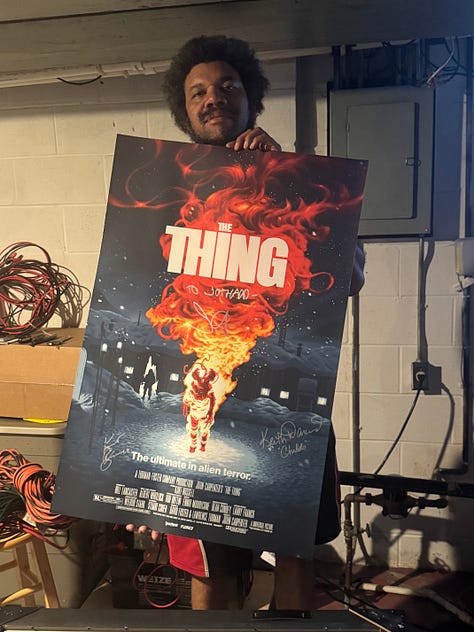
[00:53:25] Mary: You know what? We haven’t gone a single… We haven’t gone the whole time without mentioning The Thing, which we’re all Thing fans, right?

So would it be great with

a

[00:53:34] joe: Antarctica out there. Right.

No one took the

[00:53:36] Nick: I wasn’t going to. I didn’t want to.

[00:53:37] Mary: I’m taking the bait now.

Like, imagine, like, the heat vents and the new microbes and

[00:53:43] joe: you thaw

[00:53:43] Mary: Wow. Anyway, Yeah, yeah.

So

yeah- …we unthawed The Thing. But what… Okay, I wanna get super petty right now and talk about, like, the dumbest things that I, wanna talk about really dumb things that AI suggests to me, and this is some…

Okay,

[00:53:58] Nick: so.

Wait. Hold on

[00:53:59] David: [00:54:00] Is this a segment?

[00:54:01] Nick: quick.

[00:54:01] Geo: This-

[00:54:01] joe: That’s right. A new feature. a

[00:54:03] Mary: New feature …new feature. Okay, let’s just talk… I mean, because we’re, like, ruining the planet and destroying the water and driving up our electric bills for these… Okay, so, Georgia and I are children’s librarians, and one of the things that we do is we print out lots and lots of coloring sheets for little kids, right?

So, like, I’ll get… Sometimes I’ll just download, like, a batch of, like, 16 different coloring sheets on a particular theme, and some AI dipshit whatever comes up and says, “This appears to be a long document. Would you like me to summarize it?” It’s a

[00:54:37] joe: a coloring sheet.

[00:54:37] Mary: coloring

sheet. It’s coloring

sheets, okay? don’t need it summarized.

I just- … get out of my face. Let me

[00:54:47] David: Thanks, Copilot.

[00:54:49] Mary: I don’t… Every

ti- Okay, so I am a proud Luddite when it comes to AI. I mean, I’m sure I’m using it without realizing it, but every time they’re like, “Would [00:55:00] you like to use this?” No. Click. You know, it just… It’s a constant game of Whac-A-Mole just to…

Like, listen, I don’t need my coloring sheet summarized. I know how to write an email. It’s not a problem. I don’t… It,

[00:55:14] Geo: You know. And then it

[00:55:14] Mary: then-

[00:55:15] Geo: can’t even get voice to text right.

[00:55:18] Mary: Oh, okay. There you

go.

[00:55:19] joe: boy. Right?

[00:55:20] Mary: Let’s,

yeah, talk about-

[00:55:21] joe: you- ‘

[00:55:22] Nick: cause you’re shouting at your phone if you had

[00:55:23] joe: a data center in Hammond- Then-

then you wouldn’t have this problem.

[00:55:27] Mary: Let’s- Just ’cause you’re shouting at Google. If you had NASA and Hammond- Right …you wouldn’t have this problem.

That’s right.

Yeah.

I have

a lot of other

problems. than Hammond. That’s

true.

Oh my God. I I have, I was gonna go some fictional things that I like talk… I mean, we can think of supercomputers gone wrong in fiction- Mm-hmm … but I went back. There was,

[00:55:41] Geo: a- … life is so dystopian, do we really need dystopian?

[00:55:44] Mary: really. Do we need to bar? Do

we need to bar

trouble

here?

[00:55:47] joe: out two

[00:55:48] David: there any happy fiction?

[00:55:49] joe: Short– I wanna point out two short fictions- Okay … that I think are kind of cool, and one was The Machine Stops, E.M. Forster

[00:55:58] David: Yeah [00:56:00]

[00:56:00] joe: where humans live underground in pods, and they’re comp- completely dependent on a global machine for food, communication, and social connection.

The machine runs everything until it doesn’t. And so you can imagine in 1909, this is before internet, radio, commercial, aviation, so you really have this kind of dependency on something and then when it collapses, like, what happens? So very good thought piece.

And then Isaac Asimov, who I think just, you know, really good idea generation. The Last Question, and it’s about a supercomputer is asked whether entropy can be reversed, and then the supercomputer keeps evolving and computing until after the heat death of the universe.

[00:56:44] David: Cool

[00:56:45] joe: Both of these are really short. I think they’re, like, nine, 10 pages long, both of them, so.

[00:56:50] Geo: AI could summarize it.

for you. it

[00:56:51] joe: could- summarize it. AI could …summarize

it very well. You can ask

AI. I

[00:56:55] David: to

add a tiny bit of level- levity,

right? The Hitchhiker’s Guide to the Out- Galaxy, [00:57:00] the

AI, he fed it everything, and what’s the answer to the universe?

42

[00:57:05] joe: long- and-

So long, and and Thanks For All The Fish, right? Yeah. So,

[00:57:10] David: Exactly

[00:57:11] Nick: you have the-

[00:57:11] Mary: we don’t have

[00:57:12] joe: we have data centers down there

[00:57:13] Geo: Oh,

[00:57:13] Mary: if we put the data centers down there, then they

all evaporate and

boil.

Yeah.

We get a,

… little fish

boil there.

[00:57:19] Nick: Yum,

[00:57:19] joe: yum. Yeah.

[00:57:20] Mary: Good eating.

[00:57:22] joe: But

yeah, that’s, you can go there. Yeah. So I was gonna, Dave, I was gonna go and touch a little bit into biology maybe, and we talked about, we were joking about the aquatic creatures that, that Nick is worried about by the data centers.

Yes. Yes, I am.

[00:57:35] Nick: Yes, I am.

[00:57:37] joe: But for, but when you stress cells, I was kinda thinking of biological metaphors to our data centers they decide what to sacrifice, and so is that… I you were pointing this out about AI, that is AI going to go, “Here’s how I should throttle or shut down non-essential things.”

I mean, is that a biological equivalent [00:58:00] or, you wanna touch on that? Your research kinda touches into that, so I wanted to give you some,

[00:58:03] David: Yeah. So, you know, we basically study resource allocation, but just how cells do it instead of economies or households or individuals, but Cells, they don’t have as much choice. There’s not a lot of free will if you’re a cell. You know, the primary directive is to grow and proliferate. Of course, that, you know, not if you’re an adult human, by and large, most cells, that’s what they’re trying to do, is take nutrients in from the environment, build another copy of themselves. And so when they ha- encounter stresses in the environment, no matter what they have to do to cope with that whatever positive thing that they need

to do, they always have to do the same negative thing, which is slow down. They can’t grow as

fast because

they have to spend some of their [00:59:00] energy on coping with the stress that’s in front of them before

they can even consider thinking about growing.

‘Cause if they tried to grow before

they coped with the stress, they would just pop. So when I find it hard to extrapolate that insight that we have about How constrained

cells’ budgets really are onto what seems like a system that humans have set up to be utterly hungry, insatiable,

rather than

ever

having to balance

a

budget

or

ever experience stress

where you have to have some trade off. it just

seems like we’re just feeding them raw sugar,

you know, in the form of data centers.

And,

So I just,

I don’t think

these architectures are

inherently adaptive in the same kind of [01:00:00] way that you and I would

be familiar with, where you actually have to think about

some trade off and some Yeah you can’t have your cake and eat it too, and these models can right now. And I think that’s that hard constraint

That they can

as

long as the world

suffers

and we take the water and we raise the temperature of the climate.

Like,

there

is no free lunch here.

It’s just the budget and the cost and the stress is being put not into the models, but onto us

[01:00:32] joe: What I mean is that, I mean, will the machine, if it becomes self-aware- Yeah

[01:00:39] Geo: Yeah.

[01:00:39] joe: will it care? I mean, will it then go will it try to,

like, regulate itself, right? I

[01:00:44] Nick: on what

[01:00:45] joe: Yeah.

[01:00:46] Nick: becoming self-aware with? Like-

[01:00:48] David: So the best essay I’ve read on this precise topic was by this guy, Siddhartha Mukherjee. Do you know this guy? He wrote the

[01:00:56] Mary: No Cancer, the

[01:00:56] David: cancer.

the great book about

cancer.

[01:00:58] joe: Yeah. The [01:01:00] malady of all… Yeah, right. Yeah,

[01:01:01] David: yeah, The Emperor of All

Maladies.

[01:01:02] joe: Seth wrote a new book, right? Is

[01:01:04] David: Yeah. he has several new books. So what he’s working on now, and he’s, so this essay is a, something I read in The New York Times a few weeks ago. It’s part of their series, What Drives Us. So it’s in trying to get thinkers to tell you about what’s motivating them. And so he’s been Trying to cure cancer his whole career. And lately, he

has turned to training an AI model

to

try to make cancer

drugs, right?

[01:01:29] Mary: Mm-hmm.

[01:01:31] David: essay is

[01:01:32] Nick: cancer drugs?

[01:01:33] Mary: you said cancer drugs?

[01:01:33] joe: Yeah

[01:01:33] David: yeah, drugs to, to cure people of

cancer,

right?

That he wants to build,

[01:01:38] Nick: Got it. I was like That’s cool. Yeah. Yeah, right Thought he was like-

[01:01:39] joe: Useful.

[01:01:40] David: AI to cure cancer, to

make drugs.

[01:01:42] Geo: he was like, “

[01:01:43] Nick: I’m gonna give everyone cancer. Here’s the drugs.”

And

I’m

like,

“Oh, damn, that got

[01:01:48] David: that except good.

[01:01:49] joe: That’s good. Yeah, this isn’t the Spider-Man villain episodes, okay?

[01:01:52] David: No. This guy seems like a really genuinely, like, wonderful guy. Very thoughtful. The essay’s about [01:02:00] him talking to his mom actually in part. But the thing is he finds that the amount– the way that this model is, like, learning to understand cancer protein folding and how small molecules that might help patients could interact with these proteins at the very atomic level, and it was learning these kind of chemistry and physics rules. He just realized that this thing, once It’s starting to

Work a little bit. But once it works

it’s

gonna work because it went far beyond whatever

he could do,

and it’s learning on its own, and it figures it out. And

so

he started talking about it like his own child and like, you know, you can hope you send your child out into the world with good values

but ultimately what they do when they grow up is very much on them.

[01:02:55] joe: Right

[01:02:56] David: And so if these [01:03:00] models get smart enough to the point that they can really do things, what He argues is the best thing we can do is try

to give them good values, like we’re their parents

and try to…

[01:03:11] Nick: has not happened at all

[01:03:12] Geo: Right, has

[01:03:13] David: Which is certainly not what

we’re doing right?

now, right? But, like, to raise them in a nurturing

way and teach them what

human is.

Be- teach them about humanism,

right? And, like, all the beautiful things humans have done, and that is really, like, our last best hope at getting these models to

actually be nice to us

later on

[01:03:35] joe: or should you not teach them human values, but cellular values that you have to respect the limits of your resources, right? Because human values, there’s a lot in there, but if you just take it down to what you were talking about, the free will of a cell is just to grow, proliferate, live within your means.

That’s actually what we’re not teaching AI right now. Right now we’re teaching AI [01:04:00] you can have as much power, as much water,

[01:04:02] Nick: Oh, I thought you were gonna say it, We’re teaching it racism …

[01:04:05] joe: gener- well,

[01:04:05] Geo: porn. In gen- Well, I mean- Well, that

too.

[01:04:06] joe: Yeah. What did David say? Every data

server is a, you know, a,

[01:04:10] David: To a- first approximation.

[01:04:12] joe: It’s

just porn.

So yeah,

I think there are these

things where you can go and if that happens I still don’t know if, I don’t know if that jump singularity is gonna happen. I’m still, you know, I think there’s things that

y- is

the hype and the super hype and then the mega hype, and I think that’s one of them.

But, just hedging the bets if it happens, I do see the fictional scenario where AI just goes, “Your humanity is not worth” … I just feel like it’s kind of like we we’ll be in some war and we’re gonna lose because we need water and it’s kind of…

And we’ve used it all for the data centers.

[01:04:47] Geo: That’s

[01:04:47] Nick: can

[01:04:48] David: is exactly like Waterworld.

[01:04:50] Nick: like

[01:04:51] joe: yeah.

[01:04:51] Nick: you

[01:04:52] joe: We just flood their GPUs and we win. Yay.

Yes, no, but that was something, I think it’s yeah it, can we [01:05:00] actually train AI to think about natural resources and to… And I think people

are I,

I think there are folks trying to do that and find better ways

that you

grow,

and if

you become more efficient, you grow and we keep all the pegs, the legs of the table growing with it.

That’s the community, that’s energy resources, water resources. What are we doing with the

technology?

Not just consuming it, but are we doing, are we trying to find cures to human diseases and cancers and things like that? And having fun too. I mean, I think that’s part of human nature.

But,

Is it just trying to compile…

Right? Right? I mean, it’s asking you to summarize your document because it wants you to get hooked. It’s like a drug.

And if you get hooked to

[01:05:45] Geo: if you get hooked to it … I’m already, I’m already-

[01:05:46] Mary: addicted

to enough things.

I don’t need, I don’t to be addicted

to AI. Yeah, I know.

[01:05:51] joe: addicted

[01:05:52] Nick: what’s really cool? I’m already-

Drugs.

[01:05:54] joe: I know.

Really You know, I

don’t need,

I don’t need no digital

drugs.

[01:05:58] Mary: what were you gonna say, Georgia?

[01:05:59] Nick: Oh, [01:06:00]

[01:06:00] Geo: I just think the bottom line is we’d just be so much better off. I’m not saying, like, we can totally disconnect, but-

if- we

[01:06:08] Nick: everyone on drugs.

[01:06:12] Geo: But I

think if we just took less… If we just took more time away from our devices and, yeah. Just in general. Yeah.

[01:06:20] Mary: Well, every generation- is a response to the one before it, so- maybe, like, the-

m- maybe the next

generation is going to be like, “Oh, this is really cool, this pen and paper thing.” You know, all bespoke and everything.

[01:06:32] Geo: Right.

[01:06:33] Mary: So yeah, I…

Oh, boy.

[01:06:35] Nick: even the disconnecting part is hard for everyone.

[01:06:38] Geo: It is.

[01:06:38] Nick: alone

have a smartwatch on

your

[01:06:41] Geo: It is. hard. Like,

[01:06:42] Nick: as soon as It buzzes, you’re gonna look at it because-

[01:06:46] Geo: That’s

what we’re- It- It’s also

[01:06:47] joe: privilege too, right? So to disconnect from the world, you have to be privileged enough to not care about whoever the dean’s writing me about something, right? I gotta be able to put that aside, right? There’s some level of privilege [01:07:00] that you need that you can actually detach. So either, A you have the device and you’re in the world and you can now have some, you know, forward momentum in, in society.

And then at some point you can go, “You know what? I don’t need the device. I’m gonna put it away. I’m gonna go this week without

checking emails.”

[01:07:18] Geo: Well, I think- it gets back to what we could learn from the cell. Yeah.

You know what I mean?

[01:07:23] Mary: Yeah. The

[01:07:24] David: Allocate

your

[01:07:25] joe: the regular

[01:07:26] Mary: Well, it, I mean,

like-

[01:07:27] joe: you’re an

extremophile cell, and then

you’d use whatever garbage you get.

But

[01:07:32] Geo: …e-

[01:07:33] Mary: e- at like

exponential

growth. I mean, when d- where does it s- where does it stop?

yeah. Yeah.

I mean, I mean, it’s-

[01:07:40] joe: Yeah. Yeah …

[01:07:41] Mary: I don’t…

Yeah.

[01:07:42] Geo: just-

I mean, bizarro …I mean,

[01:07:44] joe: think you have…

Right?

I I also, I think people are like, “Oh, we shouldn’t regulate because that hurts innovation.”

And you know- … we look at, but we look at other… We look at the Industrial Revolution [01:08:00] and there was no

[01:08:01] Geo: regulation- We we know what happens when there’s- no regulations. I mean,

[01:08:04] joe: it was

a, it was pretty bad, right? You know-

You don’t- …

child labor, don’t need limbs.

[01:08:09] Geo: work.

Yeah, Okay. So

[01:08:11] joe: I, I think you could have had regulation and growth at the same time, and, you know,

you wouldn’t “

be, Oh, look at this disaster.”

Like it

would be a case study. Right. but So I think you would have that, um- Musk

[01:08:22] Mary: be a trillionaire. And why, well, …well- no one think of-

[01:08:25] Nick: trillionaire. Whoa, why are you trying to attack Elon Musk? Oh, well, we He’s a billionaire. We can’t attack

him. He’s a now.

[01:08:32] Geo: no. trillion.

There’s a effect, okay?

[01:08:35] joe: It’ll all But,

[01:08:36] Mary: yeah, it’s,

Are there any good uses of, for AI, of AI,

[01:08:41] Geo: of AI? Well, I think he was giving- that example- of using it for like- No, like for- There, Yeah.

[01:08:47] Mary: are there in-

[01:08:48] joe: the- …therapeutics.

I think, you know, medical diagnostics. I mean, I think there are. I mean, if you

are- Yeah

[01:08:55] David: Yes.

[01:08:55] joe: you have-

[01:08:56] David: the answer is yes but they [01:09:00] certainly- don’t directly impact most people

day to day in any tangible way.

[01:09:07] joe: Yep

[01:09:08] David: They’re abstract. They’re kind of enterprise productivity type things. It’s coding.

It’s helping people that don’t need help, and it’s not helping people that do

[01:09:22] joe: Yeah. Or super personal, like, some of the stuff where, , we were talking about devices, brain interface, quadriplegians being able to inter-

right. I

I think you are having… Yes I think you have that. But the majority of it is memes, you know,

[01:09:37] David: slop right. It’s just kind of,

[01:09:38] Mary: just,

[01:09:39] joe: trying to get AI to do things that, , let’s replace human creativity and it’s like, well, why?

Isn’t that the, you know, that’s the fun part of it all,

[01:09:47] Nick: like, I mean, didn’t you just listen to the first,

AI generate fake porn.

[01:09:51] joe: Right, yeah.

That’s right. Yeah.

[01:09:52] David: more porn.

[01:09:53] joe: We

[01:09:53] Mary: S- So

[01:09:54] Geo: I, so-

We can’t

[01:09:54] joe: pay the real

people to do it. Let’s

[01:09:56] Mary: So are we really just,

Blowing up the planet [01:10:00] for slop and porn?

[01:10:01] Nick: We’ve done it for less.

[01:10:02] joe: Okay.

Yeah. I think that-

[01:10:03] Geo: w- I think that about-

[01:10:05] Nick: done it for

[01:10:05] David: I think

[01:10:06] joe: right? Yeah, mean, it’s

[01:10:07] David: we were gonna

[01:10:08] Nick: that

[01:10:09] David: title This episode. blowing up the planet for slopping porn Is pretty much,

[01:10:14] Geo: yeah.

[01:10:15] Mary: Yeah, I thi-

[01:10:16] Nick: might be the top rated episode.

[01:10:17] Mary: like-

[01:10:18] joe: be. That’s right.

Maybe I need the slop

and porn. Maybe that

changes-

[01:10:21] Mary: I was gonna say,

Like, tell me I’m wrong, but, you know, yeah, it just, like, I guess it’s just all for slop.

Yeah. Yeah.

[01:10:28] David: Right now.

[01:10:29] Mary: now. Oh, wow.

[01:10:29] joe: Or 80%.

[01:10:32] Geo: 80 is

[01:10:32] Nick: it’s- a

percent-

[01:10:33] joe: don’t know.

[01:10:33] Nick: that’s used for- It’s I mean, why- … the home use … you know,

[01:10:36] Geo: the water is

[01:10:37] joe: right? It’s all, it’s consumer-based, right? So we live in a, I mean, consumer and the promise that the consumers will turn around and pay money for this, right?

Like a subscription service.

So I think …that’s the whole

[01:10:49] Mary: To get them hooked.

[01:10:50] joe: That’s right. So that’s why… And that’s, you know, there’s more people in non… Not everyone’s a researcher trying to solve a structure to [01:11:00] push their research for defined drug targets, or what new antibiotics can we find, right? I mean,

that, there, there’s,

That’s happening in the background, but the

stuff we hear about

and the stuff we see is

[01:11:09] Geo: the majority of it is- right. yeah …And that’s

[01:11:12] joe: problem

is that you’re feeding that beast, and then you’re saying, “Well, how can we have, how can we hook the consumer more? Oh, if we can give them more short form videos. Can we give them more, you know, what they want? If they, if you want this story with this person in it, can we give that to you right away?”

Like, because you can’t wait for it. And then it’s gonna happen slowly, but it’s gonna be

now

you have to pay for it.

And

I

think that’s the thing we don’t know yet is when that transition happens, how many people will go, “Okay, I’ll pay for it,” or how many people will be like Georgia and, “You know what?

I don’t need it that bad. I’m gonna find something else to do with my money or time and not be hooked into it.” So I think we have this, like, kind of freemium I think they call it. It’s where it’s free for a while-

[01:11:56] Mary: Ah, I

see.

[01:11:57] joe: you build up, like not a premium,

[01:11:59] Geo: and then premium-

[01:11:59] joe: a [01:12:00] freemium- There’s that- and you go,

and then it, and then so that’s like your search engines now.

How long will it be before Google stops digesting, AI

digesting-

[01:12:08] Geo: gotta figure out your

[01:12:09] joe: then you gotta figure… That’s right. Yeah. You gotta, You gotta, figure that out on your own, lady.

[01:12:15] Geo: gotta

[01:12:15] Nick: they’ll have

a cheaper option with

[01:12:17] Geo: with ads.

[01:12:17] joe: And you’re right, they probably will, right.

I mean, that’s- True

…they’ll have

something to keep you going, but that will be

the model.

I don’t know how long that’s gonna take to, to change, but I see the next probably couple years.

[01:12:28] Nick: We see the same thing with the streaming services. Yes, sir They started off- at such a low price- just to compete with cable. Yeah And now they’re killing cable- and also increasing the prices Yeah It’s that same model

where-

[01:12:41] joe: The

[01:12:41] Mary: the

[01:12:42] David: Same with Uber, Lyft,

[01:12:44] Mary: Hoopla.

[01:12:44] joe: And so you’re killing

blogs- say, hey, Check out Kanopy. It’s amazing.

[01:12:49] Mary: Yeah, your

[01:12:49] Nick: li- Hoopla …

[01:12:50] Mary: get your

library card, and your library probably has a subscription to Hoopla,

[01:12:55] Geo: can actually go- Yeah …

just like an old-fashioned

[01:12:58] Mary: Kanopy with a K.

[01:12:59] Geo: you [01:13:00] can actually go into the libraries like an old Blockbuster Video- Right …

and pick the videos Old DVDs It’s so cool.

Hell Yeah Yeah.

[01:13:08] Nick: I did that. Yeah you just … Some

of them have games, some of them have- Yeah … music and movies.

[01:13:14] Mary: we go check it and you own it. If you in a library or if you buy- Physical,

[01:13:18] Geo: it’s a physical media. Physical. Yeah.

[01:13:21] joe: it.

[01:13:21] Mary: Cloud, Mm-hmm

[01:13:22] joe: the

cloud

could go away one day,

[01:13:24] Mary: Go back to physical media, yeah

[01:13:25] joe: right?

[01:13:25] Nick: Go back to physical media,

[01:13:27] joe: and then you’re sad.

You’re lonely, and you got

nothing.

[01:13:32] Geo: Except each other.

[01:13:33] Mary: Literally.

You got nothing.

[01:13:35] joe: school porn, right?

[01:13:36] Mary: other.

Aw

[01:13:37] Nick: porn.

[01:13:38] Mary: Old

[01:13:39] Geo: porn.

I

[01:13:40] Mary: remember

that magazine.

Where

did I

find it? Where was it at?

[01:13:43] David: I got a bunch of Betamax.

[01:13:45] Nick: I remember when the cloud was- ChatGPT, where’s my

[01:13:48] Mary: old porn magazine?

[01:13:49] joe: was like The Matrix right? You know, I designed her. Like, you know, it’s like yeah.

[01:13:53] Geo: The cloud

[01:13:54] Nick: back in the day was just the f-

[01:13:56] Mary: cloud Real cloud

The

cloud

[01:13:57] joe: Real

[01:13:58] Geo: closet Really? Yeah.

A tree stump with

porn

stuck in it. in my day- I think, I- In my day we had clouds. I couldn’t think of the

[01:13:58] Mary: Like an actual

[01:13:59] Nick: A, a [01:14:00] tree

stump with porn

stuck in it.

[01:14:02] Mary: it.

[01:14:02] Nick: Yeah.

[01:14:02] Mary: Yeah.

[01:14:03] joe: Yeah.

[01:14:03] Mary: In my day.

[01:14:04] joe: In my day,

we had clouds.

[01:14:06] Nick: I couldn’t think of s- the word stump.

[01:14:08] Mary: I-

[01:14:09] Nick: It stumped me.

[01:14:10] Mary: If you, haven’t thought about the word stump- I think it’s time

for us to wrap it

[01:14:13] joe: it up. I’m right.

[01:14:14] Mary: Yeah, I think

[01:14:14] joe: I think it’s Probably

[01:14:15] Mary: time to bring it in. Bring it down home.

[01:14:17] joe: Any

f- last questions? Yeah.

[01:14:19] Geo: We just added to the slop, but-

[01:14:22] Nick: We just added to the slop no, I actually think we hit a lot of

good things this episode.

[01:14:25] Mary: I, well, I would also like to just let people know, anybody who’s listening to this right now, that we’re all actually just AI generated.

[01:14:33] Nick: Well,

[01:14:33] Geo: yeah.

[01:14:34] Mary: Yeah and none of this

[01:14:36] joe: Take me to, your leader.

[01:14:38] Mary: just to mess with you a little bit.

Yeah, none of th- you know, we just put this into a ChatGPT prompt.

[01:14:43] Geo: Are we real?

[01:14:44] joe: we

[01:14:44] Mary: a podcast for-

[01:14:46] joe: We did that an episode- Yeah … in this,

Yeah … season

three with Lily and Generoso. I

[01:14:50] Nick: if you go

[01:14:50] joe: Yeah … I

asked I asked AI to interviewed AI for a segment on that episode. So if you go back and listen to

that. Yeah. We did that.

Yep. Got their opinions. But, [01:15:00]

[01:15:00] Mary: we’re totally real.

[01:15:01] joe: We are real.

We’re real

[01:15:02] Geo: Sure I’m gonna

pinch,

[01:15:04] David: how you know we’re

real

[01:15:05] Mary: because we c- S-

[01:15:06] joe: Yeah.

[01:15:07] Nick: can

[01:15:08] Geo: Yeah.

[01:15:09] joe: You guys didn’t…

[01:15:09] Mary: Sorry, David gave us

the

thumbs-

up- ……and a little wink and

a

nod. So

[01:15:13] Geo: we

[01:15:13] joe: the nice thing about

is to rabbit hole research, we go out and about, and we interact with our people.

So we are real. We are here.

[01:15:22] Nick: We interact with

[01:15:23] David: out of the burrow

[01:15:24] joe: interact with people. Yeah. We do.

[01:15:26] Nick: I kind of just hide away like a little

rat.

[01:15:28] Mary: blink, blinking

[01:15:29] joe: Let’s give, uh… David,

you got any final words on this climate change data center? Are we all screwed?

[01:15:36] Nick: you leave us on a high note?

[01:15:37] joe: will we a-

[01:15:38] David: Yeah,

no.

[01:15:41] Nick: Say everything’s gonna be okay.

[01:15:43] David: no, I do think that there is a really good chance that, you know, there is some good that comes from all of this

[01:15:51] Mary: Mm-hmm.

[01:15:53] David: industrial scale escalation. Because at the, at least it’s about [01:16:00] intelligence, at least they say it is, and it’s about, like, understanding and getting to the bottom of scientific questions.

And if we can do that a bit with this, that’s gonna be good, and that’s gonna then help us solve a lot of these other problems. If we don’t do that, and if we just slop ourselves into tedium, then we’re doomed. But I do think people are really excited about solving hard problems, and we don’t wanna just look at screens.

We wanna get out there. We wanna do things. We wanna act in the real world and make change. So I’m hopeful and optimistic even though I think right now there’s a lot of Yeah.

Cloudy clouds

over the cloud.

[01:16:52] Mary: Yeah A lot

of wild west- mentality happening

right now.

[01:16:56] joe: Yeah

[01:16:56] David: I do think the science is underneath all of this, and if we [01:17:00] can let it happen, that’s gonna help humanity

[01:17:04] joe: I like that Hell

[01:17:05] Geo: Yeah.

[01:17:06] joe: are you doing?

[01:17:07] Geo: thank

[01:17:07] Nick: Hell yeah. Yeah. Well- Yeah …thank you so much, David, for

being here with us today. Hopefully next season- you’re here-

in

[01:17:12] David: charm

[01:17:13] Mary: All

[01:17:13] joe: in studio. Yay. We have him on the f- the f- the fourth time, and we’ll see if you get there before whoever was at three before.

[01:17:20] Geo: think he

[01:17:20] Nick: he wants to be on episode one of

[01:17:22] joe: That’s right. Yeah,

[01:17:23] Nick: He’s like, “I’m gonna be the,

[01:17:24] David: exactly.

[01:17:26] joe: He’s always

at the end of the

season. We

always like,

[01:17:29] David: on a bonus episode

[01:17:30] joe: Awesome.

[01:17:32] Geo: Yeah.

Yeah,

[01:17:32] joe: There’s …

You gotta come in studio for that, so that’s,

[01:17:34] David: I’ll make my own jacket that

says four-timer

[01:17:38] Nick: We’ll have

[01:17:39] Geo: We’ll

have AI. we’ll have

[01:17:40] joe: a, we’ll

[01:17:40] David: little stars like I won the World Cup,

[01:17:42] joe: AI,

we’ll have- I was like our number one fan …we’ll have AI

make you something, so, we’ll see.

[01:17:46] Nick: we’ll see.

[01:17:46] Mary: see.

[01:17:47] joe: Well, yeah, on that note,

you have me, Joe.

[01:17:49] Nick: have me, Joe. You

got

[01:17:50] joe: You got Nick.

[01:17:50] Geo: Georgia.

[01:17:51] joe: We’ve got

Nick.

Georgia.

[01:17:52] Mary: got Mary.

[01:17:53] joe: We’ve got Georgia. You got Mary.

[01:17:55] Nick: And-

we went down some

hole. See you.

[01:17:59] joe: Love

[01:18:00] y’all.

Newsletter and Transcript of Rabbit Hole of Research Episode 81: The Mini: Magic

Magic, octopus brains, America’s power grid, The Thing, and 3D bioprinted skin.

episode description

Substack, Apple, Spotify, YouTube, Amazon

Episode 81 Transcript


In Episode 81: The Mini: Joe, Nick, and Georgia recap Episode 80: Magic — Power and Its Costs with author B.L. Mostyn, talk about the storm that swept through Chicagoland causing a 10-day power outage, and Joe fanboying at Fan Expo Chicago — where John Carpenter, Kurt Russell, and Keith David were all in the building for a The Thing reunion.

In Science Holes, the power outage sent Nick down a rabbit hole about the US electrical grid, and could the whole country go dark. Joe talks about the complex and ethical challenges of studying octopus neuroscience, and the science of 3D bioprinted skin for burn trauma victims.

In the Media Holes, Joe is reading Bird by Bird by Anne Lamott, Georgia just finished the graphic novel My Favorite Thing is Monsters by Emil Ferris, Nick rewatched some classics and started the Marvel RPG Midnight Suns, and Joe and Georgia dive into the Handwavium of The Last House.

Upcoming events: Joe has a live Zoom reading event on release day: free link in the show notes. And Dragon Con is right around the corner: Joe’s full panel schedule below.


Joe and Georgia at Fan Expo Chicago. John Carpenter, Kurt Russell, and Keith David autographed Joe’s Thing poster. And storm damage, two maple trees ripped out.

Magic: Power and Its Costs

Magic: Power and Its Costs

JOTHAM AUSTIN, II PHD, NICK ELIZALDE, AND GEORGIA GEIS

·

AUG 19

Listen now


Order the Touch of Noir 2027 Wall Calendar by Jim and Georgia—

12 months of all-original art by Jim and Georgia; pre-orders open now, with mailing expected in September


Words // Friends Aug 26th at 7pm CST: 

Joe will be reading with four other authors on a Zoom hangout. Register now!


Check out what the RHR crew is creating:

Joe:


Share

Leave a comment

It’s science for Weirdos

Want to support the show? Tell your friends. Follow us on social media, Discord, share the podcast, and let us know what topics you are excited about. And to see all the content (studio images and artwork) subscribe to the Rabbit Hole of Research newsletter!

Stay curious, stay speculative, stay safe, and we’ll catch you in the next rabbit hole. Love Y’all!


Future Events to Hang with the Crew:

Podcast Cross-Appearances

Events & Conventions:

  • Words // Friends Aug 26th at 7pm CST: Joe will be reading with four other authors on a Zoom hangout. Register now!
  • Dragon Con – Atlanta, GA (September 3-7, 2026) – Joe attending as Professional
    • Here is my schedule of panels:
      • Fri 9/4• 10:00 AM – MCU: Wonder Man: Behind the Curtain (M302-M303 Marriott)• 7:00 PM – Spider Noir: Shadows of Justice (M302-M303 Marriott)• 10:00 PM – Long Live the New Flesh: The Rise of Cinematic Body Horror (Peachtree 1-2 Westin)
      • Sat 9/5• 11:30 AM – Philosophy in Science Fiction (Embassy AB Hyatt)• 7:00 PM – Yuletide Fear: Unwrapping Wintertime Horror Fiction (Peachtree 1-2 Westin)
      • Sun 9/6• 11:30 AM – What Makes Scientists Mad, the Sequel (Embassy AB Hyatt)• 4:00 PM – Welcome to Widow’s Bay: A Fan Panel (Peachtree 1-2 Westin)

Upcoming Episodes

*The Mini will now be every other episode!

  • Episode 82: Climate Change and Data CentersReturning Guest David Pincus PhD (episode 13 climate change and episode 39 on Johnny Storm)
  • Episode 84: ETGuest: Chris Guzman (@theboxinggloveartist)
  • Episode 86: Disability in HorrorGuest: Grace Daly (Bram Stoker nominee)

Share

Leave a comment


What the Crew is Digging, Links, Resources, and Topics Mentioned in mini and/or full episode:

Links & Resources:

  • “Any sufficiently advanced technology is indistinguishable from magic.” — Arthur C. Clarke, Profiles of the Future: An Inquiry into the Limits of the Possible

Science Holes:

  1. 1) What If America Went Completely Dark?
    Christopher Cox — New York Times Magazine, August 18, 2026
    nytimes.com/2026/08/18/magazine/national-blackout-power-electricity-outage.htmlNick’s post-storm power outage sent him down a rabbit hole about the US electrical grid. The US runs on three major interconnected power networks: Western, Eastern, and Texas. A FERC analysis found that taking out as few as nine key substations could trigger a nationwide blackout lasting 18 months to several years. The transformers that run the grid are massive, custom hand-built machines, many decades old, largely manufactured overseas with replacement wait times in years. 2) Do Octopus Brains Work Like Humans’ — Or Is There Another Way to Be Smart?
    Liam Drew — Nature, April 29, 2026
    and Scientific American: scientificamerican.comhttps://www.scientificamerican.com/article/do-octopus-brains-work-like-humans-or-is-there-another-way-to-be-smart/Octopuses are the only non-vertebrate animals with large, complex donut-shaped brain, and more than half their neurons live in eight arm nerve cords, essentially mini-brains. Skin that tastes, changes color and texture, and senses light. Evidence of memory and possible dreaming. And a serious ethical gap: vertebrates used in research have legal protections, cephalopods largely don’t. Neuroscientists are trying to protect the cephalopods and study them to map their neural connections and ask whether radically different brain architecture can arrive at the same intelligence.

3) Skin Healing Without Scars
Andrea Teagle — Knowable Magazine, 2026
knowablemagazine.org/content/article/health-disease/2026/can-3d-printed-skin-heal-burns-without-scars

Researchers are developing bioink — a gel laced with a patient’s own skin cells — that can be applied directly to severe burn wounds to rebuild healthy skin instead of triggering the body’s scar-forming emergency response. No rejection risk since it uses the patient’s own cells. Initial clinical trials are underway.


Science Terms

  • Substation — a facility where high-voltage electricity is stepped down and routed for distribution
  • Transformer — machines inside substations that change voltage levels; custom hand-built and difficult to replace quickly
  • Cephalopod — the class of mollusks including octopuses, squid, and cuttlefish; the only non-vertebrate animals with large complex brains
  • Connectomics — mapping every neural connection in a brain to understand how it produces behavior
  • Enteric nervous system — the “second brain” in the gut, containing roughly 500 million neurons that operate largely independently of the brain
  • Convergent evolution — when two unrelated lineages independently evolve similar traits, as with vertebrate and cephalopod intelligence
  • Bioink — a gel containing living cells deposited onto tissue to rebuild biological structures
  • 3D bioprinting — printing living tissue layer by layer using biological materials
  • Skin graft — skin taken from one part of the body and transplanted to repair damage elsewhere
  • Scar tissue — fibrous tissue produced as a rapid emergency repair response to large wounds; structurally different from healthy skin

Media Holes: What the Crew is Digging:

TV and Films

  • The Last House (2026, Netflix) — Joe and Georgia watched this sci-fi thriller about a mysterious rain that traps people inside their homes for years. Strong characters and tension, heavy on handwavium. 
  • Zero Day (Netflix miniseries) — Robert De Niro, nationwide cyber attack storyline. 
  • Remarkably Bright Creatures — Sally Field film based on the novel. 

Books

  • Bird by Bird — Anne Lamott. Writing motivational book that gets you hyped to get back into your projects.
  • My Favorite Thing is Monsters — Emil Ferris. Georgia just finished it and called it one of the best books she’s ever read. A graphic novel set in 1960s Chicago, illustrated almost entirely in ballpoint pen, weaving in famous works from the Art Institute of Chicago. Published by Fantagraphics, 2017. Volume 2 is now out.

Video Games

  • Midnight Suns — Marvel turn-based RPG. Nick started it post-power outage and says it’s catching his attention despite not being his usual type of game. More updates to come.

Listener Shoutout

  • “Universal Ouroboros” — listener Alex’s newly published 101-word story (101words.org/universal-ouroboros/).

“Stay curious, stay safe… Love Y’all!”


Join Rabbit Hole of Research on Discord: https://discord.gg/2nnmKgguFV

Subscribe and Share our Substack newsletter to get email updates, never miss an episode, and spread the word!! Don’t forget to give us 5 stars or a like!


Transcript

joe: [00:00:00] Hey, welcome back to the rabbit hole of research down here in the basement studio for the mini. What do you got? The

Nick: Mini mini

joe: You’ve got me, Joe

Nick: You got it, Nick

joe: We’ve got Nick

Geo: Georgia

joe: And we’ve got Georgia down here talking a little magic. We had a fun

Nick: Ah, yes. with The magic talking about magic, the power, its costs, ethics, politics.

joe: It was a really good conversation. High, low, soft, hard

Nick: Yeah. I enjoyed it a lot. I mean, I just, I feel like this season’s been full of episodes that just hit well for us

joe: Yeah, it was a magical episode.

Nick: Ooh, magical.

joe: Yeah, from that BL she had in the episode and then she sent me an email. She had said, “Any sufficiently advanced technology is [00:01:00] indistinguishable from magic.” And there was some question on who said it. It was Arthur C. Clarke, Profiles of the Future: An Inquiry into the Limits of the Possible.

So, wanted to add that.

Nick: Most responsible.

joe: Yeah. The limits of the possible.

Geo: Great.

joe: so

Nick: I Yeah. I thoroughly thought this was a fun one. We– There’s so much magic. , I feel like there’s so little things in the world that we don’t think of, , as magic, where it’s , oh, that’s just magical. , it’s nothing much, but it means so much more than you would think.

joe: Mm-hmm. Yeah

Nick: And it’s always fun to just look at it like that,

joe: yeah. It will

Geo: take time to find the magic, you know?

Nick: Yeah. I mean, we definitely live in a world where it doesn’t feel like things are as magical as they could be. But, you just have to find the little things in life and be like, “Oh, yeah, that’s pretty magical, isn’t it?”[00:02:00]

joe: Yeah. Very good. If you haven’t, go check that out. It was a good discussion. New business? Had had some fun stuff.

Nick: Oh yeah, what you got, bro?

joe: Fan Expo Chicago. I got to- And you were

Geo: definitely a fan. I

joe: definitely a fan. I was definitely a fan because there we had John Carpenter, Kurt Russell, and Keith David were all there

Nick: And who are they?

joe: They are… John Carpenter, one of my favorite directors, directed one of my favorite and wrote one of my favorite movies, The Thing. Sev-

Nick: What movie? Oh. Oh,

Geo: of y- several of your favorite movies. Kurt Russell and Keith David were

Nick: I’m surprised you’ve never brought this movie up, Joe. Geez.

joe: Yeah. I know I’ve never heard you bring up, You never heard me bring up, oh,

heard me… Oh, yeah, definitely. Had a episode end of season two, we talked about The Thing with Bill Hallier [00:03:00] and Todd Thyberg, I remem- I remember, if my memory serves me correct. So, but yeah, it was super exciting. It was fun to go and do that.

It was it was a little respice from life because w- a major storm had come through, and we were without power, so we had yeah, August 11th, and didn’t get power back for about 10 days.

So it was really interesting leaving the dark house

Nick: are all safe. We are

all alive.

joe: So but yeah, it

Nick: This is not AI.

Geo: Shout out to God.

joe: Yep, yep. We’re still

Nick: tired of everyone saying, “Hey, why is Joe so AI?” And I just have to say, I don’t know. He just sounds like that sometimes.

joe: No AI here. 100%

Nick: No

joe: I’m hu-man.

Nick: Hooman.

I thought we were hoomans. Is that not right?

joe: it’s pretty good. Lots of fun. How about-

Nick: Me, I avoided the power outage by [00:04:00] just staying in Chicago. My house didn’t have power, but I personally did have power.

joe: Mm-hmm. Mm-hmm.

Got out.

Nick: that was a fun time just hanging out.

joe: It was

Nick: No, I couldn’t do that. You know me, guys, I’m all hooked up to my Ethernet cable and s- doing random things.

joe: We’re part of the matrix

Nick: But no, yeah. Exactly, you know, someone’s gotta be there to make sure it’s all good.

But yeah.

joe: I was gonna say that before we get, go down the science holes and media holes, I wanted to talk about an event I have coming up on the day of release, August 26th. It’s gonna be a Zoom,

At 7:00 PM. Okay. It’s a Zoom. It’s

Nick: they got plenty of time.

joe: it’s gonna be a Zoom performance with several writers, and I will be one of them reading for your entertainment.

So if you’re not doing anything-

Geo: to join me … gonna be recorded so you could listen to it-

joe: it- I think it will be … at a different time? [00:05:00] I think so. I’m not

Nick: if someone wants you to, like, read at night for them to go to bed, like, this is the time to

get

joe: you can do it. 7:00 PM Central,

Geo: Might be early

joe: Might be early. Yeah, a little early for people.

Geo: But- But not for me. I’m probably gonna be tired.

joe: out. People say they wanna come out and hear me read. I’ll be reading, so- There you go … come and listen. Show some support. The link is in the newsletter. If you’re not subscribed to the newsletter, then maybe you should.

Geo: Shame on you.

Nick: A good reason to do it. Wow. Shame on you, Georgia.

joe: Yeah, the other cool thing is the Dragon Con is coming up in Atlanta, Georgia, the Labor Day weekend, so September 3rd to the 6th or something like that. Yeah, my panels, I got… My panels are here. I’ll be doing one on Wonder Man, Spider-Noir, the rise of the cinematic body horror, philosophy and science fiction, what makes scientists mad, inspiring the next generation of creators, and [00:06:00] welcome to Widow’s Bay, a fan panel.

So should be a fun time, so.

Nick: the show Widow- Widow’s Bay?

joe: yep, yep. Oh,

Nick: that’s cool. That’s a good show

joe: Yeah, it was. It was a really good show. Wonder Man was good. Spider-Noir, so I’ll be talking about all these, so

Nick: Hell yeah, that should be a good time

joe: Yeah, so if you’re down in Atlanta, Georgia, come on and

Geo: And do they mean mad as in crazy?

joe: As in like things

Geo: Or angry

joe: in movies and fiction that make you mad as a scientist. You know, like licking– like pulling someone out of a BSL4 when they got infected. So

Nick: sounds like you were about to say licking something. What were you gonna say, huh?

joe: When I started licking

Nick: feel like this is a personal jab on me.

joe: But yeah, so that’s all I have You

Nick: Hell yeah.

joe: move it along?

Geo: to move it along?

Nick: yeah let’s get to some science [00:07:00] holes ’cause I do have one.

joe: I d-

Nick: so, so, so, so science holes.

joe: holes. We’re here

Nick: Like Bill Nye, but if Bill had a science hole, this would be his hole.

joe: Yeah. Okay. Let’s,

Nick: Nope, that stays in. Don’t even think about editing that out ’cause I’m gonna bring it back up.

joe: Great. Yeah, I got a couple. I don’t know if we’ll get to both, but like I said, it was a, it was kind of a hard couple weeks, so, but yeah. Do you wanna lead off or you want me to lead off?

Nick: yeah. I’m gonna, I’m gonna go with mine. That way y- you can do both of yours if we have to, if you want to. But you know, we were here without power, and personally, again, I wasn’t without power, but it got me thinking like what would it take for the United States to go…

Like what would happen if more than one area was super affected by power loss? So I went looking down. I found this New York Times [00:08:00] article, which Joe can go ahead and input in the footnotes.

joe: it in the show notes for y’all

Nick: it was going on about how if nine of these facilities that like do the electricity what are they called again, Joe?

joe: Like substations? With the transformers that kind of step down the power to deliver to everyone else? Yep.

Nick: If nine of them were hit, because one was hit recently by snipers someone that was with a rifle or something, and it took a place down, but they were targeting, as Joe said, the transformers. if nine of them get taken down by people like that, it can definitely put us into a dark age again, where we won’t have power for…

I think Faye was saying minimum 18 [00:09:00] months, which that, that would be across

the whole United States.

joe: right.

Nick: Yeah. Like, it takes so long for the transformers to get made that it would cause a whole effect of… Yeah.

joe: that’s one correct. It was that incident happened in 2013. It was a little bit ago, the

Nick: Yeah, I–

joe: Right, right, right. Yep,

Nick: That was the reason, right? No? Like, this

joe: it wasn’t, like, last week, so Oh, no.

Nick: Oh, no.

No, but

Our power outage was

joe: Our power outages was August, but this one in the, the story in particular that kind of triggered all this was 2013.

And, you know, the article did a good job of explaining why. Like, you know, our electrical grid is old. It was cobbled together. There are three major kind of hubs that power different regions. I think one’s east, [00:10:00] west, and in Texas or something like that. Yep, so

Nick: Texan,

Geo: And

then how- There’s three …

and then

joe: many…

Geo: you said substations.

Yeah.

joe: and

Geo: many… Like is a substation like a big city?

joe: At, Or like, what does the substations… You’re saying there’s three? There, there are many, so these are the major hubs. Like, so there’s major hubs of interconnectivity that, that, that cover many states, and so there’s three major hubs that cover the whole United States.

Geo: And then the nine subs- And

You’re saying there’s three-

joe: there are many. So these are the major hubs of interconnectivity that, that, that cover many states, and so there’s three major hubs that cover the whole United States.

And then the nine- And then inside of these, hubs, there are many substations, and there are kind of junction points

Geo: key-

joe: That’s exactly right. So you just need to hit the nine key substations in all three of

Nick: Which you can look up fairly

easily

joe: can just look at where power is distributed.

You know, I think the article said any 12-year-old with internet could figure it out. And then you can coordinate potentially some strike. And then if you hit all of these substations simultaneously, [00:11:00] you could potentially render the entire United States dark. And then it went through the whole scenario,

Nick: think it said it would only take, what, under 30 people

joe: Yeah, I mean, they said this in this article. It was hypothetical, so there’s, y- you know- Yeah … It was a real thing that because of our infrastructure and the way it’s set up, and because it was cobbled together because, power came and then it wasn’t really planned well different areas developed faster than other areas.

So you have this whole mishmash and-

Geo: We watched

that show, like, about a… It was, like, over a year ago. you remember where,

joe: like

Geo: The power went out? It was… Do you know what I’m talking about?

joe: know what you’re talking about, like Revolution or something like that. Yeah, I can’t-

Geo: remember the name. But it was kind of about that.

joe: Yeah, that was

Geo: politics and, it wasn’t Al Pacino, was it? No.

joe: Oh, you’re

Are you talking about the cyber attack one? Yeah. That was on- Netflix or something. I was talking about [00:12:00] The Revolution, the one where the power went off. There was, like, some sort of all electronics and

Geo: Oh, was that the one where it was, like, snowing also?

Like-

joe: No, I don’t think so. I think this was, like

It was just a global blackout, and then the whole world was set back into, like, 100 years pre-electricity, and no one could figure out why. I think I only watched, we only watched the first season

but

Nick: that’s a raving review for that, guys

joe: I, well, I didn’t … I think other things just came in the way, so, oh, I think it was only two seasons looking at it, so maybe we did watch both seasons. Yeah, it was a good one. But I know what you’re talking about. It was a Net- it was a pretty recent Net- Netflix show, and it was, I think, was it Al Pacino or what? No, the other guy.

Geo: The other gangster

joe: the guy from, The one with Ben Stiller, and he’s the dad. I can’t think of his name Oh, yeah Do you know what I’m talking about?

Geo: do totally know who

joe: It’s a comedy. Excuse me.

Geo: totally know who you’re ta-

Nick: Guy from Meet the

joe: Who you’re ta- Yes. The [00:13:00] dad.

Geo: De Niro. De Niro. that’s it. Yep, it. Yep, De Niro. Yep.

Nick: Oh, De Niro. Good. Oh, Robert De Niro

joe: Yes. We’ll get there. See that, see how we do that? Zero

Nick: I had no clue what you guys were talking about

joe: Zero Day is the miniseries on Netflix that we’re talking about. It was a nationwide cyber attack that happened, and that was kind of it. Right. It was, that was really good.

Geo: It was good. But, like, power

joe: would- Yeah

Geo: would take out

everything.

joe: Yes, power would take out everything. Would take out- You would lose, I mean- Would

Geo: out all the computers

joe: gonna put that article in there, but it, and I encourage people to read it, but it talked about the levels. ‘Cause you start out, people wouldn’t really know what’s going on, and then, you know, the government would have to go, “Yeah, we got a national blackout.

We, it’s gonna, and it’s gonna be long,” as Nick said, 18 months to maybe three, four years. And

Geo: we’re just-

joe: And then as you go-

Geo: prepared

joe: yeah, I mean, you know, hospitals, things like that will use generators, but runs on diesel, but [00:14:00] that will eventually run out. Will our allies international allies, give us supplies when that happens?

You know, and then if you got the transformers are made internationally, so they have to come in to by port. So will our ports work? How would you operate a port to have a ship come in, and the cranes and everything that you need and the infrastructure to actually get the transformer? And then like they said, these transformers are big.

You know, like, you know, 800,000

Nick: have to go by railroad and

joe: Yeah, they usually go by railroad and things like that. But if the infrastructure across the country has now been devastated and down for now a year, , you would have… So y- none of this is like planned. Like,

Geo: you know- So I heard- So

it’s

very- … one of, the

joe: interesting, , and, thought-provoking, like how can you prevent this?

How can you prepare? How can you personally prepare for something like that? So… And

Geo: And there was locally they talked about a transformer needing to be replaced, [00:15:00] and then they’re, they are having to get that in and it’s gonna take a long time.

But Are there different sizes

of

joe: are … to transformers?

Yep, yep, ’cause they’re stepping down to like on the poles, if you think about the, the electrical poles, they’re like those white canister looking things. Those are transformers. If you look out down on the ground, they’re the little square boxes that say high voltage. Transformers live in there. And then you have at substations, small ones, they have smaller transformers, then you have big transformers like that.

So yeah, so you have all sizes. So the ones that they’re talking about, particularly in this article, the nine critical points, these are the large step down. So they go from-

Geo: they use the term transformer for all of these

joe: Yes, they’re all… Yep, yeah.

Geo: But obviously they’re very different. Very different.

joe: different. That’s right. They’re very different. Yeah, now if they all have a, the same purpose and the design of the transformers haven’t changed, so they’re the same design that was Early 1900s when electricity [00:16:00] first was becoming a a, a national global kind of utility the process hasn’t changed.

So things are hand wound and m- manipulated and there’s a lot of tedious construction and like they said, almost an art form to it that you would have, and people do. So yeah it’s kind of, They have

Geo: not trained AI

to do that. Yeah.

joe: No. If you’re a transformer maker, then you’re-

Geo: Job security

joe: you’re secure. That’s right. Unless you’re a Transformer.

Nick: Or if you’re a Transformer.

joe: And then there you go. See, look at that. Nick and I are on the same page here

Nick: We were there the whole time.

joe: So yeah it was a, that was an interesting article. I was glad you pointed it out to me, and I did

Nick: I was… I don’t know what I was doing, but I was like, “I wanna look this up.” And then I did it, and that came up, and I was like, “Great. This is so what I was looking

for.”

joe: and it was a deep dive, so it was really good. So we’ll get that we’ll get that in h- into The science holes

Nick: notes? [00:17:00] Oh. All right, Joe, what do you have for us this week?

joe: Yeah, I mean, one, it was kind of interesting, and it was, we’ve touched on this topic, but it’s how do brains work, and in particular octopus brains. Do they work like human brains, or are they designed differently? And it’s really fascinating ’cause octopu- octopuses are cephalopods, and so they have these

Nick: Are they not occupied?

Geo: They’re not

joe: octopi, no. It’s just the, the root of the word. And so I believe octopus is Greek, and so it’d be octopuses.

Nick: We gotta look that up

joe: I guarantee you it’s octopuses,

Geo: I think we’ve discussed and we’ve had this discussion.

joe: But yeah, they have these very elaborate brains, . And cephalopods in particular, so squid, cuttlefish, octopuses they all are part of the cephal- cephalopo- cephalopod family. But they have, they have three hearts, blue blood, no skeleton. Arms are flexible and move like [00:18:00] tongues.

They can actually taste through their skin . They can change color, texture of their skin and even their arms can regenerate in some species. So really fascinating. They’re the only non-vertebrate animal, so no bone structure that have big, smart brains that they can use.

And, , people have studied them for many years. And, this article was really interesting ’cause it did touch on some of the ethics of, why you’re trying to study these animals. Vertebrates, like ourselves or other animals we’re familiar with used in scientific research, they have strong legal protections.

But that’s not always the case for invertebrates, like octopuses. So these smart, intelligent

Nick: Which I do have a problem with.

joe: Yeah. And even if you try to have care there’s limited options for pain relief. So, if you’re working on other primates or other animals there, there’s usually pain management and things that you [00:19:00] can do.

But for the cephalopods not necessarily always the case. So really interesting, and the article talked about what they’re trying to do, kind of solutions to that, so.

Nick: on the same note, Alton Brown refuses to eat octopus now because he had a experience where he met an octopus and he grabbed its pen– or it grabbed his pen and, like, wrapped its tentacle around his finger or something. And then it did it again a few years later, and it remembered him.

It was re– He was like, “That was…”

joe: Yeah. Yeah, no they

Geo: that, that’s that other movie right now on where the

mar-

joe: of them, right. Yep. Where Mark Wahlberg

Nick: Really have to start knowing the names of these movies that you’re bringing up.

Geo: I know, and

I is not helpful for me actually haven’t seen it yet. It has Sally Field,

joe: Field. Yeah.

Geo: Sally Fields, and it’s based on a book, and people just said it’s,

joe: like- Right

Geo: of the best.

joe: yet.

Geo: I haven’t seen it yet, but I wanna watch it. Is that the one, [00:20:00] like, Learn- My Best Friend or My- Remarkable … Re- Learning something, yeah. Well, if you’re looking that up, I was gonna say, too, that there’s evidence article kinda goes in and talk about how the octopuses have memories, and so you just brought that up with Alton Brown.

joe: But there’s also evidence of dreaming. They have rapid skin changes during sleep cycles, so all this evidence that their brains are as complex as, human brains, except they’re really different. So a lot of the, their brains are donut shaped and this weird organization.

The neurons connections look like they… It was described as a mess of spaghetti. So they’re not, they’re unsure about the structure and organization. And then the… They have eight nerve cords or mini brains that control their arms, so their brain is kind of delocalized, so it’s not all in one.

It has a mini brain,

Nick: so

wild.

joe: yep, so really

Nick: did not know that. All

joe: And you think about humans. We think about our brain on top, in our head, , I talk on [00:21:00] here about the second brain, the enteric nervous system that’s in our guts. So we have a another

Nick: Oh, I knew there was a brain in my stomach.

joe: You have a brain in your stomach, yep.

It’s controlling stuff, so. Yeah, so really fascinating, and they’re doing what’s called connectomics I think I’ve talked about them here, in terms of the human brain, where they’re trying to map all the connections of the human brain to understand how our brains go together in disease states, health.

And so people are trying to do connectomics in cephalopods to see if their brain connections, even though the structure is different, are the brain cells connected the same way they would be in a human. So really it was a fascinating deep dive kind of report about octopuses and their brains and how smart they are.

So, and like Alton Brown, I don’t eat octopuses either, so.

Nick: Yeah, I think after I heard that I think I was pretty much done with them [00:22:00] because I wanna say it was Last Meal from Good Mythical or from Mythical Kitchen that he did that interview with, and I heard that and I was like, “Oh.”

joe: Mm-hmm. Mm-hmm

Nick: yeah, I would highly recommend checking that episode out if you’re at all interested in Alton.

joe: Yeah, well, to throw that in. Yep

Geo: Yeah. It’s called Remarkably Bright Creatures, and it does star Sally Fields. Through,

joe: through

Geo: unlikely bonds formed during night shifts at a local aquarium, Tova, an elderly widow, learns of a life-changing discovery that may bring her joy and wonder once again. But it’s supposed to be really, like- That’s really cool, yeah

but, and

joe: Oh, it’s really cool, yeah

Geo: things like that

joe: and you wonder how

Geo: have

joe: different pop culture movies

Geo: an …

joe: things like that have an effect on whether

Geo: there’s [00:23:00] any kind of legal-

Right.

Right …do you know what I mean?

joe: Yep. Yeah

Nick: and how people see them. Like, it’s all the exposure that helps these creatures.

Geo: Right

Nick: Like, if enough people understand that, yes, they have– they’re more than just what you can eat,

joe: Mm-hmm, mm-hmm,

Nick: It would help

joe: Also the way we view animals and things that we eat and,, their consciousness and their smartness., I don’t know. There’s a lot… When you have something like the, an

Geo: And I do think,

joe: I do think

Geo: A movie can have a huge impact

joe: Mm-hmm … have a huge impact. Yeah, it was

Geo: And I would bring up another one, but I’d have, but I’d have to look it up. And so I don’t wanna like waste 100%. Oh, another movie you don’t know. You

Nick: never watched it,

joe: be into the- Yeah … we’ll be throwing the media hole, so you can start. I’ll hit the… I’ll go to the next science hole real quick- … and I think we got a little time for it. This one’s interesting, maybe not as long, but it- it was all about skin healing, and it was an [00:24:00] interesting-

Nick: could finally be Wolverine

joe: article. Yeah, you can be Wolverine. It was about scarring after burn trauma and how do you repair skin. And a lot of times you try to take grafts from other parts of the body, or you try to grow skin in culture, and it takes time. And so what these researchers and groups in this article and- and starting kind of some of the- the initial clinical trials was a bioink.

And so they take these gels with cultures of your own skin cells, and then they print that or- or layer it onto the area that needs the new skin an- and then coax it to develop into skin and- and have that. So it was really interesting and- and the article goes into how they’re even trying to layer.

So you have different skin cells, and we talked about this in some other minis that, when you try to build an organ on an organoid, that the problem is that you don’t get all the [00:25:00] substructures, the , kind of veins and arteries and things like that would happen, the blood vessels, pigments that would form in a natural occurring structure.

So they’re testing, like layering, can they layer different cell types? So print one type, then put another type on top, then another type on top of that to coax it to develop these cells to work together to form something that’s closer to the original skin cell. And it- it’s just using this bioink kind of thing, then you can…

You’re not hurried. So if you have someone that’s been injured, you can now start the process of- of their healing much faster than potentially trying to wait for grafts and things like that can- they can injure another part of the body while you’re trying to heal, so.

Geo: And how long does it take for them to get this bioink?

joe: You mean- Like,

Geo: to grow these skin cells?

joe: that’s a good… I didn’t see a time. I, it- it sounded like it was very quickly. Like, they could have these [00:26:00] matrixes of skin in a syringe, kind of what they called it, pretty quickly. So growing up the skin cells, like you can have that in this, in a bioink.

But it didn’t have in here- In this article a

Geo: this article, a

joe: timeframe

Geo: and they use this person’s own-

joe: Mm-hmm …

Geo: cells. So that would probably, like… ‘Cause I think a lot of times when it’s about transplants or about other things, if you’re trying to use a foreign… You know what I mean? Mm-hmm.

joe: Mm-hmm.

Geo: If it’s not the person’s actual cells-

Right. Yeah … that, that introduces- rejection and stuff like

that. Mm-hmm …a lot of issues

joe: you have other issues. Yep, yep. Yes No, that’s

Nick: So it… Like, how are– I I guess I don’t– I think I need to look more into this one, ’cause, like, would that be able to help with, like, burn victims and everything?

joe: exactly what this is for. Yeah, that’s, that was the [00:27:00] article’s that’s the severe wounds, burn, that, that’s kind of the application for this, that you would then apply it as kind of skin cell matrix. So to grow, like the way you’d usually do it, you’d have to grow in a lab dish , skin structures.

But that could take weeks, you know? And so y- then you apply that and see what happens. So this here is a quicker process where you can harvest skin cells and then grow those up quickly and then, apply this

Geo: And when you say ink, it almost sounds like a tattoo.

joe: When you say ink, it almost seems like a tattoo. Well, I think they’re using it in that , ’cause you’re drawing.

I think it’s just our word choice is limited. I guess deposit, would be it or… But I think it’s, they’re trying to use like 3D printing, so bio-ink like you’re printing skin, right? Mm-hmm. So that’s kind of the idea,

Nick: It’s so wild.

joe: wow. Yep.

Nick: I never thought printing skin was gonna be something we’d ever have to say

joe: Yes, that’s right. 3D bioprinted skin substitute is what I think they’re terming it,

Nick: words [00:28:00]

that

joe: BioInk.

Geo: in a

joe: in a syringe. There’s a whole bunch of term… Like, you read the article, they had a few different phrases for it. We’ll see which one catches,

Geo: think it’s interesting that skin is its own organ. Yeah, that’s right. Like, you don’t, like, I think- yeah … I never realized that,

joe: then-

Geo: then, so that’s just always been, like, hard to get my mind around.

joe: around. Yeah, and when they put the bioprinted skin on, then underneath, your own body will go, “Oh, it’s just…”

Instead of wound response, which is it goes, “Oh, this is just normal skin that we can- So that’s- … deal with,”

Geo: right. Yeah. And,

joe: you know, just kind of do our normal business in- instead of a injury now, and so it can be even

Geo: off something foreign …

joe: Even, you might not even get scar tissue and things.

‘Cause when you have a big wound, you’ll start getting scar tissue and things like that, and I think we talked about in the regeneration episodes healing and things skin healing. So no, it’s, it was really it was really fascinating and they’re moving forward with now clinical trials to see if they [00:29:00] can get this to work and a, a

Nick: How soon can we– do you think we can see this?

joe: You mean like if you show up at the

Geo: Are they, are they using

Nick: Yeah. Like, can I go to them and be like,

joe: No, no, they’re in clinical trials,

Nick: my finger. Can I, can I get this going?”

joe: Clinical trials, so that means that they’re doing the testing. It’s not everywhere, so

Nick: Yeah, that’s what I was wondering, like how central it

joe: Oh, I don’t … That’s … Yeah, it could be years. I mean, I don’t know.

Depend on how the trials go, right? Maybe never, like, if it’s a real bad doesn’t work out that well. Yeah, so, yep,

Nick: Sounds like it’s gonna be some comic book villains going on here.

joe: Yeah, there you go. So yeah, no, it’s really cool. Probably see some peer-reviewed papers and things coming out soon, like a lot of

Nick: Yeah, I’d like to see more about that ’cause

joe: Yeah. I’ll keep an eye on it, but I’ll put this link to this article. It was really cool, and there’s other links in here. You guys can click around and check out. Go down your own little rabbit hole, [00:30:00] science hole,

Nick: then you can come and talk to us about it.

joe: Then yeah, you

Nick: Sometimes we’ll

joe: drop it in the

Nick: as long as we have internet

joe: if you have internet and you have power.

We don’t go dark. Excellent.

Nick: not. Then you gotta start getting a carrier pigeon for us,

joe: That’s… Yes. Yes. Georgia, do you have anything, or are we gonna go to media hole?

Nick: Are we going to my Media hole?

joe: Media holes. Let’s do it. What do you got?

Geo: I got

joe: I got something related, related. Oh,

Nick: oh yeah

joe: yeah. Yeah, so

Geo: we Related to Media, or Science?

joe: to the science hole or to n- almost the next science hole, the, the When America Goes Dark.

But we just watched, it was a new movie what is it? Netflix? The Last House, and it was really, like, a sci-fi thriller, and the whole premise was that this rain started, and it trapped people inside of

Nick: never stopped

joe: and it never stopped. Right, it was this whole… Well, it did, [00:31:00] it stopped, but people were trapped in their homes, and you didn’t know why.

And then the movie took place over five years. Well,

Geo: don’t spoil it.

joe: No, I’m trying not to. I mean, you can watch the trailer, you get all this. But yeah. It was, but it had elements of our science holes were relevant somewhat to this kind of you know, live-

Nick: have to do an episode on that? Is that what

joe: living off the grid and maybe other stuff we talked about.

So- Yeah … Yep, yeah. I just thought of it when we were talking. I was like, “Oh, that was a pretty relevant

Geo: It was very science… The science was- … not very

sound. I know. It was handwavium. It was just… But the characters were good. The acting was good. It was like- Yeah … I have to say it was enjoyable, but it just it did, it let’s just say it did not hold water.

joe: no. It was a, a lot

Geo: was, uh, a It

joe: used a lot of handwav- a big serving of handwavium in that one. It was,

Geo: boy

Nick: cold water, you know it ends water.

joe: yeah. But it was a good, it was a good story and the characters. I think [00:32:00] that’s something from-

Geo: I think the story was a little-

joe: a little, I mean, storytelling, I should say, that when you s- if you have tension, if you kind of have your tension threads set up, your, you know, in, in a s- in a story, then your reader or viewer will stay with it-

Geo: It was like- … till

joe: answer the questions. But-

Geo: moments were so- Yeah … ugh, like you could really relate to some of the emotional-

joe: You just couldn’t think about what they were

Geo: too

joe: too closely. You just had to,

Geo: to, like…

joe: Yeah, o- once the movie was over, it was

Nick: me or getting on me, Gary

joe: Yeah, it was, it’s worth a watch. But yeah you would yeah.

You’ll be scratching your head.

Geo: It’s worth a watch with a

warning.

joe: Yeah, that’s right. Expect a lot of handwavium. Cool. Yeah, how about yourself? What are you… Are any movies or so?

Nick: Movies. I think I just rewatched, like, three older movies recently, and that was Adam Sandler’s The [00:33:00] Longest Yard. Don’t ask me why I was… I don’t understand why I did that, but I did it. The Proposal with Ryan Reynolds and Sandra Bullock,

Geo: Mm-hmm

Nick: and Free Guy, which was another Ryan Reynolds film.

I don’t know what happened. I got home and had power, and I was like: Yep, this is what I’m doing with my time.

joe: I got power.

Nick: And then I also started the game Midnight Suns, which is a Marvel game,

joe: Yeah. Cool

Nick: that’s been pretty cool so far. It’s not my usual type of game,

joe: Yeah

Nick: but it definitely has been catching my attention. It’s more of a turn-based R- RPG,

And I’m not normally about that life, but this one it’s it’s piqued my interest so far.

joe: Cool

Nick: So I… As soon as I get further in that game, I’ll give more of an update. But yes.

Geo: How

joe: How are you liking it? Yeah, it’s really cool. Yeah

Nick: Georgia, what about yourself?

Geo: Oh [00:34:00] gosh, I don’t know. My brain is completely empty right now.

Nick: quietly.

joe: right now. Very empty.

Nick: Yeah

joe: Excellent. Excellent. Yeah, a book I’m reading is Bird by Bird by Anne Lamott. It’s kind of a writing motivational-

Geo: Do you like that?

joe: I do like it. Yeah, it’s

Geo: I just recently saw something that people- Yeah … really love that.

joe: Yeah, I think I saw something similar and I picked it up and started reading it.

I like that. And breaks the monotony. Gets you hyped to get back into writing projects. So if you’re looking for a little motivation, check it out. But yeah,

Geo: I did finish… My Favorite Thing Is Monsters by Emil Ferris, and I do have to say it’s one of the best books I’ve ever read. And it’s a graphic novel, and I wanna say she does alm- like her artwork almost entirely with ball- ballpoint pen. It is just [00:35:00] like, oh my God, it’s like her illustrations and her, and the story, it’s really intense.

It’s kinda hard to read at points, but it is amazing. And then I was super excited

Nick: I can find at my local library?

Geo: Oh, I, I’m sure we have it. And it’s funny because I got it because someone donated it to the library,

joe: and

Geo: wa- had been a library book. So it’s, yeah, it’s had qui- quite the journey, and I was so excited. I’m like, “Oh my God, I want this book.”

And then I just realized that she just that she wrote a second one, so now I can read another volume. I think it was maybe last

Nick: Oh, that’s cool

Geo: Yeah.

joe: neat.

Geo: It’s set in Chicago, like, in, , the 1960s, and the main character visits, , the [00:36:00] Art Institute on several occasions in the book and weaves in different famous pieces of art that, that she saw at the Art Institute. And oh, it’s so good. And so I definitely have to go now to the Art Institute and see what pieces are s- you know-

joe: there.

Geo: Still there … still there or actually there, yeah. Yeah. So anyway.

joe: Be like a scavenger hunt.

Nick: When was

this one written?

Geo: It was written

joe: Mm-hmm

Geo: And I believe-

Nick: not that long ago.

Geo: Yeah. And I had s- I had seen it at, , bookstores for the longest time. I’m like, “I really want that book.” And just for whatever reason, I hadn’t gotten it yet, and it just literally fell into my hands, and I was like, “This is meant to be.”

Mm-hmm. So. That’s cool.

joe: Very

Geo: And it’s Fantagraphics, which is, like, my… one of my favorite book publishers. Awesome. Yeah,

joe: it sounds good. Sounds really cool.

Geo: Sounds

joe: check it [00:37:00] out.

Nick: Yeah, when you’re done with it, let me know and I’ll check yours out

joe: out.

Geo: yeah. I just… Like I said, I just finished, so you’re welcome to.

joe: Cool. Awesome. Well, I think that’s it. Check it out. Don’t forget, if you’re wanna see some folks reading their writing- Oh … on Zoom, Words fr- With Friends.

Geo: What if you just wanna listen?

joe: You can just listen. You don’t have to look at us, I guess. Just look away. I don’t know.

Geo: it’s free away,

Uh,

joe: The, the free Zoom link will be there.

You can just

Geo: You can just come- And you said there was, like, four writers?

I believe

joe: four or five. Yes. Yep, yep I’m going

Geo: And is there- … based on the- … a through line

here? no, just- Or it’s just random?

joe: random. I don’t know. Mm-hmm. No one’s given me a theme,

Nick: We-we-we-we’re into ’em

joe: I’m just reading. Yeah, no, it should be fun.

I’ve not done a virtual reading before. I’ve given a virtual presentation, like scientific presentation. I wonder if that’s the same kind of feeling.

Geo: [00:38:00] I don’t know.

joe: yeah.

Geo: My friend did a virtual

Nick: Yeah,

Geo: I d- I don’t know if you remember my friend Julie did a- Yeah, that was fun … virtual play.

joe: I remember that.

Yeah, that was- It was so amazing … that was during the pandemic. Yes.

Nick: What in the virtual play?

Geo: It was a virtual play where the different actors actually all were in their homes.

joe: That’s right.

Geo: yeah

and then they-

joe: They had sets, they had costumes

Geo: it

joe: the whole thing, but it was, they were just-

Geo: It was

something else

in their

was-

joe: it was interest- It was, and one was about saving woods or something.

I don’t know. It was almost like the Briar East,

Geo: Yeah, there was like a … Yeah, you’re right.

joe: I can’t remember. Okay. That’s a, that was a… It feels like forever ago. Well, on that note,

Nick: He was very old

joe: you have me, Joe. Yeah,

Nick: Yeah, got

joe: you got Nick.

Geo: got Nick. Georgia.

joe: got Nick. Georgia. We’ve got Georgia.

Nick: And

joe: We went down so mini holes. And Nick’s cutting out there.

Nick: I don’t know why I went off. No, I was trying [00:39:00] not to. I was cutting myself out. Bye-bye.

joe: and we love y’all.

Newsletter and Transcript of Rabbit Hole of Research Episode 80:Magic: Power and Its Costs

Like Jack Burton always says, “…The check is in the mail.” We explore the hidden physics, biology, politics, and ecology behind magical systems.

Substack, Apple, Spotify, YouTube, Amazon

Episode 80 Transcript


In Episode 80 of Rabbit Hole of Research, Joe, Nick, Georgia, and Mary welcome author B.L. Mostyn (Heroes of Another Age) to the Basement Studio to discuss the costs of magical systems.

We discuss the physics, biology, politics, and ecology behind magic systems, fantastical creatures, and the power structures that sustain them. We ask the questions worldbuilders sometimes skip: How does your magical system really work (is it consistent), how many Big Macs to make fire balls and shape shift, and who’s controlling access and should they?

Special Note: The episode is being released during a rough week in NWI and Chicagoland, and the show notes may be shorter than normal. On August 11th, tornadoes and a derecho tore through the area causing major damage. At the Basement Studio: two maple trees were ripped out of the ground in the front parkway, and the cottonwood’s canopy in the back garden was shredded (luckily everything missed the house) but we did lose power. 

As of this episode’s release, the power is still out: latest restoration estimates is between tomorrow and the end of August. The Rabbit Hole family is safe. We appreciate your check-ins, patience and your support, and will keep you updated. Stay safe, stay curious, and we love y’all!


Check out more from B.L. Mostyn:


Georgia and Jim’s Touch of Noir 2027 Wall Calendar —

12 months of all-original art by Jim and Georgia; orders are open now, with mailing expected in September


Check out what the RHR crew is creating:

Joe:


Future Events to Hang with the Crew:

Podcast Cross-Appearances

Events & Conventions:

It’s Science for Weirdos

Want to support the show? Tell your friends. Follow us on social media, Discord, share the podcast, and let us know what topics you are excited about. Leave a Comment. And for email alerts sign-up for the Substack newsletter and never miss an episode, exciting updates or the bonus images we talk about on the episodes. 


We discussed these questions on the episode and now want to Hear From You (leave a comment):

  • If you could have one magical power, what would it be, and what would you be willing to pay for it?
  • Hard magic or soft magic (Hard: systems with strict rules and consequences, or Soft: a little extra splash of Handwavium in your magic?
  • What’s your favorite magic system or fantastical creature?

Drop your thoughts in the comments. We read them all, and your ideas often shape future episodes.

Leave a comment


Future Episodes

  • Episode 82: Climate Change and Data CentersGuest: David Pincus, PhD
  • Episode 84: ETGuest: Chris Guzman (@theboxinggloveartist)
  • Episode 86: Disability in HorrorGuest: Grace Daly (Bram Stoker nominee)

Share

Leave a comment

For more stuff (Images, Episode Highlights, events, etc), subscribe to our Substack newsletter!


Show Notes & Fun facts 

Stuff crew said they’d put in shownotes

  • The bird Kevin from Up — it’s based on a real animal (the Himalayan monal)By AJIT HOTA – Own work, CC BY-SA 4.0, https://commons.wikimedia.org/w/index.php?curid=57993244Kevin1Kevin: Pixar: https://pixar.fandom.com/wiki/Kevin

Books:

  • Heroes of Another Age — B.L. Mostyn
  • The Power — Naomi Alderman
  • The Wheel of Time series — Robert Jordan
  • The Hitchhiker’s Guide to the Galaxy — Douglas Adams (Babel fish)
  • The Magicians — Lev Grossman
  • Mistborn Saga — Brandon Sanderson 
  • Dragonology: The Complete Book of Dragons — Dr. Ernest Drake (Dugald Steer)

Movies/TV:

  • Big Trouble in Little China (1986) 
  • The Flight of Dragons (1982) 
  • Up (Pixar) — the bird Kevin; discussed as based on a real mountain pheasant
  • The Power (TV series, Amazon) — unfortunately it was cancelled after season one
  • The Flight of Dragons (1982 animated film) 
  • Avatar: The Last Airbender

Comics:

  • Sex Criminals — Matt Fraction & Chip Kidd (Orgasms stop time, go check it out)

Fun Facts to Impress Your Friends With:

  1. The bombardier beetle is nature’s fire-breather. It stores two separate chemicals — hydroquinone and hydrogen peroxide — in its abdomen, combines them on demand, and ejects a boiling toxic spray at 100°C. 
  2. Dragon flight has a real chemistry solution. The 1982 animated film The Flight of Dragons proposed dragons ate limestone, combined it with stomach acid to generate hydrogen gas, and fly like blimps. Hydrogen is also highly flammable, which may explain fire-breathing. But accidents happen, even though the physics can work, remember the Hindenburg disaster.
  3. Mitochondrial DNA is inherited from your mother. When sperm fertilizes an egg, the paternal mitochondria are actively destroyed during travel to the egg. The maternally supplied egg provides all the energy infrastructure for new life. This means certain inherited traits, including susceptibility to some diseases, follow a strictly maternal line, or a fantastical magic system could be tied to the mother’s bloodline.
  4. Kleiber’s Law says big animals burn less energy per pound than small ones — metabolic rate scales to body mass to the power of 3/4, not 1:1. A dragon-sized reptile with a slow metabolism, like a crocodile, could theoretically survive on one massive meal and go dormant for months. One dragon per mountain range isn’t fantasy, as discussed in episode, it’s actually the ecologically sound population density for an apex predator that size.
  5. The Australian military once lost a war to emus — and Joe thinks this may explain the dragon mythology. In 1932, the Royal Australian Artillery deployed machine guns against 20,000 emus invading Western Australian farmland. The emus won. They split into small groups, scattered under fire, and the military operation was abandoned after 1,000 confirmed kills, not emus but the soldiers. The commanding officer noted the birds moved with the “invulnerability of tanks.” Now consider Joe’s point: an emu stands six feet tall, runs at 30 mph, and has clawed feet capable of disemboweling any human that stands in its way. If medieval soldiers encountered a flock of emu and a few barely survived, they were not going home to say they got decimated by flightless birds. They were going to describe a magnificent beast with terrible claws. And like a game of telephone, this is how Emu becomes a Dragon.

Episode Highlights

  • 00:00 — Basement Roll Call: Joe, Nick, Georgia, and Mary welcome author B.L. Mostyn to the Basement Studio.
  • 03:26 — Checklist For Magic Systems: Joe walks through his framework for interrogating any fictional power system — energy source, physiology, ecology, economy, politics, and failure modes.
  • 05:58 — Defining Magic And Science: B.L. offers her definition of magic as anything we don’t fully understand, and the crew explores where science ends and magic begins.
  • 12:44 — Scale Access And Wonder: The crew debates what makes something feel magical versus merely impressive — is it scale, rarity, or just not knowing what’s in someone’s hand?
  • 17:33 — High Low Soft Hard Magic: B.L. breaks down the spectrum from high to low magic and soft to hard magic.
  • 24:56 — Heroes Of Another Age Magic: B.L. walks through her elemental magic system — gods, elementals, a cycle of power flowing through all living things, and why humans in her world cast magic wrong and damage the world around them.
  • 28:31 — Species Politics And Fear: B.L.’s eight-species world has dragons, elves, Nokin, dwarves, and humans — each with a different relationship to magic, and humans fearing it most because nobody taught them correctly.
  • 34:46 — Dragon Ecology And Flight: Joe and B.L. work through the biology of dragons — territorial range, volcanic nesting, slow metabolism, centuries-long growth from house-cat size to full dinosaur scale.
  • 41:19 — Magic Powered Dragon Flight: B.L. explains how her dragons use ambient air energy rather than wings to fly, drawing on the kinetic energy already moving through the atmosphere…but at what cost.
  • 43:24 — Handwavium And World Logic: The crew agrees a little handwavium is okay. what matters is internal consistency, not scientific accuracy down to the gram.
  • 43:55 — Emus As Dragon Origins: Joe floats his theory that medieval dragon lore may have started with soldiers encountering flocks of emus and surviving just barely to tell a different Handwavium tale.
  • 47:33 — Real World Fire Breathing: The bombardier beetle is nature’s fire-breather, and the crew discusses how a dragon could realistically generate flame using hydrogen gas.
  • 49:50 — Costs And Morality Of Magic: B.L. raises the ethical dimension — what are you willing to pay, and what are you willing to take from someone else? Dark magic as externalized cost.
  • 51:12 — Jedi Force Power Politics: Joe makes the case that the Jedi industrialized the Force, and asks whether the dark side was really just a competing school of thought that got framed as evil by the victors.
  • 53:50 — Hereditary Magic Genetics: Nick asks whether magic passes to offspring, leading Joe to explain mitochondrial DNA, maternal inheritance, and epigenetic tagging.
  • 56:25 — The Power Matriarchy Magic: Joe recommends Naomi Alderman’s The Power.
  • 59:25 — Magic War Crimes Fallout: Nick asks B.L. whether magic can constitute a war crime in her world — boiling seas, mass extinction, and whether the environmental cost of catastrophic magic becomes its own deterrent.
  • 01:02:13 — Pick Your Power And Costs: The crew goes around the table — B.L. picks shapeshifting, Mary, universal language comprehension, Nick, airbending, Joe, telepathy/telekinesis, Georgia, after pondering for awhile, picks stopping time.
  • 01:10:23 — Time Stop Comic Tangent: Joe recommends Sex Criminals by Matt Fraction.
  • 01:11:28 — Books Cons And Farewell: B.L. plugs Heroes of Another Age, and the crew signs off.

“Stay curious, stay safe… Love Y’all!”


Share

Leave a comment


Join Rabbit Hole of Research on Discord: https://discord.gg/2nnmKgguFV

Subscribe and Share our Substack newsletter to get email updates, never miss an episode, and spread the word!! Don’t forget to give us 5 stars or a like!


Transcript

joe: [00:00:00] Hey, welcome back to The Rabbit Hole of Research down here in the basement studio. We’re all crewed up. You’ve got me, Joe.

Nick: You got Nick.

joe: got Nick. Georgia. We’ve got

Georgia.

Mary: got Mary.

joe: We’ve got Mary, and we have a special guest with us.

BL: Hi, I’m B.L. Mostyn. I am the author of epic YA fantasy, Heroes of Another Age. And I’m here to talk about, world-building and magic and wherever the rabbit hole leads us

joe: Yeah. So

Geo: Yeah All right

joe: like this is the first time

Nick: I feel like this is the first time we’ve covered anything magic

joe: I, we did. We had,

Nick: I, I-

Geo: we did. We had,

Nick: what have we covered?

joe: We had Davis on and magic medicine a

Nick: Oh. You know

joe: sea- second one this, this season. Yeah. Yeah. Geez.

Nick: Man, I forgot about

joe: we lose friends at a podcast there.

Mary: Oh,

Geo: But you take more medicine than magic- Yeah … [00:01:00] probably.

joe: We don’t– We haven’t talked a lot about magic, so- So

this is yeah, super special. So…

Nick: Do you have a list for us, Joe?

joe: Do you have a list for us, Joe? You know, I actually have a list and a monologue ’cause you guys have been giving me a hard time not having a list. So I wanted to come prepared for both.

Mary: But- Excellent

joe: I’ll just go

Geo: Right out the gate. Stage

joe: setting here.

There is always that moment of excitement when someone raises their hand and the impossible happens. Fire from nothing, a wound knitting itself shut, the dead opening their eyes, time stopping, a mountain cracking in half because someone wanted it to. And you start to imagine if you could do that, everything would be different.

But before you sign that contract in blood, here’s the thing you should be asking: where does it come from, and what’s it going to really cost me? If you raise your hand and produce fire, that fire is real. It has temperature. It used energy that came from somewhere. If you heal a wound, what are the biological costs?

If you move a mountain, you just applied force to billions of tons of [00:02:00] rock, and every action has an equal and opposite reaction. Energy cannot be created or destroyed. Science doesn’t take the day off because you’re the main character, and a universe doesn’t give free lunches.

it doesn’t stop at science.

You have to think politics and ethics because magic doesn’t exist in a vacuum. It would exist in a world full of others, and the moment one person or one creature or bloodline has it, then everyone else will want it. But who controls the training, the access, the supply? Who profits? Who pays when it goes wrong?

And what happens to anyone who tries to take it without permission? So handwavium aside, what’s magic really costing and who’s paying? Or just remember what old Jack Burton always says: “Have you paid your dues, Jack?” “Yes, sir. The check is in the mail.” So…

Nick: What? What is that one from?

joe: from? Big Trouble

Geo: don’t know?

Nick: You don’t know that? Oh my

joe: Yeah. Oh my gosh.

Nick: Oh my God.

joe: starts with a little magic.

Nick: I forgot all [00:03:00] about that movie. Yeah, that’s- I love that movie … it starts with magic, so yeah. How could you forget that movie?

joe: with magic, so

Geo: How could you forget

Mary: could you forget about

Nick: ‘Cause it’s been forever and a half

joe: Forever and have. Yeah. Thank you. Thank you. Yeah. So that’s kind of… And my list kind of frames off of that, but, you know, I don’t know, we can start talking and then we can go. I’ve got, I got

Geo: You’re gonna keep us in suspense?

joe: Yeah, no, I mean, I’ll keep talking, you know. That’s why I do a podcast, so Just jump

Nick: was waiting for you to just jump into your list.

joe: So I had a list. My list here and that’s always, I give this disclaimer to lists, you can disagree with it, you can agree with it, whatever. But I had like a little checklist

Nick: Also be– if you have anything that you wanna add to his

list-

joe: to the list, yes. Or-

Nick: just jump in and just start correcting him.

And

joe: Yes. That’s the way. Or delete,

Geo: that’s the way, or delete. I, I had a

joe: I, I had a checklist for integrating fictional magical power systems, and I highlighted some of that in the little monologue. But I had energy source, like where does the power come from? When is it depleted? The psycho- the [00:04:00] physiology.

What does it do to the user’s body over time? Mine. Ecology. How does it fit in with the surrounding environment? Food web. Economy. Who supplies the infrastructure, profits? Politics. Who controls the access? Institutions that manage it or restrict it. And failure modes. What happens when it breaks, overused, or falls into the wrong hands?

So I kinda had these questions, this checklist that- Mm-hmm … As you build a world, I think you should be thinking about and asking in your work. So does that… I mean, you construct these worlds, so I don’t… I write more in speculative sci-fi but, you know-

BL: Well, you know, the interesting thing about sci-fi and fantasy is they’re really not that far apart, so you’re talking about, you know, magic systems. We could go straight into Star Wars, and what is the Force but magic? And, you know, you talk about handwavium we have all sorts of ways to travel. Are you traveling by dragonback?

Are you traveling [00:05:00] by warp drive? So the, the lines are not as well-defined as we may think, but I think that’s an excellent checklist, but they aren’t necessarily all applied to the same type of

joe: Yes, that’s true. Mm-hmm. Good

Geo: point.

Nick: do you fall under the umbrella of magic being a science?

BL: I, oh I’m so ashamed I don’t remember who said this quote, but any sufficiently advanced m- science looks like magic

Mary: Mm-hmm.

Geo: Yeah. Yeah.

joe: Arthur C. Clarke? I don’t know.

BL: so I mean, like, it all comes to somewhere, and they’re all, there, there’s always rules about everything. As Joe implied, you know, every action has an equal opposite reaction, and energy can’t be created or destroyed, so where are you getting it from?

Geo: And I feel like it’s magic just when I, like, turn on the light switch,

BL: Mm-hmm.

Geo: you know? Mm-hmm. And it gets light. Yeah.

Nick: it magic? Yeah.

Geo: It’s like magic, right?

Nick: It’s like magic. Is that waving your hand? Right? It’s like magnets. How do they work?

Mary: do they work? Oh, B, can I ask you [00:06:00] a question?

BL: it’s a great thing to think about scale. You know, something as small as electricity or magnets, like when you amplify that 10,000 times, like you get lightning bolts and, the Earth’s magnetic field.

joe: Right.

BL: again, it’s science or, you know, if it, if you don’t know how it works, it’s

magic

Geo: Exactly. Did

you have a question, Mary?

Mary: Did you have a question? Oh, yes. I w- I was going to… Thank you. I was going to ask Bee, what is your definition of magic?

Nick: Ooh,

Geo: Good question

joe: question. Mm-hmm. Mm-hmm

BL: That’s an excellent question. My

Mary: back to it. Yeah. Okay.

Nick: Okay.

Mary: I always say we can come back to it, too, or if we wanna think about it and tease out the…

BL: I love the question. I think that magic is anything that we can do that we don’t fully understand it. You know, you can… You know, you were talking about the lights, and in some ways it’s magic to some of us, and it’s not to others and- But, the way somebody makes you feel.

You know, you talk about that magic something. You know, [00:07:00] emotions can be a type of magic or, you know, intuition. My, my daughter at the time was two, and she hid my keys in a a play microwave, and it should have taken me 10 years to find this, but I just had this sudden burst of inspiration that it was in this tiny little box, and I found them before I was late for work.

Is that… What is that? Is that magic? Is that intuition? Is that something else?

joe: Right?

Mary: I love it

BL: I think it’s anything that we don’t fully understand. I mean, the human body is magic. Like, we understand synapses and electrical impulses and things like that, but we don’t really know how it works, and it’s different for all of us.

So I think magic has a wide spectrum

joe: I like that. When, at, at, so at what point… I mean, so someone with that definition, and I think you alluded to it with the lights, that for some people they move from magic to science, and is that where the power and control comes in? ‘Cause once someone [00:08:00] understands it then they’re wielding it.

You start to apply that in some way.

Geo: Yeah. Like science and superstition is so closely related, which, you know what I’m saying? Like, so like if you’re actually the scientist and you’re able to explain things, you take away so much superstitious power. You know what I mean? I don’t know.

joe: Right,

Mary: No, absolutely. I

BL: No, absolutely. I agree with you that, you know, once it’s demystified it becomes science and not magic because now we understand it. And, you know, the scientist stops being a wizard and becomes a scientist because he’s explaining it in different terminologies that more people can understand. But Joe, you talked about training and who controls it, and so as soon as, you know, the wizard beco- understands the power that he’s working with, he, she’s working with and is able to pass it on to others, you know, much do they understand?

We talk about, like, [00:09:00] equivalent exchange and, you know, either the energy from the Earth or wherever you’re getting your source from or even the body. You know, it’s still … You understand how it works. It’s sort of like doctors. They understand kinda how it works, but not really

joe: Yeah. Yeah. No, I think I can– you can see that, and

Geo: you’re going

joe: there and trying to understand the system and completion ’cause sometimes you don’t need to understand every component to use the thing, right? So that’s

Geo: Like a light switch.

Nick: like a

joe: a light switch.

Nick: think it’s

Mary: I think it’s an excellent– I think it’s a, yeah, it, yeah, that’s a good example.

Geo: a good

joe: or, your car, right? We– You get in, you either turn a key, depending on how old your car is, or push a button now, and it fires up a combustion engine. I don’t know how many of us here understand. I mean, maybe there’s some motorheads here, but understand a combustion engine in its entirety.

And now with, the electronics in the car and the computer in the car you now have this other complicated system in there now as you [00:10:00] get in. So but we all, you know, I… Well, I… If you’ve learned– You have a driver’s license, you’ve done that. You can get in the car, you can turn a wheel, you can put it in drive, and, you know, you can go somewhere.

So and you don’t have to understand it. You don’t even have to, you know, kind of just understand how to manipulate it. So you’ve been taught enough to use this very complex thing

Geo: And,

joe: you know, are you a master of that? Are you a master of driving? You know, that, that’s–

Mary: it’s- I am a master of

Geo: a master at driving. It’s kind of an interesting point. She’s a g- good driver.

joe: Do you move? And then you teach people to drive, so you go and tea- So that’s this whole thing where you don’t

Geo: that’s, I think that’s true. That’s true for a lot of tools. You don’t necessarily understand everyth- exactly how they work.

joe: Right. But

Geo: I- You know what I mean? … guess then,

joe: would you call it magic though, right?

Because that’s ’cause you don’t understand something. I guess it’s your perspective. Is it

Nick: There’s a lot of stuff I don’t understand, but I’m not like, “Oh yeah, this is a magic, how these words get [00:11:00] transferred from one end of the world to the other.”

Right. Yeah.

It’s like-

Yeah. Yeah … oh,

y- I don’t know. I have a basic understanding of the internet, but it’s not like-

joe: And we take it for granted then. Yes. Right. Right. Right. And st- and ultimately stop being curious, right?

‘Cause then that’s, that can easily happen where you go and then you’re not curious about your world and then something

Geo: you just kind of accept something. Yeah.

joe: Yeah. No, I’m just trying to make that move from magic, and then you were talking about training and the, so you go, “I declare myself the wizard of cars.

I am,” you know, and then you go it…

BL: instructor, right? The driving instructor doesn’t

joe: Right. Right. Right.

BL: know how the car works, but somehow trains you to do the thing with the magic box that moves you

at 60 miles per hour, right?

joe: Interact

with other and it is a matter of and yeah. Yeah. Yeah. Yep. Apocalyptic and- Yes.

Geo: Yeah.

BL: go post-apocalyptic and none of us on this phone call know how the internet works or know how light

joe: Right.

BL: is gets into that light bulb, we’re [00:12:00] all kind of, we’re all kind of screwed

joe: We’ve

Nick: worry, Georgia, I can turn on a light.

Geo: Okay, cool.

Nick: cool. Don’t worry.

Geo: And

joe: we’ve had that conversation before in different episodes about skills and how in a, a post-scarcity kind of world that skills of knowhow will become the commodity. So it won’t be necessarily money or things like that. It’ll be who can actually run the power generator, who can actually, you know, create medicines or know chemistry-

Mary: Who can unclog a toilet.

joe: who can un- well, you gotta

Mary: get-

Geo: You

joe: gotta get plumbing to work,

Nick: where are you gonna have this h- hidden toilet at? Who

Geo: dig an out- an

joe: outhouse, that’s gonna be,

Nick: a-

Mary: Yeah, who, y- yeah, exactly.

Who can de- design a a system, where you don’t, spread disease. I think that, but the idea of magic… So is magic just like the, the m- the less you understand things, the more you’re swayed by magic?

BL: Maybe so. I mean, it, you [00:13:00] know, if we’re talking about storytelling I think will also be a, a big thing in post-apocalyptic society because we’ve always had storytellers from the beginning to the end.

Mary: Mm-hmm.

Geo: Mm-hmm.

BL: And, you know, it goes into things like high magic and low magic, like is it secretive? Is it just a thing that one or two people can do?

Like telekinesis, rolling a pen across the table is not that impressive, right? But, if you can move mountains, as Joe was talking about, then it becomes this grandiose thing. So I think that it becomes a thing of scale, and that, maybe we don’t think, it’s a trick if you float something in the air, but it’s magic if you do this thing, and I think that we have the association that magic needs to be something big and flashy and out of the ordinary

Nick: How big would something need to be for you to be like, “Wow, that’s magical”? Like I feel like if someone’s in one room and they’re like, “Hey, I need that hammer,” and they just, you know, throw it up and- Yeah

joe: Yeah[00:14:00]

Nick: I’d be like, “Whoa.” that would be impressive to me. I, it’s not much, but I’d be like-

Geo: I think that’s a lot.

Right?

Nick: Right?

I don’t know.

Geo: Yeah. But

joe: do you know what

BL: How often does he do that trick? Oh, sorry

Nick: would hope all the time. I mean, if I could do it I would randomly do it, just, “Hey.”

joe: a hammer, right? So that’s a, I think maybe be you’re headed that way.

Is it just a hammer? So you can just keep call- you

Nick: can just keep going. You

joe: have the hammer, you have a set of magnets in your hand or something, and you can direct that magnet when you want it, but you, or hammer, but you can’t grab your beer across the room. What’s the variety of use of the…

Geo: I think it really matters on perspective.

joe: Yep, and that’s the thing. Right. That’s

Geo: obviously if I don’t, if I don’t see those big magnets in your hand, and it impresses me, then that’s- What’s in your hand? Then that’s magic. Don’t worry about about what’s in my so I just think about obviously masters of magic, like Houdini or

Nick: oh,

Geo: the guy that is around that- David Blaine? Yeah. Like, so there’s different things, [00:15:00] and it, and obviously it’s a slight of hand. It’s,

joe: like- Right

Geo: doing something so that someone doesn’t notice it, but then that does become magic.

joe: or endurance or outlasting whatever, and you … That feat is like, “Wow, that’s impressive. You held your breath for 20 minutes under, , submerged in ice or

Nick: or whatever. See, but I wouldn’t count that as magic.

Like-

joe: you don’t think so?

Nick: No. Oh, okay. That just means you learned, you trained your body enough to- Right … hold your breath.

Geo: It’s

Mary: impressive, but not magical.

Nick: you.

That’s what I’m trying

to say. I’m not like, “Holy crap, that’s a magician right there.” It’s like, “Oh, good job, you, y- you can hold your breath. You did s- a lot of training for yourself.”

joe: Well, I think a lot … So, so far we’ve touched on things that we know at some level their scientific explanation. Even if doctors don’t know 100% at the cellular and molecular level how

organs work,

they do have a physiological function that they can transplant them.

They can reconnect them. They can [00:16:00] revive them. We have this i- and we f- but, how do we move from something that’s truly, phenomenal, like physics breaking, right? Is that … That then would be how do you do that thing that just defied physics or gravity? I think you were talking about levitation or teleportation or even telekinesis besides the hammer.

So if you can, move all sorts of objects around, , with, just you can float them in the air and no strings, and

BL: I think it comes down to how many people can do it. So, you know, Joe, you or Nick or Mary or Georgia, like, we could all, like, with a little bit more schooling, go back to med school and all become doctors, in theory. And so it’s something that we all have the ability, theoretically, to go and get our degree and be able to hook up organs in the human body and things like that.

These are all things that we can achieve with enough effort. Whereas magic, who has it? Like, very select people, very few people can [00:17:00] move the hammer, can, float the beer across the room, or move the mountain, and I think that’s when we start getting into the fantasy realm of it, that it’s not something that’s accessible to everyone.

Not everyone can do it, and then it becomes magic. Because, to Nick’s point, we can all figure out how wiring works and hook up a light bulb, but I can’t call electricity to my hands. I can’t, you know, throw fireballs or anything like that. So I think the… That’s when it e- enters the fantasy realm, when there are only a few people who can use this ability

Geo: So you,

joe: had mentioned high and low magic, so can you dive into those two? Because it feels like we’re gonna probably split into these pretty soon, so

BL: Yeah, absolutely. So, so there’s high and low magic, and then soft and hard magic. High and low magic, high magic is like, it’s everywhere. Like, like think about Lord of the Rings. You know, there are wizards, we know there are wizards, there are magical beings that can talk to [00:18:00] animals or that can, you know, move mountains or can do these things.

There are magical creatures like dragons. High high magic is, it’s everywhere. Whereas low magic is like a secretive, like one or two people know about magic. I can think of , The Magicians for example. It’s only a small school of people, and they have this magical ability, but it’s hidden, often feared, often rejected by the rest of society.

If anybody found out, they’d have to keep it secret. So that’s the, the spectrum of high to low magic is, how integrated is it in everyday life? How well-known is it?

Geo: Mm-hmm.

Mary: Mm-hmm.

joe: And that’s… Oh, go

Geo: And then did you use a couple other terms? Was that soft and

joe: And hard

BL: Yeah, so, soft and hard magic, it’s the same thing as soft technology and hard technology. But it’s, you know, how solid are those rules? Like, the handwavium is, like, very soft magic. Like, I would kind of argue that Harry [00:19:00] Potter is very soft magic. Like, sometimes you use a wand, sometimes you have to say the spells, sometimes you don’t have to.

Sometimes you can use a potion. There aren’t really a lot of laws, because apparently, like, love potions are okay and legal, and , all of these ethical questions. Like, we just don’t define a lot of the rules that govern magic and what it costs and what happens if something goes wrong. Like, we don’t talk about the effects that magic has on the world or the caster themselves.

Whereas hard magic, we can look at Brandon Sanderson is, one of the king of hard magic. In his Mistborn series, he had… And I’m gonna get this wrong, but he had, 13 different types of metals and what each one of them did, and I couldn’t find a chart on this, but he actually in the writing talked about to the gram how much energy that, that caster would get out of that [00:20:00] ener- out of that metal that he ingested into his body and burned it in his stomach, but just basically digested it.

And so you knew exactly what you were gonna get out of that, how it worked, how long it was gonna last, what it did what happened if it went wrong. If, swallowed copper instead of iron, you would not get the same effect and maybe you couldn’t even use it at all. So, you know, hard magic has very set rules, consequences, backlash

Nick: I think that’s the kind of magic I like to see, where it’s like, oh, it does take a toll on you. It’s not just out of thin air I can do this. It’s,

joe: Right

Nick: oh, you can do this. Yeah.

joe: And consistent. Yeah. Right? ‘Cause I think that’s, and that’s a craft issue there.

Geo: and then also I f-

joe: hard with, I mean, sci-fi too, I think you have the same sort of soft, hard science sci-fi that you go

Geo: And I think a lot of times maybe the author knows all these rules, but they aren’t necessarily- Right … written in the- Yeah … Could come up here and there. But [00:21:00] that’s so interesting. So before you, like, so your books are you, how would you define your books?

BL: I tend toward the harder side of magic because I like the idea that there are consequences, that there are rules. If, somebody in the cast got injured and somebody could just wave a hand and they’re healed, well, there are no consequences anymore. You don’t have… The stakes have s- have lowered dramatically.

You know, there’s no threat of death. There’s no threat of,, dismemberment or injuries. Like, “Oh, we can fix him, no problem.”

Geo: Right

BL: I like the idea that there are consequences and there are rules, and it’s not limitless. Like, this is an ability, like, you know, we could all do a race right now, and it’s based on our bodies and it’s based on how much energy we have, how long we would go, who’s gonna win and it’s, advantageous to each of us to hone our skills and our abilities and our physical physical prowess to be able to handle these, these powers and these these effects.[00:22:00]

So I do tend towards the harder side

joe: Mm-hmm. Right. Yeah, no, I think that’s… I mean, I think it’s good, I, and I think Georgia touched on it just in writing. I always say that even with sci-fi, one should understand their world, all the elements. You don’t have to necessarily write all that, but you should know it because I think you can easily go into the softer kind of handwavium because you all of a sudden have a plot hole and you hadn’t thought through, and so you write yourself…

You paint yourself into the corner, and the only way out is to, literally hand w- , wave your hand and get out of it and break kind of your own rules as you go through. And I think you’re mentioning Harry Potter and some of the rules there, where sometimes it works this way, and then sometime…

And it’s never no explanation of why. Like, even if you gave this person some level you have to understand that and think about it, but-

Mary: I think we’re thinking about two different concepts possibly.

joe: Mm-hmm.

Mary: Because they’re… Because magic, I mean, I think, like, the way we’re talking about magic, magic is [00:23:00] exempted from scientific rules. But in order to have a story that’s meaningful, then there has to be some rules within that magical system. That, I mean, but they don’t…

You know, so you don’t have to think of, like, well, maybe you do, like the scientific rules, how many, how much, how many calories does it take to levitate off the ground or fly through the air? But you don’t have to in a magic system. Do you know what I mean? But you wanna do that as a proper world-building system to know how your world works, even, you know, that kind of thing.

joe: I don’t know. So I’ma, I’ll say this, I don’t know if you need, I don’t know if you need to know all the, the details down to the gram of metal of how it works. Mm-hmm. I think you just need to have a consistent set of rules so that when this magic is used, it is used consistently throughout your story.

Mary: That’s a good, you know, it’s good st- it’s good storytelling. You

joe: have to be scientifically accurate. That, at least if, you know, I’m writing that’s what

I do to make sure that the rules are just followed- Right … [00:24:00] that in chapter seven all of a sudden you got a new set of rules because you’ve had some plot hole open up.

But I mean, is that

Geo: fair?

joe: Is that-

BL: Yeah, I totally agree. There’s a, there’s another term used in writing, the deus ex machina, where the solution just comes out of nowhere, and it’s, like, poor storytelling, right? Like, where you’re just like, “We have not talked about this thing that came in and swooped and saved the plot and all the characters,” and things like that.

And I feel like that’s what happens when you break your own rules , of magic, of technology, of whatever you’re writing, is, , without rules and given it’s, , it is all made up, it’s fiction, right? But without rules, like, you know, where is the plot? Where is the stakes?

Where is the what are you fighting against? Where are your restrictions? And, you know, because if you could do anything with magic, you could just go up to the bad guy, snap your fingers, and they’re gone. It’s a pretty short story

Mary: Right. And well, and I wanted, I would like to also talk [00:25:00] about Bea, about your new book Heroes of Another Age and how magic… I mean, without giving it everything away, but how does magic how does magic come about in your s- I mean, manifest itself in, in, in this new book of yours? In the new book

BL: Yeah, absolutely. So magic in my world is element-based. It and again, we we talk about the tip of the iceberg as the only thing that makes it into the book, and that we as writers know, like, all the rest of it under the surface. So I have created this cycle where, you know, the gods have bestowed magic into the world, which is caretaken by these elementals, which, you know, floods the world, the, the water, the air, the fire, and the stone with this power that is then consumed, eaten, or drank by humans and animals, and, you know, f- as they eat other humans and i- or other animals and plants and things like that, they accumulate it, and then their prayers go back [00:26:00] up to the gods, who then do this cycle.

And the ones who are gifted with the ability to use the magic that they have within them draw from themselves, but they also make pacts with the elementals, who are the caretakers of the world, because, you know, gods are a little outside the range. And they can draw from the elemental, and they can draw from themselves, but they have limitations.

Their bodies can only hold so much. And even though the elementals, you know, have tremendous power, the, the caster themselves can’t hold all of it. So I have rules and restrictions in that way, and, you know, it’s taking from these different elementals, you get the different types of power, so if you drew from the fire elemental, you get fire power.

Sheer kinetic power, you can just do your own energy or, you know, wind or water or stone. So that’s really my magic system, and it’s determined based on the caster, their physicality, how much, you know, energy, vitality, however you wanna say it how many, you [00:27:00] know, chocolate bars they’ve had that day for the energy to call up the spell, but it yeah, exactly.

It’s based on their physiology, how much they, how much magic they can contain within themselves.

Nick: Are they able to do multiple different elements or no? Oh

BL: I actually, again we’re getting into the nitty-gritty of it, but there are three levels of casters in my world, because we all, in my books have magic within us, but it’s about the ability that you have to access that. And one is called the listeners. These are the people who just have a super green thumb, and their fields are always growing well because the water always goes exactly where it needs to go, and they’re just…

They have an affinity for an elemental, and they don’t even necessarily speak to the elementals and the spirits and things like that. They just sort of have a gift for it, so they’re accessing a little bit of that magic subconsciously. And then you’ve got the speakers, who can speak to one type of elemental.

They [00:28:00] have affinity for one type of element. And then you have the commanders or the sorcerers, who can use all the different types

Mary: Nick,

Geo: So you

joe: this hierarchy it sounds like. Is that a hierarchy of control also? So would the sorcerers, I guess, would they be the ones that will train up or seek out or, you know, do you have this, you know, a political structure? I guess that’s what I’m getting at. Is magic now controlled that way in, in your world?

BL: Yeah, absolutely. So I also have very many species. I have eight species in my world and they each view magic differently, so we’re talking about political, we’re talking about historical, so there was an order in which the gods of my world created each individual, and, you know, dragons were first, and they have no ability to use magic because they already have fire and giant size and wings and claws.

They didn’t need anything else, so they’re like, “Pfft, whatever.” And then [00:29:00] the elves came, and they were the first ones to discover magic. They were the first ones to use it, so they’re, you know, super in tuned with it. Then came my aqua species, my Nokin, who lived under the sea, and they’re like the little brother to the elves, so they had a lot of political conflicts.

They didn’t share very well. The dwarves came and they’re like, “Oh, yeah, this is magic. This is how it works,” and so, you know, they went to go… They went underground to find their own sources, and by the time humans showed up, they were like, “Yeah, we don’t wanna have anything to do with you. We’ve had enough teaching about magic,” and, like, figured it out themselves.

So humans in my world have a fear of magic because they don’t understand it. And there are still casters that show up among humans, but they have to hide it or be ostracized.

Geo: Mm-hmm.

BL: So there is a political system and it varies per species. I’ve been working on my world for a long time, so there are a lot of rules, and I know exactly how this works and all the different dimensions.

I was actually listening, Joe, to one of your earlier podcasts about finance[00:30:00]

and currency and things of that nature, and I’ve even, like, thought about the currency. I’m like, “Oh, gold is a soft metal, and it, you know, it can go underwater, but silver tarnishes, and iron tarnishes,” so there are certain things that the Nokin couldn’t use as currency, and then, you know, what they would trade with different species.

And so, yeah, there’s a lot of world-building going on here.

Mary: I think

Geo: I think that’s

joe: I think that’s I think that’s really cool. I, there was a couple points you were going through your world, and I wanna touch on some. But one I think is interesting is you said the humans were fearful of magic ’cause they don’t understand it. And I think early in our conversation we were

I kinda mentioned curiosity and how we are in our actual world, our real world, and how people seem to be pulling away from scientific fact and their curiosity is diminishing for the easy kind of fix and the easy find, and it and becoming fearful of people who might have knowledge or know, science or doctors or practitioners.

So I think it’s really [00:31:00] interesting that, you could say it’s, it was planned, and you had it. Or was it a happy accident? Or you just, you know, world- the world as it is just wound up, , mirroring your,

BL: Well, I think it’s a cycle that human beings go through. I mean, we were talking earlier about superstition and things like that. Like medical doctors in the Middle Ages, if you didn’t use leeches, you were clearly using witchcraft, and like it’s, everything you’re doing is black magic.

Even though the person got better, you clearly contacted with devils to make this happen. So I think that we’ve seen that people are afraid of what they don’t understand, and I think that people, as all animals honestly, look for the easy way out. Like, if the lion can steal a kill from the, the hyenas so that they don’t have to go hunting, and they can save those calories and just get the free meal, they’re gonna do it.

So I think people will go for the easy solution, the easy answer. But in contrast, they don’t wanna understand how it happened because that’s [00:32:00] scary. They don’t understand how it happened. They don’t wanna know anymore. Just give me the answer

joe: Yeah.

Nick: So with the humans on the, in your book, do they take a toll if they start doing magic? Like, since it’s not widely used among humans, i- is there like some kind of repercussion for them doing it, or is it just-

joe: Or, and then can I add one little- No

Nick: No, you may not.

joe: you cannot. Can I wanna add a little tidbit.

Are there researchers studying this? Like, are they experimenting on other humans? , ? You guys are messed up.

BL: are actually, because they’re always trying to outdo the elves when it comes to, you know, being the superior species on the planet. So they are doing research. The humans are not. They will definitely just tie you up and put you on the stake if they find you doing magic.

Geo: you should, yeah, so you need to keep it

joe: So if you accidentally hap upon some at, you look at the

rock,

Geo: if you decide, “Oh yeah, there’s so- You just keep that to yourself. Yeah.

Nick: No. You make a big extravagant

thing about it. Right. That’s, You start

taking out anyone [00:33:00] who’s

joe: Yeah.

BL: And the interest- one of the other little twists in my world is that, you know, the elves discovered that if they make contracts with the elementals, they don’t always have to ask the world to supply the power. They’ve already kind of made the deal with them, and they understand they’re not out to do harm and things like that.

But since nobody taught humans the correct way to do it, every time they cast magic, they cause harm to the world around

joe: Oh, right, right.

BL: So when they cast a fire spell, you know, the air becomes cold. It bec- you know, they’re drawing it from an unwilling world and that’s one of the penalties of them not embracing magic

joe: Yeah, I was gonna say that’s the conservation of energy there. So as people talk about fireballs, but you pull that energy from somewhere, so would you have a thermo drop somewhere else? So it’s cool that you’ve added that in. If they’re using a fire moment, there’s, how they’re generating the fire is still probably can talk a little bit about that.

But yeah.

Nick: So since they don’t have any, like, contracts or anything with the elementals, when [00:34:00] they’re doing it, do they get hurt, like, with their hands, like with the fireball?

BL: The one human that I talk about that, like, does a lot of this he’s learned to do the spell that, no, he doesn’t get hurt by by using the magic himself, but he does damage the world around him. And, , there is a cost because even when he’s shown, there’s a better way to do this, like, he’s like, “I don’t care.

Like, it’s faster. I don’t have to ask. I don’t have to ask the elements for this. I don’t have to make pacts. I don’t have to do any of this stuff.” Like, so there’s a moral toll that kind of comes with, like, doing it without asking, without permission, and eventually if you do cause too much destruction, if you do cause too much trouble, the elementals will have, have a problem with this and come and get you

joe: like the humans will take care of it

BL: Well, that too, if they

discover

joe: you’re there, that who gets to them and then kind of does this kind of, yeah, I think that was that leads into kind of the other area was the biome, and you mentioned dragons, and dragons in [00:35:00] fantasy realm are usually magnificent, powerful beasts, apex, true apex predators.

And I wonder how you balance that because just the– We’re not gonna talk about flight and things like that. I think I was on a, a panel at Dragon Con, and we got into that quite a bit. But one of the things I thought about then was actually the environment, right? Because apex predators like that, usually there’s a lot of lower species lower , kind of prey species that they can feed on and feast on.

So are your dragons communal, or is it just one dragon per. Have you, have you– what’s your math there to work that out,

BL: So they are communal. They’re one of the intelligent species on my planet. They were one of the first, so they are communal. They do have governments. They have trades with the other species. But they are confined in where they can live. Where they lay their nests has to be a volcanic range, like a, you know, could be dormant, but, like, still has that pool of lava [00:36:00] that will incubate the eggs for them in a communal clutch.

So that explains why they’re not all over the world and just taking over everybody’s territory and mashing the rest of the species into dust. So that’s one way that I control the, you know, the populations and their realm of influence and things like that. They also don’t breed quite as often.

Like, I think it was, oh, there was one movie where it was like where it was the dragons used to exist, and then they all went into hibernation, and the one guy let them out, and they took over the world, and there was like one male. Like, all the rest of them were female, and he could, impregnate all of them, and they all laid a laid a clutch of, 80 eggs a piece or something like that.

And it’s like, no, this is not sustainable. And even the one male dragon started eating some of the females,

joe: right. Yeah, that, that’s… I mean, and are your dragons as large as– I mean, in terms of size, like, are they, dinosaur size? Are they elephant size? Are they dog si- You know,

Nick: our- I would love if they were dog size. Me too. And probably. I mean, it’s sustainable, right? Yeah. Yeah.

Mary: too. Probably[00:37:00]

Geo: very

BL: of them are. It depends,

joe: Me too. That probably very sustainable, right?

Yeah.

Mary: No.

BL: de- well, so, you know, there’s a fascinating book I think it’s called,

Nick: just wanna see a human piss

BL: An Adult’s Guide

joe: the dragons, yeah. Oh, dinosaurs. Okay, yeah.

Yeah

BL: because, like, if you talk about the the, the larger dinos- dinosaurs, like the brontosaurus, the brachiosaurus,

joe: Mm-hmm. Right

BL: they all started out the size of house cats, and then they grow, like, in huge leaps and bounds to be much bigger.

But if you even look at the dinosaur eggs, they’re, like, not that

joe: not big. Yep. Yep. Yep.

BL: and so, dragons in my world are similar. They’re born, you know, they’re born on the smaller size, and so it takes hundreds of years for them to get to the really colossal sizes where they’re the size of, like, full-grown dinosaurs, right?

But yeah, so some of them are dog-sized for, you know, 50 or 60 years

joe: I just think that

BL: grow up

joe: when you have… I mean, you talk about the dinosaurs, and so the prey, you know, the di- the, the prey dinosaurs let’s

BL: Mm-hmm.

joe: They [00:38:00] actually for defensive purposes grew very large, and we see that even in, on Earth in, in animals we have. Whereas prey generally because of their metabolic costs to be an apex predator usually slims down and becomes very sleek, very…

You know, every muscle is there for, every pound of muscle is there for a reason. So that’s why I was asking in your world. And it sounds like what you’ve done is just extended the life to centuries and then you would finally as a old, maybe slower, your me- your metabolism’s starting to slow, you start putting on weight and mass and become a, a mature senior dinosaur.

Is that- Dragon. Or dra- sorry, dra- yeah, dinosaur.

BL: Yeah. But it’s, yes, very much that way

Geo: Yeah, cool.

joe: Yeah, no, I think it’s always interesting the biology of these worlds and the creatures that live in there because, you have to think about that. Like why… I guess the dragons, would they eat the dwarves and the elves and the [00:39:00] humans, right?

I mean, they would be the food items at some level. Is that… Right? I don’t know. I’m just thinking out

BL: in my world they’re not because they’re a communal species. There’s trade. they

Geo: Big Macs.

joe: have Big Macs. Big Macs, that’s right. Yeah.

BL: they really view themselves as historians and the keepers of time because they’re the ones who invented it ’cause they were the first species that, like, actually was, like, around and populating. So they’re highly intelligent creatures much like the other species

joe: So they respect the other intelligent creatures. They don’t by whatever rules of intelligence they’ve outlined, so

BL: Yep. So they, you know, eat things like, you know, the deer, ram rams, bighorn sheep, shee- like lots of prey species that exist

joe: Okay. Yeah. Cool.

Nick: Damn, that, that has to be a lot of deer for them to eat

Geo: have eaten

BL: Well, yes and no, because if you think about if you think about crocodilians or you think about snakes, they have one large meal and then they, like, go to sleep for, like, months while they digest it. So you have to, you think [00:40:00] about, like, reptiles having a slower metabolism, and Joe, I think you know a lot about biology and you know that it just takes one to satiate them for a long time

joe: usually they don’t move around, so if you’re… And that’s where the biology of your dragons would be. If they are still maintaining court or being active, then they’re gonna burn through that meal pretty quickly and have to find another one and to keep up their caloric load.

Or if they’re not… Right, I mean, it depends on if they’re fire-breathing or some other-

Nick: Flying in

joe: Flying in general … flying, right. They don’t, they can’t fly or they don’t fly, and that conserves then energy. They only do that under… You know, the, the consequence of flying is that you could starve yourself, right? You could become metabolically weak and then, you know-

Nick: That’s when they invent scooters, Joe. Don’t worry

joe: when they, divulge in other urges. You know, you have a, serial killer dragon that’s flying around and,.

BL: so the way I got around flight was I- that they don’t actively use magic, but magic exists inside [00:41:00] of all creatures on this planet, and so they use magic to

lift themselves. So if you s- if you see, you know, the, the typical fire drake or wyvern in, like European, but then you look at Eastern Asia, right, like Chinese or Japanese dragons the long that don’t have wings, right?

How are they flying? And so thinking about that, I’m like, they would be supported by this magic that, that flows through them. So that gets you around also the hollow bone and weight-to-wing spread ratio issue that, you know, you always run into with dragons

joe: Now you had the, the human penalty that with the fireball example that it would cool off. What’s your penalty? So you use magic to fly. Where are you pulling this? Are you cooling down a large area and , , all of a sudden it’s wintertime , over, over the city because you’ve taken flight, a herd of, I don’t know, are they a herd of dragons

Nick: The council.

joe: a council of dragons

BL: a clutch maybe?

joe: a clutch of drag- Yeah.

I mean, would you have this [00:42:00] energetic cost, right? Because that’s … You’re now displacing that. And I mean, and don’t say you’re pulling from another dimension because that’s the that’s the favorite on this podcast.

Nick: That is Joe’s go-to.

BL: Absolutely. No, the interesting thing about air magic, about air in general, is that, you know, because of the rotation of the Earth and things like that, like we have constant motion of air in general. So like just taking that kinetic motion and like using it and amping it up in their own for their own purposes and their own flight, there’s enough energy in the air at the different levels of the of the stratosphere to, to power the flight

joe: So kind of like little hurricanes? I’m trying to

re- Yeah,

BL: like not,

they don’t cause little hurricanes, but they can, you know, would absorb the the

energy that is

joe: The, the heat the, air streams and things like that, the energy and the heat in that is

Nick: It’s like they’re gliding with style, not flying.

joe: flying. They’re… Okay. So- they don’t have wings, so they’re not gliding

Nick: Dang. I don’t know, man. They[00:43:00]

BL: They could be falling with

Nick: Yeah, falling with style.

That’s what it is. Thank you.

joe: what it is. Thank you. Well, you gotta get up there. I mean, it’s all right. There’s energy to get up there that you need, the, the lift, the, you know, okay.

BL: You, you do need to flap and get up there in the first place, you would need more energy. You’re totally

Nick: That’s

joe: scientist in me,

BL: lot of times in my book. They,

like, wanna skip that step, so they just jump off

joe: There you go. So that’s it. So,

Nick: how I do it

joe: It’s the, the scientist in me is now like, to Mary’s point, like maybe, you know, shut the scientist brain down and not the… A little handwavium’s okay.

Geo: Right. Well,

Mary: like handwavium, but like, it’s more like word buil- world-building. You know, it’s i- it’s important, like you said to have like, just like omnipotent characters running around because then there’s no story. Right. You know? So yeah, there has to be some internal logic in your, in whatever creative work you’re doing.

Yeah. Did I ever tell you guys-

joe: dragon theory?

BL: No, please

joe: So- I don’t know. Go for it. So I had this, this thing, like dragons are these creatures. And so, [00:44:00] the… I said that maybe dragons of fantasy and lore were really just emu or ostriches, right?

They are mean birds, man. Like, you- That’s true … you don’t mess. They will kill. Like, you just let them loose on people, they will slaughter them. It… They’re kind of, they’re big. They’re like four or five feet tall. They got, these, these long claws. They’re like mini raptors.

Nick: I mean, the shoebill-

joe: they go, right. I mean, there was the Australians. , you had the Emu War. I mean, so-

Nick: I forgot about the emu

joe: thing is that maybe you send out your knights, they’re going somewhere, and they just run into a flock, a, a herd of emu, and just get slaughtered. And they make their way back.

They’re not gonna say, we got decimated by birds.” They’re gonna be like, “There was a magnificent beast that breathed fire,” and you know, you’re gonna build this whole thing up and have this whole lore of this, these creatures that, that could do

this right? It, it

Mary: an ostrich-

joe: it.”

Mary: I did

an ostrich didn’t kick my ass. A fire-breathing- Right … yeah, exactly.

joe: [00:45:00] 20 feet tall, if not- Right … 20 feet wide. It was, , w- great wings, you know? Yeah, so you go and, then they go and they examine the scene, and everyone’s all picked apart like they would’ve been maybe attacked by a dragon.

So

Geo: Or an emu. Or

Mary: Or- Or an emu … a bunch of

joe: a bunch of emu just flocking around just kind of,

Mary: Don’t go to Australia is what you’re saying. Just don’t…

joe: In the high, in the highlands up.

BL: the cassowary. The cassowary is the blue bird with the crest. they’re a nasty group

joe: Yeah.

Geo: Is that the bird from Up? No. No. No.

joe: No. That was some made-up bird, wasn’t it?

Yeah, it it was actually based on a real

Oh, was it? Okay

BL: Yeah, seriously. Look it up sometime. But they- it was based on a mountain phe- pheasant. And actually the enemy or the bad guy from Up is looks very much like the scientist who discovered the mountain

pheasant.

joe: Wow. That’s so cool.

BL: it’s actually based on a real animal

Geo: so cool. Wow. Cool.

joe: That’s neat to Not quite that big, though.

we’ll put that in the show notes. Yeah. Yeah. No, but that’s my dragon theory. I like to, I like talking about dragons. I [00:46:00] li- I think figuring out the science of them, and you’re right, the hollow bones. There’s a book about it, like it’s, they got gas pockets and they float like a blimp, and,, there’s all these kind of weird kind

Nick: like a whale

things.

joe: wow. Like a whale

BL: of Dragons

joe: I th- I think that might be it, yeah.

BL: Yeah,

joe: illustrated guide. I can’t… Yeah, it

BL: There was a

movie, uh, I think in the ’80s The Flight of Dragons, where they would like, they ate limestone and they had fire, or they had the Thor thimble, which was like the electricity in their, in the roof of their mouth that they s- weirdly generated so that their stomach acid with the limestone would expand them and they could fly like blimps or breathe fire

joe: Yeah. And I said, “Well, they could just be using, , hydrogen gas,” which is, , like the Lindenberg, , that flew. The Hindenburg, sorry, not the Lindenberg. The Hindenburg.

Nick: That’s

Geo: less, the

BL: didn’t end so well for

joe: that’s

Geo: the lesser known.

joe: you know, which then, , exploded… And if you’re fire-breathing, then you would have this source of gas built up in your

Geo: And maybe it’s unicorn farts[00:47:00]

Mary: Yeah.

joe: could be unicorn farts. That’s… We’re not even talking about unicorns. Yeah, no. It’s,

Mary: edible glitter.

joe: I love, I mean, I think the fantastical creatures are always fun, ’cause you can just pull from real

Geo: I was gonna say, there’s so many real-life fantastical creatures, just like the bir- Bigfoot. Just like, well, I was gonna say, just like the bird we were talking about in Up, you know?

Like-

joe: say- Bigfoot. … just like the bird we were talking about up, you know?

Like- Nick, stop dressing like Bigfoot. Come on. You gotta stop it.

Nick: Yeah. This is me

BL: there’s a,

Nick: Yes.

BL: there’s an insect called the bombardier beetle that actually, It has a couple chemicals that makes napalm and makes fire

just,

joe: does,

Nick: Oh yeah, f-

joe: It’s like about 100

100 degrees. It can just blast out and eject, tens of

Geo: of feet. I remember that bug because of that children’s book called The Bugliest Bug. Do you remember that?

joe: I do remember the

Geo: Yeah, and they talk about the b- Oh. Yeah.

Mary: I don’t know that one.

Cool.

Geo: Cool. Yeah, no.

joe: Yeah, that’s always a, the especially talking about [00:48:00] how would you get to fire-breathing, how would you get to projectile kind of exothermic reactions out of that so you could have just a chemical mix.

That one’s easy. , different organs. You would, you could set that up and, to have, to create fire. I think the flying is always the, especially for a large creature-

Wouldn’t you have to have

Geo: we have a hard time even explaining how we make airplanes fly, right? Ma- There is some,

joe: there is some, right, the, the lift

Nick: in that plane has to hope and think-

joe: that’s right.

Nick: we don’t fall out of the

sky.

But seriously. That,

Geo: Nope. But seriously, that,

joe: There there are models … but I

Geo: pretty much like a magical concept in a way. Well, I,

joe: No I… There’s a number of things that

Nick: doesn’t believe it, they crash

joe: we use that fall in that we maybe not understand it 100%, but it works, and so we just go with it un- until it stops working? I don’t know. It’s like this worked really well for, you know,

Geo: know-

BL: I always love it when you shrink down physics and it, like, works completely different. Like,

the [00:49:00] bumblebee should in no way be able to

fly,

joe: Yeah.

BL: um, but it does

joe: Yeah. , you do the same thing with quantum mechanics, right? So you have, , kind of classic physics and Newtonian physics, and you got quantum physics, as all the rules kind of change and shift there a little bit. And we don’t understand everything. That’s why we do science. That’s why we’re curious and think about it.

Nick: Are you saying I don’t understand everything?

joe: I don’t know

Nick: I don’t understand this.

joe: don’t,

Nick: no. I’m not

implying

Geo: you mean?

joe: anyone of anything

Nick: is this nonsense?

joe: No I… , was there anything you wanted to go into? , while we’re here, you got us here, and any ideas, you wanna hash out? Or

Geo: we find out

joe: the handwavium of, your biome a little more know- Or someone else., we can, it’s we leave names out.

BL: No, I was I was curious about sort… So we talked about the physical kind of costs of magic, but there are more. We talked about mental. If you look at, like, [00:50:00] Star Wars, the, the dark side of the Force and the light side of the Force, that there’s a, a bit of a, a morality there. But also, what if, the source isn’t from you personally?

Like, the, the, the dark wizards who sacrifice people and, cut out their hearts to appease the gods or to get certain powers and things like that. So the cost of magic is interesting, and it changes from culture to culture. Like, the Far East will talk about mana, which is different than just energy and vitality.

You see a lot of it in in video games and things like that, right? Like, you’ve got the, you’ve got your mana bar to tell you how much you’ve got. So I think that the cost of magic is really interesting. It comes down to what are you willing to pay? What are you willing to give up in order to use this?

joe: Right.

Geo: Like basically selling your soul- You gotta be selling your soul

joe: Basically selling your

Geo: for

Nick: of them would, Yeah …

Geo: abilities or certain- what do you go for and what will

joe: what do you pull forward? Or what will you gain if you do choose one path versus the other? I think Star Wars,

Geo: f-

joe: a little [00:51:00] sci-fi fantasy, so

Geo: I mean- I think that we all, well, I can just speak for myself, hope there is karma.

I mean- … you really hope that someone gets their- Right … you know.

joe: I always think that the thing that was interesting in Star Wars, and we did talk about that on the financial one, maybe not in this, this level where… But it almost felt like the Jedi had industrialized the Force.

Like, they were going around the universe scouring for people who had some high midichlorian value, and then taking them in, training them, and saying, “This is the way, and you’re gonna…” And then, the dark side of the Force, they were, they had their own practices. And I don’t know if they were more evil.

I think the way their story was told it,

Geo: I- … blowing up a whole planet, come on.

joe: But the Jedi blew up the entire Death Star. I mean, that was blowing up planets, so I

Nick: that wasn’t the Jedi, though. That [00:52:00] was done by a Jedi.

joe: Well

Geo: Good

joe: that’s

Nick: you’re grouping them. They’re-

joe: because the Jedi Order was- Wiped out

wiped out, yeah. Because they were laying the hard pressure on the few folks who wanted to study a different pathway of Force, right?

Nick: So I,

joe: Then that’s control, right? So that’s to control and who, where was the money coming from for the Jedi or for the Rebels, ? That, there’s a lot of un- undisclosed,

Nick: Joe, are you s-

Are, are you standing up for the Empire?

joe: I’m just saying that the story is we talked about storytelling and the victors get to tell the story. And so it seems like that , it’s like these two guys we didn’t like, right? ‘Cause there’s only a master and a apprentice , and then you got hundreds of Jedi.

So it, it feels like somebody was on the take.

Mary: I think, just think that’s just go- good organization really, you know? Yeah. You know? Yeah. But

joe: But once you figure out the cost of it, you can then industrialize it. Then you can go, “Let’s create a system [00:53:00] where we have a power structure, and we want our way of magic, our way of life to persist.

So how do we keep that?” And anyone that challenges that, then they become anti. They become the dark side, right? I mean, that,

Nick: of the state.

joe: hate. Right, exactly. So you can frame it a lot of different ways, but I don’t know. At some point, the Jedi were maybe wrong.

BL: You know, The Wheel of Time was interesting on that point because you had the Aes Sedai, you had the females that were in charge of everything, right? Like, they all bowed down to them. And if you were a guy and practicing the magic, like, you were bound to go insane, and so, like, no guy was allowed to do it.

And, like, I thought that sort of dichotomy was sort of interesting. It’s not not typically what you see in a typical patriarchal system. But,

joe: mm-hmm.

Nick: Quick question. Does magic get granted or, If someone’s pregnant and they do magic, does their offspring get magic too? Or is it, like, [00:54:00] just them?

BL: My world it gets passed down, through the bloodline. Like, so if your mom or your father wa- your mother or your father was a w- was a sorcerer, you had the chance to be a sorcerer. If both of them, you were pretty much guaranteed to be a sorcerer. It was, , passed down her, , that way in my story which I think is easier from a storytelling point of view because you actually have, like, a built-in teacher.

Like, your parent would teach you the thing, but what’s interesting with that is that especially in, in human society where it’s feared and they have to hide it, the separation of knowledge and the segregation of different spells and different fields of expertise within magic and things like that, it would be incredibly siloed.

So that was sort of in- something interesting that I was exploring in some of my books

joe: Yeah. And it, did you make a choice not to have it follow, yeah the mom or the dad, like, so in, in a very hereditary kind of way?

BL: Yeah. [00:55:00] I mean, like, it’s, I mean, honestly, all of genetics is like Russian roulette. Like, are you gonna get the blue eyes? Are you gonna get the brown eyes? Are you gonna get the high metabolism? Are you gonna be, you know, fat by the time you’re 10? Like, you know, you just, you don’t know what you’re gonna get.

Crazy grab bag at the end of the day, so I figured the ability to use magic would be another one of those,

uh, another one of those genetic

joe: there are some maternally inherited features, right? So all our, that’s how mitochondria all are maternally passed just because the nature of how , male sperm works. , it kind of burns itself out to, to deliver the DNA payload, and then the egg supplied by the mom has all of the kind of goods to get life going, , and the energy resources, the protein resources.

That’s why epigenetics tagging and turning off and on of certain genes is also maternal. So you, you do have, you know, from a, a strictly biological point of view, a [00:56:00] maternally inheritable,

inheritable,

inheritable,

Traits like that. You know, it has some very strong… Scientific basis.

So I was just asking, like, you know. But yeah, so you’re more non-sex allele magic, if we’re thinking as a geneticist. If I can put on my science hat, Mary. I’m gonna put on my science hat. I’ll take it off really

Mary: Very nice. Very ni-

BL: That is an impressive science

joe: So yeah, so

BL: that is cool knowledge

joe: but yeah, no that’s something you do. And I was Nick, you had reminded me and speaking of women and kind of, power is The Power Power by Naomi Alderman,

Alderman

where women now have gained the ability to generate electricity a- and then they kind of take over the world. So we go from a patriarchy to a, a matriarchy.

matriarchy.

a matriarchy.

A matriarchy.

And so the, the book is written, like, from the point of view of, like, a historical conference about, and someone’s presenting the idea that men used to be in power, and the, the women can’t believe it. You know, it’s like they that’s hard, so hard to believe when we’re talking [00:57:00] about historical things and how magic and systems kind of go.

And once you, you get

a

Geo: of this- Which is similar to how Handmaid’s Tale is,

joe: and-

Mary: that- Which is similar to

Nick: Tale is,

joe: The structure of the

Geo: right … structured, yeah.

Exactly. But also The Power, John Leguizamo and Toni Collette, it’s excellent. Season one, yeah. Yes. I really did enjoy it. I really hope they bring it back.

joe: they said they weren’t gonna bring it back. They got canceled. Oh. No,

Geo: the- It was too powerful

joe: read, just read the book.

Geo: the book. It really was kinda touching really close to some-

joe: Yeah, I know. You kind of, yeah. I- we had to go through that.

There, it’s a little… Yeah, there’s some-

Geo: It’s good. Yeah. I would watch just that l- s-

joe: and- I think all the trauma presented in the beginning of that book is resolved, and so I think that’s… I’ll say that I think there is some traumatic things, ’cause it’s talking about how women’s power structure in the world currently and then you’re moving from that and how and how they actually gain the ability.

But did you read the, the-

Nick: No. No, I have not.

joe: The Power? Yeah, it’s good. The

Mary: Yeah. I haven’t read it,

joe: really good. No, it’s a [00:58:00] really good read. It– B, did you read it or have you

BL: I’ve not, but I’m completely adding it to my list

joe: Yeah. Very good. A very good read. I recommend it. But it had that magic development,

right? Yeah. Because I, I– or they– it was kind of, they said it was like a electric eel power. I don’t know. The… And he had a special gland that was activated. And

Geo: And it- I don’t even think- … had to do with, like, age.

joe: right, yeah, age.

Geo: age, like some system- Like maturity and age and, yeah

joe: women couldn’t actually do it, so it became then also this struggle.

Geo: Anyway, it’s interesting

love, you know? Yeah. Very

Mary: who can generate the most electricity.

joe: Generate the most electricity. Right, right. Or if you had– I think you were post-menopause. It was, like, kind of a, there was some line where you didn’t get your gland in time, so you were out.

Whatever the trigger, the signal trigger was genetically. But yeah, so it was kind of, it was very interesting.

Nick: Yeah, I’ll have to read that one. Yeah.

Geo: Yeah.

joe: yeah. No, definitely. Yeah, and then the other thing was ethics. I think that, that came up, and we’ve touched on that. That once you have magic, what does…

You know, you were saying that, and in your s- your world, [00:59:00] you’re like the sentient, intelligent species have some ethics, that they’re not just gonna go and, “You know what? Eh, we’re gonna…” there’s probably war and things like that, but they’re not discriminantly, they’re using magic in some ethical way.

But I think sometimes, like you said, I think you get into systems or books and stories and it’s just like,

Geo: don’t- I think that’s where the tension comes from.

That’s, a lot of times. You know what I mean?

Nick: Is there any kind of magic that can be considered a war crime in your books?

Mary: Yeah.

BL: Well, actually so i- in, in, we, I don’t talk about it in the books themselves, but in, you know, I allude to it in the past between the elves and the Nokin, is that they had this, this great big war and you know, they were talking about wiping out whole populations and, like, so mass genocide that you could do, like, boiling the seas or things like that.

Like, there were definitely war crimes that you could do that you would wipe out, civilian [01:00:00] locales, like, and infrastructure and things like that. So absolutely, like anytime you talk about conflict, there are rules, like we were talking about magic and everything else, there are rules that you’re supposed to follow, and I do think that comes down to morality.

I think that comes down to, like, how far are you willing to go to get what it is that you want?

joe: I mean, I guess i- it is that balance with severe consequence, right? Because to do this thing, , I guess if

you detonate-

Geo: to the karma Right. I

joe: right, I

Geo: karma- We’re hoping … but

joe: but also if you detonate a nuclear weapon at some point, we lived in a, a semi-closed environment, so you know, nuclear fallout’s gonna make it around the globe, and you’ll be impacted.

So I think there is this… It’s not a, it’s not a clean weapon, right? So I think in magic systems, the way it sounds like, like, and especially your world is set up, that there is some, there’s some costs, environmental costs, kinda mental costs. So is that, if you actually do nuke the [01:01:00] sea to get rid of the, the aquatic species you were talking about or to decimate them, that would cost you, and maybe even your population or territory, , is that fair, or is that, you know-

BL: Yeah, absolutely because if you, just like the nuke, like if you were to, boil the sea, well, you lost a major food source, a major source of economy. You know, trade is gonna be a problem. You’ve killed all, all the plant life and things. You made a dead spot in your your environment, and also there’d be backlash from the other species.

Like, if you’re messing up the entire planet, it becomes a world war kind of situation where you’ve gone too far that, you know, you can’t be doing this, this kind of stuff

joe: Yeah. And would you need to use magic to sustain yourself? Like, so now if you kill the oceans, which oc- you know, all the algae, plankton,, produce oxygen that we breathe. If it’s a Earth-like planet then now you’ve now… Are you now re- devoting magical resources to just live?

While this ocean recovers or whatever other resource. No, that’s really… [01:02:00] That’s, mm-hmm.

BL: Yeah, and I mean, who’s got the, who’s got the energy to s- to support a a system like that? Because there’s still a cost for that for that magical recovery

joe: right. Poor humans sound like they’re screwed in that though,

so. Oh

Nick: 100%.

Mary: 100%.

Geo: 100%.

Mary: So B, if you had a, a magical pow- what would your magical power be?

BL: shape-shifting.

Mary: Nice. What would you shape shift into?

BL: well, it depends on the situation. I feel like this solves like so many of the other powers. Like some people say flight, I could turn into a hawk. Like some people say, “I wanna breathe underwater,” I could turn into a fish. Wanna run fast, wanna jump high, there is an animal for almost everything that you wanna do, opposed to with the exception of like mind reading and things like that, which I definitely wouldn’t want.

But I just think that, you know, the biodiversity on this planet, like there’s so many amazing superpowers that each, each animal, each, each creature has. Why not take them all?

joe: Now if you get, you get- Right … [01:03:00] shapeshift, let’s put the science hat on a little bit.

Mary: Okay.

joe: what’s its cost? Like, are you stuck in that? And so there’s gonna be conservation of mass, so you’re not going, you’re gonna turn into a similar size fish, let’s say

BL: an incredibly dense fish, so floating is a problem here

joe: right. So you have a Wall-E fishy.

So, so what’s your cost? What’s the penalty for… I mean, I think that makes a b- I think Georgia, you touched on it, and B, you’ve kinda allud- you know, touched on it also. There’s cost to this, and that, that’s what creates the tension and the power in the story.

So what would your cost be, you know, to shapeshift there and to change into these different animals?

BL: Well, I think it would be painful.

Like, if you’re moving the ligaments, the bones shape-shifters, werewolves in particular are big in my books, as you can probably tell from the cover. But yeah, like, if you’re moving ligaments, bones, and y- you know, as being a biologist that canine feline, a lot of the mammals have very similar bone structure.

The way that we’re made up, similar organs, like, so transforming into [01:04:00] a horse, a cat, dog would be pretty simple. It’s when you get into, like, other where you turn into a reptile and things like that and you have to grow more ribs to expand the entire body, or if you have to

joe: There, there are different, I’m gonna say just there are different… We did an episode on werewolves, and so some of the physio- and it changes. It is, it’s not trivial, so that is kind of our bone structure is different and, you know, we kind of go in… Okay, go ahead. Sorry. It’s pain.

Geo: It’s pain- It’s painful. Yeah, painful but one of my biggest pet peeves about werewolves, if I’m allowed to say this, is that, like, everybody goes and they create, like, the whole body face, but they alway- they never put a tail. And I’m like, really? Changing the shape of the skull is ha- is easier to believe than adding a few more vertebra even just elongating the vertebra?

Mary: Yeah,

joe: yeah, or changing that shape. No, there’s… Yeah, in the episode we talked about it and how, I… We kinda just said you would have to [01:05:00] go pretty much down to almost a, a goo form and then reform yourself out of that, kinda like a, a butterfly, a caterpillar to butterfly- transformation. So, and it would be very… It would be cleaner.

Geo: But how many Big Macs?

joe: It was quite a bit,

you know. I

think we were in a few hundred thousand calories to, to Yeah. whatever. Yeah we did the math in that episode.

For sure. It was a fun one, yeah. We were eating people. It was

Geo: What about you, Mary? What’s your, what’s yours?

Mary: What would my magic power be? Oh, gosh. I think it would be really cool to understand languages.

You know, to be able … And I once had a, I once had an idea that I never did anything with, but the i- you know, like, you make a wish, like, to understand all the languages, and then the, whatever the genie you know, careful what you wish for, you end up understanding every language in the universe.

So, and that would be kinda fun. So you’re, all of a sudden your brain is just crowded with, you know

joe: A noise?

Mary: Right, right, exactly. You know,

Nick: you [01:06:00] mad.

Mary: is this g- where is this thing coming from? Or, you know, like, just the idea like, oh, we’re really not alone, that kinda thing.

joe: Yeah. And that was Douglas Adams in the the Babel fish, right? Hitchhiker’s Guide to the Galaxy.

Mary: when you had the babble fish that

joe: fish, yep, and then you could understand every language.

You wouldn’t have a constant stream like a radio station- Right … but you could, if someone talked to you in a, from a different language, you would be able to understand it. So yeah,

Mary: Yeah. And it’s ended up starting a bunch of wars because of it, you know, so

joe: Yeah.

Mary: yeah. Mm-hmm. How about you, Georgia?

Geo: Oh, gosh.

joe: You had all this time to

Geo: I know. I can’t- We went

joe: through werewolves, Babel fish.

Geo: I can’t think. I wanna ask Nick.

Nick: That’s right … I would want the ability to control the air element. I think that would be a really good one. Air

joe: element. Yeah. Like, what do you

Geo: what do you mean by that?

Nick: like- Well,

joe: Well,

Nick: have you watched Avatar: The Last Airbender?

Mary: No.

Geo: No.

Nick: a great show and you should definitely watch

Mary: Oh, okay.

Geo: okay. So then we [01:07:00] would understand- Yeah … your magical power? Yeah, ’cause I

Nick: ‘Cause I mean- Bending it … would you consider, … Yeah, right? Okay,

BL: Yeah I personally really like air ’cause there are so many applications. Like, you could, you can… I mean, if you look at tornadoes, if you look at you know, just all the things that it can do there are stories about tornadoes and vortexing, like, lifting children out of fields and then plopping them fine in, like, the hay bales next door, right?

So it can be fierce, it can be gentle, it can rip the roofs off houses. You can move things, you can cut things,

Nick: can fly

Geo: Was that like Storm then,

Nick: then, kind of? Storm is more weather element

Geo: Okay. Yeah.

Nick: But yeah the, the air elemental would be very spot on.

Geo: Mm-hmm. What’s

joe: what’s the cost of this air power? Like you what’s the- … consequence? Do we have a consequence?

Nick: consequence? Consequence is you having to actually do movement to get this to go

joe: So you gotta be in shape.

Nick: No, I mean, you just have to do these [01:08:00] techniques

joe: I say there’s a pattern or some skill- Yeah … involved. Like you have to do

Nick: you can’t just go,

Geo: You become a- Wind … a master

joe: can’t just-

Geo: go. You can’t just- No

Nick: you would have to

Geo: learn

Nick: skill of it. What about you, Joe?

joe: You know-

Nick: Georgia isn’t ready.

joe: Yeah.

Geo: Hey, thanks.

Mary: think- thinking, no, j-

Nick: where do you think you go?

Mary: think- po- pondering,

Geo: think, you know, just-

joe: I really, I do, I am fascinated by telepathy and telekinesis and those powers. I just think that it is… And we did do an episode on that, so I think first season. I don’t know. It’s been a little bit.

Nick: been a while. Been a while

we

joe: got into biohacking.

It was kind of a weird episode with Michael, I think he was on. Yeah I think that’d be really neat. And,

Nick: would be your cost?

joe: Yeah I think it’s similar to what Mary was saying. I think any of these where you’re mentally just taking in information, our brains right now we filter a lot of stuff out that comes in.

We generalize and [01:09:00] we just make guesses and predictions to help us with that ’cause all the information we’re taking in of our world. So now if you’re taking in all your information and the informations of everybody else, and then using whatever energy to manipulate this everything else yeah, that’s– you’re probably just gonna be drained, if you actually use it.

So y- hopefully you can turn it on and off. Like, you can choose when you wanna do it, and not just have it an on switch where… ‘Cause then I think if that’s the case, you’ll probably have to medicate.

Nick: You’re gonna go insane

Geo: and-

joe: kind of dampen

your… You know, it’s kind of we talked about, like, with speedsters and things like that, that their world, it’ll be incredibly boring because they’re moving so fast that everyone else is just going so painfully slow just to say anything or do anything that they have to be able to modulate that and go, “You know what?

I’m gonna go normal speed slow now.” And they can control that, but that probably has energetic costs

to- actually

dampen that and to do that. So yeah, so probably have to eat a lot and, you know, work out and stay, [01:10:00] staying good mentally sharp and focused, right? Because if you lose focus, you could cause harm there also unintended harm.

So yeah, no, but I don’t know. I think it’s worth the risk. That was me hitting… Sorry. That’s how you do it. Using my mental

Geo: about,

Nick: I

Geo: I don’t know, is that magic being able to control time?

joe: I don’t know if that counts as being

Mary: Oh,

Geo: I’d like that one.

joe: idea. Yeah. That’s one of– well-

Mary: like the time turner. That’s

joe: yeah. That’s one of my favorite graphic novels is Sex Criminals. and the whole magic system there is, is about stopping time, but they stop time when they have an orgasm And so the whole system is built that way.

And then there’s cops and, groups of people that monitor that and go after people who are. And the people that accidentally figure out they can do this, they start robbing stores and stuff, hence sex criminals. So yeah, so, yeah. It’s pretty it was a pretty…

But then the thing about the comic, if you read it, it gets pretty [01:11:00] meta. And it goes into, a lot about depression and with this power and this sense of what you’re doing. So it really, and I think in the later episodes broke the fourth wall and had this whole thing, because I think the writer and they were going through some stuff, and they were using this as a way.

But it really, it went from this kind of cheeky fun to this, , really serious, like, whoa that’s kinda heavy, man. , is this kind of, but yeah, I, I-

Mary: I hadn’t thought about that,

joe: yeah. Right. So, but yeah, time. Time is, that’d be crazy. Yeah.

Nick: So B, do you have anything you’d like to plug?

BL: Yeah. You know, I’d just like to, you know, thank all of you for my time today, and encourage all of your listeners to pick up my book, Heroes of Another Age, and it’s available everywhere fine books are sold. I also have an audiobook, so you can get it there as well.

Nick: Very

BL: then, you know, visit my website, blmostyn, M-O-S-T-Y-N, .com and join my newsletter.

Sign up for,, when the next books are coming out. I have a [01:12:00] couple of short stories going into anthologies here in a little bit and more world-building and more fun

joe: Yeah. Awesome. Yeah, we’ll put all that in the show notes, so we’ll get all those links. You can find it there. Just click on them, go visit Bee and her world and what she’s doing. Any cons coming up this summer? Do you have anything

BL: Yeah.

Um, I got quite a few cons and festivals in you know, I’ll be at Balticon. I’m going to Creatures, Crimes, and Creativity, which is a Columbia convention for a bunch of different a bunch of different genres. I’ll be at the Maryland Renaissance Festival one of these days, which is kind of fun. All

I’ll be around lots of different

places, but those are the highlights right

now.

Nick: MarsCon

joe: in 2027,

Geo: 2027. Or Dragon Con. Did you mean at MarsCon? No. Oh, okay

BL: where I met the lovely Joe

joe: So yeah, so no, that’s a fun… That’s a really fun con. Smaller, but, a lot of good stuff. So yeah, awesome. Well, yeah we’ll… If you, as you [01:13:00] get things, we’ll put it in the show notes.

We always support the friends of the podcast, so yeah. It was great having

Nick: so much for being with us today.

BL: Yeah. Thank you all for giving me the time

joe: Yeah, for sure. Well, you got me, Joe.

Nick: Yeah, I got Nick. You got Nick.

Geo: Georgia. You

joe: got Georgia.

Mary: got Mary.

joe: We’ve got Mary.

Nick: And we went down some magic holes

joe: magic holes. Some magic holes. Y’all stay safe with those magical spells. Stay curious. Bye-bye. We love y’all.

Newsletter and Transcript of Rabbit Hole of Research Episode 79: The Mini: Save Trees so Spidey can Swing

Daylighting a buried creek, ’70s animal environmental movies, terraforming Mars, sperm whales with accents, garbage or rocks, and Spider-Man: Brand New Day.

In Episode 79: The Mini, Joe, Nick, and Georgia recap Episode 78: Briar East Woods and Urban Deforestation, featuring guests Anne and TJ of the Save Briar East Woods organization. The crew ties up a few loose ends mentioned on the episode and some new business: where does Indiana Dunes rank among national parks, a listener comment about daylighting a buried creek in the Dunes, Alex’s 101-word story, and the ‘70s animal horror environmental movies.

Joe quickly covers three Science Holes that caught his eye: a game that lets you try your hand at terraform Mars, sperm whales that have accents (I see you Dory), and what’s a rock. And Nick gets serious with a PSA on science funding.

And we skip the Media Holes and jump right into Spider-Man: Brand New Day, the story, the team-ups, the Handwavium, why it might be the most Spider-Man comic movie yet and the top 5 MCU movie. (We give a warning before we chat, so we don’t accidentally spoil anything).

Substack, Apple, Spotify, YouTube, Amazon

Episode 79 Transcript


Check out and support: Save Briar East Woods

Listen now


Order the Touch of Noir 2027 Wall Calendar by Jim and Georgia—

12 months of all-original art by Jim and Georgia; pre-orders open now, with mailing expected in September


Words // Friends Aug 26th at 7pm CST: 

Joe will be reading with four other authors on a Zoom hangout. Register now!


Listen to the complete 3 parts of the Spider-man Villain Series: Episode 72, 74, and 76:

Spider-Man villains part 1: Lab Safety

Spider-Man villains part 2: Scorpion and the other Chimeras

Spider-Man villains part 3: What His Villains Reveal About Him


Check out what the RHR crew is creating:

Joe:


Share

Leave a comment

It’s science for Weirdos

Want to support the show? Tell your friends. Follow us on social media, Discord, share the podcast, and let us know what topics you are excited about. And to see all the content (studio images and artwork) subscribe to the Rabbit Hole of Research newsletter!

Stay curious, stay speculative, stay safe, and we’ll catch you in the next rabbit hole. Love Y’all!


Future Events to Hang with the Crew:

Podcast Cross-Appearances

Events & Conventions:

  • Words // Friends Aug 26th at 7pm CST: Joe will be reading with four other authors on a Zoom hangout. Register now!
  • Dragon Con – Atlanta, GA (September 3-7, 2026) – Joe attending as Professional
    • Here is my schedule of panels:
      • Fri 9/4• 10:00 AM – MCU: Wonder Man: Behind the Curtain (M302-M303 Marriott)• 7:00 PM – Spider Noir: Shadows of Justice (M302-M303 Marriott)• 10:00 PM – Long Live the New Flesh: The Rise of Cinematic Body Horror (Peachtree 1-2 Westin)
      • Sat 9/5• 11:30 AM – Philosophy in Science Fiction (Embassy AB Hyatt)• 7:00 PM – Yuletide Fear: Unwrapping Wintertime Horror Fiction (Peachtree 1-2 Westin)
      • Sun 9/6• 11:30 AM – What Makes Scientists Mad, the Sequel (Embassy AB Hyatt)• 4:00 PM – Welcome to Widow’s Bay: A Fan Panel (Peachtree 1-2 Westin)

Upcoming Episodes

*The Mini will now be every other episode!

  • Episode 80: Magic: the Power and Cost of Magic SystemsGuest: B.L.Mostyn
  • Episode 82: Climate Change and Data CentersReturning Guest David Pincus PhD (episode 13 climate change and episode 39 on Johnny Storm)
  • Episode 84: ETGuest: Chris Guzman (@theboxinggloveartist)

Share

Leave a comment


What the Crew is Digging, Links, Resources, and Topics Mentioned in mini and/or full episode:

Links & Resources:

Science Holes:

  1. Can You Terraform Mars? an interactive game — NatureFor humans to live on Mars full-time, one idea is to “terraform” it by altering conditions step by step to make the environment habitable. Nature magazine created an interactive game that lets you try your own hand at it. Choose wisely as not every path leads to a livable second home. (Joe compared it to Oregon Trail without dysentery, and George likened it to the interactive climate exhibits at Science Museums)
  2. Sperm Whales in the Med Have Accents — YaleEnvironment360Dialect variation in Mediterranean sperm whales shows evidence of cultural evolution in an isolated population — Proceedings of the Royal Society B
    Isolated groups of sperm whales in the Mediterranean seem to have developed their own dialects of their species’ main social vocalization. Analyzing 20 years of audio, researchers found whales in the Hellenic Trench near Greece use a faster version of the pattern than whales around the Balearic Islands. 
  3. Are These Rocks — or Are They Garbage? — Aeon
    As human-made materials work their way into every corner of the planet, the answer to “what, exactly, is a rock?” is getting blurry. Researcher John MacDonald explores a seaside cliff in England asking whether a rock must be hard, big, or natural at all. And the crew asks if future geologists would find our plaster, pottery, and automotive paint fused into the geological record as rocks or artifacts of our time?Science Terms
  • Terraforming — deliberately altering a planet’s environment step by step to make it habitable for humans.
  • Dialect / vocalization (in animals) — regional variation in an animal’s communication patterns; here, the different click-and-pause rhythms between separated sperm whale groups.
  • Seismic surveys — underwater blasts used to locate fossil-fuel deposits, which can damage the hearing of whales and dolphins and cause them stress.
  • Anthropogenic geomaterials — human-made or human-altered materials (like industrial slag) that harden over time and take on rock-like qualities, blurring the line between garbage and geology.
  • Model organism — a species like the fruit fly or budding yeast, studied because its genetic system parallels ours closely enough to reveal insights into human disease, including autism.
  • Epigenetics — factors that turn genes up or down without changing the underlying gene sequence.
  • CRISPR — short for Clustered Regularly Interspaced Short Palindromic Repeats; a cut-and-paste gene-editing technology that lets scientists snip out, disable, or swap specific pieces of DNA.

Media Holes: What the Crew is Digging:

TV and Films

  • Spider-Man: Brand New Day (2026) — Nick said it was the most comic-accurate Spider-Man movie yet and the entire crew agrees that its a top-five MCU film, even with a little Handwavium around silencing transcription factors.
  • Hoppers (2026) 
  • Thunderbolts* (2025)
  • Finding Nemo (2003)—Georgia mentioned Dory, who “speaks whale,” in her own special dialect.

‘70s Animal-Environmental Movies:

  • Frogs (1972)
  • Food of the Gods (1976)
  • Day of the Animals (1977)
  • Night of the Lepus (1972)
  • Daredevil: Born Again (2025- , Disney +) 

Video Games

  • Can You Terraform Mars? — Nature‘s interactive game (Nick started playing during the episode).

Listener Shoutout

  • “Universal Ouroboros” — listener Alex’s newly published 101-word story (101words.org/universal-ouroboros/).

Share

Leave a comment

Love Y’all! Don’t forget to Rate the show


“Stay curious, stay safe… Love Y’all!”


Join Rabbit Hole of Research on Discord: https://discord.gg/2nnmKgguFV

Subscribe and Share our Substack newsletter to get email updates, never miss an episode, and spread the word!! Don’t forget to give us 5 stars or a like!


Transcript

joe: [00:00:00] Hey, welcome back to The Rabbit Hole of Research down here in the Basement Studio for The Mini This here is the mini episode. Last episode we talked about Briar East and urban deforestation.

deforestation.

It was a great conversation with Anne and TJ from the Save the Briar East Woods organization.

georgia: It was very good

nick: Yeah, it was a good episode. I enjoyed this one a lot. I wasn’t expecting us to, go as far as we did with it, and it was just a good conversation altogether

joe: Yeah, it was. Few things just to clean up or things that are mentioned after. So TJ had mentioned the national park ranking of the Dunes National Park, and I wanted to say overall nationally it sits at 13th overall right between the Joshua Tree National Park and [00:01:00] the Hot Springs National Park. East of the Mississippi I think was his comment.

He said thing was the most popular, but actually ranks third most visited park east of the Mississippi River following only the Great Smoky Mountains and the Cuyahoga Valley National Park.

So

nick: I don’t think anyone visits the Smoky Mountains. I think that’s all made up.

joe: I, you know, I’ve actually have visited the Smoky Mountains, so,

nick: Wow,

Joe

joe: So

georgia: And there you have it

joe: There you have it. There you have it, yeah. And beyond its popularity, it’s the fourth most biodiverse national park in, out of all the federal parks, despite its small geographic footprint so

georgia: And for us- Yeah … it’s probably the

closest.

Which is, it is very amazing.

joe: Yep. So,

nick: Pretty often. I thoroughly enjoy going

joe: Yeah. So we had a, a listener from Instagram Denise, sent a comment [00:02:00] and it was in reference to, I had mentioned the project in Seoul, South Korea, where they reestablished a biodiverse area, ’cause they had did a bridge project there, elevated highway. And so o- on the episode I think we said was there any other examples, and actually at the Indiana Dunes,

they

daylighted a creek that had been that had been piped under a parking lot. And so they actually restored it back to nature. So I will put that, a link to that- article and project called Daylighting- And it’s the one that you-

Getting Dunes Creek Out of the Pipe. So yeah.

georgia: and someone let you know. Yep.

about that.

joe: Yep. On Insta, so that was really-

georgia: Well, I th- I’ve,

nick: cool. I like that a lot

joe: Oh, I like that a lot.

georgia: Vote for just, like, let’s not do it in the first place. Yeah,

joe: That would be smart. But

georgia: But-

joe: people need to put their parking

nick: can’t undo what’s already been done. It’s trying now. Like, we don’t need to make a bunch more. We just have to fix up what we already have

joe: Mm-hmm.

And maintain and keep and preserve, right? That’s

georgia: on.

nick: If you’re not gonna maintain it, like why am I gonna, like, buy you a [00:03:00] new one?

If you’re gonna keep breaking it and not fixing it, well, I’m not gonna pay for a new one.

No.

joe: Not paying for a new one. The other thing in the episode I didn’t mention, and I did, I thought about it a little bit afterwards, was the environmental, animal environmental movies of the ’70s. You know, things like

georgia: Frogs, yeah

joe: of the Gods, Day of the Animals, Night of the Lepus.

nick: Still talk about frogs?

georgia: And you think

about

that, you think about that in

relation- The frogs

in relationship to the great scientist R- Rachel Carson. And how big of impact- … like her work had. Right. And then you did have these movies, and that was a big concern. So yeah, that’s really

interesting. Yeah.

joe: upon how the, , protectors usually get villainized all in the name of protection.

So here you actually had the animals rising up and defending themselves- Yeah … as the

georgia: for good reason, that they were having … Yeah

joe: Yep.

nick: I actually saw a movie [00:04:00] recently that was Hoppers that had a lot to do with the environment

georgia: oh, I haven’t seen that yet. I want to see that. Did you enjoy that?

nick: it. We enjoyed it.

georgia: Oh, nice. I really wanna see that

nick: Yeah, it was very environmental forward

joe: Yeah, that’s really cool. But yeah, so that was it with the episode, I think what I got in comments that I saw from it. So thank you for everyone for listening and commenting.

nick: And please support them in their cause

georgia: Right.

Definitely.

joe: Go check out their website. We’ll put the, the links will be on, in the newsletter.

If you’re not subscribed on Substack newsletter. Gets emailed to you every episode. Lot of fun facts and extras

nick: I I think we do have to move on to some old stuff that– old news that we have to do now

joe: Yes, we will. I’m a trying to clear a little business before we get to what I think you wanna talk about.

nick: I don’t wanna clear business. I wanna talk about Spider-Man.

joe: a, I’m gonna give a little listener shout out to [00:05:00] Alex. Alex, he he had a 101-word story published recently. And so we’ll have that link up there for y’all to check that out.

Mm-hmm. So we like to…

nick: Congratulations, Alex

joe: our listeners and stuff, you got good things going on, let us know. We’ll put a little plug in for you. But yeah, we’ll have the link on the newsletter, so check it out.

georgia: Very awesome.

joe: yeah, so all right. That’s all I have. I don’t know, Nick, anything you wanna talk about?

georgia: No, Nick doesn’t have anything to talk about.

joe: So I feel like this goes into movie holes.

georgia: Yeah.

nick: I have Spider-Man. All I have is Spider-Man, Joe.

joe: That’s the movie

nick: talk about Spider-Man now. Is

joe: You wanna do our Science Holes then kind of finish , a- all the

nick: All right, fine. Let’s do s- Science Holes first, and then we’ll talk Spider-Man. Geez Louise.

joe: We’ll rush through it, yeah.

georgia: only reason Nick stayed up

joe: I know yeah. Get everyone excited. All right let’s go. We won’t do the Science Holes jingle or any of that.

georgia: stuff. Aw. [00:06:00] Okay?

joe: Okay. Science Holes, we’re going down the science holes today. There you go.

georgia: Oh,

nick: Look at that hole. It’s a science hole.

georgia: You know what? I’m gonna forego my Science Hole tonight. So I have, like, three interesting things and we don’t, we’re not gonna spend probably a lot of time on them. But one was about terraforming Mars. So it’s this idea that going to a planet and making the environment more habitable for humans.

joe: And so there’s this kind of idea that you can do this and, there’s a lot of different ideas. But one of the fun things this game came out where you can practice or try your hand at trying different things to terraform Mars. And so kind of different strategies and things that you can try to do to make the planet more Earth-like.

georgia: Yeah

or is

nick: name of the game is?

joe: you can

georgia: it- Yeah, on a website.

joe: on a website, yeah. We’ll have the link there.

georgia: Oh, nice

joe: and you can go and

georgia: you can go- Kind of reminds me of …Do [00:07:00] you remember-

nick: game

joe: It’s called Now You Too Can Try Your Hand at Terraforming.

georgia: That is a long title.

joe: know it.

nick: This is a terrible name to that. They really do, need some better marketing

joe: let me-

georgia: Maybe that’s just

joe: Joe Joe being at Ross.

georgia: I was gonna say that reminds me

joe: of- Yeah. That’s, can you tr- terraform Mars is what comes up when you go to… I just clicked the link to make sure, but that was- Okay … yeah,

georgia: And who’s doing this game? Does it say? Like- It

joe: was on Nature.

georgia: And I’m wondering if they’re gonna use some of the information like, “Ooh, that’s a

good idea.” No, it’s- And then- …it’s,

joe: like, kinda Nature the scientific magazine publication. They just consulted with scientists about how to develop different things, and so this is

georgia: so it’s kind of- So is it the kind of thing you pick one thing and they

say- Exactly …

“Whoo, that one works so good.”

joe: Oregon Trail.

georgia: But you know what it reminds me of? Working through? No. When we’re at the museum, and I’m trying to remember.

Was it the [00:08:00] MSI or which museum?

But they do have that, and it’s kind of fun. Like, you do answer

all those- Climate change or- Yeah …something like that? Yeah.

And then it tells you the results at the end. Mm-hmm. And yeah. Yeah. Now you can do it at the comfort of your home.

joe: can. About terraforming Mars.

georgia: True

joe: You know, and

nick: All right. I’m actually looking at the game now. It

joe: Do you have the link? I didn’t even…

Well, okay.

georgia: he Googled

joe: it. Oh, I guess he Googled

nick: I did do it. I

joe: All right. While you’re looking at it and playing around with it, which is, it’s in- interesting, give it a chance.

georgia: Okay.

nick: So much reading.

georgia: are we on number two?

joe: Number two I got three, three quick science holes.

georgia: Okay.

joe: other one was that it was interesting that sperm whales in the Mediterranean Sea seem to have developed their own dialect of their species’ primary social vocalization.

So they have different clicks and pauses, and so they analyzed, 20 years of audio recordings [00:09:00] and found that they have different patterns and, , the whales that were near Greece had different faster versions of the pattern than do whales around the Balearic Islands between Gibraltar and Italy.

So these different groups, they have their own kind of communication within the larger kind of clicks and pauses. So really interesting-

that they’re, you know, these are intelligent

georgia: a development of language

joe: that they have, and they can have different dialects and different, , as they group together, and I think some of this was,

in some recent things that the seismic surveys that they use for looking for deposits of fossil fuels and stuff, that these surveys can damage the hearing of the whales and dolphins and cause stress.

So it was like they had their own language, showing that

these, you these animals are intelligent and, we should, try to protect them.

nick: So cool. Like, to think that whales just talk to each other, like,

georgia: Yeah

nick: in different

[00:10:00] accents.

joe: Right. Right.

nick: I wonder what their Southern accent sounds like.

joe: Yeah, that’s right.

nick: I didn’t wanna do a fake Southern accent with whales ’cause

joe: Yeah, there it is.

Okay

nick: where to begin with that

one

georgia: you know, what’s her name from Finding Nemo? She could talk whale language. She

joe: talk whale. Yeah, what was her name? Oh, I can’t remember now.

nick: Okay.

georgia: Dory, duh. Yes. Moving along to

joe: to my third little

it caught my eye- Okay,

georgia: we’re on the third … because the

joe: and it was Are These Rocks or Are They Garbage? And one of the things is what exactly is a rock? Mm-hmm. And how do you define a rock? And, it must be hard. Does it have to be a certain size? Mm-hmm. Do they have to be natural?

And this idea came because they were in, in this kind of seaside town in England, and they found things that you would go, “This is a rock,” but really it turned out that they were like slag from a long-defunct iron and steelworks that [00:11:00] had now become over time, over the last 100 years, become something that’s more rock-like.

And so this, this article is really interesting as it went through and going and seeing things, plaster and building materials- … pottery materials, things like

georgia: Automotive paint.

joe: That, that now can look like rocks and things like that. And if you’re a geologist, is this now, is it a study of what’s there?

And, geologists in the future looking back, will they see our, waste that’s now incorporated into the environment that’s still natural? A lot these products are natural things. They were minerals. They were things that we’ve taken as humans, made it into different products, and now the waste of that is becoming part of the geological record.

So really it was interesting, so.

nick: Interesting. So

joe: Yeah, yep

nick: I, I– Does it look like every other rock

or

joe: it, yeah. Some of it does. Like, you look at it they have some pictures

nick: I feel like if you look at a rock, you can be like, “Yeah, that’s a rock.”[00:12:00]

joe: Yeah, no, it’s really

cool. You look at the pictures of what they had and-

georgia: many different kinds

joe: You know. yep

Yep

georgia: think maybe Nick might have to li-

joe: take a look at the pictures

georgia: he’ll have to lick some of

joe: Maybe you have to lick some of them You have to lick some of the rocks and see what happens

nick: Olmec rocks

joe: So like, yeah. So this is like- And tell us if it- … like a little

georgia: them. Yeah, lick some of the rocks and see what happens. Yeah, so yeah. This was like- And tell us if it’s like… Oh, wow … plaster. And so- That’s really cool … the

joe: was really cool ’cause so many images you look at and you go, “Oh yeah, that looks like a pebble or a piece of plaster.” And now it looks like kind of the rocks in this little cut out of Earth that they had.

Yeah just really kind of a neat,

georgia: Well, it is an artifact of our time,

joe: It is a hard fact that we’re putting. Indeed. Indeed. So yeah, those are three, that’s kind of quick ones. They’re just

georgia: fascinating- Nothing in depth

joe: right? Yeah. No, I think science is always cool and fun, and , I just find these things just caught my eye as interesting, ?

georgia: so

nick: I– mine is not a science thing, but it is a PSA to science. [00:13:00] I was reading an article earlier that is some labs in the UK are facing closure soon if they don’t get their funding,

And it is a laser facility and a particle accelerator, and I– they need forty-two million in funding, and it is just like a shame that if they don’t get it, like these…

joe: Yeah

nick: I mean, these places that break through in science, it will go under, something fun to see. Like, these are people’s lives, livelihood, and stuff that bring everything that we run and use to new heights and new research and I don’t know. I just think that pe- we need to you know, start being a little bit more science-focused when we’re looking at who we’re voting for and what we’re doing with our [00:14:00] tax money.

Like,

joe: Yeah, no, that’s

nick: I just want people to be more aware of what’s going on, and yes, it’s gonna be a little bit more in the political field, but this take pertains to our everyday lives

joe: Yeah, I know folks whose projects have been put on hold or funding removed or just waiting for, the funding to come through. So there’s folks in those labs whose research now have stopped, paused. They’re looking for new jobs or… You stop research, it’s hard to pick it back up if you dismantle it

georgia: in

joe: in such a way, so fragment it.

georgia: th- I

nick: And plus, if you start defunding things that the, the scientists use, you’re gonna create a super villain.

So stop it.

joe: that’s gonna

go…

nick: This is how they get

started.

joe: Or a- and not even just funding, but, you know, there, there was legislation where political kind of administrative folks would [00:15:00] actually get the final say on funding. So you would have a review

georgia: that has no idea

joe: my God. No idea

they say, you know, they could give their review of the, the science, and then that still has to be approved by someone who is affiliated in the administration to say, “Oh, yeah, you can give money,” or, “You can’t,” or you have to check in with them

if you

georgia: Wasn’t there- … grants or

joe: things like that.

georgia: remember you talking about something about, was it a fruit fly study?

And they’re like, “Why would you wanna study fruit flies?” And then-

joe: you wanna study fruit flies?” And then- When I was touring, that was way back in the Sarah Palin. She was talking about research on autism, and they were using fru- fruit flies as a model system to study some genetic aspect of that.

And, she was making fun of that and just not understanding that, you test some of these genetic models is with a another model organism that has a similar genetic system like humans.

georgia: Like, Right,

joe: it’s kind of this you know, so you find cell cultures or,

georgia: So you’re not understanding- Exactly … how basic research works,

joe: Yeah. [00:16:00] Yeah. Yeah. Yeah.

nick: Yeah.

I, I just, you

joe: to do, is to educate people

nick: I know that everyone that listens to

us is already a supporter of science,

but, just make sure it seeps into your everyday life. Like, let the science flow.

joe: Yeah. Let it flow and, you know, just ask questions about it and be curious about the world around us. So we need more of that. That’s what we’re here for. Like our friendly neighborhood Spider-Man

nick: So question, should we go straight into the Spider-Man talk or should we do our what media we’ve

consumed

first and then do the very end?

joe: It’s Spider-Man. No, n- what else we gonna talk about? No the people here listening to the Media Hole, that’s all they wanna care about. I don’t think, you know, everything else we can hold till next week or two weeks from now. But yeah, so that’s

nick: don’t wanna hear any kind of spoilers, I’d say end it now. Come back after you’ve seen it.

joe: I think

nick: There might be a slip.

joe: Yeah. Yep.

nick: we might have a slip. We’re gonna try to keep [00:17:00] spoiler-free, but

joe: No

nick: holy shit

joe: Yeah I must say it was probably one of the best Spider-Man movies made, and probably top five MCU movie. That’s my,

nick: It is the most Spider-Man, Spider-Man movie they have. Like, he felt

joe: Yep.

nick: very that comic book accurate completely

where,

joe: And I’m coming at it from a entirely storytelling perspective. I thought the story that they told was solid.

It’s like one of those stories… Black Panther, it was just a solid story that, you put superhero aside, it just… it checked all the boxes,

georgia: you know what?

It… Using, like, the technology of, like,

joe: the technology of, like,

georgia: I don’t even know, like the CGI or, you know. But those scenes, like especially those opening scenes- Mm-hmm … with those buildings, I mean, it truly is, like, movie [00:18:00] magic, ? And I think in some ways, like, and I feel this too, like you were feeling really down on, like, technology in some ways, but this is one area where you can say, “I really appreciate the advances in technology.”

You know what I mean?

joe: Yeah, and

nick: Oh, yeah. The filmmaking of this was fantastic. They shot it so well.

joe: Yeah. The angles, and we saw it in the real 3D, and so it was those opening shots were just- Oh … you got a little vertigo. I was like, “Whoa, I’m getting a little nauseous here,” you know? So- But they- Yeah,

georgia: but yet those effects were amazing- Yeah, they were amazing … but they didn’t overpower the story. That’s right. That’s right.

They didn’t. So that, that happens a lot. Like, you’ll have these amazing effects and sets, but then the story doesn’t live up to it. But in this one, the story lived up-

joe: there, yeah. And I- With the- I think from that story perspective, one of the things that were striking, and it took me a little bit afterwards, I was [00:19:00] thinking about what was…

It was the most movies can’t do this, but there was a lot of interiority- Mm-hmm … of the character. It’s almost novel-esque, like, you know, where you’re reading a novel and you get that kind of inside the brain of the character and what they’re thinking. In movies, you usually don’t have that. It’s usually done through dialogue and action on the screen.

But here, you had that, and like you said, very comic book forward, ’cause that’s something in the comic books that happens a lot. You’re getting Peter’s internal kind of feelings on the page and that, that was really it came

nick: They blew it out of the water. A hundred percent love the way they wr- wrote him.

joe: And I will say that our, if you listen to our three-part series we had a lot of, we had a lot of good gems in there.

Like, we were, you

nick: I needed to treat a job

joe: yeah, you know, just not knowing anything going in yeah.

nick: Not knowing the trailers I think I did pretty good on some of my predictions.

joe: And even the, and the, and we had got into the whole [00:20:00] psychology of, Spider-Man and his motivations and things like that, and that, that really came through.

Yeah, I was watching, I was like, “Whoa, hold on. We kinda touched on that and we talked about that. We dipped in there.” And , I will say I had to like, you know, there’s some handwavium. You know, my handwavium sensors were tingling in there with the silencing of transcription factors, the universal gene quieting thing.

I thought that was a little much. And-

nick: I mean, it is very comic

book, like I said, it’s a comic book thing

through and through where

georgia: Here, just put this thing- So I thought they should have

joe: Here, just

georgia: epigenetics, because we talk about that in Rabbit Hole of Research

joe: put this thing- So I thought they should have mentioned epigenetics ’cause we talk about that on Rabble the Research a lot. It’s kind of factors that can upregulate or downregulate genes without changing the gene. So we’ve kind of… And CRISPR technology is coming online, so people, listeners of The Minis probably have heard us talk about that.

But when they were talking about that, I was like, “Oh, that’s what they’re, that’s what they’re attempting [00:21:00] to do.” But this the way they were doing it, it’s a little, it was a little strange. But

nick: It’s okay, Myro. Go ahead and reach out to us. We will be more than glad to talk science with you.

joe: Yeah. So but you just, turn your brain off for a few minutes when they go through that. Like but I can see what they’re setting up. They’re trying to set up probably for other mutants in this universe that you know,

nick: Oh, 100%. He’s doing what Tony Stark did, creating the villains,

joe: Yep.

nick: and it’s– he’s gonna try to fix them.

joe: Yep, that’s what

nick: And I do feel like he will be a big part of the X-Men series moving forward. Like,

joe: Yep. I

nick: he’s gonna be seen a lot

more

georgia: were saying, Georgia? Oh, I’m sorry. It’s not really relate… I mean, it’s not exactly related to the science and the DNA.

joe: mean, I,

georgia: But I was gonna say one of my favorite parts is The Punisher. Yes. Oh my God,

joe: Yeah, that

nick: Oh, their chemistry

georgia: Oh, I love it.

joe: Yep. What’s [00:22:00] in, in, in the comic, there’s a lot of comic runs where they have that same banter and playfulness, like, you know, ’cause you have that serious edge of The Punisher, and then you got the witty sarcastic, , Spider-Man. And

georgia: And you see a little soft side of The Punisher.

joe: yep, yep,

georgia: Yeah. Yeah. Yeah.

So,

joe: yeah

nick: and s- seeing this Punisher versus the Punisher in the shows how well Peter is with the Punisher over Daredevil.

Like,

joe: Yes

nick: guilt-driven, and he makes everyone else guilty along with him. Where Peter is like, “No, you can do better. Don’t worry. Like, just do better.”

georgia: Yeah, he’s kind of the

joe: a

nick: He wants you…

He’s trying to be your friend while talking all the smack with you. And I think that’s where, that’s why Punisher has a better repertoire with Peter than he does with Matt.

joe: Yeah. [00:23:00] Yeah

nick: yeah I thought they did a fantastic job. I, I do have a qualm with the new Black Widow calling Peter small

potatoes.

joe: Yes. Yes, that was funny.

nick: That one irked me a little bit. I’m like, “He has fought so much more than you and much bigger enemies.”

joe: Yes.

georgia: Yeah,

And obviously it was not- It

joe: small potat- …Yeah. Yep. No, that’s … It was

a nod

georgia: added a little, you know.

joe: Yeah. You go visit and you can take it up in the office,

georgia: then.

joe: You know. And then the, quote-unquote villain, I think that’s, I’m not gonna mention any names, but yeah, they did a great job. That was a nice

nick: I thought the Vmax twist was fantastic.

joe: Yes. Oh, yeah. Oh, that was … Yeah. Mm-hmm.

nick: I love that. It

joe: Yeah. It was

nick: so point on for me that I was like, [00:24:00] “This is great.” It… Oh, loved it

joe: Yeah, go, if you haven’t seen it, go see it. It’s it’s worth a watch or go see it, like, four times like Nick. I don’t know. What are you up

nick: I’ve seen it twice.

joe: Oh, I thought you were… I thought you got four times. I

georgia: was gonna say

joe: it a couple other times. All

nick: Not yet. I do

plan on seeing it again

joe: You just go for it. That’s what I’m telling people. I

nick: it was my

daughter’s

joe: it.”

nick: first film, and she absolutely loved it. Ah. did you get any of the specialty popcorn buckets?

joe: I did not, no. No

georgia: Did you?

nick: I did. I spent $50 on the popcorn bucket of his hand shooting the web and there’s a drink in it, and my little one loved it. She filled it up. She was drinking out of it the entire film. She…

Yeah,

joe: No, I didn’t. We just… We had popcorn, [00:25:00] but, and a drink, but that was,

georgia: Just a- Nothing special.

joe: nothing special, no. Yeah. No.

nick: I can’t believe you guys didn’t go

full on to see that the theater was filled. I think every- Yeah, every seat was filled … seat, yeah … So it’s always good to see folks out supporting a movie.

joe: I think it was the, one of the fastest to hit a billion dollars. So it did well in, in the first, yeah. That I think, yeah. Yep, so really good. It was a really good movie. I… Really good story. Go check it out. Like, even if you’re not a big Spider-Man fan or s- a superhero fan it’s worth the watch.

I think you would really enjoy it, so, mm-hmm, mm-hmm.

nick: Now, did you think it was targeting depression and anxiety? Or wh- where did you think it was targeting for Peter?

georgia: I’m not sure if I

nick: Because he’s going through big changes and did you think it was more anxiety or depression based?

joe: Yeah I mean, I would go-

georgia: he was grieving a

loss

joe: and, lonely. I think [00:26:00] just loneliness was it, like isolating. Maybe it’s a reflection of our day where you just, you isolate yourself and you’re just online. You don’t really interact with anyone. Personal interaction, so not digital.

You know, you might text or call, but face-to-face interaction and sharing your ups and your downs, I think that’s what, that, that’s what was on him. So yeah, a little probably depression, but probably depression caused by loneliness and that just trying to hold it all in and not share or, you know, a kind of

georgia: he obviously had anxiety over the situation

joe: But I think, yeah, I think

nick: think the heightening of his senses really just hit on, like, an anxiety attack.

joe: Yeah. Mm-hmm.

nick: coming from someone that has anxiety and has,

georgia: I think both…

nick: gone through an attack of it where it’s just like

georgia: Yeah, I

nick: every– you notice everything. You have a little mental breakdown, and then you try to get your shit back together.

georgia: I think there was moments of both of

nick: Yeah, [00:27:00] 100%.

georgia: Yeah,

joe: Mm-hmm

nick: And, all right, one last thing I wanna talk about, like, on that subject

of mental instability was when he was swinging in the rain and there was that second of him not shooting another line of web and he just started falling. You’re like,

“Oh, that, that was hit, man.”

joe: Yeah. Yeah

nick: I can talk about this movie for another two hours.

georgia: I think that Marvel has done a really good job of that. I mean, because I’m thinking of the other movie the

joe: Force. Thunderbolts,

georgia: and I think that movie really brought in a lot about mental health and I think this and it’s also in quite a few other, and I think that’s really it. That is something.

It’s funny because it’s like a superhero movie, but it puts it in such a more human

joe: Yeah … way.

nick: Yeah, mean, superhe-

super- superheroes [00:28:00] they, the comic books are s- so human-based, and that’s why it felt like a true comic book movie

Like, even with the cameos of all the other heroes, because it is a living world for them, and you get all these other people coming through and because they exist. Yeah, it just hit so many things for me.

joe: No, I thought, yes.

georgia: Yeah,

joe: It was good. Now I gotta get back out and see it again.

nick: Yeah. You wanna go? We’ll go.

joe: Yeah, sure. Yep. Mm-hmm. I’m in

always

I think that’s, we’ll wrap it up here. That’s,

georgia: yeah.

joe: And

nick: And as always, thank you for listening. Thank you for supporting us. Tell your friends,

georgia: Oh, yeah. And if you can give like a rating, those are like super big, right? Yeah.

joe: We’re one– We’re almost 100 subscribers on YouTube. I, you know, so

kind of- Wow … [00:29:00] nice.

Like, for not having video, just a podcast- Yeah … it’s

georgia: like,

joe: oh, there it is. So I don’t know. I don’t know if that’s something special there, but well, okay.

With that

you have me, Joe.

nick: Yeganeh

georgia: Joe.

joe: Got Nick.

And Georgia.

And we got Georgia

nick: we went down some mini holes

georgia: Stay safe,

joe: stay curious. Go see Spider-Man.

nick: Bye-bye.

Newsletter and Transcript of Rabbit Hole of Research Episode 78: Briar East Woods and Urban Deforestation

Pave paradise over with a parking lot? Dunes, ecology, nature and neurobiology, and Poison Ivy.

Substack, Apple, Spotify, YouTube, Amazon

Episode 78 Transcript


In Episode 78 of Rabbit Hole of Research, Joe, Nick, Georgia, and Mary welcome guests Anne Sedlacek and TJ Gaertig of Save Briar East Woods to explore the 32-acre dune forest in Hammond, Indiana. 

Briar East is the last sliver of a 4,700-year-old sand ridge, an urban forest sitting just south of steel mills and oil refineries, and it’s doing the work of soaking up the stormwater that would otherwise be in somebody’s basement. 

The crew talks about how UChicago’s Henry Cowles invented ecology on these very dunes, what Marc Berman’s walk-in-the-park research says about nature and your brain, why fiction keeps casting tree defenders like Poison Ivy as the villain, and what the forest might actually say if we could learn to speak tree.

TJ and Anne

GeorgIa and Jim’s Touch of Noir 2027 Wall Calendar —

12 months of all-original art by Jim and Georgia; orders are open now, with mailing expected in September


Basement Studio’s New Look:


Check out what the RHR crew is creating:

Joe:


Future Events to Hang with the Crew:

Podcast Cross-Appearances

Events & Conventions:

  • Dragon Con — Atlanta, GA (September 3-7, 2026) – Joe attending as Professional

It’s Science for Weirdos

Want to support the show? Tell your friends. Follow us on social media, Discord, share the podcast, and let us know what topics you are excited about. Leave a Comment. And for email alerts sign-up for the Substack newsletter and never miss an episode, exciting updates or the bonus images we talk about on the episodes. 


We discussed these questions on the episode and now want to Hear From You (leave a comment):

  • What’s a movie, show, or comic that villainizes nature, and did you catch it while watching/reading?
  • Is there a patch of woods, a park, or a green space that anchors you to where you live? What would you lose if it were gone?
  • When’s the last time you were really out in nature? Did you feel the difference?

Drop your thoughts in the comments. We read them all, and your ideas often shape future episodes.

Leave a comment


Future Episodes

  • Episode 80: Magic: the Power and Cost of Magic SystemsGuest: B.L.Mostyn
  • Episode 82: Climate Change and Data CentersGuest: David Pincus, PhD
  • Episode 84: ETGuest: Chris Guzman (@theboxinggloveartist)

Share

Leave a comment

For more stuff (Images, Episode Highlights, events, etc), subscribe to our Substack newsletter!


Show Notes & Fun facts 

Stuff crew said they’d put in shownotes


Books

  • When Trees Testify: Science, Wisdom, History, and America’s Black Botanical Legacyby Beronda Montgomery

Movies

  • Avatar
  • The Lorax
  • The Fog (John Carpenter)
  • The Blair Witch Project
  • The Wizard of Oz
  • Pocahontas (Grandmother Willow)
  • Beauty and the Beast
  • Killer Piñata (features The Owl bar in Logan Square)

TV

  • Harley Quinn (HBO Max animated series)
  • Dark Matter (Apple TV+, filmed in Chicago — also features The Owl)

Comics / Characters

  • Poison Ivy (DC)
  • Ra’s al Ghul (DC)
  • Batman (DC)
  • Swamp Thing (DC)
  • Man-Thing (Marvel)

Fun Facts to Impress Your Friends With:

  1. Briar East Woods is old. This 32-acre forest sits on a 4,700-year-old sand ridge, an ancient Lake Michigan shoreline that dried out and slowly built itself into a forest. 
  2. Your brain sees a forest in “low-res.” Nature is full of fractals, repeating, scale-free patterns you see in a snowflake, a coastline, or a tree canopy. Your brain processes them easily, like a compressed image file, so a walk in the woods actually rests your attention. A walk down a city street, where you’re constantly labeling buildings and signs, works it harder.
  3. Eleven trees on your block = a $10,000 raise. UChicago researcher Marc Berman found that adding about 11 trees per city block improved people’s health by an amount comparable to a $10,000 salary bump, or feeling seven years younger. Just put the phone away while you’re out there; the effect doesn’t work if you’re scrolling.
  4. The U.S. loses about 36 million urban trees a year. A 2018 USDA study found American urban and community areas shed roughly 36 million trees annually — about 175,000 acres, or 1% of canopy every five years — almost all of it paved over. When that study came out, Georgia was the state losing canopy fastest.

Episode Highlights

  • 00:00 — Meet the Crew and Guests: Joe, Nick, Georgia, and Mary break in the newly redecorated basement studio and welcome in-studio guests Anne and TJ.
  • 01:10 — Joe’s Opening Monologue: Joe rewinds 4,700 years to the moment a Lake Michigan sand ridge stopped being a beach and slowly became the forest we now call Briar East Woods.
  • 04:34 — Why Briar East Matters: Anne calls it the last sliver of genuine ancient dune ecosystem left, with plants that are thousands of years old and benefits Hammond’s administration refuses to recognize.
  • 07:00 — Bridge Plan Explained: Anne lays out the Governor’s Parkway project — a bridge that would take 12 of the woods’ 32 acres and clear the path for a 68-lot subdivision and two commercial spaces.
  • 08:16 — Urban Nature and Health: The crew digs into research showing wooded areas boost the brain, and why urban green space matters most where pollution and truck traffic are heaviest.1
  • 6:46 — Fractals and Brain Rest: Joe explains how nature’s fractal patterns let your brain process the world in “low-res,” resting your attention the way a compressed image saves space.
  • 20:48 — Trees as Living History: Joe connects photosynthesis to 150-to-200-year-old black oaks that literally hold the history of everyone who’s ever exhaled beneath them.
  • 23:30 — Safety Claims Debunked: TJ dismantles the school-safety pitch — the bridge is a mile from the actual train crossing and would send kids on a two-mile detour.
  • 33:47 — Flooding and Sewage Reality: TJ describes Hammond’s overdevelopment turning streets into rivers and basements into raw-sewage pools, with Briar East acting as the last sponge.
  • 37:50 — Political Pushback Ideas: Mary floats handing out sponges at the Mayor’s Night Out.
  • 39:27 — Council Meeting Reality: Mary describes public expression as wailing into the heavens while officials look down at their phones and refuse to engage.
  • 39:56 — Project Stalled Timeline: The group confirms the project has sat untouched since June of last year — stalled, by some counts, for going on three years.
  • 40:28 — Bears Stadium Politics: TJ suspects a potential Bears stadium could finally distract the mayor enough to let Briar East off the hook.
  • 41:56 — Restoring Urban Nature: Joe points to Seoul, where tearing out an elevated highway to restore a stream brought a ~600% biodiversity jump, cooling, and rising property values.
  • 44:38 — Can the Land Be Bought: Nick asks whether the group could just buy the land; Anne explains that with a reasonable administration maybe — but…
  • 46:01 — Why Green Space Wins: The crew imagines Manhattan without Central Park and revisits Chicago’s Burnham Plan as proof that protected green space can become a city’s legacy.
  • 49:17 — Poison Ivy Debate: Joe makes the case for Poison Ivy, a botanist turned defender-villain, and the crew questions why fiction keeps casting nature’s protectors as the bad guys.
  • 57:24 — Call to Action Links: Anne shares savebriareastwoods.com and the Save Briar East Woods social handles, and TJ’s simplest ask: just go breathe it in.
  • 58:43 — Parks Versus Wild: Mary draws the line between a manicured park and something primal and untouched, with the crew insisting they’re pro-park, too.
  • 01:00:40 — Wildlife and Cicadas: Anne talks about the animals of Briar East nesting barred owls, foxes, hawks, bats, bullfrogs. And Joe asks, would you eat a cicada.
  • 01:02:06 — Forest Screams and Cryptids: Nick asks if anyone goes out to scream into the trees, TJ admits the woods block the sound, and the need for a Briar East cryptid.
  • 01:03:54 — What the Forest Says: Asked to speak for the trees, Anne and TJ answer simply — “I’m alive, I’m still here” 
  • 01:05:50 — Plugs and Farewell: Anne plugs the merch and her music (Shy Bronco), and the crew signs off with:

“Stay curious, stay safe… Love Y’all!”


Join Rabbit Hole of Research on Discord: https://discord.gg/2nnmKgguFV

Subscribe and Share our Substack newsletter to get email updates, never miss an episode, and spread the word!! Don’t forget to give us 5 stars or a like!


Transcript

[00:00:00]

joe: Hey, welcome back to

The Rabbit Hole of Research down here in the basement

studio

Mary: Fully

Nick: loaded …

joe: loaded.

The new redecorated,

reorganized- Reorganized …

basement studio. That’s right,

yeah.

I

don’t know what the…

Georgia: every

mic is full.

joe: every

mic

is full.

Every mic is full.

now. We had to, we knocked some walls out.

We went Iron

Man-

Nick: This is our cave.

TJ: move,

joe: mo- mode. Yeah,

so

yeah. I gotta

po- post, some pictures.

It really looks different in here.

But we, yeah, we have a great episode planned gonna be great.

Nick: it’s

going, yeah

Mary: Yes,

we

do.

Nick: You wanna introduce yourself

there,

buddy? Hi.

joe: I,

am Joe.

Yeah,

let’s get into it. I am, yeah, I’m Joe.

Nick: You got Nick.

Got

Georgia: Nick.

Georgia.

joe: got Georgia.

Mary: You got Georgia. And You got Mary.

You

Nick: You

Mary: Mary.

Nick: and hey, look, we got some special guests … over here.

Mary: In person, In studio …

In studio.

joe: studio.

Nick: In studio. All

Mary: six mics

joe: Are hot right now, so please.

Anne: I’m Anne.

joe: I’m Anne.

TJ: Okay. And I’m TJ.

joe: TJ, yep. And we are here to talk about Briar East Woods and urban [00:01:00] deforestation.

So yeah, so it’s,

Nick: hits- close to home for all

joe: home, yeah. We’re right here, and probably for a number of people in urban settings that, that have to deal with this, and we’ll get

into

a

lot of that.

Nick: Do, do you have a monologue for us

today, Joe?

joe: I have one. I,

This one touched me a little bit, so

I put

something together for y’all. I’m gonna lay it on you

Nick: I’m gonna start crying.

Mary: I’m

joe: start this episode

millennium ago four thousand seven hundred years ago to be exact.

By this point in

geological

time, Lake Michigan had already spent thousands of years shoving sand inland, building ridge after sand ridge, and then the water receded and one of these ridges dried

out, and this is the point it stopped being a beach and started transforming into something else.

Actually, what happened

next is the only reason there’s a forest in Hammond.

On this dry sand ridge,

marram grass came first and their roots formed a complex network that could hold the sand down so the wind couldn’t erode it back into Lake Michigan.

Over the next centuries,

the grass [00:02:00] dried, rotted and made something you could call soil.

That soil brought

Cottonwoods brought

Pines brought oaks, each one building the ground the next one needed, eventually transforming that sand ridge into a forest.

sure if

you’re keeping count, but to create a forest you need a lot of time.

It took

centuries for Briar East Woods to form.

To put this into context, compared to man-made urban jungles, Chicago burnt to the ground and rebuilt itself in 20 years.

To understand how a forest assembles, a little over a century

ago, a UChicago botanist named Henry Cowles walked these same dunes, noticed that walking inland was the same as walking forward through time and more or less invented the science of ecology.

And that ecology, in 32 acres of original ancient dune that is now a forest sitting in Hammond, like all urban forests, it’s

more important than most people realize. It absorbs storm water

that would o- otherwise be in someone’s basement, it pulls the temperature down a few [00:03:00] degrees on a summer afternoon, and it

does all this without sending anybody a bill.

126 years after henry Cowles worked out

how the dune assembled a forest, another UChicago researcher, Mark Berman, is now working out the positive effects nature and the forest can have on the human brain, calling it environmental neuroscience.

And that’s the trouble. All the benefit the forest does for free never

shows up on a city planner’s budget line, and there’s always an overpass that needs somewhere to go or a project to pave paradise to put it in a parking lot. Preach it, Joni Mitchell.

Nick: And if the

joe: the woods could

Petition politic, they’ll argue on their own the way they’re always doing in fiction, they win every time. But unfortunately, they can’t, so in

this episode, we’re gonna make the case for them.

Nick: Wow, Joe

Mary: That was

great. Thank-

Nick: I think

that was your best one.

Oh. That should be

the end of him.

You it.

Mary: That’s it You

guys heard anything? No,

I’ll see. it. We’re done. Pack it

joe: up.

Mary: Okay.

joe: Yeah,

no, I think

that’s

A, I

liked the, the place to [00:04:00] start.

I named a… went over a few things in there, and we’ll probably d- unpack it a little bit more.

But

I’ll go ahead and let the guests dive into the Briar Ridge,

What it is what it’s

Georgia: Briar East.

joe: Oh, sorry.

Briar R- Briar Ridge?

Is

there

a Briar Ridge?

Is that

something?

TJ: is.

yeah.

There’s a lot of Briars ……like Hammond. Oh, that’s right.

Georgia: a housing yeah. housing development. Oh,

joe: right. I

don’t know why that’s a bad…

Mary: Stop.

Nick: That’s where the rich people are. We gotta get

Mary: Briar East Woods. Yeah.

joe: Oh, this will be edited out.

No,

Mary: Yeah. That’s okay.

joe: Yeah,

just to talk

about

Briar East, yeah, and just

Mary: you’re,

Nick: Briar East, what you guys are doing.

Mary: guys are doing. Yeah.

Well,

Anne: retreat to which you guys went Yeah. Well, I really like the historical perspective you put on that.

And I do think that the image of walking forward

from

the shoreline into

the

land

is so powerful

because

it really is such an ancient

place, and

it pales in comparison to,

you know,

the development that’s come up there over the past couple hundred years.

It’s

thousands of years old, 4,700 years old, as

you said. And it’s basically the last sliver of that

[00:05:00] ancient- dune land left, and it is genuine sand dune ecosystem,

which

makes it unique.

So

Yeah, the plants there, they are ancient plants, and they need to be saved because as you were saying as well,

you know,

even for

the

people who are living there, Hammond is a really industrialized-

…overdeveloped area already,

and the benefits of that forest are not being recognized at all by the administration there-

Yeah

For the people who live around it,

So,

yeah.

TJ: Yeah. I, like you were saying, I think, yeah, for the people of Hammond in northwest Indiana, spaces like this that anchor you to, like, the heritage of the land and,

Nick: like-

TJ: something that is real about where you live and not artificial

is is

really crucial for everyone’s psychology.

And Le- let alone it

being an urban

green space Yeah …for people to… With two and a half miles of trails in it that people constantly use until [00:06:00] the city fences it off. But,

Georgia: know-

And Can you give a little background on what is

happening- And why this is an

issue, Like-

Mary: Well, maybe,

like, l- well,

let’s step back a l- just a little bit even more than that.

Like,

We’re talking about Briar East Woods yeah, we,

you know,

We’re Briar East Woods i- in Hammond, Indiana, so- a- and

so,

How did you all get involved i- with this? How did you get started with this project, Anne?

Anne: Well,

TJ and I got involved at the same time- because we went to a

Hammond City council meeting, and we heard, there’s

a public

expression at every meeting,

and Ken Rosic would speak at the meetings every week. And

so we heard him talk,

And and then after that, we ended up running into him at a bar. And he gave us the whole spiel, and then- …a couple weeks later,

I think, gave us a

tour of the

woods. Yeah. And we were

hooked.

And We were hooked. ‘ cause it was so beautiful

to see it, and the idea of it not being there anymore,

It was really distressing. Yeah.

It was really distressing. And

[00:07:00] So yeah.

But,

Ken has been working… The

project has been in motion

since 2018.

So the city of Hammond

has a

bridge project that they’re trying to build

right through the woods. So it would take up 12 acres of the 32 acres of the woodland.

And it’s a bridge that’s supposed to go over the train tracks, but the way that it’s aligned, it basically clears the way for a path for an entirely new subdivision with 68 residential lots and then two commercial spaces,

which is what was included on the city of hammond’s grant application

to the state. And they used to deny that there was gonna be any housing, and then at some points the mayor, Mayor McDermott of Hammond, has slipped up and said, “Oh, no-” well, There might be or, you know, something like that. So they’re

TJ: would never rule it out. He would never rule it

Anne: he would never rule it

out.

Mary: And

if there

were, then just think how much more everyone else’s property values would go up,

Right.

Anne: Yeah.

joe: yeah. Yeah. If that were to happen. Yep. Yeah, yeah. Sounds like the, uh, plot to Avatar, right? Oh, yeah. Just go… Yeah, right. You know, like- Yeah … you just wanna use the natural resources- That’s right … just to, uh, dig through

Mary: If that were

to happen. Yeah.

joe: Sounds

like the the plot to Avatar.

right?

Avatar,

Nick: was just thinking the [00:08:00] exact same thing. I was

like,

Mary: “Wait, you

Nick: guys, you just wanna use the natural resources just to

say screw

Georgia: it'”?

joe: Cut down

a mother tree

and dig out

Nick: Might as well. Look at all the stuff in

there

joe: There’s gold in them there hills. That’s right. That’s right. All this stuff. We’re gonna make

tons of money. Everyone’s gonna make money,

gonna make money. right?

Yeah, no, I think

that’s

yeah

really,

cool. We were talking about the

kind of impact and the neurological part of it that you go and walking in the woods, there’s a lot of research into that now that having wooded area and people going into nature really has that positive effect on them.

And, just spending time, you have that. But the problem is when you live in urban areas the folks who can get to wooded areas is limited. So having this in an area like in Hammond and having that local resource so you don’t have to travel far. I think that’s another point there. So y- you said there was trails and things like that that- Yeah … crisscross through

Anne: Yeah. It’s super important to maintain that urban green space

and the access to it because it’s not only [00:09:00] beneficial for people, but it’s actually harmful living in an urban environment often- with the noise pollution. the air pollution. It is psychologically distressing as well as physically

distressing. And Living in cities with high amounts of pollution like that is linked to, Cardiovascular disease and anxiety depression, all types of things like that. So to take away urban green space in a place that already place has, like, the heaviest truck traffic in the country-

TJ: is directly south of two steel mills

and an oil refinery.

Georgia: and an oil refinery.

Right.

Right.

TJ: Right.

joe: Right. Yeah.

Right.

Yeah,

so

you have that.

But … the Indiana Dunes is an example where they built up industry and they maintained and preserved the dunes, creating a national park, the Lake- national lake shore in ’66, the Na-national park in 2019.

So you had this,

industry, so really a model exists that you

can- But also-

Georgia: that was because of just specific certain people that fought for [00:10:00] that. Yeah …

That’s right.

Yeah.

yeah. Which-

Mary: Yeah. Yeah. go ahead.

TJ: The,

the model that exists is industry and developers wanting all of it.

Georgia: Right,

Mary: Right.

Right.

TJ: is what’s happening i- with Briar East

Woods.

Right.

Georgia: then

someone standing up and saying, “Wait a second.”

TJ: And then, yeah, people

that live there mobilizing against

that-

that, force.

joe: Mm-hmm.

Nick: So are,

Is

your mission to make it a national park, or- wh-

TJ: what-

Hey,

I’m not against it.

Nick: What

is

Mary: Why

joe: right. Right. Why not?

I

TJ: I

think just

a city park, really.

Anne: Or- Yeah.

Or-

Nick: Or,

TJ: be honest with you- just to leave it alone.

I mean-

Mary: Yeah. Yeah.

joe: But

it is a historical site

though, right?

I That’s the

thing. Like for this- it would-

Georgia: would

be

joe: would be nice if it was actually

Georgia: protected,

which- I don’t know what that means these

joe: That’s right. No, that’s it,

TJ: It doesn’t

carry much weight.

right.

Georgia: So

Anne: You know?

Mary: Right. So-

joe: yeah.

Nick: Just ’cause, with

the dunes being a national park, I didn’t know if that would be a-

…beneficial- goal

or if it’s just-

joe: An extension of the dunes, [00:11:00] like in that-

Yes

its

Anne: It is the

same dune ridge.

Like,

you know. The

TJ: high

tallest in shoreline.

tallest in shoreline.

joe: tallest and shoreline. That’s right. Yeah. So ideally, at the end of the day, it would be part of the national park. Right, right. I think the main goal right

Anne: So ideally, at the end of the day, it would be part

of the national park. But I

think the main goal

right now is to

stop

the

development project-

……which

by

the way is called Governor’s Parkway, and then it

would be

Nick: to- Yeah,

I

joe: like

any kind of-

TJ: it

Anne: and

Make sure that it’s a park, make sure it’s preserved,

you know, not gonna be developed in any way, shape, or form. And then maybe

we

can talk state and national level.

But

Yes.

joe: Yeah.

TJ: I’ll tell you what, something I find really interesting about Briar East Woods specifically, as opposed to protected parks that are across Northwest Indiana, is that it’s not a park,

it’s not protected, it’s just undeveloped land.

Mm-hmm. Which-

Right

lends a very unique character to it.

Mm-hmm.

One where it’s not like they close the doors and

shut the fence.

Georgia: organic. It’s

very

TJ: very organically, yeah. It’s extremely organic.

All the trails are made by the people that live there.

Yeah.

[00:12:00] Nothing is maintained.

It’s

only maintained by people that ride ATVs through there that need to chop up trees to fall on the trails.

And,

Anne: And

us

when we clean up. the and-

TJ: and …us. yes.

Mary: Yes.

joe: you mentioned Ken and his efforts,

right? He was a duster, is that-

what was it called, the,

TJ: Yeah. So- The the Dune

Anne: original name of the group, which is now more formally known as Save Briar East Woods.

it was the

Dune

Dusters- Dusters I think The Dune Dusters sounds cool.

joe: That’s Dune Dusters sounds cool.

TJ: I like a bunch of old guys- The Dune Dusters sounds cool.

Nick: I like that … who like to clean. I kinda wish you guys some… Yeah, right. me. the Dune

Anne: more swaggy. we- still use

Georgia: You could say AKA. say AKA. little icon, You

joe: got a little

icon,

like

a little

guy, like with a little duster kind of going through there.

Nick: Oh, I thought it was just a

jacket. How about Oh, a jacket, yeah.

joe: Not A a show, duster in the Dunes? yeah. like the play the album. A dust- a

yeah.

Georgia: There

joe: Yeah, duster can be

a little woodland creature.

TJ: or- it’s

joe: like, yeah, no. Yeah. No, that’s cool.

No, so that’s how

that all started. Community driven. Ken took the charge

Georgia: Now, You said you, you got involved in 2018. When did Ken

First,[00:13:00]

Anne: Ken first get involved? So the

project itself they City of Hammond applied for funding for it in 2018, and then Ken began organizing

in

TJ: a year

later.

Anne: Yeah.

Around

2019,

Nick: Oh, so you guys were, like, ground floor of

this.

Anne: on this. TJ and I

got

involved- in

  1. Oh.

So

it- Yay ……Yeah. It was very localized- before then to mostly people in… It’s in the Hessville neighborhood of Hammond.

so very local issue.

And then,

TJ: And then it branched out to people living in South Hammond.

You’re doing here. And

then

Mary: Those interlopers.

TJ: The whole country.

joe: What are you doing

Anne: And the region at

large, and The Midwest- Yes.

and the coal country. Yeah.

joe: The world.

Mary: world. The

Georgia: all

Nick: The world.

Anne: The world even

joe: What I was

gonna say,

I mean,

we- we’re focused on local because we all live in the Northwest Indiana area, and,

This is important. I mentioned about

The kind of storm water and things like that. Clean air, you mentioned noise control. But

I saw this USDA in 2018 paper.[00:14:00]

It was about US urban community are- areas lose approximately 36 million trees a year. About 175,000 acres, roughly 1% of canopy in five years, and almost all of that is swapped for impervious su- surfaces, so pavements, buildings, parking lots.

So you have this.

And I think it- they noted Georgia at the time was the state with the steepest canopy loss.

And so yeah, This is a serious problem

that- Like I

Georgia: when you think of deforestation-

Mm-hmm

you think of like the Amazon.

That’s right.

yeah.

joe: yeah. Cut and burn, that’s what we learn.

Georgia: Far

away.

Yeah. No, it’s happening-

joe: Here yeah.

And we

don’t think about it ’cause we’re,

We’re industrialized, and so we’re just marching forward with our structures, housing. Instead of going vertical, we like to go horizontal.

And I think that’s a,

you know,

The presidential center, Obama Presidential went up, and it’s a vertical structure. And people are like, “Oh, that’s… Why is it vertical?” It’s

like, and they were giving them a hard time, but really, they dedicated a lot of that space to restoring

[00:15:00] the …area around that, …and the

gardens and everything.

So there was some effort

in a

urban area to actually build a struc- build this museum, and then also have,

These structures that benefit the community- The

Georgia: I think that,

joe: and,

Georgia: I think

that also is a matter of

the community too.

Right.

That’s right. Yeah. Because Jackson Park-

has

Very passionate- people- Yeah. wanting to protect Jackson Park, So I’m sure that had a huge-

Mary: And

joe: I’m sure that

had part of it. I’m not saying

Georgia: they didn’t

listen. Right, Right. ’cause obviously, but-

joe: Well,

that Mark Berman, I think that was his… That’s a lot of his research.

The, the famous one was walk in the park experiments, where he had people go on a 50-minute walk through, the park. And their psychology changed. Their attention they could focus. So people with attention deficit, things like that,

they became much more aware, and they could actually focus on things like that.

Yeah, then he’s gone on to do other studies.

Ones where it’s like if you have just 11 trees, like per block, like that’s enough to actually start… That, that’s as [00:16:00] equivalent to a $10,000 salary raise or seven years of cardiovascular health

It’s really like just these

things. So he talks about that in, in spaces and stuff.

Yeah.

Georgia: There’s a great a

Big

Is it called Big

Brains?

joe: Big Brains. That’s right.

Yep,

Georgia: That’s right. Yeah. It’s a podcast from UChicago, and they had one-

…specifically on his

research Yeah. Okay.

So that’s something to check out- ’cause it’s really good … Oh,

Nick: it’s really good … listened to that other podcast. Oh, what was his name again? After you listen to this episode. after you

listen to this

joe: after you listen to this episode.

Nick: you

TJ: podcast. No.

Mary: After that. after

TJ: episode.

joe: Yeah.

right.

Mark Berman. Okay. Yeah, he’s a University

of Chicago, Yeah … faculty member. Yep. Mm-hmm. Mm-hmm.

Okay.

Georgia: And they,

like you said, like even people that don’t like nature-

right. still got a

benefit like-

joe: did. Yep, yep, Yep, yep, That was some of his

research. Yeah.

Georgia: themselves- they still

got

joe: Even if you’re

there. But you can’t, you can’t be… It was really interesting.

You can’t be on like your phone in there. Put your phone away.

Nick: What

about- headphones? Can you- Yeah.

Is head- are headphones allowed? you

joe: no,

You wanna be immersed in nature.

And it was really

interesting ’cause then it was like, “Why?” and some of the [00:17:00] reasons that they had was that when you go through nature the environment is low res, right? So when you go through and they start this fractal idea. So a fractal is this kind of repeating, scale-free repeating pattern.

So like a snowflake, if you look at it, it’s got its shape. If you zoom in, you see the same shape. You zoom in further, it’s the same shape. So that’s a, a fractal. It’s a repeating kind of a pattern.

And when you’re out in

nature the structures, mountains, tree canopy, they have a fractal pattern. And so your brain can just process that, and if you think of it in computer terms one way you can,

Compress images is take

like, 100 megabit image and make it 10 because your brain doesn’t recognize the condensing

Of the pixels.

So

Nick: know a with me more than what you said before.

joe: learned a lot more from you than you said

before.

Oh, that’s what we

do

here. We

try to give a lot of

examples,

make

it work.

And so that’s kind of the idea, that

when you walk through the forest, your brain isn’t processing. Your brain also isn’t labeling everything. It’s like tree,

you know,

[00:18:00] leaf, grass.

You look at grass on the ground, you’re not counting every blade, whereas when you’re in an urban environment, you are processing a lot of language.

What’s this building? What’s this shop? What’s this here?

You’re going through …and your brain is

mentally mapping your environment much heavier

And your focus is really different.

So you have this kind of focus difference that you’re going through when you’re in nature, and that allows you then to, when you come out, you’re actually refreshed ’cause your brain wasn’t heavily worked in this- … this time period. So really it’s this- That’s interesting … it’s really

fascinating

research and

Going through that and how beneficial this is in, in some of the studies.

And then there was even, they tried to do it with pictures.

So would a picture of the farm nature work? And I think some of the re- th- I think

it was like, yeah, it’s just as good, but I think there’s other blind studies that are like,

eh,

you know,

it’s probably

best if you get out

and go. Yeah. But once

again, it’s

TJ: try. It was

joe: it’s

but it’s access, and

They had things where they did

In some of [00:19:00] the The

Projects and things in urban environments. And

They had it ’cause that’s randomized. You’re just put in whatever apartment. So some looked out to green spaces.

Some looked out to non-green spaces. Same thing with health patients. You’re assigned your

room

Georgia: random.

Just Having

windows.

was

joe: Having windows. Right. Having windows looking

out to a green space, that, that improved health recovery. That also led to

conditions in these kind of different homes,

Nick: So

Would having,

like,

those

windowsill plants

Be helpful, in that case, like if you’re in a

higher

floor?

joe: Right.

Right.

Yep. Yep. There was talk,

I mean, that was the other thing. It was about having indoor plants. So let’s say you’re in a space like the Basement Studio. We don’t get a lot of natural … We get

some

Nick: nothing green down here-

Mary: some.

joe: Yeah,

Nick: that is natural

joe: when I

was reading all

this

and doing

Georgia: we’d need, like, a sun lamp or …

joe: I thought you just need,

You need to have plants, have some artificial plants, because the same fractal- Artificial? Yeah, you can have artificial plants and have those in your

space.

Georgia: easier.

to care for [00:20:00]

joe: You won’t,

get the olfactory,

the smell, the, the kind of sensory, but you will get the visual kind of relaxation there. So yeah, that’s

Bringing,

you know,

These ideas

Georgia: tree

In the basement We

joe: tree we

need, in the in

a Basement Studio. We’re gonna

do like a … We need some more

TJ: gonna do, like, a, we need we can get

joe: a tree

and… the, We’ll just get

tree in a basement will plant one Right here in the middle. of the

Nick: desk.

Adopt, middle Adopt,

Georgia: adopt a tree.

for adopt a

joe: tree. Yeah, you’re gonna

We’ll write your name on every leaf or something. I don’t know. Do something. It’s artificial tree, not a real tree.

TJ: Oh.

Nick: Oh.

joe: Yeah. We’re not gonna torture a real tree that way. Oh,

Mary: Oh, yeah.

joe: But

Nick: We are anti-torturing trees.

thank you

that’s

TJ: our whole thing.

Nick: Oh,

is that what you.

g- Wait, are

you guys the pro getting rid of…

joe: you guys the pro game group?

Nick: guys no.

Anne: the pro guinea

pig? guys no. Yeah.

TJ: the pro getting rid of…? Guys, no.

Nick: Yeah.

Mary: You

guys,

joe: You mentioned

The age of some of those trees, and

I

think there’s black oaks, and they’re, like, in the

Hundreds of years

Anne: Yeah, 150, 200.

years old.

TJ: Yep.

joe: and there’s a…

I

talked about this on the mini, but I’m in the middle of [00:21:00] reading this book called When Trees Testify, so

really interesting. Do you know that? Do you… I see you saying,

“Okay, yeah,

It’s really cool.” It’s called Science, Wisdom, History, and America’s Black Botanical Legacy.

Beronda

Montgomery talks about these tree species through America, through the lens of Black America, and how these trees hold history.

And some of it is

just a process of photos- photosynthesis.

Mary: photosynthesis.

joe: Sunlight converting CO2 to sugars and producing oxygen on the back end that we breathe in,

and we

exhale CO2, carbon dioxide, for the plants to have this process happen.

And

the idea then is that

trees take that in. So historically people that were around a tree, you’re walking through Briar East and you’re breathing these trees are making your CO2 that you’ve exhaled, a part of you, molecules that were in your body then become part of this tree, its bark, its structures, its complex structures, its stable structures as it grows.

And so through [00:22:00] history, 150 years of history, that’s a, a century and a half, two centuries, 200 years old, that’s a lot of time and a lot of people who passed through there.

And both the good

And the bad, if we think

Of trees in American history what they were used for. So

it was just really good. And

so when you think of these ancient trees in forests like that, the history

And the things they’ve witnessed- Yeah … is really just powerful, and I think people don’t think about that, so.

TJ: Oh,

yeah. Yeah. I’m sure

there

are plenty of trees in Briar Woods that are

as

old as the city itself-

Oh, yeah if not older,

so.

joe: Yeah.

TJ: And just the individual tree, it’s been there the whole time.

joe: Right.

Right.

Watching,

Like

Like judging.

TJ: S-

soaking it

in. Yeah.

Georgia: Yeah,

and that sense of place. Yeah.

TJ: Yeah. Oh, Yeah,

joe: like, it’s

a place. I mean- Yeah …

yeah.

Yeah. No, Yeah,

Anne: Yeah, they’re like

monuments

in

a way.

Mm-hmm.

And

yeah, you can tell a lot about what’s happened in

an area

too, like from opening up a tree and investigating the inside-

the

core too. So

they hold [00:23:00] onto all of that.

Georgia: that.

It’s,

s- Yeah, seeing the rings and-

the Oh,

joe: yeah.

the age, right,

Nick: forgot about that. That’s why I was like-

“Wait, what are you doing? opening up trees?” “Don’t do

that. We’re saving these

TJ: torturing trees.” We just went over this.

Can’t wait to crack this baby open. Wonder

Nick: your trees. “

We just went

over

this.”

joe: it’s

like-

Nick: a

tree, Nick.

Georgia: that…

Yeah.

joe: Yeah.

Nick: I wonder

how many-

00 was in can make from this tree.

TJ: Oh,

Mary: make from this. Oh, no.

joe: Yeah,

you’re walking through, “Hey, buddy,

you behave,

okay?”

Nick: Joe,

stop Sherman was here. Sherman- is here. Sherman.

Mary: One

of…

And like for Briar East Woods, the justification for cutting down Briar East Woods keeps changing too.

joe: Yeah.

TJ: By the

Mary: way …Right.

TJ: It j- when- whenever you get ’em.

Mary: so what was… So

I became aware of this issue very late in the game, just only in like the,

the last year and a half or so. But what was the ha- like the justification for cutting down Briar East Woods originally

When Ken when Ken got involved with this? Or…[00:24:00]

Anne: this? Yeah.

So,

Hammond is a city, and especially

the hessville neighborhood, there’s a lot of train crossings. And so there was a pedestrian, or not a pedestrian, sorry. There was a fatality that occurred at the Grand avenue crossing, which is a bit east of Briar east Woods. And additionally there was, a public safety crisis where, and proPublica reported on this in 2023, where there’s five schools on Grand Avenue, and children walking to school would get caught by the train, and so they would start climbing or

TJ: through- A, a parked,

train? parked train.

Anne: Parked

Nick: Oh.

TJ: not

a

moving train. When

Mary: they were there-

they were, like

S- stayed still, like standing,

Stopped trains for, were, stopped so long.

TJ: For Hours or

sometimes days. Yeah. Oh. Yeah.

Anne: up to

like three

days I think- was the longest one. So the idea behind the bridge that is gonna cut through Briar East Woods is to alleviate that issue of the stalled [00:25:00] trains, getting around those trains particularly for school children.

Mary: However

Anne: However…

Nick: However…

TJ: We

can dispute

that

point- …

Well ……very

well.

Mary: Yeah. Let’s ta- yeah.

let’s

talk about, yeah.

TJ: Well,

I mean- Yeah … so

the,

th- on Grand Avenue where the

train

was parked and all the kids are crossing and all the schools are, that’s wonderful. We need a bridge there perhaps. The bridge is a mile away.

Mary: The bridge-

Like, The bridge- in Briar East Woods,

right.

Yeah.

Yeah, Briar

TJ: East Woods. Yeah. Right. Briar East Woods-

The trail it would take the kids on-

…is a two-mile

detour.

to

Nick: what- Whoa. So

it’s always easier-

joe: it’s always

Georgia: they were trying to- make this a solution for that-

Yes …when-

Nick: it gonna be any solution at all though?

Like there-

Anne: no- No.

TJ: No. no.

Nick: all. So,

like-

Georgia: So there’s obviously- some- What? … other reasoning behind- Yes.

Yeah.

joe: happening.

TJ: And so- they… And so then the mayor would just keep on, and the city,

would just keep on spitting out different- “Oh, well the woods are [00:26:00] dirty.

The woods have trash

in them.

Anne: Yeah. The emergency vehicles

can’t get around

Mary: of the children. The children need to cross.

Georgia: That makes

TJ: need to cross.

That

makes

Georgia: Won’t

Mary: anyone please think of the children?

TJ: that’s, like- yeah … there are actual problems that- Mm-hmm … could be addressed, and they got grant money to address it

Anne: Yes.

Georgia: And

TJ: they’re using it on, like a housing development project. just, All right, and we have to throw a bridge in

there.”

Anne: Yeah.

Mary: But like,

it’s

like,

Georgia: a bridge that won’t help. the

TJ: a bridge that will not help anyone. It- It’s

Mary: like over a mile away from where,

like the kids would need it to cross, right? So-

TJ: A

Anne: west of Grand Avenue, the train crossing at Grand

Avenue, which is where all of these issues are happening.

Georgia: then didn’t they say something like,

“Well, the kids that walk to school will still have

to…” have this issue.” Yeah. Will still have to, like- It’s like- Yeah. right …wait a second.

TJ: then

joe: not

gonna walk a

mile out their way then to loop…

Yeah.

Yeah.

TJ: I’ll give you

another funny one.

So the second most [00:27:00] popular one that they use is, well, emergency vehicles need to be able to cross parked trains.” And so

What

happens then? So

we’re

like, “Okay, yeah, sure.” But here’s the thing.

order to build this bridge, they’re coming off of the main thoroughfare

that emergency vehicles use to go north-south through Hessville. And so they’re going to close that road and instead take them on a winding journey through Briar East

Anne: East

Through the new

subdivision. Oh

Mary: my God, that’s, That’s

TJ: Are you kidding? Oh my God. That’s, stupid. and

so,

and introduce two new

intersections.

Nick: Yeah. So wouldn’t it make more sense just to have the bridge go over the railroad tracks?

TJ: Yes.

Like

that. That This is such a simple solution. How am

Nick: I the one able to be able figured it out.

Anne: I-

Georgia: …the one that doesn’t seem able to think this out?

Mary: I feel

like you’re leading it…

Like,

like

Nick: one,

Mary: one solution is quick and relatively less expensive.

Anne: Yeah,

significantly.

less

Georgia: it lead to [00:28:00] a

Mary: less. But it doesn’t lead to- Well, I

Georgia: yeah, a …fancy housing

development?

Right.

Mary: like the Compare…

A- And like the comparison of the numbers. Yeah.

Anne: Yeah. It’s hard to

say what the numbers would be now because the figures are so

old. Oh,

Mary: year- It’s been years now.

Yeah.

Anne: I mean, the last figure for Governors Parkway, I think they recently changed

It to 13 million. It was up

to 16 million at one point.

Mary: Oh. okay.

Anne: So now it’s like 13 million.

TJ: Well,

they’re funding it with different sources, too.

Yeah. You know, it’s

…federal

funds and

state

Anne: state, and then

the s- city

pays 20%.

Yes.

Oh, right.

Of the whole cost. So, so taxpayers. Yeah. of Hammond.

TJ: I think they were gonna try and use COVID relief funds for that-

Yeah.

last

time I checked.

Georgia: time

joe: Yeah, right. Is

that account still active?

Can we check it out?

Well, this

reminds me, you guys are talking some of the political stuff. In Mumbai, India, they had did something like that.

The Aarey, the green lung they wanted to build a metro rail

depot.

So and research, like this was in 2019. They felled [00:29:00] about 2,600 trees And one of the, the government’s, their line was an area cannot be a forest just because it has greenery. And so it was this whole

rhetorical-

Nick: Water is not water even though it’s wet …

joe: It’s like, “Oh a

forest just

because it’s green,”

like, “’cause it’s got green space. So y- like you were saying, TJ, you guys were…

It’s, you get these

lines and It’s like what does

that-

Georgia: like what It’s double-speak.

joe: what does that exactly? Like,

you Are we not supposed to think about that?

Nick: It’s so stupid-

that it makes you go, Yeah. it has to be true.

Right? No

one’s this

Anne: right … say

that? But

joe: But

yeah, no, it’s one of these,

Mary: Oh, right. But yeah, no, it’s kind of

joe: interesting things where pol- they give… They say things and it’s

like,

“Oh, yeah, green. What?”

Anne: Well, it’s so

I mean, people do say that all the time.

Yeah, it’s kind of- And it’s not-

I mean, the city doesn’t look at it as a forest. They look at

it

as-

a place where people dump trash, which isn’t even true, but

Nick: and

TJ: place where

kids go to smoke

weed. Yeah. Which is true.

Anne: is true.

But but

they’re gonna do it somewhere.

Nick: place.

Anne: That’s why- Please

Nick: in the good …environment of [00:30:00] nature …

joe: out spaces in there.

Random forest somewhere, not what an urban forest is

TJ: for? Yeah.

Anne: out

spaces.

TJ: have a little

sign

joe: like, you know, “These are our babies. These are our babies.” The, the-

Nick: Oh,

no.

Joe, no. Legit,

TJ: No.

Nick: And

joe: No.

Legit, That gives them, you

know-

Protection

Georgia: Yeah.

Nick: and then clean it up afterwards … clean it up afterwards.

joe: well

Anne: know,

Nick: Come on,

Anne: Come on, kids.

joe: well,

I

They’re planned, maybe not to,

you know,

like-

your

Anne: Oh.

Nick: your

TJ: hey.

Mary: thing or whatever.

joe: Oh,

Why, Why’s

it gotta be,

Georgia: Be-

Anne: why’s it gotta be me? Look, anything could ha- anything could

happen.

joe: Well,

I think-

Um, yes.

Georgia: I was gonna s-

TJ: Your mother, and

I met, in

Briar East Woods.

joe: Yeah, right. Yeah. Can you

tell me the

story again? It is- you tell me the

Mary: It is weird the way,

like, the

city council while They’ll often cite… the, they’ll often say,

Like, the woods are dirty. Yeah. Like,

well, then we could clean them,

You know? I mean,

if they’re…

If,

like, tra- well,

Georgia: trash blows in So

Mary: trash blows

Georgia: are the sidewalks in

Mary: Yeah. like, if trash blows

into your yard,

you don’t burn down your house, you just pick up [00:31:00] the trash. Right? You know? Yeah.

Nick: I constantly do this, mary. I have a

Mary: constantly burning down your house?

Anne: a

Nick: Constantly burning down your house? I have

Mary: You have to move all the time.

Georgia: entire

house. You have

joe: It’s Like,

Nick: My fridge goes out- oof. That house is gone.

But it

Mary: it does feel very much like double speak, like, like the,

like a woods- Yeah …could be dirty. Yeah, It’s such a strange… Yeah. Anyway. Yeah.

joe: I mean,

it’s also a counterargument, people try to make ’cause you go,

you have the woods,” and I’ve brought up all these, these positives. But then people go if

you got woods, then you could have people, like,

sneaking in there, hiding, crime rates.”

The sight lines are wrong, and people are gonna get…

So you

have

Georgia: Surveillance is hard.

joe: try… Right, exactly. Like,

it’s, it’s- Ugh …

Need

more cameras

in the woods. But yeah, no, I

think you have these kind of counterarguments, especially in urban environments where crime crime gets

sensationalized in, in a lot of places

And there’s an overreaction. And if you have wooded areas, sometimes that’s the first place to get attacked. It’s like, “Oh,

you know, aha,

I know what’s gonna stop the crime.”

it’s like, I

Nick: Is it ’cause they’re [00:32:00] doing crimes out there?

joe: That’s right.

Nick: Can I go out there and find them and- be like, hey, I see you doing crimes”?

joe: It’s

like we know where you’re at, but we’re not… We’re just gonna cut it down.

Anne: That’s the thing, though, is There’s never been a crime reported in

Briar woods. Right, That’s the thing. Yes. It’s Like-

Yes okay,

Like,

…ooh,

spooky scary

woods, like

horror movies. yeah. But crimes really- …don’t

…tend to happen- in natural

areas. You

can-

look-

Yeah … I don’t know the statistics- on it, but-

joe: Yeah.

Nick: Yeah. You

can intuit.

Anne: You can intuit.

joe: right.

Anne: you

Mary: yeah. But,

mean, h- yeah, really. Has there,

You know,

you look back,

you know.

yeah, that’s not something…

Anyway,

Yeah.

joe: And you I, just to pull on a thread, ’cause I was gonna get there in a little bit, but you mentioned horror. And in fiction you have woods portrayed a couple wa- ways, right? You have the trees or you have the defenders of the woods,

And that can be a, a positive entity. But you also have, on the horror side you have entities in the woods which are [00:33:00] protective of their space and people intruding in that space. And

I think that’s, we talked here about some of the horror episodes, that horror is a good way to, think about trauma and explore trauma, explore loss-

Mm-hmm

and things like that. And I wonder if that’s,

you know…

Do, do you, you watch some of these and go, oh, yeah

that’s what it would feel like if you lost, you know, this, this wooded space,

Anne: Yeah.

I think

It’s devastating.

It’s very scary to imagine,

like, single family housing going

up =over- …Such an ancient and beautiful

place.

And

Yeah, I mean it is like,

And not to be dramatic, but it’s

really destructive

to tear down all those trees. I mean, it’s beautiful- …natural

area.

They’re,

massacring-

the woods. like Yes.

TJ: Yes. No, yeah. yeah.

Mary: And then there’s consequences for that too, because,

we’re recording this in late July, and just a, a, couple weeks ago we had some really torrential rains- that came through [00:34:00] this area,

About three weeks ago. And I kept thinking, you know, i, as this was, you know- thinking, how much worse it would be if we didn’t have Briar East Woods

to soak up the water.

Mm-hmm.

And it … Yeah. Go ahead.

TJ: I’ve

always had this,

Dream of a

horror movie-

that I

wanted made about Northwest

Indiana

because northwest Indiana used to all be, like, the Everglades of the north. Yeah.

The Grand ca- Key Marsh.

And you just

keep on draining it and that’s something about Briar East Woods is that it is a sponge- For all the water. And So I have … my dream horror movie is that we pave over the last green space in Northwest Indiana and then the swamp just kinda rises out

of the sewers Yeah,

Nice.

joe: Yeah.

Mary: you go. Yes.

TJ: the

entities of

the forest come back-

to- to

reclaim

all of Northwest Indiana. Oh,

Anne: like

joe: There it is. Like, yeah.

Nick: a

man thing.

Like a-

TJ: yeah, I would …I

wanna

watch it. I don’t

know.

joe: John- Carpenter’s

The Fog where

you had that, where the fog that’s ’83-ish

or somewhere in that ballpark.

Yeah. And you have [00:35:00] the fog rolls in, and it’s

the, these … It was about pirates reclaiming their gold, but it was-

it was a town, like,

TJ: Wait.

Georgia: like, you

joe: was Like,

you

Mary: Maybe there’s some pirate treasure out there, yeah.

who

joe: was a natural phenomenon. This fog would- Yeah … kind of roll in, and then they would

Come out the fog and- Yeah

you know,

gotcha.

Um, yeah.

Mary: Uh, yeah Mary was saying though, that is

TJ: kind of- already

happening in Hammond though. Right.

Because when it rains- they’re… Hammond is so overdeveloped. And it is low. It,

you know, it’s the dunes are right there.

So

joe: Yeah …

TJ: people’s basements flood, and it’s sewage. The streets flood.

Anne: The streets flood. The streets flood, …

The entire street.

Nick: flood, …

TJ: You can take-

…a boat down the street- sometimes. But it is literally

Nick: people

TJ: have raw sewage coming up several feet- in their basements. And this is,

like, the consequence- of that, of overdevelopment. …

Yeah.

joe: Yeah.

And we can … I w- I was gonna say, you had the Hurricane Harvey in 2017 in Houston, and because [00:36:00] of just decades of paving over wooded areas and, this, these areas that can act as a sponge and absorb, naturally absorb water, right? Hurricanes have been happening on Earth.

Mm-hmm.

And, you

Georgia: for no cost and that hurricane was

Nick: yeah,

joe: For

now … it, right and it’s yeah, for n- for

free.

And so a lot of the, a lot of people said that the flooding was worse because you didn’t really have these kind of buffers now- Yeah to these natural buffers for these

storm surges and the amount of water there. So that ju- that then just comes into people’s houses. You are now the sponge. So get your sump pump and,

your insurance claims ready because that’s what’s gonna happen. If you lose these natural kind of protectors,

Nick: that

joe: That buffer you against, the environment

And, you know, the other weather events that happen.

So

yeah,

there’s

Real examples of that

TJ: And,

people suffer.

joe: Yep, That’s

TJ: and they, At, the end of the day-

That’s right … it’s people suffer. Yeah. And

the mayor’s solution to that was

well, buy a backflow valve.

Right.

Anne: Yeah, they have no recourse. [00:37:00] Yeah.

Georgia: Or

joe: insurance.

Like,

so you- you’re in areas which are al- already

Economically depressed sometimes, ’cause these are where some of these places go. So you’re taking the last little forest away. So we talk about all the health benefits,

Nick: Do you think that might be part of the plan though?

Georgia: though?

Mary: though? Like,

Nick: it is a low income area, and being, taking out this forest-

having, it take away this, sponge, Mm-hmm …it can end up driving out the

low income. And then- they can go ahead and build Mary’s Bears Stadium.

joe: Yeah.

That’s right.

Nick: Yeah. I,

Mary: stadium.

Nick: Or…

joe: It’s gonna be

named after you, right? …The, the Mary, uh, Stadium. I hope

Mary: oh

Nick: investor, right? Like…

If it

Mary: it

ends up going into Hammond I’m gonna become a Packers fan for life.

joe: Oh, boy.

Anne: an investor,

joe: dun, dun. I

Mary: right? But so yeah,

well, one

of the things that

I would love to do at the, the Mayor’s Night Out in October, which,

i- in October 28th to be [00:38:00] specific. Check gohammond.com.

For your,

But they do these Mayor’s Night Outs. Oh, gosh. the, the,

last one that, w- that happened in the sixth district last year, i- in the sixth district is councilman Scott Rakos’s district, you know, where he represents this area, which includes briar east Woods. And

we, Gosh, I, yeah, all of us, th- there’s, there are lots of people there that wa- wanted to talk to, about Briar East Woods, and the mayor tried to curate the whole event as this is like a done deal and nobody cares about this anymore, when most people wanted to talk about it.

Nick: it.

Mm-hmm.

Mary: So I think for this year, I think it would be nice if if everyone brought a sponge.

Anne: Mm-hmm.

yeah,

Mary: And gave it to Scott Rakos, just, “Here, you might need this

If you foolishly get your way,” you know?

and, you know, maybe that, w- that, maybe that will be like, “Hi, here you [00:39:00] go.”

Anne: Yeah.

TJ: We can give him a sponge full of raw sewage.

joe: Yeah,

That’s right. Oh. Have a little cup, do that. Here you go. you go. You’re gonna have it in a baggie,

Georgia: that’s what’s

Nick: not

just loose in your pocket,

like…

joe: Is

Nick: Is that the drink

joe: mixing up, …

raw sewage at

the bar? No. No, that’s

not,

Mary: gonna

need

some spon- you’re gonna need some sponges if you do what you do- if you do what you do.

So,

Nick: yeah. Maybe

Georgia: a copy

of The Lorax.

joe: A

copy of The Lorax. Yeah, you could do that. Or, I mean-

Yeah.

TJ: I,

think

Nick: love Danny DeVito … it should have been

TJ: to him-

at one of the- city council

Nick: council

meetings at one point.

Anne: Yes.

Georgia: No,

Mary: but they just kinda, they just

check out during public expression. They Make it by design that they don’t interact un- well, unless they want to. But, you know, they don’t answer any questions. It’s just, you just

wail into the heavens kinda thing. Right.

You know?

But- they don’t really have to-

They just,

usually they just look down Yeah, they just ignore you.

Anne: on their phone. Well, I mean- Yeah.

Mary: Yeah. That’s

Georgia: would say it sounds very hopeful though, ’cause it sounds like- [00:40:00] despite how much they are pushing this, they’ve really gotten slowed down at least.

Anne: They

have gotten slowed down. Their project’s been on pause for over a year now.

TJ: Two years, right?

joe: Three years.

Anne: guess technically three?

But like nothing

has happened

on it since

June of last year.

Georgia: And are they hoping that

people

forget and then, “Oh, we’re gonna…”

I don’t know. It’s

Anne: hard to

say.

I mean,

they haven’t

said a word about

it

in over

a year.

TJ: I’ll tell you what,

The-

I think the

Bears stadium will play a big role in that, to be quite honest

with you.

Nick: with you. I agree.

joe: Right,

right.

Because the mayor is, the

TJ: mayor is v-

like

he

w- it was his thing, Briar East Woods and developing

Governor’s Parkway.

And

Anne: he’s very spiteful.

Yeah. It’s a e-

ego thing.

for very

TJ: emotional.

Mm-hmm

Mary: thing for Briar East Woods- Mm-hmm

Nick: Mm-hmm

TJ: he’s-

very angry ……And unstable.

Nick: Yeah.

Mary: Yeah,

he’s

you see he’s definitely

a temper.

TJ: Yeah, ‘

but-

joe: gonna subscribe from this podcast.

Now, I don’t know. Uh, no perspective. Yeah. And

Georgia: And I

TJ: [00:41:00] think,

you know,

My,

my, reason for saying

that is that

he… I think

it’s a lot of emotional labor for him to

dedicate

I’m being serious.

to like, fighting his

residents tooth

and nail-

…to-

right like hurt them.

joe: Right,

TJ: And And so,

joe: Right …

TJ: When he’s got the Bears stadium going on, I think it would w- just be too much for him.

Anne: It would be… Yeah, and it would be a big enough win for him.

Yeah.

Right

to be

joe: say, “We got it.” Yeah.

And people

will be kinda happy. I was gonna say there

s-

Go ahead

TJ: ahead If he,

Mary: So if he the stadium, you think

Georgia: That will be-

joe: Feather in the cap, like- I

Anne: I

think it would be a good thing for Briarwoods, But

then it w- they would probably

develop Wolf Lake,

which is a whole other- issue.

joe: Yeah.

Then you, I mean, you just move it.

I think

TJ: it’s,

You just move it. Just move it, you know. Say Wolf

joe: It’s just moving,

Mary: Save Wolf Lake.

Georgia: You You gotta,

joe: you know, be, you know- Yeah … The duster’s

gotta dust

somewhere else now. Yeah.

Let’s move it on. We’re, packing

TJ: It’s been brought up.

eh?

Anne: Rebecca It, it’s been brought up. But I

joe: but I was

gonna say,

there’s some…

I mean,

I looked it up

And I…

you know, you can get [00:42:00] pessimistic about it, but also maybe examples where people have done things. So one was in Seoul, and they created an overpass similar to this project, a, a six-lane elevated highway,

and

they buried a stream and with concrete

And it was, like,

And then,

some change of,

you know, kind of a

feeling about that, this green corridor was destroyed. They actually restored the stream-

Oh, wow.

And had this come in, and they had

a a

almost a 600% jump in a local bi- di- biodiversity within a few years, local cooling by several degrees, better air quality.

All these things that y’all are talking about with the Briar East and keeping it there in this urban setting, this is one where they saw property values went up, so kind of the, “Oh, property values go up if we do

This, this project.” No,

they’ll go up if you improve this green space, if you put some effort into it, if you actually…

This is here for free. You’re not… Like you said, no- [00:43:00] no one’s doing anything. The trails, every- it’s not being managed.

This is just nature here. It’s just doing its thing, and people love it. People are getting something out of it, and so you have that here,

where

Nick: said that was in Seoul?

joe: In Seoul? In Seoul,

Nick: yep.

yep.

Are there any examples of those in,

like,

the States?

joe: You mean the United States of

America or like other states?

Nick: or like other

Georgia: States.

I mean- you mean

reversing

something like this? I can see… that.

joe: mean,

I’ve seen other

examples. So in,

Nick: in like New York-

will happen elsewhere

Georgia: hopefully it’s not a reverse

joe: great … I know, I’m just saying.

I’m just saying that you have this in other places- Yeah … that they have made these relationships

urban development.

You know,

their…

A lot of these places and countries

Are much smaller than, you know, america. So

I think we have this thing.

We’re in this expansionist mindset mo- going out west and exploring and taking over and,

you know,

make-

Nick: yeah, we still have That manifest destiny- Right.

joe: And I

think that’s still

part of this whole thing, and when people wanna do something great

And leave their legacy, [00:44:00] I think these are the projects they think of. They don’t think of, “Let me preserve… Let me put my name on this f- this forest

and preserve that.” It goes, “Let me build this concrete structure that will be

my thing that people will come and go, ‘Ah,

that’s what I remember.

I remember the great thing that this politician or this person did in their lifetime.'” And

I think we s- that, that mindset still exists. Instead of going,

“Well,

let

me protect this green space.”

And

there are people that, that do that, but I’m just saying that more, we need more people, especially people with means, people with power, political-

Georgia: But we can definitely

look at examples of communities stopping similar

projects. and- no,

joe: at examples of communities stopping similar- Yeah, no.

Right. That’s right. That’s

Nick: So question:

Would it be on the table

for Hammond to sell the land?

TJ: I think that’s

kind of

a big fear of mine, to be honest. with you.

Nick: No.

Hold on.

TJ: Okay.

Nick: What

if…

like, c- can

an

organization like- Oh

yours- go ahead and buy…

Like,

I know It’s A a dollar amount,

[00:45:00] Yes. But w- what do you think they would give you am- an amount for it?

Anne: No.

No.

No.

I think

that if we were dealing with a reasonable- mayor-

and a city administration that wasn’t totally corrupt,

yes. Like,

I know that,

That’s true

like L- Lakeside

Woods,

Save Lakeside Woods,

was a campaign that I think

was in New Buffalo or Three Oaks, Michigan.

They were

able to do that. They were able to fundraise and buy the land from-

whomever it was owned by. I’m not sure.

But again, like we said, like the

mayor,

it’s as

much about the development for him as it is

about his ego.

TJ: Yeah. Yeah. That’s what-

Anne: And

so I think there’s no price he could

possibly put on that.

Unless he gets the Bears stadium, and then

maybe he’d forget about

it,

but-

I don’t know

Nick: I don’t know. Do you think there would be any- It’s kinda

like maybe

Mary: a pacifier,

you know? Or

Put

Nick: But that’s what I’m saying. Like-

Mary: iPad in front of a toddler.

But,

you know,

I was, and

When Joe was talking

he was talking about,

you know,

like I was thinking about [00:46:00] imagine like

how

different Manhattan would be without Central Park.

Right.

Yeah. Yeah.

If they had paved over every last inch of that because

Nick: it,

Mary: the woods don’t- Yeah …make

any money.

Or, Chicago,

But It’s-

Yeah

you know, but,

you know,

a- as you said in your opening,

In,

you know, when you first talk- or read

that out,

you know,

we there is a value in, in leaving it alone.

There, it’s valuable in its

own

right.

joe: Or reclaiming or appreciating it. That was the Burnham Plan.

So Daniel Burnham he designed the World’s Fair.

And his plan for Chicago was to develop the green space. So we think back when the World’s Fair, and, your kinda late 1800s, you had Gary and Chicago were equally sized cities. You can make some argument that the trains all went through Chicago and weren’t gonna get…

But still, they were both industrialized and powerhouse cities. And really it was this, this plan to develop the lakefront and to invest

In… And a lot of industrialists were like, “What are you talking about?

This wa- [00:47:00] This makes us… Lake Michigan, this beach makes us no money. But if we put this mill here, we put this here, then we will.”

And he goes, “Whoa, you know what? Someday people are gonna wanna come here. They’re gonna spend money to vacation and do,”

Kinda take advantage of that.

And Chicago, that was their kind of pivot. If you look at that, the World’s Fair was that pivot that they began to develop and really

Put effort into maintaining green spaces and interconnected parks along the lake.

And,

you know,

and people still defend that when, I think, was it Lucas wanted to put a museum in?

He, they…

people

rallied against that. Obama pres- They, people rallied and said, “Whoa, you can’t put this here.

This is our green space.” And it…

And

as Georgia was mentioning earlier, they really…

There’s a lot of community came in because

They saw the value in that.

And it’s the same thing happened in Hammond. People are seeing the value. The residents are saying, “Hey, this is important to us. Why can’t we develop this and make this destination,” right? That could

be the

Georgia: even develop it, but just protect it. right?

joe: protect it …and

Make it that destination.

Make it something there. Close by is Gibson Woods, right? That’s just not too [00:48:00] far. I mean,

You have these great green space corridors. Wolf Lake in Hammond also,

like, great… And they have made some investments there. But you could.

That’s

the thing that’s missing, this vision. It’s always concrete and steel-

Mm-hmm

…and

Not

kind of

green and,

Mary: but, it, yeah, but it’s,

Yeah, the value comes

In,

in, the green spa- …in the

green space

Yeah,

Nick: I,

TJ: I think isn’t, the Indiana

Dunes, like the

most

visited

national park in- Wow … the Eastern America

or

whatever?

Mary: kidding. Really?

Wow, that’s awesome.

Nick: don’t know. That’s the only one I go to. though.

joe: I know, Yeah.

right. See, right.

Case in point. Yeah. …Case in

point.

TJ: in point.

Case in point.

Mary: Case in

point.

joe: Let’s name

Nick: I don’t know where anyone else

joe: that he… Yeah,

Georgia: a trendsetter,

TJ: national parks in the- I don’t know where, I don’t go to

parks.

You’re a trendsetter, I

Nick: Listen.

TJ: I, remember

seeing

someone at the Dunes and-

At

like the beach kind of dunes.

And

it was in

the parking lot. They were like, “Yeah,

we’re like lost. We’re like looking. We wanna go see some dunes.”

And I was like, “Oh, well, the beach is that way.”

And they’re like, “No, I’m just interested in

the dunes.”

And

I was like,

…”Well, “Let

me

tell you about a little place called

Briar [00:49:00] East Woods.”

Nick: oh, Jesus. Oh,

you gonna be a little weird. Oh, you wanna see some dunes?

joe: But yeah, I was … It was

I, it’s in thinking about all this, and I, we talk about industrialists and stuff, and

I

like to draw people in. But,

you know, on

a podcast, we don’t give DC

a lot of love, and so

I wanna touch upon a DC character

Nick: Oh,

I thought we

were talking about the state.

DC.

and I’m

TJ: Oh,

Nick: no No.

all right, you’re really

gonna

make

a weird swing here, buddy.

Mary: I

TJ: thought you were talking about the a little about- Poison- Yeah.

joe: Yeah. I wanna

talk a little Poison

Georgia: that we don’t.

Anne: me

joe: Poison

Ivy, ’cause I was

thinking …about

defenders who become the villain, right? That you cross a line and you have this.

And so in fictions we talked about the woods kinda defending themselves, trees, and there’s plenty of movies, and,

that happens. Signals go out and people are jumping off of buildings. She’s,

Mary: Don’t give- Mayor McDermott- …any ideas.

He’s gonna

think

TJ: He’s gonna think that

joe: But I was

saying

Mary: That’s what I’m saying … eco-terrorist or

something like that

joe: Poison

Ivy, [00:50:00] yeah, I mean,

that was the … She was this, she was a botanist, scientist, and then became this defender, had an accident, gained superpowers. She could communicate with the plants and control them, and toxins and all this. But then she was just like, she was ruthless about it. It was just like, “Oh, you were…”

Yeah,

Nick: It’s

joe: like,

Yeah,

where’s that Poison Ivy at?”

What? What? I mean- Yeah,

no.

You had that. It’s it’s very

interesting that you have this, you know,

This pull on it. Like, where is that line?

Right? That’s, it’s

A interesting thing. And it’s in- labeled

as a villain,

whereas

you look at it

now, like,

you

Nick: the s- the way

That you’re reading it, like-

Right, right … the

way it’s being written is how you’re

supposed to

be taking it. That’s ‘

cause Batman’s

joe: supposed to be taking it. That’s ’cause Batman’s supposed to be the hero.

Nick: Batman’s a

rich billionaire.

That’s a- He’s an like- Yeah, right,

Anne: He’s a dungeon. Pro industrial propaganda.

He’s,

Nick: the, crimi- ……the-

mentally

ill.

Mary: Aside from

turning into

Poison Ivy, but like,

like,

it’s

like if

somebody was listening

to the podcast

and think

And they’re learning about

Briar East Woods and it’s in

danger, what

[00:51:00] Is there something that

They

could do?

Or

way that they can get involved?

Anne: Yes.

TJ: I like

the Poison Ivy route.

Nick: Thank you. like, Yeah.

Georgia: I wanna-

Nick: Let’s go back to that more point on that-

joe: Yeah …is that,

There’s … I didn’t know this guy, R’as ghul. R’as

Nick: Ghul. Ra’s al Ghul? Yeah, Yeah, right.

joe: He’s also a Batman villain. Yes.

But

he also was, like,

trying to save. His whole thing was, like,

Nick: His daughter gives- Right.

yeah

Dan- Bruce’s

son.

joe: I

know.

I didn’t- I didn’t realize

all the

I

was like, “Oh.”

But it’s once again

Batman versus,

like, an industrialist

versus kind of a naturalist.

…like- kind of That is all Batman is. And

I’ve said it before, I’m not a huge Batman fan for a number of reasons, but this

is … After

researching a little bit of this, I’m like, “You know what?

Industrialists suck.”

Nick: Let’s

do do

joe: a- So

Nick: I can’t wait for our episode on

Batman. I’m gonna tear into him

so

hard.

Yeah. All

the DC. fans are gonna be

upset with

Georgia: now Back to the-

reality.

joe: back to…

yeah.

not

do Poison Ivy style as, Unless

Nick: you get the powers.

Mary: Yeah. we have to [00:52:00] have the powers,

first.

joe: then yes, use them for good.

Yeah. Know- go out against some industrialists.

Well- But

TJ: I’m sorry, I,

Georgia: to being Poison Ivy. What Are some- things that we could- Are

joe: you a fan of Poi- Are

you-

TJ: I

guess I’ve

never seen it, so I was… I

heard what you were describing and I was like, “Oh, I like

her

a lot.”

I,

I guess I

didn’t- … put it

together she’s… oh, she’s actually a villain. Okay.

Anne: she?

joe: is she,

right? You’re

like- I’m saying, yeah but

is

TJ: know. That’s what I’m

saying, I don’t

joe: maybe

an anti-hero.

Let’s give her, you know, like a Wolverine

or something.

Nick: hero,

TJ: yeah.

joe: Wolverine, oh, yeah,

yeah, It’s like, yeah, that’s a… You did what? Who did that? Oh, you know what? I’ma look the other

Anne: you know what? Let’s go help the other way.” I think it’s

interesting, though, like

all

these media comparisons

you’re drawing, like they really do a good job of

job of

villainizing and demonizing the natural world, and I don’t think it’s a coincidence at

all.

joe: and demonizing the natural world. Mm-hmm. Yeah. Yeah. They do. They do. And it’s a nonsense moral. Mm-hmm.

Mary: Yes. I don’t think it’s a coincidence at all. Mm-hmm.

Anne: And that’s why,

you know,

the

city

of Hammond, for example, is

so good at making the

case for that, ’cause people are

alienated

Georgia: those dirty woods.

That’s

joe: right, yeah. And it’s

that whole thing.

I mean, that’s the point. Even the people trying to save the woods, they become, in media as we [00:53:00] think about it where- where’s the posi- I think the Swamp Thing is

A positive

Man Thing.

So …there’s a

few who are in there who like, a little more positive.

They’re

just, they’re true protectors. But you’re right. Usually the woods get framed in that horror kind of idea. Yeah. We talk about the positive benefits, but then you have,

right, Right.

that you go in, you’re gonna

Something bad’s gonna happen.

You’re gonna

come out with a kid,

right?

I mean,

TJ: I mean,

Nick: I mean-

Georgia: So-

TJ: come out with the

miracle of

joe: Yeah, That might be good for some people. …but, no,

it……

You’re right.

I think that’s something and that’s,

you know, kind of

to

br-

Illuminate

that here so as people read

And watch fiction they can think about that as they’re consuming it,

Like,

what, what are they being taught or shown?

Because these are the examples that we’re gonna go and see.

Yeah. So

how do we counter

That,

you know, in,

these things? And who are these positive examples, right? You… And you were just talking about people can become one of the positive kind of champions of the woods.

TJ: Well,

yeah, not

just when you’re reading fiction too.

When you’re reading the

joe: the

news-

You

TJ: Or

reading-

your

joe: not fiction? No.

Nick: It’s [00:54:00]

joe: I’m a little

confused these

TJ: When you’re reading, when

you’re hearing

what your mayor has

to say about a local development

project listen carefully.

Mary: Y-

You know, what? it’s- …When I talk to people ……about stuff like this it seems like

I’m making

it up.

It’s such- He’s such a,

and it’s such,

a cartoonishly

a cartoonishly-

Just evil thing to do to propose a project that costs way more money than it would cost to solve the problem that you say that you wanna solve.

Mm-hmm. If you wanna make sure that kids get to go to school safely, then just why don’t you just build the bridge? Yeah. Or if, like if you need emergency vehicle access, why cut it off?

Anne: Exactly.

Yeah.

If

you

TJ: want

a housing development, say it with your chest,

man. Come on. Yeah.

Mary: Yeah, right.

TJ: Be a man.

Mary: Say yeah. really.

Dig deep.

joe: don’t use the kid- Yeah. Hide behind the kids.

plenty-

Mary: I don’t know, how many kids.

We got plenty

…of vacant houses in- Hammond. Why don’t they just build the townhouses? If the point is to build townhouse but then the,

but then you don’t get to look at the pretty trees outside the window. [00:55:00] right?

Yeah. I

mean-

a, save

a

couple of those, for the…

joe: But But in a new

development,

you can do that, right? I think

The other thing, and

I and it’s mentioned several times, I think everyone at that you have this four, 5,000 old forest that took time to develop.

Mm-hmm. You

just can’t

pave over that and put some trees in, some saplings.

TJ: Yeah. not gonna

joe: have the same benefits. So I think what you wanna do is go ahead… You’re right. Or why don’t you revitalize other areas? But that means displacing people.

That’s a harder political sell. Cutting through a forest with no voice, that’s much easier, right? That’s the

thing.

Mm-hmm.

Really, it’s about voice.

The trees don’t put up resistance or have a voice, so if you wanna bulldoze through, unless

c-

citizens come up and say, “Hey, this is bad,” no one’s gonna stop that because that’s gonna go. But if you go into one of these areas, even if it’s a economically depressed area and you start bulldozing it, you’ll have people, gentrification.

You’ll have a lot of people rally around that to put up all sorts of roadblocks. So politically, [00:56:00] it is, it’s somewhat easier in your head. The calculation you’re making is this is the easier,

Calculus to do it here and take out this forest. It’s 32 acres. Eh, no one… It’s just trees. Let’s take it out.

And forgetting its history, forgetting about the effects on climate the, the sponge kind of effect

On rainwater. So I think you…

That’s what’s happening in this

When you come into these areas that people aren’t thinking.

It’s

kind of,

yeah, you’re right, that would make more sense.

There’s a lot of places, and we can look in a lot of towns and cities and go, “You know what? This area is ripe for some renewal.”

That’s a lot of political capital. It’s weird.

You gotta go in.

There’s historical things. There’s red line.

There’s

all sorts of issues that come in.

Whereas if it’s just some wooded area, you know what? Hey, we can do it right here and do that and-

TJ: Well-

joe: and take it out,

TJ: so

last month Hammond auctioned off, I think it was veterans Park- for housing.

And so it was a park in a neighborhood,

and

then it’s like, all right, that’s gonna

be housing.

Last year, or two years ago, it was clark

Baseball fields.

That’s [00:57:00] housing.

Yeah. And they’re not,

Nick: Are people

moving into these spots as quickly as they’re trying to build

them? Like-

Yeah, and they’re

We’re about to hit- They’re spending- …

some major economic crisis

They’re

TJ: spending $500,000-

on these houses

too.

Wow, Wow. It’s, they’re not- solving the housing crisis.

I know. They’re… They’re solving

some-

Mary: some-

Nick: Yeah

Georgia: make some money in my pocket. kind of thing. Yeah.

Yeah.

Anne: That’s

the thing too,

is like

what Mary’s saying, it’s

like it’s

so

comically

obvious once you’re aware of the basic facts of the situation.

But

they’re relying on people not

paying attention, and not coming

together, and that’s why

I

think the…

The best thing you

can do,

To save Briar East Woods or to just pay

attention to what’s happening

around in the erasure of green spaces, is to

be

informed and,

like, you know,

listen

to

podcasts like this,

And learn about what’s going on.

Go

to public

meetings and stuff and see what’s happening in your

town, ’cause-

if people don’t know about it, they can just

get away

with it, even if it’s so glaringly

Georgia: you guys have a website

and-

Anne: guys [00:58:00] have a website, Yeah. Yeah. So our website is

called

savebriareastwoods.com, and it has all the information about it. And our social media is all- Save Briar East Woods.

Nick: And-

joe: We’ll put links on the, we’ll put links on the

the show notes and have that.

So TJ, you were saying?

TJ: at all possible, go to Briar East Woods.

Yes,

joe: breathe in that.

Yes.

Contribute

your

Anne: CO2

Georgia: CO2 to

joe: the development- the healthy development. benefits.

Georgia: of being out in nature …You’ll feel

joe: You’ll be smarter.

Well-

I don’t know about that,

Nick: Ooh.

Don’t… That’s…

Mary: that’s-

TJ: be

You’ll see some fences that you’ll navigate around,

and then-

Nick: Are

they jumpable?

They’re,

joe: jumpable?

TJ: they’re walk around able. They’re- You You don’t gotta jump.

Georgia: get a little- getting a little

joe: old there, Nick.

Nick: walk-around-able. You

TJ: stair jinx.

You- It’s on Kentucky Avenue

Nick: Yeah. Whoa.

I got

this still. Don’t worry.

Mary: it’s like the difference between

parks and

nature.

Nick: Yeah, It’s, I mean- Yeah.

Mary: parks are valuable.

Don’t get

me wrong.

I love a park. But-

TJ: Yeah

Georgia: na-

Mary: there’s something

just so primal and just so invigorating about-

Let’s park

joe: nature, [00:59:00] too. I don’t wanna- Yeah … I don’t want that message to get out. I think the park is nature. I think the forest.

I think

Nick: pro all pro parks.

joe: Right. We’re all, We’re all we’re not anti-parks.

don’t wanna destroy it. I

don’t want, you

know- Yeah …the mayor calling

up

like, “

Hey, I

heard on Rebel Research that these parks are fair game now.”

Mary: Well, his,

I don’t think his think they are. yeah.

kids- don’t play sports anymore-

so I think the parks are fair game.

So,

joe: Yeah, I’m

just saying that …I think- yeah …green

space

is, green space should be protected especially… Also, we talk about these areas that are economically depressed, and people take that away.

the,

that the parks are, and it, they’re gonna put things like data centers in, right? Which is even, not even a benefit of housing now. It’s just now something else in poor areas, economically

depressed

Georgia: that’s a different,

joe: that’s

a different

Mary: Yeah, whole different e- yeah.

whole other… But It’s like- That’s a whole other episode … public green space, right?

joe: Right? Because no

one’s there to… It’s just, no one’s there. No one’s using it. Why can’t we just use it, right? So I think that’s the same mentality that I think it’s more about

just

Georgia: But I think

Mary’s [01:00:00] saying there’s even something even more- …because it is

that organic-

spot Yeah that’s been untouched.

joe: Yeah,

Anne: Yeah. it’s

that history you’re

talking about, and it’s the things that are there, you know. Like, you think of a park, and you think of, like, okay, this is

like, a nice place I can walk my dog or

play sports. There’s

lawn. There might be like a

little

wild

area.” But

to

experience

the natural

wild

landscape

and like

all that history and all those plants-

and you learn

a lot

about

the place that you’re in, and I think you feel

a real,

that primal connection that you’re talking about with

like being

in nature-

and how it’s calming- …and how it’s like there’s

something so instinctual

about-

joe: All right. So if we’re in, we’re going to Brier East-

Mm-hmm

what animals, wildlife can we expect to see?

Anne: Well,

my

favorite is that there is

Nesting barred owls

there

joe: nice. Yeah. Nice

Georgia: Nice.

Anne: But there’s

all kinds.

There’s foxes.

TJ: There’s

raccoons. Raccoons.

Raccoons.

There’s- [01:01:00] Frogs,

Georgia: right? There bullfrogs.

TJ: There’s bats

Mm-hmm.

Anne: There’s hawks,

red-tailed hawks.

joe: Cicadas …

cicadas, so cicadas everywhere.

Nick: have cicadas everywhere.

joe: Was

right, so they have the cicada

bloom. Was

That

Was

that a couple years ago? You had everyone, there was

like

the yeah … everywhere.

Nick: All over the place, All over so that had to be exciting. Yeah, a lot of folks. And did you eat, did you try the cicada? Did you go

joe: get

TJ: never.

Georgia: They’re- edible. They’re That

joe: edible.

TJ: favorite animal, bro.

joe: That’s what they’re…

Nick: They like, yeah,

joe: no,

they are edible. Like

you can You

can eat ‘

them.

Georgia: doesn’t wanna hear

that.

joe: one

I’m

just saying.

TJ: chorus, bro.

joe: Maybe it’s

nature’s

snack,

TJ: listen to.

joe: Yeah. I

think I’d

Nick: I think I like crickets more than cicadas.

TJ: joking.

joe: Mealworms

Nick: I love the sound

TJ: crickets. I mean,

uh, look,

I love the

joe: sound- Oh, I thought you m-

Anne: They sound great. I

Mary: sound of

Nick: Oh.

Georgia: We

thought you were, we thought you. were talking

Nick: you. No, I

mean-

TJ: talking about eating. No,

Nick: I’m not gonna lie. You know? you just get

a

little-

joe: some mealworms,

like, so

that’s

a, yeah, okay.

I’ve

Anne: I have eaten Crickets.

It’s

joe: It’s the [01:02:00]

Nick: See? Crickets are

e-

Crickets are

edible.

Thank

you. And- It’s

the other

white meat,

joe: right?

So

it’s like…

Anne: So

Nick: question for you guys. You,

said it’s primal, right? Do you guys ever just go out there

and just scream?

Georgia: Like

Nick: top of your

lungs, just-

TJ: I,

normally

scream?

in Bri- in Brier

East Woods. Ah. Like, copy Cat. I’m always screaming. It’s a very loaded

It’s

a very loaded topic

for me.

No rage out. Like, just a good primal

Nick: rage out.

Mary: a

Anne: rage

Nick: let it all

Georgia: And that can make you feel really

good. It does. That’s what… you know,

Nick: We’re talking about,

like, connecting

with the earth

and sometimes just …getting all of it off of

joe: to go. He’s like, “How, how- I

Nick: wanna go scream somewhere … and no one’s gonna hear

joe: I gotta go?

Anne: a good place to do it, the trees

block the sound. See-

joe: Yeah. See, there it …

TJ: it won’t help the

crime happening

in

Briar East allegations, but

joe: Or, It’s a

good place for serial killers. they’re like,

“Ooh, let me write that down”

Nick: start

a horror story about

me

being- stuck out

there.

TJ: one will move-

into a

haunted forest, right?

Nick: I’ll haunt people. I’m cool with it. He’s got the

Georgia: bro.

joe: got the

Nick: done it before.

Georgia: glider right there.

I’ve

joe: there,

TJ: think

[01:03:00] we’re circling

back to the poison

ivy

tactics.

joe: ivy. Exactly.

Nick: I’ll be the Blair Witch of Blair B- Briar Witch.

joe: yeah …Briar East East.

don’t Make

the mistake I,

made.

Yeah, no,

TJ: poison ivy … I encourage people to

live in

Briar

East Woods.

I…

j- Just don’t

build a

house. No,

Nick: just- in the land.

joe: Yeah.

You’re just

TJ: haunt

Briar East Woods.

It if you want to help

Briar

East Woods,

follow

the

joe: guys need a…

TJ: Just- get the yard sign. Yeah. Go live in Briar

East Woods.

I’m so serious.

Nick: Just

joe: think you guys need, you

need,

a cryptid.

Nick: We

TJ: need That

would be

wonderful. You need, like, a

joe: Bigfoot or something.

like-

Bigfoot’s taken, Pacific Northwest.

But you need a-

Nick: Indiana

has plenty of cryptids.

joe: But they need

one in

Briar East.

TJ: to tell. Yeah.

We’ll And that we’ll go over it

Nick: on a different… the woods? Yeah, On a different episode.

joe: That’ll be

in the show

notes

maybe.

Nick’s

gonna get on that.

TJ: That’s on

the mini. That’s…

Nick: It’s…

Mary: mini. It’s…

Georgia: Yeah

joe: I… So yeah, we’re

gonna wrap up here. But

I do, I wanna- Ask this ’cause

We

touched on fiction a little bit

And fiction in particular [01:04:00] about giving trees a voice in different modes, be it positive, be it horror, be it,

or vigilante, but the, the woods have something.

But I just,

You guys are spending a lot of time volunteering your time,

so

this question’s for both of you. What does the forest say? What does Briar East say to you

that you wish people listening to this podcast, people wanting to build a bridge there,

What, what do you want them to hear from the tree?

You’re s- you’re now the mouthpiece of the trees, so

You

got it

TJ: I’m

alive.

I’m still here, baby.

Nick: Yes.

Yeah,

Anne: Yes.

Yeah, like look at me, appreciate me. They’re so overlooked, or the city wants them

to be.

them…

the neighborhood appreciates it

so much.

Anyone who knows about it and who’s been there can recognize that, But, I mean,

they

are alive and they’re …important, and they provide

so much benefit.

they’re

And I

wish that

they could tell people

I [01:05:00]

all about it.

TJ: They

will-

if you go there.

joe: Yeah. Yeah.

Yeah.

We’re just too stupid humans to understand their language, right? That’s what you’re saying?

Georgia: language, right? That’s what

TJ: right

now. Right.

Georgia: they’re

joe: Yeah. Cool.

Well,

yeah,

anyone else you got?

Nick: That’s what

you’re

joe: were

you saying something?

Nick: something? No,

I,

all I

thought of- when they were saying that is the tree from Pocahontas.

tree-

No?

You guys don’t remember the tree from Pocahontas? No.

There was like, it looked like an old lady’s face.

is just like,

And she talks to

her, and she’s just like old and wise.

Remember

the- Come

on, none of you?

joe: Remember the mean

trees from

Wizard of

Oz?

TJ: Beauty and the Beast? I was just

saying, Yeah,

if you go to

Nick: you go to

Briar East

Woods, ………the trees throw

Anne: More anti-nature if you’re industrialist, they’ll know. You it things at you. Only in and it’s

joe: like

it can see

into your heart.

It’s

like

you know, it’s

like a, soul test.

TJ: lately It’s why the mayor wants them

gone.

joe: Do

Nick: guys

have

anything else to plug before we wrap up?

Personal or about the project? Yeah.

Anne: Well,

you should [01:06:00] follow social

media. We do sell merchandise

also, if you visit the website. So if

you want shirts-

Nick: want shirts-

joe: savebriareastwoods.com.

Same.

Anne: savebriareastwoods.com. We

have

cool new Grateful Dead

joe: Oh, nice.

Yeah,

Mary: Sadly you can’t see

There’s no video- but

I’m wearing- We

Georgia: picture.

it. We are gonna take We’ll

joe: take a picture.

Georgia: Yeah. Rock on.

joe: There, you get it.

Yeah. And

Anne, it’s personally though you do music also, right?

Is that,

Anne: I do music

Nick: go ahead and plug that? As well.

joe: Yeah.

Georgia: I’ll

Anne: give a little

plug.

I

make

music

folk music, singer-songwriter, under

the moniker Tera Firma, Tara Firma, which you

can

stream

anywhere

you like.

And I’m also in a new band called Shy Bronco.

We’re a rock band.

We’re playing on

Wednesday,

August 26th at

The

Owl in Logan Square

joe: Chicago.

Oh, yeah.

I like The Owl. That’s with the winking sign?

Uh, yes. Yeah. Oh, I

love that place.

Oh, yeah, talk about… I’ve never been in there.

Anne: I’ve never been in there.

It’s- it’s a nice spot.

joe: I’ll have to put that on

my

Georgia: [01:07:00] featured in What is

it? The, Dark Matter

The Killer Piñata.

joe: Killer

Piñata.

The

Killer Piñata. Oh. That’s

right,

Nick: I forgot about that.

Georgia: has some outtakes-

like of and The Owl is in it.

joe: Anyway.

Georgia: Interesting. Anyway,

I

Anne: We’ll have

joe: Dark Matter too, the Apple- Oh, yeah … Plus TV set in Chicago,

Georgia: they also, you also see in there.

joe: Owl. It’s a great sign. I

Anne: of iconic, yeah.

Georgia: Yeah. So-

Anne: we’re also playing on

Sunday,

August 30th at The Cellar Door in Michigan

City, Hey. And you can follow us at Shy

Bronco,

shy_bronco

Nick: Bronco, @shybronco,

Georgia: Bronco. Very cool. @

joe: shybronco, shy underscore bronco on Instagram. Awesome. TJ, anything?

You play harmonica or something? No, totally.

He said…

TJ: No?

Nick: He’s

TJ: I play the

accordion.

joe: at me,

yeah. He’s like-

Nick: like-

He’s actually gonna be hanging out in

the forest, haunting it from now

joe: be in a

forest. Scooby-Dooing it. He’s gonna have

the

mask

like, “Aha, it’s just

TJ,”

right?

Nick: I

TJ: I did

record I,

I recorded some, like, ambient field recording music in Briar East Woods,

and it was me and my friend recording.

[01:08:00] And it was just,

like,

long drone sounds, and then I would do,

like, bird noises-

with different-

bird calls.

And, and so it

did, it must

have

sounded

like it

was haunted

that day. Yes.

joe: was-

Mary: Woo-woo.

Georgia: it is.

Woo-hoo. Woo-hoo. Yeah,

right, Very cool.

joe: Excellent. All right.

Well,

I think this has been a fascinating conversation.

Nick: you both

so very much. for being here

Anne: you for having

joe: and- You guys

TJ: are so much

fun to hang out with.

Anne: hang out with. Yeah, this was such a great

joe: Yeah.

Well, you guys

are welcome back anytime. You can talk about something else. We can pick another topic,

TJ: Batman. Batman.

Nick: topic,

Georgia: Batman.

TJ: And Northwest

joe: Batman. yeah, yeah. TJ’s gonna

read up

TJ: He’s

joe: Poison Ivy. He’s like,

“I wanna be “

back for the

Poison Ivy

TJ: wanna come back with Poison Ivy.” I’m gonna come out with a Poison

Ivy manifesto.

Watch

Nick: Go ahead and watch

the Harley Quinn cartoon show on HBO Max.

Fantastic. She’s in it.

All right.

Love

joe: Yeah. There it is. So-

That’ll

be your

next merch. Your

merch will

be like, you know, Poison Ivy. See what happens

there.

I don’t, I

don’t

know. It’s

a mixed message there.

Okay. So since we’re at the end.

Yeah,

so you have me, Joe.

Nick: You got You got

joe: Nick. [01:09:00] We got Nick. Georgia.

We got Georgia.

Mary: You got

Mary.

Nick: You got

Georgia: Mary.

Nick: And

we went down some

ho- Nice

joe: safe, stay curious. Go visit the woods. Go

to Brier East. Check it

out. Breathe it in. Love Love it.

Nick: Bye-bye.

Newsletter and Transcript of Rabbit Hole of Research Episode 77: The Mini: Spider-Man Villains

Taking Spider-Man’s villains down the science holes: SpudCell, axolotl mucus, brain-machine interfaces, and why campfires lower your blood pressure.

episode description

Substack, Apple, Spotify, YouTube, Amazon

Episode 77 Transcript


In Episode 77: The Mini, Joe, Nick, and Georgia recap Episode 76: Spider-Man: What His Villains Reveal About Him— the third and final part of their Spider-Man villain series featuring guest Alex Hanes of the YouTube channel Hanes for Heroes (@Hanes4Heros).

The crew briefly revisits the episode, speculates about which villains might show up in the new MCU Spider-Man: Brand New Day film, and Joe adds a thought that Captain America might have the closest hero origin story and moral struggles to Spider-Man’s. Georgia gives her opinion about Spider-Man’s most memorable moment is the Iron Man embrace in Infinity War.

In the Science Holes, Joe talks about:

A NYTimes report about ChatGPT near-fatal health advice lawsuit.

The idea of prediction betting on drug trial results and FDA decisions. 

Connecting Doc Ock’s tentacle arms to real brain-machine interface research and a new study revealing how individual neurons build sentences one word at a time.

And at the buzzer, Joe sneaks in the SpudCell — the first fully synthetic artificial cell that can feed, grow, and divide. And Georgia thinks conspiracy. 

Georgia discusses the axolotl, whose skin mucus shows early promise against drug-resistant bacteria and cancer cells. 

Nick backs up his campfire claims with actual research showing fire lowers blood pressure and reduces stress — a teaser for Episode 78’s dive into the science of nature.

In the Media Holes:

The crew discusses the media they have been digging: Maximum Pleasure, Trying, Obsession, My Favorite Thing is Monsters by Emil Ferris, Pimp My Airship by Maurice Broaddus, and Palworld’s 1.0 update. Joe and Georgia also talks about the author event at Bucket O’Blood in Avondale with eight horror authors.

Bucket O’ Blood author event. In photo L to R: Theodore Van Alst, Maurice Broaddus, Nick Medina, Christina Henry, and Christopher Golden.
Joe and Maurice!

Order the Touch of Noir 2027 Wall Calendar by Jim and Georgia—

12 months of all-original art by Jim and Georgia; pre-orders open now, with mailing expected in September


Words // Friends Aug 26th at 7pm CST: 

Joe will be reading with four other authors on a Zoom hangout. Register now!


Listen to the complete 3 parts of the Spider-man Villain Series: Episode 72, 74, and 76:

EP 72: Spider-Man villains part 1: Lab Safety

EP 74: Spider-Man villains part 2: Scorpion and the other Chimeras

EP 76: Spider-Man villains part 3: What His Villains Reveal About Him


Check out what the RHR crew is creating:

Joe:


Share

Leave a comment

It’s science for Weirdos

Want to support the show? Tell your friends. Follow us on social media, Discord, share the podcast, and let us know what topics you are excited about. And to see all the content (studio images and artwork) subscribe to the Rabbit Hole of Research newsletter!

Stay curious, stay speculative, stay safe, and we’ll catch you in the next rabbit hole. Love Y’all!


Future Events to Hang with the Crew:

Podcast Cross-Appearances

Events & Conventions:

  • Words // Friends Aug 26th at 7pm CST: Joe will be reading with four other authors on a Zoom hangout. Register now!
  • Dragon Con – Atlanta, GA (September 3-7, 2026) – Joe attending as Professional

Upcoming Episodes

*The Mini will now be every other episode!

  • Episode 78 – Briar East Woods – Urban DeforestationGuest: Anne Sedlacek and TJ. Gaertig
  • Episode 80: Magic: the Power and Cost of Magic SystemsGuest: B.L.Mostyn
  • Episode 82: Climate Change and Data CentersReturning Guest David Pincus PhD (episode 13 climate change and episode 39 on Johnny Storm)

Share

Leave a comment


What the Crew is Digging, Links, Resources, and Topics Mentioned in mini and/or full episode:

Links & Resources:

Science Holes:

1) AI Health Advice Problems

ChatGPT Led to a Man’s Near-Fatal Health Crisis, Lawsuit Claims

— New York Times

Appears to be the first lawsuit arguing that someone seeking medical guidance was led astray by ChatGPT. Rather than directing the user to seek professional help, the chatbot reassured him everything was fine — repeatedly. The crew discusses AI safety guardrails, legal liability, and Georgia draws a parallel to reference librarians who are trained to refer medical questions to authorized sources rather than advise directly.

Answer to Nick’s question: Yes, giving medical advice without a license is illegal — called the unlicensed practice of medicine — and casual advice can also create legal liability if someone is harmed.


2) Prediction Betting 

Kalshi to Offer Betting on Drug Trial Results and FDA Regulatory Decisions

— Apple News

Prediction platforms are expanding, and Kalshi now wants to let people bet on FDA drug approvals. Joe raises concerns about insider trading risk and whether this is science engagement or just gambling with extra steps.


3) Brain Computer Interface 

Mind-Reading Devices Are Revealing the Brain’s Secrets (2024) &

How the Brain Builds a Sentence (2026)

— Nature

Joe connects Doc Ock’s tentacle arms to real brain-machine interface research already helping people with paralysis move prosthetic limbs and communicate. A side benefit: researchers used that same neural data to discover that individual neurons in the frontotemporal cortex act as specialized linguistic building blocks — some only fire for nouns, others only for the end of a phrase — overturning the assumption that language is a diffuse whole-brain phenomenon.


4) Axolotl Skin Mucus

Axolotl Skin Mucus as a Potential Weapon Against Multi-Resistant Bacteria and Cancer (2025) 

— Phys.org

Identification of antimicrobial peptides from the Ambystoma mexicanum displaying antibacterial and antitumor activity

—PLOS

Researchers identified 22 promising antimicrobial peptides from axolotl skin mucus that destroy drug-resistant bacteria like MRSA by punching holes in cell walls. Three also triggered programmed cell death in breast cancer cell cultures without harming healthy cells. Joe notes Dr. Connors should have been studying axolotls instead of reptiles. The axolotl is native to Mexico and is currently threatened with extinction.


5) Artificial Cells, Life! 

This Cell Feeds, Grows and Reproduces. And It’s Manmade

— New York Times

SpudCell Research Group Website

A team at the University of Minnesota built SpudCell — the first fully synthetic artificial cell that can feed, grow, replicate, divide. Unlike previous minimal cell research that started with living cells, SpudCell was built from scratch. 


6) Campfire Health Benefits

Hearth and Campfire Influences on Arterial Blood Pressure

— NIH/PMC

Why Being Outside Around a Fire is Good for Your Physical and Mental Health

— The Woodee

Nick came back with the research to back up his campfire claims. Studies show fire lowers blood pressure, reduces stress, and makes harder conversations easier. A teaser for Episode 78’s deep dive into the science of nature. And Solo Stove, the crew is still waiting on that sponsorship.


Science Terms

  • Antimicrobial peptides (AMPs) — small proteins that bind to and destroy bacterial cell walls, and in some cases trigger cell death in cancer cells
  • Apoptosis — programmed cell death triggered by the axolotl AMPs in breast cancer cell cultures
  • Brain-computer interface (BCI) — implanted electrodes that decode neural activity and translate it into commands, restoring movement and communication in people with paralysis
  • Connectomics — the effort to map every neuron and connection in the brain at high resolution
  • Frontotemporal cortex — the brain region where language-specialized neurons were identified
  • MRSA — methicillin-resistant Staphylococcus aureus, a drug-resistant bacterial infection and major healthcare problem
  • Representational drift — the phenomenon where individual neurons can change their roles over time
  • Synthetic biology — the field focused on designing and building new biological systems, including artificial cells like SpudCell

Media Holes: What the Crew is Digging:

TV and Film

  • Maximum Pleasure (Apple TV+)
  • Trying (Apple TV+) 
  • Obsession

Books

  • My Favorite Thing is Monsters by Emil Ferris (2017) — graphic novel set in Chicago.

Video Games

  • Palworld — Nick jumped back in after the 1.0 update dropped, noting significant changes to the game.

Live Music

Literary Events

  • Joe and Georgia attended the Carry Me to Your Bookshelf Tour at the Bucket O’Blood Books & Records in Avondale, Chicago Authors in attendance:
  • Christopher Golden, Maurice Broaddus, Nick Medina, Christina Henry, S.A. Barnes, Jonathan Janz, Daniel Kraus, Gus Moreno, and Theodore Van Alst. Several are contributors to the End of the World as We Know It anthology and the Red Line: Chicago Horror Stories anthology (Joe is in this one). And hopefully we will have many of them on the RHOR Podcast!!!

“Stay curious, stay safe… Love Y’all!”


Join Rabbit Hole of Research on Discord: https://discord.gg/2nnmKgguFV

Subscribe and Share our Substack newsletter to get email updates, never miss an episode, and spread the word!! Don’t forget to give us 5 stars or a like!


Transcript

joe: [00:00:00] Hey, welcome back to the Rabbit Hole of Research down here in the basement studio

Nick: Reason Studio

joe: We got the echo.

Nick: Sorry, Joe. I don’t know what happened

joe: know what happened. No, no worries. You’ve you’ve got me, Joe.

Nick: Yeah, I mean, yeah

joe: Yeah, you’re there. We’ve got Nick. Georgia.

Georgia: Georgia

joe: And we’ve got Georgia here for the mini.

Nick: Many

joe: Yep. Last episode, we talked about Spider-Man and his villains, and looking at Spider-Man through the lens of his villains and what that revealed about him.

We had a guest on, Alex Haynes from the YouTube channel Haynes for Heroes. So that was a really interesting,

Nick: It was a really fun episode.

joe: episode. Yeah.

Nick: I enjoyed just us talking about Spider-Man

joe: It

Nick: and just all three of us geeking out. [00:01:00] Oh,

yeah, unfortunately, Georgia wasn’t on this episode. Were you, Georgia?

Georgia: I wasn’t.

joe: messed it. She had to work

Nick: Right

Georgia: you’re excited about the Spider-Man movie coming out, huh?

Nick: I was so excited. I think I’m going on Wednesday night, which is the day this episode drops.

joe: Mm-hmm. Yeah, right. Going to see a premiere?

Georgia: Right. They, it doesn’t come out till Friday, does it?

Nick: A buddy of mine got tickets, so yeah, he gave one to me,

Georgia: Oh,

Nick: and I’m going, yeah, early screening

Georgia: Okay

Nick: Or not early, but a couple days early.

Georgia: You didn’t tell your daughter that, did you?

joe: Mm-hmm.

Nick: I need to go see it first. That way when she does get to go see it,

joe: Mm-hmm.

Nick: I can leave if she needs to.

joe: Right, right. That makes

Georgia: that’s

A good idea.

joe: That, that’s a good idea Mm-hmm. Very good idea

Georgia: Yeah And then you’ll know if there’s, like, some scary spots and stuff

Nick: Exactly. – it’s her first movie. I can’t just, throw her in and hope [00:02:00] she stays the entire time.

Georgia: Right.

joe: Yeah

Right.

Should be fun

Nick: Yeah, unfortunately this episode’s coming out before we’re able to go see it.

joe: Yeah, and talk about it. Yeah, ’cause we had planned originally the original release date, we would have seen it f- before this mini recorded and could have talked about it, but-

Georgia: was close

joe: Yeah, I mean, they changed the date

Georgia: So do you guys, and you guys might have talked about this episode and so, but do you know which villains are in the movie?

joe: We, well- Or-

Nick: I don’t

joe: We don’t. I don’t. We didn’t talk about that in the episode, and I don’t really… People have been speculating, but I don’t know. I, it could be-

Georgia: So it’s been kept as a secret, huh? For the

joe: secret, huh? For the most part, yeah.

Nick: I think,

joe: Do

Nick: I feel like they, there’s been stuff out.

I, I also don’t watch the trailers,

so I refuse

doing that

Georgia: give

joe: I guess, yeah, I haven’t watched any trailers either, but the ones I’ve seen, there was no real indication [00:03:00] of heroes and things like that, or villains, sorry. Or whether the heroes will be in there, right? I mean, I think that’s still

Georgia: up

joe: up in the air

Georgia: Yeah. Speculating

joe: It’s like-

Nick: I think the only one I’ve heard confirmed is Frank Castle

joe: Yeah. I heard, yeah. Or Daredevil might be in it, but I, yeah

Nick: Yeah. So

I don’t know and not even gonna look it up until I go see

it.

joe: Be surprised. Yep. I was gonna add one thing I didn’t mention in the episode was that I thought Captain America probably has a hero origin story similar to Spider-Man in kind of his goodness. That we talked a lot about what makes you good and that line if you do it, but I think he also has that ability to sacrifice himself, you know?

A

Georgia: little bit of innocence.

joe: Right, and that, yeah, that, that innocence. Yep that’s a perfect way to put it.

Nick: I wanna say that [00:04:00] in most stories you’ll see that Cap relates to Spider-Man because of their background

joe: Yeah. But yeah

Georgia: I just think the most, and you guy, the most touching Spider-Man moment was when him and Iron Man were embracing

joe: Mm-hmm. Yeah, we mentioned that.

Georgia: You mentioned that Yeah. I just, that’s the one that really sticks with you.

Yeah. You know?

Nick: I think we did have some theories about the movie, so, but

joe: Yeah

Nick: going forward,

joe: Right.

Nick: and it’s like I, I can’t wait to see how close we are. I mean, everyone who listens to this might already be like, “Oh, I already know.” But yeah,

we’re from the, the past.

Georgia: you can talk about it at the next mini, right? Yeah.

joe: Yeah. Right? Yeah. Yeah, there were some even further out to the Dune movie and things like that. So some reoccurring Spider-Man behaviors, I guess. Yeah. So we’ll see. Yeah, you gotta listen to the episode. [00:05:00] Go

back- Hey, everyone … out episode …76

Georgia: probably obvious that I haven’t listened to the episode, but I have a good reason. I’m in the throes of summer reading, and I… It’s been crazy, and I only have two programs left, and that’ll be it for summer reading 2026

joe: There you go. Go to your local library and get the finale of summer reading.

Georgia: That’s right

joe: That’s fun.

Nick: The values I’m already eating

joe: Cool.

Georgia: There’s still time

joe: still time to do it. Everyone can do it.

Nick: Go read your books.

joe: Reading is good.

Georgia: It is good.

joe: Yeah, so that’s that was that episode. Go check it out if you haven’t already. Go check out the newsletter. We break a lot of stuff down in there, the science and things like that. And with that, we can move right along to our science holes.[00:06:00]

Nick: Scientology. Wow.

joe: We are

Nick: That the… What’s our theme song for that?

joe: I don’t know. I’m not doing it

Georgia: Going down the science hole

joe: right.

Nick: No. I…

joe: Yeah, doesn’t sound right.

All

Right. I had, I mean, not quite a science hole, but something that I think this was interesting. It was an article in The New York Times, and they were covering the story about how ChatGPT led to this near fatal incident health crisis, and this man has filed a lawsuit against the company.

Nick: Oh, damn. Really?

joe: yeah. So

Nick: I feel like they’ve been coming out a lot more often in our minis.

joe: Yeah, so this a- appears to be the first case that argues that someone seeking guidance about a medical condition was led astray by the chatbot, ChatGPT bot. And it’s just really fascinating ’cause they do put in all these safety features which encourage users [00:07:00] to go find a professional and to end the conversation when there’s kind of signs of a true medical crisis.

But unfortunately, in this case because the conversation, the way it went the ChatGPT agent just kept going in circles like, “Oh yeah, this is what’s happening to you. Don’t worry about it. I- we know. Just get some

Georgia: So it was like a rogue chat.

joe: Yeah, I mean, it’s just the idea about it where, there’s some talk that maybe he was using an older version. Like we said, the AIs, they the, especially the earlier chatbots really were designed to please, to be pleasing, and to make you

Georgia: Oh no, you’re gonna be okay …

joe: And so that was the that was the issue there.

And now they’re trying to roll out these health, , ChatGPT Health and things like that. , how are the guardrails? Can they be broken? Can they miss emergencies? So it’s just a fascinating article about that. And once again, if you’re having health issues, , go seek professional help, like an actual human.

Nick: I thought it was against the law to [00:08:00] give un you know, unsolicited medical advice or something like that. Or,

joe: I don’t know if

Nick: Now, what is it called? You can’t give un- just medical advice out ’cause then it could come back to you. So like that’s– who does it go back to?

joe: Yeah, the company, I guess. That’s the

lawsuit- That’s who’s

Georgia: sued,

joe: who’s being sued, so that

Georgia: the,

and there’s no- Reading about it … no, no decisions yet, right? It’s

joe: this is new. Yeah. Yeah. So just

Georgia: I know it’s like working in a library and doing reference, you have to be really careful if people ask about any medical.

And we have a couple different, like, authorized medical websites that we can refer people to, and about medication and also about different conditions. But obviously we can’t give any-

joe: Yeah. Yep

Nick: Yeah, you’re not telling people how to diagnose… You’re not diagnosing anyone

Georgia: Right. Right Yeah, I don’t know what the rules are that ’cause you can tell a friend, [00:09:00] “Oh, I

joe: Yeah, I don’t know what the rules are at, ’cause you could tell a friend, “Oh, I think it’s just a sprained ankle. Take some ibuprofen.” I mean, and you give that advice and someone takes it, and then it’s wrong.

Georgia: I mean-

joe: I don’t- Right … I don’t I don’t know what the law around that. I gotta look that up now.

Yeah, okay. Right. Different rabbit hole.

Georgia: But it does seem like this tool that you’re using for information and it’s giving you that, it does seem like there has to have- Yeah … some responsibility, the person, like, providing that tool.

joe: I think at some point, if you were there talking to someone, giving them your, what you feel is the right advice, at some point you’ll go, “You know what?

Maybe we should go get a professional. , maybe we should go to the hospital. Maybe we should do something and go there.” But yeah it wasn’t even a matter that he didn’t have insurance or things. I think he did. He could have went to the clinic and got looked at, but- Yeah. Right … The AI just said, “No, you don’t have to.

Don’t worry about it,”

Georgia: it.” So. Go see a

Nick: You’re kind of wrong, though.

joe: Yes. Yes. right. Rub some dirt on it, Jimmy. Excellent. Yeah, so that was a s- that was fascinating. Another [00:10:00] fascinating one, not quite the, the science hole, but related is , about these prediction betting sites now.

And so they’re gonna start offering betting on drug trial results and FDA regulatory decisions. And so you can make bets if a drug is gonna be approved or not approved. So it’s just this whole slippery

Nick: Such a… Yeah.

joe: Yeah. Yeah. Yeah. Yeah.

Nick: as all get out

Georgia: Yeah, give me a break …

had it

joe: it where you could predict words in like the president’s speech. and a teleprompter operator had made tens of thousands of dollars ’cause they were taking the bets, they knew, ’cause they could read the speech before they uploaded it into the teleprompter, how the bets were gonna go.

So kind of all this regulatory stuff, there’s gonna be betting on like, delay, flight delays. Like they’re trying to get to all this stuff. So yeah, so- What? Why

Georgia: stuff. So- Let’s regulate that, but not, like, food safety things.

joe: Well, they’re not regulating it. That’s why we

Georgia: funny.

joe: do both, I mean.

Georgia: why would we [00:11:00] regulate it? Why would we regulate anything?

joe: Yeah, so just bet on whatever. So yeah, so you can bet on the next hottest drug, I guess. Yeah, that was in… Those are a couple interesting things. It’s this merge of technology and science, and now you have it where people are betting on, science results and drug trials. But

Nick: Wait, are we in support of this? I’m not exactly sure.

Georgia: even sure. Yeah.

joe: No, I’m not in support of it, no. I

Georgia: I think it sounds horrible

joe: But it sounds warm. Yeah. Yeah

Nick: it does a good thing where it makes people pay attention to science more.

joe: I guess. But it’s just gambling.. Are they really researching it or are they looking for a hot tip? Like, so there’s on Reddit, “Oh, hey, this drug trial’s going well.” And then, “Oh, okay, I’m gonna get on, the, the prediction app and bet money.” So-

Georgia: not to mention buying stock of that company and

joe: right, and company, it’s not separate, but yeah, this is , then how you regulate it. If you work for one of these companies and you’re getting inside do you go and… You know what I mean? , so yeah, it’s just, it has bad written all over it, [00:12:00] but, that said, okay. Well, we can get into some actual, , research holes.

Georgia: I

joe: I had a couple, and I think Georgia had one, so I don’t know if you– I can keep talking

Nick: I do as well

joe: Everyone has one, so I have two. I have one that’s kinda topic related, and then the other one is not top… Well, kind of top. Both are. Okay, never mind. Go.

Georgia: never mind. Go.

joe: wants to go? Jump down a hole?

Nick: Joe, you go.

Georgia: Go ahead,

joe: Yeah. So

this is all about brain machine interfaces, and I-I… It’s related to the topic because we talked about which villain we might wanna be or identify with. It was a fun end cap to the conversation, and I had said Doc Ock and he…

His whole thing, he was making these brain machine interfaces. He had the tentacle arms. And so this is related to that because, they’re making these devices that use electrodes to [00:13:00] implant into the brain, dozens to hundreds of electrodes, that can decode neural activity and restore people’s ability to move, to speak, to control prosthetic limbs type things like that. So it was really interesting and fascinating area of research that’s going on, and that was, I mentioned, I think Doc Ock, he was on that. But then the chip he had malfunctioned and yeah, he became a villain more and probably just needed some help.

So because you have these electrodes and you’re doing this, you’re getting a whole bunch of other data, and you can ask other questions and look at that data and and take that as an opportunity to learn some basics about how the brain works, things we don’t know, and overturning assumptions about brain anatomy and, how jobs are handled in the brain.

And so one, the paper came out, was about how a brain builds a sentence. And,, the short of it is that they found these neurons in the the frontal temporal [00:14:00] cortex part of the brain, that the individual neurons are acting as specialized kind of linguistic building blocks. And so they always thought language was this diffused project, a whole network of…

But really, , you have neurons that are thinking about the noun, the verb, the adjective, and they are, firing as your brain is constructing speech to put together , your sentences and kind of language model there. So it was really just… It was really fascinating at this kind of cellular level.

A couple caveats. One, this was a, temporary snapshot, and so there’s a lot of, evidence already that neurons switch roles. Are they always permanent roles?

And then the other one was that it wasn’t quite clear how you have, this, just a background electrical hum. And so the idea , you could have- one neuron, doing language and the one right next to it is doing something totally else. And so how do you– how is this kind of balance [00:15:00] maintained and things like that.

So yeah, this is really interesting kind of the brain. We’re learning a lot about it. There’s the connectomics projects that are happening to map every cell at high resolution in the brain. Really fascinating work, and that combined with this to give even a higher resolution of the neurons and how they communicate and how they interact.

So yeah, just really– I thought it was really

Nick: Wait, so have they done human trials yet?

joe: Which,

which one?

Nick: For the

joe: So the brain interface, so this isn’t, I don’t know if this is Neuralink, but the brain

Nick: or, uh, you know

joe: the brain computer interface technology, they’re, they are do- using that in patients and things like that. Neuralink, I don’t know.

I don’t follow what they’re doing. Yeah there’s been

Nick: I didn’t– I, I– It was the only thing I could think of the

name for it

joe: Yep. So no there’s actual research people are using to use this technology and to… And this was, this p- this study on how to build a sentence was just they were collecting the data from, , testing these brain computer [00:16:00] interfaces and, that, they said, “What else can we learn from this data?

We’re collecting all this data-” Mm-hmm. “… to do this, but can we use it to learn something else?” And so it’s just kind of asking other questions. Mm-hmm. But, yep

Georgia: It remi- it reminds me of and I’m gonna get this to- like horribly wrong, but about evolution and humans and their use of language because of where we, in the brain, the language center is

joe: Was it because

Georgia: because it was right next to what… ‘Cause w- we use our thumbs and we, and our hands in a certain way, and that’s right next to the language area. And-

joe: may not help

so

Georgia: then that was why humans developed much more language. I can’t remember. Yeah. But then I just think about the more we kind of find out, and then I don’t wanna say mess with it, what else can that lead [00:17:00] to?

I don’t know.

joe: Once you, I mean, like, if you understand how language, then you can make your brain computer interfaces more efficient, right?

So you know exactly where you need to put the electrodes or things like that. Right. So

Georgia: But, like, what could be the next step in, in some sort of evolutionary… I don’t know. I can’t even… My brain, my own- Yeah. My

joe: with other

people,

Georgia: My little puny brain can’t think of what that would be, but…

And the smallest little headways in that type of research could probably make huge differences.

joe: Yeah, especially if you’ve, you’re suffering from one of these disabilities or you have a catastrophic incident that you now need to, you know-

Georgia: And then you think about people that h- have different disorders where they don’t have spoken language.

And then being able to communicate. I could see

Nick: Oh yeah, I didn’t even think about that

Georgia: like a huge effect on that.

joe: Yep. All right.

Georgia: right. Yeah,

joe: put all the [00:18:00] links to all the stuff in the show notes, so-

Georgia: right. Well, I don’t know why I picked this science hole because I have a hard time pronouncing this word. And they give me a hard time about it at my work. But but axolotl. Am I saying it right? Mm-hmm. Oh, wow. The axolotl,

joe: Joe,

Nick: That one looks close enough

Georgia: They found that the skin mucus is actually a potential weapon against multi-resistant bacteria in cancer.

Mm-hmm. They they have been doing this research, Dr. Sarah Strauss,

has found effective an- antibiotic alt- alternatives on the skin of the axolotl, which also fight tumor cells. Mm-hmm. So I don’t know if you wanna enlighten us any more on this, Joe, or-

joe: It was interesting when you sent it my way, but yeah they looked at [00:19:00] thousand or so of these antimicrobial peptides, and they found about 22 which were effective candidates from the mucus.

And, essentially they’re these amino acids, so amino acids make up proteins, with positive charge and have kind of water-repelling components, so… And that’s important ’cause that enables them to bind to the cell wall of the bacteria, poke holes in them, penetrate the cell and bind to molecules within the cell, damaging the cell, leading it to death.

But they also found that these AMPs can also act against fungal and various viruses, so they also have some interaction there. And they found four that had anti-carcinogenic effect.

So in these cell cultures cancer cell cultures trigger kind of a programmed cell death in the breast cancer cell culture that they were using which then would lead to the cells dying,

Georgia: And I think I read something about it’s very effective because it’s can be very [00:20:00] targeted- Mm-hmm … without hurting other beneficial cells- Right … only affecting the cancer cells.

joe: right. Or at least in the cell culture, I think that’s where the studies were at, or at least what I read about it. Mm-hmm. And that’s kind of… Yeah, so limited right now, but, potentially exciting, so- Right

to always

Nick: Yeah, it’s something that can go further

joe: Yeah, exactly.

Georgia: are known, you know, for their ability to grow limbs, organs, and even parts of their brain and heart. So I guess, is that why they were really looking

joe: at-

Georgia: at axolotls in particular?

Nick: are also endangered species as well

joe: That’s right. I was gonna mention that. Yeah, they’re native to Mexico, but they’re threatened with extinction. So I think there’s been efforts to preserve them, but you’re right, their regenerative properties, they’re a model system for that. So- … I think they’re being studied,

Georgia: Maybe similar to a Spider-Man character, right? Yeah. It,

joe: mean, I,

Georgia: who would that be?

joe: talk about was it [00:21:00] Scorpion? Or- King Kong … no.

Georgia: they

joe: liz- the Lizard Oh, yeah ………Dr. Connors

who was trying to regenerate his arm. I always get… They’re kind of all have, yeah, the arm. That’s right. That’s right. Yeah. Scorpion was paid off the, to go through- Yeah … like a radioactive

Nick: I pay you

joe: Yeah. Yeah. The Lizard, Dr. Connors, he actually lost his arm and then he was using reptile DNA, and gamma radiation. It seemed a little hokey, but reptiles, when we talked about that on the ep, reptiles wasn’t probably the way to go. Probably an axolotl was the organism you should’ve been working with and studying and then

maybe not

Georgia: to mention, they’re so darn cute Well, yeah.

joe: So-

Nick: I mean, oh, s-

joe: lizards

Georgia: are- Lizards are cute too. I’m sorry.

Nick: As cute, though. Don’t give up the lizards that much, love.

joe: Yep.

Georgia: Anyway. Yeah,

joe: it was fascinating. No, I think that was really cool. Something I hadn’t heard about, so, mm-hmm.

Nick: All right. My turn, guys?

Is it,

is it,

is it my turn to

go?

joe: have a turn.

Nick: All [00:22:00] right. Well, since we are getting closer to the fall time, and Joe and I were having a fire this past week I had made a comment I just wanted to come and back up what I said to him about how campfires are good for people and stuff, which he should know because he does it all the time.

But apparently it lowers blood pressure and stress and has also been indicated to help with harder conversations.

joe: Mm-hmm.

Nick: It’s just the way that the fire goes with the sounds it makes your brain kind of

Georgia: Huh. And so you found studies that show this?

Nick: Get a nice little recap. I did. And yeah I think it was just like a nice little thing, you know? ’cause

Georgia: Well, Joe’s all behind

that Yeah.

Nick: It’s

a good, unplugging

joe: Yep, and this will tether into our, the little preview of the episode 78, where we get into [00:23:00] nature and the, some of the benefits that nature can provide, so a little teaser here.

Nick: Yeah. You know, it’s,

joe: Which I think we did the fire after recording that episode.

That was

Nick: That was the exact same

episode, yes.

joe: Yep. So,

Nick: Where, you know, ooh, it just had me thinking and I was like, yeah, we is good to unplug every now and then.

joe: now and then Yes.

Nick: get outside

joe: Mm-hmm

Georgia: Get around a campfire around the fire. You don’t need a camp just a

Nick: Got some

joe: the Solo Stove, Not a sponsor yet,

Georgia: I was gonna say you’re still looking for their sponsorship I know,

joe: Solo Stove, hit me up. Rabbit Hole Research.

Nick: Yes, I would like one donated, please.

joe: Smokeless fire pits, so very

Georgia: Smoke I’ll never say anything about the smoke.

joe: smoke reduce. That’s right.

Georgia: very

joe: yeah, very

nice.

Cool. Excellent. Yeah we’ll get those

Nick: So what kind of media have you guys been up to? Watching

joe: I had

Georgia: one more Oh my gosh. sorry. I’m more? One so sorry, Joe my gosh. [00:24:00] Oh, yeah. I’m sorry. One more? One more. One more. So yeah, this one’s- A little one … this one’s kind of… Yeah, it’s, it is a little one. It’s about Spud Cell. Do you guys hear about Spud Cell? No. No. Okay, Sud Spell. It’s Fred McKenzie? despite Mackenzie, no. Spud Cell, it’s what this University of Minnesota team has called their synthetic biologists and, , essentially they’ve m- made the first artificial cell that, that potentially has life.

joe: And to recap what life means biologically, not, , philosophically life usually

metabolism, so living things use energy to run chemical reactions.

Growth and change, organisms can grow larger and adapt to their surroundings.

Reproduction, they create new copies of themselves to keep their species going.

And response, they react to changes in the world around them.

And so synthetic biologists want to create an artificial cell that they can manipulate to make different products or do different jobs that may not oc- occur naturally,

Georgia: [00:25:00] AI.

joe: AI. Well, no, not AI. Life, real life. Oh.

Georgia: I don’t know. They want their

AI more

lifelike, so they’re gonna just make it synthetic fake biology

joe: are you talking about? Okay, stop with the handwavium over there. Yeah, what this

Nick: Oh man, I’m not even there for

this one. I love it

joe: I don’t know what’s happened. It’s like every- AI’s doing everything. Oh let’s just, let’s just- It’s an artificial let’s cool our jets. Yeah it’s an artificial cell but made with bio- biological bits. So what you usually try to do with an artificial cell is you start with a living cell and you purify bits of that, and then you try to recapitulate that and make something that’s living.

What they did here was they said, “Well, let’s do it the opposite way. Let’s get 36, enzymes that work a small genome, make plasmids,” so this is like small bacteria. Use plasmids, they’re like little circular pieces of DNA, and they can do work.

Georgia: So you

joe: Put the DNA in there, and using kind of this very controlled and limited [00:26:00] genome they call it a, a protein synthesis using recombinant elements.

They then can have the– artificial cell make its proteins that it needs to do functional work inside the cell. They figure out a way to have it divide. Most cells need some sort of cytoskeleton or cytoskeletal elements as kind of scaffolding that will help the cells kind of divide.

That’s always been a bottleneck in artificial cells because if they don’t have that, they can’t divide. What they do here is they let the proteins crowd together on the outer membrane, and as they get more crowded, that makes mechanical stress, and then the membranes will split, and you get a duplicate.

They feed the cells with like tiny little liposomes with nutrients, and so they fuse to the– and they make it bigger and bigger. So you kinda have all the elements of kind of life there that, that’s going, and they can sustain themselves do replication, .

So it’s really interesting that they can– they got this to work and can– and has this, [00:27:00] this artificial life in, in a you know, in a test tube. So yeah. So pretty cool. Yeah.

Nick: yeah. I didn’t even think about that being an option for them

Georgia: Yeah, no. So this is,

joe: Yeah, no. So this is, neat. So but yeah, and then they’re… I’ll put the link to their website. They have a paper now going through peer review but yeah they’re just thinking of different things they can do to make the system a little better, a little more self-sustaining.

But it’s interesting. Life finds a way. So cool. So yeah, I thought I’d bring that up, the spud cell. Just kind of neat and probably tethers also to the episode ’cause according to Georgia, you do this, you’ll become a villain. You put AI in it, then, next thing you know, you’re a spud man, woman.

I don’t know

Georgia: Spud man. I don’t know. I just feel like this is how things start.

joe: I don’t know. More than things have already started? This is why we’re talking about it, so people can be aware and know and-

Nick: Wait, is Georgia now the conspiracy [00:28:00] theorist

here?

Georgia: doesn’t know

joe: I’ve been out of the loop years. I know. Yeah, I don’t know what’s happening.

Nick: Normally it’s me. Dang. Georgia, you can’t steal my job.

joe: Yeah, we’re AI

Georgia: Yeah,

Nick: are you, AI?

joe: Yeah, right, there it is. Every- everybody’s AI.

Stop

it

Nick: We good to move on to media hole?

joe: Yeah, sure. Go for it

Nick: What are you, what have you guys been watching? What are you, what’s been good?

joe: What?

Georgia: Well we started the Maximum Pleasure.

joe: Mm-hmm.

Georgia: We’re like on episode four, I wanna say. So not too s- too far in. You finished that?

Nick: Yes. If that was the last episode of the season, then I believe it was

Georgia: Okay, just one season, right?

Nick: Yeah.

Georgia: Yeah, mm-hmm.

Nick: Right now, yeah. We were watching it as it was airing

joe: Oh, wow.

Georgia: Okay. Yeah, so that was, that’s pretty good. Definitely,

joe: Okay. Yeah, so that was, that’s pretty good. Definitely- Mm-hmm. Very good.

Georgia: …definitely tension

joe: baby … So far, Yeah. we’re only a couple episodes in. Yep,

Georgia: [00:29:00] yep. Mm-hmm. Yeah

Nick: ooh

joe: good. Yeah. Yeah, we’re watching Trying, so that’s another one that’s really… It’s got fi- I think the fifth season has come out, but we, I mean, I don’t, didn’t really

worry

Georgia: watching it. We just started.

joe: started it. It’s on Apple+ I believe, and it’s about a couple who are just in a relationship trying to adopt. It’s british, set in London. So yeah, really fascinating, really fun and interesting and

so,

but yeah. Something to check out.

Something a little different

Georgia: But,

Nick: Yeah, I have to check that out. It’s, you like it though?

joe: I do. Yeah, no, I like it a lot. Yeah. It’s really, yeah.

Georgia: It’s light-hearted Yeah Like- Got

joe: some laughs. It tugs on the heartstrings a little bit. I mean,

Nick: I don’t need everything to be just like, “Oh is it gonna be something that makes me cry? Is that what you guys are trying?”

Georgia: I don’t know if it

joe: I don’t know if you’re gonna cry. I mean, you might. I don’t know what your emotional state is.

Georgia: characters are very likable.

joe: Yeah. Maybe if

Georgia: you think?

joe: th- very likable, yeah. Maybe if you’re [00:30:00] AI you’ll cry, ’cause you won’t know. You’ll be like, “I need to cry now.” Do do,

Nick: never know with me. Sometimes I’m AI

joe: what else do you have, Jordan? Or- Oh,

Georgia: you have, Georgia? Oh, I was just gonna say, and then the book I’m reading is the graphic novel, My Favorite Thing is Monsters by Emil Ferris mm-hmm. Right And this has been something I’ve wanted to get for, years. I’m trying to think when this came out. Oh, it actually came out in 2017, and I can’t believe I haven’t read it yet.

So I ended up with a copy of it, and it’s really amazing. And it’s set in Chicago, which I didn’t realize. So yeah, if you haven’t checked that out, it’s really amazing.

joe: Yeah, that sounds really cool.

Georgia: What about you, Joe? Any other books?

joe: I got edits back from

my agent, so, I’ve been working on those.

So after [00:31:00] finishing Pimp My Airship by Maurice Broaddus,

Georgia: Broaddus,

joe: am

Georgia: Who you just- Right … we just got to see- I was gonna

joe: say, I

was

Georgia: an event …active

joe: in the literary community. We went to an event at the Bucket O Blood in Avondale here in Chicago,

Nick: Oh yeah, did you guys have a good

time

there?

joe: a really good time.

Met several, eight- Eight, yeah

Georgia: eight different- Yeah,

they had

joe: were there. Eight.

Georgia: And

joe: Golden, Maurice Broaddus,

Georgia: Golden, Maurice Broaddus, Nick Medina

joe: Medina. Just trying to-

Georgia: Christina Henry.

joe: S.A. Barnes, Jonathan Janz Daniel Kraus, I’ve tried- Oh, he was … I

got to chat with, yeah. Gus Moreno. And Theodore Van Alst. And so yeah, really cool, and it

Nick: Yeah, I am.

joe: fun ’cause Nick and Ted, they had stories in the Red Line, Chicago horror anthology that I have a story in, so it was really neat, And

Georgia: are all, a lot of them are in the,

joe: the, In Stand,

Georgia: End of the World of-

joe: as We Know It.

Georgia: Anthology, so- Yeah … yeah, I think you would … Yeah, if you [00:32:00] check out Nick Medina and,

joe: Yeah. And it was kind of celebrating Christopher Golden’s novel, Carry Me to My Grave, and it was called Carry Me to Your Bookshelf Tour.

So yeah, so and then they

Georgia: And he got all these people together, and then

they- Had

joe: in the- Different … yeah, the End of the World as We Knew It. He was the the editor along with Brian Keene,

Georgia: was really awesome- So,… because I think you could tell most of them knew each other for a while. Yep. Yep.

And they had these panel discussions- … that were really … Yeah.

joe: and I invited a few folks to join us on the podcast. They said they, they would,

Georgia: We’ve asked Daniel Kraus like

Nick: I really gotta read their

joe: Christopher Golden Maurice Broaddus to come,

Georgia: So

joe: Nick ……yeah

Nick Medina,

Georgia: Yeah, that

would be amazing.

Yeah …very interested,

joe: So, yeah, yep. So if they’re listening, hey,

you

know. We’ll you’ll be getting your emails. Season four. We’re hoping.

Yeah, come on out. We had, we have a lot of fun

Nick: And if you can send us over [00:33:00] a copy of a book, that’d be great too

or if there’s any advanced copies

joe: So put a plug in for the library. Go check out at the library. They probably have all these books, and I probably have-

Georgia: did purchase a

few …yeah,

joe: yep, so

a number of their

Georgia: I wanted to buy every book,

joe: Yeah, that would’ve been nice, yeah.

Some of these guys have, like, 20, 20 books. I don’t have all, every book, but- I was like- Yeah … oh, it was so tough to be like, “Oh.” But

Georgia: Some of you guys have like 20, 20. Some have all 20 books. It was like, oh, it was so tough to be like, “Oh, which

joe: we got a few, so enough to get you

Nick: Very cool.

joe: Excellent. Yeah. What else? Anything else you got, Nick, there on the, the media holes?

Nick: What? I know it’s gonna sound bad, but I’m only halfway done with Obsession. I had to stop for the night, but we were watching that earlier.

Georgia: Oh, wow

Nick: It’s really good. I’m enjoying

Georgia: Oh my gosh. It’s just,

Yeah

Nick: I, I think they did a great job with it. It feels like a rom-com that’s been horrified

Georgia: Yeah, it’s just, and-

joe: haven’t seen it.

Georgia: and the main [00:34:00] woman in that show, I really hope she’s up for an Oscar. I really, it’s amazing.

Nick: Yeah. Sh- she’s fantastic.

Well, besides that, I think I’ve been playing Palworld. They just dropped their 1.0 update what, a week or two ago, and I, yeah, jumped back on that. They did a lot of changes in the game. They weren’t bad changes, been playing that. And wow, I feel like there hasn’t been all that much that I’ve been watching lately.

Was able to go see a show this past weekend. Saw Local H and some other small bands for their opener. That was a good time.

Georgia: Very

joe: cool

Yeah, very cool. Yeah. Live ma-

Nick: it was an outdoor one.

joe: Mm-hmm.

Georgia: I

Nick: besides that pretty quiet on my front.

joe: All right. I think that’s yeah

Nick: At the show?

joe: That’s the show?

That sounds like it

Nick: All right.

joe: Well, you [00:35:00] me, Joe

Nick: you got Nick

Georgia: Georgia

Nick: And we went down some mini holes

joe: Stay safe out there. Stay curious. Subscribe. Give us some likes.

Nick: Bye-byeee

Newsletter and Transcript of Rabbit Hole of Research Episode 76: Spider-Man villain series 3: What His Villains Reveal About Him

Peter Parker is one bad day away from most of his villains. We dig into the science, the grief, and the philosophy of why he chose differently.

With Guest Alex Hanes (@Hanes4Heros)

Substack, Apple, Spotify, YouTube, Amazon

Episode 76 Transcript


In the 76th episode of Rabbit Hole of Research, from the Basement Studio, Joe and Nick are joined by Alex Hanes of the YouTube channel Hanes for Heroes(@Hanes4Heros) for the conclusion of their three-part Spider-Man villain series, and this one gets personal. Bring some tissues!

The crew digs into what it actually means to be a hero/villain, neurologically, philosophically, and biologically. They explore moral injury and the difference between guilt and shame. Why Spider-Sense might be anxiety on overdrive, and how Peter’s pattern of seeking father figures keeps leading him straight to his greatest enemies, and the crew speculates on what might be coming with Dr. Doom in the MCU.

They debate whether Spider-Man could ever cross the line into villainy, examine Venom and Carnage as the darkest possible mirrors of Peter Parker, and ponder the question Alan Moore spent his career answering: would unchecked power produce heroes?

Plus Joe wows the crew with the science of spider silk, spider-goat milk, and how many calories it would actually take to be Spider-Man. The crew ends discussing which version of Spidey walks out of a cage match.


Check Out Alex’s YouTube Channel:

Hanes4Heros


Georgia and Jim’s Touch of Noir 2027 Wall Calendar —

12 months of all-original art by Jim and Georgia; orders are open now, with mailing expected in September


Check out what the RHR crew is creating:

Joe:


Future Events to Hang with the Crew:

Podcast Cross-Appearances

Events & Conventions:

  • Dragon Con — Atlanta, GA (September 3-7, 2026) – Joe attending as Professional

It’s Science for Weirdos

Want to support the show? Tell your friends. Follow us on social media, Discord, share the podcast, and let us know what topics you are excited about. Leave a Comment. And for email alerts sign-up for the Substack newsletter and never miss an episode, exciting updates or the bonus images we talk about on the episodes. 


We discussed these questions on the episode and now want to Hear From You (leave a comment):

  • If you woke up tomorrow with Spider-Man’s powers, what would you actually do: hero, villain, or something in between?
  • Peter Parker is one bad day away from most of his villains. Do you buy that, or is there something in his character that would always pull him back?
  • Who is your favorite Spider-Man villain, and what does that say about what you find most compelling in a good antagonist?

Drop your thoughts in the comments. We read them all, and your ideas often shape future episodes.

Leave a comment


Future Episodes

Three Part Spider-Man Series continues to get ready for the new MCU Spider-Man: Brand New Day

  • Episode 78 – Briar East Woods – Urban DeforestationGuest: Anne Sedlacek
  • Episode 80: Magic: the Power and Cost of Magic SystemsGuest: B.L.Mostyn
  • Episode 82: Climate Change and Data CentersGuest: David Pincus, PhD

Share

Leave a comment

For more stuff (Images, Episode Highlights, events, etc), subscribe to our Substack newsletter!


Show Notes & Fun facts 

Stuff crew said they’d put in shownotes


Comics mentioned:

  • Spider-Men — Peter Parker and Miles Morales crossover written by Brian Michael Bendis with art by Sara Pichelli
  • Superior Spider-Man — Doc Ock takes over Peter’s body
  • Marvel Zombies
  • Spider-Verse — various issues including Reed Richards storyline
  • Spider-Carnage
  • Venomized Spider-Man
  • Ghost-Spider — Gwen Stacy’s universe
  • Injustice — Superman kills the Joker storyline
  • Your Friendly Neighborhood Spider-Man — animated series (2025, Disney +)

Films and TV mentioned:

  • Spider-Man trilogy — Tobey Maguire
  • Spider-Man: MCU No Way Home
  • Spider-Man: MCU Homecoming / Far From Home
  • Spider-Man: Into the Spider-Verse
  • Spider-Man: Across the Spider-Verse
  • Venom films
  • Avengers: Infinity War / Endgame
  • The Spider Within — Miles Morales short film (YouTube)
  • Daredevil: Born Again — Season 2 referenced
  • Luke Cage — Netflix series Season 1 and 2
  • Spider-Noir
  • Your Friendly Neighborhood Spider-Man — animated series

Video games mentioned:

  • Spider-Man — PS4
  • Spider-Man 2099

Fun Facts to Impress Your Friends With:

  1. Spider silk is stronger than steel — and we’ve engineered goats to produce it.Spider dragline silk is stronger than high-grade steel by weight and far more elastic. Because spiders are too territorial to farm, researchers spliced silk protein genes into goats so the proteins are expressed in their milk, which can then be extracted and spun into fiber. The company even put the goats (Sugar and Spice) on public display, and the public did not respond well.
  2. Orb weaver spiders eat their own web every day. Not because they’re hungry — because silk is metabolically expensive to produce. They consume the entire web, reclaim the proteins, and rebuild it fresh the next day. They are running a materials recycling operation in real time, with no waste. Spider-Man leaving his webs all over Manhattan would be, biologically speaking, an absolute disaster for his budget.
  3. A human-sized creature physically cannot wall crawl — the math breaks.Geckos and spiders use surface adhesion to climb, but adhesion force scales with surface area while body weight scales with volume. Double the size of a gecko and it can no longer support itself on a wall. For a human to wall crawl using the same mechanism, adhesive pads would need to cover roughly 40% of total body surface. DARPA actually built gecko-inspired climbing gloves and got a human up a glass building, but it required enormous specialized pads and was exhaustingly slow.
  4. Spider-Sense has a real neurological analogue. The human brain has a subcortical threat detection pathway, the pulvinar pathway, that processes threatening stimuli faster than conscious awareness. You flinch before you “see” the thing. Studies show humans detect spiders and angry faces faster than neutral stimuli even under masking conditions. Spider-Sense may be less fantasy and more a hypothetically amplified version of something already running in your brain.
  5. Being Spider-Man would require an extraordinary number of calories.Factoring in web production, the metabolic cost of a hyper-active healing factor, sustained fast-twitch muscle activity, and a nervous system running on permanent high alert, a conservative estimate puts Spider-Man’s daily caloric need somewhere between 20,000 and 30,000 calories on an active patrol day. For context, Tour de France cyclists burn around 8,000 to 9,000 calories a day. Peter’s bodega sandwich habit is not going to cut it.

Episode Highlights

01:11:25 Guest Plug and Wrap — Alex plugs Hanes for Heroes, his Superhero Pride Month challenge, and his mission to get more people loud in movie theaters for superhero films. Joe floats a future DC episode. Nick throws a sticker on it.

00:00 Basement Studio Roll Call — Joe holds down the Basement Studio solo while Nick joins via Zoom, and guest Alex Hanes of Hanes for Heroes checks in ready to talk Spider-Man.

01:17 Spider Villain Series Setup — Joe sets up the third and final chapter of the Spider-Man villain series, focused on what Peter’s enemies reveal about him as a hero.

01:43 Power and Responsibility Monologue — Joe opens with the question underneath all the web-slinging and one-liners: what actually makes someone good when the alternative is right there and nobody could stop you?

03:23 Why Go Villain — Nick immediately declares he’s going straight villain, Poison Ivy gets dragged into the conversation, and the crew debates the fine line between villain and anti-hero.

05:52 Trauma and Moral Injury — The crew unpacks how grief and moral injury — not just superpowers — shaped who Peter Parker became, and whether Uncle Ben’s death was the cause or just the accelerant.

08:16 Spider-Sense Anxiety — Nick brings up the Miles Morales short film The Spider Within and the crew lands on a uncomfortable idea: Spider-Sense may just be anxiety on overdrive with nowhere to go.

13:14 Villains as Mirrors — Nick makes the case that each villain reveals a different part of Peter — fear, grief, ambition, rage — and that the rogues gallery is essentially a map of everything Peter could have become.

13:54 Father Figures and Betrayal — Joe pulls the thread on Peter’s pattern of clinging to brilliant older male mentors who inevitably become his greatest enemies — and what that says about the wound left by his parents and Uncle Ben.

18:29 MCU Mentors and Doom — The crew traces the father figure pattern through Iron Man and Mysterio and speculates on what a Spider-Man and Dr. Doom dynamic in the MCU could mean — tissues may be required.

22:13 Venom Suit Dark Path — Alex makes the case that Venom is the most complete mirror in the rogues gallery — Spider-Man with the moral injury removed — and the crew debates what Peter liked about the suit that he won’t admit.

26:21 Multiverse Evil Spider-Men — Spider-Carnage, Venomized Spider-Man, Marvel Zombies, and the Peter Lizard all get their moment as the crew asks why there aren’t more openly villainous Spider-Men in the multiverse.

30:47 Holding Back the Power — Joe raises the uncomfortable point that Spider-Man could end most of his villains’ careers permanently if he just took the filter off — and the crew debates whether holding back is heroism or habit.

36:24 Crossing the No Kill Line — Alex uses the Injustice Superman arc to map out exactly how the slippery slope works — and why crossing the line once means there is no line anymore.

39:10 Spider-Man Goes Too Far — The crew examines the Spider-Verse comic where Peter uses Reed Richards as a human bridge in agonizing pain to save a city — and whether the ends justifying the means makes you a villain.

39:56 Where To Draw The Line — Could Spider-Man have a villain rating system? Four out of five villain stars and you get a pass. Five out of five and you’re done. The crew takes this more seriously than expected.

40:25 Crime Leaves New York — Alex points out the obvious: every hero is in New York. Why is there still crime there? The crew agrees criminals should just move to Albany.

42:10 Web Fluid Science — Joe breaks down the real physics and volume problem with Peter’s web fluid — liters per swing, hundreds of cartridges per patrol, and why synthetic web fluid is actually the most scientifically plausible part of his entire character.

43:10 Goat Spider Silk — Joe explains the spider-goat milk experiment, Dr. Randy Lewis, the original company going bankrupt, Sugar and Spice, and why the public display of the goats was a catastrophic PR decision.

47:05 Webs Need Calories — Alex connects web production to metabolic cost, Joe brings in the healing factor and Spider-Sense anxiety burn, and the crew lands on a number somewhere between 20,000 and 30,000 calories a day.

50:26 Spidey Meal Debate — Aunt May’s wheatcakes, bodega sandwiches, and pizza by the pie — the crew debates Spider-Man’s go-to meal and whether he could even finish eating before Scorpion comes rolling down the street.

53:57 If We Had Powers — Joe would capitalize and retire. Nick goes full Robin Hood villain and knows it. Alex would help his community quietly and avoid confrontation. Nobody goes full hero unprompted.

57:27 Villainy and Escalation — Nick’s Robin Hood plan gets stress-tested and collapses almost immediately into the exact escalation cycle that creates supervillains — and he’s fine with it.

01:00:21 Favorite Spider-Man Villains — Joe picks Doc Ock, Nick goes Mysterio and Black Cat, Alex goes Carnage and is still upset about the second Venom movie.

01:06:24 Strongest Spider-Man Ranked — Miles versus Tom Holland in a cage match of powers, sacrifice, and father figure energy, with the crew ultimately split and Spider-Man winning regardless.


“Stay curious, stay safe… Love Y’all!”


Join Rabbit Hole of Research on Discord: https://discord.gg/2nnmKgguFV

Subscribe and Share our Substack newsletter to get email updates, never miss an episode, and spread the word!! Don’t forget to give us 5 stars or a like!


Transcript

joe: [00:00:00] Hey, welcome back to the Rabbit Hole of Research down here in the basement studio, the very lonely basement studio. It’s it’s just me down here holding it down. This is Joe, if you didn’t know that already.

Nick: You got neck

joe: Nick. We’ve got Nick coming to us on Zoom, couldn’t be in the

Nick: Having Joe think he’s going crazy in the studio alone,

obviously.

joe: I am.

Georgia may or may not join us. She had to work a little late this episode. The recording had to get moved a couple times. During one of the storms that came through the Midwest we actually lost power in the Basement Studio, so we couldn’t, I was gonna, I was gonna go for it, candlelight, battery power.

I was ready to go, but everyone else you know, I think it would’ve worked. Yeah. So and yeah, we have our guests here joining us

Alex: Hey, my name’s Alex Haynes. I’m super excited to be here. I was know- heard

about you guys through a mutual friend of ours [00:01:00] who’s

also named Alex Oh, nice. So he’s cool. And said he wanted to talk about Spider-Man, and, you know, that’s just my bag, so I’m really excited for this.

Nick: Hell yeah.

joe: Talking about Spider-Man and, you know, that’s just my bag. Hell yeah. Yeah, definitely. You got the Spider-Man shirt on there. I mean, you’re ready to go. Yeah, and this is we’ve been following along with the show. This is part three of our Spider-Man villain series. And this episode kinda rounding out towards the end is what does his villains reveal about him and just overall Spider-Man as a hero.

I’m sure we’ll touch into his powers his everything.

Nick: you got a monologue? Yeah

joe: I’ve got that, so.

Nick: All right, Joe, go for it.

I’m not,

gonna give gonna let me do it?

joe: Let’s hear it. for a scrappy, friendly neighborhood Spider-Man, he has one of the most diverse collection of enemies in comics, and it’s not because of their mutations, technology, political savviness, or handwavium powers that makes them memorable.

It’s the fact that almost [00:02:00] all of them mirror aspects of him. Reckless scientists who are reckless with lab safety, experimenting without thinking about consequences, personal losses, grief driving their reactions, powers that they thought would make things right but weren’t ready for the responsibility.

Peter Parker is one bad day away from most of his villains, separated by one different choice at one different moment, which keeps bringing the stories back to the same question underneath all the teenage angst, web-slinging, and snappy one-liners. What actually makes someone good? Not law-abiding, but superhero, sacrifice everything good, especially when the alternative is right there and nobody can stop you from obtaining your wildest desires.

Everyone knows the line, “With great power comes great responsibility.” We’ve heard it and we’ve said it so many times that we probably have stopped thinking about what it means. It isn’t saying power makes you responsible. It’s saying power requires you to choose it every single time [00:03:00] against every other option available to you.

So if you woke up tomorrow stronger, faster, essentially beyond consequence, what would you do? Most people say the right thing, and they would do good. But would they? Or would you be more like an Alan Moore superhero, where unchecked power doesn’t produce heroes? It would merely hold a mirror up to our truest selves, and what would you see?

Nick: We already know my answer, guys. I go straight villain. It happens. It’s gonna

be A slippery slope of me thinking I’m doing something right and then all hell breaks loose.

joe: Yeah.

Alex: No why villain? Why villain? Just to s- just to-

Nick: well ’cause… All right.

So, I’m gonna go ahead and go slip into the DC verse right now. You got Poison Ivy, who i- they classify as an eco-terrorist.

She’s doing right by the plants. She’s just trying to restore it. Mm-hmm. But she gets labeled a villain. So when you’re doing things that [00:04:00] aren’t necessarily in line with good neutral, you tend to fall more into evil

joe: But I would consider her a anti-hero, right?

Where you’re- Anti-hero

Nick: is not Considered a hero still.

joe: I think you are. That’s part of

Nick: It’s part of the name,

anti-hero.

joe: right, right. But I mean, you’re still a hero, right? It’s kind of this, it’s a weird,

Nick: Yeah. You,

joe: of these weird phrasings that we use.

But technically you have to be a hero level first, and then you’re just off a little bit. It’s not a 180. I don’t think that’s the true it’s you’re maybe 35 degrees off, if we’re trying to

Nick: Yeah, like,

joe: you know. Like a Catholic.

Alex: good.

Nick: Yes. I’m very much chaotic neutral. Like-

joe: Yeah, there you go

Alex: Or the, Yeah … you also gotta consider, like, what is viewed as what’s considered good in that universe. So like with, in, you know, since we’re bringing up Poison Ivy, like in her case, she’s going after billionaires, [00:05:00] people that are actively destroying the planet. But also in the process of going after them, she’s also putting innocent people

in danger. Yeah. So it’s just like, like in the long run, what she’s doing is helpful, but like we’re gonna need you to

Tighten it up just a little bit, Poison Ivy. I feel like that’s more Batman’s issue with her. It’s just like, “Hey I get it, but like y-

Nick: Is it

Alex: though?

there’s this woman pushing her baby in the-

Nick: He’s a billionaire man. Like he, she’s gonna go after him eventually.

joe: And I think both of these characters, Poison Ivy, Batman, and Spider-Man, let’s pull it back to our topic of, our spotlight, our topic. I know we try to give… We don’t give DC a lot of love, but,

Nick: It’s the only time I give DC love. It’s right now in

the middle of a Spider-Man series

joe: the Spider-Man series. But grief and trauma was the underlying factor in, you

know, kind of what pushed these people on their path. You know? [00:06:00] If you go back to origin stories, they are all mixed up. And it, I guess it depends on which origin story,

Nick: 100%. it’s not necessarily Spider-Man’s power came from, the traumatic event, but it led to who he was, I think.

joe: That was a key component in him becoming who he was. So, right?

Alex: Yeah, absolutely. It’s definitely just that idea where he’s like, “I had the power to do something, and because I didn’t,

This led to my uncle being murdered,” or this leads to bad things happening. So this is like, I honestly feel bad for Spider-Man, ’cause just the trauma of that situation forces him to put everything on his

shoulders, like even at the expense of his own life.

‘Cause, you know, when you think of like great power comes great responsibility, that, that

can be not just like using your literal power for good, but it’s also like taking responsibility for your own life, you know? like looking out for his, for like making sure he’s doing well in [00:07:00] school, taking, help taking– care of his aunt.

But he doesn’t. But he doesn’t. But he doesn’t.

Nick: 100%

Alex: of the time. And it’s just that trauma of like- He puts- … “No, I gotta stop criminals or someone’s gonna die.” And I’m like, “No, boo-boo, I love you. Let me give you a hug. It’s okay.

joe: Yeah.

Alex: You don’t have to.”

joe: And I think that gets at his it’s a moral injury, so it’s almost different than, like, a post-traumatic stress kind of disorder. This grief and then replaying in your head what you would’ve done, how you could’ve done something different, and I think that’s, there’s some kind of guilt, “I did something bad,” and shame, “I am bad.”

You know, I think he walks that line, and he stays in, guilt mode, and I think

Nick: Yeah, he walks through and

joe: about. Yep.

Nick: constantly, like, in the, “Oh, I hear sirens. I gotta go.”

Like, what, the,

I wanna say two years ago they did a series called Spider-Men. It was Peter and Miles, and they made it an active routine to make it Wednesdays a day to go to this coffee shop [00:08:00] and get coffee, and they’re trying so hard to not, do Spider-Man business that day. And, something happens constantly, and it’s like that place became a focal point of someone else getting powers and them having to help figure out how to control it for them. Like-

joe: And I, and I wonder one of the things is, you know, and we might get into a little bit of the handwavium and science-y stuff i- throughout this episode, but, I think that his neurological kind of pathways had to be rewired. And so as part of that rewiring, is he just stuck in, a hyperactive grief state?

So, like, where normal people may process it and they go through their stages and, they would eventually come out of it. Is it because he has these kind of hyper-aware powers, a Spidey Sense, all this is probably tethered into that? Is he now just a loop, you know, this crazy feedback loop of, hyper-grief,

Nick: the s- his Spidey sense actually leads into anxiety. Into the [00:09:00] Spider-Verse did a mini film that was released in overseas and it came to YouTube two years ago or so. I don’t know why everything I know right now is two years ago. But it was Miles dealing with his spider sense being over-driven, and he was just having this super anxious,

like it was anxiety on overdrive.

And seeing that, I mean, this whole conversation’s just gonna be about mental health, I guarantee it. ‘Cause-

Mm-hmm … like if we’re looking at th- them it comes down to them having an overdrive on anxiety and it’s just being that self-aware

joe: Yeah and that grief and anxiety are really intertwined, right? major loss disrupts your whole sense of safety leading to panic attacks, racing thoughts, constant fear and so you, you have this kind of situation, right? I mean, that tethers, and Alex Lee, you wanna jump in [00:10:00] here?

Alex: Yeah. A- and I think, you know, what’s real- what I really like about thi- this point is, A, at the end of the day, though, like, with all this anxiety, all this trauma, all this guilt that Spider-Man’s facing deep down it shows, like, why exactly he’s a hero, that he truly is a good person. ‘Cause I feel

like if, even if he, let’s say Uncle Ben didn’t die. If Uncle Ben didn’t die, would he be the same Spider-Man that he is? I think he still would be ’cause deep down, like,

’cause his reaction to that trauma was to do good instead of

like,

“Oh no, I’m gonna go get revenge on criminals instead.” you know? So I feel like if h- if Uncle Ben

hadn’t have died, if he hadn’t experienced, like,

that severe guilt. It might have took him

longer to get to that point. He, you know,

he’s still a teenager, still,

developmentally selfish, like he’s trying to figure out his life.

But I feel

like-

he eventually would get there on that [00:11:00] good side. So I think that’s what separates

Spider-Man from his villains. Like when they had that moment, that fork in the road, at the end of the day he chose to be good, whereas most of his villains, some of them can’t control it, but most of them

joe: Right. Right. Yeah. Yeah. Yeah.

Alex: go the opposite route

joe: Goes off with that. And I wonder, because we start at Uncle Ben, but we could take it a step back and talk about the, that loss of his parents, right? Because they were tragically killed or we assume they’re- yeah

Nick: yeah. It’s That’s right. There’s, there are lines.

depends. It, it, It’s

a toss-up really. Like, whatever they decide- is what’s gonna

happen.

joe: that’s almost more traumatic, right? Because if you’re raised with this idea and that’s some sense of goodness, right? Your parents were doing something good.

They died, and then you gave up a chance to save your uncle potentially, that, that’d eat at you. Like, “Oh, what would my parents think? What would this…” You know, now you could compound that with the Uncle Ben, and then you move forward into a good state. So what happens [00:12:00] then, and , there probably is a line, a universe line like this, but what happens when, if his parents do show back up?

That just has to throw him and probably wreck him mentally if all of a sudden it’s like, “Oh, guess what? Your parents, they’ve been lying to you, this whole time, and, you know, they were doing their shady stuff and just didn’t wanna involve you,” right? I mean, that, that’s kind of,

Nick: I wanna say that’s the storyline for a few different ones, where they were like, got wrapped up into some bad stuff and they’re like, “Yeah, we-“

Alex: Like weren’t they Hydra agents in one

Nick: storyline? Yes, I think that was it.

Or what, one of them I think they were

working for Osborn, right? The Weeping. Oh, yeah. I think that was… I feel like Osborn was wrapped in one, and it was just like a, such a mind flip.

joe: Right, right, right, right

Nick: And just to pedal back real quick, the

short film I was talking about is The Spider Within.

joe: Mm-hmm.

Nick: Highly recommend- I remember that … checking that out. I remember

Alex: that one. Yes. I that, that [00:13:00] was… That made me cry. I felt bad for Miles.

Nick: Oh, 100%. Like it- But I was right. It came to YouTube two years ago.

joe: Two

Alex: Two

Nick: years huh? I was so spot on. I’m so happy about that. But like,

even his villains definitely do say a lot about Spider-Man as a character. Like, with each one we see a different part of Peter come through. Like, with the Green Goblin, you see so much fear come through with him.

Right

It’s one that hits him to the core, and that’s why they use Willem Dafoe

perfectly for it, introducing to the Tobey Maguire verse, and then bringing Dafoe back, showing that fear again- as he takes out Aunt May. It was just like

You felt the rage that Peter felt.

joe: Yeah. And well, go

Nick: Go ahead, Joe.

joe: No, I was just gonna say you also, and I loop back to parents because I think also Spider-Man, he [00:14:00] falls into the trap, Peter, of looking for a father figure, right? So a lot of the times he gets really close to his, the villain or soon to be villain because they also have mental issues.

We- we’re talking about, , Osborn. He is unstable, split personality, but Peter being young, Alex you brought it up, being young, you attach onto that. You look past those things. You look at the genius. You look at kind of success. You look at, oh, this is the person I wanna be, and he’s looking for that role model.

Both of his male, closest male role models have been, tragically lost, right? And so you go, and then you cling on to somebody, and then all of a sudden, “Aha, I’m actually your nemesis.”

Nick: like that happens so much more often than we would think. Because

it’s like, “Oh, my father

figure betrayed

joe: Yeah, so that, that has to twist you. I mean, and to still come out on the other side and go, “You know what? I’m gonna, do the right thing. , I’m gonna, I’m gonna take a pizza and leave 10 bucks,” right? I mean, it’s kind of, you see him do these small little gestures [00:15:00] that you’re right, you don’t have to do it.

There’s no one would even stop him, and I think that’s truly a character of his. It’s not the big things he does. It’s usually that, the tiny little things that, then they feed those into his storylines,

Nick: that’s why He’s the, your friendly neighborhood Spider-Man. Yep. He, they really bring him down to that street level where if he were to do something nice for you, you’d be like, “Wow, that’s a good guy right there.”

Mm-hmm.

Alex: But I think it’s really cool how, like, when Spider-Man has these father figures that eventually become villains, and you can see that’s like you can see connections- Breaks my heart every time

Every time. But like, he sees something in them that he wants to become at some point. And then at the same time

They see something in him that reminds them of them. So in a way it feels like with these evil father figures, they try to maybe subconsciously get him away from

all the trauma that they’ve experienced. Get [00:16:00] like, “Hey, do this because we want– I want you to…” Like

with

Norman

Osborn, an example, for the original Spider-Man movies, he’s

like, “You know, do

it this way. I can help you get to this point ’cause we’re alike. We’re on the same whether it be intelligence, drive to succeed,” things of that nature.

And then it’s like A road map that

Peter sees

In these guys. So with N- Norman Osborn, he starts– The more he gets to know him, the more

he

understands

like,

“Oh, actually, that is a route I can take.” I especially like how it’s portrayed in the Your Friendly Neighborhood Spider-Man series.

I think. Yeah, yep. The new, the newest one- where, you know,

Norman Osborn’s very much the father figure. in his life, but

joe: Yep

Alex: He doesn’t… Eventually he starts to see the coldness in how Norman Osborn carries himself and it’s just

like,

“Oh, is that what I’m becoming Like, Like, am I starting to act like that?” Like w- with great power comes great [00:17:00] respect, like How he twists that.

Nick: Yep.

Alex: That phrase, that was just like- … That doesn’t feel right.

That doesn’t, that’s not something how…

joe: And create those designs. Yeah. That doesn’t feel right. That isn’t, that’s not something- Doesn’t sit right. Right. Yeah. Are you sitting right? Yeah.

Alex: Yeah.

Nick: Well, I do feel like Peter definitely has a little bit reserve. Like, he tends to give them a more leeway when it comes to these things. In the Spider-Man game that was for the PS4, he does the same thing with Otto, where he- he starts to figure it out, but he doesn’t wanna fully admit it that it’s happening. Like, it’s the rose-colored glasses that he’s wearing

Well, he’s just having a bad

day.

joe: I think he wants it, right? So you want it really bad. You want these connections. You were talking about the animated series. I think that one, it came out a couple years ago maybe. I don’t know now. It feels like a little bit. But

Nick: I think last year, man La- last what is

time? What is time?

What

is

joe: kind of his origin story was cooked in there, and riding that line between, gang life and street and trying to be [00:18:00] part of that. And now with this, these abilities, like

What’s he gonna– I mean, I think, yeah, the next season probably will explore some of that. But that’s also that

Nick: last year

joe: same kind of line that you have in there where, you know… But I do find these things and I I’m jumping a little bit ’cause my head’s jumping. But

Nick: Same here, buddy …

joe: I wanna go, I wanna I wanna pull on his father.

I- there’s a reason I wanna pull on him just one more thread, and that’s in the MCU.

Nick: One more web,

joe: one more web one more web a thread. We’ll talk about those webs in a little bit. But you know, we have Iron Man kind of as the father figure mentor. Yeah.

And now we’re gonna reboot, and Dr. Doom’s coming along, right?

I mean, that, that’s gonna be… Once again, I think you guys

Nick: I can’t wait to see what’s gonna happen.

joe: If I’m right now, you guys, let’s get your tissues ready. I think this is a… I think there’s gonna be a, you know… I think, yeah, that’s gonna be a big tearjerker.

Nick: Joe, you’re gonna see me cry at, in the middle of the night That’s[00:19:00]

joe: Yeah.

Alex: Tommy. That’s not Tommy.

joe: Yeah, that’s right. , that scene when, you know, in, Infinity War when he was breaking apart that imp- almost improv scene, and you get, , this is like that-

Nick: Breaks your heart …

joe: like that father-son moment. Like, and he was clinging to that like, “Tell me what’s wrong.

Tell me it’s gonna be better.” And it was like… And then that guilt, , it drove him in Endgame. That was, Tony Stark’s kind of… He thought about that. That, that was eating at him, and then he went back and then made that sacrifice. But fast-forward,

Nick: with the father figure, he ended up putting that same figger- father figure energy towards Mysterio, Jake Gyllenhaal’s

character. Mm-hmm. And that was such a poor decision of trying to just replace that energy with Mysterio, and it’s just backfiring so hard.

joe: It’s so hard But has he learned his lesson, right? Will that be a trigger point also? Will he reject Doom or, will that

Nick: Ooh, like[00:20:00]

joe: right? Yeah, you know, kind of, yeah. Okay. There we are.

Alex: feel I feel like,

joe: That’s the

Alex: I don’t know, ’cause

joe: I’m just going, I’m just going through. They, no one asked me to write anything, but

Alex: I don’t- I feel like he is so trusting of Tony Stark because,

you know, especially MCU Tony Stark, h- his, just the path that he took to become a hero is very similar to Spider-Man’s. Like, he didn’t use the power that he had responsibly. It caused someone’s death. In Iron Man’s case, like, they were using his weapons for the military, and people around the world were getting killed with his weapons.

So it

was just

like,

like Spider-Man, Iron–

Tony

Stark was carrying that guilt.

Like,

that was the only thing really driving him

to

be a hero.

you know, use his great power more responsibly. And so, like, when Spider-Man

meets Tony Stark,

They just click on that.

Like,

so

They’re,

basically the same person, just different [00:21:00] powers in the MCU. So-

Nick: like, he- I mean,

their energy was just electric. Yeah, exactly. And then if they do this, i- if, I don’t know, like, a part of me is thinking, like, they’re not gonna have Dr. Doom take his helmet off, so it won’t even be like a you look like Tony Stark thing. But

Alex: if they do and they have an interaction with Spider-Man, it’s just gonna be this, with Dr.

Doom, it’s gonna be like this complete betrayal of this father figure that Spider-Man

had.

joe: right? I mean, is that part of it? Because he did have the whole thing where everyone forgets who he is, and so you have this

Nick: But he doesn’t forget them.

Like

joe: I’m saying. He doesn’t forget them, but the other way, right? There would be no connection. So is that the burn, right?

Where you go, “Hey,” you know- I don’t

Nick: gonna fall for the same father figure tricks anymore. After Aunt May dies, I think he’s lost that. Like, he doesn’t have something to go home [00:22:00] to anymore. So he’s just in a nomad land at the moment

joe: Now he can become a villain, right? He’s there.

Nick: Oh, he jumping sides over with Doom over

there?

I mean-

joe: no, he’s

Nick: I wouldn’t be upset by this.

Alex: get the black suit, get the black suit on and Stripped down to his core and just emotionally raw, emotionally angry, Which the Venom suit

joe: The Venom suit. The Venom suit, yep.

Nick: Opposite of Peter. And with Eddie Brock being in it, you have that complete other

side of it. You got the yin and the yang. He can’t sense Venom with his spider sense because it’s so much him

joe: Well, I mean, that’s the thing about the Symbiote, right? That it, it gained Spider-Man’s ability and understands him, but he doesn’t have any of the mental baggage, right? So that it’s almost like that is the what Spider-Man would be without maybe some of the grief baggage, right? And that’s a good

That’s a, [00:23:00] yeah an interesting point, the, to look at that. But, you know, a true mirror image. And then you got, and then you got Eddie, who also has his baggage, right? his life was tossed upside down. He also was at the bottom and, when a Symbiote kind of found him or he found it, I don’t know.

I mean, you can … I don’t know how destiny-

Nick: They found each other, know? They were just Had

joe: a

Alex: a little meet

cute together.

joe: Yeah.

Nick: I want The rom-com of that. This one- Yeah.

joe: that’s right. It’s

Nick: like, “Oh, hello.” I mean, kind- the Venom movies kinda did it

You’re so right. …

joe: I was gonna say

Nick: They were kinda rom-com-y.

joe: yeah, it did feel like a little love fest in there,

but yeah, I think that’s where you have that. So we got Spider-Man. So it, it sounds like if I’m reading the room, the empty studio in the digital room that y’all … I mean, you would have no problem with Spider-Man dipping his toe into a villain, villaindom, I guess. I don’t know if that’s

I mean, would you feel some [00:24:00] way? I see Alex getting a little

Nick: He has in stories before. Like, if it’s what he thinks is right he’s done some very dark things. What, in, wow, what storyline was it? It was one of the Spider-Verse comics where he ended up using Reed

Richards to

hold the

city together, and Reed was in invincible

pain ’cause he shouldn’t be stretched that far and it’s just that Spider-Man took a darker route.

Like, he lost more people and thought that he can’t lose the whole

city if he uses Reed to

you know,

do what he needs to do.

joe: gets back to, like, the Poison Ivy argument, right? That the ends justify the means. Is that, so if you have a few casualties, if you lose Reed. Right, but save the city, I think he also falls into that trap a lot, like [00:25:00] overextending himself and,

you know.

And then hopefully someone bails him out, right?

Alex: Yeah. I, you know, the idea of a Spider-Man dipping, becoming a villain, it,, it, it sounds fun, but also I just, it would break my heart because, he, that’s just not what he’s about,

Especially at the end of No Way Home, like all good he did, like just like to make everyone on the planet forget about your existence, like that’s one

of the most ultimate heroic sacrifices you could do

Yeah. For him to just give up on his morals and ideals, like it would just make all of that just like pointless. Like why do that if you’re just gonna

joe: His morals and ideals would just make all of that just, pointless. Like why do that if you’re just gonna- Well, unless that’s your long play, right? I mean, and now if you wipe the slate clean, no one knows who you are. Now you can go out Just go and let your freak flag fly, right?

I mean, just kind of feel like,

Nick: is “[00:26:00]

joe: I’m gonna do

Nick: Why I do

think that the Venom suit will show up, and that is where it’s gonna have that darker twist. Like, the Venom suit is always that this is the dark Spider-Man that everyone’s always like, “Oh, yeah, this is what we want.” But, like, no one truly wants the

Venom suit to stick around. Like-

Yeah. it’s

joe: multiverse there has to be Spider-Men-

Nick: Oh, 100%

joe: who went down a different path.

Nick: Yeah,

joe: if they’re gonna play that out and have that, we, we accept the multiverse and then it’s different versions of Spider-Man from noir to pig to, you know, whatever then you

Nick: A pig?

joe: that you know,

Nick: the pig becomes the villain.

joe: The pig becomes the villain. But you have that kind of, that idea where you go in and there has to be villainous Spider-Men. I don’t, I, I’m surprised we haven’t seen, that’s, I mean, maybe,

Nick: Peters …

that aren’t always [00:27:00] in Spider-Man suits.

joe: Are always in Spider-Man suits.

Right. Right

Alex: There’s there’s, you know, there’s- ’cause what

Nick: in-

Alex: There’s the Venomized Spider-Man that actually does take out his villains.

There’s Spider-Carnage

joe: Garnets, right. Right

Alex: Which was that, highlights that one

joe: Yeah

Nick: wasn’t there a spider lizard, or a Peter lizard? Yeah.

Alex: that’s like Gwen Stacy’s- Yeah … universe, right? Yeah. That one, where he kills her.

Nick: Yeah. Or was he the lizard in that or was he the Green Goblin? So

Alex: that one he, he was the lizard in-

Nick: Oh …

Alex: Ghost-Spider’s universe Okay. And then I guess if you wanna count- Okay, I was like, wait, I- … Marvel Zombies,

If you count Marvel Zombies-

joe: Mortal zombies Oh, I love zombies. Yes. We count it. I don’t know if he’s a villain then, right? You’re just a zombie. Are zombies villains?

Nick: yeah.

joe: are. I don’t think they are. They have

Alex: They were,

joe: They’re just impulse-driven

Alex: sense of what they were doing

joe: What they were doing- Yeah, I mean, 100%. They knew what They were doing

Nick: They didn’t care You

Alex: can make the argument that the virus was so, like, in- [00:28:00] like, insatiable, like they couldn’t stop the hunger.

So y- y- you can make That

argument, yeah. But also they were constantly aware, like, “Man, I feel really bad about this. I wish we were smart enough to figure something out,”

which they definitely were

joe: then you’re just impulse driven, right? So once the impulse drives you, you’re not, you have no control. So they really don’t have control, right? I mean, I guess if they eat, then they get control. But then, if they eat, you’re saying they’re a villain. So really that’s a loop there that you know but-

Alex: They just gotta jump off a

joe: You gotta jump off

so that’s why I’m kind of, yeah, right, or do something else.

Nick: I forgot

there was

one,

character in there that was eating small bits to keep control of himself. I can’t remember which one it was though.

Alex: Giant man. He had the brothers- Was, yes

tied up And he was just taking pieces

joe: slithers of them, right. Yeah

Nick: And that wa- like, he still wasn’t there. Yeah

joe: and I’m gonna stay, I’m gonna stave off zombieism by [00:29:00] feeding small pieces. Okay. This isn’t a zombie episode. As much as I would love it to be, it is not. It’s a Spider-Man looking at through his villains.

Yeah. So what else we got?

Alex: So yeah I like going- See, wow. Go ahead … just to go back to the Venom one real quick. Like, yeah, like, like y’all said earlier, that’s like the… Venom’s the perfect counter to Spider-Man. Like, they’re basically the exact… They are the exact same character, but just different paths taken. Like, one’s like Spider-Man chooses responsibility and good, and the other one chooses straight up revenge. And like even with the

alternate universe where Spider-Man does

get

completely taken over by the Venom

symbiote, like that’s what happens. He starts taking out his villains. He starts going down that darker path of violence and murder and mayhem complete opposite. So like yeah, it’s just he- Venom is what Spider-Man

could have

been if he [00:30:00] let that trauma of his uncle Pa- getting killed just push him too far, which just

goes to show, like his internal strength. It’s like, ’cause, you know, u- understand like if we

love our family member and Someone takes them out, like- we’re

gonna be angry. If we have the power to do something- Oh … we’re gonna do something. But he

Nick: chose-

Alex: 100% would

Nick: do it

joe: And I mean, it’s one of those

Nick: See, villain path goes really

easy for me …

joe: get there, but I mean, you’re talking about,

, Venom and his taking out. \ He also he feels like he has some moral code. He wants to have fun and he’s kinda silly, but he is kind of in that, I think once again, in that anti-hero frame, and this gets me to, to Spider-Man in some ways.

Is he actually restricting his power, right? I mean, is Yeah … he holds back.

Osborn’s kind of needling? Like, you’re holding yourself back because really if he just un- he took the filter off and the regulator off, he could [00:31:00] end crime. Kingpin, a lot, a number of these people aren’t, are really a match for him, both physically and mentally. He’s one of the smartest, as a teenager, one of the smartest people in the Marvel Universe. I think he would rank

Nick: Yet very dumb with finances. Like

his finances are trash

joe: yeah. I mean,

Nick: He

does not save money.

joe: I mean, and he, but he doesn’t, he also was, you know, he wasn’t brought up with means, so that, that’s it.

So he’s frugal. His dumpster diving, scrounging for pizza, going to the bodega for sandwiches and, bartering. I think that’s just who he is. I think, he’ll always… That’s that I think you empathize.

People relate with that. They go, “Oh, I, oh yeah, if I’m a sp- that’s how I’m gonna be. I’m gonna be in the hood. I’m gonna be like,, ‘Hey, you guys want sandwiches? You want…’, da.”

Nick: what,

in the Spi- in Homecoming they say, “Oh man, I thought you were gonna be Black, man.”

joe: Yeah.

Nick: Oh. Just like- Oh, I’m sorry. Oh man, I’m sorry. Or that was n- that was Far From Home. No

Way Home. No, Way Home,

there it is. I [00:32:00] was like, wait, which one was that?

joe: No, so I, I think you have this where, it does him a disservice maybe. I don’t know. Well, let’s say not a villain. Let’s go anti-hero. Would that, would you just go he’s just bludgeoning people through New York City, cleaning the streets, just a new sheriff’s in

Nick: But then you go with the Batman route. Like, Batman

straight up.

joe: but

Nick: doesn’t care about them being

poor or not, or the conditions that

they’re

in, where Peter does. Peter cares about, “All right, here, what’s the problem?” Like, “Y- I know you’re going through hard times. You’re trying to steal money from this pizza place, but, like, can you just not?”

joe: I mean, I’m

Nick: he tries to reason

joe: You’re right I agree there, right? So in that case, yes, but I’m talking about high-level crime, like

Nick: Oh yeah, take

’em out,

joe: I’m talking about, up there, right? That’s the thing with Batman. I think you’re right. You go to DC and Batman, a lot of the people he’s picking on, they’re mentally unstable.

They got other issues.

Nick: He just

beats the shit out of

joe: should be in a institution, [00:33:00] maybe have a different conversation with them, like a different intervention. Also, he doesn’t have superpowers, right? I mean, we can go through all that. He is not a super-powered individual, so his

Nick: can’t afford to have conversations.

joe: Uh, so I’m not picking on DC, I’m just saying that a- as a character.

So but with Spider-Man, he truly, he does, and he’s equal… He’s as smart as Bruce Wayne, right? I think he would give him bang for his bang for technology development and he also is powered. So on that level, can he have a still a little minor kind of moral code? And Nick’s point, okay, yeah, I mean, you’re starving at home.

You stole a loaf of bread. I’m not gonna crush you down. I’m not gonna beat you just because I’m

Nick: Batman will.

joe: Let’s talk it out. But also, should he be more aggressive on the streets, right? Should he be more laying the lumber down on somebody’s… You know, crossing that line., it’s a fine line, but

I don’t know. He seems to not wanna [00:34:00] cross it. I mean, that’s-

Nick: I think with this actual, super villains, if he goes a little harder, he’s gonna do major damage. Like, this isn’t even saying, unleash the full power of him, ’cause he is a very strong character,

joe: Yes

Nick: but full strength I think he wipes the table. Like, each one of them. That’s why he’s able to go against the Sinister Six with all

Six of them going at him at the same time

Like-

Alex: Absolutely. He took off the scorpion’s jaw when he was

possessed

by a-

Nick: Yeah …

Alex: Doc Ock,

Nick: and-

Alex: Yeah …Doctor Octopus. I’m like, “Oh, no.”

Nick: You’re like, “Oh.”

Alex: It was… If I was a Spider-Man villain, I saw that, I’m like, “All right. I’m retired. I

ain’t-“

Nick: I’m

walking.

joe: I’m checking out. Finding

Nick: think I’m gonna go mess with Wolverine instead.

Don’t

worry.

joe: yeah. I mean, I don’t know if that’s where you wanna go, but

Alex: That- I, but I think that’s a good point. Like, I

feel like he [00:35:00] absolutely can be more aggressive on cri- he’s surely capable of it, and that’s, like, one of the reasons why I’m glad he’s not a villain because if he was he would be an absolute monster. ‘Cause, like- with, like, regular criminals, he doesn’t do too much to them.

Like, he might do a, throw a little kick or a punch, but for the most part he just messes with, like, like, bank robbers, he’ll just mess with them stick them to a

wall, because,

joe: Doop, doop. Yep.

Alex: But like, that, ’cause that’s all he needs to

do. Like, that’s how

beneath they are, and that’s the whole part with, like, with great power.

joe: He doesn’t go any further than he has to, right? And I don’t know if that’s just because

Alex: you’re playing, unless you’re playing the Spider-Man video game where you can just throw people off- Whoa … off the building, right? You’re just giving them the biggest medical bill ever. Throwing sewer grates at shoplifters from a liquor store. But like, but yeah, like, he, that’s part of the whole great power, great responsibility.

Like, he knows he has this power in him and, like, when he meets Daredevil, like, Daredevil himself says, like, he is, like, [00:36:00] tensing up

His muscles so much because he doesn’t need to hurt people that much. He can just,

he can get the job done without doing it. But with the higher level crimes, like I know there’s a couple villains where he’s just, like definitely considered it, like Green Goblin- obviously. Kingpin. He’s just like,

“You know, I could-“

Mm.

joe: Yep

Alex: May- maybe this time I can just let

it go.”

joe: You brought up Daredevil and just the the Reborn season two. I don’t know. I don’t wanna spoil it, but I think he also had that issue and some of that was personal. Like, you- Yeah … the villains define you, right?

And so if you take ’em out, then what do you do, right? It’s like retiring from your 30-year career. You retire, you’re home, you got plenty of time, and then you just feel… You hear people talk about how they just, they feel they got nothing, like their life is meaningless now. Even though they had this great career and everything.

So I wonder if he holds back ’cause he likes the thrill of… I mean, right? I mean, is there some, not just, [00:37:00] you know, Marvel needs to make money, but it’s like

Alex: be a, like a fear of what they’ll become if they cross that line. So

like let, let, uh, if Spider-Man kills the Kingpin then like, oh, there’s no more crime. Oh, I had my point, and it go- I think it was just if he crosses that line, Kingpin’s gone, and then he’s like, “Okay, well now I have to keep going because now…” Like the only reason they don’t kill is because they’re afraid of what will happen once they cross that line. So like, like the o- like so I need to beat up this guy close to death, but as much as possible, or I’m going to kill more people

joe: Yeah. But once

Alex: Because like it’s-

joe: you know, once you push someone like let’s say Kingpin to the brink of death, I mean he has tons of resources, tons of power still. He comes back. He’s gonna now invest in the next generation [00:38:00] of, you know- Villains powered villains, right? He’s gonna try, or technology villains.

He’s gonna try to do that. So you really you’re creating, just go ahead and end it and then, you gotta eat that too, right? I mean, you’re living with all this guilt already. Why not, why is that gonna, why is that the tip over point? I mean, you

Nick: I do think

J. Jonah Jameson does keep him in check though.

Like, if as soon as he does anything wrong, Jameson has him on blast.

joe: just jealous, man. I

Nick: the,

Alex: at that point it’s just

pettiness.

Nick: Like

Alex: it’s- that’s why he doesn’t kill nobody. He It’s just pettiness

joe: Yeah, I think that’s a… I don’t know what the man’s problem is. I think he’s just hating for hating’s sake, you know?

Alex: I feel like it would be similar, like if Spider-Man started killing people, it’s just like, “Okay, well, I killed Kingpin, so like maybe I should also probably kill Mysterio, ’cause he’s messed up.” And then it goes, “Okay, well, Mysterio was pretty bad, and,

Rhino has a whole suit attached to

him … it wouldn’t be too much to, it wouldn’t be too much

we might as well just off him … of [00:39:00] a stretch if I killed Shocker,

you know? And it just, it- Similar to how Superman did in the Injustice series. Like yeah, he killed the Joker. Oh, yeah. The Joker needed to go.

Okay, then he killed Darkseid’s son. Like

that makes sense, and then it just becomes progressively like, oh, now you’re just killing people that disagree with you.

Like it’s just, it’s like a, like that pain that Spider-Man is always in, like that will become an addiction. Like this will be the only thing that soothes that pain, is to take life. So I feel like it just won’t stop. So like he’ll he won’t be Spider-Man anymore. He’ll just be Killer.

joe: Yeah. It’s just

Nick: Killer Man. You know, we got Killer Man over here.

Alex: Killer

Man.

joe: Killer Man. It’s… Yeah.

Alex: Proportional strength of a Killer

joe: which multiverse universe is that? Killer Man. Killer Spider-Man. No, I think that’s a good point. I think you’re right.

Nick: Ooh, that would actually be a really cool series

joe: where would the line, where [00:40:00] would you draw the line, or how would you draw the line?

Or could you draw a line? Would you start to parse through and go, “Well, this is level five. This is four out of five villain stars. This is five out of five. Okay you’re getting taken out.” Right. Right. You, “

Nick: Oh, you’re only on four stars.

You are

so lucky. Oh.”

joe: 3.7. If you tick up, you know…

Yeah. So he would… You’re right. And then would you just escalate? Would then, would that lead to escalation of powered individuals? Like, would they then become… Would you create a power vacuum? ‘Cause once you take out, are you gonna now draw in or draw out? And they’ll just go somewhere else.

Instead of in New York, they’ll be in Philadelphia, right? I mean, I don’t know. You know, no one…

Alex: Which honestly criminals should do

in the Marvel universe. Like all the heroes are in New

York City.

Like why is there

crime there?

Nick: It’s

just better off to just go over

one state,

joe: Yeah. go to Jersey, Philly. I mean, Boston. There’s a lot of other biggish cities there that you can,

Alex: Go, like, go [00:41:00] to,

like, a small town. Go to, like, Albany, New

York

joe: Yeah. Yeah. I mean, I don’t know. Yeah. New York, what, is the second largest city? First, then LA, New York. Philly’s the sixth largest, , that’s a lot of people. A lot of crime there you could get into, so…

Nick: I’ve definitely read a series where what, I think the Vulture went on vacation to Albany with a retreat of things, and Peter just so happened to be there. He’s like, “Come on, dude. Like, don’t start things.” Like, “Just trying to have a good weekend.” And then

obviously things happen and escalate.

It’s just like, yeah what are the chances?

You try to get out of town

joe: Well, like I said, there’s some money in that, those storylines, right? So

Nick: You gotta write it. You

gotta write it now

joe: guess what? Who’s here?

I’m just going to go see the Liberty Bell. Why are you here, dude? What… is your class

Alex: Like I’m,

joe: Yeah

Alex: I used up all my PTO for this, Spider-Man,

come

on

joe: It’s like, [00:42:00] “I just got a day off. Let me be.”

Nick: The benefits suck. I’m sorry.

joe: But yeah, I think that yeah, that’s good. So some stuff, I think. I mean, we talked about… I’m gonna, I’m gonna get a little bit of handwavium and his webbies. I think that’s always a fun one.

Nick: What are you talking about?

joe: the webs he shoots out, right? I mean, that’s kind of

Nick: Listen, I’ve been following someone on

Instagram and they are making webs at home

joe: They’re making webs at home. What kind of web?

What are you talking about?

Nick: They are, they’re making web fluid.

joe: Yeah, I don’t… Okay.

Nick: I’ll, I’ll see if I can send it to you.

joe: I’ll see if I can send it to you. Yeah, no, please do. And there, there’s probably some, I don’t know about at home we talk about bio kind of scientists in their garage doing stuff. But spiders, do form, like orb spiders, they can produce seven different silks depending on the function.

And so they have this process, so really interesting, high tensile strength stronger than high-grade steel. So some of that, some of these ideas, really elastic, much more [00:43:00] elastic than steel. So these ideas are really interesting and that was some of the science I bet to the Spider-Man and his webs.

And to Nick’s point, there’s the goat spider milk, right? You guys hear… This was some years ago

Nick: goat spider milk?

joe: spider milk. So you really can’t… So, like, silkworms is how we get a lot of our silk because they go,

Nick: Oh, okay. I know what you’re talking about now

joe: you can raise silkworms, but you really can’t raise spiders ’cause they’re territorial.

They, you know, there’s a lot of problems with just having a bunch of spiders and trying to harvest their silk. So these researchers, they engineered goats that they would produce the silk proteins in their milk, and then you can extract it out the milk and then sp- and spin it. It’s similar to spider silk, but it’s not functionally as strong, things like that.

But you can use it for fiber, bulletproof vests. There’s a lot of things you can do with it that’s really kind of handy. And so yeah, so they went, and they started, like, a company. [00:44:00] It’s really fascinating, like, that whole thing and trying to do that. But people are trying to engineer kind of silk genes into, E.

coli yeast so that you can produce silk without– spider silk without kind of using spiders. And so that gets into that you could have, Spider-Man synthesizing fluid. Spider fluid is, has some real world, it’s not 100% handwavium, right?

The handwavium part is that to actually eject the web and, to cover, distance to swing through Manhattan you know, kind of you know it would have to support, his weight the gravity force of it, and you’re talking, hundreds of pounds of dynamic load to go there.

So you would be using probably liters or gallons of fluid in a single night. And so if you have little cartridges, you’d probably have, hundreds, thousands of cartridges weighing down Spider-Man. Like,

Alex: That, that’s your whole suit is the web cartridge

joe: just web [00:45:00] cartridges. So I think, yeah, it would be, probably ver- very handwavium that he’s not synthesizing that much.

Or to do the things he does, maybe just to web up a person here or there, okay. But to be actually physically swinging , Tarzan through Manhattan, that’s yeah, probably not probably not,

Nick: That’s so insane that scientists can do that with a

goat spider. That is crazy.

joe: yeah. Check it out. I’ll put the link will be in the show notes on that, but yeah, that was a real thing.

They started a company, but then I think the company went bankrupt because they were, they had the goats, on display. It was a weird thing in public. People didn’t really like that. It freaked them out. Like, it’s just like, you know. But I think they still, they re- Yeah, they re- The original two goats, I think they were, like, Sugar and Spice or something was their names, or something like that.

I’ll look that up for y’all. But yeah, it’s, … But yeah, they, , but now they’ve they’re still doing this and have applications that they do it, but it’s not as public now. Like, they’ve kind of learned their lesson that people don’t like to think about spider goat milk, [00:46:00] so.

Nick: I do.

joe: Um, but yeah, so that was one of the things I’d seen I thought was really interesting, that spider silk does have a lot of cool properties to it, so that part is,

you know, yeah,

Alex: no, that’s gonna trip me out for the rest of the night. I’m just gonna be sitting here like- milk goats and make spiderwebs

joe: that’s gonna trip me out for the rest of the day. They look like little spider webs. Spider

Alex: out of the I’m gonna tell my wife, I’m gonna tell my wife this, and she’s gonna be like, “What are you talking about?”

joe: Not normal goats that, that you you see at the farm. Like, these aren’t those goats. Goats don’t normally do this. Yeah, these are engineered goats, so they engineer genes in. So Yep. So not a … Don’t worry about

Nick: just, I can’t,

joe: Yeah, your …

Alex: I can’t just go up to a goat and don’t go

joe: yeah, no, yeah, no, your goat milk in the

Nick: find a, random goat. Let me web you. Come here.

joe: doesn’t have silk proteins.

But yeah, you could actually … I mean, we joke about this in other episodes, you know, so s- Peter could have his garage lab, and he could be engineering silk proteins and making his fluid and [00:47:00] things like that. So yeah, it- it’s possible. But he would– the amount he would need is extraordinary.

And then you have it where it’s produced biologically, right? That’s the other … So there’s the cartridge Spider-Man, which I think is most, and probably the most, still a lot of handwavium, but we can kind of, we could imagine. But I think actually producing it out of your body, I think, I don’t know.

I just don’t think that would

Alex: must take A physical toll on his

body, especially the more

joe: Yep

Alex: he uses it. Like, I’m kind of s- like similar to how like the Flash needs to digest a bunch of calories, I feel like the same

joe: There it is. Big Mac conversation’s gonna happen.

Alex: Spider-Man

Nick: We haven’t had one of

those

in a while.

joe: talked about calories in a while. Yeah, no I agree. I think the whole Spider-Man biology is gonna be caloric heavy.

Nick: Mm-hmm ……He’s all physical Yeah, So we’re talking about him being frugal. It, this comes up a lot, that I [00:48:00] think his food budget is probably holding him back.

joe: I think

Nick: That makes sense.

joe: That’s why we that’s why I keep saying Wolverine goes back to the mansion, ’cause he’s like, “Dude, I gotta eat, man. I’ll live… Professor’s got

Nick: There’s free food over here, bub

joe: right. Yeah, so, but yeah, I mean, Spider-Man, he has, I mean, besides, if he’s gonna shoot webs out, you’re right.

That’s just gonna be the caloric load there. A, will they be thick enough? Can he hold those? Those are different. It’s gonna be even just shooting out little web, that’s gonna take some calories. His healing factor, , he heals up incredibly fast. Maybe not as fast as Wolverine, but he does have some healing factor, which that mirrors spiders.

They can, during molting, regenerate limbs and things like that. They have this ability. But also, that’s gonna take, I think we had talked in the Wolverine episode, Deadpool episode something about 10,000 calories resting. And if you’re active, about 50,000 per hour, meaning these are per hour calories, where you’re just actively, your body, your metabolic rate is so high.

And that’s using human physiology. [00:49:00] So we also talked about that maybe whatever mutation happened, it also changed the way you process metabolically food and things like that. So, so maybe his numbers come down a little bit. But just if we say, he’s mostly still r- running under human, 1.0, you know, right?

So a thing

Nick: Human 1.0.

joe: that, you know. He, I he could be in, in the 20, 30,000 calories , a day, you know? And if he’s really active, he’s really fighting, he’s really… When you hit someone incredibly hard to do that, to tear their jaw off you are exerting a lot of force and, in a burst in action.

So these thing, these types of activities would also generate, if you’re always on high alert, that anxiousness or spidey sense, that’s also taking a toll. And we hear about that. People that are anxious, they are in a state of a distress and metabolic kind of activity is happening there firing, neurons are firing.

Your mind is going. So yeah I think you’re right. He would

Nick: It always hurts when [00:50:00] my therapist says that it’s not spider sense,

it’s anxiety.

joe: I think he would be eating a lot more, probably most of the time. Which he does, and it… I mean, it- it’s probably one of the characters that has the character eating a lot. And usually, like a whole pizza or something like that.

Like, he’s just munching down in between,

Nick: he does eat a

lot.

That is-

I didn’t realize that

until now

Alex: There’s just their subtle way of saying this, yeah. What do you think is his, like, go-to meal? Like, if it’s a perfect evening and he’s like, “Ooh, I’m e- I’m throwing down on this.” What do you what would you say?

Nick: Is he cooking or is he going out?

Alex: Let’s say he’s cooking. Or, you know, let me rephrase. Like, his I’m starting the day, I’m about to do my Spider-Man stuff, let me eat, let me consume this real quick before I go out.

Nick: I think he what I- it’s always Aunt May’s wheatcakes. Isn’t that

the thing that. he… Does he I wanna say or is that just free food, right? I mean, it’s like, “I need some calories.”[00:51:00]

I think he has

the recipe card ’cause it’s in the

Spider-Man- PS4 game.

that they give you the recipe I love the thing, ’cause w- which movies… Well, I mean, or maybe all of them, but where he goes just down to the bodega and he gets the smushed sandwich.

Yeah. That was, uh, I just see him, doing that, throwing whatever. Make me my special, cheese, meat, breakfast time, maybe a egg on there. I mean, right? You just smush it down and there you go. I think he would eat more than one.

But pizzas are a lot of Calories

and are

fairly cheap.

joe: pizza would be the other thing, right? I mean,

Alex: Got a good amount of

protein.

Nick: Yeah. Like, you could… It’s high caloric intake right

there

joe: Yep. high calorie intake right there. What, three, 300 or 400 calories a slice? So yeah, no he kind of, he’s scarf down one of those. I mean-

Yeah.

I don’t know if

Nick: I’m Keith

joe: I mean, that’s the other problem. You eat… I mean, ’cause it’s not, it’s filling,

Nick: he’s not

eating and swinging at the same time.

joe: think- Wait, maybe you have to.

Nick: He doesn’t. You’re right

he’s got his mask down, like [00:52:00] he’s gonna

joe: But I’m saying you, you’re there, you’re at the restaurant, he’s chilling. He’s two pies in. He’s like, “Man, I’m getting full.” And then there’s something break out in the street. Scorpion comes rolling down. He’s gotta go, he’s gotta get to work, right? He’s gotta

like…

Nick: Can we not do this right now,

guys?

joe: It’s Like, “Hey, can you go…” And so is that,

Nick: do you need an hour, Spidey?

Here, I’ll sit here. Just

give you, give you an hour

joe: why he, it feels like he’s throwing his punches a little bit. Maybe he can’t, maybe he’s still digesting. Maybe he’s like on a calorie load. He’s, after a large meal, you gotta like chill, but he can’t.

He’s gotta get out there and go. And it’s like, you know what? I really don’t I don’t, I can’t do this. Let’s

Alex: what If he had protein shakes

made from goat spider milk? How helpful would that be?

joe: Yeah. It’s artificial… Yeah, the protein he’s making to make his web juice, he just drinks that and that’s it, you know? So he’s,

Alex: He got, he, he got

two of those goat spiders, spider goats [00:53:00] in his ho- at his home

joe: No, but

Alex: he takes care of

Nick: That’s why he keeps getting evicted. It’s like, “You

have the goats here, Peter.” “

joe: Oh, what are you doing in there? What are you doing in there?” no, I think, Spider-Man’s just a really, he’s a fascinating character. I think he’s a favorite of everyone. I think if you go, I think he’s probably one of the most popular-

Nick: He’s definitely been one of my favorites since I was a

young lad. And hell, my little one absolutely loves Spider-Man. It’s an easy c- go-to

joe: Easy to relate to. I think that’s it. I mean, you kinda just a everyday person can relate to Spider-Man, and that’s what … A- and that’s really kinda nice, I think. And it’s … I, Alex, I agree with you. I think if he, if that villain line came out, it would be a fun read or fun mini-series. I think it would be enjoyable.

But some part of you would be like, “Oh, that, oh, I

Nick: Just a little hurt?

joe: Oh, is that, would that, would I do that? I opened the episode up with [00:54:00] that mirror. Like, what would you do? Like, if all of a sudden you, you became Spider-Man. I just don’t, I don’t know.

I mean, I feel like I’m a good person. Feel like I would do the

Nick: There are some files I have to find out the names of.

joe: yeah, I mean,

Alex: I, I’m not saying you should go after people, but-

Nick: Listen, I

Alex: got a whole list … I’ll look over here, Jawn, yeah.

joe: I’m gonna have my

Alex: But what would you do, what would you do though if you had Spider-Man’s powers?

You woke up and you’re Sp-

joe: Yeah, I don’t know. I mean, I would, A, probably have to eat. I mean, that’s, we just talked about that. After my meal,

Alex: Yeah.

Nick: Joe’s already got his- list planned. He’s

like, I’m

gonna grill out for like three hours.”

joe: eat, gotta start making my spider milk extracting my webs.

Nick: Now would you be, would you

want organic or inorganic, though, Joe?

joe: inorganic. N- stop it. No inorganic. I don’t want it, need to stop. All of it’s organic. I,

Nick: No, I want it to be fake.

joe: I don’t know. I think that you, I think [00:55:00] wholeheartedly, deep down, I would do 80% good. I think you’re right. I don’t know.

But, and who’s here to s- I mean, is it just me now, Spider-Man, amongst all of you normal humans? Or is it

Nick: let’s say that, yeah

joe: You know? Yeah, I think, yeah, I don’t know. I don’t know. I would do… I’m, you’re right. I would think of something and I would capitalize on this. I need to make some money, retire, chill.

Nick: Oh, So

You’re, going that route. You’re just going capitalist would be… Yeah, no I think I, some part of me would. Like, I’d assume wake up, you know, take the South Shore, go to the lab, do my normal thing. You have these great abilities. I don’t know, and I’m not sure I would go out and just be like Crime Stopper, right? I, it’s a mixed bag.

joe: That’s not my

Nick: You want celebrity status from this?

joe: Yeah, why not? I mean, what, I mean, you know, do something. Write some books, and make some movies, be there. I don’t know. It’s,

Nick: Didn’t they cover that in Wonder Man?

joe: It is kind of, right? I mean, he [00:56:00] was… That

Alex: Yeah. Like You, You, you’d Wonder Man it. That’s fine.

I

respect it.

joe: No. How

Nick: You could be a stunt double

joe: That’s right, yeah.

I mean, just go have some fun with it. Not do anything malicious. I’m not saying I’m out there doing malicious things. It’s just how’s he doing that? That’s my secret to know, and that’s , that’s for you to find

Nick: I’ll make it all the way to the end

joe: pay the bills,

let’s go. Let’s roll. That’s like, gonna get the jet this weekend? Great. Let’s you know,

Nick: What about you, Alex? Where are you laying in this sit- situation?

Alex: Man, you know, I, to begin, like I’m not even a confrontational person to begin with, so even with powers, I don’t know if I’d go out and fight crime. I de- I definitely- Come on,

Nick: dude. I can’t be the only one

Alex: I definitely… ‘Cause, ’cause like, you know, ’cause think- things are so, it’s, like aren’t black and white anymore, you know? You don’t know what you’re walking into especially in my

city, like stuff goes down, but you don’t know who,

like what side do you

join know? So

I feel like i, I still I would try to [00:57:00] capitalize on the powers, but like kinda do, be a stunt double or be an Olympic athlete, not that they make that crazy money you know, just something to help me out- like- Just The

Nick: recognition

Alex: Yeah.

yeah.

And not even

the

recognition. Like I, I just need some money. and I would use the money to like help my community. Like that’s

Nick: obviously-

Alex: Well,

Nick: I feel like you would need the recognition for the money, right? Like-

Alex: True. Yeah that’s how you get

Nick: that money

Alex: That wouldn’t be, that wouldn’t be my sole goal.

It was just

like,

hey, you know-

joe: mean, the problem is there would… I mean, I just go back that I think there would be escalation that someone would try to figure out to come at you, right? I think that you’re… I asked, that’s the thing in my head as I was going through it, that you’re gonna cross a line. You’re gonna, you’re gonna, something’s gonna happen and I don’t know if you…

Nick: I already know it’s coming

joe: you’ll be labeled as a villain, right? I mean, I think that’s,

Nick: That’s what I said at the start. That’s exactly what I said. Come on.

joe: Yeah, so,

Nick: We just went full

circle with that one. Like They already gonna call me a villain. I

joe: so Nick, you’re just all in. You [00:58:00] are all in. Robin Banks.

Nick: all… No, I never said Robin Banks.

I…

joe: villain, right?

Nick: Does… I

might steal from the cartel.

joe: You gotta define your villainy now. So right, so you’re gonna draw… So you’re gonna do the thing where we talked about that slippery slope. You’re gonna draw the line that these folks are bad, these folks are good. I’m gonna steal, I’m gonna take from, , kinda Robin Hood kind of thing, right?

Nick: Yes, 100%.

joe: All right, I see. Yeah

Nick: that, I- Robin Hood would be labeled as a villain today, guys. We all know

this.

joe: But I think that would escalate

Nick: news would be like, “Oh this person is just stealing from these corporations,” and

it’s like, yep

joe: I think that would escalate going after

Nick: Oh,

100%. I am creating my own villains.

joe: You would begin to do that, right? And I was thinking earlier, Luke Cage especially the Netflix one, seri- part… S- season one and two, and you had this escalation where it was like, “We need to find weapons.

We need to find other people who can match that.” It was kind [00:59:00] of this whole thing where it was like, let’s escalate. Spider-Noir, if people haven’t seen it. It was, the same idea. Let’s escalate, and I think you would get that. I think you would start to generate, people stealing your DNA and trying to, recreate, other Super Nicks and things like that, you know?

So it’s

Nick: Oh my. Thank you.

joe: But I think that would be, that would, that… I mean, I see that’s what would happen. So how do you get ahead of that? How do you capitalize on it and then prepare for that, right? Do you get in and out, like, all right. Do you keep it on the DL for a little bit, you know,

Nick: you try to be sneaky about it. I’m not going, like, full swing, everyone’s gonna hear a big bang and be like, “Oh, that must be Nick over there.” oh, there’s Nick. And of course- There he goes … something to cover the identity, like full on don’t tell anyone. Yeah.

e- exactly. Mm-hmm. I mean, obviously everyone here- Need

joe: I think it’s gonna be you.

Nick: right away. They’re like, “Oh, that must be Nick.”

joe: minute it goes down, I’m like, Nick’s out there . [01:00:00] I read- I see the news story, I’ll be like, “Nick, dude what’s going on, brother?”

Alex: Then quick text,

“Was that

you?”

joe: yeah.

Alex: We had this

conversation- Why aren’t you

plu- … a while ago. You say you’re-

joe: the

Nick: Why aren’t you plugging the pod

out there, man? What are you doing?

joe: Why don’t you do that? You know, why don’t we get some something happening?

Nick: Throw a sticker up there,

bruh.

joe: Rob. Oh, cool.

Alex: But another question to throw at y’all we were talking about Spider-Man villains earlier. Who is both of y’all’s favorite Spider-Man villain? Be a

thick one. Oh.

Nick: That’s a hard question. Joe you got an answer right away, or-

joe: I don’t know if I have an answer. I, like favorite is hard because I don’t wanna favorite villain. But I like Doc Ock a little bit. Like I, I

Nick: to him?

joe: Maybe that’s it. He’s this kind of, he’s trying to do some good stuff. He’s trying to better, I don’t know.

He’s trying to, he’s trying to do something [01:01:00] worthwhile. He’s not necessarily psychotic. I think he’s just, I think he I think, yeah, he had the accident. I mean, I think he kinda went through, and then he was just a thing of circumstance, and he didn’t … When that tragedy happened to him, he picked the path he picked.

He wanted to strike out and lash out, and he was angry. Maybe a therapy session would’ve helped, but once again, once you have the power, it’s it’s hard to put that back in the box and go, “You know what? Maybe we s- have a sit-down, and we’ll work this out.” Because I think that’s all he needs.

I think if he had a little sit-down, get his rage under control, get his kinda … I think he would probably still be doing some really cool things and helping people with disabilities, and right? I could see this whole,

his technology, the brain interface, you know, that’s all brain machine interfaces.

That’s hot stuff right now. He was cutting edge, and, he’s there, so why not use that? You always see Spider-Man kind of trying to be that, but I think it just reminds him, [01:02:00] like, that Spider-Man’s not the person that should be trying to talk him down. Get someone else in there.

Get Daredevil in there, so like

Alex: honestly, like, I feel like both superheroes and villains could use a

lot of therapy. There’d be a lot less issues. If

joe: Yes, no. No,

Alex: they gave Scarlet Witch some therapy there would be a lot less problems.

joe: that problem. That would be a cool… That’d be a really cool anthology. If anyone’s listening to this and they want the, to do an anthology, hit me up, because I think it’d be really neat. I, we had Jonathan Maberry on, he talked about the the Night Nurse in, in Healing Superheroes anthology where, you know, that person that actually tends to their wounds and their…

But I think just the therapy one would be interesting. Let’s have different stories on the couch or wherever you meet them and, you know, working through their psychoses would be would be pretty fun. Okay, there you go.

Nick: I like that I think mine would have to be either Mysterio

or Black Cat. [01:03:00] Like- Oh, good night … I love the idea for Mysterio using, like, practical effects and, like, CGI just to get stuff around Peter, and

the not knowing what’s the reality is with his, you know, he does so many different things just to draw them in. It’s always a really cool, like, story with him. And then Black Cat definitely just has the line of good and evil. Like, she j-

walks the line Yeah …and Peter sees it, and he knows he shouldn’t be into her, and of course he is.

And

it’s just Like, “Oh.” Like, her crimes are minor. I really can’t give her too much shit.

Alex: Yeah.

Nick: Like, what about you, Alex? Where are you at with this?

Alex: You know,

Growing up,

I was always a big fan of…

I like villains that

,like this [01:04:00] nearly un- unclimbable challenge- for the hero. And growing up for me, that was Carnage.

I feel like Carnage. was just-

Oh …was

just, like,

joe: Yeah. …

Alex: beyond what Spider-Man could overcome.

You know, it was just this unhinged, like,

like, no moral whatsoever just pure Not e- not even, like, instinctual. Like, what Carnage does was all intentional.

It was just this, a s- a sick person. And, like, the whole, like, all the comics I read, the cartoons or the video games I played, it just, Carnage was just this monster and he was horrifying.

And Spider-Man almost always dies

when he’s fighting him.

Nick: Oh,

Alex: 100%. And so it’s just … And then, but, like, when Spider-Man, like, either he teams up with someone or he just finds out a way to overcome him, it is just, oh, it’s, like, such a exciting moment for me, and I always had s- like, such a great time [01:05:00] anytime Carnage was involved. And the, you know, the re- the second Venom movie really hurt my feelings on how they portrayed- Oh … Carnage.

Nick: that

was such a rough one. “

Alex: Uh.” It was like- It was even- … it’s not even, it’s not even Carnage. I’m just gonna call him Damage I

Nick: wish they just didn’t need to do it.

joe: I, well, I think if you translate it you’re right. Alex, in some ways that with Carnage, I don’t think that movie comes out the way it’s not the way a hero movie should end. And so it’s , I think that’s why. ’cause it’s… I think when they go at it it’s 50/50. If Spider-Man doesn’t team up or doesn’t do so- yeah, it’s, he’s matched. That’s

Alex: Like, that Carnage,

that is just like pure-

Let’s see …like, I feel like Carnage represents that part of Spider-Man that’s just pure, just unleashed-

Nick: Yes …

Alex: just harm, just violence. And that’s that that’s that moment where if Spider-Man did cross that line, eventually he would just become untethered, where there is no [01:06:00] rhyme or reason why he’s committing violence.

He’s just doing it. And so I feel like that’s the furthest away from his

Morality that I feel like Spider-Man can get to is Carnage

joe: Yeah.

Nick: Yeah. 100%. Joe, have you gone through your list, buddy?

Did, Did, you have a list?

joe: I

Nick: don’t think you actually read it today.

joe: I didn’t have a list. No, I… No, no lists on this one. We go

Nick: Well then I do have one more question- for the table. Who is the strongest Spider-Man? Like, of the film series Of the film series

joe: Film series? Oh, like the old, like the

Strong,

Nick: Like the what?

joe: which way? Sorry. Physical strength or

Nick: Who is h- how do you wanna take it? Like

Alex: Y- you put them in a cage and you just- Who’s

Nick: walking out

alive? Who’s

Alex: last one standing.

joe: yeah,

Nick: wanna start off the

list?

joe: I don’t know. I don’t know. You got the, your guns loaded, so why don’t you you got the barrels ready to go, so why don’t you [01:07:00] just go?

Nick: Think with the whole round of powers that the Spider-Man has, it would have to be Miles. Like, he has more powers than Peter, as well as the strength of Peter. He is able to have that same feat that Peter can, but with that slight upgrade in different categories. He’s got n- not only invisibility, but electrical power, electric powers, and what in the comics, he even is able to force his electricity into a sword?

Like, the- That’s funny … they’re setting it up so hard for him just to be OP even more so than Peter. And what, e- even Holland, Tom Holland is saying that he can’t wait for them to bring Miles in so he could be the mentor to him. Like, I want that so bad, but-

Alex: Now he gets to [01:08:00] be the father figure.

Nick: and that’s what they’re g- that’s what he wants.

joe: What what happened in… Whatever … Right, when they had all of the multiverse Spider-Men, Mans come… I don’t know what the actual plural of Spider-Man. Spi- the Spider-Mans, right? ‘Cause it’s Spider-Man is… Spider-Man is his name, and there’s

Nick: spiders.

joe: Right. It’s like

Nick: The spiders

joe: But yeah they had that kind of father-y self kind of soothing inter- and in Miles, right? So they had that also, where an older Peter comes, and it becomes this almost a more trusted, but then that trust is broken, right? That’s what happens.

That’s Spider-Man’s… I think that’s his stick. Whoever he clings onto is gonna betray him at some point, right? And we all

Nick: it’s one of the beats that they need.

joe: We watch the story, and you guys, we all, “No, he’s not gonna fall for it this time. This one’s gonna be different. He’s gonna, he’s gonna wise up.” I don’t know.

Nick: how many times can he fall for the

joe: we’ll be back. But I w- I was gonna say, you brought up Tom Holland. I think in there little MCU, [01:09:00] that, that love there. But he had the ferry scene where, I mean, his physical

Nick: Oh yeah

joe: he held that together and pulled it there. And then I think mental s- Alex, mental strength to go, “Yes, I’m gonna give up everyone knowing me,” all of the fame he has.

‘Cause he is, I mean, right, Spider-Man, some of it’s the neighborhood

Nick: He’s an Avenger.

joe: is known, right, all of that. And to go, “You know what? Yes just do it.” I’m a… The ultimate sacrifice there. Even his loved o- , everything. I mean, it’s this kind of the woman he loves, his best friend, all that.

It’s this, , so I think mentally and physically I’m gonna have to go there. I… Right, Miles, I think he has, the ability. But I think just package-wise and even Tom’s like, “Oh, I can’t wait to mentor,” that’s also that. But is that a mentor to betray, right? I mean, are we setting up?

Are we following our lines? You know, that would be but okay. But yeah, that’s… I would go with Tom, ’cause I think that, I think he

Nick: Tom’s a good choice.

Alex: Mm-hmm. Yeah, [01:10:00] so yeah I’m I’m divided because I love all the Spider-Men in all the movies, so it’s just like, ugh. But I-

Nick: The answer is yes.

Alex: The answer is yes.

Spider-Man wins.

but I feel like it, for me it’s between Tom Holland and Miles Morales

Just because, like, Tom Holland, I feel like the people he’s fought are, like, higher caliber than the other, like Tobey Maguire and Andrew Garfield Spider-Man.

He fought other Avengers, he fought Thanos, he fought in that big war, he’s going up against the Black Order and all that. And you know, but then you have Miles, who legit-

Nick: Fought

Alex: Spider-Man

Nick: survived

Alex: all the

Spiders.

joe: right.

Alex: He, like

he wasn’t fighting all of them, but he

was at least- It was a-

outmaneuvering- Yeah. however many, all of them, and then able to w- you know beat up Miguel O’Hara, the Spider-Man [01:11:00] 2099, like get him off him. So it’s just, like, so in terms of fighting Spider-Man, I feel like Miles Morales

joe: Yeah.

Alex: the, has the upper… Y- right? He can…

yeah. He’s like,

“You know, I don’t give a dang about

this multiverse thing.

I’m saving my daddy. All of this can burn.”

joe: Yeah

Alex: So I’ll, have to give it I’ll give it to Miles.

Nick: Hell yeah.

joe: Okay. There it is. There it is.

Nick: All right. Well Alex, thank you so

very much for

being here with us today. I know it was a bit for us to get

this arranged.

joe: It’s, alex, do you wanna, you have a great YouTube channel. You wanna give out the deets on that and talk about a little bit about what you do on your channel? It’s just some cool stuff, so.

Alex: Yeah. So, my t- YouTube channel’s called Hanes for Heroes, and pretty mu- my only goal for this channel is to get more people invested in the superhero genre because- Hell yeah … I love it so much. I need more people to talk to about it, and I love talking, and I love being, like, teaching people about it.

[01:12:00] So I like to bring up superheroes or storylines and basically teach people about them and try to garner that interest. And actually

this past month in June, I did my Superhero Pride Month challenge

where every day- Hell yeah … for the month of June I posted a superhero that was LGBTQ in one way or another. And so that was a lot of fun. A lot of people seemed to really enjoy that. So I just want to expand the fandom

and just get as many people in here as possible so we can have, like, those awesome movie events, you know, every time a Marvel movie comes out. ‘Cause that’s what makes this fun, dude.

That makes

it fun.

Nick: You got this

Alex: on point, man. You know, I wanna start having that for DC movies again, ’cause historically those

haven’t been great. So, you know, I’ve like, I want those loud theaters again , I want those lines- Hell yeah … wrapping around the building for superhero movies.

It’s just I love it so much, and I wanna share that with everyone.

joe: No, that’s awesome. Yeah, no, I A- hell yeah, man And yeah, [01:13:00] I think that’s really neat. And you brought up DC. We historically and this is season three for us, we haven’t given DC as much love as

Nick: I brought DC up

more in this episode than We,

ever

joe: had guests come on in the past that are like, “I’m gonna, I’m gonna be DC heavy and we’re gonna talk DC,” and then the episode just goes where Marvel, Image, like it’s like kinda what happened to DC?

Nick: just not easy.

joe: maybe season four we’ll have to coordinate a little bit and have you come back and let’s like dig into some DC. There’s some fun characters in there who deserve some conversate besides the big ones. , Spider-Man. Spider…

There I go. Superman,

Nick: you went, it, you said it. Marvel.

joe: Superman,

Nick: There we go

joe: I think you do have other characters who, are really cool. And you go, “Oh, yeah, they’re really nuanced.” and like a Spider-Man, they’re not just super powered or, , have this incredible backstory, but they’re, they are the everyday person [01:14:00] that we can empathize with.

So yeah, let’s… If you wanna come back we can have you come back on and do something. Do a DC thing, so.

Alex: Just let me know. Just let me know.

joe: Wonder pow- Wonder Twin powers activate, right? There we go, right? Is that,

Alex: there we go.

joe: Well, cool. On that note, you have me, Joe. Yeah.

Nick: You got

Nick

joe: got Nick.

Nick: we went down

some

hole

joe: safe, stay curious.

We love y’all

Nick: Bye-bye

Newsletter and Transcript of Rabbit Hole of Research Episode 75: The Mini Chimeras

Chimeras, organoids, CRISPR epigenetic editing, explosive diarrhea outbreak, Spider-Noir, mules vs. hinnies, and the 2026 World Cup as a disease modeling event

Substack, Apple, Spotify, YouTube, Amazon

Episode 75 Transcript


Paste Newsletter In Episode 75: The Mini, Joe, Nick, and Georgia recap Episode 74: Scorpion and the Other Chimeras — part two of their Spider-Man villain series featuring guest Erin C. Anthony, evolutionary ecologist and middle school science teacher — and dig into a few things that didn’t make it into the full episode.

Joe explain what organoids are, tiny, self-organizing 3D tissue cultures grown from stem cells that can mimic actual human organs, and why they are important in biomedical research. Including what happened when they sent some into space on the Artemis II mission.

Georgia wants to know more about the explosive diarrhea outbreak, caused by the microorganism Cyclospora cayetanensis, spreading across 31 states. What you should know about the parasite, and how to avoid catching it.

Joe goes down the science hole of CRISPR and epigenetics. Scientists are now targeting the chemical markers that sit on top of DNA, turning genes on and off without editing the genetic sequence directly. Plus: gut bacteria have a population-level survival trick that might change how we think about evolution.

The episode wraps with the crew going down the Media hole. Kirk Douglas in the 1951 noir Ace in the Hole, T. Kingfisher’s parasitic horror novel Wolf Worm, Maurice Broaddus’s steampunk Afro-SF Pimp My Airship, Beronda L. Montgomery’s When Trees Testify, Watch Dogs 2, Widows Bay, and  Return to Silent Hill. Joe talks about his time at Shore Leave 46, and a shoutout from Friends of the Podcast, Alex with a GTA III trench coat wiki, and Liorean Doodles art work.


Last day July 15th: Pre-Order: Touch of Noir 2027 Wall Calendar —

12 months of all-original art by Jim and Georgia; pre-orders open now, with mailing expected in September


Catch-Up on the Spider-man Villain Series: Listen to Episode 72 and 74:

EPisode 72: Spider-Man villains part 1: Lab Safety

EPisode 74: Spider-Man villains part 2: Scorpion and the other Chimeras


Check out what the RHR crew is creating:

Joe:


Share

Leave a comment

It’s science for Weirdos

Want to support the show? Tell your friends. Follow us on social media, Discord, share the podcast, and let us know what topics you are excited about. And to see all the content (studio images and artwork) subscribe to the Rabbit Hole of Research newsletter!

Stay curious, stay speculative, stay safe, and we’ll catch you in the next rabbit hole. Love Y’all!


Future Events to Hang with the Crew:

Podcast Cross-Appearances

Events & Conventions:

  • Dragon Con – Atlanta, GA (September 3-7, 2026) – Joe attending as Professional

Upcoming Episodes

*The Mini will now be every other episode!

Three Part Spider-Man Series to get ready for the new MCU Spider-Man: Brand New Day

  • Episode 76 – Spider-Man Villains Part 3: What His Villains Reveal About HimGuest: Comic YouTuber, Alex Hanes (@Hanes4Heroes)The conclusion of the Spider-Man trilogy takes a step back to ask what the science of his villains tells us about Spider-Man himself.
  • Episode 78 – Briar East Woods – Urban DeforestationGuest: Anne Sedlacek
  • Episode 80: Magic: the Power and Cost of Magic SystemsGuest: B.L.Mostyn

Share

Leave a comment


What the Crew is Digging, Links, Resources, and Topics Mentioned in mini and/or full episode:

Links & Resources:

Science Holes:

1. Organoids

Organoids are tiny, self-organizing three-dimensional tissue cultures grown in the lab from stem cells. By mimicking the complexity and functionality of actual human organs, brain, liver, lungs, they give scientists powerful models for studying human development, modeling diseases, and testing drugs without animal testing. They range in size from the width of a hair to about 5 millimeters, so nutrients can penetrate without the need for blood vessels.

Current and future uses:

  • Personalized medicine — grown from your own stem cells to test how your body responds to a specific drug before you take it
  • Disease modeling — studying how conditions develop at the organ level
  • Drug discovery and toxicity testing — a more human-accurate alternative to animal models

On the Artemis II mission, organs-on-a-chip, organoids cultured on a business-card-sized container, were taken into microgravity, returned to Earth, and are now being studied for how spaceflight affects organ function.


2. Cyclospora cayetanensis Outbreak

Outbreak reported across 31 states, linked to fecally contaminated agricultural water

Cyclospora cayetanensis is a single-celled protozoan parasite, not a bacterium, spread through agricultural water contaminated with fecal matter. It infects leafy greens and fresh herbs that are difficult to wash thoroughly, like cilantro, spring mixes, and berries with grooves and crevices where the parasite’s oocysts can hide.

Key facts:

  • Causes gastrointestinal illness lasting approximately 14 days
  • Does not spread person to person. Traced to farms and agricultural water contamination
  • Standard cleaning methods (vinegar, lemon juice, even bleach) are less effective due to the parasite’s thick cell wall
  • Best defense: cook food to 158°F / 70°C
  • Humans are the only known hosts
  • Currently considered endemic, not pandemic

3. CRISPR’s Next Act: Editing the Epigenome

Nature 

A new wave of biotech startups are developing therapies that use modified CRISPR tools, specifically inactive Cas9 (dCas9) fused with effector proteins, to target epigenetic markers rather than cutting or changing DNA itself. By adding or removing chemical groups like methyl groups from specific genes, these tools can switch genes on or off with precision, creating long-lasting and potentially heritable changes without altering the underlying genetic code.


4. Gut Bacteria Have a Genetic Failsafe

The Microbiologist

Gut bacteria use epigenetic changes to hedge their bets against stressors like antibiotics and dietary shifts. Rather than all individuals in a bacterial population responding the same way, some members epigenetically switch certain genes on or off, priming a select few to survive if environmental conditions change dramatically. This gives the population a built-in survival advantage, even if most are wiped out, a resistant subset can repopulate.


5. 2026 World Cup and Infectious Disease Modeling

The Scientist

With the 2026 FIFA World Cup underway across multiple host cities, public health officials are using tabletop disease modeling, similar to the planetary defense modeling discussed with Charles Blue in Episode 66, to prepare for the conditions created by massive gatherings, international travel, and cross-border migration. Potential outbreak risks being modeled include measles, influenza, mosquito-borne viruses, and at the high end, Ebola, with travel restrictions already in place from countries with active outbreaks.


Science Terms

  1. Organoid — a tiny, self-organizing 3D tissue culture grown from stem cells that mimics the structure and function of a human organ
  2. Organ-on-a-chip — organoids cultured on a small flat container, used for portable experimentation including in microgravity
  3. Protozoan — a single-celled eukaryotic organism with a nucleus and mitochondria, distinct from bacteria
  4. Cyclospora cayetanensis — a protozoan parasite spread through fecally contaminated water, causing prolonged gastrointestinal illness
  5. Endemic — a disease or outbreak that is localized, traceable, and predictable within a specific region
  6. Pandemic — a disease event that has reached global scale, no longer contained locally
  7. Epigenetics — chemical modifications that sit on top of DNA, controlling which genes are expressed without changing the underlying sequence
  8. DNA methylation — the addition of methyl groups to DNA to silence gene expression

Media Holes: What the Crew is Digging:

Georgia

Film

  • Ace in the Hole (1951, dir. Billy Wilder) — starring a young Kirk Douglas as a cocky journalist who turns a cave-in accident into a media circus. Georgia describes it as intense, poignant, and relevant to media and journalism today.
  • Obsession — Georgia saw it and says it lives up to the hype. Made by a 26-year-old director for approximately $1 million, it has reportedly earned 200 times its budget. 

Book

  • Wolf Worm — T. Kingfisher — a horror novel set in 1899 following a female scientific illustrator working with an eccentric scientist studying parasitic flesh eating insects.

Joe

Book (fiction)

  • Pimp My Airship — Maurice Broaddus (2023) — an alternate history steampunk Afro-SF adventure set in the Indianapolis area. Joe met Maurice at ConCarolina and talked with him about coming on as a guest.

Book (nonfiction)

  • When Trees Testify: Science, Wisdom, History, and America’s Black Botanical Legacy— Dr. Beronda L. Montgomery (2026), a plant biologist explores how seven trees and a cotton shrubs are intertwined with Black history and culture in America.

Children’s Book

  • Young MacDonald — David Milgrom — a children’s book that explores genetics by reimagining the Old MacDonald song with chimeric animals like a Hig (a horse-pig) that says oink-neigh.

Nick

Video Game

  • Watch Dogs 2 — Ubisoft — a hacker open-world game set in San Francisco. Nick describes it as a good analog for real-world tech dangers and surveillance culture.

TV

  • Maximum — Apple TV, starring Tatiana Maslany (She-Hulk). Nick has been enjoying it.
  • Widows Bay — Apple TV. Nick just finished it and loved it. Georgia mentions a possible bonus episode.

Film

  • Return to Silent Hill — an adaptation of Silent Hill 2. Nick said it was a rough watch with early-2000s-feeling CGI, though it stays true to the source game. Recommends the recently re-released video game over the film.

Friends of the Pod

Liorean Doodles — a Discord community member who shared artwork with Nick.here

Alex sent in the GTA III wiki page on the man in the trench coat:

GTA III Serial Killer Wiki: https://gta-myths.fandom.com/wiki/SerialKiller(GTAIII)


“Stay curious, stay safe… Love Y’all!”


Join Rabbit Hole of Research on Discord: https://discord.gg/2nnmKgguFV

Subscribe and Share our Substack newsletter to get email updates, never miss an episode, and spread the word!! Don’t forget to give us 5 stars or a like!


Transcript

joe: [00:00:00] Hey, welcome back to The Rabbit Hole of Research down here in the basement studio for the mini. You have me, Joe.

Geo: Georgia.

joe: got

Nick: got Nick.

joe: We’ve got Nick. We’re all crewed up for the mini. You know how we do it. A little mini recap of the last episode

74,

74, part two of our Spider-Man villain series, Scorpion and the other Chimeras.

And so we had our guest, Erin C. Anthony. And so she was a evolutionary biologist and science communicator and teacher, and so really cool. It was a great episode.

Geo: And I was just thinking before we started recording but I was just saying, very… it had a lot of science- It did

which is

joe: before we started recording, what I was just saying, very… it had a lot of science. It did. Which is- yeah. Yeah the superhero

Nick: Yes, we are very sciencey this time around

Geo: The superhero

joe: science. I was gonna say the superhero ones, even last [00:01:00] season for the Fantastic Four, the first time we tried this format, we did a four-part- Mm-hmm

series. It got pretty science-y in there.

Geo: mean-

joe: some f- and philosophical at times, so that was,

Nick: do feel like it’s ’cause they’re hu- they’re written by humans. Like it, it has that more grounded feel for us, where we all kinda have that bits to relate, and they were just as curious about science as we are,

joe: Mm-hmm. Or

Nick: and that’s where we all tie in

Geo: Yeah. Yeah. I feel like Erin brought a lot of that. Obviously, that’s a really big passion,

joe: passion-

Geo: to communicate science and, Yeah.

joe: Yeah, so a few

Nick: And it’s always a good jumping off point.

joe: was just

gonna

Nick: was just saying it’s always good jumping off point for everyone to get into the sciences

joe: Yeah, it’s like the hook, hook them in here you go. And you got a little science over here. Don’t look

over here. A little science. Yeah. facts to impress your friends with, right? That’s what we always say, so we try to give it to

you

Geo: Pressure for a minute, right? That’s what they say, so we try to give it to you. That’s what we always say.

Nick: Is that what we always say?

Geo: That’s what, at the beginning of every episode. At least that’s what I say.

I don’t know, you guys don’t say much[00:02:00]

joe: That’s what, at the beginning of every episode, at least that’s what I say. I don’t know. You guys don’t say much on the intro, so.

Geo: Yeah,

Nick: I just say it’s my name

Geo: Yeah, why is that? Why don’t we say anything on the intro?

joe: You guys didn’t take

Nick: I think we need

a re-

Geo: intro

to heart. We need to re-record that intro.

joe: I think Nick’s in the trailer. I don’t know who, if people actually listen to the podcast trailer, but we do have a trailer.

Geo: Oh, yeah. We should revisit that.

joe: Some things to talk about on there and when I went back over and doing it, things that we mentioned. One thing I didn’t mention, we were talking about studies and animal studies and things, but where research science is moving away and using something called organoids.

Geo: And

joe: And organoids are these kind of tiny self-organizing three-dimensional tissue cultures that are grown from the stem cells, right? So, in these cells, they can coax it to mimic kind of the complexity and functionality of the actual human organ they want to study. So they can make like little tiny, [00:03:00] in the order of millimeters brain, liver, lungs to kinda have a model to see how the organ functions and/or drugs, or how the drug would affect the model, how would it affect the organ or doing different things.

Right. So it’s a really cool system that’s been developed and being used now.

Geo: I’m trying to picture that because if you think about the brain- Right … it has all those different parts- Mm-hmm … and they all have different functions. So are they able to model that all in a little tiny-

joe: Or different parts- … of the brain,

Geo: Yeah. Okay. Different parts of the brain. So like, they’re only maybe looking at a certain section. Of the…

joe: right They’re only maybe looking

at a certain section.

Of the… Right. So-

Geo: so then they-

joe: Right. So your study is, it is specific, right? You can’t grow an entire organ and the reason is that the vasculature, and we talked about this in the episode, you have vasculature, you have other structures these the vasculature which brings blood, oxygenated blood in, deoxygenated blood out, to provide nutrients for the tissue.

[00:04:00] So if you get too big, you need the structure. So for these tiny organoids, you keep ’em small so that the nutrient bath they live in, you can actually provide nutrients for the tissue, and that’s how far it can penetrate

in-

Geo: many,

joe: many- … without the vasculature.

Geo: vasculature … if they’re little, like these organoids- Yeah, organoids

joe: Organoids from width of a hair to about five- Oh, okay … Millimeters.

Geo: Let’s say you’re studying… I guess it’s all different. Right. But how many cells would they typically have?

joe: Yeah. You’re probably talking…

Nick: you can count those?

joe: Well, you can estimate, right? So I’m guessing tens of thousands, maybe even millions of cells.

Geo: a hair, then it’s probably-

joe: even from just a hair then. Right. Right, and it

Geo: on

joe: on what

you’re studying, right? So I was gonna mention because what they did is on the Artemis II mission where they went up, they had taken organs on a chip. So they took cultured organoids on,

Geo: organoids on

joe: a little chip dish and took it up

into

Geo: [00:05:00] Not like potato chips

joe: Not like potato chip. Not like a potato chip.

Nick: That’s upsetting

joe: like

a business card sized little container,

Geo: Wow.

joe: and maybe flat. So it wasn’t very big, but you had these functioning kind of mimics of the organs on

Geo: in there.

joe: So you take that

Geo: up- And you could see how they-

joe: microgravity and things

like that- affect

the organ. So then they went up, they did their mission, and they brought these back down, and now scientists are taking this and doing their studies and review.

Geo: I’m just picturing that and how hard that… ’cause you see those pictures of the astronauts a- and everything floating around you. You can see them, “Oh no, I just lost my brain organoid.”

joe: Yeah.

Geo: flying across.” They pick

joe: on a chip, there it goes. Flying across.

Geo: flying across.”

joe: I’m, I think they’re not throwing it around.

That’s

Nick: you sure, Joe?

Geo: I mean- They’re doing…

Nick: it’s something they would do

joe: when

they’re

trying to get people excited about science, they’re probably doing this kind of stuff. Playing. Right, yes. But I think when they’re in there doing their experiments, they’re not… “Throw me the pipette across the [00:06:00] module.”

Geo: a microscope in space? I mean- That, I don’t know. I don’t- Because- I’m unsure … they really have- They could.

joe: could. They could have, a

Geo: very tight for space-

joe: things like that. So yeah, that’s, that’s probably why they’re bringing it back to Earth to do more studies.

But yeah, so it was really interesting. I didn’t mention in there, other uses, personalized medicine. The organoids can be tailored to the person, right? So they can use your stem cells to form your cells to form the organoid and then see how your organ would respond to this drug or something

Geo: you say something like that, specialized to the individual- Right, right

that just, for me, all I see is a giant dollar sign.

joe: Well, yes, that is true.

Geo: is that just mean the only, the people that have lots of money would be able to have- Well, yeah … customized

joe: you’re right because

right now-

Geo: we’re in a w- lot of people don’t e- their insurance won’t even pay for,

joe: know-

Geo: a [00:07:00] certain blood test, let alone I’m, I’m gonna be able to get a customized-

joe: Yeah, no personalized medicine

is exactly that, that, when you take medicines and then there’s some dose that you take, and they go, “Well, let’s start at five milligrams, see what happens, then 10 milligrams,” right?

Because this was tested- on an aggregate of-

Geo: that’s just hopefully a doctor doing their job … of people.

joe: also it’s not tailored to you specifically. So how your body’s gonna respond to that, the side effects that you’re gonna have, it’s unknown until you personally take the medicine.

So you’re right. So here you could have a case where they go, “Okay, let’s take some of your cells, let’s grow up a little organoid and we’re gonna see how this liver drug affects your cells. How does it absorb it? How does it process it? Is it as effective as the control group?” And then come

back and go,

Geo: you don’t have to suffer the side effects

joe: won’t have to suffer the side effects. Potentially, right. You could take it a step further and go, well, after you do that, you could go, “Well, [00:08:00] here’s other information we’ve learned, and so now we’ve used, let’s say, AI to make some custom drug based off the original drug we had. But we found that if we change this receptor,” remember this lock and key, we talked about that in the episode, “that, we change this a little bit, it fits into your, cellular locks a little better, and it’ll be more effective.”

Wow, look at that. So that’s a personalized medicine. It’s just for you. And someone else it may work, but it might not work as efficiently. So really really cool, and you’re right, that leads to some dystopic thinking there. But but yeah. But then you got disease modeling, and I said drug discovery and toxicity.

So those are the things that you use these organoids for. But really really cool because you get away from animal models, so you don’t have to do these experiments in mice or rats or chimps or the other animal models that we use. Sometimes you may have to because if you need to look

at the entire organ, but

Geo: And you use human cells.

joe: That’s right. Yep, exactly. That’s right. So it’s even more direct. But [00:09:00] so yeah. So that was thought I’d mention that. In the episode, Erin talked about medical research on human research and being paid,

and in

1965 Scorpion, he was paid $10,000. And she said, “Oh, what was that in today’s money?”

You can do the inflation kind of calculator. It came out to $106,000. So it was a lot of money for this test to be done. But so yeah, and then we started the episode about Spider-Man. Is he a chimera? And it was like, no, because he doesn’t really have… He, his DNA was mutated to create new spider genes per the lore of the comic. But it was really interesting, and I don’t wanna spoil it, but in Spider-Man Spider-Noir, the Amazon Prime series the way the- they were created was much more chimeric in nature, that they did actually have a fusion of the other animals’, the [00:10:00] spider’s cells in- integrated. And his powers were even a little more integrated.

He had actually, the webs were coming from out of him as so right.

Right, right. So it, it was interesting that

Geo: scenes that were really yeah.

joe: Right. And I know we talked in the last mini about how the Spider-Noir felt a little different than the Spider-Man that maybe we’re used to and familiar with, but, and but that was something I noticed.

We went through the episode, and I was like, “Oh, you know what?” Mm-hmm … that was a little

Nick: Unfortunately, I have yet to finish the Spider-Noir series.

joe: mm-hmm. I-

Nick: I know.

I’m shocked

Geo: I understand your-

joe: Yeah

Geo: Especially when you’ve read the comics and you know the stories, and then you, and then of course the adaptation. Right. And that always makes a difference.

And I had not read the comics. Yeah. Yeah. And I just, I loved the series, but it was based on just the series for [00:11:00] me, so. Yeah.

joe: Yeah. So the other thing I was gonna say the other thing that we in the episode, you had referred to a mule as a Jenny

and,

Nick: about to bring that

joe: Oh, were you?

Nick: just about to bring up how I was

joe: Look at that, we’re

Geo: Jawn.

joe: Ah. It was interesting. And a listener commented, I wanna say on Spotify or think it was Spotify. Spotify.

Nick: it was on Spotify

joe: Yeah, and I had looked this up and so yeah, Jenny is a mature female donkey, and when a Jenny is bred with a male horse, a

Geo: stallion,

joe: stallion, the offspring is called

a hinny.

a hinny.

If you breed a male donkey, which is called a jack, with a female horse, which is a mare, the offspring then is a mule. So it’s they have all these

Geo: names for all these animals. That’s awesome, yeah.

joe: But Yeah,

so, a Jenny is a mature female donkey, and a jack is a m- mature male donkey, and then you have a male horse, sta- stallion, and then you have a female horse, the mare.

I was gonna say the [00:12:00] Italian stallion, but then I went, no, that’s Rocky. But I was like that’s… That’s a mare. Yeah.

Nick: One I don’t see us going down

Geo: Oh,

joe: No, we’re not.

Geo: not right now anyway. Not right now.

joe: right now. Maybe season some other… Season X. Yeah, and then there was some feedback about splicing. One of the questions in the newsletter that I had posed was if you could pick an animal to be fused with as a chimeran.

And Alex, he said the wolf, and he would become a werewolf, a real werewolf. And then we had some banter back and forth about using gene editing to get the best qualities of the werewolf, but not the, insatiable appetite and loss of, kind

Geo: Kinda, you can’t- Right … you can’t really have your cake and eat, and

joe: like we

said-

Geo: you really need to eat

joe: That’s right, yeah. it comes down to calories. So how many Big Macs?

Geo: I just, when you sa- talk about that, all I can picture is Jack Nicholson. Yeah.

joe: you

Nick: Jack Nicholson. Oh, wow

Geo: In The Wolf.

joe: all I can picture is Jack Nicholson. Yeah. In Wolf. In the Wolf. Yeah. Was it just Wolf, right? Just Wolf. Or was it The Wolf?

Geo: I think it was just Wolf. Yeah.

joe: You had a [00:13:00] medallion and

stuff,

Geo: did, I had a medallion ’cause I went to the opening night when that came out.

joe: Yeah.

Geo: don’t know wh- yeah, I don’t know where that is. I’ll have to find it.

joe: Alex also sent the link to Grand Theft Auto III, I believe. It was a wiki about the man in the trench coat. I guess there’s a whole fandom about some man in a trench coat who turns

out to be

a serial killer.

So that fits Nick’s theory-

Geo: we k- how well do we know Nick?

joe: I know. I don’t

know.

Nick: I’m not the one out here in trench coats unlike someone that

has openly said they wear

underwear

Geo: I

joe: I didn’t… I don’t know who that… I don’t wear a trench coat. Mm-hmm. Yeah.

Nick: Yeah, sure, Joe.

joe: Yeah, I was gonna then… Oh, go ahead. Go ahead

Nick: Do you know what kind of animal you’d be fused with, or did we say that on the show? I don’t we, did, did say it on the show. See, if you would’ve listened again

Wow.

joe: if you would’ve listened then So listen to episode 74-

Geo: Go listen to episode 74. No I, you know what, Nick? I was sitting [00:14:00] here going, “I can’t remember” Yeah.

joe: Yeah. You get, and also, I think I mentioned that in the newsletter, so if you read the newsletter, and-

Geo: New- I have to say, Joe, I really enjoy just r- looking and reading the newsletter. I think it’s really well done.

joe: Well, thank you. I’m getting a little bit of assistance on

Nick: Wait, we have a newsletter?

Geo: But yeah. Newsletter? All right. You guys go out,

joe: guys go out,

Geo: know, show notes.

joe: the show notes, but yeah, it comes be- as the episode’s released, you’ll get an email, and it has a digest of what we talked about in the episode.

Kind of-

Geo: like that-

joe: science terms …

Geo: Like that you break it down. Here are those things that you could use to impress your friends at a party.

joe: there, there’s the fun facts in there. Yeah … so

I’ll harvest those. A few, that’s a few. There’s probably many more, but- Yeah

just some really cool ones. But if you’re not subscribed, go subscribe, and then you can also see what we’re up to. You can kinda keep in touch with us, so yeah. Okay. So go subscribe to the newsletter on Substack.

Nick: See, that was such a good way to organically dive into that

[00:15:00] one.

joe: that’s right. Yeah.

Go, go support us, please.

Geo: do this

Nick: We don’t do this often. Sometimes we need to ask for some support.

Nice

joe: Yeah. Anything else before we move on from the episode?

Nick: No I thoroughly enjoyed this episode. Actually, this whole series is just right up my

alley.

joe: good. Yep. We have one more. We’re gonna finish it out, part three with Alex Haynes. So that was that was a fun conversation about the influence of Spider-Man’s villains on Spider-Man himself and how we feel about Spider-Man becoming a villain. So that’s a little tease in there.

We

Geo: little tease of it. We kind of-

joe: went down that rabbit hole. But yeah, check it out. It’ll be out in a couple Wednesdays or

Nick: Yeah. And, uh, again, I think we have a lot of new listeners on this episode too, so it’s greatly appreciated to see everyone, finding us now and go… Hopefully everyone goes through our old episodes.

joe: definitely. And we have, we alternate between a full episode and then the mini here that we [00:16:00] do a little recap, and then we add the science holes, touching on some current science, and then we do the media that we’re digging and consuming and what we like about that to give you guys some long format, media that you can dig into and join what we’re doing.

So cool. Thanks.

Geo: All right.

joe: All right. Now we need a little jingle. Science holes. No.

Geo: for Science Holes. No.

joe: That’s so–

Nick: Science hole. Look at that hole, it’s a Science hole.

joe: All right, maybe not. Well, we’re gonna get there. We’re gonna have something figured out

for a little

Geo: Holes. But

joe: yeah. You guys, would… Does somebody wanna start? I’ve been talking for a while, like I do all the time,

Nick: I believe Georgia had something, right?

joe: don’t know. I was gonna say. Yes.

Geo: yeah … I did. So right now we’re having this I don’t… And I don’t even know, it, I don’t know what to call it. But it’s not like a pandemic. Oh, no.

joe: no. not

No, an outbreak or- Outbreak … endemic.

Endemic,

I think. En- that might be something. I’d [00:17:00] love to know

Oh, right. Yep. are those terms. But a lot of people are getting sick and the big thing that’s happening is explosive diarrhea. And I think you’ve, people feel bad for about 14 days. And to be honest, this has really been freaking me out because I went out to a festival, and then I got some tacos. And I had, cilantro and onions on my tacos, which why wouldn’t you? Then I remember, oh, they said cilantro and fresh herbs is one of the things you should avoid. So I’m eating this, and then in the middle of the night I’m waking up and I’m like, my stomach is upset. And I’m thinking, “Oh my God, I have this.”

Geo: And luckily I felt better by the next morning. But I guess I’d just like a little more science on it.

joe: Yeah, just some facts.

So it’s the cyclospora. It’s a single-celled [00:18:00] organism. It’s not a bacterium, but it’s actually a protozoan, so it’s in this other Kingdom . So you have Kingdoms of organisms like bacteria, fungi, planta, animal ,

Geo: and it’s a parasite. It is a parasite.

joe: a parasite, yep.

So it is in that

Geo: something a parasite, when it can only live if it’s on a host? Or-

joe: So it’s an organism that lives on or inside another organism. Gets its food at the expense of a host.

So we’re gonna give

Geo: just hearing that word parasite, and you said it’s a single cell. Single

joe: Single cell. So it’s a single-celled organism.

But

Geo: if you were to get sick, you have more than just

joe: you’re right. You have more than one…

Geo: cell. If you only had one little tiny single cell-

joe: only have one little tiny little thing no.

Geo: would be it … Then you’d just say, “Get out of here,” right?

joe: the organism itself, that it’s not multicellular.

So you know, something, you are multicellular. Right. So you exist as many cells, and that’s makes you. But this thing can exist as just one cell. So one cell can grow and form-

Geo: so, let’s say, you know how you have probiotics in your stomach? [00:19:00] Yes. Are those single cells? Those are bacteria,

joe: and many, most are probably single bacterium, yes. E. coli, salmonella, those are single cell organisms, but they’re bacteria.

This is a protozoan. So protozoans are eukaryotes, so like our cells. They have a nucleus. They have mitochondria. So they have a thick cell wall, these, so they’re a little harder to kill.

Right, and

then- So it lives in

Nick: Can this go to animals too or no?

joe: You mean the cyclospora itself? I think humans are the only known hosts.

Geo: And-

and it’s in 30 states now,

joe: and this is spread by fecal matter that contaminates food stuffs. And so the reason why, as you mentioned, some of these herbs, leafy kind of herbs that are affected, is because they’re somewhat harder to wash. So just gently washing them, you can’t get all of the material off- The, the- Off of the material, ’cause you got crevices that, that are there that kind of prevent that.

Or if you get a spring mix of vegetables, like washing it is a little [00:20:00] difficult to get all, every leaf of the salad mix clean. So that’s why the, in the fresh kind of leafy vegetables you’re having this problem. If you cook the food, so if you put the cilantro in a something and you cook it to 158 degrees-

Geo: yeah, but then that would be- Then, yeah

joe: Yeah, because now these have- Then yes,

Geo: be so good on your taco.

joe: If you do that’s, that kind of then will kill it. You said onions. Remember, onions have a skin on it, so most of the time you will peel the onion. Yeah.

You’re not eating the onion,

skin,

Geo: onion is as bad, but- No, that, that

joe: my thing. That it’s mostly just these leafy kind of

vegetables that you have.

Geo: the bag- Yeah … the bag salads are really- Salad mixes

joe: it’s hard to wash those, and you can’t get

the

Geo: basically for the last week, I have been like avoiding fresh vegetables just in general.

Yeah, that’s

joe: what I’m saying.

The, you can eat, most of the vegetables and stuff are good to eat. You don’t have to worry about it. And even if you get this, it, it’s- You know- It’s [00:21:00] unpleasant, but you, if you stay hydrated, you’re probably… If you’re in good-

Geo: And then that’s

joe: you’re going to,

Geo: kill you. It depends on who gets this how bad it affects you. But also, okay,

Nick: I’m gonna tell you guys

Geo: What’d you say?

joe: Yep

Nick: I said, “Well, shit, I’m gonna die, guys. I’ve been eating a lot of greens lately.”

joe: I, like I said, you’re probably okay, so

Geo: we have a garden that we haven’t harvest a lot yet. We’re still waiting for that. But if I go out and get the cabbage leaves and, wash them… Okay, so is this something

joe: that

Geo: is going through the water? So, you go out and you water your garden- Contamination

but is it, how is it getting on these plants? How is it getting on this produce?

Nick: On the field

joe: Yeah. It’s,

Geo: so- And then it,

And

then

joe: is it- So yeah, so what happens is that you’re getting-

Geo: to another [00:22:00] person?

joe: it cannot, it doesn’t move from person to person. It’s not like a norovirus or a stomach bug that you’re, like a viral or bacterial infection that does go from person to person, poor hand washing, then all of a sudden you get it, or a buffet line. This isn’t that. And so you’re right.

So it is in the water, but that’s fecal, it’s contaminated water with fecal matter. So agricultural water, field workers contaminate the water that they’re using for that. And so it always, it always goes back to farms. It traces to human sanitation breakdown.

So if there’s some sewage leak or some problem, then you have that. The water that we drink and the water we’re probably watering our plants with out in the gardens, they are treated

Geo: so is this something like-

and you water- … Like a recall? Like a lot of times you’ll get a thing and it

joe: They will recall the foods that- Right … potentially this happens with and if they’re monitoring properly. And then you asked em- endemic and pandemic, just to circle back. Endemics [00:23:00] usually are, localized. You can trace it, you can map it, you can predict it. Pandemic is like the scale changes where it’s more global and it’s no longer a local c- local kind of phenomenon, but it’s more global now.

So this year, maybe endemic, it’s 31 states or so. So you got, so it’s

Geo: something’s going on if it’s happening in that many.

joe: Well, our industrial food complex,

Geo: And people getting– And regulations going down.

joe: I know I’m

Geo: And people getting- … regulations and

joe: yes food regulation can be a problem or,

Geo: that relates to science, and science not getting paid for, so then people not finding out

okay

joe: So yeah, leafy stuff grown in your own garden, you’re probably good to go. You’re not gonna worry about anything. Go to local farms.

You know the farmers. You know what they’re doing. Probably good. But yeah, industrial farming complex that’s one of the problems. Especially if… And like you said, regulations are lax, anything like that. And yeah, things like this can happen, so.

Nick: [00:24:00] Which is always rough for everyone

joe: Rough for everyone.

It is, yep. And I didn’t really know a lot about this organism until I started looking it up a little bit.

Geo: up a little bit. So there you go.

Thank you for that science hole. Yep.

joe: yep. Hopefully. But don’t freak out. Again, just cook it. You’re okay.

Nick: Yeah, just learn to cook.

joe: You

Nick: always a good thing

joe: clean it, prepare it. But yeah

Nick: what about you, Joe? What do you got for us this week

joe: Yeah. So I had a couple things, and one was on CRISPR. So CRISPR always comes up. We’re gonna trying to plan an episode for season four. But one of the cool things, and I’ve talked about this, is the epigenetics. So epigenetics is this you have your DNA, which has instructions for genes to turn on, turn off to do different things, but these are chemical groups, methylation groups that sit on top of the DNA to actually have another level of control that is applied to the instructions of the DNA.

And these things can be [00:25:00] they’re hereditary, so they can be passed on. They can be induced by stress, by poor diet, by your environment. And so you can imagine that once you have an epigenetic change, that this change then will persist through generations. And so one of the things, in, in these epigenetics, they can turn things on, off, maybe things that’s supposed to be on, it turns it off.

So you… And this can lin- lead to health kind of consequences. And so what they’re doing, they’re saying, “Well, can we use CRISPR to modify the epigenetic coding that is applied to the DNA?” And so there was a study, couple research studies, company

companies, startup firms are coming out where they are developing therapies that specifically target the epigenetic markers.

So not changing the genes, where CRISPR cut and paste, but actually changing the chemical modifications that’s put on the [00:26:00] different genes. So really interesting research and kind of you can go in, you can treat things like, high cholesterol or rare muscular disorders.

These kind of companies are going after that are controlled, that are caused because of these kind of epigenetic patternings that are being applied,

so…

Really, so that was really interesting and tethers into the episode with some of the things we were talking about, genes turning on and off, and how would you make a Minotaur, I think, was one we kinda chatted about.

And so, And then the other one that was interesting, once again epigenetics and, so it was a paper, the gut bacteria have a genetic fail-safe. And essentially what happens, you have a population of bacteria, they’re all

individuals- Yeah

all single cell individuals.

Geo: But there’s a lot of them.

joe: But they want to hedge their, hedge their bets, right? So if the environment changes they wanna make sure that they are able to withstand that as a population, maybe not as an individual, which is really [00:27:00] interesting. And so some of the members

of this population will use epigenetics to turn on or turn off different genes so that if their environment changes, a antibiotic comes in or the environmental nutrients change, that even though you might wipe out much of the population, some of it may s- still live because it made these kind of epigenetic changes that it then can modify to actually persist then in the event that something like this happens.

A, a catastrophic environmental

Geo: me…

Basically that’s evolution, right?

joe: Well, kind of

You’re not mutating genes to change the gene product. You’re changing the modification on top of the gene product. So it’s a little different than evolution. You could- It

Geo: the one thing that I remember the moths in a certain area, they were like w- do you know what I’m talking about? Yeah. So yeah. They were, like, gray. England, during the- [00:28:00] Yeah

during the revolution,

joe: they yeah the moths were white, and then when you had the soot built up, the birds could eat the white moths ’cause they could see them pretty easily.

Geo: Were some gray ones or some- Then

joe: ones started. So there were gray ones, and this is that, the phenotype.

So you always had probably white and gray, let’s say, moths flying around. The white ones, just for whatever reason. So then you change their environment- Mm-hmm … and now the gray-colored moths had a selective advantage, and then the white ones were eaten at a higher rate, and then the gray ones could multiply

Geo: So then their genes were more-

joe: their genes were, now became more persistent in the population than the white ones. Maybe they, the white color ones didn’t go away because it wasn’t,

Geo: when- … selected against … when you were talking about what you were talking about, that’s what kind of came into my mind. Right, right, right. Yeah. Yeah. Mm-hmm, mm-hmm. So,

joe: but yeah, so i- in that case, right, so these bacteria, it could be if there was an epigenetic change right there, where you were a white [00:29:00] moth, but then you changed, you got stressed, you saw your buddy get eaten. Then all of a sudden you go, “Oh, man, let me…”

You methylate then your de- your gene, and it goes gray.

Geo: I have to think this is probably thinking about this on way too simple terms or prac- but- Like you were saying, trauma or stress can cause these things, and you said that can cause certain genes or certain things to turn off.

So would, let’s say you’re in a program where it’s to reduce stress and you’re using meditation. Mm-hmm. Mm-hmm. And then that meditation,

would

that be considered what you’re talking about?

joe: Yep. You

Geo: I mean-

joe: yeah. No, that would be, right.

Geo: a- That’s right … bigger practical thing, and then you’re talking about something on more of a cellular

joe: That’s right. Yep.

Geo: But that is, that really

joe: it. Yep. That’s right. Your body responds to that this peaceful environment. You can think of it, kids who grow up in, very [00:30:00] stable, quiet, neighborhoods versus kids who grow up next to an industrial factory.

Geo: Or dangerous or- right.

They’re gonna

joe: the stress, their environment will cause them to have… Their body’s gonna respond to that at a cellular level, and then you go, “Oh, why are these kids sicker?” Or why are they not

as healthy?”

Or, “Why can’t they concentrate as well?” Well, because their body made these changes to fit that environment, not fit this environment now that’s over here.

Yeah. So, yep. Mm-hmm. But yeah, so they’re trying to now, can you use tools to undo that, interesting.

Nick: That’s wild. I didn’t expect them to be able to do that

joe: Yeah, no, that field’s moving pretty fast and, they’re going after, taking these tools and,

Nick: I honestly feel like every time I’m just so shocked by what it can do

joe: Yep. So, but yeah. So that was a couple there and then the tether into

Geo: This

joe: this disease, infectious disease model that, that people were talking about the public [00:31:00] health systems and the 2026 World Cup that’s happening right now. But they were saying how that creates the perfect condition for infectious disease spread, right?

So you have all these people coming

together.

Geo: people in- People

joe: many people, yeah. People coming together and then migrating, right? ‘Cause you might go to a game in Kansas City, and then you travel to LA or Philadelphia, the sites, Miami. And so you get this mix where y- and then you go to Canada or Mexico, so you

have this kind of- Big mix. Right. So you could have stuff, you could have potentially-

Geo: eat the cilantro, guys.

joe: Like, “Don’t eat this lunch.” That’s right. Yeah. So they do the tabletop modeling. You might have heard when we had Charles Blue on talking about for planetary defense, but you can do the same thing for disease modeling. And so, potentially outbreaks of measles, influenza, mosquito-borne vi- viruses.

So you can have, maybe at the high end of risk could be things like Ebola, and actually, they actually would… They limited travel from countries where Ebola, the, this current Eb- Ebola outbreak. And [00:32:00] so they’re actually, denied or quarantined before they can come in because if, they get into these populations, you could have you could have a disaster.

A disease spread event. So-

Geo: But they let the team in.

Do they have to do a special test

joe: did contamina- they probably containment or

Nick: And like what they did during COVID time

joe: yep. I don’t know if their team was in. Sorry. I don’t… Do you know that?

Geo: No, I don’t.

joe: No. I

Geo: was speculating.

joe: not have had a team in. Not every country had a team in the World Cup. So, but yeah, so that was,

Geo: So that was,

joe: thought that was interesting and tethered into what you were talking about, the

Explosive diarrhea.

Nick: We all love toxic explosive diarrhea here at Rabbit Hole Research.

joe: I know. That’s it.

You gotta go.

Geo: a pleasant, it’s not a pleasant rabbit hole.

joe: It’s not a pleasant rattle. No, that was,

Nick: I’m pretty sure that’s gonna be our most popular mini just ’cause we talked about it. But

joe: Yeah, so those are a couple[00:33:00]

Nick: Very good. You guys wanna jump into what media we’ve been consuming?

joe: Yeah, let’s do it up. What are you,

Geo: Yeah

Nick: I think we’re calling this section our media hole

joe: The media yeah, we start naming-

Geo: The media holes.

joe: The media holes … all the media holes.

Geo: it the media

joe: What are we

wasting

Nick: look at media hole over there

joe: Yeah what long format-

Geo: Yeah, because- Unprocessed-

joe: media have you been enjoying?

Geo: w- the holes that I f- find myself falling into are the stupid scrolling on my phone thing

joe: Holes.

We wanna… No, everyone can do

Nick: The doom scrolls.

Geo: Yeah.

joe: It’s just like we try to get out of the doom

Yep. Like you eat food, you gotta have mix it up. You can have chips and ice cream. Good stuff, but you gotta have a well-balanced diet.

Geo: diet. That’s all I’ve been eating lately ’cause it’s not leafy green.

joe: Wash your vegetable. You can… There’s other vegetables you can eat. You don’t need the

Nick: Nope, Georgia’s out. She just wants [00:34:00] chips and

joe: yeah.

Geo: gonna

joe: I was gonna a- we shouldn’t mention it there, but berries too, like things like that, that have

nooks and crannies. Things like that. Right, yeah. That’s

Geo: are really- They’re

joe: hard to clean, so if you get splash on from the water, you get…

Okay. Either way. Or cook ’em.

Nick: if you do get Berries use baking soda. It’s always a good thing to,

Geo: to wash them with? Kitchen towel.

Nick: it’s a kitchen hack,

yeah. Nice t- Just let it soak for 15 minutes. In a, in a water, baking soda-

Yes. Yeah

Geo: May

Nick: yeah, that’s always a good thing to do with it. If you have littles, it helps kill a lot of the bacteria and stuff that’s on it.

joe: Yeah. But, you gotta remember that’s for bacteria. This here is a protist, the cyclospora. So it has a really thick- So that-

Geo: the baking soda won’t work

joe: right. So I thank you. That’s what makes this so difficult. People are treating it like it is a normal bacterium or kind of [00:35:00] cleaning it in normal food preparation.

Geo: it’s scary

but this isn’t, It’s a scary thing …

joe: This isn’t that. So you have these so like the vinegar, lemon juice even bleach might not be as effective- on these organisms. So- Bleach is

Geo: in bleach

joe: so yeah. So it is a,

Nick: you don’t like having your raspberries and bleach, Georgia? I love just drinking the bleach.

joe: Yeah. Yeah. And a b- and a baking soda is probably more, a little more for pesticide removal and things like that. I think folks use it- Yeah … For that. But yeah, for this it, it is

Nick: But you should be cleaning them, yes

joe: So you should clean, but you do have… It’s difficult because of the structure of the leaf or the berries, because they have like little grooves that- Right … the oocysts of this,

Geo: cyclospora

joe: parasite- can get

can get

Geo: and this thing is resistant to that.

joe: Yeah

it has a big cell wall that makes it hard for things to get in. That’s why it’s tough to kill. It’s like Steven Seagal, Hard to Kill. So,

On

Geo: on that note, let’s move it, let’s move into the Media Holes.

joe: [00:36:00] holes. I’m gonna change my title on this now.

Geo: Do you want me to go?

joe: Sure. Let’s do it up.

Geo: Let’s do it.

Nick: Yeah, go right ahead, Georgia

joe: and

Geo: this is actually a segue for a really nice plug that I can do. But

joe: but

Geo: my friend Jim and I are big fans of film noir, you might know if if you’ve listened to the podcast. And we have a calendar that will be our 2027 calendar, and it has lots of movies, noir facts.

And one of the movies that’s mentioned in there, I realized I haven’t watched this movie, and I’ve heard of it several times, so I thought, “I better watch that.” And it’s called, it’s a 1951

joe: movie called

Geo: Ace in the Hole. Have you guys heard of that?

And it stars a very-

Nick: No, I can’t say I have

Geo: we can’t hear that … a very young Kirk Douglas. And the funny thing is Ed Mu- Eddie Mueller, who’s the expert on noir, feels like it’s not a noir because a lot of it happens during the day. I don’t know. [00:37:00] So it could be more noir adjacent, but I’m telling you right now, you need to watch this movie. It is the starkest, most… It has this commentary of about media

joe: that

Geo: never seen before. It w- it’s just, it’s, it sticks with you. I… Okay, so basically, Kirk Douglas is this real cocky young guy, and he’s this journalist,

and

he d- doesn’t necessarily… And it’s really poignant right now because the whole idea is about truth and journalism and media, and he happens upon this small town.

Hunting for Native American artifacts, and this cave-in, and he’s down there under some [00:38:00] rocks and it’s how they deal with getting him out of there. And it becomes, a media circus?

That’s what happens, and

Nick: Yeah

Yeah

Geo: basically it’s how can we make money off of this person’s horrible situation. But you really just, it I recommend this movie. Highly recommend it. It’s not an uplifting movie by any means, but it makes such a great point about how we exploit people and things and how we get caught up in these.

And I just think about social media and media today,

it’s just

s- so relevant. Mm-hmm.

joe: Mm-hmm.

Geo: Yeah, so, so I highly recommend that. And then the other book I read, the Wolf Worm by T.

King- fisher. Yep. And

it kinda goes right with the parasite.

joe: That’s right, yep.

Yeah, The screw worm. Mm-hmm. It talks about

Geo: a parasitic [00:39:00] insect, and it’s set in like 1899. It’s from a woman’s point of view. She’s a scientific illustrator, and it really talks about naturalists and the study of nature and it’s, so I think it does actually have quite a bit of science in it too.

joe: Well, yeah, the screw worms, they’re flesh-eating insects. Yeah. It’s- worms, yep. Yeah.

Geo: Terrifying.

Nick: Oh

Yeah

those things are Yeah

Geo: So it is a horror book but so, so good. It’s so well-written. I love that So that’s

Nick: I- I’ll have to check that one out. That sounds really good

Geo: Yeah, I think you’d really like it

joe: Yeah, I think we mentioned it. It’s a little squirmy. It’ll get under your skin literally. Right. Well, figuratively hopefully, not literally, yes. Yes.

Yeah.

Nick: The screw worm will literally get under your skin.

Geo: Whoa

Nick: I hope

Geo: ho.

Nick: not[00:40:00]

joe: Oh. Very good

Nick: But hell yeah.

joe: Yep.

Nick: What about you, Joe?

joe: yeah, so I’ll just go two books. One’s fiction. I started listening to Pimp My Airship by Maurice Broaddus. It came out in 2023. It’s a alternate history tale kind of revolution and resistance steampunk Afro sci-fi adventure

story,

Geo: that you met?

joe: I did meet him, yep. I met him at Con Carolina.

Geo: And then I… And-

joe: and he lives in near India- Indianapolis, I believe. And this story is set in Indianapolis area, so it’s really interesting. So I’m about halfway through,

Geo: And I saw him at the ALA conference.

joe: that at the ALA. That’s right. Yep, that’s what you were saying.

Yep. Yeah.

Yep. So, and then the other book I’m reading is a nonfiction When Trees Testify: Science, Wisdom, History, and America’s Black Botanical Legacy by Beronda L. Montgomery. 20… And this came out [00:41:00] months ago.

And

so she is a , a PhD plant biologist, and explores the way in particular seven trees and cotton shrub are intertwined with Black history and culture.

And the idea is thinking about how the knowledge surrounding the trees, they shaped America’s kind of history from the beginning of, you know Our time here in America as Americans. And so, and

Nick: I didn’t even know about that

joe: trees live, some trees live hundreds of years.

Mm-hmm. So what, what memories do they have- Right … of some of the events-

Geo: And that really makes me think of Charles Chesnutt- Mm-hmm … and The Conjure Woman.

joe: right.

Geo: And he had a story about the trees on that one plantation- Mm-hmm

had been chopped down, and they, it was like they were using it as lumber. Mm-hmm. And like- Right

joe: That’s what happened. Mm-hmm. And they, and it

Geo: the, some of the spirits and, yeah. [00:42:00] Yeah.

joe: Yep. No, it was… it’s interesting ’cause some of it, plants, they convert they use CO2 that we exhale, and to use that to make sugars and f- for them in the process of photosynthesis, and then they expel plants’ oxygen that we can use, and we can breathe.

So it’s a, a- an interesting thing because people that are around, if a tree lives that long, then you could say if this person was around this tree, then some of their CO2 they exhaled could become part of this tree and their sugars and their bark that they use and make complex structures with those sugars.

So, yeah

Geo: the metaphors are- Yeah … just yeah.

joe: And then, I mentioned a children’s book where they were making Chimeras

Geo: cameras.

joe: like a higg, which is a horse pig that says oink-neigh.

It’s called- Oink-neigh here and a oink-neigh there

Geo: oink-neigh there

joe: Young MacDonald by David Milgrom. And so it’s a really fun book. It explores genetics in a very fun way by [00:43:00] reformulating the classic Old MacDonald jingle song. Yeah, it’s really fun. Young MacDonald. So okay. That’s it for me, my media hole.

What about you, Nick?

Nick: Oh yeah. Well, I have been playing an older game lately. Not all the way done with it, but a good chunk of the way. Watch Dogs 2.

It is about hackers and stuff, and the first one takes place in Chicago, the second one p- takes place in, I wanna say San Francisco.

And yeah,

it’s just a really cool version of what goes on with tech and the dangers of it.

Just ’cause, anything you could do online, it’s there for everyone, and it’s just like a… It’s a good analogy of what’s going on in, with the world and stuff. But been playing that. And oh, what’s the name of the show? Been watching an Apple TV show with Tatiana…

Do you know the, [00:44:00] what’s her name? The one who played She-Hulk

joe: know the, what’s her name? Mm-hmm. The Blade runner. Oh. Is this the one

Geo: Is this the one Maximum, Maximum-

Nick: Maximum Pleasure …

guaranteed.

Geo: I haven’t watched it, but I heard it was really good, and I know they’ve been really talking about how … ‘Cause I think Stephen King was recommending it

Nick: Yeah. I thoroughly have been enjoying that show.

Yeah, been watching that and just finished Widow’s Peak or Widow’s Bay?

Geo: Widows Bay. I lo- I love Widows Bay yeah.

joe: that was really

good.

Geo: was so good. I guess they came out with an extra episode. Did you hear about this? I haven’t loo- I haven’t looked at it. It’s not like a regular episode, but it’s it sounds like it’s almost like a collage of different things that ma- you know, just like the mood of Widows Bay.

It was supposed

joe: isn’t like the Netflix thing, the Stranger Things where it was like, oh, a new ending episode. No,

but I think

Geo: is a thing. I’ll have to

joe: this

really is a thing. I’ll have to look. Okay.

Nick: I hope

Geo: Because it

joe: was like- Yeah … ’cause it was

Nick: If it’s like that, I can’t watch it.

Geo: ’cause it was [00:45:00] like, “Hey, to hold you over until we come out with another season.” It’s like just the ambiance of Widows Bay.

joe: what they remember people remember with Stranger Things- Yeah … the finale, series finale came out, and then people, it was a

little disappointed- Some people

Geo: …flat … some people weren’t. I liked

joe: they said there was another version that was gonna drop, and they gave a date and a time, and then Netflix crashed because everyone logged in at that.

Yeah, so okay.

That’s

Geo: No I’m pretty sure this was… But you’re right. I don’t know if I really read about that on a very official-

Nick: reputable source

joe: Yeah. Right, right. Where was it at?

Geo: I’ll have to do some research. I

Nick: I am on Apple right now and I only see 10 episodes, nothing more than

Geo: oh my gosh. I might have been, I might have been… I thought of something else that I didn’t mention.

joe: mention.

Geo: also, this weekend, saw Obsession, and I have to say, I have to say, we don’t need to talk about this [00:46:00] movie because the billion other people on TikTok and Instagram talking about this movie, but it holds up to the hype.

Let me just say that. H- have you seen it,

joe: Mm-mm.

Nick: No, I have Not

Not yet. Girl, I don’t get to go to the movies.

I’m

Geo: I know.

Nick: I got a toddle.

Geo: I know. I’m just say- I’m just saying you know a lot of times when you hear this big hype and expectations, you go in and then, it’s hard to live up to that. No.

Nick: I do get that 100% ’cause a lot of movies that get super hyped for me, I’m not the biggest fan of.

Geo: Yeah, no.

Nick: Like

Geo: that does happen to me quite often, but this tr- stayed true to what people said. It’s intense. It’s d- and it’s very different. And I think it’s just so exciting that a 26-year-old director is making this movie. He made it for a million dollars,

Nick: Oh, [00:47:00] yeah.

Geo: and it’s… I

Nick: I would highly recommend checking out his comedy stuff too.

Geo: I don’t even know if this is probably, this number probably isn’t even accurate anymore, but the last thing I saw it wa- made 200

200

times its budget. 200 times. So you don’t have to have a huge budget. You know what I mean? You can be young. You can be innovative. And I think it’s

Nick: definitely showing that, yeah the indie space has what it takes for it. You don’t have to have a huge budget for horror movies.

Geo: No,

Nick: movies just need to be good.

Geo: Oh my God.

Nick: it

Geo: That’s … And the acting in this movie, if there aren’t some awards come out of that, that’ll be like a shame ’cause that … Ugh. Anyway, you gotta see it

Nick: on the opposite end of that spectrum, I watched a bad horror movie at home. What I did watch [00:48:00] the Return to Silent Hill, and was a rough watch. I watched it all. I thought for a minute that they were doing some stuff intentionally, like everything just had a video game look, but it was just… I’m pretty sure it was just supposed to be bad CGI. It’s… But it felt like it was early 2000s, and

Geo: ‘Cause that was a video game, right?

Nick: Yes. And this was an adaptation of Silent Hill 2, and yeah, it stuck very true to the game for the most part.

Geo: So does that mean

Nick: it was a rough movie

joe: But the movie-

Geo: Would you recommend it? Or

Nick: I’d recommend the video game, which they had a re-release of that come out last year, I believe. Yeah, that sounds right. And that was a fun replay. But the movie is a rough recommend, recommendation. Georgia, [00:49:00] maybe you guys should watch it next week and let me know about it.

See what you

joe: Georgia, maybe you guys should watch it next week and let me know about it See what happens. Yeah, why don’t we gonna watch bad

movies? There’s a lot of good yeah. I’ll

Geo: see if I can pencil that in

joe: Yep

Nick: Yeah. Y- you got some time. Don’t worry. And then one other thing I’d like to bring up is that someone on our Discord had messaged me, and they sent me some of their artwork, and I just wanted to give them a little shout-out.

joe: Lorene Doodles.

Nick: Doodles. Yeah, they’ve had some really cool stuff and we’re about supporting the small artists and shit like that.

So,

Geo: so maybe we

Nick: just your mom

joe: can

Geo: we put a link in the,

joe: the, in our

Geo: in our

Nick: yeah, sure. If I remember to send Joe it tonight, yeah.

joe: Yes. Yeah, please send it. We’ll get it, if not this one, the next newsletter. Every Wednesday, a newsletter goes out, so we’ll, we can get it into one. Mm-hmm. Yay. Mm-hmm. Very nice

Nick: you just go check it out. Tell them that we sent you over here

joe: Yep. [00:50:00] Cool

Nick: Got anything else for us, Joe?

joe: I think that’s that might be it. I was gonna mention I was at a con, the SHore Leave 46 Con in Lancaster, PA.

Geo: PA.

joe: And one of the things was I went to a panel, it was a adaptation of Fallout. And so it was a really interesting discussion, and the thing came up about the video game, and they’re like, “Oh, Joe, you gotta play this v- you gotta play it.”

So I

Nick: You should

joe: Which I’m surprised, ’cause it came out in ’97, and that was

Geo: you might actually play a- I was playing a

joe: video games, especially, on the Doom, the, that kind of descent right in that timeframe. So it’s really interesting that this one this must have fallen right into where that gap between where I was playing a lot and not playing a lot.

‘Cause I started, I was in, grad school at this particular time. So yeah, very interesting.

Nick: Yeah, you should definitely check out the game

joe: Yep. But it was a good conversation. I really enjoyed it. And but yeah, it was a good con. I gave a talk about the electron microscopy of zombies and [00:51:00] cells. Well received. Maybe I gotta post some of that on there, but yeah.

Cool. Yeah, but that’s it for me.

Geo: Whoa. I know. We went down quite a few holes.

joe: It’s a mini. It’s gonna be

Nick: We go down all the

holes

joe: What- It’s gonna be the

Geo: cha- The maxi We’re gonna have to change- Maxi

joe: the maxi.

Geo: We’re gonna have to change

Nick: the Maxi Mini?

joe: Yeah.

Geo: have to change the name of

Nick: The Maxi Mini Hole. Yeah.

joe: I know. The mini, mini squared hole.

But yeah, I think that’s that’s it. Thanks for listening. Thanks for supporting.

Nick: And don’t forget to tell all your friends, and yeah,

uh, give us a

joe: you got

Nick: a good old high five sometime.

joe: You got a question or something you want us to look into, let us know.

Geo: hole you’d like to go down

joe: it. It might not come in the next episode, but we can, put our heads together and figure it out. But yeah, thank

Nick: We do try to get to everyone’s messages and stuff.

joe: You

got

Nick: just takes time because we are humans with other things that we do.

joe: We got [00:52:00] stuffs. But on that note, you got me, Joe. You got me.

Nick: got

joe: We got Nick. We’ve got Georgia

Nick: And we went down some mini hole

joe: right. So stay safe out there, stay curious and we love y’all

Nick: Bye-byeee

Newsletter and Transcript of Rabbit Hole of Research Episode 74: Spider-Man villains series 2: Scorpion and the Other Chimeras

What if you could rewrite your DNA? The science behind Spider-Man’s chimera villains, CRISPR, genetics, and Handwavium.

Substack, Apple, Spotify, YouTube, Amazon

Episode 74 Transcript


In the 74th episode of Rabbit Hole of Research, Joe, Nick, and Georgia are joined by guest Erin C. Anthony, an evolutionary ecologist and science communicator, to continue their Spider-Man villain series with a deep dive into chimeras: part myth, part Handwavium, and recently part reality.

The crew kicks off explaining what a chimera is? And is Spider-Man one? They explore the science behind why you can’t just inject someone with scorpion DNA and call it a day, looking at you waving those hands J. Jonah Jameson.

Along the way they get into CRISPR, epigenetics, xenotransplants, and the very real, and ethically complicated, efforts to grow human organs inside animals. They also talk about the axolotl and salamander research behind limb regeneration, debate whether Frankenstein’s monster would have survived immune rejection?

They also touch on the ethics of brain chimeras, clones as organ banks, and the comic run Flowers for Rhino, a riff on Daniel Keyes’ Flowers for Algernon that asks what happens when a supervillain gets too smart for his own good.

The episode closes with the crew’s answers to the most important question of the night: if you could splice your DNA with one animal, what would it be?


Pre-Order: Touch of Noir 2027 Wall Calendar —

12 months of all-original art by Jim and Georgia; pre-orders open now, with mailing expected in September

Joe will be at Shore Leave 46 — Lancaster, PA (July 10-12, 2026)

Lancaster Wyndham Resort and Convention Center


Check out what the RHR crew is creating:

Joe:


Future Events to Hang with the Crew:

Podcast Cross-Appearances

Events & Conventions:

  • Shore Leave 46 — Lancaster, PA (July 10-12, 2026)Lancaster Wyndham Resort and Convention Center
  • Dragon Con — Atlanta, GA (September 3-7, 2026) – Joe attending as Professional

It’s Science for Weirdos

Want to support the show? Tell your friends. Follow us on social media, Discord, share the podcast, and let us know what topics you are excited about. Leave a Comment. And for email alerts sign-up for the Substack newsletter and never miss an episode, exciting updates or the bonus images we talk about on the episodes. 


We want to Hear From You (leave a comment):

  • If you could splice your DNA with one animal, what would it be and why? 
  • Would you accept a lab-grown organ grown inside a pig using your own stem cells if it meant saving your life?
  • Scientists have drawn a hard line at brain chimeras. Do you think that line is in the right place?

Drop your thoughts in the comments. We read them all, and your ideas often shape future episodes.

Leave a comment


Future Episodes

Three Part Spider-Man Series continues to get ready for the new MCU Spider-Man: Brand New Day

  • Episode 76 – Spider-Man Villains Series 3: What His Villains Reveal About HimGuest: Comic YouTuber, Alex Hanes (@Hanes4Heroes)The conclusion of the Spider-Man trilogy takes a step back to ask what the science of his villains tells us about Spider-Man himself.
  • Episode 78 – Briar East Woods – Urban DeforestationGuest: Anne Sedlacek
  • Episode 80: Magic: the Power and Cost of Magic SystemsGuest: B.L.Mostyn
  • Episode 82: Climate Change and Data CentersGuest: David Pincus, PhD

Share

Leave a comment

For more stuff (Images, Episode Highlights, events, etc), subscribe to our Substack newsletter!


Show Notes & Fun facts 

Stuff crew said they’d put in shownotes

https://www.inaturalist.org
  • Radiolab episodes on CRISPR — mentioned by Georgia: 

CRISPR part 1 (2015)

CRISPR part 2 (2017)


Comics

  • Amazing Spider-Man — Scorpion origin (Issue #20, 1965)
  • Amazing Spider-Man — The Lizard origin (Issue #6, 1963)
  • Flowers for Rhino — published in Spider-Man’s Tangled Web #5–6 (2001). Written by Peter Milligan with art by Duncan Fegredo, it pays homage to Daniel Keyes’ sci-fi classic Flowers for Algernon

Books

  • Flowers for Algernon — Daniel Keyes (short story and novel)
  • Never Let Me Go — Kazuo Ishiguro
  • Scorpion House — Nancy Farmer (YA sci-fi novel)
  • The Island of Doctor Moreau — H.G. Wells

Movies

  • The Fly (1986, dir. David Cronenberg) — Jeff Goldblum
  • The Fly (1958) — Vincent Price original: Help Me!
  • Jurassic Park (1993) — Reptile DNA, should have been bird DNA.
  • Spider-Man: The Amazing Spider-Man (2012)
  • They Live (1988) 
  • Invasion of the Body Snatchers (1978)

TV

  • X-Files — The Salamander referenced by Erin
  • BoJack Horseman — referenced during Minotaur discussion
  • Spider-Man animated series (1981) — The Lizard episode the crew watched before recording

Fun Facts to Impress Your Friends With:

  1. Scorpions glow in the dark — and not just under a blacklight. Scorpions fluoresce blue-green under UV light, including natural moonlight. Scientists still aren’t entirely sure why. One hypothesis is that the glow helps them detect light levels. Another is that it helps them find each other. 
  2. Your body can reject your own skin — Skin grafts taken from one part of your body and moved to another can actually be rejected or fully reabsorbed. Your immune system uses a lock-and-key system of antigens on cell surfaces to identify what belongs where, and sometimes even your own tissue in the wrong location doesn’t get the key.
  3. A rat pancreas was grown inside a mouse — Scientists knocked out the gene a mouse needs to build a pancreas, injected rat stem cells into the gap, and the rat cells built a functional pancreas inside the mouse. When transplanted into diabetic mice, it produced insulin and reversed the disease. The blood vessels threading through it were still mouse, but the organ itself was rat.
  4. Baby humans can regrow fingertips — Very young children, within days of birth, can regenerate amputated fingertips. The ability disappears quickly as stem cells deactivate. Salamanders keep this ability their entire lives, and scientists are actively researching how to switch it back on in humans.
  5. CRISPR won the Nobel Prize in Chemistry in 2020 — The molecular scissors technique that can clip out a region of DNA and replace it with another was awarded science’s highest honor just five years after the NIH imposed a moratorium on human-animal chimera research that relied on it. The tool and the ethics have been racing each other ever since.

Episode Highlights

00:00 — Hello From the Basement Studio

Joe, Nick, and Georgia welcome evolutionary ecologist and science teacher Erin C. Anthony, met at MarsCon in Virginia Beach.

01:46 — What Is a Chimera

Erin sets the record straight: a chimera is an organism composed of cells from two or more distinct organisms, not just DNA splicing.

03:48 — Is Spider-Man a Chimera?

Erin drops the verdict: Spider-Man is not a chimera, his radioactive spider bite is closer to a mutation than a true genetic mix.

05:48 — Jurassic Park DNA Detour

The crew questions why Jurassic Park used reptile DNA when the movie itself said birds are the closer evolutionary relatives of dinosaurs.

07:14 — Scorpion Origin Story

J. Jonah Jameson paid $10,000 in 1965 to have Mac Gargan experimentally fused with scorpion traits, because scorpions are natural predators of spiders.

09:30 — Why Adult Chimeras Fail

Erin explains why the Scorpion serum wouldn’t work on an adult: chimeric modification only really works in embryos, before cell paths are set.

10:56 — CRISPR Explained Simply

Joe breaks down CRISPR as molecular scissors that can clip out and replace regions of DNA, winner of the 2020 Nobel Prize in Chemistry.

13:37 — Ethics and the Deafness Case

Erin recounts the real legal case of a deaf couple who wanted CRISPR used to give their unborn child a hearing impairment to share their cultural community.

14:27 — Minotaur Thought Experiment

The crew works through how a Minotaur would actually develop, each cell carrying both horse and human DNA, developmental signals deciding which genes to express where.

16:39 — Growing Human Organs in Pigs

Joe explains how CRISPR knocks out a pig’s organ-development gene, human stem cells fill the vacancy, and the pig’s body becomes an incubator for a human organ.

31:46 — Xenotransplants Reality Check

Erin reports on the two real pig-to-human heart transplants (2022 and 2023), the recipients survived two months and six weeks respectively.

36:09 — Clones as Organ Banks

The crew discusses Erin’s high school read Scorpion House and Kazuo Ishiguro’s Never Let Me Go, fiction that asked whether clones could ethically serve as personal organ reserves.

39:26 — Back to Spider-Man Villains

Nick steers the crew back to the rogues gallery: Tarantula, Rhino, Scorpion, some biological chimeras, some purely mechanical.

40:30 — Atomic Age Comic Science

Joe connects the radiation-and-DNA origin stories of 1960s Spider-Man villains to Cold War atomic anxiety and the dawn of genetic science.

43:22 — Heart Shock Origins

Erin notes that electromagnetic pulse revival of hearts, the science behind defibrillators, first appeared in science fiction before becoming medical reality.

43:56 — Frankenstein Electric Revival

Joe ties it back to Episode 1: Mary Shelley attended parlor events where scientists used electricity to animate corpses, inspiring Frankenstein.

45:56 — Spider-Man Lizard Science

Joe and Erin unpack the Lizard’s origin, Dr. Connors chose reptiles for limb regeneration, but lizards don’t actually regrow limbs; salamanders do.

49:10 — Stem Cells and Limb Regrowth

Erin explains that salamanders keep their stem cells active their whole lives, humans have the same genes, they’re just switched off after infancy.

53:44 — CRISPR Switches and Pathways

The crew debates whether CRISPR could flip the regeneration switch back on in adult humans, or whether the answer lies at the epigenetic level instead.

56:35 — Scorpion Venom and UV Glow

Joe reveals that scorpion venom compounds are being researched as anti-cancer, antifungal, and antiviral agents, and that scorpions fluoresce under UV light, including moonlight.

59:41 — Trench Coats and Chimeras

Doc Ock and Scorpion both hide their modifications under trench coats, a fact that sends the crew down an unexpected and spirited detour.

01:05:30 — Pick Your Animal Splice

Nick asks the big question: if you could splice your DNA with one animal, what would it be? Axolotl, mantis shrimp, pig, bald eagle, and photosynthesis all make the list.

01:09:15 — Xenografts and Farewell

Erin drops one last term, xenograft, the grafting of animal parts from one species into another.

“Stay curious, stay safe… Love Y’all!”


“Stay curious, stay safe… Love Y’all!”


Join Rabbit Hole of Research on Discord: https://discord.gg/2nnmKgguFV

Subscribe and Share our Substack newsletter to get email updates, never miss an episode, and spread the word!! Don’t forget to give us 5 stars or a like!


Transcript

joe: [00:00:00] Hey,

welcome back to the Rabbit Hole of Research down here in the basement studio. You’ve got me, Joe.

nick: You got Nick.

joe: got Nick.

geo: Georgia.

joe: We’ve got Georgia. We’re all crewed up. We have a… Well, no, we’re not all crewed up now.

geo: Now. We’re missing Mary.

nick: Mary.

joe: we’re three-fourths crewed up now. We, the old- Yeah

this is old school here. Mary is not with us, but we do have a special guest. Would you like to, introduce

erin: I’m…

Yes. I’m Erin Anthony. And I am a evolutionary ecologist but now I am a middle school science teacher. I do a lot of science communication and interpretation for the general public

joe: Awesome, yeah. And we met at Mars Con in Virginia Beach, so we were on a panel. I think I moderated the panel we were on. I can’t remember if that was the case or, yeah. Oh, well. That

was

erin: we were on a couple, we were on a

joe: yeah, it feels feels [00:01:00] forever ago. But always a f- it’s a fun time, so if you’re in the Virginia Beach area, or even if you’re not, just take a trip over.

It’s usually pretty nice in January, so. But yeah, we’re here. We’re continuing our

Spider-Man

villain series and- What’s

nick: what’s our episode today, Joe?

joe: we’re gonna be talking about in particular maybe a little bit of Scorpion and the other chimeras in the Spider-Man universe. So we’ve got an evolutionary biologist and, so yeah we’re kind

nick: See I figured this was gonna be the Pokémon episode.

joe: Yeah, that’s you’re right. Pokemon also have a lot of

nick: of chimeras

joe: or chimeras. I don’t know. What is that, like a potato and potato? Sure.

geo: I know

nick: I know the exact definition of the two of them.

joe: Yeah, so I, I can, you want me to get into it? I have my little-

geo: Oh, please … cheat

joe: guide us in.

So every cell in your body contains the same DNA.

Your liver cells, eyes, brain, feet, skin, the same code, identical instructions. What makes them different is which [00:02:00] instructions they’re allowed to read. Cellular machinery silences some genes and amplify others, following their section of the blueprint. All the cells with their different blueprints come together and make us work.

But what if your cells could ignore their blueprints and you could rewrite those designs? Sounds like science fiction or handwavium, but it’s actually not. Scientists have done it. They’ve deleted genes a pig needs to grow a pancreas, injected human stem cells into the gap, and coaxed a human organ to grow, using the pig’s body as an incubator to create organs that could potentially be used for transplant back into a human.

And Spider-Man villains have been riffing on this technology unwittingly since 1963. A man fused with the scorpion traits specifically and why? Because scorpions are natural predators of spiders, of course. A surgeon who lost his arm and decided lizard DNA was the answer to regenerate his lost limb.

A Victorian geneticist who spent over a century building [00:03:00] organisms assembled from the parts of multiple beings trying to guide evolution, and he named his creations chimeras. The Greek used the same word for creatures assembled from parts that weren’t meant to go together, and they thought of them as monsters.

But is that what they are? Or is that just what we call something before we understand it, before we learn to build it ourselves? And as Richard Feynman once wrote on his blackboard, “What I cannot create, I do not understand.” So

nick: Interesting. So, if he couldn’t make pasta, he’d be like, “I don’t

joe: make pasta, he’d be like, “I don’t-“

geo: right.

Well, he didn’t say he had to make it well.

Right. He

joe: is not Mrs. Doubtfire.

geo: This is witchcraft. But,

joe: he would be he would probably be a villain in the Spider-Man universe. That’s a that’s-

geo: So Spider-Man is a… And I’m always afraid of the pronunciation. Can you say it again?

joe: Chimera? Chimera. Or chimera.

I don’t know. Erin do you have

erin: I say Chimera,

nick: [00:04:00] yeah.

geo: Chimera. So Spider-Man’s a chimera, right? Because he’s part Spider-Man?

nick: I think you’re right.

erin: No.

nick: it.

erin: No.

he is

nick: N- what? Okay.

Whoa.

erin: because the… It’s not even possible, but his

DNA was altered with venom, and it’s not that he has another set of DNA

in his

joe: Yeah.

nick: Even when he became the h- Man-Spider?

erin: Yes. So it’s technically like his DNA. It’s not

spider DNA.

So it- people think, or I was reading a little bit about it earlier today and they think it’s more like equivalent to an, a radiation mutation

joe: and that was one idea that it was radioactive. They say a radioactive spider bit him, so that would be DNA, DNA kind of mutation

geo: fact that he’s able to throw webs and- That’s like- And his-

nick: That’s [00:05:00] web shooters.

geo: Oh, it’s not? He isn’t actually.

joe: it depends on the-

geo: I thought,

nick: Eh, th- that one stems off a lot.

Okay. So it’s- not he gets to Man-Spider, that’s when he can do the webs from his body organically. Every other time, he is creating that in a lab.

geo: Okay. Yeah.

joe: So a chimera is a organism with cells from two or more genetically distinct organisms, not just DNA spliced, but generally mixed cell type organisms, is a rough definition. Is that fair to say, Aaron, or

erin: Yep. I was trying to come up with a good definition that would be understandable. So I wrote down an organism composed of cells from two or more distinct organisms

geo: So

nick: Jurassic Park?

erin: the same species

nick: Would that be Jurassic Park then, or no?

joe: There, Yes, Ah.

geo: Ah,

you got me. Yes.

joe: Yes,

Jurassic Park would ’cause they… [00:06:00] Well, I, well, we’ve been, we need to do a Jurassic Park episode ’cause I

nick: of- ‘

joe: cause I still don’t know why, and this is, we’re getting a little off track so

geo: we’re getting a little off

joe: But

geo: I- Already?

Already? Damn them. But I

don’t

joe: I don’t know why they used lizard or reptile DNA because even in the movie at the beginning they go, “Oh, birds are the evolutionary cousins of dinosaurs.” And then they go, “Oh, we couldn’t have the whole sequence so we used reptile DNA.” So I think something nefarious was going on from the start, and because it really didn’t make sense why they made this kind of weird jump.

So it was, like, I don’t, so that’s one of many problems.

geo: pretty successful though.

joe: They were

pretty successful though. They Yes. A

lot of handwavium in that. Yes, they were.

geo: But yeah, so-

joe: but yeah, that’s,

geo: now not all of Spider-Man’s villains

this

fall in this category, right? No. No,

joe: no not all

geo: But, like- Scorpion

a good number of them?

joe: is one. The Lizard probably is another.

nick: I’m trying to remember what The Jackal was. What was [00:07:00] his

joe: I don’t

nick: spliced with? ‘Cause I know he ends up having, he starts doing a lot of cloning. We we’re doing some po- pre pre-talk about, and yeah. Like he… I can’t remember.

We’ll have to go back to that one.

joe: Yeah.

nick: But

joe: know the other ones. Yeah, so

geo: Scorpion

joe: was, like I said, he was made Jameis Jenison, Jane Jenison, Jameson, James

geo: Have another-

joe: a tongue twister there. Am I… Yes. Yes. He wanted to find a rival that matches Spider-Man, and so he was like, “Oh, so a natural predator to spiders are scorpions.” And he said, “Oh, let’s make this a scorpion hybrid.” And tried to create that chimera so that you would have the scorpion with the tail and…

Looks like you wanna jump in there

erin: yeah, I went down my own rabbit hole of research with that because I was like, okay, they said Jamison [00:08:00] paid to have Scorpion participate in a human experimentation. And I, come from an experimentation background, as I know that Joe does as well. I don’t know as much about you guys, but

I was like, hold on. You don’t pay to be a part of a human experiment. You get paid or you just volunteer. And I was like very excited. I was like, yeah, what I think is true. And I was like, how much did Jamison pay for this random man to go join a

human experimentation study? He paid $10,000. And I was

like, Oh

my God.

And that was in what was it, like nine-

1960s?

nick: I think so,

joe: or, yep. yeah,

I

think so, yep.

erin: What’s the inflation?

joe: you had, Yeah, I

nick: really wanted to keep the menace Spider-Man.

joe: did move ahead though, right? ‘Cause then at the Depression, it was a meal in a suit was the going rate to get experimented on in the Reign of Superman, that was the- The hot

nick: was a- Was it- … hot meal and a

joe: yeah. That was , [00:09:00] Jonah Jameson,

nick: J. Jonah Jameson

joe: get it all straight there.

geo: there.

joe: Had that, and this was ’65, that’s before technology, so now one would probably lean on CRISPR, ’cause I think it was like gamma, I don’t know they, it was like injecting DNA.

So a lot of it was either we’re just gonna inject random DNA and then make something work, or we’re gonna use gamma radiation to alter your DNA and fuse. So it was, you know-

erin: I looked a little bit into that ’cause I was like, “Okay, how did he even do this?” And it was ra- a mix of radiation and chemical therapy. And I was like, “Okay, does this even work?” and so I started looking into it, and it really only works when you’re starting to form a embryo. And I was like, “Oh, so it wouldn’t work anyway on a full-grown man to

to all that.”

nick: Wait, so I can’t become the Scorpion? Yeah. What?

geo: But

joe: When you’re in an adult, you’re-

geo: in [00:10:00] adult, in, in- you’re an adult Oh. When

joe: you’re in your adulthood, or even in child… Yeah, every- everything after embryo,

Your cells are reading their instructions and they’re doing what they need to do. So to come in and to make modifications there becomes extremely difficult throughout the entire body. So-

geo: you would just fight things off as a foreign… Is that right? Or…

joe: Well, not nec- A, how do you get all your cells now to adopt this new DNA and replace your original DNA functionally?

Right. Right? So how do you- So- How do you do that? So that’s, you know-

geo: When you were talking about scientists that are doing things like this- Yeah … they’re ta- you’re talking about Embryos

joe: generally.

yep. Yeah. Yeah, embryos where you have fewer cells you’re earlier. So, cell paths aren’t, have not been set.

So a lot of the stuff with correcting genetic defects that’s, a lot of that’s been done in embryos. And so they go in and they use CRISPR. It’s this, [00:11:00] the new technology

that can go in and-

geo: what CRISPR is?

joe: CRISPR I guess best is molecular scissors. So they can go in and they can clip out a region of DNA and then replace that with another piece of DNA that would encode a gene or a correction gene that

geo: That’s just amazing.

Would you say CRISPR’s been around, what 10 years or five years or- Geez … do you know?

joe: I think in the

mainstream

nick: Oh, damn.

geo: I just remember probably, like-

joe: I don’t think… So it’s like a lot of research in science, by the time it makes it to mainstream, there’s been-

Right, many years of…

I, I wanna say like the ’90s or

the- And when was it actually successfully is… You know what I mean? It was probably in- Development … for quite some time,

geo: so

erin: It won a Nobel Prize in chemistry in 2020

geo: Okay. I just remember, this is my background for CRISPR, listening to a Radiolab episode. Yeah. And it was really- Yeah … it was [00:12:00] really cool. I was like, “Whoa.” But that was probably six years ago or something. I remember listening to that, so. Interesting.

nick: Interesting. Yeah. I wouldn’t have thought of when it came about, ’cause I know Joe has mentioned it before, but I’ve

joe: I-

nick: just like thought…

It was a thing. It’s always been a

geo: right? Oh, no, I knew it was pretty cutting edge,

joe: yes.

geo: It is pretty amazing. I can’t imagine how exciting they would it be that worked.

nick: so with CRISPR, i- is it… I don’t know how to put it. So

CRISPR, do they do it for th- people and things that are like actively living or only embryos?

joe: Well, embryos are technically living.

nick: Well, I mean ma- mature.

geo: It be a

joe: Yeah …

geo: can it be a later

joe: that’s a … I mean,

That’s an interesting question. You

know-

erin: it… They do it with bacteria which are already capable of changing their DNA as adults. So they, attach to another bacteria, and they exchange DNA, and then [00:13:00] instead of reproducing with that exchange of DNA, they just change their own DNA, which is how they can adapt so quickly to antibiotics.

joe: Right

erin: So that’s… And their DNA kind of forms a circle before they undergo their cell divisions, so it’s a little easier

joe: Yeah. And smaller genomes but for a fully mature, developed organism, I think is the question. Yeah. Applying CRISPR, it’s targeting to the place you want. And I don’t remember the research, but was that the hearing defects? That was done in children, I believe,

and that wa- but that was a

very specific

erin: there was a really interesting case where someone wanted to reverse that and actually give a child hearing defect because they were in the deaf community and they wanted to have a the child that they were they had in womb. They’re like, “Can I please have this child also be deaf? Because if they’re not deaf, then they wouldn’t be part of my community,” and it’s a cultural thing. And that went [00:14:00] up into the court systems. I don’t know what the outcome of it

geo: That’s, that is fascinating. Yeah.

Wow.

nick: was not expecting that

geo: Wow. Yeah.

nick: I thought you were g- you misspoke and I was gonna be like, “Wait, You wanna purposely make someone deaf?” All

joe: Yeah. Yeah, so you, you can start,

geo: you know- Yeah, who

decides what-

there you go … what is good and what is bad at that point?

joe: But these are very targeted, you’re not affecting whole organism. You just need to affect the cells that, are involved in hearing.

geo: Okay, so a manataur. I know manataurs aren’t real.

But I mean- Sure … that be,

joe: real world to

Do we

geo: they share DNA, or do we ever

never-

joe: they’re all one, it’s one organism

geo: one organism. One organism, right. But it has DNA of a horse and I don’t know, a human.

joe: Y- I presume so, yeah.

Yes I

nick: thought it was just a specific DNA- Yeah … that is horse-human.

joe: horse-human. Horse-human. Yeah, so the way it would work if I had, it’s a manatar. I didn’t, wasn’t

prepared

geo: didn’t- Sorry.

nick: I

joe: But like any of these, I guess, you would need, so you would [00:15:00] what changes would physically need to happen?

So that means that during development there was some mix. You’ve included now a second or a copies of the genome of a horse, so those genes are there to be turned on and off. And then once those genes are there to turn on and off, then you can have developmental programming go and turn those genes on and off.

So for the rear horse butt, leg, hind legs, and midsection, those developmental genes would kick on, and then you would form that. And then in this soup of development, the human cells would then turn on and send their signals like, “Okay, all right, horse stop, cell stop growing, and let me develop now the human part of it.”

And so that’s that’s how you would think about it. But all of the DNA would be in each cell, so each cell would have horse and human DNA, and your, the same, the way your cells are all Georgia cells and DNA, or Nick or Erin or Joe, they just turn on what they need to turn [00:16:00] on developmentally. So as an embryo developing, the cells literally reach out into the space and start to lay the body plan.

And as they lay down, they send signals to the other cells and say, “Okay, you guys, this isn’t, you’re not doing this. You’re not being feet. You now need to be the ankles. You need to be the

legs,” you

geo: then could you have a manataur where it was a human, like a human legs and a horse head? Yes. So isn’t

joe: isn’t that Bo Jackman?

nick: Oh. Isn’t

joe: isn’t that, what’s his name?

Bo something.

nick: Arnett’s character. BoJack Horseman.

joe: Horseman, yeah. Okay. But yeah, that’s how it’d work, and it’s interesting ’cause some of less … So real, let’s go back to the real. I had mentioned in the open the the example with the pig where they’re trying to grow human organs in there.

So what they do with that, they take CRISPR, they knock out the genes that would make, let’s say the, a pancreas or a heart, whatever organ you want to y- fully function, and you replace that with human genes, so you can

geo: it a little- In the pig

in the

joe: pig, in the embryo. So you’re [00:17:00] functionally remove something, so don’t make a pig heart, and you replace that with a human DNA and said, “Make a human heart .”

You, and then you raise the pig up, and it starts making a human heart. So in human research like that, they usually have to stop at day 28 or something early. You’re not allowed to do genetic work or chimeric work on embryos. And so they stop it, but they can see the new organs starting to form.

But they do this in mouse and rat, so two different species. And you go, “Okay, so knock out the mouse. Let’s add rat, and then grow a pancreas.” One of the interesting things is that because you just told the cells to, the mouse’s to grow the pancreas, the rat pancre- pancreas, you gotta remember, organs are very complex.

And so where do you get all the other genes and structures from, the arteries, veins that deliver blood and take away, the used, the deoxygenated blood? They find that those are actually still mouse so the host organism’s cells. So when

you have it, So

geo: but they’re [00:18:00] doing stuff they wouldn’t normally do.

joe: normally do.

Well, they normally would make a pancreas. So it’d be a mouse, 100% mouse pancreas. So that’s because you tell it

geo: make a human pancreas- But it may be a human pancreas

joe: a human pancreas … but

geo: veins and everything … might need different structures than, right

erin: So, that was one problem I was finding with implanting human tumors in mice,

was that eventually the stroma, which is that membrane that attaches the organs to the rest of the body and the blood vessels that attach to it, those are still my stroma.

And they will eventually change the behavior and the drug response of the tumor. So there are some effects

geo: So

joe: a, and one other layer I should mention maybe-

nick: maybe Wait,

joe: as we get into this. Okay, go for it.

geo: So

nick: you’re growing th- like a human heart in a pig- Yes … wouldn’t that have, don’t know side effects for said pig? Well-

Like

I’m

assuming-

geo: I don’t think the pig ha- a different… Yeah. [00:19:00] the pig’s gonna come out of this a-

joe: the heart would still function normally. T- as normal can be

geo: for- Up until the

point, up until the

joe: Yes, when they need to take the heart out and

put it

geo: th- they’re

not gonna save the

pig.

nick: I- I-

joe: That’s right. Yeah

nick: Like I was just saying, i- having that in a pig, like pumping things, pumping the blood- Right

is a different, muscle than what it would be

joe: No, it’s the heart,

erin: pigs and

humans have Very. similar organs. That’s why we use them

joe: Yeah.

nick: Okay. I was And you’re using the

joe: pig- size-wise. Are you thinking more like- Yeah … size-wise? Yeah. Yeah.

think, ’cause the heart- Size

erin: and structure

joe: factor

yeah, and the heart’s a muscle, and this is where I was gonna say this second layer. Because what… the other thing that can… that happens is something called epigenetics, and I know I mentioned this on ep- other episodes. Epigenetics is this a feature- A little

geo: mistress

joe: that your, genetics is a cruel mistress, right?

And so we have the instructions of the cell, I was just saying, on what gets turned on and turned off. So you have those instructions, but you also have then epigenetic kind of [00:20:00] overlaying that. And so that also then can add an extra layer of information to tell certain genes to turn on more, to turn on less.

And you can inherit these kind of factors, and so you go. And so any of your environment can cause certain genes to be turned off or turned on. So when you’re growing these chimeras and you’re trying to do that, not only do you have the situation where you have the cell types, ’cause those other…

You didn’t replace all the genes, so you also have the host actually imparting its, its instructions on that new DNA. So we were saying about size. You could have a case where in the pig there is instructions already, epigenetic instructions, that even though you have replaced this, making a human heart it would probably form it like it would in a pig.

And to Aaron’s point, we use pig because that heart and size is probably close to… You would grow the pig to a certain size. If you need a heart for a [00:21:00] child, you would have a little pig. If you want an adult, you would grow it bigger. But the pig probably would override and make the organ into its, what it needs.

So if you grew it to maturity, the heart probably would function like a normal pig. It probably wouldn’t know the difference ’cause, a heart cell in a pig, a human, a dog, th- they’re identical,

geo: And the like- … in, in how they function … yeah. Like the m- The amount of beating like the times,

joe: be, I think the overlay would

start to control that.

erin: Yeah, they did a l- this is old research now, but with Drosophila, the the fruit fly, they moved different genes around and they put genes from other animals into the fruit fly to see what would happen. So they put a cockroach leg gene on the fruit fly’s back

a- and replaced it with a wing. But what grew was not a cockroach leg.

What grew was a fruit fly leg in that spot where they said, “Hey, make a leg.”

geo: Oh, wow.

joe: Yeah. Yeah

erin: So

even though it’s from a different animal those [00:22:00] instructions it’s gonna be like, “Well, I am a fly. So you gave me a leg gene, I am making a leg

nick: Interesting

joe: Yeah but you do have… There’s the pictures where they can grow human ears on the

geo: Okay, so, so the example of The Fly.

joe: Temple

geo: Je- Jeff Goldblum. Yeah.

joe: That’s a chimera.

geo: that is a c-

joe: Yeah. See, got mixed. Yep. The DNA- DNA

human DNA and fly DNA

geo: But it was only the head that was

joe: That’s the original. In the Cronenberg ’86 version, Jeff Goldblum- Oh … He turned into a complete fly, remember? Yeah.

geo: it’s just the Vincent Price.

joe: Vincent Price one was the head like, “Help me.”

nick: “Help

erin: actually hilarious ’cause I was talking to seventh graders about The Fly today

as we talked about meiosis and they were like, “Oh, could this happen?” And I was like, “One, I’m so proud of you for knowing what The Fly is, but two, it- they- you

can’t breed them together ’cause the chromosome number is different.”

So I don’t know [00:23:00] how that would work for adding in fly genes where you have, the head is a fly. If their chromosome number is different, like how are you splicing those genes in, and what’s being turned on and what’s being expressed? And I don’t know.

That would be more into your ball court, Joe

nick: Yeah

joe: yeah, that’s make it work. Yeah you’re right. We didn’t mention… With the Minotaur, that’s, that was something also. Where does, where do these horse, new horse genes go?

And you could make it where you add chromosomes in, so you just, you wholesale in chromosomes, so you could have multiple sets of… And this happens with fraternal twins, I believe, that they, in during development, they just take in, so they have two sets of genomic DNA. And then they’re essentially a chimera of, their other…

their twin, and so they actually have both copies of DNA in there. So you can have multiple copies, and there’s organisms like a lily, I think. [00:24:00] They can have many copies of their genome. So you can… It’s not metabolically taxing to have more DNA. The problem is when you get to cell division and things like that.

This is… These are finely calibrated systems over millennia of evolution, and so when you’re trying to divide the cell, your machinery’s expecting a certain number of chromosomes, and now if you got more, then you will start to get mismatches where some chromosomes are left behind or, move to different places.

You- then you would develop mutations and probably death. And so probably a lot of these early embryo, you try to do it in embryo, you lose a lot of them because of these issues that they didn’t really… This didn’t

work out

geo: just like, “This is not the way it’s supposed to

joe: yeah. Yeah. So

nick: to be.”

Right. Exactly, yeah. So what about with the horse and donkey, the jinny? W- are they- Yeah … just so similar that having them

geo: Reproduce?

joe: Yeah,

nick: without using any[00:25:00]

geo: Horse

joe: donkey makes a mule. Yes. Mule. Yes. Yep.

geo: A jinni?

nick: I thought it was a jenny

geo: I’ve never

heard that.

joe: Never jenny. I was like, “Do you… Are you…

It’s, like, a pet or something?”

nick: might’ve been someone’s pet. I don’t know. Pretty sure it’s-

geo: I’m

joe: like, I was thinking, I’m like, “What are you talk… A Jenny? What is that?” it might be some term for a female donkey I don’t know. Okay. Yeah, they’re just really close in, in… two close species, but they’re sterile

geo: you know- so then the mule will not

joe: Yep. Yeah. The mule cannot reproduce, no. So you go, and this is… I think it’s a mismatch. I think the chromosome number is close enough that you can-

geo: Oh, interesting

joe: can line up properly that you will get appropriate crossing. But yeah. Yeah. The same thing in some flower specie- plant species.

If they’re close relatives, they can, they can do it. Their chromosome number, like Erin pointed out, that’s close enough that they can actually… Everything can line up, and then you can get division, and so you can actually make the appropriate, cell division and grow into a plant.

But usually [00:26:00] they’re sterile or other issues crop up. They don’t make it to adulthood or, certain things like that.

nick: So doing it in s- CRISPR and stuff, would something be able to reproduce or no?

joe: That’s a good question. No, you probably could… If you really wanted it, could you try to add back in the

genes that were taken out,

the reproductive genes, you might be able to.

Yeah. I… Right. I don’t know if you should, but

geo: I don’t think you should. I-

nick: They said that the dinosaurs wouldn’t reproduce.

joe: reproduce.

nick: because they used Reptil

joe: joking.

nick: DNA.

erin: I teach a class on the evolution of dinosaurs in the summer, and when we get to my genetics unit, we we talk about Jurassic Park, how that can’t happen and why it can’t happen, and we look at then a Paleocene park or Pleistocene park. Blah, sorry. So looking at mammoths and things. But the dinosaurs, we don’t know exactly how they reproduced.

We would [00:27:00] have to use their closest living relatives, birds, to figure it out or just, make assumptions, inferences

nick: What were your assumptions?

erin: the assumptions are that they court like birds do with displays to determine physical fitness. That might, be like you gotta dance for a long time. If you dance for a long time, you dance for the longest you obviously are physically fit more so than the person who had to tap out in five minutes.

nick: I would love to see a T-Rex dance like that

joe: T-Rex dance.

geo: T-Rex dance.

erin: the feathers or the skin color, the more vibrant

they are, the better they are at avoiding predators, or that is even an indicator of how well-fed they are, if they can get certain nutrients that would create those bright colors. So those are what birds do today

joe: Yeah. But I was gonna say to Nick, your point about, trying to modify and use CRISPR this way, I th- I think someone who was ahead of the game is Mister [00:28:00] Sinister because he- Yes … he had the Chimera program where he was trying to create these genetically… He was trying to force human evolution, and so he was– he created and used his wealth from Victorian era into modern times and tried to create, take superpowers from other mutants and then recombine them into-

geo: a Frankenstein?

joe: Exactly like a Fran- yeah, like a Frankenstein,

except- A genetic Frankenstein? A

genetic Frankenstein, right, that would do that, yeah. So ’cause Frankenstein was a Chimera at some level also because he, they, I think they used animal parts in there. I think it was, like, not– I don’t think it was 100% human.

I think they had the–

geo: I think

joe: Dr. Frankenstein had to get some bits, so it’d be Frankenstein’s monster. But yeah, Frank- Dr. Frankenstein. But yeah.

Frankenstein. Frankenstein. Maybe

geo: they were friends ’cause that sounds like we’re about the same time period. Do you think

joe: Y- you’re right, yeah. They

geo: may- [00:29:00] maybe they were, like, buds.

Like-

nick: What was it

erin: body does reject things even from your same species if they, you don’t have the same blood types.

joe: Yep, that’s right.

erin: so Frankenstein’s monster, like the, he would’ve had to figure out, okay, what blood type did this body have? What blood type did this body have?

don’t think they had discovered at that point yet

nick: on

that, like, if something

If

something is completely drained of blood, does it have a blood type still, or can you just start pumping whatever in there?

erin: your T cells, B cells,

I don’t know if they’d already begun then too, but you still have an immune response, and what you’re really looking at is the antigens on the outside of your cell. They’re like keyholes on a door, and you have your own antigens and w- and they recognize each other, and then if your antigens don’t unlock the door, then you’re not allowed in.

You’re not allowed in this body. They need to kick you out and destroy you. So your whole immune system kicks in, [00:30:00] and that’s when you get limb rejection or tissue rejection if you’ve had a skin graft. You can even have rejection of your own skin.

That’s a whole thing.

nick: Wait, what?

erin: but for…

nick: What was

that?

erin: If you… All right.

So if you have, something happens to your face, say a monkey bit you and you have missing face you might have a part of your thigh taken and then re-grafted onto your face so that you have that skin there. What can happen is your body either rejects it or it’s “Oh, that’s not supposed to be there.

I’m not taking that.”

Or it can absorb it completely, where it’s just “Oh, that, I’ll just take that back into the body,” and then suddenly you don’t have it there anymore either but you just wasted part of your leg up on your face. But it’s still it’s a gamble. You can do certain things to, to try and help your body accept it, but ultimately it’s up to your body whether

it’s going to

or not.

joe: Just, well, as you develop, early in development you develop self and so your cells [00:31:00] know self and so they won’t respond to you.

geo: this, And

joe: that that’s why like with cancer it’s so hard to treat because your body sees that as self even though it’s now you

geo: Fighting

against it … the cell

joe: is- Yeah

you It’s just, there’s a genetic mutation generally and that’s causing kind of a runaway cell proliferation and so you have this kind of issue, but your s- your body’s “Eh, this is us. We gotta live with it.” and that’s why it becomes– A lot of the work is to actually, use it against itself and say, “Well, if it’s growing so fast, can you put signals out that will tell your body I think this is wrong,’ and so go start to attack it and clean it up or to get rid of it?”

But yeah that’s why cancer is such a hard

geo: Disorder, disease. So when you grow the human heart in the pig-

joe: pig- Mm-hmm … how,

geo: what are the chances of that to be successfully transplanted? Ha- you know what I mean? Have they had really good success rate of that?

Or [00:32:00]

erin: guy they did, I don’t know,

joe: But I think that was a- I don’t

erin: follow through has been going though.

joe: follow very much … Was that a pig heart, though?

That, it wasn’t, it wasn’t, no one’s… Yeah.

erin: few

joe: Yeah. They haven’t I don’t know if they’ve grown a fully mature organ yet, human organ

in- But,

geo: that they’re just experimenting with and it ha- isn’t really a

joe: practice?

In, yeah, because in, just the rules, ethical considerations, they they, it’s embryo research in, especially in America, is pretty limited, so you can’t have, you can’t do a lot of embryo research, especially with human cells and human kind of work past a certain day in development. And so when it’s pretty ear- it’s like 28, 30, I forget.

It’s really early on in development. But you can see a lot. You can say, okay, you are starting, the cells

geo: then in other countries, are they doing that?

joe: Sh- I don’t, sure. Maybe. Maybe. Hopefully not. Yeah.

erin: did a quick

joe: Go for it.

erin: There have been two people who have gotten a pig heart transplant, but it is the actual pig [00:33:00] heart because they were not eligible for a human heart transplant. Don’t know why. There was one in 2022 and then one in 2023. The person in 2022 only lived for two months after this transplant. And it was linked to possibly a virus that was from the pig. And then the other person survived for six weeks after the transplant.

Yeah, even

nick: these are not

erin: died, Yeah

these not great. Definitely better to have a human heart

transplant. However, I guess they were working with what they could.

And it’s still good for science to be like, “Oh, cool. Well, now we know

what can go wrong and what can go right.” But, not great for

humans.

joe: I think there was, um- It

geo: that it worked for six weeks

joe: but you had, then um,

I think it was in China recently, they had the a liver, a pig, they used a pig liver temporarily. So this kind of a xenotransplant. So they used the liver temporarily instead of using external equipment, they connected a pig liver up until human liver became available I think, and then they transplanted,

geo: then they [00:34:00] transplanted that- And how did that, that

joe: I think That

went well. Yeah, I think that’s, that person was living and

nick: How long did it

last?

joe: did it

last? The-

geo: Or you mean how long was the temporary? Yeah.

joe: Yeah, I think it was, yeah, I don’t know, I

geo: Like weeks?

joe: or something like that. Yeah. It was it’s, it was in lieu of external equipment kind of filtering blood, right?

‘Cause your liver is fl- filtering your blood out, the capacity of your body. So this is instead of having, there’s external equipment and that’s been tested, but this is the first-

geo: a liver would be easier to do that than a heart?

joe: I don’t know if it’s easier, but yeah.

geo: maybe the function of a liver wouldn’t be as- Yeah.

Well, I know, I think there’s still- I don’t know. I’m just-

joe: I think there’s still this kind of issues with that, ’cause you’re putting the pig heart in. The idea of trying to do it with human, and particularly the person who needs the transplant to use their cells, is that, as Erin was explaining, all of these kind of cell factors and external kind of lock and key search and destroy things would be removed, because now this is you essentially.[00:35:00]

But that gets into this other part I was saying, that when you do it that way, you still have all pig… I think it’s still, I think the one study I saw, it’s one human cell per a hun- 100,000 pig cells, so it’s really like a low, is it really human or is it mostly… It’s not even mostly human, it’s mostly pig.

‘Cause a lot of the other superstructure that makes the organ, the veins, the arteries, they are all from pig. And so the epigenetics is all pig. So you have this kind of, yes, it’s human, it was seeded with human cells. It was, you’re trying to grow a human-like heart, but it’s not, so yeah, I think there’s, it, there’s a long way to go.

It’s not like this is… But this is where the field is headed especially when you talk about Chimeras, that’s,

nick: All right, hypothetical.

All right, so say that I want to

joe: Then I go.

nick: a liver in, just a r- a liver ready for me.

Right.

Would I be able to go ahead and be like, “Hey, here are my cells. Can you put this in a [00:36:00] pig and grow this for me?” would it would it-

geo: You look that

joe: there’s a number- I mean, yeah. Are you… Yeah.

nick: book Who do

I

call?

joe: island of Dr. Moreau? What are we doing here?

nick: a…

erin: somebody played around with this as a fictional concept with a children’s book called Scorpion House,

and I read it when I was in high school. But the concept is a young boy who had a lot of siblings, they guessed they were adopted. They live in this old man’s house. Suddenly, it’s every so often his siblings disappear, and then he figured out, “Oh, we’re all clones,

and we’re just… As this old man needs organs, he’s taking them

from us.” it was a really

interesting concept and like hypothetically probably because he’s genetically identical to the old man, his organs wouldn’t be rejected by that body. But of course, there’s always a chance that they could. It would be a very low likelihood of that

geo: Huh?

erin: I know that they are trying to grow organs [00:37:00] in labs. I don’t think that is

financially sustainable for… ‘Cause you do have to grow like a specific person’s organ if they

wanted to like have an organ bank for just themselves to make sure they could live longer. Because that also doesn’t guarantee a longer life anyway.

That’s just oh, you have one specific organ that fails. Luckily, you have six of these cloned and growing in this lab. And, but like you have other issues with growing old, like your telomeres can issue

joe: Yeah, and in growing organs in a lab is also, once again, they’re complex three-dimensional structures. And so how do you get that to grow without all the other information that’s feeding in? So as your body’s developing, like I said, there’s a bunch of other cells coming together, giving a bunch of kind of-

geo: And it all has to work right and work together and- If you’re

joe: a cell, you just got a pile of cells, those are … You go, “I want a heart.” So if you just take heart cells and you just try to grow a heart you won’t… You’ll just get a mass

geo: I have a hard time tr- [00:38:00] growing a turnip. Come on.

joe: need

all the other cells. Like I, I keep mentioning veins and arteries, like there’s a bunch of other connective tissue in there. There’s a, there’s a bunch of other cells that form the structure as we know as a heart. So I think that’s also, how do you make the scaffolding? How do you

Didn’t … So they’re trying to make 3D-printed with biomaterials that you can seed with different cell types that then they may talk to each other and send the right signal and form the organ. So forming a whole organ is difficult, so really it’s probably easier

geo: So hypothetically, no. …to

joe: the person.

So you would clone … It’d be little mini Nicks running around, and then you would just off them when you need them.

nick: Can I just keep them in like test tubes

joe: or something. When there was … And there’s a, there’s also a book, Never Let Me Go, by Kazuo

geo: Ishiguro.

joe: And so that’s the premise was similar, where the clones, they’re, they don’t realize that they’re clones of other people, but they actually have jobs, and they go out.

They’re like, and do things. And then they’re,[00:39:00]

geo: then

joe: they

nick: Is that what doppelgangers are? Am I a

clone?

joe: You’re really a clone,

nick: Oh, I knew it.

geo: But remember that children’s book about the- Old

joe: the- Old McDonald’s- Yeah

geo: Did you- Yeah … yeah, then he made like a dog boy, and

he

joe: are all chimeras. Yeah.

geo: Old

joe: Yeah, was it like Old McDonald’s Far- No,

geo: I don’t know. We probably have it over there … I

actually

joe: looking. I was seeing if I

geo: see if I

joe: my eyes on it

geo: a

joe: But

geo: long time ago.

joe: No, that was fun. It was-

geo: k- kinda creepy, but… Yeah.

nick: So I do think that going back to Spider-Man stuff, there are different iterations where More of the villains are chimeras.

joe: Yeah. We have, like Tarantula, Rhino, Scorpion.

geo: That’s just the thing

joe: And I, yeah-

nick: Some of them, they are more mechanical, where others- Yeah

Like Doc Ock?

They… Doc Ock is

joe: Doc Ock’s mechanical,

nick: he’s not-

geo: He’s not octopus

nick: Not at all, no.

joe: No octopus.

nick: Breaking here, Doc Ock is not an

joe: But that’s like s- the Scorpion though too, [00:40:00] because in some iterations he is a chimera.

It was a genetic kind of DNA, radiation, chemical mutagenesis, DNA. But then another iteration, I think like in the movies, he’s like mechanical. Yeah. Like he has a mechanical s- cute. It’s more technology-based. They wanted to get away from the handwavium of,

geo: Well, maybe they just wanted to… They thought, “This is fun to draw,”

joe: yeah. I guess, or- Yeah … you wanna explain it the science. You’re like, “Let’s get the

science

geo: think maybe they wanted to do the drawing first and then, “Okay, can we explain this?”

joe: Well, maybe that’s… Well, you also had, a lot of these comics, they were done, Spider-Man in the ’60s

erin: Mm-hmm.

joe: so you had fear of other communism,

geo: Fear of science maybe?

joe: You had, well, you had the, at that time, you’re right, the atomic age was in full swing. Mechanical DNA was just starting to be understood as this kind of hereditary kind of, kind of thing, manipulation of that. So you really did have this, and this was being [00:41:00] shown up in comics, as you have across…

We’re picking on Spider-Man a little bit because the Spider-Man series, getting ready for the movie that’s gonna be coming out soon. Yeah. But you do have, in other comics, you see similar he- villains and superheroes that are created the same way, and this kind of let’s mix together the best traits from all these things and create this superhuman or super- villain or to go up

against

geo: Spider-Man Now, Spider-Man’s in the same universe as the mutants.

Yes.

joe: Yes.

Yes. Mm-hmm. Yeah that’s why Mist- Mr. Sinister was,

um, he was trying to yeah. He was recruited by Apocalypse and then

nick: then

joe: to

erin: No, there was a a whole thing. I don’t think… It wasn’t Civil War. It was or it may have been a spinoff of that. I can’t remember. I didn’t read all the comics. They were doing mutants versus everyone else

essentially, but it was- Okay … yeah it wasn’t X-Men. X-Men were a big part of it, but it was across all Marvel Universe, and so, Spider-Man was technically a mutant. And so he was on that side, but he,

Had his [00:42:00] relationship with the Avengers, and it was a really interesting concept. And I was like, “Oh, how are they identifying mutants?” And they were like, “We’re, we identified the X gene.” And I went that’s not a thing.” you get mutations on tons of different genes. And,

Everything can be technically a mutation. I’ve got hazel eyes. That can be a mutation if you compare them to brown eyes or other eyes. So it’s a little iffy. Stan Lee did an interview where he, with was asked “How did you come up with these concepts?” And he came up with some of them, but sometimes, writers would be like, “Hey, Stan I think this would be really cool if this character, the way he got his powers, let’s just say he was bitten by a radioactive spider.”

And he’s “That sounds science-y. Let’s do

joe: Yeah. Yeah. Yeah. Well,

geo: the scorpion,

joe: obviously like the scorpion, like I said, it, it’s a natural predator of spiders, so we went, “A villain, let’s go with that.” A rhino, it was like, “Oh, they got their tough skin like armor,” which really is just their skin’s just really thick in, in [00:43:00] its composition.

But it was like, “Oh, how do… We can make a fusion, chimera with a person, and they can then have it, and this structural thing.” But it was, like, the science where it was at and what was known, there was a lot of hand-waving between that and the actual factual,

erin: But there

are, like, hidden little science-y

nuggets within science fiction. One of the coolest things that I’ve learned doing all these deep dives is electromagnetic pulses of the heart. We figured out… We didn’t figure out, but yeah we had to eventually, but it first appeared in science fiction as an idea of restarting hearts with electromagnetic pulses

joe: Yeah.

nick: Do you think that’s because someone tried it and then they were like, “Hey, word is that if you use electricity it’ll help you get in.”

erin: No idea.

but

geo: Which came first?

nick: Exactly. It’s

joe: Exactly. Yeah. No, them Frankenstein, that was all based on the, they were trying to [00:44:00] revive bodies on…

That was episode one of Rabbit Hole of Research. You can go back and listen to it, y’all.

nick: Wait, I don’t remember

this episode. Was I in

this

geo: You weren’t on that. Oh,

nick: don’t

geo: know.

That was before you.

nick: I don’t

joe: one’s the only episode without Nick, so.

geo: You probably didn’t even listen to episode one, did

you? No, you made me do

nick: Joe forced me.

Okay. Well,

it

geo: but

joe: talked.

It’s, it was a really interesting time where they were doing a lot of experimentation to revive bodies, and that understanding of electricity was there. And a lot of people think that Mary Shelley had… She was friends with all these kind of… Because it was all this kind of elite kind of thing to do.

You would have a dead corpse in your

geo: parlor- It’s a theater

joe: then you would try to revive them with electric shocks and they would move. Laws were created, like what happens if… ‘Cause a lot of times the bodies they had were criminals that had been hung or… And they said, “Well, if they…” And so they made laws like, well, if the body gets re- revived, then they would get hung again.

Like we would we went, it was like, Yeah, and it was

geo: stink? Oh my

God. [00:45:00]

joe: God.

yeah.

erin: thing to do for the elite.

joe: That’s right, yeah.

Not too

nick: Not too

far off from how we are now.

joe: “Come on over. You’re gonna watch us revive this corpse.” And so yeah, there was like these kind of scientists and even was like, different people who, became…

geo: They

joe: stopped doing it and they were like, “This is kinda dumb, but hey this electricity thing is really cool. Let me

experiment with that.”

geo: are some other things we could do?

joe: But yeah, Mary Shelley would go to these events, and a lot of people think that she might have, that’s where the inspiration for Frankenstein came from,

nick: That would make sense,

yeah. So,

joe: Yep. Mm-hmm. Yeah. But yeah,

just kind

geo: can’t quite get over how a monkey bit your face.

nick: I like to just stick my face near I know. What are you doing?

I was trying to get the rage

erin: I was using a real example

geo: Oh my gosh Yeah. was trying to find the rage virus. What can I say?

joe: Oh, no, the rage

virus.

erin: Monkeys are just full of rage regardless. Terrible pets

joe: Yeah. So.

nick: What other villains you got for us, Joe?

joe: Got The Lizard. We [00:46:00] just watched the 1981 Spider-Man animated cartoon about The Lizard and

geo: And he let out the other reptiles from the zoo

joe: had a, he built a weather machine The Lizard, and he was gonna turn New York into a swamp, and he released all the reptiles.

Oh,

nick: this

geo: But it got resolved pretty quickly.

joe: quickly. It did,

erin: He was my favorite super villain. I was like, “Oh, I would love everyone to be lizards.”

joe: I know.

erin: I stand,

with you

nick: So is that where the plot for The Amazing Spider-Man came from then?

joe: Maybe

nick: ‘Cause didn’t he try to do to go up in the air to make everyone lizards?

joe: every- Well, then yeah, I think he’s done a few things. Yeah, and I think that was his idea.

geo: that devious guy.

But he was the,

joe: the, he was one of Spider-Man’s earliest reoccurring villains, was the Lizard.

He was a surgeon, lost his arm in combat. He was distraught. He wanted to grow limbs, and so they picked, reptiles, which actually reptiles don’t really regenerate their limbs. And so

erin: can still read through it

joe: that was [00:47:00] …that’s that’s why it was one of the science things where they thought, ’cause they will regenerate their tails, but they don’t regenerate limbs

nick: Don’t some of them?

joe: Don’t they? Salamanders do. Oh, okay. So that kind of … Right, yeah. Lizards and salamanders are, they look similar, but they are- So- …

erin: and their limbs can

completely regenerate, and it looks exactly the

joe: Yep.

geo: So it should’ve really been-

joe: It should’ve been- Salamander … Salamander. That’s right. Which I think there is a villain called The Salamander.

nick: like there is. There might be like a D-list villain somewhere named the

Salamander.

erin: yeah, I think that was an X-Files.

joe: Oh, what’s

geo: oh.

nick: You are correct. That was, like, early on in the

joe: the X Files.

erin: My husband has maybe watched

X-Files all the way through twice at this point

geo: Oh, my

nick: Only twice?

geo: And now we’re gonna maybe

erin: preparing for a third

geo: we might get a new X-Files, right?

joe: new

Ryan Coogler’s got the new X Files coming

geo: I’m excited about that.

joe: The other thing with the … Oh, go ahead, Erin

erin: Sorry, go ahead. You were explaining something and we were all interrupting,

and

joe: no, you’re

fine.

No,

erin: stem cells.

joe: this is what [00:48:00] happens. No, I was gonna s- I was gonna say the lizard, the other thing is that he had he can control the other lizards.

geo: Right. He was

sending out

signals- He was

joe: then- Right … Spider-Man did something with the power plant to

disrupt

geo: the radio, the radio- Like a

joe: or

something, and he was like, “Oh, I can’t control

geo: was like, “Oh, I can’t control them.”

erin: what would make more sense is if it was like a pheromone

thing

joe: Yes, that would, yes.

geo: no, that’s

joe: but no, that’s,

geo: tongue-ing

nick: Was he tongue-ing the air the entire time?

joe: No, he wasn’t. No. What? No. What am I, Hannibal Lecter over there? With some

nick: don’t lizards talk with their tongues?

geo: I don’t think he did that once. No? Yeah.

I

nick: believe it as a lizard

then. No.

joe: but that would be a snake. A reptile, but- Aren’t

nick: snakes reptiles?

They

joe: are.

yeah. Right. But not a lizard.

nick: Reptiles.

geo: Okay, well. He’d be a

nick: Okay.

What is a lizard other than a snake without arms?

erin: That’s true.

I would know it the other way around.

But

nick: Flip it, reverse it,

joe: it.

reverse

erin: they’re both squamates. They’re very closely related, and snakes do have [00:49:00] vestigial hip bones

geo: Boom.

nick: Thank you.

geo: That’s

exactly what

joe: Yeah, that’s what

nick: that’s, I said that verbatim.

joe: know. Do

geo: to

erin: Oh but going back to the lizard

as a villain, if he wanted to regrow his limbs, he should have been looking at stem cells, and I think he was just looking at genetics and not, the very basic cells. And salamanders can regenerate limbs because their stem cells are still active. Humans, our stem cells deactivate.

They’re still there, but they’re not turned on.

So current research to try and regrow limbs is like, how do we turn on these stem cells? How do salamanders keep theirs turned on? There are instances of very young children, like couple days

joe: Yeah, fingertips. Yeah.

Yeah.

geo: Oh.

erin: their stem cells are still on.

joe: Yeah, they can.

nick: how long does it take to regrow that?

Does

it like-

erin: her fingertips were small,

joe: Not gonna be a fingertip anymore.

geo: kid. We’re talking like an infant, I guess.

nick: Still, like [00:50:00] a fingertip’s a fingertip.

joe: Yeah.

A lot of the, and I was gonna say a lot of that research is in the ox- oxalots. Ox- axolotls. There it is.

geo: it is. Come on, Joe. Yeah. That’s, that’s- I

joe: Hey,

you know

nick: gonna let you flounder with that one. I know how to say

joe: gonna go. Well, say it

then. Jump in

geo: you have a young child and all children- Yeah.

joe: But that’s one of the model organisms for limb regeneration, and at this idea that Erin was just saying about that turned on. So they do have pathways. There’s different genes they know that come on.

Yeah.

geo: And- Aren’t they cool?

joe: and to that point, humans have all those genes and responses, but they just don’t…

They ignore that. So if you lose a limb, it’s like, “Eh, I’m just gonna make scar tissue instead of regenerate the limb.” So it there’s pathways there, and it just says, your body goes, “Nah, you know what? You had a hand. You got it chopped off, so live with the consequences.”

nick: That’s really weird that we have the ability to, but we, our body just stops. Like-

joe: Yeah. And it could [00:51:00] be it could be some evolutionary bits in that,

nick: It would make sense to keep it going then.

Like-

joe: if you had it, if

geo: you- If it was happening a lot, I guess

joe: you… Right. If something, if you lose a limb and you have to keep going how long can you stop and actually heal?

So is it better just to form a scar, peel up, patch up, and then move on? Or are you gonna really attempt to try to reform a digit or a hand or a limb that, won’t work properly or

geo: And how many Big

joe: long will it take to… Right. So how long will it

take

erin: it takes a lot of energy too, and we already divert a ton of energy into keeping us warm and to our brains

joe: So that could be, that could be part of it, that it’s more like the healing process. Let’s just go ahead, cells, get this over with as quickly as possible so that this person can keep moving, can procreate and keep their genetic lineage strong [00:52:00] in moving forward.

nick: Wolverine could do it,

joe: If Wolverine

could do … Yes, Wolverine is our,

nick: Which we’ve already done the episode with him and- Wolverine

joe: do, and Deadpool. Yep.

nick: Yeah. So I feel like that’s something that w- would be cool to see come back, like if science was looking more into the stem cells to be like, “Oh, yeah.”

joe: are. No, I people are studying that. There’s a lot of

nick: I would be willing to cut off a hand to try

joe: like in, like lamprey. So lamprey is this little eel, and so I know people that work on that.

But it’s an invertebrate. It has a, notocord that is like a primitive spinal cord, and it can be s- it can be severed, and then it will fall to the bottom of the ocean and get covered with sand. And then sometime later it will regrow its– It would make another functional spinal cord or notochord is the term for it.

It, and then it will live on, but it needs time to just stay inactive. All it’s doing is just laying there and then healing itself and [00:53:00] regenerating. So

nick: it doing for the energy, though?

joe: It’s n- it’s

geo: it’s just standing still

joe: to go

nick: and

eat as much as it can before dropping down or?

joe: You don’t- It can … you can’t predict when

you…

erin: a different organism. They don’t have endothermy. The, so we are endothermic. We create our heat from the inside so endo, inside, therm, heat. And they are not. They are ectotherms. They get their heat from the outside, ecto, outside. So they’re not eating as much as we are ’cause they don’t need to generate all this heat.

You spend… You eat three meals a day partly because you are a an endothermic animal

joe: Yeah.

geo: You really are.

joe: Thanks.

nick: Thanks? I… Is th- is this an insult, Georgia?

geo: I don’t know.

joe: just a human in you.

geo: good. Oh. But yeah.

nick: Oh.

joe: But yeah, so that’s, there, like I said, people are working on it, and I think it’s since we know how it works in here, can we figure out, and we have all the bits, can we just figure out how to turn it on?

How can we switch all the levers on to get this to work

nick: Can CRISPR help? Do…[00:54:00]

joe: This isn’t, I mean-

nick: Hypothetically, going into the embryo and then being like, “All right, just keep this one turned on.”

joe: I think it’s, right. So I think what CRISPR-

nick: Or would that

like- How

joe: is to add, I think, is, so is to add in functionality.

And what I’m saying is that you have the functionality but it’s not turned on.

nick: Yeah, but if you have to add something in to keep that functionality on.

joe: But it might not be at

the ch-

erin: code, so

joe: Yeah. It might not be

at the,

erin: about it, but

you could possibly splice in an on code

joe: You could, but it might not be at the genetic level. So it could be at this epigenetic level where now you’re having something external click off, which CRISPR it in, so then could you modify that but not screw up all the other developmental stuff, right?

‘Cause now we’re talking about developmental pathways so that f- ’cause at some point in time early on, all this stuff is on ’cause you need to develop, and then it all turns off when you’re done, your body plan is formed, and now you’re just filling [00:55:00] out. Let’s say filling out. And then something happens, an accident, and then now you gotta regenerate.

Now all those signals, now you’re telling it, so it’s a very particular case that you need these signals to come on to now reform a digit, to recreate the body plan. So go, “Okay,

nick: this

joe: what the body plan’s let’s get these certain particular instructions out and build it.” So that’s kinda where you’re at.

So could you have CRISPR come in, get signals to say you’ve lost a digit and now turn on all this pathway? Maybe, or is there another easier way? Just go, what’s the, what is really, what’s the, what is that on/off, and can you control it via drugs or chemically? Can you just dip your hand into some solution and then that will activate the cells and tell them, “Hey, you should be in this state, not this state”?

I don’t know. And right, it’s not my area of research, but yeah. So I’m not gonna s- CRISPR, it could be a way, but then what’s t- I guess you gotta… What’s the mechanism of on/off in that? I don’t know that answer, [00:56:00] so

nick: Willpower

joe: Yes.

nick: Yeah. Yeah,

I’m

joe: Yeah, I’ll use my lizard telepathy to

turn

nick: just will it

joe: That doesn’t work. People always go to reptiles, like anything. Jurassic Park, reptiles. Spider-Man, reptiles. I think they’re just cool. Reptiles

erin: They are

joe: are neat. Yeah, so-

nick: Yeah, they’re crazy

looking. Look at

joe: and,

nick: with their little tongues going…

joe: We need some chianti and fava beans over here.

What’s happening? Yeah

nick: like

seeing snake’s tongues go, “Kill you.”

joe: But yeah, a lot of these organisms too are really cool. Like you, like scorpion venom, it’s like compounds. They’re, have properties, maybe anti-cancer, antibacterial, antifungal, antiviral. When I was diving in, it was like, oh, you read about the scorpion and

it can do.

geo: it can also kill you, right?

joe: There are. I think it’s very few. I think it’s I think it’s a hundredth of the species. It’s not that many. So there’s thousands of species, and I think it’s just in the [00:57:00] 20 20 or 30 of

them that can actually kill you,

geo: the most

spiders.

joe: Most bite, right. There’s so many that they’re not all venomous to you,

geo: Oh,

nick: Oh, I definitely didn’t know that not all scorpions were venomous.

joe: that not all scorpions were venomous. No, I th- Well, they all have, they have venom, but are they dangerous? Will they kill you? Or are they lethal? I think that’s the question, right, so.

Right. Yeah.

geo: They could be lethal to if a dog gets bit

joe: a- Stung, yep

geo: or stung versus a human. That’s right. You know what I mean?

joe: really different and things like that, so,

erin: I was not aware of how widespread scorpions were in the

United States. I look for reptiles and amphibians wherever I go, and I was outside of Portland two years ago, and I flipped a rock, and under there was a scorpion, and I was like, “H- hold on. This is in Portland.” And I was talking to the people there.

We had no idea we had scorpions, and I looked on iNaturalist, and it was the second most northerly record of a western forest scorpion, and apparently they’re … That’s when they’re out anyway. So I [00:58:00] talked to an entomologist, and they’re like, “One, it’s an arachnid. No, you don’t talk to me.” And I was like, “I’m so sorry. I am a fool.” I said, “Talk to somebody else.” And they were like, “Yeah, we don’t care.” That’s when they’re coming out to roam around anyway

joe: Yeah

nick: was not aware that they were not just in the Southern Hemisphere

joe: I think they’re, like, in every-

nick: Or

geo: They were

joe: say they’re, like, in every, on every continent except

geo: they were very prevalent in Arizona.

nick: They were

geo: Yeah. Arizona,

nick: prevalent in

geo: Like you had to check your, you have to check your shoes.

nick: desert areas That’s why you had to check your, you have

joe: You can. And so that’s a fun thing that the scorpions will they have, they will fluoresce their their exoskeleton will fluoresce under UV, under moonlight. It’s really interesting that they have this fluorescing compound,

nick: Now, I don’t think Spider-Man has tried this

erin: Yes, that would be the way to look for scorpions.

nick: it’s

very easy

joe: easy.

And

nick: prevent

[00:59:00] any

joe: Who’s here?”

geo: go to the nightclub and

s- like

nick: You just see him glowing. I

joe: I just think a man-sized creature with a long, oversized… A misproportion. I think that’s the other thing. The scorpion in the comics, his tail is much larger than per body area to a scorpion.

I think it’s, I think

it’s-

geo: You think it’d be hard to hide?

joe: I think barely hard to hide yes. I don’t know. Thinking doesn’t he wear a trench coat and is kinda be walking around? That’s what I think. Yeah. He’s

nick: See? And that’s when you need it- Walks outside … that’s when you need to know.

geo: don’t trust those Is

joe: drastically- It’s at They Live. He got glasses. He’s “Put on these glasses, you’ll see the scorpion.”

geo: No.

joe: Yeah, cool. That’s Chimeras. We

can do it

erin: It was incredible how Doc Ock also wears a trench coat and his back lies flat

joe: Oh, right. Yeah

nick: A lot of people like trench coats

geo: They’re convenient. I

nick: don’t

trust

anyone in a trench coat They’re

joe: A trench coat

geo: Benny Hill. I

nick: I don’t trust them Columbo, didn’t he

joe: wear a

geo: yeah, Columbo did. But I trust

joe: Columbo. [01:00:00] yeah

nick: It’s either a super villain or a flasher, and I don’t wanna see either of

geo: of them. Or Columbo.

Or Columbo.

joe: Or Columbo

erin: Could be both.

nick: Still stands

erin: be, or s- flashers are not considered supervillains

nick: I wouldn’t consider super

villains

geo: might be just a side gig.

nick: Yeah.

joe: know if they’re-

geo: Yeah.

joe: I don’t know if they’re be villains.

nick: be villains Perverts, not villains Yeah,

joe: perverts. You could just have a trench coat on with nothing on underneath.

geo: always have a trench coat on

nick: up-

Are, are you… Hold up, Hold up.

Please

geo: it up, could be. Hold up. Please, oh. Is this

joe: got to

nick: Joe, is this something you’ve tried, like you

joe: No, I didn’t say once again, I didn’t say I tried it. I’m just saying that why do you… All right.

geo: Why are you… ‘Cause the

erin: You can wear it without opening it,

joe: Right.

erin: No one’s judging you, Joe

joe: You can go

geo: you’re not a flasher unless you flash, right? If you keep the trench coat closed and nobody knows you’re

joe: I, I was just saying- that- … flash … you don’t, you [01:01:00] not, you’re not suddenly a villain.

geo: a villain.

nick: Does Joe… Do you have your own special trench coat? Like I don’t

joe: a villain. I don’t own a trench coat. That’s honestly true,

nick: can confirm or deny

this.

geo: As I know.

joe: own one, no.

nick: I

joe: I always

think of Invasion of the Body Snatchers. I wonder if they were, I wonder if they were chimeras.

’cause they became the alien, like the, thing, I think they are they chimeras? They take over. Well, they take over every cell, so they no longer are chimeras.

geo: So you’re now both.

joe: with

the Invasion of the Body Snatchers, you get infected

geo: But I think they’re similar to The Thing, where they take over that.

Well- But then, no, you’re right- Yeah … ’cause they keep, they stay a human.

joe: stay human. They just infect you. So are you now a, the pod person? But that’s because they’ve infected, and that’s one of

geo: And is there any way back? Is there any way back?

joe: A lot of research, I looked, when I was looking this up, they really, there’s a lot of there’s a lot of rules and some of that they won’t like neuro chimeras. So with the pig hearts or [01:02:00] pancreas or other organs, they are fine. There’s… But when you start saying, “Oh, we’re gonna make chimeric…”

Chimeric that sounds like a s- a spice or something.

nick: I was thinking limerick when you said

joe: With with neuronal tissue, brains, then that’s kinda where the big line is at “Don’t cross this line.” And a lot of that’s because of consciousness and things like

that. So if you make a pig human brain and then it’s is it human?

Does it have human

geo: or

joe: or emotions?

nick: interesting. And then- And then you put it in a human body. Will it start

joe: talking? Oh, my gosh. Or will

nick: Oh, I love this idea

erin: That gets into an interesting h- where are your memories stored? And if

Take some of that but then you replace it, will you remember being a pig

joe: Right.

nick: Or will you just start reverting back to your pig-like self? But,

joe: like we s- like I said earlier, that you, the pig to human ratio in these chimeras are, is small, so you don’t have a lot of human cells there. So what cells are important? And I think there was a [01:03:00] episode I saw, Flowers for Rhino. It was the Flowers for Algerron

nick: Alderaan,

joe: the Daniel Keyes story about the mouse who was given super intelligence and then it, and then they gave it to a person who was had learning disabilities and then he became super smart and then they realized that the…

I’m st- I don’t want to spoil it. Maybe people- It, this is a pretty old story,

erin: It’s a very old book, but it’s so good

nick: I don’t think I am aware of this.

geo: it is really good.

Is it Flowers

nick: I don’t think

joe: yeah. You

should. and

there’s

erin: you want a good cry, a

geo: And there’s a good … And the movie

joe: And the movie, like

geo: movie, a

nick: could get me to cry.

Hold up. It’s

geo: So, so-

joe: so-

nick: real easy

erin: the short story version that was in

geo: it’s really good.

joe: the novel? They lengthened it and

then they made

the movie. Yeah, Yeah, it was pretty good. Yeah.

erin: like a 40-page short

joe: movie. Yeah, that’s right. Yeah, it’s like a novella. Yep. Yeah. Yeah. And then the movie was good-

geo: movie I thought was

joe: based on a novel, so they extended it. The more about the relationship, so they they, yeah, they just stretched it out a little bit so you really felt [01:04:00] bad at the end. But yes, it was really good, but they, the, there was a comic run Flowers for Rhino, and that was his whole thing.

So I think part of his thing was to get super smart. That was his- Yeah … that was the goal. Like it’s always like some goal, I guess like you want to do this thing. Is there revenge or some Faustian bargain you’re gonna get super smart or, live forever, so.

nick: always a bargain- … unless you’re a supervil- or a super scientist and you’re like, “Mah, I need to control the world.”

joe: Oh,

nick: Is that you, Joe?

No, that’s I

think I did a spot on Joe impur- impersonation.

joe: coat. I think you got a trench coat.

nick: I

don’t.

geo: A, a science coat’s a little bit like a trench coat. Oh.

nick: indeed.

joe: Yeah. They are indeed. It’s the

scientist’s

geo: probably frown upon flashing.

nick: Are you allowed to go without clothes underneath those coats?

joe: there’s like the safety videos. You’re not supposed to… Yeah, you gotta wear pants and socks and closed-toed shoes. It’s a whole thing.

geo: That makes sense. We’ll

nick: that in lab safety.

joe: That’s right. We, [01:05:00] that, that episode.

erin: at a, I worked at a lab in New Orleans and it was so hot

outside, but then when we got inside it was so cold, and we

only wore the lab coats if there were people we didn’t want to give us money were

around. So we had a separate drawer for every person, and it was just full of cardigans and sweaters and closed-toed shoes

geo: That’s

joe: same thing in, in– I went to grad school in Arizona State University, so it was pretty warm, so we wore shorts and yeah, T-shirts. Yeah. So- But yeah,

nick: question for everyone. If you can splice your DNA with one animal, what would it be?

geo: Ooh.

nick: Joe, you wanna start us off?

joe: I don’t wanna start off.

You you’ve been thinking about this for a while. No. What? No. You in your trench coat.

geo: coat.

nick: I think I’d go axolotl.

joe: You’d go axolotl. Yeah.

geo: And did

nick: I want

the an axolotl … and did you think of that before, or just since this conversation?

Oh, it’s been a long running.

geo: Oh, so you’ve been thinking about that for a long What are you

joe: gonna do as an axolotl? I mean-

nick: gonna become a superhero [01:06:00] and possibly what? I can lose limbs, Joe, and regenerate

joe: but that’s… That’s just a part of it, right? I don’t… What else?

nick: I’ll deal with everything else later.

joe: I don’t know.

nick: That’s the only part I want of it.

joe: Okay. Oh, boy.

nick: I can reg- I- Regeneration, come on.

joe: Aaron, what do you got? Anything?

erin: I don’t know. I was gonna go salamander, and then I was like hold on a second. Let’s think a little harder.” I, don’t know. I, if I was like a full other animal, I would choose bald eagle because then anyone who shot me would be, persecuted and I would owe the avenge.

I’d be

joe: are you

under th- safe bird. it right. Are you in the threat

nick: of being

joe: yeah. What are you, what are you doing? Like you’re a secret agent in your trench coat? That’s a…

erin: But I

nick: a… Another person I don’t trust in a tr- trench

geo: Are you also in a, do you lose a lot of

nick: I will.

joe: know, yeah.

Well, Reese from Terminator. Oh, Mantis. Oh, yeah.

erin: Mantis

joe: Mantis shrimp. Oh. Yeah.

nick: Oh,

wait. Is that not the one that does the snapping that, like-

joe: [01:07:00] Yeah.

erin: That could be my power.

I wanted it

for the vision. I wanted to see.

all these different

joe: see.

nick: yeah. I thought you were like, “I wanna snap at people and make them hurt.”

geo: Interesting. I think

maybe-

erin: be like really psychedelic life.

We’ll see what’s going on

geo: I think maybe a cat.

joe: a cat. Cat.

nick: So you could just lay in the sun all day? You can do that now

joe: I know. Yeah, no.

nick: Just go outside,

Georgia

joe: the

cat?

geo: are cool.

joe: Cats are cool. Not a dog?

geo: I was actually thinking a pig because I th- I really like pigs. Yeah. And they, yeah. A

joe: Yeah. A lot

of-

geo: And we talked a lot

joe: you can go. Yeah, we did talk a lot about pigs, yeah.

geo: yeah. All right. Choke him.

nick: Got it.

geo: got it

joe: got it there. Okay.

joe: I don’t know. That’s a weird question.

geo: All

nick: my questions are

weird.

joe: about the trench

geo: if you needed to fight Spider-Man, what- If

joe: If I had to fight Spider-Man. Fighting Spider-Man. I know. Why am I now a

nick: Lady Pig? Well, because

geo: m- most of these

joe: the villain?

the villains in Spider-Man-

geo: are the villains of Spider-Man, so maybe you could think of it

joe: way. That’s true, yeah. But I, like we talked about, a lot of these mutations don’t [01:08:00] work the way, they don’t work the way we want them to work, so. I don’t know. What am I getting from all this? Maybe I’ll be Octopus and I’ll be like the real Doc Ock.

nick: Ock.

joe: I can

geo: I

nick: I could see that.

joe: I can have more arms maybe. Yeah. You go and you’re like, doing stuff. And I can squish myself into little spaces.

nick: You can

geo: probably- Even camouflage.

joe: Camouflage, that’s right. Got the skin. I

geo: probably have to get a custom-made trench

coat.

joe: But I, you know what?

I’ma go, okay, I’ma go with a plant. I would like to photo- do photosynthesis. I think that’d be cool.

nick: Interesting.

erin: adaptation

joe: Just go, yeah.

nick: So then eating you would become, be vegetarian.

joe: Well, you can’t eat me. I’m part human still.

I’m just, yeah, right. It’s…

erin: and you eat, aren’t you a cannibal?

joe: Am I a plant? Yeah, right. Maybe I can eat plants.

Maybe I can eat you then.

nick: then.

erin: But also you have photosynthesis. You can make your own

joe: That’s right, yeah. You know what? I’m set. I don’t have to eat anything. I

geo: No Big Macs. I

joe: just go. I can have a Big Mac if I [01:09:00] want a Big Mac, with my lettuce. Eating my people.

nick: Eating my

geo: people.

nick: people.

geo: Hold the lettuce.

joe: lettuce. Yeah.

nick: lettuce. Yeah.

joe: Just, mayonnaise. Give me that.

nick: that.

geo: All right, well- Well,

nick: thank you so much for being here with us. Do you have anything to plug?

joe: Or add to the conversation if you’ve… Some research bit that we didn’t get to, you wanna just mention it right now really fast, but yeah

erin: I think we got to everything except for xenografts.

That

joe: are xenographs. Xenographs.

All

erin: to, go. It’s grafting animal parts from one species into another.

joe: yeah.

Yeah,

erin: but I don’t have any plugs for any future events doing some, like maybe some trivia with a science association, but I haven’t fully gotten that sorted out. I’m gonna be at Mars Con next year

joe: Nice. Yeah. I’ll hopefully be there. And I was gonna say with that that, isn’t that if you put pig heart into humans, wouldn’t that cla- wouldn’t that be grafting an animal organ into

erin: you’re right. [01:10:00] You’re right. We d- I just didn’t

get to

nick: so. It’s a

erin: I learned

joe: word,

geo: is a, it’s such a

cool

word. You

joe: say

the fancy word.

That could become the word of the season, like

geo: know. It’s pretty cool. Yeah.

nick: Georgia didn’t actually say it this se- this episode.

geo: Joe did.

nick: Just ’cause he was bringing it up, well, thanks

joe: for joining us. It was a lot of fun and talking about cimeras and Spider-Man and then all that, but you got me, Joe.

nick: You got Nick.

joe: We’ve got Nick. Georgia. We’ve got Georgia.

nick: Georgia. And we went down some holes

joe: mixed up holes, half holes, Chimera holes.

nick: Bye-bye. We love y’all

Newsletter and Transcript of Rabbit Hole of Research Episode 73: The Mini: Lab Safety

We revisit why you shouldn’t lick rocks, dangers of self-experimenting, dark proteins, de-aging cells, and sadly a 1,000-year-old Peru geoglyph destroyed

Substack, Apple, Spotify, YouTube, Amazon

Episode 73 Transcript


Joe, Nick, and Georgia are back in the Basement Studio — well, sort of. Georgia is remoting in from the American Library Association conference in Chicago, and Nick is in his office. Joe is holding down the Basement Studio solo. The band is together in spirit.

In Episode 73: The Mini: the RHR crew recaps Part 1 of the Spider-Man villains series: Lab Safety (EP 72) episode featuring Tera Lavoie, PhD, and the ongoing debate over whether Nick should be allowed anywhere near a rock alone.

Past guest Lorena checks in with some unfortunate news from Peru, and in Science Holes, Joe brings three stories. A NYTimes story about self experimentation, rewriting what we thought we knew about the human genome, and can we turn back the clock on aging cells.

The crew closes out with what they have been watching, reading, and playing, a few upcoming announcements, and Season 4 is officially happening (was there any doubt).

Stay curious. But don’t lick rocks or sand (come on Nick!)


Pre-Order: Touch of Noir 2027 Wall Calendar —

12 months of all-original art by Jim and Georgia; pre-orders open now, with mailing expected in September

Joe will be at Shore Leave 46

Lancaster, PA (July 10-12, 2026): Lancaster Wyndham Resort and Convention Center


Listen to Episode 72:

Spider-Man villains part 1: Lab Safet

Check out what the RHR crew is creating

Joe:


Share

Leave a comment

It’s science for Weirdos

Want to support the show? Tell your friends. Follow us on social media, Discord, share the podcast, and let us know what topics you are excited about. And to see all the content (studio images and artwork) subscribe to the Rabbit Hole of Research newsletter!

Stay curious, stay speculative, stay safe, and we’ll catch you in the next rabbit hole. Love Y’all!


Future Events to Hang with the Crew:

Podcast Cross-Appearances

Events & Conventions:

  • Shore Leave 46 – Lancaster, PA (July 10-12, 2026)Lancaster Wyndham Resort and Convention Center
  • Dragon Con – Atlanta, GA (September 3-7, 2026) – Joe attending as Professional

Upcoming Episodes

*The Mini will now be every other episode!

Three Part Spider-Man Series to get ready for the new MCU Spider-Man: Brand New Day

  • Episode 74 – Spider-Man Villains Part 2: Scorpion and the Other ChimerasGuest: Erin C. AnthonyThe crew explores the science of chimeras, genetic splicing, and what it would actually take to create Spider-Man’s most dangerous foes.
  • Episode 76 – Spider-Man Villains Part 3: What His Villains Reveal About HimGuest: Comic YouTuber, Alex Hanes (@Hanes4Heroes)The conclusion of the Spider-Man trilogy takes a step back to ask what the science of his villains tells us about Spider-Man himself.
  • Episode 78 – Briar East Woods – Urban DeforestationGuest: Anne Sedlacek
  • Episode 80: Magic: the Power and Cost of Magic SystemsGuest: B.L.Mostyn

Share

Leave a comment


What the Crew is Digging, Links, Resources, and Topics Mentioned in mini and/or full episode:

Links & Resources:

Science Holes:

1. Against Expert Advice: People Using Synthetic Drugs to Self-Treat Addiction

NYTimes

A New York Times article about people self-experimenting with unapproved synthetic compounds in hopes of breaking addiction. The story follows a woman known as Becks, a former biology major and chemistry hobbyist addicted to opioids, who discovered SR-17018 through Reddit after users flagged a 2019 study showing the compound helped addicted mice reduce dependence. With no approved human trials, no safety data, and no medical oversight, Becks ordered it online and kept a detailed diary of her experience. 

2. Revealed: The Mysterious ‘Dark’ Proteins That Might Play a Big Role in Biology

Nature

Scientists have long assumed that large stretches of the human genome are essentially junk, non-coding regions that don’t appear to do anything meaningful. A new effort is challenging that assumption, officially naming thousands of previously ignored short proteins encoded by these regions “peptideins” and adding them to major gene and protein databases for the first time. 

3. Trial to ‘De-Age’ Cells Treats First Person

Nature

The first human participant has been treated in a gene therapy trial aimed at coaxing aged cells to behave like younger ones. The company Life Biosciences in Boston is targeting a form of glaucoma, activating three reprogramming genes in retinal cells using a virus delivery system — with a built-in safety switch that turns the genes off if the patient stops taking a specific antibiotic. The bigger question of whether de-aged cells can truly enhance longevity remains wide open, and the crew is already eyeing it as a future episode topic.


Science Terms

  • SR-17018 — An unapproved synthetic opioid receptor compound being self-administered by people attempting to treat addiction, sourced from Chinese labs and sold online with no regulatory oversight or human safety data.
  • Peptideins — The name for thousands of short proteins encoded by previously ignored regions of the human genome.
  • Junk DNA — An informal term for regions of the genome that don’t appear to code for known proteins. 
  • Retinal Ganglion Cells — The neurons that make up the optic nerve, targeted in the de-aging trial as a potential treatment for glaucoma. Unlike most neurons, they are not normally capable of regeneration.
  • DNA structure — DNA is shaped like a twisted ladder (a double helix), made of two strands of nucleotides that wind around each other and pair up to hold the genetic code
  • Nucleotides (A, T, G, C) — the four chemical “letters” of DNA: adenine (A), thymine (T), guanine (G), and cytosine (C). A always pairs with T, and G always pairs with C, forming the rungs of the DNA ladder. The order of these letters provides the instructions for building proteins
  • DNA sequencing — the process of reading the order of A, T, G, and C letters in a piece of DNA, allowing scientists to compare genetic codes, identify mutations, and trace ancestry

What the Crew is Digging:

TV

  • Widow’s Bay (Apple TV+)— Joe and Georgia finished the series, and Nick has two more episodes.
  • Spider-Man Noir (Amazon)— The crew finished the series. 
  • Afterparty (Apple TV+) — Nick just started the second season.

Books

  • Wrong Place, Wrong Time by Gillian McAllister
  • The Pools by E. Lockhart (advance copy)

Video Games

Resident Evil: Requiem — Nick finished it. No spoilers, so reach out to Nick if you have questions.


“Stay curious, stay safe… Love Y’all!”


Join Rabbit Hole of Research on Discord: https://discord.gg/2nnmKgguFV

Subscribe and Share our Substack newsletter to get email updates, never miss an episode, and spread the word!! Don’t forget to give us 5 stars or a like!


Transcript

joe: [00:00:00] Hey, welcome back to The Rabbit Hole of Research down here in the basement studio I am feeling quite lonely here in a basement studio. It’s just me, Joe, down here

Nick: Oh, well, hey Joe, it’s you got Nick,

joe: got Nick

Nick: I’m all alone in my office too, if that makes you feel any better.

georgia: Hi. I’m here too.

Nick: Who’s that?

georgia: Do you know who I am?

joe: You know, we got Georgia.

Nick: Doesn’t introduce herself.

joe: introduced I know. Yeah. It’s like she’s off

at the ALA

conference

georgia: I need no introduction. No, I’m kidding.

joe: Yeah. All right, Tera

Nick: in, thank you.

joe: I know. That was like Tera, right? She did the same thing. Like, “Oh, you guys know who I am.”

Nick: And they didn’t tell you

joe: but yeah, Georgia, you’re at the ALA. You wanna talk a little bit about that, what you’re doing there?

georgia: Yeah the American Library Association at conference here [00:01:00] in Chicago. So not too far away, but because I have a nice friend that let me stay at, and they live within, like, a 10-minute walk of the conference center, so that’s been nice.

joe: Mm-hmm. Cool

georgia: so I’m missing the basement studio

joe: Missing the basement studio but we’re here.

georgia: Oh, I was gonna say, it’s been really cool. Like, it’s just been this amazing experience. And I was, just before we started recording, like I said, it’s kinda cool that one of our guests was one of the authors at the ALA conference, so. Grace one of our, one of our soon to come guests

joe: right.

Yep. Part of our… Will be part of our horror series in I think it’s before October. So be in there.

We got a few fun episodes, so yeah. Yeah. No, Grace was a good guest, so [00:02:00] excellent. All right, so yeah, last week we talked about lab safety and our kickoff to the Spider-Man villain series, so part one.

It was a fun episode. We learned all about how to be safe in a laboratory and not to lick rocks, so.

georgia: or how not to be safe

Nick: No, it’s how to lick rocks.

joe: Yes. Licking rocks You don’t.

Nick: tell them to

joe: a golem. You don’t lick the rocks. But yeah, it was a

georgia: gotta be a little risky, you know, sometimes

joe: It was a fun episode. We will be two more one on chimeras and one about Spider-Man himself and how the villains have influenced him. So yeah, it should be neat. But yeah. Any thoughts on that episode?

Nick: I can’t wait. I loved it. It was a lot of fun, and Tera’s always a fun guest to come back to. Yeah. What about you, Georgia?

georgia: No I really, I enjoyed it. But I do [00:03:00] have to be honest, I’ve been at this conference and stuff, I haven’t been checking on any of the comments or anything.

joe: Yep

Nick: Can’t believe you.

georgia: I know.

Nick: Alex says yay me for licking rocks.

georgia: He encouraging you to lick rocks?

Nick: Yeah. ‘Cause rocks are cool looking. And if you lick the sand, it’s like licking, like, hundreds of rocks at the same time.

joe: Oh, boy. Let’s not, like… No,

let’s

georgia: That sounds horrible.

joe: That sounds boring. Yeah. Yeah, it does. That sounds like a

georgia: You were at

joe: a fun time

georgia: you were at the beach today.

Did you lick the sand there? I

Nick: was. Always. It just gets in your mouth sometimes- Well- … and you’re just like,

georgia: Yeah.

joe: All right. All right. That’s enough licking stuff. Don’t do

it.

Nick: Stop licking.

joe: Did get something from a past guest. It wasn’t the lab safety, it was from the Nazca Lines Lorena. She sent me an article about the Peru [00:04:00] geoglyphs and how there was a total destruction of the triple spiral pre-Hispanic geoglyph.

The figure is more than a thousand years old linked to water worship, and it was located within a protected archaeological zone in the north of the country. But unfortunately, it was destroyed, so

kind of sad.

georgia: horrible

Nick: Man,

that’s awful

georgia: I mean, here it’s been there for that many years, and then, I mean…

Nick: Humans come by and they’re like, “Oh, you know what?

joe: Yep

Nick: W- let’s just get rid of this.”

georgia: Ugh. Yeah, it’s heartbreaking

joe: and was protected, right? But it was just a bunch of illegal occupants that had built makeshift structures in the zone, and then, “Oh, we accidentally didn’t know,” but now it’s like, “Oh, we can put some pipelines in,” right?

So it’s kind of you know, since it’s gone now, oh, since it’s gone

georgia: that seems suspicious. Mm-hmm

joe: but yep. Yeah. So they’re investigating that and, was it all a big ruse? [00:05:00] But yeah, unfortunate. Very sad. So but it was

Nick: I hate when corporations do stuff like that. It’s just so shady

joe: Always nice to Hear from previous guests on episodes, but then it’s like, oh

georgia: And you don’t wanna hear something like that. No

Nick: we only want good things.

joe: That’s right. We’ll take the other things,

georgia: good news.

joe: Stay aware and stay curious, right? This type of thing came up and now I knew about the Nazca Lines and knew about the geoglyphs, so I was…

You know, when you see something like this, it makes you think about it, whereas before I might have just overlooked this article or, you know, if someone sent it, be like, “Yeah, okay.”

georgia: Yeah, right

joe: cool. Anything else? You guys wanna go on to the Science Holes?

Nick: I I messed up. I di- I didn’t read anything this week. It’s been a

joe: Oh boy.

Nick: I was very very much in planning stages with things.

joe: I know Georgia’s been at the [00:06:00] conference, so I do have three things maybe we could talk about. And two might be… Well, one’s probably related to the episode. It was people using new and unpredictable synthetic drugs to experiment on themselves in hopes of becoming free of addiction.

So this, there was a story in The New York Times about a woman who’s been struggling with addiction and, heard about this drug called SR-17018, and it was on Reddit. People were talking about it. It was synthesized in China and then sold online without any, a- approvals or shown to be safe for potential side effects or dosages.

So you just kinda get these compounds.

georgia: wrong?

joe: Yeah, right. That’s , the thing about it. But you have people on Reddit who are saying, “Oh, there was a 2019 study and it suggested it could [00:07:00] free drug addicted mice of their dependence on the drug. And so you have this woman she just goes by the name Becks in the article, kind of a chemistry hobbyist, a former biology major, in

georgia: Oh my God.

joe: And so she was writing a lot of stuff in her journal and talking about statistics, like 80,000 people died from drug overdoses in the United States in 2024, more than Americans died in the Vietnam War. So she was just really concerned that she was gonna,, wind up dying from her addiction And she was addicted to opioids. So she had a accident, and so that kind of, triggered her addiction. But you know, she struggled with that even in high school, college but this really was the thing. So she kept this diary, and she got the drug just say, call it SR, instead of SR17018, but I’ll refer to it [00:08:00] as SR as they did in the article.

And so she took it, a dose, measured it out, and then she felt really good. Day one, day two, she didn’t have any… The typical withdrawal symptoms, and so she just kinda thought this was working. And then,, she kinda kept recording. And then like day nine-ish, day eight or nine, she kinda started having anxiety and high blood pressure.

So she decided to skip a dose because she didn’t have medical insurance and didn’t wanna go to the hospital being uninsured. And so– And then, day 10, she completely relapsed and

then

georgia: many days?

joe: It was about 10 days.

georgia: Okay

joe: And then after that, she kind of just was spiraling and, she would take SR the drug, and that would ease the withdrawal symptoms.

And then she would just go on these benders, not only to opiate, but heroin, cocaine, and she kinda did this, for several months until she finally went to [00:09:00] rehab. And then through rehab, she finished the whole process.

And then about a year later now she’s relatively sober. She found a partner, fell in love moved to Europe, I think. And so she says that a lot of this, her lifestyle changed, so she only does, drugs maybe five times over this last bit of time. So that’s why I said relatively sober.

But she changed her environment, changed her diet, and like she said, had a lot of luck that she’s still there. And then in the article, the interviewer asked if she thinks SR helped, and she said, yeah, she thinks it did help her go through the rehab process. So really fascinating and,

Nick: I mean, that’s also really good to see someone make it out of there and

joe: yep

yep

Nick: successful

joe: But the, it, I don’t know if taking this SR was the right thing, right? ‘Cause it really didn’t help

her. She really…

georgia: I really don’t think you should

ever take something that you’re, [00:10:00] like, I don’t really get how you think taking a drug is gonna help. I mean, I know that there are drugs that help you…

joe: With withdrawal symptoms, yep. Mm-hmm

georgia: Yeah, and giving up other drugs. But just the thought of taking this totally unknown drug

joe: Well, there,

georgia: try to stop addiction

joe: a paper in 2019 on mice that it said it helped them with their withdrawal symptoms. So that’s the only study you have that

georgia: not enough

joe: Right. Right. Right. It has potential, right? And this is the thing we talked about in the episode, that a lot of the villains, they go from, it kinda works to let’s do it.

Like, there’s no testing or they don’t wait for that. They kinda are desperate. I mean, she’s desperate and, you know, it’s “I’m gonna die if I don’t do something.” And then you read, oh, here’s some examples. People are trying it. It seems to work. They have success stories.

I think you never think that probably you only see success stories because maybe the non-su- r-

yeah, [00:11:00] the non-successful stories, they might have died or not, journaled it. So that’s the problem. Without a peer review study, you don’t really know what the failures were and things like that, so.

But it is, it’s a growing problem that they’re now seeing, that you’re having these science to street pipeline for novel drugs

georgia: Reddit should not be your source of in- info on that.

joe: And he’s like like these these Chiney lab- Chinese labs are scouring science papers for these new discoveries and then pushing them out and building the hype.

Nick: Very cool

joe: Well, the other thing we had touched on, I think in the last mini. Losing track of which mini we talked about

Nick: a lot of minis. I don’t–

joe: they’re starting to build up. Yeah, but it’s nice that they’re building ’cause this shows…

But we were talking about sequencing and finding differences. I think, Georgia, we touched a little bit on forensics, like how do they tell between two people? And I said, “Oh, there’s this, there’s a lot of DNA that we have that don’t really code for [00:12:00] working proteins.” So proteins that we need all the time , and so those areas, can have mutations, and they mutate faster so that, that .01% difference between us humans, something like three million base pairs, it’s usually in those areas.

And so that’s what they sequence and look in these unique areas. And they usually call that “junk DNA” because it doesn’t play a role potentially. And so there was this paper just came out where they’re starting to classify these, junk, quote-unquote, genes, junk genes. And so there are about 20,000 genes that have been considered essential but these thousands of unclassified and ignored, junk DNA and dark proteins with unknown but potentially important roles in cells are being reclassified and studied .

Like, we don’t know what they do. We kind of consider them junk because they don’t seem to do anything in major [00:13:00] processes. And so in a lot of these genes that encode have been excluded from databases. So these tend to be very short in amino acid length. They lack evolutionary relatives in other organisms, which is probably why they’ve been omitted.

And so now they’re making an effort to include these thousands of molecules encoded by the human genome, and they gave it the name pep- peptidenins. And start including them in the major gene and protein databases as something that might have a role in biology.

So it’s interesting that you have these things, and we were just talking about these kind of areas in, that people don’t study or look at because,

georgia: I mean, and then that feels like pretty presumptuous to, I don’t know, is that the right word? To say, “Oh, these are junk.” Like, just ’cause you don’t really know what they do, you’re just assuming that they don’t do anything?

Nick: And that everyone else follows them with that [00:14:00] logic

joe: Yeah, and some of the junk DNA too is non-coding, so I don’t wanna say all the junk DNA is… Gonna be in these peptides. But they’re kinda picking out the stuff that potentially could code for a protein and going, “Oh, hey, this thing might be important.

Maybe someone should look at that.” But yeah that’s how it starts. You rethink about these things. But that’s… Science isn’t, you know, isn’t complete, this study also shows that, where we have a good idea of how we think things work, but we’re still learning how these systems, including us, our cells, work and , go together and make us who we are and what we are.

So I think that’s fascinating ‘ cause I think a lot of people think science is done. Like, you go to school, you learn a textbook pop, and then okay, that’s it. But, you know-

Nick: Wait, there’s more after that?

joe: There’s more after that, a lot more.

Nick: What? I’m shooketh

joe: So yeah, it’s [00:15:00] really cool. It’s kinda cool seeing studies like that and thinking about the implications, so… Yeah, and then the last one I had, which was pretty interesting, and we touched on we, in that episode but there was a trial to de-age cells. And so the first person is a company called Life Biosciences in Boston.

They are- got approval to treat their first participant. And the goal… The idea,, de-aging cells . Maybe we need to think maybe a episode might come out of this. But you wanna take a cell, and coax it back to make it seem like a younger cell?

And so can you-

Nick: respond as one as well,

joe: or

Nick: would it just look like

joe: that’s the idea. That’s, these are all the things that can you turn on certain genes to make the old cell behave as though it was young again? And the idea, if you can make it think it’s young [00:16:00] again, is then you can rejuvenate cells. In this case, they’re testing treatment for a certain form of glaucoma.

You know, glaucoma is an eye disease that can cause blindness. And so if they can rejuvenate the optic nerve, then cells, then that could actually help grow and form, healthier cells, regenerate the neurons because these neurons aren’t normally capable of regeneration.

So that’s the idea. Can we trick it and then nudge it think that the restorative features of the young cells and then, but not too far back. Like, you don’t wanna, you don’t wanna push it back to where it doesn’t know what kind of cell it should be, right? ‘Cause that’s the beginning of our cells, they were you know they didn’t know what they were, and then they, they get signals.

And okay, I’m an eye cell. I’m a nerve cell, optic nerve cell. So you you’re playing in that sweet spot where you want it younger so that it’s healthy and rejuvenating and regenerating, but not too far back. So- Yeah,

Nick: Yeah, you want like a 15 to 20 year gap.

joe: [00:17:00] Sure. And so it’s… Oh, go ahead. Yeah. Yeah.

georgia: No, I was just gonna say, yeah, I’d like a lot of my cells to

do that

joe: Yeah. That was something. So one, we touched on this in another mini is that they’re using a virus that they, it, that’s been used in gene therapy. I forget which study we talked about where they used a virus system to put in these three reprogramming genes into the retinal cells and that would then kind of function.

And what they’ve added a safety feature that the system, the genes are only switched on when the participant takes an antibiotic. And so if the antibiotic is stopped, then the genes all switch off. And so it’s this little control that they have built in. And to your point, Georgia, that was something that came up in this article was that, , when you’re modifying cells, are they truly younger and can they be reprogrammed to enhance longevity is also a larger question.

So these are, [00:18:00] and I think, Nick, you were touching on that also, that they don’t know. And then this is just focused on the eye, so also, you don’t wanna get too ahead, right? Because if, things like this, if it doesn’t work, then that could freak people out and then research dries up or money because it goes, “Well, that was a, you know, it didn’t work out.”

And if it works really well, then people are gonna get really crazy and go, “Oh, can we do this for the whole body and, this tissue?” So I think there’s some measured optimism, and I think they’re trying to expand it to, like, 12 people to really getting it. So

Nick: to do, go on.

joe: Yeah, so

Nick: I f- can already think of a few movies that are

joe: Mm-hmm.

Nick: this vein

joe: Yep. Aging in general is really fascinating, and I know we’ve talked about telomere length and other episodes it’s come up, so yeah. So as season four, I think we’ve been teasing it. We’re starting to think about it and,

Nick: We’re thinking about recording it.

joe: Yes, we’re thinking about a season four now. There’ll be… Oh, pretty sure there’ll be a season four, so . We’re-[00:19:00]

Nick: I think we were already greenlit, right?

joe: That’s right.

Yeah, we got it. We’re there. So, yeah, so that, those are my three science holes. I think they were really cool, and they were relevant to the the episode, which sometimes doesn’t always happen, but yeah. Yep, yep. So cool

georgia: Yeah.

joe: All right

Nick: of media have you guys been consuming lately?

georgia: Oh, that’s a good question.

I mean, I have a plethora of to-be-read books now. Yeah. And I’m super excited because one of my all-time favorite books is We Were Liars. I know I’ve brought it up before. And We Were Liars came out, about 10 years ago, and I read it then, and then there’s the Prime TV series, and I loved it so much.

I just love it. So I got to meet E. Lockhart at ALA, and I got [00:20:00] an advance copy of her new book- Okay, yeah … that’s in the same kind of universe. So, I was t- A- actually, I was trying to start reading it last night, but I was so tired. I did fall asleep ’cause I was just so tired. But I’m excited about getting to read that.

It’s called The Pools. And, yeah.

Nick: Very cool

joe: Very cool. And we finished watching Widow’s Bay, so that was really I don’t

georgia: so good

joe: I don’t

think we-

Nick: How many episodes are there for that?

joe: Eight, I think

Nick: Eight?

georgia: I think

Nick: so Okay. Then I as well finished it.

joe: Yeah. Yeah, it’s like

georgia: you didn’t realize it was the finale of the-

Nick: Well, it felt like it could keep going.

georgia: Yeah. And- Well, I, really hope they, I, well, I can’t remember. Did I read that they for

joe: I think season two is g- is green-lit, so I think that’s happening

Nick: Oh, wait. There’s 10 episodes,

joe: Oh, was there 10? Okay, sorry. We watched all of them. I don- I thought there was eight[00:21:00]

Nick: Oh, then I lied. I have two episodes left.

georgia: Yeah.

joe: See, that’s why it felt like it. It felt like there was a

solid conclusion, but it felt like they

could keep going on with the story. Mm-hmm.

georgia: Right, you could really feel like it could keep going, but it also gets pretty you know.

Nick: Like I, I figured it was gonna be

georgia: like-

Nick: There’s a climax … that’s where season two would be picked up, you know? Like it felt like- Yeah

all right, this is your your end. Oh.

georgia: Yeah.

Nick: Sorry, I didn’t mean to cut you off there, Joe.

joe: Sorry, didn’t mean to cut you off. No, you’re fine. The other thing we finished watching was Spider Noir, so that was, Oh my gosh, it’s so good

georgia: Oh my gosh, it’s so good. I can’t even tell you how good I think it is.

Nick: I have not finished it.

joe: Mm-hmm. Yeah, it was good. I

georgia: Are you enjoying it?

Nick: Yes and no. Like, it’s good. It’s not my favorite. It’s… I w- I would grade it as good.

georgia: Is that because-

Nick: Not

georgia: great … like, I think maybe because I almost don’t even think [00:22:00] of it as Spider-Man.

Does that make sense?

Nick: Yeah.

joe: Yeah

georgia: I think- Like, like of its own thing, I think it’s really good, and I love Nicolas Cage’s performance, and I really love the filming of it, the… And I I like the story, but I have to remind myself that it’s Spider-Man.

joe: Yeah.

Nick: And I keep wanting more of Spider-Man, and-

georgia: Yeah

Nick: it’s just, like, I don’t know. It… Oh, I’m gonna finish it. I just haven’t

joe: And I didn’t read that comic line, so it

was… I think one of the jarring things is that if you know the Spider-Man story, and some of them, and there’s a couple different universes, but they all have similar parallels.

But the Noir storyline was just… It’s so different than the traditional Sp- how Spider-Man became Spider-Man, and then some of the villains, how they became, who they are. So yeah, it was really… That was fascinating, so I think that’s where you get that, is this really a [00:23:00] Spider-Man or just kind of another superhero

movie?” …

Nick: it sort of feels like a knockoff

joe: right. Exactly, yes.

georgia: I guess the

joe: That’s a good way to put it in it, it looks great, and

Yeah. It’s a good story too. I mean, yeah, it’s, if you called it anything else, you would be like, “Oh, that’s a great superhero story,” and, but it’s like Spider-Man, right? It’s like you know?

georgia: Yeah. I don’t know. That’s interesting.

I didn’t read the comics s- at all either, so it’s like, do you feel like the comics of the Spider-Noir gave you more Spider-Man?

Nick: Yes.

georgia: Okay.

Nick: Yes, I

georgia: do. Okay.

Nick: And Georgia, I think you would enjoy those ones. I don’t know why.

georgia: Yeah. I feel like- I have to check those out

Nick: I guarantee at your local library they’ll have ’em.

joe: Yeah, right.

Nick: In a nice collection book.

joe: Yeah,

georgia: I will have to check that out. Yes.

joe: Mm-hmm. Mm-hmm[00:24:00]

georgia: Maybe, or even on Hoopla

joe: Oh, and Hoopla definitely probably has it. Yeah, they have a lot of that stuff. Yeah. Speaking of books, I did read, Wrong Place Wrong Time. It was a really good thriller. A little bit of time displacement, it had this kind of l- a sci-fi-ish element to it, but it was really well done.

It was a good book, so. Gillian McAllister is the author, so yep. But

georgia: Yeah, I, and then kind of to that point was I did read a little bit of that book, and I just wasn’t in the right head space to read it because it does… He, she deals with, it’s a mother dealing with her teenage son, and I think it was just, like, in that way, just a little too hard for me to, read it.

And it, which is kind of like a play on words. It was the wrong time to

joe: wrong time, yep. [00:25:00]

Nick: Oh.

joe: So. Cool. How about you, Nick? What have you been up to watching, listening, playing?

Nick: I have recently beaten the la- latest Resident Evil game,

And I thoroughly enjoyed it. I think the ending Wasn’t trusting itself enough to do what it wanted to do, and so I think they held back on that.

joe: Yeah

Nick: But overall, I thought it was a great game.

joe: Oh.

Nick: But yeah. W- I just don’t wanna spoil the game

joe: right, right, ‘

right, right

Nick: I don’t know, someo- someone out there might be

joe: Might be playing it in the middle of it. Write Nick? Offline if you want more Okay. Apple

Nick: on Apple TV.

joe: Mm-hmm. Mm-hmm

Nick: We even we enjoyed that one. It was a good murder mystery. Kind of always feels like the game Clue. But yeah, [00:26:00] they they I haven’t started season two yet, but season one is yeah, that, that was good. We’re, I think we’re gonna start season two soon ’cause, it’s already available.

Might as well. But yeah, that I really haven’t been doing much. Been trying to do some new work on things. So i- if I can get it to work out the way I want it to, I’ll bring more information about it.

joe: Nice.

georgia: Intriguing.

joe: I know, right? A little teaser. Yeah. Cool.

georgia: All right.

joe: a few things. One, I will be at Shore Leave 46Con in Lancaster, PA, July 10th to the 12th. So come out if you are in that area and say hi. I’m giving a talk on what electron microscopy and cell biology can teach us about zombies.

So something to to come and hear

Nick: you see what I sent you about [00:27:00] zombies on Instagram?

You might need to watch that before going there.

Just for you.

joe: Okay. I’ll check it out and see what you sent me. So yeah, that’s going on, and then don’t forget, if you haven’t already, Georgia and Jim Siergey they have a noir calendar coming out. Pre-orders are up. We’ll get the link. It’s in the newsletter. But yeah, you can find that.

It’s gonna be really nice. Speaking of

noir

Nick: those pre-orders? Can-

georgia: Oh, they’re only $15. Oh,

Nick: wow. $15.

georgia: It’s g- yeah, like, it’s a wall calendar to put on your wall. It’s, like, full of art and- You can see all

Nick: the hottest artists.

georgia: Well, just the two of us artwork, but.

Nick: Okay, maybe I was wrong. You get just two of ’em.

joe: Cool. All right. Well, thought I’d just mention some of the [00:28:00] stuff we’re up to. And Nick’s got a secret project. Maybe he’ll be announcing that, so

Nick: Yeah, hopefully soon.

joe: Coolio.

Nick: cool

joe: All right, well, I think that’s a wrapper

georgia: All right

Nick: You got Joe.

joe: You do have, you, the, no one’s here, so I just feel like I’m floating in the ether. Yes, you have me, Joe.

Nick: You got Nick

georgia: And Georgia And

Georgia

joe: georgia

Nick: we went down some holes

joe: Some mini holes. . Stay safe. Don’t lick rocks. Stay

Nick: some rocks

georgia: Or sand

joe: Stay curious. Love y’all