Newsletter and Transcript of Rabbit Hole of Research Episode 81: The Mini: Magic

Magic, octopus brains, America’s power grid, The Thing, and 3D bioprinted skin.

episode description

Substack, Apple, Spotify, YouTube, Amazon

Episode 81 Transcript


In Episode 81: The Mini: Joe, Nick, and Georgia recap Episode 80: Magic — Power and Its Costs with author B.L. Mostyn, talk about the storm that swept through Chicagoland causing a 10-day power outage, and Joe fanboying at Fan Expo Chicago — where John Carpenter, Kurt Russell, and Keith David were all in the building for a The Thing reunion.

In Science Holes, the power outage sent Nick down a rabbit hole about the US electrical grid, and could the whole country go dark. Joe talks about the complex and ethical challenges of studying octopus neuroscience, and the science of 3D bioprinted skin for burn trauma victims.

In the Media Holes, Joe is reading Bird by Bird by Anne Lamott, Georgia just finished the graphic novel My Favorite Thing is Monsters by Emil Ferris, Nick rewatched some classics and started the Marvel RPG Midnight Suns, and Joe and Georgia dive into the Handwavium of The Last House.

Upcoming events: Joe has a live Zoom reading event on release day: free link in the show notes. And Dragon Con is right around the corner: Joe’s full panel schedule below.
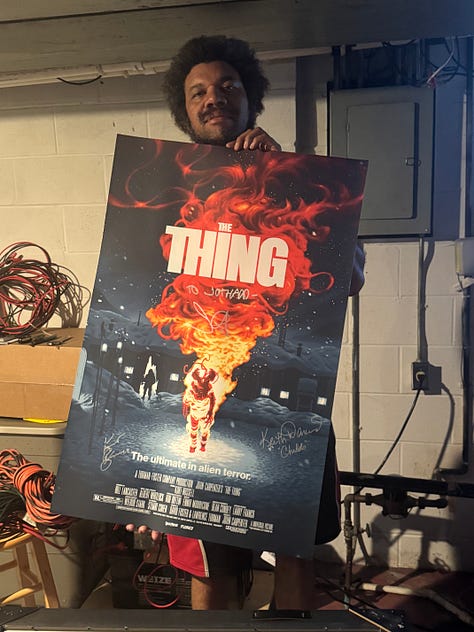

Joe and Georgia at Fan Expo Chicago. John Carpenter, Kurt Russell, and Keith David autographed Joe’s Thing poster. And storm damage, two maple trees ripped out.

Magic: Power and Its Costs

Magic: Power and Its Costs

JOTHAM AUSTIN, II PHD, NICK ELIZALDE, AND GEORGIA GEIS

·

AUG 19

Listen now


Order the Touch of Noir 2027 Wall Calendar by Jim and Georgia—

12 months of all-original art by Jim and Georgia; pre-orders open now, with mailing expected in September


Words // Friends Aug 26th at 7pm CST: 

Joe will be reading with four other authors on a Zoom hangout. Register now!


Check out what the RHR crew is creating:

Joe:


Share

Leave a comment

It’s science for Weirdos

Want to support the show? Tell your friends. Follow us on social media, Discord, share the podcast, and let us know what topics you are excited about. And to see all the content (studio images and artwork) subscribe to the Rabbit Hole of Research newsletter!

Stay curious, stay speculative, stay safe, and we’ll catch you in the next rabbit hole. Love Y’all!


Future Events to Hang with the Crew:

Podcast Cross-Appearances

Events & Conventions:

  • Words // Friends Aug 26th at 7pm CST: Joe will be reading with four other authors on a Zoom hangout. Register now!
  • Dragon Con – Atlanta, GA (September 3-7, 2026) – Joe attending as Professional
    • Here is my schedule of panels:
      • Fri 9/4• 10:00 AM – MCU: Wonder Man: Behind the Curtain (M302-M303 Marriott)• 7:00 PM – Spider Noir: Shadows of Justice (M302-M303 Marriott)• 10:00 PM – Long Live the New Flesh: The Rise of Cinematic Body Horror (Peachtree 1-2 Westin)
      • Sat 9/5• 11:30 AM – Philosophy in Science Fiction (Embassy AB Hyatt)• 7:00 PM – Yuletide Fear: Unwrapping Wintertime Horror Fiction (Peachtree 1-2 Westin)
      • Sun 9/6• 11:30 AM – What Makes Scientists Mad, the Sequel (Embassy AB Hyatt)• 4:00 PM – Welcome to Widow’s Bay: A Fan Panel (Peachtree 1-2 Westin)

Upcoming Episodes

*The Mini will now be every other episode!

  • Episode 82: Climate Change and Data CentersReturning Guest David Pincus PhD (episode 13 climate change and episode 39 on Johnny Storm)
  • Episode 84: ETGuest: Chris Guzman (@theboxinggloveartist)
  • Episode 86: Disability in HorrorGuest: Grace Daly (Bram Stoker nominee)

Share

Leave a comment


What the Crew is Digging, Links, Resources, and Topics Mentioned in mini and/or full episode:

Links & Resources:

  • “Any sufficiently advanced technology is indistinguishable from magic.” — Arthur C. Clarke, Profiles of the Future: An Inquiry into the Limits of the Possible

Science Holes:

  1. 1) What If America Went Completely Dark?
    Christopher Cox — New York Times Magazine, August 18, 2026
    nytimes.com/2026/08/18/magazine/national-blackout-power-electricity-outage.htmlNick’s post-storm power outage sent him down a rabbit hole about the US electrical grid. The US runs on three major interconnected power networks: Western, Eastern, and Texas. A FERC analysis found that taking out as few as nine key substations could trigger a nationwide blackout lasting 18 months to several years. The transformers that run the grid are massive, custom hand-built machines, many decades old, largely manufactured overseas with replacement wait times in years. 2) Do Octopus Brains Work Like Humans’ — Or Is There Another Way to Be Smart?
    Liam Drew — Nature, April 29, 2026
    and Scientific American: scientificamerican.comhttps://www.scientificamerican.com/article/do-octopus-brains-work-like-humans-or-is-there-another-way-to-be-smart/Octopuses are the only non-vertebrate animals with large, complex donut-shaped brain, and more than half their neurons live in eight arm nerve cords, essentially mini-brains. Skin that tastes, changes color and texture, and senses light. Evidence of memory and possible dreaming. And a serious ethical gap: vertebrates used in research have legal protections, cephalopods largely don’t. Neuroscientists are trying to protect the cephalopods and study them to map their neural connections and ask whether radically different brain architecture can arrive at the same intelligence.

3) Skin Healing Without Scars
Andrea Teagle — Knowable Magazine, 2026
knowablemagazine.org/content/article/health-disease/2026/can-3d-printed-skin-heal-burns-without-scars

Researchers are developing bioink — a gel laced with a patient’s own skin cells — that can be applied directly to severe burn wounds to rebuild healthy skin instead of triggering the body’s scar-forming emergency response. No rejection risk since it uses the patient’s own cells. Initial clinical trials are underway.


Science Terms

  • Substation — a facility where high-voltage electricity is stepped down and routed for distribution
  • Transformer — machines inside substations that change voltage levels; custom hand-built and difficult to replace quickly
  • Cephalopod — the class of mollusks including octopuses, squid, and cuttlefish; the only non-vertebrate animals with large complex brains
  • Connectomics — mapping every neural connection in a brain to understand how it produces behavior
  • Enteric nervous system — the “second brain” in the gut, containing roughly 500 million neurons that operate largely independently of the brain
  • Convergent evolution — when two unrelated lineages independently evolve similar traits, as with vertebrate and cephalopod intelligence
  • Bioink — a gel containing living cells deposited onto tissue to rebuild biological structures
  • 3D bioprinting — printing living tissue layer by layer using biological materials
  • Skin graft — skin taken from one part of the body and transplanted to repair damage elsewhere
  • Scar tissue — fibrous tissue produced as a rapid emergency repair response to large wounds; structurally different from healthy skin

Media Holes: What the Crew is Digging:

TV and Films

  • The Last House (2026, Netflix) — Joe and Georgia watched this sci-fi thriller about a mysterious rain that traps people inside their homes for years. Strong characters and tension, heavy on handwavium. 
  • Zero Day (Netflix miniseries) — Robert De Niro, nationwide cyber attack storyline. 
  • Remarkably Bright Creatures — Sally Field film based on the novel. 

Books

  • Bird by Bird — Anne Lamott. Writing motivational book that gets you hyped to get back into your projects.
  • My Favorite Thing is Monsters — Emil Ferris. Georgia just finished it and called it one of the best books she’s ever read. A graphic novel set in 1960s Chicago, illustrated almost entirely in ballpoint pen, weaving in famous works from the Art Institute of Chicago. Published by Fantagraphics, 2017. Volume 2 is now out.

Video Games

  • Midnight Suns — Marvel turn-based RPG. Nick started it post-power outage and says it’s catching his attention despite not being his usual type of game. More updates to come.

Listener Shoutout

  • “Universal Ouroboros” — listener Alex’s newly published 101-word story (101words.org/universal-ouroboros/).

“Stay curious, stay safe… Love Y’all!”


Join Rabbit Hole of Research on Discord: https://discord.gg/2nnmKgguFV

Subscribe and Share our Substack newsletter to get email updates, never miss an episode, and spread the word!! Don’t forget to give us 5 stars or a like!


Transcript

joe: [00:00:00] Hey, welcome back to the rabbit hole of research down here in the basement studio for the mini. What do you got? The

Nick: Mini mini

joe: You’ve got me, Joe

Nick: You got it, Nick

joe: We’ve got Nick

Geo: Georgia

joe: And we’ve got Georgia down here talking a little magic. We had a fun

Nick: Ah, yes. with The magic talking about magic, the power, its costs, ethics, politics.

joe: It was a really good conversation. High, low, soft, hard

Nick: Yeah. I enjoyed it a lot. I mean, I just, I feel like this season’s been full of episodes that just hit well for us

joe: Yeah, it was a magical episode.

Nick: Ooh, magical.

joe: Yeah, from that BL she had in the episode and then she sent me an email. She had said, “Any sufficiently advanced technology is [00:01:00] indistinguishable from magic.” And there was some question on who said it. It was Arthur C. Clarke, Profiles of the Future: An Inquiry into the Limits of the Possible.

So, wanted to add that.

Nick: Most responsible.

joe: Yeah. The limits of the possible.

Geo: Great.

joe: so

Nick: I Yeah. I thoroughly thought this was a fun one. We– There’s so much magic. , I feel like there’s so little things in the world that we don’t think of, , as magic, where it’s , oh, that’s just magical. , it’s nothing much, but it means so much more than you would think.

joe: Mm-hmm. Yeah

Nick: And it’s always fun to just look at it like that,

joe: yeah. It will

Geo: take time to find the magic, you know?

Nick: Yeah. I mean, we definitely live in a world where it doesn’t feel like things are as magical as they could be. But, you just have to find the little things in life and be like, “Oh, yeah, that’s pretty magical, isn’t it?”[00:02:00]

joe: Yeah. Very good. If you haven’t, go check that out. It was a good discussion. New business? Had had some fun stuff.

Nick: Oh yeah, what you got, bro?

joe: Fan Expo Chicago. I got to- And you were

Geo: definitely a fan. I

joe: definitely a fan. I was definitely a fan because there we had John Carpenter, Kurt Russell, and Keith David were all there

Nick: And who are they?

joe: They are… John Carpenter, one of my favorite directors, directed one of my favorite and wrote one of my favorite movies, The Thing. Sev-

Nick: What movie? Oh. Oh,

Geo: of y- several of your favorite movies. Kurt Russell and Keith David were

Nick: I’m surprised you’ve never brought this movie up, Joe. Geez.

joe: Yeah. I know I’ve never heard you bring up, You never heard me bring up, oh,

heard me… Oh, yeah, definitely. Had a episode end of season two, we talked about The Thing with Bill Hallier [00:03:00] and Todd Thyberg, I remem- I remember, if my memory serves me correct. So, but yeah, it was super exciting. It was fun to go and do that.

It was it was a little respice from life because w- a major storm had come through, and we were without power, so we had yeah, August 11th, and didn’t get power back for about 10 days.

So it was really interesting leaving the dark house

Nick: are all safe. We are

all alive.

joe: So but yeah, it

Nick: This is not AI.

Geo: Shout out to God.

joe: Yep, yep. We’re still

Nick: tired of everyone saying, “Hey, why is Joe so AI?” And I just have to say, I don’t know. He just sounds like that sometimes.

joe: No AI here. 100%

Nick: No

joe: I’m hu-man.

Nick: Hooman.

I thought we were hoomans. Is that not right?

joe: it’s pretty good. Lots of fun. How about-

Nick: Me, I avoided the power outage by [00:04:00] just staying in Chicago. My house didn’t have power, but I personally did have power.

joe: Mm-hmm. Mm-hmm.

Got out.

Nick: that was a fun time just hanging out.

joe: It was

Nick: No, I couldn’t do that. You know me, guys, I’m all hooked up to my Ethernet cable and s- doing random things.

joe: We’re part of the matrix

Nick: But no, yeah. Exactly, you know, someone’s gotta be there to make sure it’s all good.

But yeah.

joe: I was gonna say that before we get, go down the science holes and media holes, I wanted to talk about an event I have coming up on the day of release, August 26th. It’s gonna be a Zoom,

At 7:00 PM. Okay. It’s a Zoom. It’s

Nick: they got plenty of time.

joe: it’s gonna be a Zoom performance with several writers, and I will be one of them reading for your entertainment.

So if you’re not doing anything-

Geo: to join me … gonna be recorded so you could listen to it-

joe: it- I think it will be … at a different time? [00:05:00] I think so. I’m not

Nick: if someone wants you to, like, read at night for them to go to bed, like, this is the time to

get

joe: you can do it. 7:00 PM Central,

Geo: Might be early

joe: Might be early. Yeah, a little early for people.

Geo: But- But not for me. I’m probably gonna be tired.

joe: out. People say they wanna come out and hear me read. I’ll be reading, so- There you go … come and listen. Show some support. The link is in the newsletter. If you’re not subscribed to the newsletter, then maybe you should.

Geo: Shame on you.

Nick: A good reason to do it. Wow. Shame on you, Georgia.

joe: Yeah, the other cool thing is the Dragon Con is coming up in Atlanta, Georgia, the Labor Day weekend, so September 3rd to the 6th or something like that. Yeah, my panels, I got… My panels are here. I’ll be doing one on Wonder Man, Spider-Noir, the rise of the cinematic body horror, philosophy and science fiction, what makes scientists mad, inspiring the next generation of creators, and [00:06:00] welcome to Widow’s Bay, a fan panel.

So should be a fun time, so.

Nick: the show Widow- Widow’s Bay?

joe: yep, yep. Oh,

Nick: that’s cool. That’s a good show

joe: Yeah, it was. It was a really good show. Wonder Man was good. Spider-Noir, so I’ll be talking about all these, so

Nick: Hell yeah, that should be a good time

joe: Yeah, so if you’re down in Atlanta, Georgia, come on and

Geo: And do they mean mad as in crazy?

joe: As in like things

Geo: Or angry

joe: in movies and fiction that make you mad as a scientist. You know, like licking– like pulling someone out of a BSL4 when they got infected. So

Nick: sounds like you were about to say licking something. What were you gonna say, huh?

joe: When I started licking

Nick: feel like this is a personal jab on me.

joe: But yeah, so that’s all I have You

Nick: Hell yeah.

joe: move it along?

Geo: to move it along?

Nick: yeah let’s get to some science [00:07:00] holes ’cause I do have one.

joe: I d-

Nick: so, so, so, so science holes.

joe: holes. We’re here

Nick: Like Bill Nye, but if Bill had a science hole, this would be his hole.

joe: Yeah. Okay. Let’s,

Nick: Nope, that stays in. Don’t even think about editing that out ’cause I’m gonna bring it back up.

joe: Great. Yeah, I got a couple. I don’t know if we’ll get to both, but like I said, it was a, it was kind of a hard couple weeks, so, but yeah. Do you wanna lead off or you want me to lead off?

Nick: yeah. I’m gonna, I’m gonna go with mine. That way y- you can do both of yours if we have to, if you want to. But you know, we were here without power, and personally, again, I wasn’t without power, but it got me thinking like what would it take for the United States to go…

Like what would happen if more than one area was super affected by power loss? So I went looking down. I found this New York Times [00:08:00] article, which Joe can go ahead and input in the footnotes.

joe: it in the show notes for y’all

Nick: it was going on about how if nine of these facilities that like do the electricity what are they called again, Joe?

joe: Like substations? With the transformers that kind of step down the power to deliver to everyone else? Yep.

Nick: If nine of them were hit, because one was hit recently by snipers someone that was with a rifle or something, and it took a place down, but they were targeting, as Joe said, the transformers. if nine of them get taken down by people like that, it can definitely put us into a dark age again, where we won’t have power for…

I think Faye was saying minimum 18 [00:09:00] months, which that, that would be across

the whole United States.

joe: right.

Nick: Yeah. Like, it takes so long for the transformers to get made that it would cause a whole effect of… Yeah.

joe: that’s one correct. It was that incident happened in 2013. It was a little bit ago, the

Nick: Yeah, I–

joe: Right, right, right. Yep,

Nick: That was the reason, right? No? Like, this

joe: it wasn’t, like, last week, so Oh, no.

Nick: Oh, no.

No, but

Our power outage was

joe: Our power outages was August, but this one in the, the story in particular that kind of triggered all this was 2013.

And, you know, the article did a good job of explaining why. Like, you know, our electrical grid is old. It was cobbled together. There are three major kind of hubs that power different regions. I think one’s east, [00:10:00] west, and in Texas or something like that. Yep, so

Nick: Texan,

Geo: And

then how- There’s three …

and then

joe: many…

Geo: you said substations.

Yeah.

joe: and

Geo: many… Like is a substation like a big city?

joe: At, Or like, what does the substations… You’re saying there’s three? There, there are many, so these are the major hubs. Like, so there’s major hubs of interconnectivity that, that, that cover many states, and so there’s three major hubs that cover the whole United States.

Geo: And then the nine subs- And

You’re saying there’s three-

joe: there are many. So these are the major hubs of interconnectivity that, that, that cover many states, and so there’s three major hubs that cover the whole United States.

And then the nine- And then inside of these, hubs, there are many substations, and there are kind of junction points

Geo: key-

joe: That’s exactly right. So you just need to hit the nine key substations in all three of

Nick: Which you can look up fairly

easily

joe: can just look at where power is distributed.

You know, I think the article said any 12-year-old with internet could figure it out. And then you can coordinate potentially some strike. And then if you hit all of these substations simultaneously, [00:11:00] you could potentially render the entire United States dark. And then it went through the whole scenario,

Nick: think it said it would only take, what, under 30 people

joe: Yeah, I mean, they said this in this article. It was hypothetical, so there’s, y- you know- Yeah … It was a real thing that because of our infrastructure and the way it’s set up, and because it was cobbled together because, power came and then it wasn’t really planned well different areas developed faster than other areas.

So you have this whole mishmash and-

Geo: We watched

that show, like, about a… It was, like, over a year ago. you remember where,

joe: like

Geo: The power went out? It was… Do you know what I’m talking about?

joe: know what you’re talking about, like Revolution or something like that. Yeah, I can’t-

Geo: remember the name. But it was kind of about that.

joe: Yeah, that was

Geo: politics and, it wasn’t Al Pacino, was it? No.

joe: Oh, you’re

Are you talking about the cyber attack one? Yeah. That was on- Netflix or something. I was talking about [00:12:00] The Revolution, the one where the power went off. There was, like, some sort of all electronics and

Geo: Oh, was that the one where it was, like, snowing also?

Like-

joe: No, I don’t think so. I think this was, like

It was just a global blackout, and then the whole world was set back into, like, 100 years pre-electricity, and no one could figure out why. I think I only watched, we only watched the first season

but

Nick: that’s a raving review for that, guys

joe: I, well, I didn’t … I think other things just came in the way, so, oh, I think it was only two seasons looking at it, so maybe we did watch both seasons. Yeah, it was a good one. But I know what you’re talking about. It was a Net- it was a pretty recent Net- Netflix show, and it was, I think, was it Al Pacino or what? No, the other guy.

Geo: The other gangster

joe: the guy from, The one with Ben Stiller, and he’s the dad. I can’t think of his name Oh, yeah Do you know what I’m talking about?

Geo: do totally know who

joe: It’s a comedy. Excuse me.

Geo: totally know who you’re ta-

Nick: Guy from Meet the

joe: Who you’re ta- Yes. The [00:13:00] dad.

Geo: De Niro. De Niro. that’s it. Yep, it. Yep, De Niro. Yep.

Nick: Oh, De Niro. Good. Oh, Robert De Niro

joe: Yes. We’ll get there. See that, see how we do that? Zero

Nick: I had no clue what you guys were talking about

joe: Zero Day is the miniseries on Netflix that we’re talking about. It was a nationwide cyber attack that happened, and that was kind of it. Right. It was, that was really good.

Geo: It was good. But, like, power

joe: would- Yeah

Geo: would take out

everything.

joe: Yes, power would take out everything. Would take out- You would lose, I mean- Would

Geo: out all the computers

joe: gonna put that article in there, but it, and I encourage people to read it, but it talked about the levels. ‘Cause you start out, people wouldn’t really know what’s going on, and then, you know, the government would have to go, “Yeah, we got a national blackout.

We, it’s gonna, and it’s gonna be long,” as Nick said, 18 months to maybe three, four years. And

Geo: we’re just-

joe: And then as you go-

Geo: prepared

joe: yeah, I mean, you know, hospitals, things like that will use generators, but runs on diesel, but [00:14:00] that will eventually run out. Will our allies international allies, give us supplies when that happens?

You know, and then if you got the transformers are made internationally, so they have to come in to by port. So will our ports work? How would you operate a port to have a ship come in, and the cranes and everything that you need and the infrastructure to actually get the transformer? And then like they said, these transformers are big.

You know, like, you know, 800,000

Nick: have to go by railroad and

joe: Yeah, they usually go by railroad and things like that. But if the infrastructure across the country has now been devastated and down for now a year, , you would have… So y- none of this is like planned. Like,

Geo: you know- So I heard- So

it’s

very- … one of, the

joe: interesting, , and, thought-provoking, like how can you prevent this?

How can you prepare? How can you personally prepare for something like that? So… And

Geo: And there was locally they talked about a transformer needing to be replaced, [00:15:00] and then they’re, they are having to get that in and it’s gonna take a long time.

But Are there different sizes

of

joe: are … to transformers?

Yep, yep, ’cause they’re stepping down to like on the poles, if you think about the, the electrical poles, they’re like those white canister looking things. Those are transformers. If you look out down on the ground, they’re the little square boxes that say high voltage. Transformers live in there. And then you have at substations, small ones, they have smaller transformers, then you have big transformers like that.

So yeah, so you have all sizes. So the ones that they’re talking about, particularly in this article, the nine critical points, these are the large step down. So they go from-

Geo: they use the term transformer for all of these

joe: Yes, they’re all… Yep, yeah.

Geo: But obviously they’re very different. Very different.

joe: different. That’s right. They’re very different. Yeah, now if they all have a, the same purpose and the design of the transformers haven’t changed, so they’re the same design that was Early 1900s when electricity [00:16:00] first was becoming a a, a national global kind of utility the process hasn’t changed.

So things are hand wound and m- manipulated and there’s a lot of tedious construction and like they said, almost an art form to it that you would have, and people do. So yeah it’s kind of, They have

Geo: not trained AI

to do that. Yeah.

joe: No. If you’re a transformer maker, then you’re-

Geo: Job security

joe: you’re secure. That’s right. Unless you’re a Transformer.

Nick: Or if you’re a Transformer.

joe: And then there you go. See, look at that. Nick and I are on the same page here

Nick: We were there the whole time.

joe: So yeah it was a, that was an interesting article. I was glad you pointed it out to me, and I did

Nick: I was… I don’t know what I was doing, but I was like, “I wanna look this up.” And then I did it, and that came up, and I was like, “Great. This is so what I was looking

for.”

joe: and it was a deep dive, so it was really good. So we’ll get that we’ll get that in h- into The science holes

Nick: notes? [00:17:00] Oh. All right, Joe, what do you have for us this week?

joe: Yeah, I mean, one, it was kind of interesting, and it was, we’ve touched on this topic, but it’s how do brains work, and in particular octopus brains. Do they work like human brains, or are they designed differently? And it’s really fascinating ’cause octopu- octopuses are cephalopods, and so they have these

Nick: Are they not occupied?

Geo: They’re not

joe: octopi, no. It’s just the, the root of the word. And so I believe octopus is Greek, and so it’d be octopuses.

Nick: We gotta look that up

joe: I guarantee you it’s octopuses,

Geo: I think we’ve discussed and we’ve had this discussion.

joe: But yeah, they have these very elaborate brains, . And cephalopods in particular, so squid, cuttlefish, octopuses they all are part of the cephal- cephalopo- cephalopod family. But they have, they have three hearts, blue blood, no skeleton. Arms are flexible and move like [00:18:00] tongues.

They can actually taste through their skin . They can change color, texture of their skin and even their arms can regenerate in some species. So really fascinating. They’re the only non-vertebrate animal, so no bone structure that have big, smart brains that they can use.

And, , people have studied them for many years. And, this article was really interesting ’cause it did touch on some of the ethics of, why you’re trying to study these animals. Vertebrates, like ourselves or other animals we’re familiar with used in scientific research, they have strong legal protections.

But that’s not always the case for invertebrates, like octopuses. So these smart, intelligent

Nick: Which I do have a problem with.

joe: Yeah. And even if you try to have care there’s limited options for pain relief. So, if you’re working on other primates or other animals there, there’s usually pain management and things that you [00:19:00] can do.

But for the cephalopods not necessarily always the case. So really interesting, and the article talked about what they’re trying to do, kind of solutions to that, so.

Nick: on the same note, Alton Brown refuses to eat octopus now because he had a experience where he met an octopus and he grabbed its pen– or it grabbed his pen and, like, wrapped its tentacle around his finger or something. And then it did it again a few years later, and it remembered him.

It was re– He was like, “That was…”

joe: Yeah. Yeah, no they

Geo: that, that’s that other movie right now on where the

mar-

joe: of them, right. Yep. Where Mark Wahlberg

Nick: Really have to start knowing the names of these movies that you’re bringing up.

Geo: I know, and

I is not helpful for me actually haven’t seen it yet. It has Sally Field,

joe: Field. Yeah.

Geo: Sally Fields, and it’s based on a book, and people just said it’s,

joe: like- Right

Geo: of the best.

joe: yet.

Geo: I haven’t seen it yet, but I wanna watch it. Is that the one, [00:20:00] like, Learn- My Best Friend or My- Remarkable … Re- Learning something, yeah. Well, if you’re looking that up, I was gonna say, too, that there’s evidence article kinda goes in and talk about how the octopuses have memories, and so you just brought that up with Alton Brown.

joe: But there’s also evidence of dreaming. They have rapid skin changes during sleep cycles, so all this evidence that their brains are as complex as, human brains, except they’re really different. So a lot of the, their brains are donut shaped and this weird organization.

The neurons connections look like they… It was described as a mess of spaghetti. So they’re not, they’re unsure about the structure and organization. And then the… They have eight nerve cords or mini brains that control their arms, so their brain is kind of delocalized, so it’s not all in one.

It has a mini brain,

Nick: so

wild.

joe: yep, so really

Nick: did not know that. All

joe: And you think about humans. We think about our brain on top, in our head, , I talk on [00:21:00] here about the second brain, the enteric nervous system that’s in our guts. So we have a another

Nick: Oh, I knew there was a brain in my stomach.

joe: You have a brain in your stomach, yep.

It’s controlling stuff, so. Yeah, so really fascinating, and they’re doing what’s called connectomics I think I’ve talked about them here, in terms of the human brain, where they’re trying to map all the connections of the human brain to understand how our brains go together in disease states, health.

And so people are trying to do connectomics in cephalopods to see if their brain connections, even though the structure is different, are the brain cells connected the same way they would be in a human. So really it was a fascinating deep dive kind of report about octopuses and their brains and how smart they are.

So, and like Alton Brown, I don’t eat octopuses either, so.

Nick: Yeah, I think after I heard that I think I was pretty much done with them [00:22:00] because I wanna say it was Last Meal from Good Mythical or from Mythical Kitchen that he did that interview with, and I heard that and I was like, “Oh.”

joe: Mm-hmm. Mm-hmm

Nick: yeah, I would highly recommend checking that episode out if you’re at all interested in Alton.

joe: Yeah, well, to throw that in. Yep

Geo: Yeah. It’s called Remarkably Bright Creatures, and it does star Sally Fields. Through,

joe: through

Geo: unlikely bonds formed during night shifts at a local aquarium, Tova, an elderly widow, learns of a life-changing discovery that may bring her joy and wonder once again. But it’s supposed to be really, like- That’s really cool, yeah

but, and

joe: Oh, it’s really cool, yeah

Geo: things like that

joe: and you wonder how

Geo: have

joe: different pop culture movies

Geo: an …

joe: things like that have an effect on whether

Geo: there’s [00:23:00] any kind of legal-

Right.

Right …do you know what I mean?

joe: Yep. Yeah

Nick: and how people see them. Like, it’s all the exposure that helps these creatures.

Geo: Right

Nick: Like, if enough people understand that, yes, they have– they’re more than just what you can eat,

joe: Mm-hmm, mm-hmm,

Nick: It would help

joe: Also the way we view animals and things that we eat and,, their consciousness and their smartness., I don’t know. There’s a lot… When you have something like the, an

Geo: And I do think,

joe: I do think

Geo: A movie can have a huge impact

joe: Mm-hmm … have a huge impact. Yeah, it was

Geo: And I would bring up another one, but I’d have, but I’d have to look it up. And so I don’t wanna like waste 100%. Oh, another movie you don’t know. You

Nick: never watched it,

joe: be into the- Yeah … we’ll be throwing the media hole, so you can start. I’ll hit the… I’ll go to the next science hole real quick- … and I think we got a little time for it. This one’s interesting, maybe not as long, but it- it was all about skin healing, and it was an [00:24:00] interesting-

Nick: could finally be Wolverine

joe: article. Yeah, you can be Wolverine. It was about scarring after burn trauma and how do you repair skin. And a lot of times you try to take grafts from other parts of the body, or you try to grow skin in culture, and it takes time. And so what these researchers and groups in this article and- and starting kind of some of the- the initial clinical trials was a bioink.

And so they take these gels with cultures of your own skin cells, and then they print that or- or layer it onto the area that needs the new skin an- and then coax it to develop into skin and- and have that. So it was really interesting and- and the article goes into how they’re even trying to layer.

So you have different skin cells, and we talked about this in some other minis that, when you try to build an organ on an organoid, that the problem is that you don’t get all the [00:25:00] substructures, the , kind of veins and arteries and things like that would happen, the blood vessels, pigments that would form in a natural occurring structure.

So they’re testing, like layering, can they layer different cell types? So print one type, then put another type on top, then another type on top of that to coax it to develop these cells to work together to form something that’s closer to the original skin cell. And it- it’s just using this bioink kind of thing, then you can…

You’re not hurried. So if you have someone that’s been injured, you can now start the process of- of their healing much faster than potentially trying to wait for grafts and things like that can- they can injure another part of the body while you’re trying to heal, so.

Geo: And how long does it take for them to get this bioink?

joe: You mean- Like,

Geo: to grow these skin cells?

joe: that’s a good… I didn’t see a time. I, it- it sounded like it was very quickly. Like, they could have these [00:26:00] matrixes of skin in a syringe, kind of what they called it, pretty quickly. So growing up the skin cells, like you can have that in this, in a bioink.

But it didn’t have in here- In this article a

Geo: this article, a

joe: timeframe

Geo: and they use this person’s own-

joe: Mm-hmm …

Geo: cells. So that would probably, like… ‘Cause I think a lot of times when it’s about transplants or about other things, if you’re trying to use a foreign… You know what I mean? Mm-hmm.

joe: Mm-hmm.

Geo: If it’s not the person’s actual cells-

Right. Yeah … that, that introduces- rejection and stuff like

that. Mm-hmm …a lot of issues

joe: you have other issues. Yep, yep. Yes No, that’s

Nick: So it… Like, how are– I I guess I don’t– I think I need to look more into this one, ’cause, like, would that be able to help with, like, burn victims and everything?

joe: exactly what this is for. Yeah, that’s, that was the [00:27:00] article’s that’s the severe wounds, burn, that, that’s kind of the application for this, that you would then apply it as kind of skin cell matrix. So to grow, like the way you’d usually do it, you’d have to grow in a lab dish , skin structures.

But that could take weeks, you know? And so y- then you apply that and see what happens. So this here is a quicker process where you can harvest skin cells and then grow those up quickly and then, apply this

Geo: And when you say ink, it almost sounds like a tattoo.

joe: When you say ink, it almost seems like a tattoo. Well, I think they’re using it in that , ’cause you’re drawing.

I think it’s just our word choice is limited. I guess deposit, would be it or… But I think it’s, they’re trying to use like 3D printing, so bio-ink like you’re printing skin, right? Mm-hmm. So that’s kind of the idea,

Nick: It’s so wild.

joe: wow. Yep.

Nick: I never thought printing skin was gonna be something we’d ever have to say

joe: Yes, that’s right. 3D bioprinted skin substitute is what I think they’re terming it,

Nick: words [00:28:00]

that

joe: BioInk.

Geo: in a

joe: in a syringe. There’s a whole bunch of term… Like, you read the article, they had a few different phrases for it. We’ll see which one catches,

Geo: think it’s interesting that skin is its own organ. Yeah, that’s right. Like, you don’t, like, I think- yeah … I never realized that,

joe: then-

Geo: then, so that’s just always been, like, hard to get my mind around.

joe: around. Yeah, and when they put the bioprinted skin on, then underneath, your own body will go, “Oh, it’s just…”

Instead of wound response, which is it goes, “Oh, this is just normal skin that we can- So that’s- … deal with,”

Geo: right. Yeah. And,

joe: you know, just kind of do our normal business in- instead of a injury now, and so it can be even

Geo: off something foreign …

joe: Even, you might not even get scar tissue and things.

‘Cause when you have a big wound, you’ll start getting scar tissue and things like that, and I think we talked about in the regeneration episodes healing and things skin healing. So no, it’s, it was really it was really fascinating and they’re moving forward with now clinical trials to see if they [00:29:00] can get this to work and a, a

Nick: How soon can we– do you think we can see this?

joe: You mean like if you show up at the

Geo: Are they, are they using

Nick: Yeah. Like, can I go to them and be like,

joe: No, no, they’re in clinical trials,

Nick: my finger. Can I, can I get this going?”

joe: Clinical trials, so that means that they’re doing the testing. It’s not everywhere, so

Nick: Yeah, that’s what I was wondering, like how central it

joe: Oh, I don’t … That’s … Yeah, it could be years. I mean, I don’t know.

Depend on how the trials go, right? Maybe never, like, if it’s a real bad doesn’t work out that well. Yeah, so, yep,

Nick: Sounds like it’s gonna be some comic book villains going on here.

joe: Yeah, there you go. So yeah, no, it’s really cool. Probably see some peer-reviewed papers and things coming out soon, like a lot of

Nick: Yeah, I’d like to see more about that ’cause

joe: Yeah. I’ll keep an eye on it, but I’ll put this link to this article. It was really cool, and there’s other links in here. You guys can click around and check out. Go down your own little rabbit hole, [00:30:00] science hole,

Nick: then you can come and talk to us about it.

joe: Then yeah, you

Nick: Sometimes we’ll

joe: drop it in the

Nick: as long as we have internet

joe: if you have internet and you have power.

We don’t go dark. Excellent.

Nick: not. Then you gotta start getting a carrier pigeon for us,

joe: That’s… Yes. Yes. Georgia, do you have anything, or are we gonna go to media hole?

Nick: Are we going to my Media hole?

joe: Media holes. Let’s do it. What do you got?

Geo: I got

joe: I got something related, related. Oh,

Nick: oh yeah

joe: yeah. Yeah, so

Geo: we Related to Media, or Science?

joe: to the science hole or to n- almost the next science hole, the, the When America Goes Dark.

But we just watched, it was a new movie what is it? Netflix? The Last House, and it was really, like, a sci-fi thriller, and the whole premise was that this rain started, and it trapped people inside of

Nick: never stopped

joe: and it never stopped. Right, it was this whole… Well, it did, [00:31:00] it stopped, but people were trapped in their homes, and you didn’t know why.

And then the movie took place over five years. Well,

Geo: don’t spoil it.

joe: No, I’m trying not to. I mean, you can watch the trailer, you get all this. But yeah. It was, but it had elements of our science holes were relevant somewhat to this kind of you know, live-

Nick: have to do an episode on that? Is that what

joe: living off the grid and maybe other stuff we talked about.

So- Yeah … Yep, yeah. I just thought of it when we were talking. I was like, “Oh, that was a pretty relevant

Geo: It was very science… The science was- … not very

sound. I know. It was handwavium. It was just… But the characters were good. The acting was good. It was like- Yeah … I have to say it was enjoyable, but it just it did, it let’s just say it did not hold water.

joe: no. It was a, a lot

Geo: was, uh, a It

joe: used a lot of handwav- a big serving of handwavium in that one. It was,

Geo: boy

Nick: cold water, you know it ends water.

joe: yeah. But it was a good, it was a good story and the characters. I think [00:32:00] that’s something from-

Geo: I think the story was a little-

joe: a little, I mean, storytelling, I should say, that when you s- if you have tension, if you kind of have your tension threads set up, your, you know, in, in a s- in a story, then your reader or viewer will stay with it-

Geo: It was like- … till

joe: answer the questions. But-

Geo: moments were so- Yeah … ugh, like you could really relate to some of the emotional-

joe: You just couldn’t think about what they were

Geo: too

joe: too closely. You just had to,

Geo: to, like…

joe: Yeah, o- once the movie was over, it was

Nick: me or getting on me, Gary

joe: Yeah, it was, it’s worth a watch. But yeah you would yeah.

You’ll be scratching your head.

Geo: It’s worth a watch with a

warning.

joe: Yeah, that’s right. Expect a lot of handwavium. Cool. Yeah, how about yourself? What are you… Are any movies or so?

Nick: Movies. I think I just rewatched, like, three older movies recently, and that was Adam Sandler’s The [00:33:00] Longest Yard. Don’t ask me why I was… I don’t understand why I did that, but I did it. The Proposal with Ryan Reynolds and Sandra Bullock,

Geo: Mm-hmm

Nick: and Free Guy, which was another Ryan Reynolds film.

I don’t know what happened. I got home and had power, and I was like: Yep, this is what I’m doing with my time.

joe: I got power.

Nick: And then I also started the game Midnight Suns, which is a Marvel game,

joe: Yeah. Cool

Nick: that’s been pretty cool so far. It’s not my usual type of game,

joe: Yeah

Nick: but it definitely has been catching my attention. It’s more of a turn-based R- RPG,

And I’m not normally about that life, but this one it’s it’s piqued my interest so far.

joe: Cool

Nick: So I… As soon as I get further in that game, I’ll give more of an update. But yes.

Geo: How

joe: How are you liking it? Yeah, it’s really cool. Yeah

Nick: Georgia, what about yourself?

Geo: Oh [00:34:00] gosh, I don’t know. My brain is completely empty right now.

Nick: quietly.

joe: right now. Very empty.

Nick: Yeah

joe: Excellent. Excellent. Yeah, a book I’m reading is Bird by Bird by Anne Lamott. It’s kind of a writing motivational-

Geo: Do you like that?

joe: I do like it. Yeah, it’s

Geo: I just recently saw something that people- Yeah … really love that.

joe: Yeah, I think I saw something similar and I picked it up and started reading it.

I like that. And breaks the monotony. Gets you hyped to get back into writing projects. So if you’re looking for a little motivation, check it out. But yeah,

Geo: I did finish… My Favorite Thing Is Monsters by Emil Ferris, and I do have to say it’s one of the best books I’ve ever read. And it’s a graphic novel, and I wanna say she does alm- like her artwork almost entirely with ball- ballpoint pen. It is just [00:35:00] like, oh my God, it’s like her illustrations and her, and the story, it’s really intense.

It’s kinda hard to read at points, but it is amazing. And then I was super excited

Nick: I can find at my local library?

Geo: Oh, I, I’m sure we have it. And it’s funny because I got it because someone donated it to the library,

joe: and

Geo: wa- had been a library book. So it’s, yeah, it’s had qui- quite the journey, and I was so excited. I’m like, “Oh my God, I want this book.”

And then I just realized that she just that she wrote a second one, so now I can read another volume. I think it was maybe last

Nick: Oh, that’s cool

Geo: Yeah.

joe: neat.

Geo: It’s set in Chicago, like, in, , the 1960s, and the main character visits, , the [00:36:00] Art Institute on several occasions in the book and weaves in different famous pieces of art that, that she saw at the Art Institute. And oh, it’s so good. And so I definitely have to go now to the Art Institute and see what pieces are s- you know-

joe: there.

Geo: Still there … still there or actually there, yeah. Yeah. So anyway.

joe: Be like a scavenger hunt.

Nick: When was

this one written?

Geo: It was written

joe: Mm-hmm

Geo: And I believe-

Nick: not that long ago.

Geo: Yeah. And I had s- I had seen it at, , bookstores for the longest time. I’m like, “I really want that book.” And just for whatever reason, I hadn’t gotten it yet, and it just literally fell into my hands, and I was like, “This is meant to be.”

Mm-hmm. So. That’s cool.

joe: Very

Geo: And it’s Fantagraphics, which is, like, my… one of my favorite book publishers. Awesome. Yeah,

joe: it sounds good. Sounds really cool.

Geo: Sounds

joe: check it [00:37:00] out.

Nick: Yeah, when you’re done with it, let me know and I’ll check yours out

joe: out.

Geo: yeah. I just… Like I said, I just finished, so you’re welcome to.

joe: Cool. Awesome. Well, I think that’s it. Check it out. Don’t forget, if you’re wanna see some folks reading their writing- Oh … on Zoom, Words fr- With Friends.

Geo: What if you just wanna listen?

joe: You can just listen. You don’t have to look at us, I guess. Just look away. I don’t know.

Geo: it’s free away,

Uh,

joe: The, the free Zoom link will be there.

You can just

Geo: You can just come- And you said there was, like, four writers?

I believe

joe: four or five. Yes. Yep, yep I’m going

Geo: And is there- … based on the- … a through line

here? no, just- Or it’s just random?

joe: random. I don’t know. Mm-hmm. No one’s given me a theme,

Nick: We-we-we-we’re into ’em

joe: I’m just reading. Yeah, no, it should be fun.

I’ve not done a virtual reading before. I’ve given a virtual presentation, like scientific presentation. I wonder if that’s the same kind of feeling.

Geo: [00:38:00] I don’t know.

joe: yeah.

Geo: My friend did a virtual

Nick: Yeah,

Geo: I d- I don’t know if you remember my friend Julie did a- Yeah, that was fun … virtual play.

joe: I remember that.

Yeah, that was- It was so amazing … that was during the pandemic. Yes.

Nick: What in the virtual play?

Geo: It was a virtual play where the different actors actually all were in their homes.

joe: That’s right.

Geo: yeah

and then they-

joe: They had sets, they had costumes

Geo: it

joe: the whole thing, but it was, they were just-

Geo: It was

something else

in their

was-

joe: it was interest- It was, and one was about saving woods or something.

I don’t know. It was almost like the Briar East,

Geo: Yeah, there was like a … Yeah, you’re right.

joe: I can’t remember. Okay. That’s a, that was a… It feels like forever ago. Well, on that note,

Nick: He was very old

joe: you have me, Joe. Yeah,

Nick: Yeah, got

joe: you got Nick.

Geo: got Nick. Georgia.

joe: got Nick. Georgia. We’ve got Georgia.

Nick: And

joe: We went down so mini holes. And Nick’s cutting out there.

Nick: I don’t know why I went off. No, I was trying [00:39:00] not to. I was cutting myself out. Bye-bye.

joe: and we love y’all.

Newsletter and Transcript of Rabbit Hole of Research Episode 80:Magic: Power and Its Costs

Like Jack Burton always says, “…The check is in the mail.” We explore the hidden physics, biology, politics, and ecology behind magical systems.

Substack, Apple, Spotify, YouTube, Amazon

Episode 80 Transcript


In Episode 80 of Rabbit Hole of Research, Joe, Nick, Georgia, and Mary welcome author B.L. Mostyn (Heroes of Another Age) to the Basement Studio to discuss the costs of magical systems.

We discuss the physics, biology, politics, and ecology behind magic systems, fantastical creatures, and the power structures that sustain them. We ask the questions worldbuilders sometimes skip: How does your magical system really work (is it consistent), how many Big Macs to make fire balls and shape shift, and who’s controlling access and should they?

Special Note: The episode is being released during a rough week in NWI and Chicagoland, and the show notes may be shorter than normal. On August 11th, tornadoes and a derecho tore through the area causing major damage. At the Basement Studio: two maple trees were ripped out of the ground in the front parkway, and the cottonwood’s canopy in the back garden was shredded (luckily everything missed the house) but we did lose power. 

As of this episode’s release, the power is still out: latest restoration estimates is between tomorrow and the end of August. The Rabbit Hole family is safe. We appreciate your check-ins, patience and your support, and will keep you updated. Stay safe, stay curious, and we love y’all!


Check out more from B.L. Mostyn:


Georgia and Jim’s Touch of Noir 2027 Wall Calendar —

12 months of all-original art by Jim and Georgia; orders are open now, with mailing expected in September


Check out what the RHR crew is creating:

Joe:


Future Events to Hang with the Crew:

Podcast Cross-Appearances

Events & Conventions:

It’s Science for Weirdos

Want to support the show? Tell your friends. Follow us on social media, Discord, share the podcast, and let us know what topics you are excited about. Leave a Comment. And for email alerts sign-up for the Substack newsletter and never miss an episode, exciting updates or the bonus images we talk about on the episodes. 


We discussed these questions on the episode and now want to Hear From You (leave a comment):

  • If you could have one magical power, what would it be, and what would you be willing to pay for it?
  • Hard magic or soft magic (Hard: systems with strict rules and consequences, or Soft: a little extra splash of Handwavium in your magic?
  • What’s your favorite magic system or fantastical creature?

Drop your thoughts in the comments. We read them all, and your ideas often shape future episodes.

Leave a comment


Future Episodes

  • Episode 82: Climate Change and Data CentersGuest: David Pincus, PhD
  • Episode 84: ETGuest: Chris Guzman (@theboxinggloveartist)
  • Episode 86: Disability in HorrorGuest: Grace Daly (Bram Stoker nominee)

Share

Leave a comment

For more stuff (Images, Episode Highlights, events, etc), subscribe to our Substack newsletter!


Show Notes & Fun facts 

Stuff crew said they’d put in shownotes

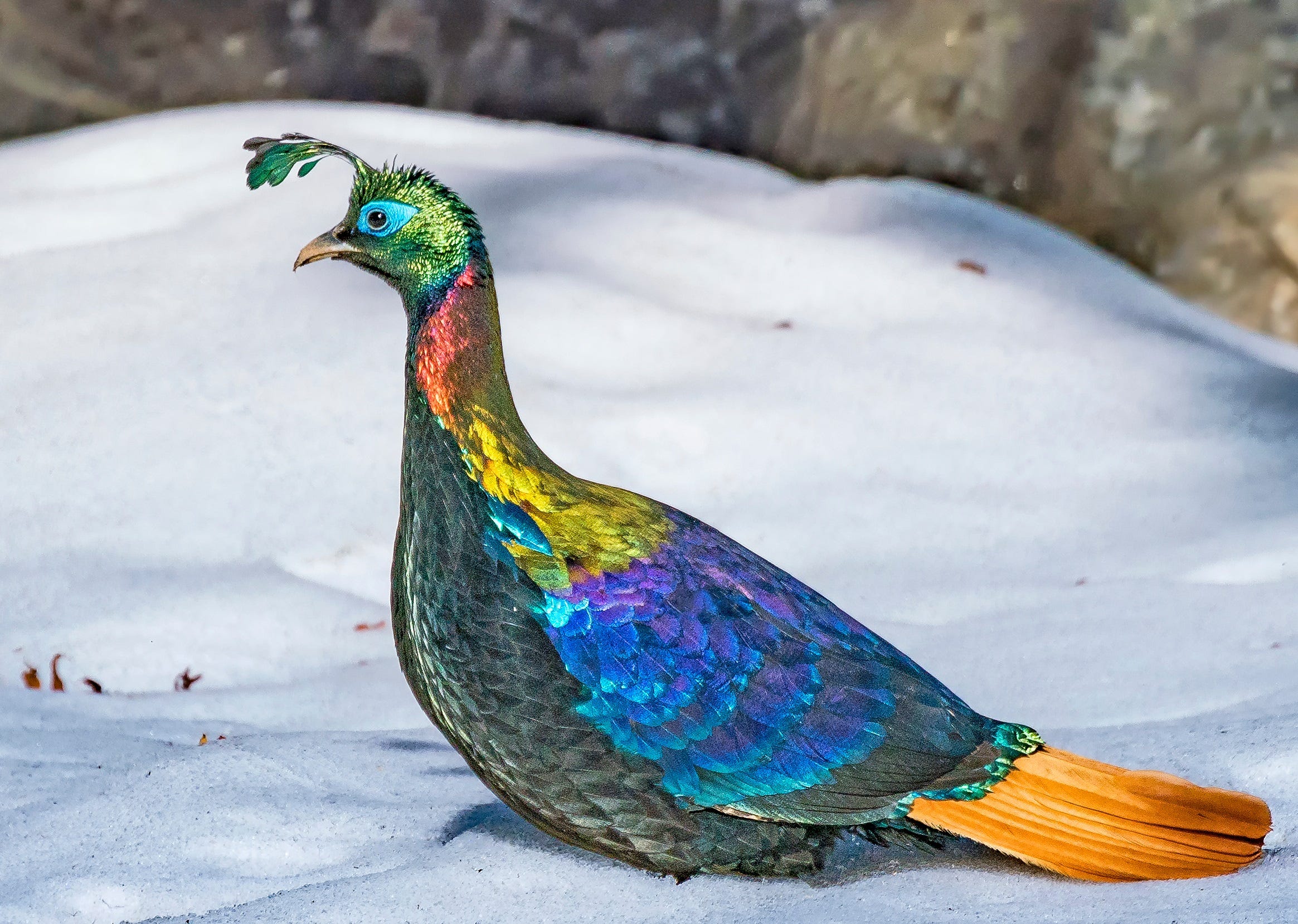
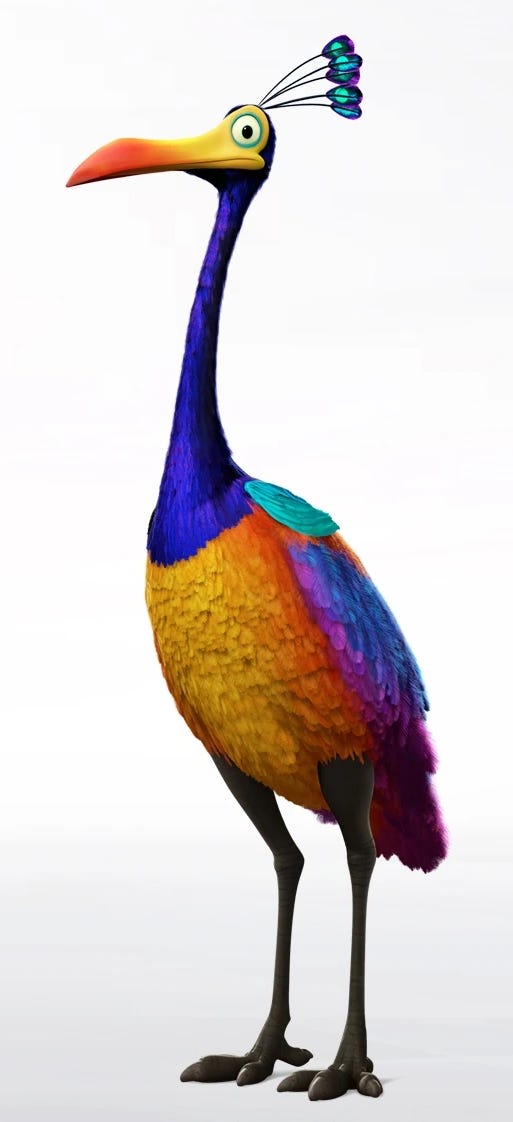
  • The bird Kevin from Up — it’s based on a real animal (the Himalayan monal)By AJIT HOTA – Own work, CC BY-SA 4.0, https://commons.wikimedia.org/w/index.php?curid=57993244Kevin1Kevin: Pixar: https://pixar.fandom.com/wiki/Kevin

Books:

  • Heroes of Another Age — B.L. Mostyn
  • The Power — Naomi Alderman
  • The Wheel of Time series — Robert Jordan
  • The Hitchhiker’s Guide to the Galaxy — Douglas Adams (Babel fish)
  • The Magicians — Lev Grossman
  • Mistborn Saga — Brandon Sanderson 
  • Dragonology: The Complete Book of Dragons — Dr. Ernest Drake (Dugald Steer)

Movies/TV:

  • Big Trouble in Little China (1986) 
  • The Flight of Dragons (1982) 
  • Up (Pixar) — the bird Kevin; discussed as based on a real mountain pheasant
  • The Power (TV series, Amazon) — unfortunately it was cancelled after season one
  • The Flight of Dragons (1982 animated film) 
  • Avatar: The Last Airbender

Comics:

  • Sex Criminals — Matt Fraction & Chip Kidd (Orgasms stop time, go check it out)

Fun Facts to Impress Your Friends With:

  1. The bombardier beetle is nature’s fire-breather. It stores two separate chemicals — hydroquinone and hydrogen peroxide — in its abdomen, combines them on demand, and ejects a boiling toxic spray at 100°C. 
  2. Dragon flight has a real chemistry solution. The 1982 animated film The Flight of Dragons proposed dragons ate limestone, combined it with stomach acid to generate hydrogen gas, and fly like blimps. Hydrogen is also highly flammable, which may explain fire-breathing. But accidents happen, even though the physics can work, remember the Hindenburg disaster.
  3. Mitochondrial DNA is inherited from your mother. When sperm fertilizes an egg, the paternal mitochondria are actively destroyed during travel to the egg. The maternally supplied egg provides all the energy infrastructure for new life. This means certain inherited traits, including susceptibility to some diseases, follow a strictly maternal line, or a fantastical magic system could be tied to the mother’s bloodline.
  4. Kleiber’s Law says big animals burn less energy per pound than small ones — metabolic rate scales to body mass to the power of 3/4, not 1:1. A dragon-sized reptile with a slow metabolism, like a crocodile, could theoretically survive on one massive meal and go dormant for months. One dragon per mountain range isn’t fantasy, as discussed in episode, it’s actually the ecologically sound population density for an apex predator that size.
  5. The Australian military once lost a war to emus — and Joe thinks this may explain the dragon mythology. In 1932, the Royal Australian Artillery deployed machine guns against 20,000 emus invading Western Australian farmland. The emus won. They split into small groups, scattered under fire, and the military operation was abandoned after 1,000 confirmed kills, not emus but the soldiers. The commanding officer noted the birds moved with the “invulnerability of tanks.” Now consider Joe’s point: an emu stands six feet tall, runs at 30 mph, and has clawed feet capable of disemboweling any human that stands in its way. If medieval soldiers encountered a flock of emu and a few barely survived, they were not going home to say they got decimated by flightless birds. They were going to describe a magnificent beast with terrible claws. And like a game of telephone, this is how Emu becomes a Dragon.

Episode Highlights

  • 00:00 — Basement Roll Call: Joe, Nick, Georgia, and Mary welcome author B.L. Mostyn to the Basement Studio.
  • 03:26 — Checklist For Magic Systems: Joe walks through his framework for interrogating any fictional power system — energy source, physiology, ecology, economy, politics, and failure modes.
  • 05:58 — Defining Magic And Science: B.L. offers her definition of magic as anything we don’t fully understand, and the crew explores where science ends and magic begins.
  • 12:44 — Scale Access And Wonder: The crew debates what makes something feel magical versus merely impressive — is it scale, rarity, or just not knowing what’s in someone’s hand?
  • 17:33 — High Low Soft Hard Magic: B.L. breaks down the spectrum from high to low magic and soft to hard magic.
  • 24:56 — Heroes Of Another Age Magic: B.L. walks through her elemental magic system — gods, elementals, a cycle of power flowing through all living things, and why humans in her world cast magic wrong and damage the world around them.
  • 28:31 — Species Politics And Fear: B.L.’s eight-species world has dragons, elves, Nokin, dwarves, and humans — each with a different relationship to magic, and humans fearing it most because nobody taught them correctly.
  • 34:46 — Dragon Ecology And Flight: Joe and B.L. work through the biology of dragons — territorial range, volcanic nesting, slow metabolism, centuries-long growth from house-cat size to full dinosaur scale.
  • 41:19 — Magic Powered Dragon Flight: B.L. explains how her dragons use ambient air energy rather than wings to fly, drawing on the kinetic energy already moving through the atmosphere…but at what cost.
  • 43:24 — Handwavium And World Logic: The crew agrees a little handwavium is okay. what matters is internal consistency, not scientific accuracy down to the gram.
  • 43:55 — Emus As Dragon Origins: Joe floats his theory that medieval dragon lore may have started with soldiers encountering flocks of emus and surviving just barely to tell a different Handwavium tale.
  • 47:33 — Real World Fire Breathing: The bombardier beetle is nature’s fire-breather, and the crew discusses how a dragon could realistically generate flame using hydrogen gas.
  • 49:50 — Costs And Morality Of Magic: B.L. raises the ethical dimension — what are you willing to pay, and what are you willing to take from someone else? Dark magic as externalized cost.
  • 51:12 — Jedi Force Power Politics: Joe makes the case that the Jedi industrialized the Force, and asks whether the dark side was really just a competing school of thought that got framed as evil by the victors.
  • 53:50 — Hereditary Magic Genetics: Nick asks whether magic passes to offspring, leading Joe to explain mitochondrial DNA, maternal inheritance, and epigenetic tagging.
  • 56:25 — The Power Matriarchy Magic: Joe recommends Naomi Alderman’s The Power.
  • 59:25 — Magic War Crimes Fallout: Nick asks B.L. whether magic can constitute a war crime in her world — boiling seas, mass extinction, and whether the environmental cost of catastrophic magic becomes its own deterrent.
  • 01:02:13 — Pick Your Power And Costs: The crew goes around the table — B.L. picks shapeshifting, Mary, universal language comprehension, Nick, airbending, Joe, telepathy/telekinesis, Georgia, after pondering for awhile, picks stopping time.
  • 01:10:23 — Time Stop Comic Tangent: Joe recommends Sex Criminals by Matt Fraction.
  • 01:11:28 — Books Cons And Farewell: B.L. plugs Heroes of Another Age, and the crew signs off.

“Stay curious, stay safe… Love Y’all!”


Share

Leave a comment


Join Rabbit Hole of Research on Discord: https://discord.gg/2nnmKgguFV

Subscribe and Share our Substack newsletter to get email updates, never miss an episode, and spread the word!! Don’t forget to give us 5 stars or a like!


Transcript

joe: [00:00:00] Hey, welcome back to The Rabbit Hole of Research down here in the basement studio. We’re all crewed up. You’ve got me, Joe.

Nick: You got Nick.

joe: got Nick. Georgia. We’ve got

Georgia.

Mary: got Mary.

joe: We’ve got Mary, and we have a special guest with us.

BL: Hi, I’m B.L. Mostyn. I am the author of epic YA fantasy, Heroes of Another Age. And I’m here to talk about, world-building and magic and wherever the rabbit hole leads us

joe: Yeah. So

Geo: Yeah All right

joe: like this is the first time

Nick: I feel like this is the first time we’ve covered anything magic

joe: I, we did. We had,

Nick: I, I-

Geo: we did. We had,

Nick: what have we covered?

joe: We had Davis on and magic medicine a

Nick: Oh. You know

joe: sea- second one this, this season. Yeah. Yeah. Geez.

Nick: Man, I forgot about

joe: we lose friends at a podcast there.

Mary: Oh,

Geo: But you take more medicine than magic- Yeah … [00:01:00] probably.

joe: We don’t– We haven’t talked a lot about magic, so- So

this is yeah, super special. So…

Nick: Do you have a list for us, Joe?

joe: Do you have a list for us, Joe? You know, I actually have a list and a monologue ’cause you guys have been giving me a hard time not having a list. So I wanted to come prepared for both.

Mary: But- Excellent

joe: I’ll just go

Geo: Right out the gate. Stage

joe: setting here.

There is always that moment of excitement when someone raises their hand and the impossible happens. Fire from nothing, a wound knitting itself shut, the dead opening their eyes, time stopping, a mountain cracking in half because someone wanted it to. And you start to imagine if you could do that, everything would be different.

But before you sign that contract in blood, here’s the thing you should be asking: where does it come from, and what’s it going to really cost me? If you raise your hand and produce fire, that fire is real. It has temperature. It used energy that came from somewhere. If you heal a wound, what are the biological costs?

If you move a mountain, you just applied force to billions of tons of [00:02:00] rock, and every action has an equal and opposite reaction. Energy cannot be created or destroyed. Science doesn’t take the day off because you’re the main character, and a universe doesn’t give free lunches.

it doesn’t stop at science.

You have to think politics and ethics because magic doesn’t exist in a vacuum. It would exist in a world full of others, and the moment one person or one creature or bloodline has it, then everyone else will want it. But who controls the training, the access, the supply? Who profits? Who pays when it goes wrong?

And what happens to anyone who tries to take it without permission? So handwavium aside, what’s magic really costing and who’s paying? Or just remember what old Jack Burton always says: “Have you paid your dues, Jack?” “Yes, sir. The check is in the mail.” So…

Nick: What? What is that one from?

joe: from? Big Trouble

Geo: don’t know?

Nick: You don’t know that? Oh my

joe: Yeah. Oh my gosh.

Nick: Oh my God.

joe: starts with a little magic.

Nick: I forgot all [00:03:00] about that movie. Yeah, that’s- I love that movie … it starts with magic, so yeah. How could you forget that movie?

joe: with magic, so

Geo: How could you forget

Mary: could you forget about

Nick: ‘Cause it’s been forever and a half

joe: Forever and have. Yeah. Thank you. Thank you. Yeah. So that’s kind of… And my list kind of frames off of that, but, you know, I don’t know, we can start talking and then we can go. I’ve got, I got

Geo: You’re gonna keep us in suspense?

joe: Yeah, no, I mean, I’ll keep talking, you know. That’s why I do a podcast, so Just jump

Nick: was waiting for you to just jump into your list.

joe: So I had a list. My list here and that’s always, I give this disclaimer to lists, you can disagree with it, you can agree with it, whatever. But I had like a little checklist

Nick: Also be– if you have anything that you wanna add to his

list-

joe: to the list, yes. Or-

Nick: just jump in and just start correcting him.

And

joe: Yes. That’s the way. Or delete,

Geo: that’s the way, or delete. I, I had a

joe: I, I had a checklist for integrating fictional magical power systems, and I highlighted some of that in the little monologue. But I had energy source, like where does the power come from? When is it depleted? The psycho- the [00:04:00] physiology.

What does it do to the user’s body over time? Mine. Ecology. How does it fit in with the surrounding environment? Food web. Economy. Who supplies the infrastructure, profits? Politics. Who controls the access? Institutions that manage it or restrict it. And failure modes. What happens when it breaks, overused, or falls into the wrong hands?

So I kinda had these questions, this checklist that- Mm-hmm … As you build a world, I think you should be thinking about and asking in your work. So does that… I mean, you construct these worlds, so I don’t… I write more in speculative sci-fi but, you know-

BL: Well, you know, the interesting thing about sci-fi and fantasy is they’re really not that far apart, so you’re talking about, you know, magic systems. We could go straight into Star Wars, and what is the Force but magic? And, you know, you talk about handwavium we have all sorts of ways to travel. Are you traveling by dragonback?

Are you traveling [00:05:00] by warp drive? So the, the lines are not as well-defined as we may think, but I think that’s an excellent checklist, but they aren’t necessarily all applied to the same type of

joe: Yes, that’s true. Mm-hmm. Good

Geo: point.

Nick: do you fall under the umbrella of magic being a science?

BL: I, oh I’m so ashamed I don’t remember who said this quote, but any sufficiently advanced m- science looks like magic

Mary: Mm-hmm.

Geo: Yeah. Yeah.

joe: Arthur C. Clarke? I don’t know.

BL: so I mean, like, it all comes to somewhere, and they’re all, there, there’s always rules about everything. As Joe implied, you know, every action has an equal opposite reaction, and energy can’t be created or destroyed, so where are you getting it from?

Geo: And I feel like it’s magic just when I, like, turn on the light switch,

BL: Mm-hmm.

Geo: you know? Mm-hmm. And it gets light. Yeah.

Nick: it magic? Yeah.

Geo: It’s like magic, right?

Nick: It’s like magic. Is that waving your hand? Right? It’s like magnets. How do they work?

Mary: do they work? Oh, B, can I ask you [00:06:00] a question?

BL: it’s a great thing to think about scale. You know, something as small as electricity or magnets, like when you amplify that 10,000 times, like you get lightning bolts and, the Earth’s magnetic field.

joe: Right.

BL: again, it’s science or, you know, if it, if you don’t know how it works, it’s

magic

Geo: Exactly. Did

you have a question, Mary?

Mary: Did you have a question? Oh, yes. I w- I was going to… Thank you. I was going to ask Bee, what is your definition of magic?

Nick: Ooh,

Geo: Good question

joe: question. Mm-hmm. Mm-hmm

BL: That’s an excellent question. My

Mary: back to it. Yeah. Okay.

Nick: Okay.

Mary: I always say we can come back to it, too, or if we wanna think about it and tease out the…

BL: I love the question. I think that magic is anything that we can do that we don’t fully understand it. You know, you can… You know, you were talking about the lights, and in some ways it’s magic to some of us, and it’s not to others and- But, the way somebody makes you feel.

You know, you talk about that magic something. You know, [00:07:00] emotions can be a type of magic or, you know, intuition. My, my daughter at the time was two, and she hid my keys in a a play microwave, and it should have taken me 10 years to find this, but I just had this sudden burst of inspiration that it was in this tiny little box, and I found them before I was late for work.

Is that… What is that? Is that magic? Is that intuition? Is that something else?

joe: Right?

Mary: I love it

BL: I think it’s anything that we don’t fully understand. I mean, the human body is magic. Like, we understand synapses and electrical impulses and things like that, but we don’t really know how it works, and it’s different for all of us.

So I think magic has a wide spectrum

joe: I like that. When, at, at, so at what point… I mean, so someone with that definition, and I think you alluded to it with the lights, that for some people they move from magic to science, and is that where the power and control comes in? ‘Cause once someone [00:08:00] understands it then they’re wielding it.

You start to apply that in some way.

Geo: Yeah. Like science and superstition is so closely related, which, you know what I’m saying? Like, so like if you’re actually the scientist and you’re able to explain things, you take away so much superstitious power. You know what I mean? I don’t know.

joe: Right,

Mary: No, absolutely. I

BL: No, absolutely. I agree with you that, you know, once it’s demystified it becomes science and not magic because now we understand it. And, you know, the scientist stops being a wizard and becomes a scientist because he’s explaining it in different terminologies that more people can understand. But Joe, you talked about training and who controls it, and so as soon as, you know, the wizard beco- understands the power that he’s working with, he, she’s working with and is able to pass it on to others, you know, much do they understand?

We talk about, like, [00:09:00] equivalent exchange and, you know, either the energy from the Earth or wherever you’re getting your source from or even the body. You know, it’s still … You understand how it works. It’s sort of like doctors. They understand kinda how it works, but not really

joe: Yeah. Yeah. No, I think I can– you can see that, and

Geo: you’re going

joe: there and trying to understand the system and completion ’cause sometimes you don’t need to understand every component to use the thing, right? So that’s

Geo: Like a light switch.

Nick: like a

joe: a light switch.

Nick: think it’s

Mary: I think it’s an excellent– I think it’s a, yeah, it, yeah, that’s a good example.

Geo: a good

joe: or, your car, right? We– You get in, you either turn a key, depending on how old your car is, or push a button now, and it fires up a combustion engine. I don’t know how many of us here understand. I mean, maybe there’s some motorheads here, but understand a combustion engine in its entirety.

And now with, the electronics in the car and the computer in the car you now have this other complicated system in there now as you [00:10:00] get in. So but we all, you know, I… Well, I… If you’ve learned– You have a driver’s license, you’ve done that. You can get in the car, you can turn a wheel, you can put it in drive, and, you know, you can go somewhere.

So and you don’t have to understand it. You don’t even have to, you know, kind of just understand how to manipulate it. So you’ve been taught enough to use this very complex thing

Geo: And,

joe: you know, are you a master of that? Are you a master of driving? You know, that, that’s–

Mary: it’s- I am a master of

Geo: a master at driving. It’s kind of an interesting point. She’s a g- good driver.

joe: Do you move? And then you teach people to drive, so you go and tea- So that’s this whole thing where you don’t

Geo: that’s, I think that’s true. That’s true for a lot of tools. You don’t necessarily understand everyth- exactly how they work.

joe: Right. But

Geo: I- You know what I mean? … guess then,

joe: would you call it magic though, right?

Because that’s ’cause you don’t understand something. I guess it’s your perspective. Is it

Nick: There’s a lot of stuff I don’t understand, but I’m not like, “Oh yeah, this is a magic, how these words get [00:11:00] transferred from one end of the world to the other.”

Right. Yeah.

It’s like-

Yeah. Yeah … oh,

y- I don’t know. I have a basic understanding of the internet, but it’s not like-

joe: And we take it for granted then. Yes. Right. Right. Right. And st- and ultimately stop being curious, right?

‘Cause then that’s, that can easily happen where you go and then you’re not curious about your world and then something

Geo: you just kind of accept something. Yeah.

joe: Yeah. No, I’m just trying to make that move from magic, and then you were talking about training and the, so you go, “I declare myself the wizard of cars.

I am,” you know, and then you go it…

BL: instructor, right? The driving instructor doesn’t

joe: Right. Right. Right.

BL: know how the car works, but somehow trains you to do the thing with the magic box that moves you

at 60 miles per hour, right?

joe: Interact

with other and it is a matter of and yeah. Yeah. Yeah. Yep. Apocalyptic and- Yes.

Geo: Yeah.

BL: go post-apocalyptic and none of us on this phone call know how the internet works or know how light

joe: Right.

BL: is gets into that light bulb, we’re [00:12:00] all kind of, we’re all kind of screwed

joe: We’ve

Nick: worry, Georgia, I can turn on a light.

Geo: Okay, cool.

Nick: cool. Don’t worry.

Geo: And

joe: we’ve had that conversation before in different episodes about skills and how in a, a post-scarcity kind of world that skills of knowhow will become the commodity. So it won’t be necessarily money or things like that. It’ll be who can actually run the power generator, who can actually, you know, create medicines or know chemistry-

Mary: Who can unclog a toilet.

joe: who can un- well, you gotta

Mary: get-

Geo: You

joe: gotta get plumbing to work,

Nick: where are you gonna have this h- hidden toilet at? Who

Geo: dig an out- an

joe: outhouse, that’s gonna be,

Nick: a-

Mary: Yeah, who, y- yeah, exactly.

Who can de- design a a system, where you don’t, spread disease. I think that, but the idea of magic… So is magic just like the, the m- the less you understand things, the more you’re swayed by magic?

BL: Maybe so. I mean, it, you [00:13:00] know, if we’re talking about storytelling I think will also be a, a big thing in post-apocalyptic society because we’ve always had storytellers from the beginning to the end.

Mary: Mm-hmm.

Geo: Mm-hmm.

BL: And, you know, it goes into things like high magic and low magic, like is it secretive? Is it just a thing that one or two people can do?

Like telekinesis, rolling a pen across the table is not that impressive, right? But, if you can move mountains, as Joe was talking about, then it becomes this grandiose thing. So I think that it becomes a thing of scale, and that, maybe we don’t think, it’s a trick if you float something in the air, but it’s magic if you do this thing, and I think that we have the association that magic needs to be something big and flashy and out of the ordinary

Nick: How big would something need to be for you to be like, “Wow, that’s magical”? Like I feel like if someone’s in one room and they’re like, “Hey, I need that hammer,” and they just, you know, throw it up and- Yeah

joe: Yeah[00:14:00]

Nick: I’d be like, “Whoa.” that would be impressive to me. I, it’s not much, but I’d be like-

Geo: I think that’s a lot.

Right?

Nick: Right?

I don’t know.

Geo: Yeah. But

joe: do you know what

BL: How often does he do that trick? Oh, sorry

Nick: would hope all the time. I mean, if I could do it I would randomly do it, just, “Hey.”

joe: a hammer, right? So that’s a, I think maybe be you’re headed that way.

Is it just a hammer? So you can just keep call- you

Nick: can just keep going. You

joe: have the hammer, you have a set of magnets in your hand or something, and you can direct that magnet when you want it, but you, or hammer, but you can’t grab your beer across the room. What’s the variety of use of the…

Geo: I think it really matters on perspective.

joe: Yep, and that’s the thing. Right. That’s

Geo: obviously if I don’t, if I don’t see those big magnets in your hand, and it impresses me, then that’s- What’s in your hand? Then that’s magic. Don’t worry about about what’s in my so I just think about obviously masters of magic, like Houdini or

Nick: oh,

Geo: the guy that is around that- David Blaine? Yeah. Like, so there’s different things, [00:15:00] and it, and obviously it’s a slight of hand. It’s,

joe: like- Right

Geo: doing something so that someone doesn’t notice it, but then that does become magic.

joe: or endurance or outlasting whatever, and you … That feat is like, “Wow, that’s impressive. You held your breath for 20 minutes under, , submerged in ice or

Nick: or whatever. See, but I wouldn’t count that as magic.

Like-

joe: you don’t think so?

Nick: No. Oh, okay. That just means you learned, you trained your body enough to- Right … hold your breath.

Geo: It’s

Mary: impressive, but not magical.

Nick: you.

That’s what I’m trying

to say. I’m not like, “Holy crap, that’s a magician right there.” It’s like, “Oh, good job, you, y- you can hold your breath. You did s- a lot of training for yourself.”

joe: Well, I think a lot … So, so far we’ve touched on things that we know at some level their scientific explanation. Even if doctors don’t know 100% at the cellular and molecular level how

organs work,

they do have a physiological function that they can transplant them.

They can reconnect them. They can [00:16:00] revive them. We have this i- and we f- but, how do we move from something that’s truly, phenomenal, like physics breaking, right? Is that … That then would be how do you do that thing that just defied physics or gravity? I think you were talking about levitation or teleportation or even telekinesis besides the hammer.

So if you can, move all sorts of objects around, , with, just you can float them in the air and no strings, and

BL: I think it comes down to how many people can do it. So, you know, Joe, you or Nick or Mary or Georgia, like, we could all, like, with a little bit more schooling, go back to med school and all become doctors, in theory. And so it’s something that we all have the ability, theoretically, to go and get our degree and be able to hook up organs in the human body and things like that.

These are all things that we can achieve with enough effort. Whereas magic, who has it? Like, very select people, very few people can [00:17:00] move the hammer, can, float the beer across the room, or move the mountain, and I think that’s when we start getting into the fantasy realm of it, that it’s not something that’s accessible to everyone.

Not everyone can do it, and then it becomes magic. Because, to Nick’s point, we can all figure out how wiring works and hook up a light bulb, but I can’t call electricity to my hands. I can’t, you know, throw fireballs or anything like that. So I think the… That’s when it e- enters the fantasy realm, when there are only a few people who can use this ability

Geo: So you,

joe: had mentioned high and low magic, so can you dive into those two? Because it feels like we’re gonna probably split into these pretty soon, so

BL: Yeah, absolutely. So, so there’s high and low magic, and then soft and hard magic. High and low magic, high magic is like, it’s everywhere. Like, like think about Lord of the Rings. You know, there are wizards, we know there are wizards, there are magical beings that can talk to [00:18:00] animals or that can, you know, move mountains or can do these things.

There are magical creatures like dragons. High high magic is, it’s everywhere. Whereas low magic is like a secretive, like one or two people know about magic. I can think of , The Magicians for example. It’s only a small school of people, and they have this magical ability, but it’s hidden, often feared, often rejected by the rest of society.

If anybody found out, they’d have to keep it secret. So that’s the, the spectrum of high to low magic is, how integrated is it in everyday life? How well-known is it?

Geo: Mm-hmm.

Mary: Mm-hmm.

joe: And that’s… Oh, go

Geo: And then did you use a couple other terms? Was that soft and

joe: And hard

BL: Yeah, so, soft and hard magic, it’s the same thing as soft technology and hard technology. But it’s, you know, how solid are those rules? Like, the handwavium is, like, very soft magic. Like, I would kind of argue that Harry [00:19:00] Potter is very soft magic. Like, sometimes you use a wand, sometimes you have to say the spells, sometimes you don’t have to.

Sometimes you can use a potion. There aren’t really a lot of laws, because apparently, like, love potions are okay and legal, and , all of these ethical questions. Like, we just don’t define a lot of the rules that govern magic and what it costs and what happens if something goes wrong. Like, we don’t talk about the effects that magic has on the world or the caster themselves.

Whereas hard magic, we can look at Brandon Sanderson is, one of the king of hard magic. In his Mistborn series, he had… And I’m gonna get this wrong, but he had, 13 different types of metals and what each one of them did, and I couldn’t find a chart on this, but he actually in the writing talked about to the gram how much energy that, that caster would get out of that [00:20:00] ener- out of that metal that he ingested into his body and burned it in his stomach, but just basically digested it.

And so you knew exactly what you were gonna get out of that, how it worked, how long it was gonna last, what it did what happened if it went wrong. If, swallowed copper instead of iron, you would not get the same effect and maybe you couldn’t even use it at all. So, you know, hard magic has very set rules, consequences, backlash

Nick: I think that’s the kind of magic I like to see, where it’s like, oh, it does take a toll on you. It’s not just out of thin air I can do this. It’s,

joe: Right

Nick: oh, you can do this. Yeah.

joe: And consistent. Yeah. Right? ‘Cause I think that’s, and that’s a craft issue there.

Geo: and then also I f-

joe: hard with, I mean, sci-fi too, I think you have the same sort of soft, hard science sci-fi that you go

Geo: And I think a lot of times maybe the author knows all these rules, but they aren’t necessarily- Right … written in the- Yeah … Could come up here and there. But [00:21:00] that’s so interesting. So before you, like, so your books are you, how would you define your books?

BL: I tend toward the harder side of magic because I like the idea that there are consequences, that there are rules. If, somebody in the cast got injured and somebody could just wave a hand and they’re healed, well, there are no consequences anymore. You don’t have… The stakes have s- have lowered dramatically.

You know, there’s no threat of death. There’s no threat of,, dismemberment or injuries. Like, “Oh, we can fix him, no problem.”

Geo: Right

BL: I like the idea that there are consequences and there are rules, and it’s not limitless. Like, this is an ability, like, you know, we could all do a race right now, and it’s based on our bodies and it’s based on how much energy we have, how long we would go, who’s gonna win and it’s, advantageous to each of us to hone our skills and our abilities and our physical physical prowess to be able to handle these, these powers and these these effects.[00:22:00]

So I do tend towards the harder side

joe: Mm-hmm. Right. Yeah, no, I think that’s… I mean, I think it’s good, I, and I think Georgia touched on it just in writing. I always say that even with sci-fi, one should understand their world, all the elements. You don’t have to necessarily write all that, but you should know it because I think you can easily go into the softer kind of handwavium because you all of a sudden have a plot hole and you hadn’t thought through, and so you write yourself…

You paint yourself into the corner, and the only way out is to, literally hand w- , wave your hand and get out of it and break kind of your own rules as you go through. And I think you’re mentioning Harry Potter and some of the rules there, where sometimes it works this way, and then sometime…

And it’s never no explanation of why. Like, even if you gave this person some level you have to understand that and think about it, but-

Mary: I think we’re thinking about two different concepts possibly.

joe: Mm-hmm.

Mary: Because they’re… Because magic, I mean, I think, like, the way we’re talking about magic, magic is [00:23:00] exempted from scientific rules. But in order to have a story that’s meaningful, then there has to be some rules within that magical system. That, I mean, but they don’t…

You know, so you don’t have to think of, like, well, maybe you do, like the scientific rules, how many, how much, how many calories does it take to levitate off the ground or fly through the air? But you don’t have to in a magic system. Do you know what I mean? But you wanna do that as a proper world-building system to know how your world works, even, you know, that kind of thing.

joe: I don’t know. So I’ma, I’ll say this, I don’t know if you need, I don’t know if you need to know all the, the details down to the gram of metal of how it works. Mm-hmm. I think you just need to have a consistent set of rules so that when this magic is used, it is used consistently throughout your story.

Mary: That’s a good, you know, it’s good st- it’s good storytelling. You

joe: have to be scientifically accurate. That, at least if, you know, I’m writing that’s what

I do to make sure that the rules are just followed- Right … [00:24:00] that in chapter seven all of a sudden you got a new set of rules because you’ve had some plot hole open up.

But I mean, is that

Geo: fair?

joe: Is that-

BL: Yeah, I totally agree. There’s a, there’s another term used in writing, the deus ex machina, where the solution just comes out of nowhere, and it’s, like, poor storytelling, right? Like, where you’re just like, “We have not talked about this thing that came in and swooped and saved the plot and all the characters,” and things like that.

And I feel like that’s what happens when you break your own rules , of magic, of technology, of whatever you’re writing, is, , without rules and given it’s, , it is all made up, it’s fiction, right? But without rules, like, you know, where is the plot? Where is the stakes?

Where is the what are you fighting against? Where are your restrictions? And, you know, because if you could do anything with magic, you could just go up to the bad guy, snap your fingers, and they’re gone. It’s a pretty short story

Mary: Right. And well, and I wanted, I would like to also talk [00:25:00] about Bea, about your new book Heroes of Another Age and how magic… I mean, without giving it everything away, but how does magic how does magic come about in your s- I mean, manifest itself in, in, in this new book of yours? In the new book

BL: Yeah, absolutely. So magic in my world is element-based. It and again, we we talk about the tip of the iceberg as the only thing that makes it into the book, and that we as writers know, like, all the rest of it under the surface. So I have created this cycle where, you know, the gods have bestowed magic into the world, which is caretaken by these elementals, which, you know, floods the world, the, the water, the air, the fire, and the stone with this power that is then consumed, eaten, or drank by humans and animals, and, you know, f- as they eat other humans and i- or other animals and plants and things like that, they accumulate it, and then their prayers go back [00:26:00] up to the gods, who then do this cycle.

And the ones who are gifted with the ability to use the magic that they have within them draw from themselves, but they also make pacts with the elementals, who are the caretakers of the world, because, you know, gods are a little outside the range. And they can draw from the elemental, and they can draw from themselves, but they have limitations.

Their bodies can only hold so much. And even though the elementals, you know, have tremendous power, the, the caster themselves can’t hold all of it. So I have rules and restrictions in that way, and, you know, it’s taking from these different elementals, you get the different types of power, so if you drew from the fire elemental, you get fire power.

Sheer kinetic power, you can just do your own energy or, you know, wind or water or stone. So that’s really my magic system, and it’s determined based on the caster, their physicality, how much, you know, energy, vitality, however you wanna say it how many, you [00:27:00] know, chocolate bars they’ve had that day for the energy to call up the spell, but it yeah, exactly.

It’s based on their physiology, how much they, how much magic they can contain within themselves.

Nick: Are they able to do multiple different elements or no? Oh

BL: I actually, again we’re getting into the nitty-gritty of it, but there are three levels of casters in my world, because we all, in my books have magic within us, but it’s about the ability that you have to access that. And one is called the listeners. These are the people who just have a super green thumb, and their fields are always growing well because the water always goes exactly where it needs to go, and they’re just…

They have an affinity for an elemental, and they don’t even necessarily speak to the elementals and the spirits and things like that. They just sort of have a gift for it, so they’re accessing a little bit of that magic subconsciously. And then you’ve got the speakers, who can speak to one type of elemental.

They [00:28:00] have affinity for one type of element. And then you have the commanders or the sorcerers, who can use all the different types

Mary: Nick,

Geo: So you

joe: this hierarchy it sounds like. Is that a hierarchy of control also? So would the sorcerers, I guess, would they be the ones that will train up or seek out or, you know, do you have this, you know, a political structure? I guess that’s what I’m getting at. Is magic now controlled that way in, in your world?

BL: Yeah, absolutely. So I also have very many species. I have eight species in my world and they each view magic differently, so we’re talking about political, we’re talking about historical, so there was an order in which the gods of my world created each individual, and, you know, dragons were first, and they have no ability to use magic because they already have fire and giant size and wings and claws.

They didn’t need anything else, so they’re like, “Pfft, whatever.” And then [00:29:00] the elves came, and they were the first ones to discover magic. They were the first ones to use it, so they’re, you know, super in tuned with it. Then came my aqua species, my Nokin, who lived under the sea, and they’re like the little brother to the elves, so they had a lot of political conflicts.

They didn’t share very well. The dwarves came and they’re like, “Oh, yeah, this is magic. This is how it works,” and so, you know, they went to go… They went underground to find their own sources, and by the time humans showed up, they were like, “Yeah, we don’t wanna have anything to do with you. We’ve had enough teaching about magic,” and, like, figured it out themselves.

So humans in my world have a fear of magic because they don’t understand it. And there are still casters that show up among humans, but they have to hide it or be ostracized.

Geo: Mm-hmm.

BL: So there is a political system and it varies per species. I’ve been working on my world for a long time, so there are a lot of rules, and I know exactly how this works and all the different dimensions.

I was actually listening, Joe, to one of your earlier podcasts about finance[00:30:00]

and currency and things of that nature, and I’ve even, like, thought about the currency. I’m like, “Oh, gold is a soft metal, and it, you know, it can go underwater, but silver tarnishes, and iron tarnishes,” so there are certain things that the Nokin couldn’t use as currency, and then, you know, what they would trade with different species.

And so, yeah, there’s a lot of world-building going on here.

Mary: I think

Geo: I think that’s

joe: I think that’s I think that’s really cool. I, there was a couple points you were going through your world, and I wanna touch on some. But one I think is interesting is you said the humans were fearful of magic ’cause they don’t understand it. And I think early in our conversation we were

I kinda mentioned curiosity and how we are in our actual world, our real world, and how people seem to be pulling away from scientific fact and their curiosity is diminishing for the easy kind of fix and the easy find, and it and becoming fearful of people who might have knowledge or know, science or doctors or practitioners.

So I think it’s really [00:31:00] interesting that, you could say it’s, it was planned, and you had it. Or was it a happy accident? Or you just, you know, world- the world as it is just wound up, , mirroring your,

BL: Well, I think it’s a cycle that human beings go through. I mean, we were talking earlier about superstition and things like that. Like medical doctors in the Middle Ages, if you didn’t use leeches, you were clearly using witchcraft, and like it’s, everything you’re doing is black magic.

Even though the person got better, you clearly contacted with devils to make this happen. So I think that we’ve seen that people are afraid of what they don’t understand, and I think that people, as all animals honestly, look for the easy way out. Like, if the lion can steal a kill from the, the hyenas so that they don’t have to go hunting, and they can save those calories and just get the free meal, they’re gonna do it.

So I think people will go for the easy solution, the easy answer. But in contrast, they don’t wanna understand how it happened because that’s [00:32:00] scary. They don’t understand how it happened. They don’t wanna know anymore. Just give me the answer

joe: Yeah.

Nick: So with the humans on the, in your book, do they take a toll if they start doing magic? Like, since it’s not widely used among humans, i- is there like some kind of repercussion for them doing it, or is it just-

joe: Or, and then can I add one little- No

Nick: No, you may not.

joe: you cannot. Can I wanna add a little tidbit.

Are there researchers studying this? Like, are they experimenting on other humans? , ? You guys are messed up.

BL: are actually, because they’re always trying to outdo the elves when it comes to, you know, being the superior species on the planet. So they are doing research. The humans are not. They will definitely just tie you up and put you on the stake if they find you doing magic.

Geo: you should, yeah, so you need to keep it

joe: So if you accidentally hap upon some at, you look at the

rock,

Geo: if you decide, “Oh yeah, there’s so- You just keep that to yourself. Yeah.

Nick: No. You make a big extravagant

thing about it. Right. That’s, You start

taking out anyone [00:33:00] who’s

joe: Yeah.

BL: And the interest- one of the other little twists in my world is that, you know, the elves discovered that if they make contracts with the elementals, they don’t always have to ask the world to supply the power. They’ve already kind of made the deal with them, and they understand they’re not out to do harm and things like that.

But since nobody taught humans the correct way to do it, every time they cast magic, they cause harm to the world around

joe: Oh, right, right.

BL: So when they cast a fire spell, you know, the air becomes cold. It bec- you know, they’re drawing it from an unwilling world and that’s one of the penalties of them not embracing magic

joe: Yeah, I was gonna say that’s the conservation of energy there. So as people talk about fireballs, but you pull that energy from somewhere, so would you have a thermo drop somewhere else? So it’s cool that you’ve added that in. If they’re using a fire moment, there’s, how they’re generating the fire is still probably can talk a little bit about that.

But yeah.

Nick: So since they don’t have any, like, contracts or anything with the elementals, when [00:34:00] they’re doing it, do they get hurt, like, with their hands, like with the fireball?

BL: The one human that I talk about that, like, does a lot of this he’s learned to do the spell that, no, he doesn’t get hurt by by using the magic himself, but he does damage the world around him. And, , there is a cost because even when he’s shown, there’s a better way to do this, like, he’s like, “I don’t care.

Like, it’s faster. I don’t have to ask. I don’t have to ask the elements for this. I don’t have to make pacts. I don’t have to do any of this stuff.” Like, so there’s a moral toll that kind of comes with, like, doing it without asking, without permission, and eventually if you do cause too much destruction, if you do cause too much trouble, the elementals will have, have a problem with this and come and get you

joe: like the humans will take care of it

BL: Well, that too, if they

discover

joe: you’re there, that who gets to them and then kind of does this kind of, yeah, I think that was that leads into kind of the other area was the biome, and you mentioned dragons, and dragons in [00:35:00] fantasy realm are usually magnificent, powerful beasts, apex, true apex predators.

And I wonder how you balance that because just the– We’re not gonna talk about flight and things like that. I think I was on a, a panel at Dragon Con, and we got into that quite a bit. But one of the things I thought about then was actually the environment, right? Because apex predators like that, usually there’s a lot of lower species lower , kind of prey species that they can feed on and feast on.

So are your dragons communal, or is it just one dragon per. Have you, have you– what’s your math there to work that out,

BL: So they are communal. They’re one of the intelligent species on my planet. They were one of the first, so they are communal. They do have governments. They have trades with the other species. But they are confined in where they can live. Where they lay their nests has to be a volcanic range, like a, you know, could be dormant, but, like, still has that pool of lava [00:36:00] that will incubate the eggs for them in a communal clutch.

So that explains why they’re not all over the world and just taking over everybody’s territory and mashing the rest of the species into dust. So that’s one way that I control the, you know, the populations and their realm of influence and things like that. They also don’t breed quite as often.

Like, I think it was, oh, there was one movie where it was like where it was the dragons used to exist, and then they all went into hibernation, and the one guy let them out, and they took over the world, and there was like one male. Like, all the rest of them were female, and he could, impregnate all of them, and they all laid a laid a clutch of, 80 eggs a piece or something like that.

And it’s like, no, this is not sustainable. And even the one male dragon started eating some of the females,

joe: right. Yeah, that, that’s… I mean, and are your dragons as large as– I mean, in terms of size, like, are they, dinosaur size? Are they elephant size? Are they dog si- You know,

Nick: our- I would love if they were dog size. Me too. And probably. I mean, it’s sustainable, right? Yeah. Yeah.

Mary: too. Probably[00:37:00]

Geo: very

BL: of them are. It depends,

joe: Me too. That probably very sustainable, right?

Yeah.

Mary: No.

BL: de- well, so, you know, there’s a fascinating book I think it’s called,

Nick: just wanna see a human piss

BL: An Adult’s Guide

joe: the dragons, yeah. Oh, dinosaurs. Okay, yeah.

Yeah

BL: because, like, if you talk about the the, the larger dinos- dinosaurs, like the brontosaurus, the brachiosaurus,

joe: Mm-hmm. Right

BL: they all started out the size of house cats, and then they grow, like, in huge leaps and bounds to be much bigger.

But if you even look at the dinosaur eggs, they’re, like, not that

joe: not big. Yep. Yep. Yep.

BL: and so, dragons in my world are similar. They’re born, you know, they’re born on the smaller size, and so it takes hundreds of years for them to get to the really colossal sizes where they’re the size of, like, full-grown dinosaurs, right?

But yeah, so some of them are dog-sized for, you know, 50 or 60 years

joe: I just think that

BL: grow up

joe: when you have… I mean, you talk about the dinosaurs, and so the prey, you know, the di- the, the prey dinosaurs let’s

BL: Mm-hmm.

joe: They [00:38:00] actually for defensive purposes grew very large, and we see that even in, on Earth in, in animals we have. Whereas prey generally because of their metabolic costs to be an apex predator usually slims down and becomes very sleek, very…

You know, every muscle is there for, every pound of muscle is there for a reason. So that’s why I was asking in your world. And it sounds like what you’ve done is just extended the life to centuries and then you would finally as a old, maybe slower, your me- your metabolism’s starting to slow, you start putting on weight and mass and become a, a mature senior dinosaur.

Is that- Dragon. Or dra- sorry, dra- yeah, dinosaur.

BL: Yeah. But it’s, yes, very much that way

Geo: Yeah, cool.

joe: Yeah, no, I think it’s always interesting the biology of these worlds and the creatures that live in there because, you have to think about that. Like why… I guess the dragons, would they eat the dwarves and the elves and the [00:39:00] humans, right?

I mean, they would be the food items at some level. Is that… Right? I don’t know. I’m just thinking out

BL: in my world they’re not because they’re a communal species. There’s trade. they

Geo: Big Macs.

joe: have Big Macs. Big Macs, that’s right. Yeah.

BL: they really view themselves as historians and the keepers of time because they’re the ones who invented it ’cause they were the first species that, like, actually was, like, around and populating. So they’re highly intelligent creatures much like the other species

joe: So they respect the other intelligent creatures. They don’t by whatever rules of intelligence they’ve outlined, so

BL: Yep. So they, you know, eat things like, you know, the deer, ram rams, bighorn sheep, shee- like lots of prey species that exist

joe: Okay. Yeah. Cool.

Nick: Damn, that, that has to be a lot of deer for them to eat

Geo: have eaten

BL: Well, yes and no, because if you think about if you think about crocodilians or you think about snakes, they have one large meal and then they, like, go to sleep for, like, months while they digest it. So you have to, you think [00:40:00] about, like, reptiles having a slower metabolism, and Joe, I think you know a lot about biology and you know that it just takes one to satiate them for a long time

joe: usually they don’t move around, so if you’re… And that’s where the biology of your dragons would be. If they are still maintaining court or being active, then they’re gonna burn through that meal pretty quickly and have to find another one and to keep up their caloric load.

Or if they’re not… Right, I mean, it depends on if they’re fire-breathing or some other-

Nick: Flying in

joe: Flying in general … flying, right. They don’t, they can’t fly or they don’t fly, and that conserves then energy. They only do that under… You know, the, the consequence of flying is that you could starve yourself, right? You could become metabolically weak and then, you know-

Nick: That’s when they invent scooters, Joe. Don’t worry

joe: when they, divulge in other urges. You know, you have a, serial killer dragon that’s flying around and,.

BL: so the way I got around flight was I- that they don’t actively use magic, but magic exists inside [00:41:00] of all creatures on this planet, and so they use magic to

lift themselves. So if you s- if you see, you know, the, the typical fire drake or wyvern in, like European, but then you look at Eastern Asia, right, like Chinese or Japanese dragons the long that don’t have wings, right?

How are they flying? And so thinking about that, I’m like, they would be supported by this magic that, that flows through them. So that gets you around also the hollow bone and weight-to-wing spread ratio issue that, you know, you always run into with dragons

joe: Now you had the, the human penalty that with the fireball example that it would cool off. What’s your penalty? So you use magic to fly. Where are you pulling this? Are you cooling down a large area and , , all of a sudden it’s wintertime , over, over the city because you’ve taken flight, a herd of, I don’t know, are they a herd of dragons

Nick: The council.

joe: a council of dragons

BL: a clutch maybe?

joe: a clutch of drag- Yeah.

I mean, would you have this [00:42:00] energetic cost, right? Because that’s … You’re now displacing that. And I mean, and don’t say you’re pulling from another dimension because that’s the that’s the favorite on this podcast.

Nick: That is Joe’s go-to.

BL: Absolutely. No, the interesting thing about air magic, about air in general, is that, you know, because of the rotation of the Earth and things like that, like we have constant motion of air in general. So like just taking that kinetic motion and like using it and amping it up in their own for their own purposes and their own flight, there’s enough energy in the air at the different levels of the of the stratosphere to, to power the flight

joe: So kind of like little hurricanes? I’m trying to

re- Yeah,

BL: like not,

they don’t cause little hurricanes, but they can, you know, would absorb the the

energy that is

joe: The, the heat the, air streams and things like that, the energy and the heat in that is

Nick: It’s like they’re gliding with style, not flying.

joe: flying. They’re… Okay. So- they don’t have wings, so they’re not gliding

Nick: Dang. I don’t know, man. They[00:43:00]

BL: They could be falling with

Nick: Yeah, falling with style.

That’s what it is. Thank you.

joe: what it is. Thank you. Well, you gotta get up there. I mean, it’s all right. There’s energy to get up there that you need, the, the lift, the, you know, okay.

BL: You, you do need to flap and get up there in the first place, you would need more energy. You’re totally

Nick: That’s

joe: scientist in me,

BL: lot of times in my book. They,

like, wanna skip that step, so they just jump off

joe: There you go. So that’s it. So,

Nick: how I do it

joe: It’s the, the scientist in me is now like, to Mary’s point, like maybe, you know, shut the scientist brain down and not the… A little handwavium’s okay.

Geo: Right. Well,

Mary: like handwavium, but like, it’s more like word buil- world-building. You know, it’s i- it’s important, like you said to have like, just like omnipotent characters running around because then there’s no story. Right. You know? So yeah, there has to be some internal logic in your, in whatever creative work you’re doing.

Yeah. Did I ever tell you guys-

joe: dragon theory?

BL: No, please

joe: So- I don’t know. Go for it. So I had this, this thing, like dragons are these creatures. And so, [00:44:00] the… I said that maybe dragons of fantasy and lore were really just emu or ostriches, right?

They are mean birds, man. Like, you- That’s true … you don’t mess. They will kill. Like, you just let them loose on people, they will slaughter them. It… They’re kind of, they’re big. They’re like four or five feet tall. They got, these, these long claws. They’re like mini raptors.

Nick: I mean, the shoebill-

joe: they go, right. I mean, there was the Australians. , you had the Emu War. I mean, so-

Nick: I forgot about the emu

joe: thing is that maybe you send out your knights, they’re going somewhere, and they just run into a flock, a, a herd of emu, and just get slaughtered. And they make their way back.

They’re not gonna say, we got decimated by birds.” They’re gonna be like, “There was a magnificent beast that breathed fire,” and you know, you’re gonna build this whole thing up and have this whole lore of this, these creatures that, that could do

this right? It, it

Mary: an ostrich-

joe: it.”

Mary: I did

an ostrich didn’t kick my ass. A fire-breathing- Right … yeah, exactly.

joe: [00:45:00] 20 feet tall, if not- Right … 20 feet wide. It was, , w- great wings, you know? Yeah, so you go and, then they go and they examine the scene, and everyone’s all picked apart like they would’ve been maybe attacked by a dragon.

So

Geo: Or an emu. Or

Mary: Or- Or an emu … a bunch of

joe: a bunch of emu just flocking around just kind of,

Mary: Don’t go to Australia is what you’re saying. Just don’t…

joe: In the high, in the highlands up.

BL: the cassowary. The cassowary is the blue bird with the crest. they’re a nasty group

joe: Yeah.

Geo: Is that the bird from Up? No. No. No.

joe: No. That was some made-up bird, wasn’t it?

Yeah, it it was actually based on a real

Oh, was it? Okay

BL: Yeah, seriously. Look it up sometime. But they- it was based on a mountain phe- pheasant. And actually the enemy or the bad guy from Up is looks very much like the scientist who discovered the mountain

pheasant.

joe: Wow. That’s so cool.

BL: it’s actually based on a real animal

Geo: so cool. Wow. Cool.

joe: That’s neat to Not quite that big, though.

we’ll put that in the show notes. Yeah. Yeah. No, but that’s my dragon theory. I like to, I like talking about dragons. I [00:46:00] li- I think figuring out the science of them, and you’re right, the hollow bones. There’s a book about it, like it’s, they got gas pockets and they float like a blimp, and,, there’s all these kind of weird kind

Nick: like a whale

things.

joe: wow. Like a whale

BL: of Dragons

joe: I th- I think that might be it, yeah.

BL: Yeah,

joe: illustrated guide. I can’t… Yeah, it

BL: There was a

movie, uh, I think in the ’80s The Flight of Dragons, where they would like, they ate limestone and they had fire, or they had the Thor thimble, which was like the electricity in their, in the roof of their mouth that they s- weirdly generated so that their stomach acid with the limestone would expand them and they could fly like blimps or breathe fire

joe: Yeah. And I said, “Well, they could just be using, , hydrogen gas,” which is, , like the Lindenberg, , that flew. The Hindenburg, sorry, not the Lindenberg. The Hindenburg.

Nick: That’s

Geo: less, the

BL: didn’t end so well for

joe: that’s

Geo: the lesser known.

joe: you know, which then, , exploded… And if you’re fire-breathing, then you would have this source of gas built up in your

Geo: And maybe it’s unicorn farts[00:47:00]

Mary: Yeah.

joe: could be unicorn farts. That’s… We’re not even talking about unicorns. Yeah, no. It’s,

Mary: edible glitter.

joe: I love, I mean, I think the fantastical creatures are always fun, ’cause you can just pull from real

Geo: I was gonna say, there’s so many real-life fantastical creatures, just like the bir- Bigfoot. Just like, well, I was gonna say, just like the bird we were talking about in Up, you know?

Like-

joe: say- Bigfoot. … just like the bird we were talking about up, you know?

Like- Nick, stop dressing like Bigfoot. Come on. You gotta stop it.

Nick: Yeah. This is me

BL: there’s a,

Nick: Yes.

BL: there’s an insect called the bombardier beetle that actually, It has a couple chemicals that makes napalm and makes fire

just,

joe: does,

Nick: Oh yeah, f-

joe: It’s like about 100

100 degrees. It can just blast out and eject, tens of

Geo: of feet. I remember that bug because of that children’s book called The Bugliest Bug. Do you remember that?

joe: I do remember the

Geo: Yeah, and they talk about the b- Oh. Yeah.

Mary: I don’t know that one.

Cool.

Geo: Cool. Yeah, no.

joe: Yeah, that’s always a, the especially talking about [00:48:00] how would you get to fire-breathing, how would you get to projectile kind of exothermic reactions out of that so you could have just a chemical mix.

That one’s easy. , different organs. You would, you could set that up and, to have, to create fire. I think the flying is always the, especially for a large creature-

Wouldn’t you have to have

Geo: we have a hard time even explaining how we make airplanes fly, right? Ma- There is some,

joe: there is some, right, the, the lift

Nick: in that plane has to hope and think-

joe: that’s right.

Nick: we don’t fall out of the

sky.

But seriously. That,

Geo: Nope. But seriously, that,

joe: There there are models … but I

Geo: pretty much like a magical concept in a way. Well, I,

joe: No I… There’s a number of things that

Nick: doesn’t believe it, they crash

joe: we use that fall in that we maybe not understand it 100%, but it works, and so we just go with it un- until it stops working? I don’t know. It’s like this worked really well for, you know,

Geo: know-

BL: I always love it when you shrink down physics and it, like, works completely different. Like,

the [00:49:00] bumblebee should in no way be able to

fly,

joe: Yeah.

BL: um, but it does

joe: Yeah. , you do the same thing with quantum mechanics, right? So you have, , kind of classic physics and Newtonian physics, and you got quantum physics, as all the rules kind of change and shift there a little bit. And we don’t understand everything. That’s why we do science. That’s why we’re curious and think about it.

Nick: Are you saying I don’t understand everything?

joe: I don’t know

Nick: I don’t understand this.

joe: don’t,

Nick: no. I’m not

implying

Geo: you mean?

joe: anyone of anything

Nick: is this nonsense?

joe: No I… , was there anything you wanted to go into? , while we’re here, you got us here, and any ideas, you wanna hash out? Or

Geo: we find out

joe: the handwavium of, your biome a little more know- Or someone else., we can, it’s we leave names out.

BL: No, I was I was curious about sort… So we talked about the physical kind of costs of magic, but there are more. We talked about mental. If you look at, like, [00:50:00] Star Wars, the, the dark side of the Force and the light side of the Force, that there’s a, a bit of a, a morality there. But also, what if, the source isn’t from you personally?

Like, the, the, the dark wizards who sacrifice people and, cut out their hearts to appease the gods or to get certain powers and things like that. So the cost of magic is interesting, and it changes from culture to culture. Like, the Far East will talk about mana, which is different than just energy and vitality.

You see a lot of it in in video games and things like that, right? Like, you’ve got the, you’ve got your mana bar to tell you how much you’ve got. So I think that the cost of magic is really interesting. It comes down to what are you willing to pay? What are you willing to give up in order to use this?

joe: Right.

Geo: Like basically selling your soul- You gotta be selling your soul

joe: Basically selling your

Geo: for

Nick: of them would, Yeah …

Geo: abilities or certain- what do you go for and what will

joe: what do you pull forward? Or what will you gain if you do choose one path versus the other? I think Star Wars,

Geo: f-

joe: a little [00:51:00] sci-fi fantasy, so

Geo: I mean- I think that we all, well, I can just speak for myself, hope there is karma.

I mean- … you really hope that someone gets their- Right … you know.

joe: I always think that the thing that was interesting in Star Wars, and we did talk about that on the financial one, maybe not in this, this level where… But it almost felt like the Jedi had industrialized the Force.

Like, they were going around the universe scouring for people who had some high midichlorian value, and then taking them in, training them, and saying, “This is the way, and you’re gonna…” And then, the dark side of the Force, they were, they had their own practices. And I don’t know if they were more evil.

I think the way their story was told it,

Geo: I- … blowing up a whole planet, come on.

joe: But the Jedi blew up the entire Death Star. I mean, that was blowing up planets, so I

Nick: that wasn’t the Jedi, though. That [00:52:00] was done by a Jedi.

joe: Well

Geo: Good

joe: that’s

Nick: you’re grouping them. They’re-

joe: because the Jedi Order was- Wiped out

wiped out, yeah. Because they were laying the hard pressure on the few folks who wanted to study a different pathway of Force, right?

Nick: So I,

joe: Then that’s control, right? So that’s to control and who, where was the money coming from for the Jedi or for the Rebels, ? That, there’s a lot of un- undisclosed,

Nick: Joe, are you s-

Are, are you standing up for the Empire?

joe: I’m just saying that the story is we talked about storytelling and the victors get to tell the story. And so it seems like that , it’s like these two guys we didn’t like, right? ‘Cause there’s only a master and a apprentice , and then you got hundreds of Jedi.

So it, it feels like somebody was on the take.

Mary: I think, just think that’s just go- good organization really, you know? Yeah. You know? Yeah. But

joe: But once you figure out the cost of it, you can then industrialize it. Then you can go, “Let’s create a system [00:53:00] where we have a power structure, and we want our way of magic, our way of life to persist.

So how do we keep that?” And anyone that challenges that, then they become anti. They become the dark side, right? I mean, that,

Nick: of the state.

joe: hate. Right, exactly. So you can frame it a lot of different ways, but I don’t know. At some point, the Jedi were maybe wrong.

BL: You know, The Wheel of Time was interesting on that point because you had the Aes Sedai, you had the females that were in charge of everything, right? Like, they all bowed down to them. And if you were a guy and practicing the magic, like, you were bound to go insane, and so, like, no guy was allowed to do it.

And, like, I thought that sort of dichotomy was sort of interesting. It’s not not typically what you see in a typical patriarchal system. But,

joe: mm-hmm.

Nick: Quick question. Does magic get granted or, If someone’s pregnant and they do magic, does their offspring get magic too? Or is it, like, [00:54:00] just them?

BL: My world it gets passed down, through the bloodline. Like, so if your mom or your father wa- your mother or your father was a w- was a sorcerer, you had the chance to be a sorcerer. If both of them, you were pretty much guaranteed to be a sorcerer. It was, , passed down her, , that way in my story which I think is easier from a storytelling point of view because you actually have, like, a built-in teacher.

Like, your parent would teach you the thing, but what’s interesting with that is that especially in, in human society where it’s feared and they have to hide it, the separation of knowledge and the segregation of different spells and different fields of expertise within magic and things like that, it would be incredibly siloed.

So that was sort of in- something interesting that I was exploring in some of my books

joe: Yeah. And it, did you make a choice not to have it follow, yeah the mom or the dad, like, so in, in a very hereditary kind of way?

BL: Yeah. [00:55:00] I mean, like, it’s, I mean, honestly, all of genetics is like Russian roulette. Like, are you gonna get the blue eyes? Are you gonna get the brown eyes? Are you gonna get the high metabolism? Are you gonna be, you know, fat by the time you’re 10? Like, you know, you just, you don’t know what you’re gonna get.

Crazy grab bag at the end of the day, so I figured the ability to use magic would be another one of those,

uh, another one of those genetic

joe: there are some maternally inherited features, right? So all our, that’s how mitochondria all are maternally passed just because the nature of how , male sperm works. , it kind of burns itself out to, to deliver the DNA payload, and then the egg supplied by the mom has all of the kind of goods to get life going, , and the energy resources, the protein resources.

That’s why epigenetics tagging and turning off and on of certain genes is also maternal. So you, you do have, you know, from a, a strictly biological point of view, a [00:56:00] maternally inheritable,

inheritable,

inheritable,

Traits like that. You know, it has some very strong… Scientific basis.

So I was just asking, like, you know. But yeah, so you’re more non-sex allele magic, if we’re thinking as a geneticist. If I can put on my science hat, Mary. I’m gonna put on my science hat. I’ll take it off really

Mary: Very nice. Very ni-

BL: That is an impressive science

joe: So yeah, so

BL: that is cool knowledge

joe: but yeah, no that’s something you do. And I was Nick, you had reminded me and speaking of women and kind of, power is The Power Power by Naomi Alderman,

Alderman

where women now have gained the ability to generate electricity a- and then they kind of take over the world. So we go from a patriarchy to a, a matriarchy.

matriarchy.

a matriarchy.

A matriarchy.

And so the, the book is written, like, from the point of view of, like, a historical conference about, and someone’s presenting the idea that men used to be in power, and the, the women can’t believe it. You know, it’s like they that’s hard, so hard to believe when we’re talking [00:57:00] about historical things and how magic and systems kind of go.

And once you, you get

a

Geo: of this- Which is similar to how Handmaid’s Tale is,

joe: and-

Mary: that- Which is similar to

Nick: Tale is,

joe: The structure of the

Geo: right … structured, yeah.

Exactly. But also The Power, John Leguizamo and Toni Collette, it’s excellent. Season one, yeah. Yes. I really did enjoy it. I really hope they bring it back.

joe: they said they weren’t gonna bring it back. They got canceled. Oh. No,

Geo: the- It was too powerful

joe: read, just read the book.

Geo: the book. It really was kinda touching really close to some-

joe: Yeah, I know. You kind of, yeah. I- we had to go through that.

There, it’s a little… Yeah, there’s some-

Geo: It’s good. Yeah. I would watch just that l- s-

joe: and- I think all the trauma presented in the beginning of that book is resolved, and so I think that’s… I’ll say that I think there is some traumatic things, ’cause it’s talking about how women’s power structure in the world currently and then you’re moving from that and how and how they actually gain the ability.

But did you read the, the-

Nick: No. No, I have not.

joe: The Power? Yeah, it’s good. The

Mary: Yeah. I haven’t read it,

joe: really good. No, it’s a [00:58:00] really good read. It– B, did you read it or have you

BL: I’ve not, but I’m completely adding it to my list

joe: Yeah. Very good. A very good read. I recommend it. But it had that magic development,

right? Yeah. Because I, I– or they– it was kind of, they said it was like a electric eel power. I don’t know. The… And he had a special gland that was activated. And

Geo: And it- I don’t even think- … had to do with, like, age.

joe: right, yeah, age.

Geo: age, like some system- Like maturity and age and, yeah

joe: women couldn’t actually do it, so it became then also this struggle.

Geo: Anyway, it’s interesting

love, you know? Yeah. Very

Mary: who can generate the most electricity.

joe: Generate the most electricity. Right, right. Or if you had– I think you were post-menopause. It was, like, kind of a, there was some line where you didn’t get your gland in time, so you were out.

Whatever the trigger, the signal trigger was genetically. But yeah, so it was kind of, it was very interesting.

Nick: Yeah, I’ll have to read that one. Yeah.

Geo: Yeah.

joe: yeah. No, definitely. Yeah, and then the other thing was ethics. I think that, that came up, and we’ve touched on that. That once you have magic, what does…

You know, you were saying that, and in your s- your world, [00:59:00] you’re like the sentient, intelligent species have some ethics, that they’re not just gonna go and, “You know what? Eh, we’re gonna…” there’s probably war and things like that, but they’re not discriminantly, they’re using magic in some ethical way.

But I think sometimes, like you said, I think you get into systems or books and stories and it’s just like,

Geo: don’t- I think that’s where the tension comes from.

That’s, a lot of times. You know what I mean?

Nick: Is there any kind of magic that can be considered a war crime in your books?

Mary: Yeah.

BL: Well, actually so i- in, in, we, I don’t talk about it in the books themselves, but in, you know, I allude to it in the past between the elves and the Nokin, is that they had this, this great big war and you know, they were talking about wiping out whole populations and, like, so mass genocide that you could do, like, boiling the seas or things like that.

Like, there were definitely war crimes that you could do that you would wipe out, civilian [01:00:00] locales, like, and infrastructure and things like that. So absolutely, like anytime you talk about conflict, there are rules, like we were talking about magic and everything else, there are rules that you’re supposed to follow, and I do think that comes down to morality.

I think that comes down to, like, how far are you willing to go to get what it is that you want?

joe: I mean, I guess i- it is that balance with severe consequence, right? Because to do this thing, , I guess if

you detonate-

Geo: to the karma Right. I

joe: right, I

Geo: karma- We’re hoping … but

joe: but also if you detonate a nuclear weapon at some point, we lived in a, a semi-closed environment, so you know, nuclear fallout’s gonna make it around the globe, and you’ll be impacted.

So I think there is this… It’s not a, it’s not a clean weapon, right? So I think in magic systems, the way it sounds like, like, and especially your world is set up, that there is some, there’s some costs, environmental costs, kinda mental costs. So is that, if you actually do nuke the [01:01:00] sea to get rid of the, the aquatic species you were talking about or to decimate them, that would cost you, and maybe even your population or territory, , is that fair, or is that, you know-

BL: Yeah, absolutely because if you, just like the nuke, like if you were to, boil the sea, well, you lost a major food source, a major source of economy. You know, trade is gonna be a problem. You’ve killed all, all the plant life and things. You made a dead spot in your your environment, and also there’d be backlash from the other species.

Like, if you’re messing up the entire planet, it becomes a world war kind of situation where you’ve gone too far that, you know, you can’t be doing this, this kind of stuff

joe: Yeah. And would you need to use magic to sustain yourself? Like, so now if you kill the oceans, which oc- you know, all the algae, plankton,, produce oxygen that we breathe. If it’s a Earth-like planet then now you’ve now… Are you now re- devoting magical resources to just live?

While this ocean recovers or whatever other resource. No, that’s really… [01:02:00] That’s, mm-hmm.

BL: Yeah, and I mean, who’s got the, who’s got the energy to s- to support a a system like that? Because there’s still a cost for that for that magical recovery

joe: right. Poor humans sound like they’re screwed in that though,

so. Oh

Nick: 100%.

Mary: 100%.

Geo: 100%.

Mary: So B, if you had a, a magical pow- what would your magical power be?

BL: shape-shifting.

Mary: Nice. What would you shape shift into?

BL: well, it depends on the situation. I feel like this solves like so many of the other powers. Like some people say flight, I could turn into a hawk. Like some people say, “I wanna breathe underwater,” I could turn into a fish. Wanna run fast, wanna jump high, there is an animal for almost everything that you wanna do, opposed to with the exception of like mind reading and things like that, which I definitely wouldn’t want.

But I just think that, you know, the biodiversity on this planet, like there’s so many amazing superpowers that each, each animal, each, each creature has. Why not take them all?

joe: Now if you get, you get- Right … [01:03:00] shapeshift, let’s put the science hat on a little bit.

Mary: Okay.

joe: what’s its cost? Like, are you stuck in that? And so there’s gonna be conservation of mass, so you’re not going, you’re gonna turn into a similar size fish, let’s say

BL: an incredibly dense fish, so floating is a problem here

joe: right. So you have a Wall-E fishy.

So, so what’s your cost? What’s the penalty for… I mean, I think that makes a b- I think Georgia, you touched on it, and B, you’ve kinda allud- you know, touched on it also. There’s cost to this, and that, that’s what creates the tension and the power in the story.

So what would your cost be, you know, to shapeshift there and to change into these different animals?

BL: Well, I think it would be painful.

Like, if you’re moving the ligaments, the bones shape-shifters, werewolves in particular are big in my books, as you can probably tell from the cover. But yeah, like, if you’re moving ligaments, bones, and y- you know, as being a biologist that canine feline, a lot of the mammals have very similar bone structure.

The way that we’re made up, similar organs, like, so transforming into [01:04:00] a horse, a cat, dog would be pretty simple. It’s when you get into, like, other where you turn into a reptile and things like that and you have to grow more ribs to expand the entire body, or if you have to

joe: There, there are different, I’m gonna say just there are different… We did an episode on werewolves, and so some of the physio- and it changes. It is, it’s not trivial, so that is kind of our bone structure is different and, you know, we kind of go in… Okay, go ahead. Sorry. It’s pain.

Geo: It’s pain- It’s painful. Yeah, painful but one of my biggest pet peeves about werewolves, if I’m allowed to say this, is that, like, everybody goes and they create, like, the whole body face, but they alway- they never put a tail. And I’m like, really? Changing the shape of the skull is ha- is easier to believe than adding a few more vertebra even just elongating the vertebra?

Mary: Yeah,

joe: yeah, or changing that shape. No, there’s… Yeah, in the episode we talked about it and how, I… We kinda just said you would have to [01:05:00] go pretty much down to almost a, a goo form and then reform yourself out of that, kinda like a, a butterfly, a caterpillar to butterfly- transformation. So, and it would be very… It would be cleaner.

Geo: But how many Big Macs?

joe: It was quite a bit,

you know. I

think we were in a few hundred thousand calories to, to Yeah. whatever. Yeah we did the math in that episode.

For sure. It was a fun one, yeah. We were eating people. It was

Geo: What about you, Mary? What’s your, what’s yours?

Mary: What would my magic power be? Oh, gosh. I think it would be really cool to understand languages.

You know, to be able … And I once had a, I once had an idea that I never did anything with, but the i- you know, like, you make a wish, like, to understand all the languages, and then the, whatever the genie you know, careful what you wish for, you end up understanding every language in the universe.

So, and that would be kinda fun. So you’re, all of a sudden your brain is just crowded with, you know

joe: A noise?

Mary: Right, right, exactly. You know,

Nick: you [01:06:00] mad.

Mary: is this g- where is this thing coming from? Or, you know, like, just the idea like, oh, we’re really not alone, that kinda thing.

joe: Yeah. And that was Douglas Adams in the the Babel fish, right? Hitchhiker’s Guide to the Galaxy.

Mary: when you had the babble fish that

joe: fish, yep, and then you could understand every language.

You wouldn’t have a constant stream like a radio station- Right … but you could, if someone talked to you in a, from a different language, you would be able to understand it. So yeah,

Mary: Yeah. And it’s ended up starting a bunch of wars because of it, you know, so

joe: Yeah.

Mary: yeah. Mm-hmm. How about you, Georgia?

Geo: Oh, gosh.

joe: You had all this time to

Geo: I know. I can’t- We went

joe: through werewolves, Babel fish.

Geo: I can’t think. I wanna ask Nick.

Nick: That’s right … I would want the ability to control the air element. I think that would be a really good one. Air

joe: element. Yeah. Like, what do you

Geo: what do you mean by that?

Nick: like- Well,

joe: Well,

Nick: have you watched Avatar: The Last Airbender?

Mary: No.

Geo: No.

Nick: a great show and you should definitely watch

Mary: Oh, okay.

Geo: okay. So then we [01:07:00] would understand- Yeah … your magical power? Yeah, ’cause I

Nick: ‘Cause I mean- Bending it … would you consider, … Yeah, right? Okay,

BL: Yeah I personally really like air ’cause there are so many applications. Like, you could, you can… I mean, if you look at tornadoes, if you look at you know, just all the things that it can do there are stories about tornadoes and vortexing, like, lifting children out of fields and then plopping them fine in, like, the hay bales next door, right?

So it can be fierce, it can be gentle, it can rip the roofs off houses. You can move things, you can cut things,

Nick: can fly

Geo: Was that like Storm then,

Nick: then, kind of? Storm is more weather element

Geo: Okay. Yeah.

Nick: But yeah the, the air elemental would be very spot on.

Geo: Mm-hmm. What’s

joe: what’s the cost of this air power? Like you what’s the- … consequence? Do we have a consequence?

Nick: consequence? Consequence is you having to actually do movement to get this to go

joe: So you gotta be in shape.

Nick: No, I mean, you just have to do these [01:08:00] techniques

joe: I say there’s a pattern or some skill- Yeah … involved. Like you have to do

Nick: you can’t just go,

Geo: You become a- Wind … a master

joe: can’t just-

Geo: go. You can’t just- No

Nick: you would have to

Geo: learn

Nick: skill of it. What about you, Joe?

joe: You know-

Nick: Georgia isn’t ready.

joe: Yeah.

Geo: Hey, thanks.

Mary: think- thinking, no, j-

Nick: where do you think you go?

Mary: think- po- pondering,

Geo: think, you know, just-

joe: I really, I do, I am fascinated by telepathy and telekinesis and those powers. I just think that it is… And we did do an episode on that, so I think first season. I don’t know. It’s been a little bit.

Nick: been a while. Been a while

we

joe: got into biohacking.

It was kind of a weird episode with Michael, I think he was on. Yeah I think that’d be really neat. And,

Nick: would be your cost?

joe: Yeah I think it’s similar to what Mary was saying. I think any of these where you’re mentally just taking in information, our brains right now we filter a lot of stuff out that comes in.

We generalize and [01:09:00] we just make guesses and predictions to help us with that ’cause all the information we’re taking in of our world. So now if you’re taking in all your information and the informations of everybody else, and then using whatever energy to manipulate this everything else yeah, that’s– you’re probably just gonna be drained, if you actually use it.

So y- hopefully you can turn it on and off. Like, you can choose when you wanna do it, and not just have it an on switch where… ‘Cause then I think if that’s the case, you’ll probably have to medicate.

Nick: You’re gonna go insane

Geo: and-

joe: kind of dampen

your… You know, it’s kind of we talked about, like, with speedsters and things like that, that their world, it’ll be incredibly boring because they’re moving so fast that everyone else is just going so painfully slow just to say anything or do anything that they have to be able to modulate that and go, “You know what?

I’m gonna go normal speed slow now.” And they can control that, but that probably has energetic costs

to- actually

dampen that and to do that. So yeah, so probably have to eat a lot and, you know, work out and stay, [01:10:00] staying good mentally sharp and focused, right? Because if you lose focus, you could cause harm there also unintended harm.

So yeah, no, but I don’t know. I think it’s worth the risk. That was me hitting… Sorry. That’s how you do it. Using my mental

Geo: about,

Nick: I

Geo: I don’t know, is that magic being able to control time?

joe: I don’t know if that counts as being

Mary: Oh,

Geo: I’d like that one.

joe: idea. Yeah. That’s one of– well-

Mary: like the time turner. That’s

joe: yeah. That’s one of my favorite graphic novels is Sex Criminals. and the whole magic system there is, is about stopping time, but they stop time when they have an orgasm And so the whole system is built that way.

And then there’s cops and, groups of people that monitor that and go after people who are. And the people that accidentally figure out they can do this, they start robbing stores and stuff, hence sex criminals. So yeah, so, yeah. It’s pretty it was a pretty…

But then the thing about the comic, if you read it, it gets pretty [01:11:00] meta. And it goes into, a lot about depression and with this power and this sense of what you’re doing. So it really, and I think in the later episodes broke the fourth wall and had this whole thing, because I think the writer and they were going through some stuff, and they were using this as a way.

But it really, it went from this kind of cheeky fun to this, , really serious, like, whoa that’s kinda heavy, man. , is this kind of, but yeah, I, I-

Mary: I hadn’t thought about that,

joe: yeah. Right. So, but yeah, time. Time is, that’d be crazy. Yeah.

Nick: So B, do you have anything you’d like to plug?

BL: Yeah. You know, I’d just like to, you know, thank all of you for my time today, and encourage all of your listeners to pick up my book, Heroes of Another Age, and it’s available everywhere fine books are sold. I also have an audiobook, so you can get it there as well.

Nick: Very

BL: then, you know, visit my website, blmostyn, M-O-S-T-Y-N, .com and join my newsletter.

Sign up for,, when the next books are coming out. I have a [01:12:00] couple of short stories going into anthologies here in a little bit and more world-building and more fun

joe: Yeah. Awesome. Yeah, we’ll put all that in the show notes, so we’ll get all those links. You can find it there. Just click on them, go visit Bee and her world and what she’s doing. Any cons coming up this summer? Do you have anything

BL: Yeah.

Um, I got quite a few cons and festivals in you know, I’ll be at Balticon. I’m going to Creatures, Crimes, and Creativity, which is a Columbia convention for a bunch of different a bunch of different genres. I’ll be at the Maryland Renaissance Festival one of these days, which is kind of fun. All

I’ll be around lots of different

places, but those are the highlights right

now.

Nick: MarsCon

joe: in 2027,

Geo: 2027. Or Dragon Con. Did you mean at MarsCon? No. Oh, okay

BL: where I met the lovely Joe

joe: So yeah, so no, that’s a fun… That’s a really fun con. Smaller, but, a lot of good stuff. So yeah, awesome. Well, yeah we’ll… If you, as you [01:13:00] get things, we’ll put it in the show notes.

We always support the friends of the podcast, so yeah. It was great having

Nick: so much for being with us today.

BL: Yeah. Thank you all for giving me the time

joe: Yeah, for sure. Well, you got me, Joe.

Nick: Yeah, I got Nick. You got Nick.

Geo: Georgia. You

joe: got Georgia.

Mary: got Mary.

joe: We’ve got Mary.

Nick: And we went down some magic holes

joe: magic holes. Some magic holes. Y’all stay safe with those magical spells. Stay curious. Bye-bye. We love y’all.