Magic, octopus brains, America’s power grid, The Thing, and 3D bioprinted skin.
episode description
Substack, Apple, Spotify, YouTube, Amazon
Episode 81 Transcript
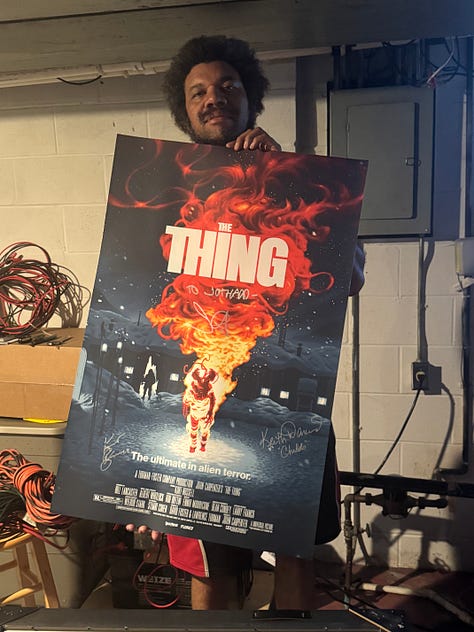
In Episode 81: The Mini: Joe, Nick, and Georgia recap Episode 80: Magic — Power and Its Costs with author B.L. Mostyn, talk about the storm that swept through Chicagoland causing a 10-day power outage, and Joe fanboying at Fan Expo Chicago — where John Carpenter, Kurt Russell, and Keith David were all in the building for a The Thing reunion.
In Science Holes, the power outage sent Nick down a rabbit hole about the US electrical grid, and could the whole country go dark. Joe talks about the complex and ethical challenges of studying octopus neuroscience, and the science of 3D bioprinted skin for burn trauma victims.
In the Media Holes, Joe is reading Bird by Bird by Anne Lamott, Georgia just finished the graphic novel My Favorite Thing is Monsters by Emil Ferris, Nick rewatched some classics and started the Marvel RPG Midnight Suns, and Joe and Georgia dive into the Handwavium of The Last House.
Upcoming events: Joe has a live Zoom reading event on release day: free link in the show notes. And Dragon Con is right around the corner: Joe’s full panel schedule below.

Magic: Power and Its Costs
JOTHAM AUSTIN, II PHD, NICK ELIZALDE, AND GEORGIA GEIS
·
AUG 19
Order the Touch of Noir 2027 Wall Calendar by Jim and Georgia—
12 months of all-original art by Jim and Georgia; pre-orders open now, with mailing expected in September
Words // Friends Aug 26th at 7pm CST:
Joe will be reading with four other authors on a Zoom hangout. Register now!
Check out what the RHR crew is creating:
Joe:
- Named by the Guild Literary Complex as one of the 35 Writers to Watch!
- Red Line: Chicago Horror Stories Anthology featuring a new story by Joe!
- Joe’s Sci-fi physiological thriller Novel: Will You Still Love Me If I Become Someone Else?
- Essay by Joe: From Beyond Press: Specific Knowledge: Jotham Austin, II, PhD on Transformations in Fiction
It’s science for Weirdos
Want to support the show? Tell your friends. Follow us on social media, Discord, share the podcast, and let us know what topics you are excited about. And to see all the content (studio images and artwork) subscribe to the Rabbit Hole of Research newsletter!
Stay curious, stay speculative, stay safe, and we’ll catch you in the next rabbit hole. Love Y’all!
Future Events to Hang with the Crew:
Podcast Cross-Appearances
- Watch Joe on Joe Compton’s YouTube channel 21Grams
- The RHR crew on Ben Tanzer’s This podcast will change your life: episode three hundred seventy-nine
Events & Conventions:
- Words // Friends Aug 26th at 7pm CST: Joe will be reading with four other authors on a Zoom hangout. Register now!
- Dragon Con – Atlanta, GA (September 3-7, 2026) – Joe attending as Professional
- Here is my schedule of panels:
- Fri 9/4• 10:00 AM – MCU: Wonder Man: Behind the Curtain (M302-M303 Marriott)• 7:00 PM – Spider Noir: Shadows of Justice (M302-M303 Marriott)• 10:00 PM – Long Live the New Flesh: The Rise of Cinematic Body Horror (Peachtree 1-2 Westin)
- Sat 9/5• 11:30 AM – Philosophy in Science Fiction (Embassy AB Hyatt)• 7:00 PM – Yuletide Fear: Unwrapping Wintertime Horror Fiction (Peachtree 1-2 Westin)
- Sun 9/6• 11:30 AM – What Makes Scientists Mad, the Sequel (Embassy AB Hyatt)• 4:00 PM – Welcome to Widow’s Bay: A Fan Panel (Peachtree 1-2 Westin)
- Here is my schedule of panels:
Upcoming Episodes
*The Mini will now be every other episode!
- Episode 82: Climate Change and Data CentersReturning Guest David Pincus PhD (episode 13 climate change and episode 39 on Johnny Storm)
- Episode 84: ETGuest: Chris Guzman (@theboxinggloveartist)
- Episode 86: Disability in HorrorGuest: Grace Daly (Bram Stoker nominee)
What the Crew is Digging, Links, Resources, and Topics Mentioned in mini and/or full episode:
Links & Resources:
- “Any sufficiently advanced technology is indistinguishable from magic.” — Arthur C. Clarke, Profiles of the Future: An Inquiry into the Limits of the Possible
Science Holes:
- 1) What If America Went Completely Dark?
Christopher Cox — New York Times Magazine, August 18, 2026
nytimes.com/2026/08/18/magazine/national-blackout-power-electricity-outage.htmlNick’s post-storm power outage sent him down a rabbit hole about the US electrical grid. The US runs on three major interconnected power networks: Western, Eastern, and Texas. A FERC analysis found that taking out as few as nine key substations could trigger a nationwide blackout lasting 18 months to several years. The transformers that run the grid are massive, custom hand-built machines, many decades old, largely manufactured overseas with replacement wait times in years. 2) Do Octopus Brains Work Like Humans’ — Or Is There Another Way to Be Smart?
Liam Drew — Nature, April 29, 2026
and Scientific American: scientificamerican.comhttps://www.scientificamerican.com/article/do-octopus-brains-work-like-humans-or-is-there-another-way-to-be-smart/Octopuses are the only non-vertebrate animals with large, complex donut-shaped brain, and more than half their neurons live in eight arm nerve cords, essentially mini-brains. Skin that tastes, changes color and texture, and senses light. Evidence of memory and possible dreaming. And a serious ethical gap: vertebrates used in research have legal protections, cephalopods largely don’t. Neuroscientists are trying to protect the cephalopods and study them to map their neural connections and ask whether radically different brain architecture can arrive at the same intelligence.
- Mythical Kitchen Last Meal with Alton Brown: eats his last meal and discusses why he docent eat octopus.
3) Skin Healing Without Scars
Andrea Teagle — Knowable Magazine, 2026
knowablemagazine.org/content/article/health-disease/2026/can-3d-printed-skin-heal-burns-without-scars
Researchers are developing bioink — a gel laced with a patient’s own skin cells — that can be applied directly to severe burn wounds to rebuild healthy skin instead of triggering the body’s scar-forming emergency response. No rejection risk since it uses the patient’s own cells. Initial clinical trials are underway.
Science Terms
- Substation — a facility where high-voltage electricity is stepped down and routed for distribution
- Transformer — machines inside substations that change voltage levels; custom hand-built and difficult to replace quickly
- Cephalopod — the class of mollusks including octopuses, squid, and cuttlefish; the only non-vertebrate animals with large complex brains
- Connectomics — mapping every neural connection in a brain to understand how it produces behavior
- Enteric nervous system — the “second brain” in the gut, containing roughly 500 million neurons that operate largely independently of the brain
- Convergent evolution — when two unrelated lineages independently evolve similar traits, as with vertebrate and cephalopod intelligence
- Bioink — a gel containing living cells deposited onto tissue to rebuild biological structures
- 3D bioprinting — printing living tissue layer by layer using biological materials
- Skin graft — skin taken from one part of the body and transplanted to repair damage elsewhere
- Scar tissue — fibrous tissue produced as a rapid emergency repair response to large wounds; structurally different from healthy skin
Media Holes: What the Crew is Digging:
TV and Films
- The Last House (2026, Netflix) — Joe and Georgia watched this sci-fi thriller about a mysterious rain that traps people inside their homes for years. Strong characters and tension, heavy on handwavium.
- Zero Day (Netflix miniseries) — Robert De Niro, nationwide cyber attack storyline.
- Remarkably Bright Creatures — Sally Field film based on the novel.
Books
- Bird by Bird — Anne Lamott. Writing motivational book that gets you hyped to get back into your projects.
- My Favorite Thing is Monsters — Emil Ferris. Georgia just finished it and called it one of the best books she’s ever read. A graphic novel set in 1960s Chicago, illustrated almost entirely in ballpoint pen, weaving in famous works from the Art Institute of Chicago. Published by Fantagraphics, 2017. Volume 2 is now out.
Video Games
- Midnight Suns — Marvel turn-based RPG. Nick started it post-power outage and says it’s catching his attention despite not being his usual type of game. More updates to come.
Listener Shoutout
- “Universal Ouroboros” — listener Alex’s newly published 101-word story (101words.org/universal-ouroboros/).
“Stay curious, stay safe… Love Y’all!”
Join Rabbit Hole of Research on Discord: https://discord.gg/2nnmKgguFV
Subscribe and Share our Substack newsletter to get email updates, never miss an episode, and spread the word!! Don’t forget to give us 5 stars or a like!
Transcript
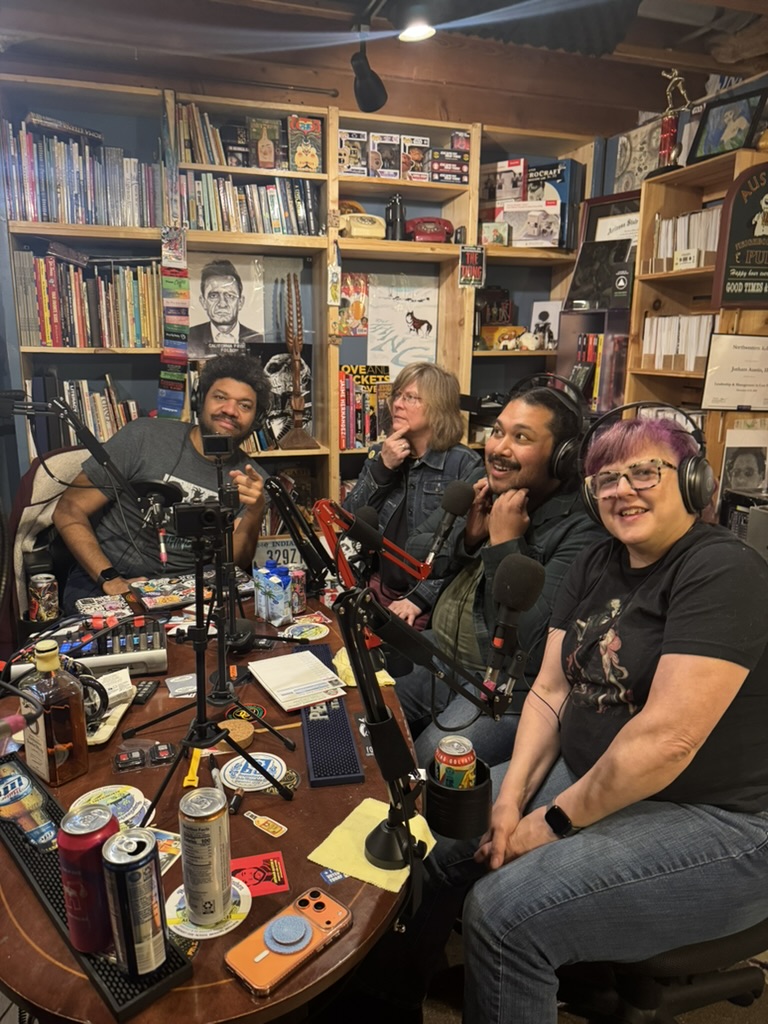
joe: [00:00:00] Hey, welcome back to the rabbit hole of research down here in the basement studio for the mini. What do you got? The
Nick: Mini mini
joe: You’ve got me, Joe
Nick: You got it, Nick
joe: We’ve got Nick
Geo: Georgia
joe: And we’ve got Georgia down here talking a little magic. We had a fun
Nick: Ah, yes. with The magic talking about magic, the power, its costs, ethics, politics.
joe: It was a really good conversation. High, low, soft, hard
Nick: Yeah. I enjoyed it a lot. I mean, I just, I feel like this season’s been full of episodes that just hit well for us
joe: Yeah, it was a magical episode.
Nick: Ooh, magical.
joe: Yeah, from that BL she had in the episode and then she sent me an email. She had said, “Any sufficiently advanced technology is [00:01:00] indistinguishable from magic.” And there was some question on who said it. It was Arthur C. Clarke, Profiles of the Future: An Inquiry into the Limits of the Possible.
So, wanted to add that.
Nick: Most responsible.
joe: Yeah. The limits of the possible.
Geo: Great.
joe: so
Nick: I Yeah. I thoroughly thought this was a fun one. We– There’s so much magic. , I feel like there’s so little things in the world that we don’t think of, , as magic, where it’s , oh, that’s just magical. , it’s nothing much, but it means so much more than you would think.
joe: Mm-hmm. Yeah
Nick: And it’s always fun to just look at it like that,
joe: yeah. It will
Geo: take time to find the magic, you know?
Nick: Yeah. I mean, we definitely live in a world where it doesn’t feel like things are as magical as they could be. But, you just have to find the little things in life and be like, “Oh, yeah, that’s pretty magical, isn’t it?”[00:02:00]
joe: Yeah. Very good. If you haven’t, go check that out. It was a good discussion. New business? Had had some fun stuff.
Nick: Oh yeah, what you got, bro?
joe: Fan Expo Chicago. I got to- And you were
Geo: definitely a fan. I
joe: definitely a fan. I was definitely a fan because there we had John Carpenter, Kurt Russell, and Keith David were all there
Nick: And who are they?
joe: They are… John Carpenter, one of my favorite directors, directed one of my favorite and wrote one of my favorite movies, The Thing. Sev-
Nick: What movie? Oh. Oh,
Geo: of y- several of your favorite movies. Kurt Russell and Keith David were
Nick: I’m surprised you’ve never brought this movie up, Joe. Geez.
joe: Yeah. I know I’ve never heard you bring up, You never heard me bring up, oh,
heard me… Oh, yeah, definitely. Had a episode end of season two, we talked about The Thing with Bill Hallier [00:03:00] and Todd Thyberg, I remem- I remember, if my memory serves me correct. So, but yeah, it was super exciting. It was fun to go and do that.
It was it was a little respice from life because w- a major storm had come through, and we were without power, so we had yeah, August 11th, and didn’t get power back for about 10 days.
So it was really interesting leaving the dark house
Nick: are all safe. We are
all alive.
joe: So but yeah, it
Nick: This is not AI.
Geo: Shout out to God.
joe: Yep, yep. We’re still
Nick: tired of everyone saying, “Hey, why is Joe so AI?” And I just have to say, I don’t know. He just sounds like that sometimes.
joe: No AI here. 100%
Nick: No
joe: I’m hu-man.
Nick: Hooman.
I thought we were hoomans. Is that not right?
joe: it’s pretty good. Lots of fun. How about-
Nick: Me, I avoided the power outage by [00:04:00] just staying in Chicago. My house didn’t have power, but I personally did have power.
joe: Mm-hmm. Mm-hmm.
Got out.
Nick: that was a fun time just hanging out.
joe: It was
Nick: No, I couldn’t do that. You know me, guys, I’m all hooked up to my Ethernet cable and s- doing random things.
joe: We’re part of the matrix
Nick: But no, yeah. Exactly, you know, someone’s gotta be there to make sure it’s all good.
But yeah.
joe: I was gonna say that before we get, go down the science holes and media holes, I wanted to talk about an event I have coming up on the day of release, August 26th. It’s gonna be a Zoom,
At 7:00 PM. Okay. It’s a Zoom. It’s
Nick: they got plenty of time.
joe: it’s gonna be a Zoom performance with several writers, and I will be one of them reading for your entertainment.
So if you’re not doing anything-
Geo: to join me … gonna be recorded so you could listen to it-
joe: it- I think it will be … at a different time? [00:05:00] I think so. I’m not
Nick: if someone wants you to, like, read at night for them to go to bed, like, this is the time to
get
joe: you can do it. 7:00 PM Central,
Geo: Might be early
joe: Might be early. Yeah, a little early for people.
Geo: But- But not for me. I’m probably gonna be tired.
joe: out. People say they wanna come out and hear me read. I’ll be reading, so- There you go … come and listen. Show some support. The link is in the newsletter. If you’re not subscribed to the newsletter, then maybe you should.
Geo: Shame on you.
Nick: A good reason to do it. Wow. Shame on you, Georgia.
joe: Yeah, the other cool thing is the Dragon Con is coming up in Atlanta, Georgia, the Labor Day weekend, so September 3rd to the 6th or something like that. Yeah, my panels, I got… My panels are here. I’ll be doing one on Wonder Man, Spider-Noir, the rise of the cinematic body horror, philosophy and science fiction, what makes scientists mad, inspiring the next generation of creators, and [00:06:00] welcome to Widow’s Bay, a fan panel.
So should be a fun time, so.
Nick: the show Widow- Widow’s Bay?
joe: yep, yep. Oh,
Nick: that’s cool. That’s a good show
joe: Yeah, it was. It was a really good show. Wonder Man was good. Spider-Noir, so I’ll be talking about all these, so
Nick: Hell yeah, that should be a good time
joe: Yeah, so if you’re down in Atlanta, Georgia, come on and
Geo: And do they mean mad as in crazy?
joe: As in like things
Geo: Or angry
joe: in movies and fiction that make you mad as a scientist. You know, like licking– like pulling someone out of a BSL4 when they got infected. So
Nick: sounds like you were about to say licking something. What were you gonna say, huh?
joe: When I started licking
Nick: feel like this is a personal jab on me.
joe: But yeah, so that’s all I have You
Nick: Hell yeah.
joe: move it along?
Geo: to move it along?
Nick: yeah let’s get to some science [00:07:00] holes ’cause I do have one.
joe: I d-
Nick: so, so, so, so science holes.
joe: holes. We’re here
Nick: Like Bill Nye, but if Bill had a science hole, this would be his hole.
joe: Yeah. Okay. Let’s,
Nick: Nope, that stays in. Don’t even think about editing that out ’cause I’m gonna bring it back up.
joe: Great. Yeah, I got a couple. I don’t know if we’ll get to both, but like I said, it was a, it was kind of a hard couple weeks, so, but yeah. Do you wanna lead off or you want me to lead off?
Nick: yeah. I’m gonna, I’m gonna go with mine. That way y- you can do both of yours if we have to, if you want to. But you know, we were here without power, and personally, again, I wasn’t without power, but it got me thinking like what would it take for the United States to go…
Like what would happen if more than one area was super affected by power loss? So I went looking down. I found this New York Times [00:08:00] article, which Joe can go ahead and input in the footnotes.
joe: it in the show notes for y’all
Nick: it was going on about how if nine of these facilities that like do the electricity what are they called again, Joe?
joe: Like substations? With the transformers that kind of step down the power to deliver to everyone else? Yep.
Nick: If nine of them were hit, because one was hit recently by snipers someone that was with a rifle or something, and it took a place down, but they were targeting, as Joe said, the transformers. if nine of them get taken down by people like that, it can definitely put us into a dark age again, where we won’t have power for…
I think Faye was saying minimum 18 [00:09:00] months, which that, that would be across
the whole United States.
joe: right.
Nick: Yeah. Like, it takes so long for the transformers to get made that it would cause a whole effect of… Yeah.
joe: that’s one correct. It was that incident happened in 2013. It was a little bit ago, the
Nick: Yeah, I–
joe: Right, right, right. Yep,
Nick: That was the reason, right? No? Like, this
joe: it wasn’t, like, last week, so Oh, no.
Nick: Oh, no.
No, but
Our power outage was
joe: Our power outages was August, but this one in the, the story in particular that kind of triggered all this was 2013.
And, you know, the article did a good job of explaining why. Like, you know, our electrical grid is old. It was cobbled together. There are three major kind of hubs that power different regions. I think one’s east, [00:10:00] west, and in Texas or something like that. Yep, so
Nick: Texan,
Geo: And
then how- There’s three …
and then
joe: many…
Geo: you said substations.
Yeah.
joe: and
Geo: many… Like is a substation like a big city?
joe: At, Or like, what does the substations… You’re saying there’s three? There, there are many, so these are the major hubs. Like, so there’s major hubs of interconnectivity that, that, that cover many states, and so there’s three major hubs that cover the whole United States.
Geo: And then the nine subs- And
You’re saying there’s three-
joe: there are many. So these are the major hubs of interconnectivity that, that, that cover many states, and so there’s three major hubs that cover the whole United States.
And then the nine- And then inside of these, hubs, there are many substations, and there are kind of junction points
Geo: key-
joe: That’s exactly right. So you just need to hit the nine key substations in all three of
Nick: Which you can look up fairly
easily
joe: can just look at where power is distributed.
You know, I think the article said any 12-year-old with internet could figure it out. And then you can coordinate potentially some strike. And then if you hit all of these substations simultaneously, [00:11:00] you could potentially render the entire United States dark. And then it went through the whole scenario,
Nick: think it said it would only take, what, under 30 people
joe: Yeah, I mean, they said this in this article. It was hypothetical, so there’s, y- you know- Yeah … It was a real thing that because of our infrastructure and the way it’s set up, and because it was cobbled together because, power came and then it wasn’t really planned well different areas developed faster than other areas.
So you have this whole mishmash and-
Geo: We watched
that show, like, about a… It was, like, over a year ago. you remember where,
joe: like
Geo: The power went out? It was… Do you know what I’m talking about?
joe: know what you’re talking about, like Revolution or something like that. Yeah, I can’t-
Geo: remember the name. But it was kind of about that.
joe: Yeah, that was
Geo: politics and, it wasn’t Al Pacino, was it? No.
joe: Oh, you’re
Are you talking about the cyber attack one? Yeah. That was on- Netflix or something. I was talking about [00:12:00] The Revolution, the one where the power went off. There was, like, some sort of all electronics and
Geo: Oh, was that the one where it was, like, snowing also?
Like-
joe: No, I don’t think so. I think this was, like
It was just a global blackout, and then the whole world was set back into, like, 100 years pre-electricity, and no one could figure out why. I think I only watched, we only watched the first season
but
Nick: that’s a raving review for that, guys
joe: I, well, I didn’t … I think other things just came in the way, so, oh, I think it was only two seasons looking at it, so maybe we did watch both seasons. Yeah, it was a good one. But I know what you’re talking about. It was a Net- it was a pretty recent Net- Netflix show, and it was, I think, was it Al Pacino or what? No, the other guy.
Geo: The other gangster
joe: the guy from, The one with Ben Stiller, and he’s the dad. I can’t think of his name Oh, yeah Do you know what I’m talking about?
Geo: do totally know who
joe: It’s a comedy. Excuse me.
Geo: totally know who you’re ta-
Nick: Guy from Meet the
joe: Who you’re ta- Yes. The [00:13:00] dad.
Geo: De Niro. De Niro. that’s it. Yep, it. Yep, De Niro. Yep.
Nick: Oh, De Niro. Good. Oh, Robert De Niro
joe: Yes. We’ll get there. See that, see how we do that? Zero
Nick: I had no clue what you guys were talking about
joe: Zero Day is the miniseries on Netflix that we’re talking about. It was a nationwide cyber attack that happened, and that was kind of it. Right. It was, that was really good.
Geo: It was good. But, like, power
joe: would- Yeah
Geo: would take out
everything.
joe: Yes, power would take out everything. Would take out- You would lose, I mean- Would
Geo: out all the computers
joe: gonna put that article in there, but it, and I encourage people to read it, but it talked about the levels. ‘Cause you start out, people wouldn’t really know what’s going on, and then, you know, the government would have to go, “Yeah, we got a national blackout.
We, it’s gonna, and it’s gonna be long,” as Nick said, 18 months to maybe three, four years. And
Geo: we’re just-
joe: And then as you go-
Geo: prepared
joe: yeah, I mean, you know, hospitals, things like that will use generators, but runs on diesel, but [00:14:00] that will eventually run out. Will our allies international allies, give us supplies when that happens?
You know, and then if you got the transformers are made internationally, so they have to come in to by port. So will our ports work? How would you operate a port to have a ship come in, and the cranes and everything that you need and the infrastructure to actually get the transformer? And then like they said, these transformers are big.
You know, like, you know, 800,000
Nick: have to go by railroad and
joe: Yeah, they usually go by railroad and things like that. But if the infrastructure across the country has now been devastated and down for now a year, , you would have… So y- none of this is like planned. Like,
Geo: you know- So I heard- So
it’s
very- … one of, the
joe: interesting, , and, thought-provoking, like how can you prevent this?
How can you prepare? How can you personally prepare for something like that? So… And
Geo: And there was locally they talked about a transformer needing to be replaced, [00:15:00] and then they’re, they are having to get that in and it’s gonna take a long time.
But Are there different sizes
of
joe: are … to transformers?
Yep, yep, ’cause they’re stepping down to like on the poles, if you think about the, the electrical poles, they’re like those white canister looking things. Those are transformers. If you look out down on the ground, they’re the little square boxes that say high voltage. Transformers live in there. And then you have at substations, small ones, they have smaller transformers, then you have big transformers like that.
So yeah, so you have all sizes. So the ones that they’re talking about, particularly in this article, the nine critical points, these are the large step down. So they go from-
Geo: they use the term transformer for all of these
joe: Yes, they’re all… Yep, yeah.
Geo: But obviously they’re very different. Very different.
joe: different. That’s right. They’re very different. Yeah, now if they all have a, the same purpose and the design of the transformers haven’t changed, so they’re the same design that was Early 1900s when electricity [00:16:00] first was becoming a a, a national global kind of utility the process hasn’t changed.
So things are hand wound and m- manipulated and there’s a lot of tedious construction and like they said, almost an art form to it that you would have, and people do. So yeah it’s kind of, They have
Geo: not trained AI
to do that. Yeah.
joe: No. If you’re a transformer maker, then you’re-
Geo: Job security
joe: you’re secure. That’s right. Unless you’re a Transformer.
Nick: Or if you’re a Transformer.
joe: And then there you go. See, look at that. Nick and I are on the same page here
Nick: We were there the whole time.
joe: So yeah it was a, that was an interesting article. I was glad you pointed it out to me, and I did
Nick: I was… I don’t know what I was doing, but I was like, “I wanna look this up.” And then I did it, and that came up, and I was like, “Great. This is so what I was looking
for.”
joe: and it was a deep dive, so it was really good. So we’ll get that we’ll get that in h- into The science holes
Nick: notes? [00:17:00] Oh. All right, Joe, what do you have for us this week?
joe: Yeah, I mean, one, it was kind of interesting, and it was, we’ve touched on this topic, but it’s how do brains work, and in particular octopus brains. Do they work like human brains, or are they designed differently? And it’s really fascinating ’cause octopu- octopuses are cephalopods, and so they have these
Nick: Are they not occupied?
Geo: They’re not
joe: octopi, no. It’s just the, the root of the word. And so I believe octopus is Greek, and so it’d be octopuses.
Nick: We gotta look that up
joe: I guarantee you it’s octopuses,
Geo: I think we’ve discussed and we’ve had this discussion.
joe: But yeah, they have these very elaborate brains, . And cephalopods in particular, so squid, cuttlefish, octopuses they all are part of the cephal- cephalopo- cephalopod family. But they have, they have three hearts, blue blood, no skeleton. Arms are flexible and move like [00:18:00] tongues.
They can actually taste through their skin . They can change color, texture of their skin and even their arms can regenerate in some species. So really fascinating. They’re the only non-vertebrate animal, so no bone structure that have big, smart brains that they can use.
And, , people have studied them for many years. And, this article was really interesting ’cause it did touch on some of the ethics of, why you’re trying to study these animals. Vertebrates, like ourselves or other animals we’re familiar with used in scientific research, they have strong legal protections.
But that’s not always the case for invertebrates, like octopuses. So these smart, intelligent
Nick: Which I do have a problem with.
joe: Yeah. And even if you try to have care there’s limited options for pain relief. So, if you’re working on other primates or other animals there, there’s usually pain management and things that you [00:19:00] can do.
But for the cephalopods not necessarily always the case. So really interesting, and the article talked about what they’re trying to do, kind of solutions to that, so.
Nick: on the same note, Alton Brown refuses to eat octopus now because he had a experience where he met an octopus and he grabbed its pen– or it grabbed his pen and, like, wrapped its tentacle around his finger or something. And then it did it again a few years later, and it remembered him.
It was re– He was like, “That was…”
joe: Yeah. Yeah, no they
Geo: that, that’s that other movie right now on where the
mar-
joe: of them, right. Yep. Where Mark Wahlberg
Nick: Really have to start knowing the names of these movies that you’re bringing up.
Geo: I know, and
I is not helpful for me actually haven’t seen it yet. It has Sally Field,
joe: Field. Yeah.
Geo: Sally Fields, and it’s based on a book, and people just said it’s,
joe: like- Right
Geo: of the best.
joe: yet.
Geo: I haven’t seen it yet, but I wanna watch it. Is that the one, [00:20:00] like, Learn- My Best Friend or My- Remarkable … Re- Learning something, yeah. Well, if you’re looking that up, I was gonna say, too, that there’s evidence article kinda goes in and talk about how the octopuses have memories, and so you just brought that up with Alton Brown.
joe: But there’s also evidence of dreaming. They have rapid skin changes during sleep cycles, so all this evidence that their brains are as complex as, human brains, except they’re really different. So a lot of the, their brains are donut shaped and this weird organization.
The neurons connections look like they… It was described as a mess of spaghetti. So they’re not, they’re unsure about the structure and organization. And then the… They have eight nerve cords or mini brains that control their arms, so their brain is kind of delocalized, so it’s not all in one.
It has a mini brain,
Nick: so
wild.
joe: yep, so really
Nick: did not know that. All
joe: And you think about humans. We think about our brain on top, in our head, , I talk on [00:21:00] here about the second brain, the enteric nervous system that’s in our guts. So we have a another
Nick: Oh, I knew there was a brain in my stomach.
joe: You have a brain in your stomach, yep.
It’s controlling stuff, so. Yeah, so really fascinating, and they’re doing what’s called connectomics I think I’ve talked about them here, in terms of the human brain, where they’re trying to map all the connections of the human brain to understand how our brains go together in disease states, health.
And so people are trying to do connectomics in cephalopods to see if their brain connections, even though the structure is different, are the brain cells connected the same way they would be in a human. So really it was a fascinating deep dive kind of report about octopuses and their brains and how smart they are.
So, and like Alton Brown, I don’t eat octopuses either, so.
Nick: Yeah, I think after I heard that I think I was pretty much done with them [00:22:00] because I wanna say it was Last Meal from Good Mythical or from Mythical Kitchen that he did that interview with, and I heard that and I was like, “Oh.”
joe: Mm-hmm. Mm-hmm
Nick: yeah, I would highly recommend checking that episode out if you’re at all interested in Alton.
joe: Yeah, well, to throw that in. Yep
Geo: Yeah. It’s called Remarkably Bright Creatures, and it does star Sally Fields. Through,
joe: through
Geo: unlikely bonds formed during night shifts at a local aquarium, Tova, an elderly widow, learns of a life-changing discovery that may bring her joy and wonder once again. But it’s supposed to be really, like- That’s really cool, yeah
but, and
joe: Oh, it’s really cool, yeah
Geo: things like that
joe: and you wonder how
Geo: have
joe: different pop culture movies
Geo: an …
joe: things like that have an effect on whether
Geo: there’s [00:23:00] any kind of legal-
Right.
Right …do you know what I mean?
joe: Yep. Yeah
Nick: and how people see them. Like, it’s all the exposure that helps these creatures.
Geo: Right
Nick: Like, if enough people understand that, yes, they have– they’re more than just what you can eat,
joe: Mm-hmm, mm-hmm,
Nick: It would help
joe: Also the way we view animals and things that we eat and,, their consciousness and their smartness., I don’t know. There’s a lot… When you have something like the, an
Geo: And I do think,
joe: I do think
Geo: A movie can have a huge impact
joe: Mm-hmm … have a huge impact. Yeah, it was
Geo: And I would bring up another one, but I’d have, but I’d have to look it up. And so I don’t wanna like waste 100%. Oh, another movie you don’t know. You
Nick: never watched it,
joe: be into the- Yeah … we’ll be throwing the media hole, so you can start. I’ll hit the… I’ll go to the next science hole real quick- … and I think we got a little time for it. This one’s interesting, maybe not as long, but it- it was all about skin healing, and it was an [00:24:00] interesting-
Nick: could finally be Wolverine
joe: article. Yeah, you can be Wolverine. It was about scarring after burn trauma and how do you repair skin. And a lot of times you try to take grafts from other parts of the body, or you try to grow skin in culture, and it takes time. And so what these researchers and groups in this article and- and starting kind of some of the- the initial clinical trials was a bioink.
And so they take these gels with cultures of your own skin cells, and then they print that or- or layer it onto the area that needs the new skin an- and then coax it to develop into skin and- and have that. So it was really interesting and- and the article goes into how they’re even trying to layer.
So you have different skin cells, and we talked about this in some other minis that, when you try to build an organ on an organoid, that the problem is that you don’t get all the [00:25:00] substructures, the , kind of veins and arteries and things like that would happen, the blood vessels, pigments that would form in a natural occurring structure.
So they’re testing, like layering, can they layer different cell types? So print one type, then put another type on top, then another type on top of that to coax it to develop these cells to work together to form something that’s closer to the original skin cell. And it- it’s just using this bioink kind of thing, then you can…
You’re not hurried. So if you have someone that’s been injured, you can now start the process of- of their healing much faster than potentially trying to wait for grafts and things like that can- they can injure another part of the body while you’re trying to heal, so.
Geo: And how long does it take for them to get this bioink?
joe: You mean- Like,
Geo: to grow these skin cells?
joe: that’s a good… I didn’t see a time. I, it- it sounded like it was very quickly. Like, they could have these [00:26:00] matrixes of skin in a syringe, kind of what they called it, pretty quickly. So growing up the skin cells, like you can have that in this, in a bioink.
But it didn’t have in here- In this article a
Geo: this article, a
joe: timeframe
Geo: and they use this person’s own-
joe: Mm-hmm …
Geo: cells. So that would probably, like… ‘Cause I think a lot of times when it’s about transplants or about other things, if you’re trying to use a foreign… You know what I mean? Mm-hmm.
joe: Mm-hmm.
Geo: If it’s not the person’s actual cells-
Right. Yeah … that, that introduces- rejection and stuff like
that. Mm-hmm …a lot of issues
joe: you have other issues. Yep, yep. Yes No, that’s
Nick: So it… Like, how are– I I guess I don’t– I think I need to look more into this one, ’cause, like, would that be able to help with, like, burn victims and everything?
joe: exactly what this is for. Yeah, that’s, that was the [00:27:00] article’s that’s the severe wounds, burn, that, that’s kind of the application for this, that you would then apply it as kind of skin cell matrix. So to grow, like the way you’d usually do it, you’d have to grow in a lab dish , skin structures.
But that could take weeks, you know? And so y- then you apply that and see what happens. So this here is a quicker process where you can harvest skin cells and then grow those up quickly and then, apply this
Geo: And when you say ink, it almost sounds like a tattoo.
joe: When you say ink, it almost seems like a tattoo. Well, I think they’re using it in that , ’cause you’re drawing.
I think it’s just our word choice is limited. I guess deposit, would be it or… But I think it’s, they’re trying to use like 3D printing, so bio-ink like you’re printing skin, right? Mm-hmm. So that’s kind of the idea,
Nick: It’s so wild.
joe: wow. Yep.
Nick: I never thought printing skin was gonna be something we’d ever have to say
joe: Yes, that’s right. 3D bioprinted skin substitute is what I think they’re terming it,
Nick: words [00:28:00]
that
joe: BioInk.
Geo: in a
joe: in a syringe. There’s a whole bunch of term… Like, you read the article, they had a few different phrases for it. We’ll see which one catches,
Geo: think it’s interesting that skin is its own organ. Yeah, that’s right. Like, you don’t, like, I think- yeah … I never realized that,
joe: then-
Geo: then, so that’s just always been, like, hard to get my mind around.
joe: around. Yeah, and when they put the bioprinted skin on, then underneath, your own body will go, “Oh, it’s just…”
Instead of wound response, which is it goes, “Oh, this is just normal skin that we can- So that’s- … deal with,”
Geo: right. Yeah. And,
joe: you know, just kind of do our normal business in- instead of a injury now, and so it can be even
Geo: off something foreign …
joe: Even, you might not even get scar tissue and things.
‘Cause when you have a big wound, you’ll start getting scar tissue and things like that, and I think we talked about in the regeneration episodes healing and things skin healing. So no, it’s, it was really it was really fascinating and they’re moving forward with now clinical trials to see if they [00:29:00] can get this to work and a, a
Nick: How soon can we– do you think we can see this?
joe: You mean like if you show up at the
Geo: Are they, are they using
Nick: Yeah. Like, can I go to them and be like,
joe: No, no, they’re in clinical trials,
Nick: my finger. Can I, can I get this going?”
joe: Clinical trials, so that means that they’re doing the testing. It’s not everywhere, so
Nick: Yeah, that’s what I was wondering, like how central it
joe: Oh, I don’t … That’s … Yeah, it could be years. I mean, I don’t know.
Depend on how the trials go, right? Maybe never, like, if it’s a real bad doesn’t work out that well. Yeah, so, yep,
Nick: Sounds like it’s gonna be some comic book villains going on here.
joe: Yeah, there you go. So yeah, no, it’s really cool. Probably see some peer-reviewed papers and things coming out soon, like a lot of
Nick: Yeah, I’d like to see more about that ’cause
joe: Yeah. I’ll keep an eye on it, but I’ll put this link to this article. It was really cool, and there’s other links in here. You guys can click around and check out. Go down your own little rabbit hole, [00:30:00] science hole,
Nick: then you can come and talk to us about it.
joe: Then yeah, you
Nick: Sometimes we’ll
joe: drop it in the
Nick: as long as we have internet
joe: if you have internet and you have power.
We don’t go dark. Excellent.
Nick: not. Then you gotta start getting a carrier pigeon for us,
joe: That’s… Yes. Yes. Georgia, do you have anything, or are we gonna go to media hole?
Nick: Are we going to my Media hole?
joe: Media holes. Let’s do it. What do you got?
Geo: I got
joe: I got something related, related. Oh,
Nick: oh yeah
joe: yeah. Yeah, so
Geo: we Related to Media, or Science?
joe: to the science hole or to n- almost the next science hole, the, the When America Goes Dark.
But we just watched, it was a new movie what is it? Netflix? The Last House, and it was really, like, a sci-fi thriller, and the whole premise was that this rain started, and it trapped people inside of
Nick: never stopped
joe: and it never stopped. Right, it was this whole… Well, it did, [00:31:00] it stopped, but people were trapped in their homes, and you didn’t know why.
And then the movie took place over five years. Well,
Geo: don’t spoil it.
joe: No, I’m trying not to. I mean, you can watch the trailer, you get all this. But yeah. It was, but it had elements of our science holes were relevant somewhat to this kind of you know, live-
Nick: have to do an episode on that? Is that what
joe: living off the grid and maybe other stuff we talked about.
So- Yeah … Yep, yeah. I just thought of it when we were talking. I was like, “Oh, that was a pretty relevant
Geo: It was very science… The science was- … not very
sound. I know. It was handwavium. It was just… But the characters were good. The acting was good. It was like- Yeah … I have to say it was enjoyable, but it just it did, it let’s just say it did not hold water.
joe: no. It was a, a lot
Geo: was, uh, a It
joe: used a lot of handwav- a big serving of handwavium in that one. It was,
Geo: boy
Nick: cold water, you know it ends water.
joe: yeah. But it was a good, it was a good story and the characters. I think [00:32:00] that’s something from-
Geo: I think the story was a little-
joe: a little, I mean, storytelling, I should say, that when you s- if you have tension, if you kind of have your tension threads set up, your, you know, in, in a s- in a story, then your reader or viewer will stay with it-
Geo: It was like- … till
joe: answer the questions. But-
Geo: moments were so- Yeah … ugh, like you could really relate to some of the emotional-
joe: You just couldn’t think about what they were
Geo: too
joe: too closely. You just had to,
Geo: to, like…
joe: Yeah, o- once the movie was over, it was
Nick: me or getting on me, Gary
joe: Yeah, it was, it’s worth a watch. But yeah you would yeah.
You’ll be scratching your head.
Geo: It’s worth a watch with a
warning.
joe: Yeah, that’s right. Expect a lot of handwavium. Cool. Yeah, how about yourself? What are you… Are any movies or so?
Nick: Movies. I think I just rewatched, like, three older movies recently, and that was Adam Sandler’s The [00:33:00] Longest Yard. Don’t ask me why I was… I don’t understand why I did that, but I did it. The Proposal with Ryan Reynolds and Sandra Bullock,
Geo: Mm-hmm
Nick: and Free Guy, which was another Ryan Reynolds film.
I don’t know what happened. I got home and had power, and I was like: Yep, this is what I’m doing with my time.
joe: I got power.
Nick: And then I also started the game Midnight Suns, which is a Marvel game,
joe: Yeah. Cool
Nick: that’s been pretty cool so far. It’s not my usual type of game,
joe: Yeah
Nick: but it definitely has been catching my attention. It’s more of a turn-based R- RPG,
And I’m not normally about that life, but this one it’s it’s piqued my interest so far.
joe: Cool
Nick: So I… As soon as I get further in that game, I’ll give more of an update. But yes.
Geo: How
joe: How are you liking it? Yeah, it’s really cool. Yeah
Nick: Georgia, what about yourself?
Geo: Oh [00:34:00] gosh, I don’t know. My brain is completely empty right now.
Nick: quietly.
joe: right now. Very empty.
Nick: Yeah
joe: Excellent. Excellent. Yeah, a book I’m reading is Bird by Bird by Anne Lamott. It’s kind of a writing motivational-
Geo: Do you like that?
joe: I do like it. Yeah, it’s
Geo: I just recently saw something that people- Yeah … really love that.
joe: Yeah, I think I saw something similar and I picked it up and started reading it.
I like that. And breaks the monotony. Gets you hyped to get back into writing projects. So if you’re looking for a little motivation, check it out. But yeah,
Geo: I did finish… My Favorite Thing Is Monsters by Emil Ferris, and I do have to say it’s one of the best books I’ve ever read. And it’s a graphic novel, and I wanna say she does alm- like her artwork almost entirely with ball- ballpoint pen. It is just [00:35:00] like, oh my God, it’s like her illustrations and her, and the story, it’s really intense.
It’s kinda hard to read at points, but it is amazing. And then I was super excited
Nick: I can find at my local library?
Geo: Oh, I, I’m sure we have it. And it’s funny because I got it because someone donated it to the library,
joe: and
Geo: wa- had been a library book. So it’s, yeah, it’s had qui- quite the journey, and I was so excited. I’m like, “Oh my God, I want this book.”
And then I just realized that she just that she wrote a second one, so now I can read another volume. I think it was maybe last
Nick: Oh, that’s cool
Geo: Yeah.
joe: neat.
Geo: It’s set in Chicago, like, in, , the 1960s, and the main character visits, , the [00:36:00] Art Institute on several occasions in the book and weaves in different famous pieces of art that, that she saw at the Art Institute. And oh, it’s so good. And so I definitely have to go now to the Art Institute and see what pieces are s- you know-
joe: there.
Geo: Still there … still there or actually there, yeah. Yeah. So anyway.
joe: Be like a scavenger hunt.
Nick: When was
this one written?
Geo: It was written
joe: Mm-hmm
Geo: And I believe-
Nick: not that long ago.
Geo: Yeah. And I had s- I had seen it at, , bookstores for the longest time. I’m like, “I really want that book.” And just for whatever reason, I hadn’t gotten it yet, and it just literally fell into my hands, and I was like, “This is meant to be.”
Mm-hmm. So. That’s cool.
joe: Very
Geo: And it’s Fantagraphics, which is, like, my… one of my favorite book publishers. Awesome. Yeah,
joe: it sounds good. Sounds really cool.
Geo: Sounds
joe: check it [00:37:00] out.
Nick: Yeah, when you’re done with it, let me know and I’ll check yours out
joe: out.
Geo: yeah. I just… Like I said, I just finished, so you’re welcome to.
joe: Cool. Awesome. Well, I think that’s it. Check it out. Don’t forget, if you’re wanna see some folks reading their writing- Oh … on Zoom, Words fr- With Friends.
Geo: What if you just wanna listen?
joe: You can just listen. You don’t have to look at us, I guess. Just look away. I don’t know.
Geo: it’s free away,
Uh,
joe: The, the free Zoom link will be there.
You can just
Geo: You can just come- And you said there was, like, four writers?
I believe
joe: four or five. Yes. Yep, yep I’m going
Geo: And is there- … based on the- … a through line
here? no, just- Or it’s just random?
joe: random. I don’t know. Mm-hmm. No one’s given me a theme,
Nick: We-we-we-we’re into ’em
joe: I’m just reading. Yeah, no, it should be fun.
I’ve not done a virtual reading before. I’ve given a virtual presentation, like scientific presentation. I wonder if that’s the same kind of feeling.
Geo: [00:38:00] I don’t know.
joe: yeah.
Geo: My friend did a virtual
Nick: Yeah,
Geo: I d- I don’t know if you remember my friend Julie did a- Yeah, that was fun … virtual play.
joe: I remember that.
Yeah, that was- It was so amazing … that was during the pandemic. Yes.
Nick: What in the virtual play?
Geo: It was a virtual play where the different actors actually all were in their homes.
joe: That’s right.
Geo: yeah
and then they-
joe: They had sets, they had costumes
Geo: it
joe: the whole thing, but it was, they were just-
Geo: It was
something else
in their
was-
joe: it was interest- It was, and one was about saving woods or something.
I don’t know. It was almost like the Briar East,
Geo: Yeah, there was like a … Yeah, you’re right.
joe: I can’t remember. Okay. That’s a, that was a… It feels like forever ago. Well, on that note,
Nick: He was very old
joe: you have me, Joe. Yeah,
Nick: Yeah, got
joe: you got Nick.
Geo: got Nick. Georgia.
joe: got Nick. Georgia. We’ve got Georgia.
Nick: And
joe: We went down so mini holes. And Nick’s cutting out there.
Nick: I don’t know why I went off. No, I was trying [00:39:00] not to. I was cutting myself out. Bye-bye.
joe: and we love y’all.