Transcript of Episode 63: The Mini: Splatterpunk

The crew revisits fear and horror, Georgia watches Blair Witch for the first time, and their Slay the Lake road trip. Science news: CRISPR defenses, semen-derived eye drops, and airborne eDNA.

SubstackAppleSpotifyYouTubeAmazon

joe: Hey, welcome back to the Rabbit Hole of Research down here in the basement studio for the mini. 

nick: The mini

joe: mini. Yeah. Yep. So here we are. You got me Joe,

nick: Mia got Nick.

joe: got Nick.

geo: Hi. And we’ve

joe: And we’ve got Georgia.

nick: Wow, great

energy. 

joe: enthusiastic.

nick: Hi, I’m here. I’m Georgia.

geo: didn’t

joe: say the name. It’s as people know her

nick: she 

didn’t. 

joe: by the hi. Like, you know who else is gonna

nick: You know who? You know this voice. It’s Georgia.

joe: You know this voice. Yeah. So, last episode, we talked about splatter punk when Terror becomes Entertainment. We had freak was our guest splatter punk author.

And yeah, it was a good conversation.

nick: [00:01:00] It was, and you guys went to the Fest right this weekend.

joe: We did. Yeah. So we went to Slay Lake in lay the lake. That’s what it was. 

Yep. Yep. LG, BT Q Plus Horror Book Festival. So it was a really fun time taking a road trip. To Wisconsin in Kenosha. It was the Final Girl Bar in

nick: Oh, 

joe: themed bar.

So really cool. If you’re in that area, 

geo: That’s fun. 

joe: it out. It was really neat. Yeah, had a good time. So met a lot of cool people. Authors

geo: while,

joe: and while we were there, unrelated to fear and terror was we went to the Milwaukee. Zine Fest also. So we, we went there and then , on our way back, stopped in Kenosha.

So a twofer.

nick: Oh, very cool.

Because yeah, you guys were just there on Saturday, right?

joe: That’s

nick: was a one day event. Saturday. Yep. It was just a one day[00:02:00] 

joe: event.

nick: least you guys were able to make the most of it.

The episode itself, I thought it was a good one. It’s feels like it’s in the Halloween spirit, but out of the Halloween time,

joe: Halloween in the spring. I don’t know.

geo: Well, it’s always a,

joe: it’s like,

geo: it’s always a good time for h horror

joe: Always a good time for horror. 

nick: There’s never a bad time for murder. Yeah, I get it.

joe: there is not.

nick: Is that the message we’re.

joe: that’s it. Phobias. Yeah. No, it was really good. A good episode we had, listener comment, Alex, he suggested one of the Body Horror novels that he enjoys Reading is someone you can Build a Nest in. The title Sound it familiar, but yeah, I’m gonna check that out.

geo: out.

That’s interesting. So 

it seems 

nick: who’s that by? Do you know?

joe: It’s by John wiswell,

nick: John Whi. Well,

geo: and it’s a new book.

joe: Yeah. 2 20, 24.

geo: [00:03:00] Okay.

joe: Yeah, it’s like a shape shifting.

Queer fantasy Romance novel Wow. Is what it’s 

geo: that’s got like, everything

joe: is known for its dark humor, gruesomely wholesome tone and exploration of themes like love, family identity from a monster’s perspective.

geo: That sounds interesting.

I kind of remembered Alex, 

joe: Award for best novel and a Locus Award for Best first novel and was a Hugo Award finalist.

geo: Wow.

joe: So, yeah. 

nick: Very cool. 

joe: I

geo: remember Alex say. He doesn’t watch horror.

joe: I guess he

geo: But yeah, and I was just talking to someone at my work and she’s really getting into horror books and reading horror, and then I asked about some movie and she’s like, oh, no, I can’t watch, I can’t watch horror movies, but I

nick: Oh, off mic. We’re gonna talk about who this is so I can tell them some good recommendations.

geo: But I, like she was saying like, I can read horror, but I can’t watch it. And I thought that [00:04:00] was interesting. So yeah. It

joe: Yeah. That kind of goes, I mean, I think that maybe you can distance yourself in reading it. Maybe the 

nick: I feel like seeing it might be, yeah, that might be the problem. It’s, yeah, you could hear the gruesome stuff, but seeing it actually acted out by humans

joe: Right.

geo: But 

nick: might be where it’s like, oof.

joe: begin to feel it a little more. It’s like you see like leg injuries or arm, like you see people get hurt.

geo: Some ways though, I think your mind sometimes comes up with more gruesome than, it feel, it feels it in even more so than what they might’ve came up with.

joe: Yeah,

nick: I can completely see that. ’cause then that’s where you start seeing it reenacted in your head and then it just stays there because you read it. Yeah.

joe: Mm-hmm. Yeah. I was gonna say, we had watched a Netflix series. Something Bad is Going To

geo: Something Very Bad.

joe: and so was it very bad?

geo: had a very bad, it [00:05:00] had a very bad, yeah. 

nick: I dunno. You guys have said it both ways

joe: I know. Yeah. Yeah. It’s on Netflix. It’s really good. It’s eight episodes, I believe.

Mm-hmm. But on the episode, the splatter punk episode that we did, the one movie that came up was the Monkey,

geo: Mm-hmm.

joe: we hadn’t seen The Monkey Georgia and I know we hadn’t seen the Monkey, and we watched it. It was really good.

geo: It was really good. 

Something bad

joe: is gonna

geo: Something very bad

joe: gonna happen. Had the same,

geo: it really kind of had that same

joe: yep.

Yeah.

nick: Vibe.

joe: Yep. Yeah. Kind of this generational horror passed 

geo: and kind Had to do with a curse and,

joe: Yeah. Yep. It was really good. Highly recommend both of those. The mokey was really good. And something really bad is gonna happen.

geo: Very bad,

joe: Which really bad did happen because I was in the cleaning the kitchen

geo: And that was because you were joking around and 

you said that 

joe: something really bad’s gonna happen and then I shattered the, yeah 

geo: shelf 

joe: [00:06:00] really bad. So,

geo: So 

don’t be just 

running around saying that willy nilly.

nick: I mean, that’s always the turning point in a story. And you go, oh, I have a bad feeling about this.

geo: Right,

nick: like, or I have, I feel like something bad’s gonna happen.

geo: right,

nick: always does. 

geo: right, 

nick: You’re loading that gun.

joe: Yeah. Never show a gun if you’re not gonna use it. Right. Exactly.

nick: Exactly.

joe: Coolio. All right. Yeah, I think that was it. It was a good, nice tidy episode. Not a lot to rehash. I mean, I guess we could, but probably that’s a whole nother episode.

nick: Yeah, exactly.

joe: Not the mini. Well, cool. 

nick: Should we move on to new new territory of studies? What are we calling the segment? I can’t remember. I thought we had a 

name for it. 

geo: segment.

joe: Yes, 

nick: I thought the whole thing is a science.

joe: no,

nick: Come on, Georgia.

joe: science podcast. 

geo: No, but this is the [00:07:00] specifically science

joe: I don’t know. We still have a name for this. Just, we 

nick: Oh, we gotta find a name. 

joe: we’ll awkwardly, transition into this segment.

geo: well, we gotta come up with a name

joe: I thought we had something.

geo: and maybe like a

nick: thought we did 

geo: and maybe like a little jingle that we can put in 

right now. 

joe: I’m, I put it out there for jingles, like, maybe I have to make something.

I’ll have to do

nick: it’ll go bum.

joe: No, that’s,

nick: No, you don’t like my freestyle Jazz, my mouth Jazz.

joe: Well that’s Usman. What do you got? What do you got? What you been checking out? What’s, 

nick: I was reading something a couple days ago, it was a study where they were finding bacteria that fights off viruses using different. Ways, but, alright, so I was reading this and then I don’t know what happened, but I got really distracted and I had the question for you. How small

do things go [00:08:00] and do you know when it stops? Like how far, when is it the very furthest you can go?

joe: I don’t

geo: in smallness

joe: What do you mean by smallness? 

nick: Well, I mean.

geo: Joe is an expert

about small things,

joe: What’s your question about size?

geo: He’s saying it’s something like, is it like go on infinitely small. small?

nick: yeah, like when Do you know? It’s the very smallest it can go. Nothing else is gonna be on top of that.

joe: You mean living things or like atoms and quirks and subatomic particles? 

geo: You’re talking like ant man

joe: is our, like a quantum round mean what, I guess,

nick: there a quantum realm? Yes, there is.

joe: Yeah. No you get, you can get pretty

nick: really. 

joe: Yes. There. I mean, yes, there are subatomic particles, so you can get down to. The atom, and then there’s

geo: that anyone’s ever seen, like with a microscope?

joe: I think [00:09:00] folks have somewhat imaged electrons and you can look at atoms, so you can see that.

But yeah, I think, you know, I don’t actually, I don’t know, like if there’s some quantum tunneling and things like that, some other techniques where you can image, but what’s the real question? Like why do you know what, how small something,

geo: that is a question. what do you like Not, that’s not 

joe: off like with bacteria and viruses and how small, because I’m trying to get to why what size, where are we getting at? 

geo: Think that, I don’t know. I

nick: ’cause they’re saying they found new things in it, even though they had used the same gene editing system to. Make to discover CRISPR and DNA sniping, snipping proteins.

geo: snipe

snip. 

nick: Sorry I had to look that one up real quick and I was like, wait, reread that. But yeah it made me think, well, if you can find that already in what we see, can we go deeper and find [00:10:00] better? Tools.

joe: So I think what they did. Those are all genetic tools, and so you’re just that’s at the level of DNA, which isn’t at the level of the smallest particles in the universe. So it’s

geo: pretty small though, right?

joe: I mean, it’s subcellular,

geo: it’s cellular.

joe: But DNA is a complex molecule, so it’s not even individual atoms.

And so what they’re doing, and I don’t know if this paper at all, but these systems, like crispr, they were originally designed for the bacteria. To cut up genetic material. So bacteriaphages, so these are viruses that invade bacteria. You know, the bacteria needs some defenses against these bacteria, these viruses that will infect them.

The bacteriaphages.

And so they developed a system, the CRISPR system that we hear about in gene editing now. And that’s, it was originally used and they use it to actually cut up the genetic material. So when a virus attaches injects its genetic [00:11:00] material to be used and used a cellular machinery to make copies of itself to make new bacteria fas the bacteria goes, hold up.

It has some defenses. Uses CRISPR cas and then identify, destroy the invading viral genetic material. So that’s how that system works as a bacterial defense mechanism against viral infections and the idea there. And then after you cut up this DNA, this viral DNA, some of that can linger around and even be incorporated in the bacterial DNA to actually be activated as a, maybe like a genetic memory.

That it can then block new infections that comes along. So the bacteria has complex mechanisms to protect itself against viruses that might be trying to in invade and destroy them. 

nick: That’s as far as we’ve made it so far. Yes. Like we [00:12:00] haven’t gone deeper into the smaller structures or No.

joe: So I’m trying to reframe, no, I’m trying to reframe what, yeah, it’s kind of ’cause Yeah, I think small is the wrong adjective.

nick: Is it.

joe: I’m, yes. Complex.

I’m trying to figure out the question like, so the mechanism, so this is 

nick: weird of a question. We can skip it. It is 

okay. 

joe: I guess we can try to hash through it. Yeah. ’cause these

nick: real bad that 

joe: no, 

nick: you. 

joe: these are all gene mechanisms, so these molecules that do work, so are proteins and they do work on things in the cell. So when you say small, it’s not a matter of going smaller. Y you know what I mean? So maybe if i can reframe the question or the idea is are there other systems like the CRISPR system have they all been identified genetically? 

Right? There’s probably [00:13:00] bacteria using mechanisms that are to protect itself from bacteria phases. That we might not have identified. So have we identified all of the systems that bacteria uses to destroy invading viruses? I don’t know. And I would venture to say no. So I think we’ll still find and mechanisms of how these systems work and, you know, that’s why we do research and explore and try to find that.

So I think that’s how I’m interpreting your question more like. Have we

nick: That actually goes closer to what I’m trying to, ‘

what I’m 

joe: like you’re saying, there’s some new research saying, oh, we just discovered this new system. But bacteria have been around for a long time and viruses have been around for a long time.

And so 

geo: so it’s more a matter of, we’ve figured out a way to actually.

joe: understand the system

geo: and manipulate

joe: and 

manipulated for our

geo: with That’s right. Using CRISPR yep.

you’re you. And then, but wasn’t CRISPR discovered in a really unusual way like. And I [00:14:00] can’t remember, I just remember listening to a really good radio lab episode, but it was probably 10 years ago and it felt like,

nick: think it was 10 years ago. I think I know the one

you’re talking 

geo: And it was so good. I’ll have to revisit that. ’cause it felt like,

nick: that was recently though, like within the past five years.

geo: I think it was longer.

joe: Yeah. I mean it probably, CRISPR was, I think if you timeline it, probably the late eighties, early nineties. So, yeah.

geo: to really use it and stuff.

joe: use it. Right. I think that was mid two thousands, so Yeah. So you’re 

geo: just, I know that it was a few years before the pandemic. Yeah. That, I remember listening 

to

joe: think that’s when it, that’s when it really hit and

geo: And there was, seemed like there was some real interesting like.

That it does have a very interesting scientific history, you know? Yeah. That whole, 

joe: I think it was just discovered in bacteria as part of their immune [00:15:00] response and these clustered repeated sequences and they didn’t know why they were repeating and the purpose of this genetic repeats. So I think that was it. And I think it was a little bit later until people figured out how this could be acquired immune.

Kind of, we were just talking about earlier, that is taken in these snippets of viral. Genetic material and then using that as a memory, genetic memory to then, when you see that pattern the viral genetic material comes in, it sees the viral DNA or RNA pattern in that, and then it uses this protein CRISPR to cut that up, right?

So you’re matching a pattern and then cutting it. And then what we use this system for gene editing is that you can then go through, find a pattern and then. Cut out and replace with a different piece. Mm-hmm. Of DNA,

geo: So we are basically using something the body already does, bacteria, and then, okay, something that bacteria already

joe: This is a bacterial system. [00:16:00] CRISPR is a 

geo: within our, within our

body, within our right, 

joe: right, because DNA is DNA. The molecular structure of DNA . The same nucleotides as they’re called are used in bacteria and viral, fungi. Plant, like every life form on Earth that we know of uses DNA.

nick: Oh, I 

like 

joe: it has the same

nick: that we know of.

joe: right. I mean, I’m not gonna, I’m not gonna paint myself in a corner. There’s always something, but what’s the odds of that? I don’t know. I’m not going as far as the universe either. Right. ’cause we haven’t done that. 

nick: Not 

yet. 

joe: but that’s kind of how this works.

And we have in our own bodies, we do have mechanisms to cut and remove DNA, the same thing. 

geo: But to be able to realize that and then use it in these clinical,

yeah, it it 

joe: took decades of work. I mean, like I said, I think it was eighties, late eighties when they first realized this pattern but didn’t understand what the purpose was.

And then you had all this research and then utilize this and then make it a tool and now push it like how far can you push this tool to not only, we were talking not [00:17:00] only to remove DNA and go and edit and. and

Replace DNA, but to epigenetic kind of changes. So epigenetic remember are these kind of overlays.

So you have your genetic information and then you can have other molecules that will turn things on and off called methylation. So you add, specific markers that say, okay, turn this one on, turn it off. And those epigenetic kind of traits can be.

Passed on. And now they’re, you can use CRISPR to actually modify epigenetic kind of marker. So can you turn genes on and off like that, so not replacing gene, but kind of going in and say, okay, let’s turn these on and off and then get some

nick: just, you know, doing slight changes where it’s not gonna be something crazy.

joe: Yeah. So I think it’s really cool 

nick: I think the whole idea of CRISPR is really neat. Like every time we talk about it, I am.

geo: it is fascinating. Yeah.

nick: something that sounds like it’s science fiction.

joe: Yeah. No, I think that’s, in that book Change Agent had it, that was crispr, gene [00:18:00] editing was a big thing and then especially epigenetic changes.

Because you think mostly of the changes happening embryonically, when you have fewer copies of the gene, you know you’re early on, you change it, and then the cells as they replicate will have the new, quote unquote healthy copy of the gene you’re trying to edit and replace. Epigenetic can, in a adult, can you modify gene expression and

geo: And is 

joe: regulation?

Can 

geo: is prob, this is probably a dumb question, but is that related to certain, like illnesses? Like certain, like, so is that similar to being predisposed to something

joe: So like epigenetics has really, like environmental stresses can cause, so really what you’re doing is you’re modulating gene regulation, so you’re turning on and off or how much to produce you’re actually turning on and off a product, the protein. And that protein is doing some work into cell. So 

geo: could lead to some 

sort of 

joe: could lead to [00:19:00] disease stress, anxiety, neurological disorders.

So if you can now go in, understand. What’s being epigenetically controlled? Can you go in now and 

geo: and purposely, yeah. 

joe: Something that should

nick: really weird? Michelle had said that word earlier and I did not know what it meant until, what, 40 minutes ago?

joe: Epigenetic.

nick: Yeah.

joe: Yeah. We’ve

nick: was really weird. 

joe: podcast quite a bit,

nick: Yeah. I feel like we do, but I never grasped what it

meant. 

joe: me.

geo: Right, right,

joe: Yeah, no it’s really interesting.

nick: Believe you. I’m just takes a, it just takes a few times for it to sink in, right?

joe: Yeah.

nick: She actually gave the definition and it was like the only thing I was learning at that moment.

joe: Yeah. Yeah. And I think we talked, touched on this, swing all the way back to bacteriaphage and why kind of the interest in it and how bacteria use their systems to fight that. Because, [00:20:00] as we overuse antibiotics, you might need alternate therapy to fight bacteria.

So can you use bacteriaphages to actually, , attack and kill. Bacterial infections that you may have , this research is leading to something, beyond even this crispr.

nick: Sorry, I think I threw us off

joe: No. Yeah. When you said small, like you were. I think you were yeah. It’s not a matter of size. ’cause that wasn’t the key. So, sorry, I just had to, we had to unpack,

nick: yeah. 

joe: Terminology there, which is okay.

You know, so,

nick: Words are

joe: then we got, yeah. ’cause then we got into like quirks and stuff, and that’s a different, that’s a different area of science. But I think you want it to be more in the biological, cellular function. 

geo: Very

nick: cool. Did you have one, Joe? I’m sorry Again.

joe: No. Yeah. I had a couple that, that I saw that were interesting and I think some, because the title was like interesting and then poked around. But one was harnessing semen, derived exosomes for non-invasive [00:21:00] drug delivery. And so, yeah.

So a little bit. The un unpack , so exosomes. Are these kind of very small vesicles. So vesicles are like these kind of lipid droplets that cells excrete and they can have information, they can have genetic information, protein information. And that transports between your cells.

And they use this kind of as a way to pass notes, some DMs so they’re just passing these little messages between each other, these kind of exosomes. So they’re exo outside, somes cellular or body . So every type of cells make ’em. And so what’s interesting is that in this particular study they’re using this to make these eye drops. For a tumor growth in the retina and in particular retinalblastoma, this rare malignant eye cancer really really prevalent in children. And so how do you treat? This kind of eye cancer. [00:22:00] And so the way they do it now is, chemotherapy, injections, radiotherapy, all these pretty invasive procedures.

’cause you have to get in through many different layers of the eye to get to the cancer. So what these researchers hypothesized and tested. Was if you take exosomes from tissues that have to pass through many different signals, through different tissue types, so in this case semen used to for fertilization.

So it’s gotta go to a different system through different female reproductive tissues to reach its target and fertilize and do reproduction. So they said, well, can we use these exosomes that can have these abilities? Do they have any special properties that allow them to pass through different cell types and different tissues to get

nick: the people behind this talking about it. 

Like just to come up with this idea. They had to say [00:23:00] some weird shit before they got to this joke,

joe: So, yeah. So they, do that all the research you get there and yes, they do have special properties that will allow them to penetrate and move through, just like they do the female reproductive track.

And so can you use this in the eye in kind of the same system? Can you kind of, once again, like the cast system, the CRISPR system we were talking about, can you take a system that has another function and then repurpose it for some other biological purpose that, that you need? And yeah it seemed to work that in, I believe this was done in mice , where they tested it, that they could actually.

Take these kind of

geo: it’s kind of like a superhero, super derived

joe: Endo, exosomes, SEVs and 

nick: wait, what was that Georgia? 

joe: No.

geo: No. Don’t you picture ’em like little superheroes that can

joe: exosomes, superheroes? They can

geo: can like bust through different structures and get, it’s like.

joe: I don’t think they’re busting through. I think they’re just passing through.

Yes. Yeah. Right.

geo: think they’re like little suits, 

joe: semen. 

geo: [00:24:00] They’re just like 

joe: vesicle. So they’re isolated

geo: little superhero vesicles.

joe: It’s no. Weird. I, yeah. These are isolated, so they take it they’re purified. These are what the semen cells are excreting, the exosome. So then you collect that and you’re not.

Putting sperm in someone’s eye. So let’s clear this all up, Nick, because I see you giggling in the back of the class. Yeah, it’s a really cool cool study. Yeah, that they have, so it’s really promising because you can deliver now, can you take these exosomes, load ’em up with anti-cancer treatments and then deliver it, deliver them without kind of.

These kind of very invasive techniques. So can you do this and have high efficacy so

geo: I do agree with Nick. It is fascinating how, not just scientists, but anyone working on a problem, you know, solving a problem and to get to the point. You know what I mean? Where they were able to think [00:25:00] about this.

That’s like, that is

joe: and it’s a lot of, and a lot of research has went into that. So from these other systems, like how do exosomes work in their natural environment? How do they work there? And then go, oh, can this,

geo: okay. And I can just see somebody like waking up like first thing in the morning, like, oh my gosh, I got an idea.

You know, like, I don’t know. It’s really.

joe: Yeah I don’t know. I’ll put the show notes.

geo: And 

joe: everything in, show notes

geo: similar, like you said, it’s similar to like, like architects or engineers looking at like things that happen in nature and then saying, oh, that’s a great system.

Let’s try that. Could like solve whatever.

nick: it

joe: good, right? Yeah, definitely. 

geo: So then this has taken that same idea, but on 

this much cellular level. Yeah, it’s very, you were 

joe: You were gonna say small level?

geo: Well, no, I was not.

nick: I am sorry.

joe: No, you’re 

geo: it’s 

joe: were, they are small, right? That’s why, yeah. So that’s why where we headed with the smallness. But

nick: Small [00:26:00] things are small. 

joe: yes. They’re small things. Yeah. The, another one I thought was. Interesting. And once again, this was it’s, the answer’s blowing in the wind detection of birds, mammals, amphibians, and with airborne environmental, DNA.

And so they did this survey, this group, and this was a couple years ago, and it’s just coming back up again and the idea is that. Everything you do and every organism is leaving some genetic information, it’s just being, you scratch your head or your skin cells, , it’s just out there in the world.

And so this team, they went and they tried to collect this airborne dust and then say, well, can we tell what organisms. We’re in there, like what animals, what plants what things pass by this patch of ground and kind of catalog that, like is it sensitive enough? And so it was really cool ’cause they could do that.

But it raises other [00:27:00] questions like, and they put point this out in the paper, ’cause you go, you see some, I think one of the study areas and there’s been several groups doing this, but one of the groups did this and they found, salmon, DNA, some miles away from where, the water source is at.

And then just realized this was carried, you know, you know, so rain. Or how did it get there? So, you know, ’cause the salmon didn’t walk

geo: ate the salmon and 

joe: have happened. It could have just, blown through the wind. It could have been rain, you know, all sorts of things that could have passed this DNA around.

So when you do these studies and you do these surveys, you do have to be conscious of that. If you find. , you find traces of rat in, in some area, , was that rat there? Did it come in the feed? So did it pass a year ago? Like, you don’t know. There’s no timestamp on this.

So how long ago did this thing pass? Like,

geo: right, like, you wonder how long does this stay around?

joe: it’s really cool. And you’ve 

geo: but

what’s the practical, 

joe: So you’re doing surveying, like, so if you’re looking for invasive species. So is this [00:28:00] organism invading in this area?

We don’t see it now, but was it here? Is it moving? You could think about it. They did this a lot with COVID and they started looking at municipal wastewater, and then you could look for spikes. So you do a study of the wastewater and you can see what. What genetic materials in there, and if you see a lot of COVID genetic material, then you know you’re going to have a spike potentially in this area because now you’re seeing more wastewater that has viral kind of DNA in it.

So you can use it for population surveys to get some idea of what’s happening in an area. But as naturalists you can, like I said, you can be out looking for a species. Is there an endangered species? Do we see any trace of it?

Has it been here? What’s its movement?

geo: it just really does seem like looking for a needle in the haystack.

joe: Well, I think it’s the, I think using this technique is saying that you now have a way to find a needle. Like before, if you go, so how [00:29:00] else you set up cameras and you look and if the creature happens to go by, oh we see one I think here.

You can now go out and do the survey and go, okay, what do we see? Oh, look at this. We do see. DNA of whoever, X, Y, and Z, 

geo: guess, I guess 

joe: I think that’s how you can think 

geo: tell you to look in this specific area in the first

joe: Well, you just, you could just be surveying, right? That’s a nice thing of it.

You can just survey even more areas. So, right, you set the cameras up in the wrong place, you never catch it. So here can you survey and then know where to actually look for the thing you’re looking for. So how do we make the haystack smaller? Mean, you can think of it that way. So yeah, I think there’s a lot of, 

geo: searching for certain, like maybe missing people or or a forensic kind of application.

joe: Yeah, I guess 

I mean, like, biological weapons might be one where you can use it and get a handle and, but yeah. Yes, you could. I think people are already doing DNA stuff like in the crime scene where people are

geo: Well, right,

joe: Oh, right. Because you would need to know where they’re [00:30:00] going. I mean, that’s even more like you’re, to your point, like if you’re just sourcing down the street.

I mean, if you happen to

geo: what are the chances 

that

joe: Yeah. Or false positives. Right? So if you, okay. They follow you in your coffee shop, , workplace train, these places you go a lot. Then if you’re taken from one of those places, then it really, now how do we find a new trail?

So if you’re looking for a person, I think, but yeah I guess you could, like, if it was like, we think you’re in the field, maybe they can do sources or something. Yeah. Interesting. Yeah.

nick: Yeah I mean, I could see it having other uses

joe: Yeah. I think it’s more like this pa this paper is mostly like monitoring.

Species level 

kind of thing. So not individuals in 

geo: the I know population it was kind of a far reach,

joe: Yeah. Oh, maybe like a science fiction novel or something. Cool.

nick: I, I think that would be fun.

joe: Yeah, that’s we’re right.[00:31:00] 

nick: So, what kind of media have you guys been consuming?

joe: Oh, go ahead, Georgia.

geo: Oh no, I, what kind of media? Yeah, I’m sorry. I’m drawing a blank on anything.

joe: Want me to finish Something Very Bad? Really bad. Oh wow.

geo: we already talked about that. We already talked about that.

joe: Yeah. I kind of watched that. Oh, you, oh, you should say you, you know what? Georgia watched? She hadn’t

geo: Oh, yeah.

joe: And I was like, okay, we just gotta watch it. You go ahead. Oh

geo: yeah. I watched Blair Witch.

nick: Oh, really?

You’d Never seen

that? I had never seen that.

What did you think?

geo: no, I thought it was really good. I think I had so many. Preconceived notions about it that I thought it was very interesting what it really was. You know what I mean?

nick: Wait. What? What? What were your notions about it beforehand? I need to know now.

joe: Well,

geo: Well, I mean, 

nick: [00:32:00] just say you had them.

geo: I mean, I guess I’m, I won’t be spoiling it. 

joe: No

geo: It’s pretty old,

joe: was 99, so feeling

geo: so old right now. Oh my God. But,

I think, I thought that it was gonna show more like. Like we were talking about, like maybe show more gruesome things and like, and then it’s like the whole movie I was waiting for kind of these jump scares or these like more gruesome, like, 

nick: Oh no. It’s more atmospheric. 

geo: It is definitely more what you make it in your mind which I thought was really good. So I was surprised that. That is what it was. 

You know what I mean? it picked up 

joe: really well.

I hadn’t seen it in a while. I saw it in the theater when it came out the, to my neighbors, they were going to see it, and I just, I had no clue what Blair Witch was about. And I went in and it was really yeah, it was good. And then watching it now, because it’s been a while since I’ve actually seen it, so putting eyes on it again. And going through it, it was like, oh, this really [00:33:00] holds it was done well. And I think the simplicity of it 

geo: mm-hmm. 

joe: That you aren’t relying on kind of gadgets and graphics and, practical effects.

It’s more just these people, they’re just trust. They’re kind of,

geo: that does hold up, but in a way it’s like we’re so used to like things getting more like mm-hmm. What we talked about in the episode,

joe: Mm-hmm.

geo: how.

Now it’s almost like you really have to make something like extremely gruesome or extremely out there because you’re trying to like,

joe: and I don’t know if

geo: And then I think that’s a good reminder that you don’t have have to, you don’t have to. I was

know what I mean? 

joe: that. I think there’s something to be said with skillful writing, acting, putting people in these positions and then having them, limit the information that the viewer has, and then using that to drive tension and suspense and, the horror of it all, and putting yourself in that situation, if you’re in the woods.[00:34:00] 

With your map, that’s not right. Your friends, their association was loose, so they weren’t like, best buddies or a couple or some serious partnership. They were just going out there to do this project and help a friend out and now you’re stuck in a situation that how easily these things fray and come apart and yeah, it’s, it was really, it was cool to watch.

And if you haven’t seen Blair Witch project, go check it out. The first one in 99, or

nick: Honestly, the third one is as Well, It’s actually, uh, 

joe: any other ones,

geo: The third one is really good.

nick: yes, it’s not labeled the third one or anything like that but. Because what, after this one, after the original came out Season Of The Witch and that one I don’t remember,

joe: Yeah, I didn’t see

nick: so I’m assuming it wasn’t Great.

geo: uh, 

nick: but the one that they did in 2016, 

that was pretty good where they brought it to a more current day setting. [00:35:00] So they had technology and that was failing on them. And it was really cool how they were able to. Still bring that

feeling

of alone

and 

geo: they, yeah, I think they called that Blair Witch Two right?

nick: No, 

it was just called Blair Witch.

geo: a, 

yeah. Oh. 

joe: of a Witcher, something like that.

geo: we noticed the

joe: there was a two or something. Yeah. I don’t know. Yeah. One of, we

geo: said like had

nick: It was the Blair Witch is the first one.

geo: Yeah. I don’t know. Mm-hmm.

nick: And then the second one was, oh, Book of Shadows, Blair Witch Two.

geo: Okay.

nick: That’s what it was.

geo: Okay.

joe: Yeah.

nick: And then just Blair Witch. Yeah.

geo: it’s funny ’cause that kind of gets back to that whole thing about watching a who.

Movie as opposed to reading it, or reading a horror book. And that kind of gets back to that whole thing of how much do you show. Yeah. And then I think of those movies I can’t even think of the name of them. Is it Myst or [00:36:00] those movies where there’s some sort of creature out 

there,

joe: Yeah. Myst it. That 

geo: and then they show this real cheesy thing and then you’re like, oh, well that’s it.

You know, 

it’s just 

joe: on the special effects budget.

geo: And it’s like, no, just don’t show the thing. You know what I mean? And then 

that 

joe: the mind kind of

geo: fill in those. Yeah. But.

joe: Yeah.

nick: Blair Witch did such a fantastic job with that. Like I remember seeing that as a child on 

VHS. 

geo: Oh, wow. Yeah.

nick: with you because you’re like, oh, you don’t know what this creature is or what’s going on.

joe: right,

nick: Yeah. And then they also had a video game too. 

That was pretty good.

geo: Oh, wow.

joe: Yeah. The other thing think I own that

geo: at

nick: on multiple systems.

joe: go ahead. Yeah. At the Slay the Lake at the Final Girl Bar. We were sitting there eating a little food and chatting with a friend who happened to come down for the festival and yeah, they had Friday the 13th. [00:37:00] eight, Jason takes Manhattan. And that’s my fa one of my favorite scenes. And we started watching close to that scene where you have the the black guy, he’s in this like track suit and he like starts boxing with, Jason on the roof.

And they go and then they, he gets, he’s winded, he’s gassed and he is like, take your best shots. And then Jason punches his head off, like it’s like one another. I just, it’s just that over the top. And I think that’s,

geo: my God. And like we were talking about that real, that movie isn’t even a horror movie,

really. mean, it’s 

joe: of 

geo: scary, It’s just silly. 

joe: I think it was like you got 

nick: you get in that whole range. 

joe: How can you kill people?

Like what’s the funniest and most unique way? What haven’t we done yet? I think that, and Freddy Krueger did the same thing when you got. Into the four or five. It was just how do we, , how do we kill somebody with a, a spool of scotch tape or something, you know?

It’s just being silly.

nick: have to up the [00:38:00] antes because it’s just,

joe: right. Yeah.

nick: yeah, and that’s what it just becomes, which,

joe: but it

nick: I like it’s a comedy at was, fun. I hadn’t watched that in a while, like I knew it and it was like, oh, I think that scene’s coming in this,

geo: and we were debating the year it came out based on how high the hair

was. And,

but me and Glen were totally right on about the. Yeah, about the 1980. 

I said late 

eighties.

It came out 1988 or 89. Yeah,

joe: I said it was I said early nineties . ’cause the hair wasn’t as

geo: no, 

you said 

joe: said early nineties

geo: You said nineties. 

joe: I said early nineties ’cause the hair and it was 88.

nick: don’t know. This one feels like something that Joe didn’t say, but he’s saying, he said.

joe: Yeah. They know I was right. 

geo: Yeah, 

joe: yeah. What are you watching? Anything?

nick: What I have been watching the new SNL UK been enjoying that a lot. I think they just had episode four [00:39:00] is what came out. I think they crew did, is doing a great job. Yeah, definitely recommend that. 

geo: And what do you watch that on?

nick: We’ve been watching that on Peacock.

geo: Okay.

Mm-hmm.

nick: Yeah, it’s nothing too much to do, but yeah, it’s yeah it’s been an enjoyable show so far.

geo: Nice. And

nick: then we have also just refinished Brooklyn nine.

joe: I’ve never seen that.

nick: That was a good show. I mean, it’s a show about cops, but it’s. One that is a comedy show with Andy Sandberg. So if you are a fan of him, they do a good job.

And then I have just jumped back into playing the game Fasm phobia,

Ghost Hunting game where they had announced that they are going to be doing a, crossover event with another really good game that I like Ellen Wake too. So yeah, just [00:40:00] just been trying to jump back into that whole series.

joe: Cool. That sounds really fun. Mm-hmm. 

nick: And then yeah, just just trying to get my readings done. Georgia had recommended a book to me that I just started

geo: Oh, you have started it.

nick: I just started it.

geo: Okay. Yeah, we’ll talk about that later. I mean, I think I’m

nick: the name of the book again? Georgia.

geo: it’s strange animals,

nick: And what did you think of it?

geo: oh my gosh. I’m loving it. I’m loving 

nick: a book that Georgia recommended to me. 

So, 

geo: So,

does that make it, are more, 

is that 

good or bad?

nick: we’re gonna find out now, aren’t we?

joe: Yeah. The pressure.

nick: I mean, I recommended a book to you before, so you know.

geo: Yeah.

joe: And

geo: then I’m about 70% done and it, I really like it a lot.

nick: Oh, I thought you finished it

geo: No. Because

nick: to finish it?

geo: no, when I recommended it to, to you, I was only like on the [00:41:00] fifth chapter, so it was kind of a risky recommendation, but I was that. But I was that confident in it. It was that good. It was like, and I was that confident that you would like it, that I recommended it that early on, so, yeah.

nick: risky one right there.

geo: know. And I think it’s gonna pay off, but

nick: Good. But yeah, that, that’s where that’s where I’m at.

joe: Yeah. So I was going just mention maybe people seen this online, but I was recently named one of the 35 Writers to Watch by the Literary Guild Complex.

And they’re having a celebration event April 30th at the Epiphany Center for the Arts. So

geo: it is kind of a fundraiser for the, you

joe: And you’ll meet all the other writers that are there and other folks in. The area, I guess, that are gonna come. So yeah it’s gonna be a

nick: [00:42:00] Are under 35, right?

joe: That is not the requirement of the list, but yeah,

nick: Under 35. just 35 writers to watch, so gonna be doing it. So yeah, no, 

was 35. 

joe: kind of a surprise and honored. So, yeah, I’m looking forward to the event, but don’t I throw it out there. Folks are looking for

nick: buddy, you deserve this. 

joe: 30th and they can come on down.

Say hi to have a toast and, celebrate all these wonderful, I’ve been looking them up and, , just really honored to be named among them. So, yeah, throw out, throw that out there.

nick: As I said again, Joe you deserve this one.

joe: you. Thank you.

nick: Not all your awards you deserve, but you know this one you have.

joe: it’s, I get myself.

nick: Oh, I’m gonna give myself this Rabbit hole research award.

joe: that’s right.

geo: I think

the 

joe: I give awards out. I 

geo: was gonna say, 

I think the only person that’s gotten a rabbit hole research award is Jeff Goldblum

joe: jeff Goldblum. That’s right. 

nick: I thought we agreed [00:43:00] it was S

joe: No. It was Jeff Gold. We hashed this out.

geo: Yeah. 

In the end.

joe: Amy and

geo: Jeff Goldblum was the

joe: we had a word and we

geo: debut, 

award

joe: I don’t, yes. And then we had a word of the season,

geo: Mm-hmm. Well, that’s a given

joe: Yeah. So

nick: What was the word for the season? I can’t remember. I think it was what?

geo: Shut up. You remember,

joe: I’ll put it in the show notes,

geo: notes, Extremo files. I kind of like this new word. What is it? I don’t remember. But I still see the exomes,

nick: think it be a.

geo: Exosomes. And they’re like little superheroes. Exosomes,

joe: Exosomes. Yes.

geo: I just see ’em like with a little teeny tiny cape.

joe: A little fist extending out.

geo: Right, right.

joe: through

nick: Flying behind it all slimy and whatnot.

joe: Yes. Okay. [00:44:00] Well you’ve got me, Joe, on

nick: Yeah. Got Nick

joe: Got Nick,

geo: Georgia. 

joe: Got George. A little more enthusiasm at the end.

nick: and

joe: Oh.

nick: we went down some tiny hole

joe: Went down The Mini. Stay safe. Stay curious. We love y’all.
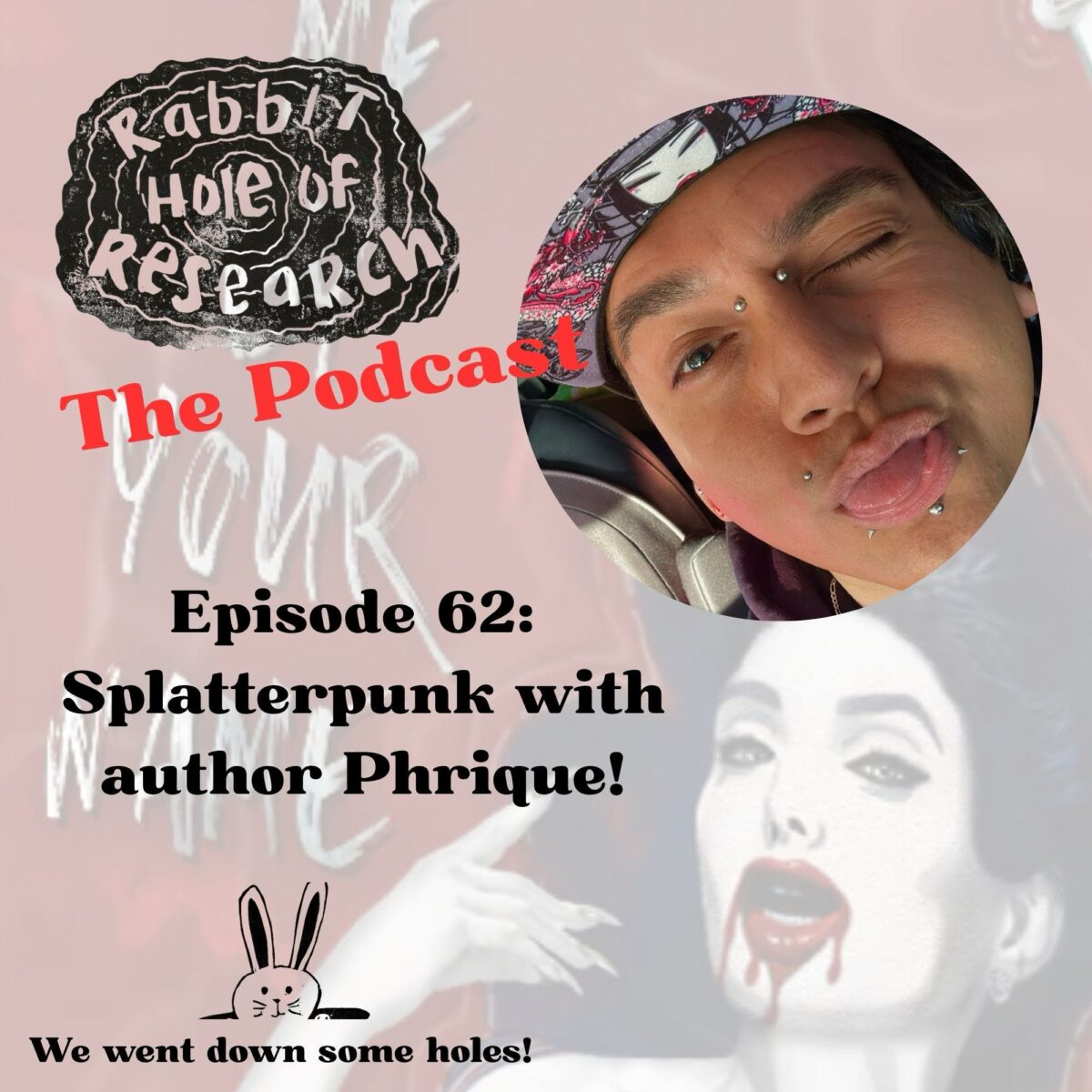
Episode 62 Show Notes: Fear, Phobias, and Splatterpunk: When Terror Becomes Entertainment

The RHR crew explores the neuroscience of fear, the psychology of disgust, and the genre brave enough to find out exactly where terror ends and entertainment begins.

SubstackAppleSpotifyYouTubeAmazon

In the 62nd episode of Rabbit Hole of Research, Joe, Nick, and Georgia welcome splatterpunk author Phrique to the Basement Studio to dig into one of horror’s most primal questions: what separates a debilitating phobia from a Tuesday night movie with friends?

Starting with the ancient alarm system wired into every human brain, the crew explores the neuroscience of fear’s two pathways; the lightning-fast response that bypasses conscious thought entirely, and the slower response that keeps you in your seat when the monster appears. From there the conversation spirals into why disgust and fear are more deeply entangled than most people realize, how the brain’s prediction engine works to build suspense, and why humor isn’t just a break from the tension, it’s a way to reset the fear dial.

Phrique breaks down the difference between extreme horror and splatterpunk, shares the political allegory and queer subtext running through his work, and explains why, no matter how hard he tries to write something purely for shock value, a moral always finds its way in. The crew also tackles the uncanny valley of flesh, the Cronenberg principle of gradual bodily transformation, the crew’s personal phobias, and why enjoying horror might actually be good for you.

Plus a stack of recommendations across film, books, video games (check the newsletter), and a spotlight on the Slay the Lake LGBTQ+ Horror Book Fest at The Final Girl Bar in Kenosha on April 18th.


Where to Find Phrique:

  • All things Phriquehttps://linktr.ee/phrique
  • Phrique writes phoolery, not at all plain & far from simple. For legal reasons, he only writes what the voices tell him to. He willfully abuses alliteration & injects innuendo where it ought not be, with the intent to make the reader giggle, gasp, and gag at his gaiety. He wants you to laugh at things you shouldn’t, so he’s not the only one being stared at.
  • Phrique’s books: Gig of the DamnedScissor Me TimbersCurse Me By Your NameRearranged Guts, In The Club We Are All Monsters 

Slay the Lake 

LGBTQ+ Horror Book Fest | The Final Girl Bar | Kenosha, WI Saturday, April 18, 2026 | 3PM–8PM | 18+ Event Ticketed early entry $15 (2PM–3PM) includes tote bag, blind date with a book, and early access. 10% of early entry sales go to the Transgender Law Center. Tickets: slaythelake.com

The event is also collecting book donations for LGBT Books to Prisoners — a trans-affirming, racial justice-focused, prison abolitionist project sending books to incarcerated LGBTQ+ people across the US. Check lgbtbookstoprisoners.org for their current needs list and bring donations to the event.

Check out what the RHR crew is creating:

Joe:


Future Events to Hang with the Crew:

Podcast Cross-Appearances

Events & Conventions:

  • 35 Writers to Watch: Celebration Party – Epiphany Center for the Arts 201 South Ashland Ave., Chicago, IL, United States (April 30th 7-9pm)
  • 5th Annual Mai Fest – Blue Island, IL (May 9th 2026 12-5pm)
  • Avondalia Night Out – Rosa’s Lounge in Avondale, Chicago IL (May 14th 2026 7-8pm)- Joe reading
  • Creative Arts Summit – DIY Podcast Workshop at Lake County Public Library (Merrillville, IN) on May 23rd, 2026
  • ConCarolinas – Charlotte, NC (May 29–31, 2026 ) – Joe attending as Guest
  • Shore Leave 46 – Lancaster, PA (July 10-12, 2026)Lancaster Wyndham Resort and Convention Center
  • Dragon Con – Atlanta, GA (September 3-7, 2026) – Joe attending as Professional

It’s Science for Weirdos

Want to support the show? Tell your friends. Follow us on social mediaDiscordshare the podcast, and let us know what topics you are excited about. Leave a Comment. And for email alerts sign-up for the Substack newsletter and never miss an episode, exciting updates or the bonus images we talk about on the episodes. 


We want to Hear From You (leave a comment):

  • Fear without control is a phobia. Fear with control is entertainment. But where is YOUR line? Is there a horror movie, book, or game that pushed you past it?
  • The crew shares their personal phobias; crowds, deep water, beaches, hobos, and clowns made the list. What’s yours, and did a horror movie give it to you or did you already have it?
  • Phrique, Joe, Nick, and Georgia all have a soft spot for practical effects and the gritty texture of 70s and 80s horror. What’s a modern horror film you think actually gets it right?

Drop your thoughts in the comments. We read them all, and your ideas often shape future episodes.

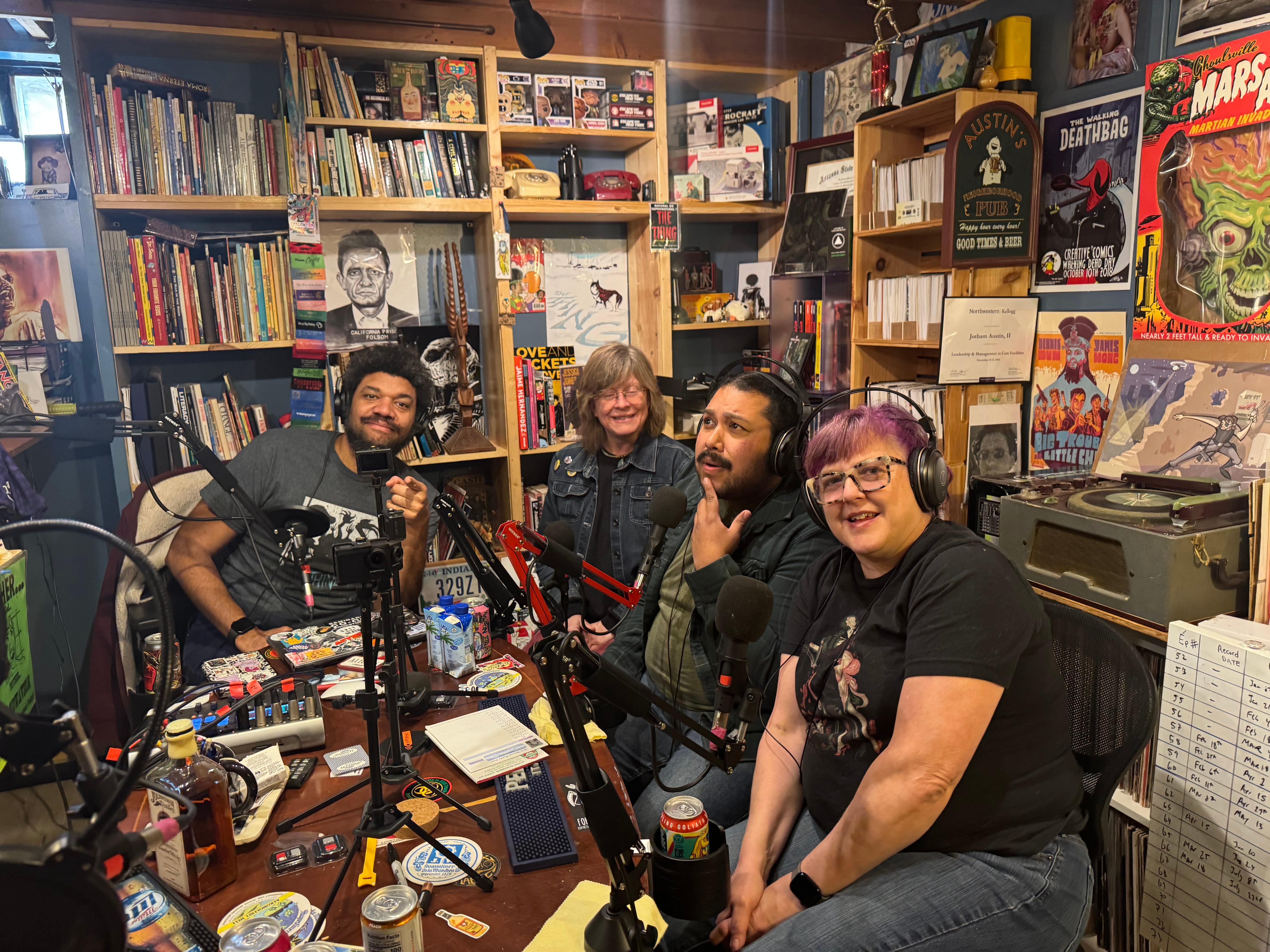
The RHR in The Basement Studio (Left to Right: Joe, Mary, Nick, Georgia)

Future Episodes

  • Episode 64 – Into the Deep: Humans, Caves, and the Final FrontierGuest: Ernie Bell, PhD (NASA and Blue Origin)What can living underground on Earth teach us about surviving on other worlds?
  • Episode 66 – Planetary Defense: Saving Earth from Other Worldly Impact
    Guest: Charles Blue
    Exploring asteroid detection, planetary defense systems, and what it takes to protect Earth from cosmic collisions.
  • Episode 68 – Hive Mind: PlubrisGuest: Wes Thorn (returning guest — Simulation Hypothesis episode)The crew dives into hive minds, collective intelligence, and the blurry line between the individual and the swarm.

For more stuff (Images, Episode Highlights, events, etc), subscribe to our Substack newsletter!


Show Notes & Fun facts 

Movies, TV & Pop Culture Mentioned

  • Phenomena (Dario Argento)
  • Trilogy of Terror: three segments each based on unrelated short stories by Richard Matheson. (3rd segment has the Zuni fetish doll Joe was talking about)
  • The Thing (John Carpenter)
  • Event Horizon
  • The Fly (1986)
  • Invasion of the Body Snatchers (1978)
  • The Blob
  • The Stuff (1985)
  • Monkey Shines (1988)
  • The Monkey (2024, based on Stephen King short story)
  • Cabin in the Woods
  • Rosemary’s Baby
  • The Shining
  • Evil Dead / Evil Dead II
  • Blood Beach
  • Cheerleader Camp
  • When Evil Lurks
  • High Tension
  • Blood and Black Lace (Dario Argento)
  • Deep Red (Dario Argento)
  • Barbarella
  • Annihilation
  • Overboard (referenced jokingly)
  • Dorian Gray (referenced in Phrique’s collaborative story)
  • Junji Ito (artist referenced in relation to uncanny valley and body horror)
  • David Cronenberg (body horror principle)
  • George Romero (zombie films as political allegory)
  • John Waters (disgust as art, boundary-pushing storytelling)
  • Chuck Palahniuk (cited as a Phrique influence)

Books Mentioned

  • The Stand — Stephen King (Franny referenced)
  • Haunter — Charlee Jacob (recommended by Phrique)
  • Works by Clive Barker 
  • Works by Grady Hendrix (mentioned by Georgia)
  • Only Good Indians — Stephen Graham Jones (recommended by Georgia)

Video Games Mentioned:

  • Dead Space
  • The Callisto Protocol
  • Resident Evil 7: Biohazard (recommended by Nick)
  • Doom (referenced by Joe)
  • Toxic Commander (upcoming — John Carpenter scoring)
  • Fallout (Pip-Boy radio referenced)

Fun Facts to Impress Your Friends With:

  1. Your brain has a fear shortcut that fires in about 12 milliseconds.Neuroscientist Joseph LeDoux mapped two pathways fear signals take through the brain. The “low road” bypasses conscious thought entirely, shooting straight from the thalamus to the amygdala and triggering a fight-or-flight response before you even know what scared you. That’s why you jump before you think.
  2. You can’t logic your way out of a phobia, and neuroscience explains why.When a phobic stimulus hits, the amygdala fires an emergency signal and the prefrontal cortex (your rational brain) partially goes offline. Stress hormones flood the body. Thinking your way through it in the moment is nearly impossible because the thinking brain has literally been sidelined.
  3. Horror enjoyment follows an inverted U-shape. Researchers at the Recreational Fear Lab at Aarhus University studied 110 haunted house visitors wearing heart rate monitors. The finding: too little fear is boring, too much becomes genuinely unpleasant. The sweet spot in the middle, just enough arousal without tipping into distress, is exactly where horror lives.
  4. Disgust and fear are more entangled than you think, and splatterpunk exploits both. The anterior insula, your brain’s disgust processing center, doesn’t just react to gross things, it also processes your awareness of your own body. When body horror describes flesh transforming or boundaries dissolving, your insula doesn’t just file it as external information. It recruits your own body-awareness system. That’s why body horror doesn’t just look disturbing. It feels disturbing.
  5. The uncanny valley was first described in 1970, and horror has been using it ever since. Japanese robotics professor Masahiro Mori coined the term to describe the deep unease triggered by something that looks almost-but-not-quite human. Body horror, transformation narratives, and creature features have been weaponizing this response for decades. Something fully alien can be processed as “other.” Something almost human forces your mirror neuron system to engage, and when the simulation hits a violation, empathy flips to horror.

Episode Highlights

00:00 — Basement Crew Intro The whole crew is in person and accounted for: “We’re all crewed up down here. All in person. Surviving. Living.”

00:26 — Meet Phrique Splatterpunk author Phrique introduces themselves: “In that year and a half I put out like five books.”

02:17 — Fear vs. Fun Monologue Joe sets the stage with his opening monologue: “We seek out the exact sensation that in any other context we’d call trauma. Same chemicals, same brain regions firing, same body braced for horror.”

04:08 — What Is Splatterpunk? Phrique draws the line between extreme horror and splatterpunk: “Extreme horror is literally for shock value, splatterpunk is basically all that, but for a reason, with a moral, with some kind of commentary.”

06:23 — Stories With a Message Phrique breaks down the allegory running through their work: “When you hold things in, it manifests.”

10:43 — Fear Psychology and Tropes Joe connects splatterpunk to the brain’s ancient fear hardware: “Our brain, our hardware and software… it’s pretty ancient. A lot of our fear structure is based on keeping us safe.”

17:38 — Humor as Misdirection Phrique explains the strategic use of comedy in horror: “I like that the humor takes you… I’ll usually do it right after I just killed like 12 drag queens and I make you love them.”

24:39 — Creepy Toys and Old Horror The crew riffs on childhood horror memories and cursed toy movies: “Don’t remove this tag… and then it comes to life.”

28:55 — Final Destination Phobias Phrique connects the log truck scene to real workplace anxiety: “I work in a steel mill, they tell us someone dies there probably about once a month.”

30:13 — Defining Phobias and Disgust Phrique offers a working definition and connects germophobia to evolution: “A phobia would be when it causes distress, when it affects you and causes you to go out of your way to avoid it.”

35:26 — Music Sets the Mood The crew unpacks how music rewrites a scene’s emotional DNA: “You go to a minor key versus a major key, it could be the happiest scene ever, but you feel it internally.”

40:28 — First Horror Memories Phrique recalls their earliest horror experience: “I knew you are not supposed to be watching this. This is going to mess you up.”

41:34 — Favorite Horror Classics Georgia names her all-time favorites: “Rosemary’s Baby. And The Shining.”

42:38 — Why We Love Horror The crew lands on horror’s core appeal: “It’s almost like a rollercoaster… I survived that. And now I know don’t run upstairs.”

44:50 — PhD Dreams and Fear Research Phrique reveals their abandoned psychology path: “My dissertation was going to be on basically what you talked about when did we take this emotion that is literally built into us and turned it into something we seek out?”

47:13 — Splatterpunk and Body Horror Joe introduces the Cronenberg principle: “Make it slow, make it last, you begin to buy into that transformation happening in front of you.”

49:37 — Retro Creature Features The crew geeks out over classic creature horror: “The Stuff is one of my favorites, people just eating some stuff that bubbles out of the ground.”

52:04 — Sci-Fi Horror Crossovers Phrique shares their reluctant foray into sci-fi horror writing: “Dead Space is one of my favorite games ever, I played all of those.”

54:47 — Uncanny Valley Explained Joe traces the concept back to its origin: “Japanese robotics professor Masahiro Mori in 1970, when you look at things that are personified in human form but not quite human, it triggers that deep unease.”

58:35 — Art Covers and Romcom Gore Phrique reveals their new book cover and genre mashup: “It’s literally an office romcom about Bloody Mary, but I’m calling it a romcom with a body count. The body count is 29.”

01:03:35 — Slay the Lake Community Phrique reflects on finding their people: “It’s a safe space, but also you’re being basically celebrated…yep, we’re going to, we got stuff to say, we have books to put out.”

01:10:07 — Phobias and Top Picks The crew shares personal phobias and recommendations: “When Evil Lurks, that’s my new favorite. It was High Tension before, but When Evil Lurks was just great.”

01:16:02 — Wrap Up and Slay the Lake Event Plug Joe sends everyone off with the details: “Go out, support a lot of great authors. You’re supporting a lot of good causes going there.”

“Stay curious, stay safe… Love Y’all!”


Join Rabbit Hole of Research on Discord: https://discord.gg/2nnmKgguFV

Subscribe and Share our Substack newsletter to get email updates, never miss an episode, and spread the word!! Don’t forget to give us 5 stars or a like!

Transcript of Episode 62: Fear, Phobias, and Splatterpunk: When Terror Becomes Entertainment 

The RHR crew explores the neuroscience of fear, the psychology of disgust, and the genre brave enough to find out exactly where terror ends and entertainment begins.

SubstackAppleSpotifyYouTubeAmazon


joe: [00:00:00] Hey, welcome back to the Rabbit Hole of Research down here in the basement studio. You’ve got me, Joe, you

Nick: you got Nick.

joe: got Nick

Geo: Georgia, 

joe: We’ve got

Georgia. We’re all crewed up down here. All in person Surviving Living.

Nick: Yeah, we’re we’re just making it through.

joe: Hunkering down.

Nick: Just trying to make it through the winter months.

joe: it through the winter months. That’s right. That’s right. So, in this episode we do have a guest with us. Hello there. Over here. So if you’d like to introduce yourself so people hear your voice. Know who you are.

Phrique: Hello everyone. I’m Phrique I am a splatter punk author. New-ish. We’re in that space where it’s it’s been about a year and a half, so well, intermediate, I guess. Yeah, so kind of new. But in that year and a half I put out like five books, so

Nick: Yeah. Oh,

Phrique: yeah. 

joe: Cranking ’em out.

Phrique: I’m having fun obviously, that.

joe: yeah. So yeah, we’re gonna dig into fear [00:01:00] Phobias. Psychology and splatter punk, how these come together a little bit. So it’s

Geo: it’s

Nick: kind of unusual for us to have a horror episode outside of

joe: I know. Yeah, this year, just the way the calendar works, we only get to release two episodes in October.

So we gotta find other places to Yeah. To get our fix in.

Geo: could always talk about horror 

joe: I guess 

Geo: yeah.

joe: can talk about whatever we want. It’s our podcast.

Geo: That’s right. 

joe: That’s right. That’s 

Geo: Those sponsors. Those sponsors are gonna start protesting and leave us

joe: All our sponsors here. No sponsors, Nick. Yep.

Nick: Yeah.

Geo: We We gotta, I think we got a new one coming out soon.

joe: Oh my gosh,

Phrique: I heard the episode about the hot sauce ones and I’m like, now I gotta look these

up. So you guys,

Nick: those are Sauce. Yeah. Jesse and

Geo: Oh, those are, yeah.

Phrique: guys did a very good job with marketing ’cause I’m like, damn, I don’t even need hot sauce like that, but I need to

look Yeah,

joe: And they’re really good. Yeah.

Geo: they are one is really tasty.

joe: So yeah, I think we’ve pretty much gone through all our yeah.

Nick: I am fresh out. Yeah,

Geo: Yeah, not fresh

Nick: out. 

It’s been out for a

joe: We gotta have ’em on again. Then we get some free hot [00:02:00] sauce. All right. Well I got, you know,

Nick: you got a list.

joe: I have actually this episode. I don’t really have a list. I know how, but I do have my, oh

Geo: have? He’s got a monologue.

joe: mine on. Oh, you guys wanna hear little,

Nick: terrified of this.

joe: right? So here we go. Let’s get into

this.

You’re reading in bed.

The house is quiet. Dark door is locked. Safe. You know the book in your hands is just ink and paper, but your heart is racing, palm, sweating, skin goose, fleshing. Every muscle in your body is tensed for a threat that doesn’t exist.

Nick: I, what kind of book are you reading?

joe: You could close the book, turn on overhead light, but you don’t.

But you creep closer to this feeling of fear that is supposed to protect you. It’s an ancient alarm designed to keep you alive. It screams at you to run from the snake, away from the cliff, the predators in the dark, or to flesh that squirms with maggots, but sometimes you run towards it instead, paying to be [00:03:00] chased through popcorn, buttered fingers held up to our eyes.

We watched a scene we know will make us sick. We seek out the exact sensation that in any other context we’d call trauma. Same chemicals, same brain regions firing. Same body brace for horror but one is. Debilitating phobia. And the other is a Tuesday night movie with friends. So what’s the difference between terror and entertainment and what happens when a genre decides to find out how far you can push it before the difference disappears?

Geo: That’s good question. 

Phrique: So lovely.

Nick: yeah.

joe: Thank you. 

Nick: Y you’re posing some questions there, I think at the end. Yeah. 

joe: What do you think?

Nick: I

think once you see it right there in front of you, that’s when it becomes the major difference.

joe: Yeah.

Nick: Like

Geo: What do you mean?

Nick: Well, I mean, if I see something on the screen, I’m not scared.

I, I watched horror movies enough to where I’m like, yeah, that’s fine.

Geo: So it’s more the things you can’t see. [00:04:00] It’s, More the things that are physically in the room with me.

Nick: Like 

joe: you’re afraid of people.

Geo: People are pretty scary. Yeah.

joe: So what do you think Phrique you write in the genre?

Do you wanna define splatter punk for folks who aren’t familiar with that genre? Sure.

Phrique: Sure. Well first off, the, that was, like I said, lovely. You literally hit like all my, like brain buttons that like every little thing. Just like I have an, I’m an evolutionary psychology nerd, so like, all perfect. So, splatter punk, everyone that doesn’t know is basically like a genre of extreme horror, spider punk, similar, of like

brother and sister, maybe cousins.

But extreme horror is literally for shock value. You know, they’re just trying to get as much sensory and to just really just rev up everything. And splatter fun is basically all that, but for a reason, [00:05:00] like with a moral, with some kind of commentary. There’s more allegory, nuance stuff like that.

And it’s very funny because, I even find when I’m trying to not write but I’m not trying to put a moral in there still is one there. And personally, I have OCPD, so it is not normal OCD, it’s actually like more foundational for me, where the minute I see something, I already know my brain already, is it categorized where it’s going to be.

And it’s just kind of one of those, you know, it’s not the worst mental illness to have, but it’s it’s very it’s even in my writing you can tell because 

joe: my

Phrique: first book was called Gig of the Damned, which is a like a jello about drag queens. And so I’m telling you, I’m killing these 12 drag queens on the back.

There’s a kill list, so I’m telling you they’re gonna die. Like we’re not mincing words with that, but it’s very, the first chapter is my main character is Gambled on a Fart. [00:06:00] And then, which is my favorite drag queen name ever. And and then the next chapter is Dina Fire. And then the next chapter is ga Fart.

Next chapter. It’s Reba Dichi. So everything’s just my brain, just, that’s kind of how it needs to go back and forth. Like my tattoos are all the same on both sides, like they mirror so I have to have everything symmetrical. So it’s just funny ’cause it’s like it’s, but it’s so, like even there’s two stories I’m working on now and I’m like, this is gonna be more extreme horror because there’s not much about, I can talk about it ’cause I’ve talked about it before, but it’s called Rearranged Guts and it’s going to be about a basically a serial killer who uses Grinder to find his victims. And he basically explodes them. Like he gets in there and then he finds ways to just, yeah. He really likes to see their, he likes to see their inside.

So, 

joe: right. But, and 

Phrique: and so I’m thinking like, this is just gross. This [00:07:00] is just, you know, but then the more I’m getting into it, it’s like he has a lot of internalized homophobia,

You know, father did X, Y, Z and so it kind of made, so I accidentally put a mortal in anyways. ’cause it’s just see what I mean? A lot of my stories is very, when you hold things in, it manifests,

joe: Right, right.

Phrique: Timbers was about nun mother Superior who.

Had these urges and she was told by the church in so many words, you can’t have these urges. And then it just so happens a lesbian lumberjack falls into the convent and has amnesia. ’cause of course she has amnesia and the only way for her to get her memory back is to have sex with all the nuns. So all this is going on in the 

convent 

joe: go.

Phrique: and most superior.

joe: Oh, hold on.

Can we put a pin really quick here? Sure.

Geo: true.

Phrique: Sure. 

joe: Is that a known cure to amnesia?

Is that you know, when I watch Overboard today have Goldie 

Geo: Is that scientifically proven? 

joe: Have I missed [00:08:00] that research

bit like in there, like where it’s, you know,

Nick: wait, sex with nuns cares everything,

Geo: It couldn’t hurt. Right.

Phrique: funny you say that too, ’cause like thinking of like old TV shows. ’cause I love, you know, I watch all the old you know, 1980s, 1970s movies

and stuff like, 

joe: stop calling seventies and eighties old. Just, 

, when I go old,

I think you’re gonna go forties 30. You’re like, I’m like, geez man.

Nick: I agree with you. Sixties and seventies is old.

Phrique: late 1900, the late 1900 movies. I will, I’ll go. But like they always talked about someone had amnesia and there was like quick send, you know, things that don’t really come up nowadays, but for some reason that’s kind of what I was, I kind of wanted to more of a grind housey field.

So I, I had to bring that back. But then, ’cause we’re introduced to the character whose name is Paulina, and so she’s a lumberjack, I was legit trying to go for Paul Bunion, I think her last name is Bunion. Yeah. Because that was, I had to do it. But yeah, like that’s, she’s, we [00:09:00] meet her where she’s basically like a lesbian.

S douche bag. She’s just known for sleeping with everybody. So that’s kind of was her mo but she’s a lumberjack, so she’s also, you know, chainsaw in hand and just she’s in the convent and she lost her memory and just little ticks of what she used to be was, she was 

handy. 

She was handy. So,

joe: So,

Phrique: But yeah, that’s just, but it was mainly about Mother Superior is she’s like the like she would flag rate, I don’t know what the word’s not coming to me, where she would, you know, what they beat themselves with rope and all that.

She was part of that,

But she took it a little too far where it became a little s Andy, like where it’s that line where it’s are you enjoying this?

So meanwhile, 

Nick: much enjoyment outta your swings.

Phrique: right. So that’s what I want to touch on that. But then also all this sex is going on around her when she’s trying to like, keep her urges at bay.

And it’s just kind of what [00:10:00] happens when you keep stuff, you know,

joe: kind of buried

Phrique: bottled up, it’s gonna come out way or another. So I, that was a really long explanation, 

Phrique: but that is, that splatter punk is whatever you want it to be. But I have, I said from the beginning, I’m gonna write the gayest shit ever because one thing about splatter punk is that it’s very, there’s no rules.

You can say whatever you want. I’m a big fan of the punk part of it, where we’re kind of being told to be quiet, to not not make a fuss. You know, don’t don’t wave that rainbow flag too much. So then that’s why my covers literally say violent f bloody a FK, a F, because I’m

not

I’m.

joe: , from the evolutionary point of it, the brain, our hardware and software.

It’s pretty ancient, , it’s a hundred thousand years old. , it hasn’t evolved that much. And a lot of our fear structure is based on keeping us safe. That was hinted at that. And so to fight or [00:11:00] flight, , that’s our quick response, 12 10, 12 milliseconds you gotta go.

And then we have longer responses to threats. And so really the idea here in, in some ways, splatter punk. My thinking also is that you’re trying to funnel modern day issues through this and hijack this very primitive kind of fear structure. Your studies and in your writing, are you playing with that line?

Do you see the line or, 

that. 

Phrique: It’s almost like when I hate to go back to the nuns again, but like when you,

joe: we’re not gonna get sponsored by the nuns. I

Nick: I

thought this episode was sponsored by the Catholic Church. Is that not right 

Phrique: so you guys know you’re, we’re in the same area. I was forced to go to Andrea and so I was forced to go to Catholic school and and it shows because that’s what happens when you force when you force the Pisces to do anything. Oh, I’m gonna fight. But but let think about when a nun is like slapping someone’s knuckles.

’cause they wanna get that message in there. So I [00:12:00] guess I have to get your attention. And so that’s kind of. Like a big slap on a slap on the knuckles. ’cause it’s well I’m trying this is what I’m trying to say. This is, I’ve done like a bunch of short stories that are more bizarro. And I did one called, oh no, I Got Exploded Baby All Over My Favorite Sweater, which one of my favorite titles, but, and it’s 

legit all, and I kill five babies in it.

That’s, that sounds horrible. Like I should be ashamed, but I promise you I do it in the funniest way possible. You will laugh

joe: They’re a funny way to do that. 

Phrique: Feel horrible for laughing. But it is an allegory for, these are terrible like influencer parents who aren’t paying attention to their kids.

They literally put them in front of this baby monitor that basically watches them and it also a little, some their, it wasn’t tested all the way and they put something in their brain that makes the babies want off themselves. But to get away from parents that they shouldn’t have.

been born too, because Roe [00:13:00] versus Wade and all that.

So again, no matter what, there’s always gonna be a reason for it, whether I like it or not, but 

Nick: I feel like horror has always had that underlining political,? Yeah.

joe: No, you’re right. Yeah.

Geo: Yeah.

Nick: throughout all of it. It’s always had something behind it.

joe: No,

Phrique: Romero

joe: I mean, you,

Nick: like,

joe: go ahead.

Phrique: yeah, it’s like with, he wanted the zombies for like I, I, when I read about all that, I’m like, okay, so I feel less crazy because that’s just what my voice is, but I know how to get your attention with lesbian nuns and then I’ll get 

my message in there that way.

joe: and I think horror does give that space to experiment in because you’re pushing it to the edge and you’re towing that line. You know? There’s studies where, , you have to have enough of this kind of fear in it to, to engage and keep people there. The brain active, so you’re not gonna tip over to the running out.

When the people come for Nick in the theater, [00:14:00] he can stay on the edge of his fear and ride it. 

Sorry, 

I’m pointing you out. You called it out earlier.

Nick: Was that on? Were we recording during that one?

Geo: I

joe: I don’t know. Maybe. I don’t 

know. People all here and the post edit,

Nick: They’re gonna be very

joe: but Yeah.

Well, Nick said that he doesn’t get scared in movies, but the people scare him.

Geo: No, that was, we were recording

joe: Well, we have a little aside here. No, but as you go forward, oh, the point I was making, you guys screwed me up now. 

Nick: Oh no,

joe: Yeah. You guys did this on purpose. This is my phobia.

Geo: This is your greatest fear, isn’t it?

joe: sleeping. I’m gonna wake up and be like, poof, man. I was on, I was recording. And had that there, so No, but I was saying about the kind of, you, you ride that line between the fear keeping the brain engaged, , the cortex there funneling through and the person is well, I’m safe.

I know I’m safe. And so I can experience this very scary or very fearful or [00:15:00] situational scary, right? Because we see a lot of that with, social issues where you’re putting into that and then empathizing, right? So if you, especially with body horror not only that kind of gets your brain engaged and you begin to empathize with that character and you not, you go to the next level of actually feeling what they’re feeling and having that very visceral experience as you’re watching and your skin is crawling and you’re in that moment.

What would it be like? And your mind starts going, what if I was in that situation and you then everything washes away. 

Geo: I think it’s a way to, like you said, safely look fear in the eye. You know,

joe: Yeah.

Nick: I love seeing the parts where it’s oh, you just messed up and I know you have, without even going forward in this film.

joe: Right, right, right.

Nick: Like having those, what I mean, they are reactions that people would have, but it’s always something that’s like

You know, you messed up. [00:16:00] I know you messed up like everyone knows it, but would that be something that you would make that mistake during the moment, or no? Well,

joe: Well, I mean, right.

And that’s also, that’s the craft of the writer, right. And or the storyteller that will they, show their hand too much? Right? So if you show too early, and the audience can guess, right? Because really we’re, you also have your brain’s a good prediction engine. So your brain’s predicting what’s gonna happen.

And so this is where the fear comes in. And so if your brain can predict what’s happening and you’re not gonna be fearful of that, you’re not gonna think it’s even. You’ll probably start laughing at it because now you’ve realized, oh, I know exactly what’s gonna happen. So if you’re writing to that and you’re really gonna show and lean into the comedic value of it, then great.

But if you’re really trying to build suspense and the fear, then you really actually want to, not you, you want to fool people by doing the thing. I expect the creatures in the closet ’cause that’s what I expect. [00:17:00] And then when it’s not, and then it jumps out somewhere else, that’s when you go, oh crap.

Like I, I had this all wrong. So that’s when that’s a, I think that’s a good writer versus a lazy writer that goes with tropes

Nick: which I think Cabin in the Woods is the perfect example of this. And I think I’ve mentioned it

Geo: have something,

joe: bringing this up

Nick: I

love

this film 

so much. It

Geo: Okay. P, pause this. So we can’t go watch this movie and we’ll be right back.

joe: be right

Nick: listening. Immediately. Go watch Cabin in the Woods. All right. All right. They’re

back.

I think

joe: Yeah. Yeah. Woo.

Geo: That 

was great.

joe: No, I’m 

joking. 

I,

Phrique: saying.

joe: what was that 

Phrique: I get what you’re saying just about that especially pattern recognition, like we are, we’re geared to notice patterns. I feel sometimes that I.

Nick: I,

Phrique: My brain notices them more. Like I am legit a quality inspector, so that is my job is to, I can be reading, writing, whatever at work.

I [00:18:00] work like 12 hour shifts. I work with steel mill, unfortunately, and I’m legit looking for defects in the steel. And my brain will, I can be in this book and my eye will notice the little blip and I know, okay, I just did my job. So good job. But I think that we all do that. And so, especially when I’m writing, I know, and I’ve watched so many, I literally do basically watch a horror movie a day if possible.

Or jello, which, ’cause I’m a nerd for those, but I know what I would expect to happen and sometimes I want that. I want the trope because I wanna kind of see, give an homage. I love an homage. But then also. I know what you’re gonna expect. So then part of me wants to do a little yeah, I’m gonna mess with that.

So I’m gonna throw a red hand again. I’m gonna make it, you think that something’s gonna happen. And one thing with me that I don’t know if it’s a bad thing or not, but I laugh at everything. I literally make it, I shouldn’t, you should not be laughing at things that I’m writing about. And I’m the guy that like, [00:19:00] I will laugh during a giggle during a funeral.

I’m in trouble. ’cause it’s just, nope, I gotta get outta here right now. And then I’ll laugh even more because I know I’m not supposed to. So it’s just, but

joe: that reminds me of the character of Franny in Stephen King’s, the stand. And that was her, that was like her character flaw that she would laugh during these very serious moments. And so when you said that, I was like, wow, that’s a, i, that’s a character in a classic horror, 

Phrique: I mean, that would be me. I would be, you know, my, my final words are gonna be, are gonna be something smart Alec that I should not have said, but

joe: yeah.

Phrique: I gotta get it out. So, but yeah, that’s a lot of I do throw a lot of humor in even when, like I tried to do when my first stories was it was about like a priest that were getting hunted down by this girl that they had locked up.

And said that she was possessed when it was just, she knows their secrets. So that was supposed to be my most I really [00:20:00] wanted grind house. I wanted to be very just, you know, gritty and we’re not joke, no jokes, we’re not laughing. And I said something about the priests, like pancake ass or something.

And people like, like that’s the funniest thing I’ve ever read. And they’re like, that was, you weren’t

supposed to laugh, 

joe: there.

Right, right, right. Well, you gotta have

Phrique: what my brain does. I have to throw those. It’s just, but a lot of people, I like that the humor takes you, I like I’ll usually do it. I just killed like 12 drag queens and I make you love them.

And people, that’s one of the things I get a lot of compliments on is that I gave you 12 characters, but everyone has their own voice. Everyone knows what they look like. They’re very distinct and you know, people get connected to them even knowing I’m literally going to kill them. I told you I’m going ahead of time.

So then I usually throw humor in. And the, so in Gig of the Damned, it’s the killer is wearing a bedazzled ski mask. So it’s like hot pink, bedazzled ski [00:21:00] mask with leather trench coat, the gloves, the straight razor. ’cause it’s a gilo. And, ’cause I thought, you know, drag queens, if you put a ski mask on a drag queen, they’re kind of gonna look the same.

You won’t really know who’s. Under there. So, but each girl, before they die for all 12 of them, I worked in the joke that they all say in one way or another, someone got A bedazzer for Christmas. And so like I, and it’s purposely there to kind of throw you off and kind of make you like, oh, I’m laughing, I can relax.

They get the base sliced off. So that’s kind of, yeah, But I think

it’s handy and I like doing, but yeah.

joe: Yeah. Using humor to break the tension, once again, to throw off that your prediction, you’re trying to, your brain’s working to figure out and when’s the next horrific thing going to happen? And then. If you have something else, look over here. Brain. And I was waving my left hand. Is

Nick: for hand waving him?

That’s [00:22:00] what

normally 

joe: hand wa that’s right.

Nick: Yeah. I wasn’t sure.

joe: yeah, you’re right. Okay. I’ve better get, I gotta get some other symbol. Wave my foot, you know, 

Nick: the diversion of it is over here.

joe: It’s over here. But yeah, no, that’s, yeah. I think the horror part of it is interesting because you see that, in some horror, some of you don’t like it.

Nick: It really depends like on who, what kind of horror they’re going for.

And for the more intense ones, you do find comedy in it like. Just because of how over the top they can get. Yeah, 

joe: that’s right. Yep.

Nick: Like the more over the top, you want to have something to cut through it. ’cause it helps you keep going, keep reading, keep watching.

Geo: And it’s like the absurdity of it. Yeah. 

Nick: You know, if you’re having already something super absurd with the amount of killing getting done you want something like

joe: well, also if you’re riding that, if you’re riding that fair the fair, the fear train

Nick: fair Fear.

Fear, 

joe: fear, the fairy fear, fair [00:23:00] train.

Nick: fairy fear.

joe: but if you’re on that line and you could easily tip over to where you can’t watch it anymore.

You have to leave, you have to cover your eyes. You can’t enjoy the story. You gotta put the book down. Then I think it’s that intensity, there, you gotta actually throw in his humor that bring, ratchet down a little bit and give the person’s mind, the viewer or the reader a chance to catch up with everything and then have that.

And if you’re throwing this, you said you throw in a line, oh, you got bedazzler for Christmas. Then you know that repetitive line, you’re almost expecting it. And you won. It’s like the cheesy one-liners and it’s oh, like what’s gonna be the one liner?

And you then it tamps it down to a level where once again it brings your, the energy down and your fear, your brain your cortex can catch up so that you don’t hit a fight or flight response and freaks you out. So your brain can then go, okay, let’s process this. Let’s, take advantage of the machinery [00:24:00] that’s you know, running Windows 93 and, and then you go and,

Nick: oh, is that what you’re running over there?

joe: That’s what we’re running.

Nick: I thought they were the big flat disks.

joe: A floppy dis.

Geo: The big

Nick: Oh, that what they’re called. Oh, they’re called my bad.

I thought they were flat discs. actually five and

joe: a quarter floppy.

Dis. Yeah. The little, I had to explain a little save symbol that you see the little icon of save.

It’s like that’s, that was actually this, we used to save on like the floppy disk the three and a half inch, five and a quarter. Okay. This is, that’s a fear here. I’m fear fearing here a

Nick: That, that was all I was going for is let’s just hit the fears for Joe.

joe: Yes.

Geo: fear of

Nick: of that.

joe: That fear. Yes. That you have. 

Phrique: Of absurdity, what did, have you guys seen the Monkey and what did you guys think of that, if you did?

Nick: I thought it was funny. I was enjoying it. It, as I said, like I, I love the horror and I can get some good humor out of it.

joe: The Monkey, sorry.

Nick: Yeah. That came out what, like a year or two ago now.

Phrique: yeah, year or two ago it was I wanna [00:25:00] think that it was based off of a Stephen King short story.

joe: Oh, a Monkey Shine. That, that’s the 

Phrique: was just, it’s just The Monkey and it, I think it’s, it has the little like toy monkey on it and, I wanna say it was about a year or two,

Geo: Yeah. 

Oh

joe: Yeah. I think that wasn’t a story. Monkey Shines was that or that the other horror movie?

Geo: Well, that’s the older one

joe: Yeah. There was an

older one Monkey Shines that, sorry. Jesus. Louis Wee.

Phrique: Yeah, that

joe: Yeah.

Nick: The Monkey is

joe: the late eighties. Yeah. Yeah. 

So Monkey Shines was like the late eighties.

There was a movie called Monkey Shines, but Okay.

Geo: And now is this one related to the Monkey Shines?

joe: I don’t, I think it’s

Geo: I think it’s different. It’s totally a different,

Phrique: a cursed, it’s like a cursed little like monkey toy. Like 

Geo: Those are creepy.

joe: like 

Geo: all you had to show

Nick: about getting Jo that for Christmas, actually.

joe: doesn’t freak the Trilogy of Terror.

Do you guys remember that was the, that was good. That was the mini series back early eighties, I think. Late seventies.

Nick: I think my dad owned that on DVD. 

Geo: a [00:26:00] theme 

joe: thing was a little 

the doll, the

Geo: it was like a wooden 

joe: wooden, doll. And it had the little tag on it that if you, it says, don’t remove this tag, and then it comes to

Geo: Of course you remove 

Phrique: Was that the Karen? The Karen 

joe: yeah.

Phrique: Karen Blackwood. Yep. I’m not doing it because I’m on camera, but I remember seeing that as little kid and I when he did that,

joe: Right,

Nick: right. That’s

joe: That’s right. Yes. Yeah, it

almost think, 

Geo: freaked out. They 

joe: banned it 

like they had it. And so it was the first time where I think a lot of sponsors backed out.

And so the network just put it out and they had to change the ending to make it more resolved that, but that episode in particular, that series, yeah, it’s pretty, it holds up. We were just watching it not too long ago and it’s, it was like, wow, that is, that’s, , probably not something you should watch when you’re a little kid, but

Nick: I mean, I did 

Geo: I went 

joe: see The Thing in the movie when I was seven, so, you know, that’s that’s where I go in.

Phrique: Yeah, there’s like that’s first thi this is again, I try my best to not come off as such, like a pretentious douche bag, but [00:27:00] unfortunately it’s kind of in my DNA that it does. But ’cause you guys, if you grew up out here back in the day on Channel 50, they would play horror movies on the weekend.

It would just be a random one and like my mom would be working and my dad would just 

joe: Oh, hold on something.

Phrique: put it on. And one of the first horror movies I can ever remember watching was Daria Magento’s phenomenon.

And It was on, but it was, and and I mean I was, I wanna say I was probably about six or seven and I knew, ’cause I was getting so scared that you are not supposed to be watching this.

This is going to mess you up. You watch this, don’t tell mom or dad. And of course like I’m seeing. Girls getting their head shoved through windows and then off, and then there’s like a monkey, and then there’s gigantic scissors, and then there’s a guy with a messed up face. And of course my mom comes home and I’m trying to explain all this to her, and she’s just looking at me like he’s gonna need so much therapy.

[00:28:00] And which is true but but that’s very, but it did it had a lasting effect because here I am and like, that’s one of my favorite movies now where I’m like an Argento nerd and you know, I watch JS all day and I love the old, like any horror from like the seventies and eighties and even some like late sixties ones I could watch all day.

It could be the most terrible. And I still enjoyed my time.

If you show me a movie from two years ago, I’m like, I want my hour and a half back be. It was just, it’s not.

Not, it’s not there. Like we, I make fun of the 19 hundreds all the time, but that’s also like one of the best movies were so I can’t, but that’s why I said The Monkey was great because it was just so absurd.

And it’s, the deaths were so just almost like a Final Destination type deal where it’s just, they’re so absurd. So,

Nick: love The Final Destination. They’re so funny.

Phrique: I mean that, that’s one of my favorite ones. But,

so I work in a steel mill Yes. 

Nick: Every one of

Phrique: they don’t 

joe: I think I [00:29:00] only seen the first one.

Nick: Oh. You can stop

joe: I got stopped after that.

Nick: Like the, that, that is one movie that did give me a phobia from, I wanna say it was Final Destination three 

Phrique: yep, that’s the one. 

Nick: The log coming off the truck and just smashing the guy in the face.

I’m like, the amount of times I’ve been behind a truck that has a bunch of logs on it, I’m like, this is the day 

Phrique: And then for

the new one. 

joe: That

Phrique: new one they had trucks driving around with the logs and that was

joe: Oh wow.

Phrique: like, it’s genius. That’s ’cause

of course that, and it’s just, you see that and it’s nope. Yeah, the Final Destinations, a lot of people don’t like them. Those are the ones that like, I have to mentally prepare myself for them because I know my anxiety is going to be amp.

And again, I work in a steel mill, they tell us die there probably about once a month

Nick: Oh yeah. Those places are terrifying, right?

Phrique: like we literally have a memorial when you drive past because told that’s [00:30:00] why they get paid the big money and all that. ’cause people die there all the time. So the final destination ones hit me all the time. ’cause I’m like, there’s 

so many of these things that could just, yeah,

but I mean, but I love them though. But yeah.

joe: I was gonna say but with phobia, like kind of the way fear without control is a phobia. Fear with control is entertainment. And so it’s funny at that moment you’re saying with the logs, like you, you have these, I generated this phobia, and so you have this, now you’ve lost control.

’cause when you get behind a. You’re now your brain’s I’ve seen this. So instead of, and this raises a really interesting other point is that, you know, people think, oh, exposure will desensitize you, but it can have the other effect where you become sensitive 

and you 

can generate, you can go into the movie thinking, oh, I’m a, 

Geo: oh, I had never thought about that danger.

Oh, great.

joe: And then you have it, and then all of a sudden you’re, now you come out and it’s hold on I’m actually more freaked out and you [00:31:00] can’t, how do you remove this fear like this very modern fear and a lot of it really, it’s interesting and this is that, the old, I mean, I keep saying old software, our brain, old hardware, old software, because, you know, a lot of our phobias are related to, spiders and,, fear of falling heights.

You know, these things that would literally kill you. But now. More people die from, car accidents, guns not spiders. And so really why aren’t we, you don’t see people with phobia of guns or phobia of, you know, of

Nick: well what we have shark week now. Like people used to be terrified of

joe: right. 

Geo: Isn’t.

joe: it, 

Geo: I don’t know the definition of phobia, but is it phobia?

Nick: I know Joe didn’t give a list.

Geo: I know you need 

joe: no list. yeah, 

Geo: needed more definitions. But is that like when it’s a phobia, it’s not realistic? Is that I don’t, the part of it, or

joe: my am I? Well, we have a, you know, don’t Phrique you, you’re here.

This is your 

Phrique: A [00:32:00] phobia. I would, A phobia would be when it causes distress, when it causes, when it affects you and it causes you to go out of your way to avoid it, then it would be considered a phobia. And yeah, I agree with what you said about how so,

the, like a lot of people like Germophobes, we have this like I love.

love to be repulsed. And I love to write like repulsive, gross, nasty. And that’s kind of one of my claim to fame is the details that I put in, like Think Of The Damned is actually pretty tame. But the amount of detail that I go into with the deaths and the injuries, that’s just when I muting powers I guess.

But that’s what I’m known for. But when it’s like the disgusting, the ’cause and it’s coming from inside because I’m such a neat freak germophobe, and again, I work at Male and that they think it’s the funniest thing in the world, but like my re my repulsion level is so [00:33:00] easily triggered. And that’s another one of those that’s evolutionary 

because yeah, dirt equals you can, that’s how you get the plague.

That’s how you can get X, Y, z. That’s how you get food poisoning. You know, when you’re watching, I think they just redid it fear factor. And they had making smoothies with rotten bile and like brain matter and all this stuff from just like pigs, coagulated pigs, blood. And it’s I mean, then that’s it in our,

it’s in our d that you 

joe: Disgust. and Fear are kind of, they get tethered. Yeah. Yep. 

Phrique: Yeah. It’s there for a reason. 

joe: you know, our jom, the germ contamination phobias, disgusted. That’s our primal, that’s where the disgust comes from. And 

in fear 

Geo: and that’s a safety thing because then it’s supposed to keep you from licking rocks and

joe: That’s right. Don’t lick rocks, Nick.

Nick: You should lick rocks. This is for science.

joe: get superpowers that way 

unless you get a suit. No, you get a suit and a meal, then you look the rocks and you’ll get superpowers.

Nick: Hey,

joe: Hey,

Nick: suck on a rock. Don’t worry.

Phrique: There’s some people [00:34:00] that would think, okay, well then, but if I do go lick like a CTA handle 

joe: Yeah. 

Hold up. 

Phrique: Strengthen. That’ll strengthen

my. 

Nick: all, you just have to grab the gum from underneath it. It’s free gum under every bench. Guarantee it still has a little flavor in it. Yes.

Phrique: I mean, now that

could strengthen your immune system and make you 

healthier, 

joe: it could

Nick: Makes you a superhuman. Yes.

joe: But that was like Elf on Elf, the, which is a comedy when he starts eating the used gum, that, that disgust it, it was like, you were like, oh my, oh, I don’t know if I can watch this.

It like, oh my God. You’re like, oh, what is he doing?

Nick: the childish childishness of him, like really cut through on that moment, because if it was a child doing it, you’d be like, yeah, that totally makes

Geo: He was just totally naive.

joe: and you have that. I mean, it’s also the context of it, right?

Because that was, that’s a comedy. And you go, if you change the context in any way. That can easily be like this horror that’s the killer. That person there.

Nick: but you could do that with [00:35:00] damn near

anything. Right? Right.

Have you seen Friends? Without the laugh track? It makes Ross seem like an absolute psychopath.

Sorry,

joe: Don’t watch Friends.

Nick: just watch the clips of it without the laugh track.

joe: I’m trying to make me watch Friends,

Nick: It makes it

joe: look like

Nick: 10

Geo: right?

joe: Yeah, I 

can 

Nick: hundred folds better. Like I would not watch it if it wasn’t that funny. Because you’re like, he is psychotic.

joe: Yeah. 

Phrique: my teacher just made us watch the Star Wars ending with the music and without it to test that out. ’cause I’m in a this semester I’m in mass, mass communication mass media and communication, and then the psychology of marketing, which both great classes. Like they’re, I like, I’m a nerd for this stuff.

So, it just so happens I need it for my degree also. But yeah, she’s having us do all that stuff where it’s like, yep, once you take the music out, they’re just kind of standing there in front of these, like they’re getting the, and then of course I don’t chewbacca’s still making his random noises.

joe: Right, right, [00:36:00] right,

Phrique: does, but I mean, yeah, it, it does make a, I mean, it, it makes the movie, it makes the moment, so I get it. I

joe: Yeah.

You add all that. I mean, music really does, I mean, so if you change, you know, you go to a minor key versus a major key in music that changes the whole scene. So it could be the happiest scene ever, but if they, the music isn’t a minor key, which is, traditionally thought as sad, depressing, tonality.

You then feel internally our bodies and we will kind of respond to that and set that context up for you. So really, in movies, that’s why in the award shows , people that do sound and all that. You know, they should get their flowers because that, that sets, , as Nick’s saying that and re this sets the tone of the scenes that have that impact.

And that’s, in movies, when you have a book, you don’t really have a soundtrack. So you, your words are,

Phrique: I’m writing, like I’m trying to, I do wanna set the mood where it’s okay, is this happy and upbeat or is this, you know, making, but then at the same time again. [00:37:00] I’m a weirdo, I’m a freak, so I’m gonna I’ve had deaths come in the middle of just oh, yay. You know, this is a, you know, baby shower.

joe: Yeah. 

Phrique: But but it’s like, I mean, 

joe: I was gonna say, that’s what you do with music too, so you can have, you can be very happy, uplifting. And then, a head goes rolling across the floor and everyone’s looking at it like, what just happened? We were just playing, good time. 

Good time,

Nick: I think this is where the Christmas horror comes in perfectly.

Which horror? Christmas horror. Like Santa Slay

I know we passed it already, but it always has that jolly music and then

Santa’s putting something through someone’s head.

Geo: Well, that’s a, that’s a new thing that they’re doing a lot of, like on Fallout, like they have these scenes where it’s these just really horrible things are happening, or really scary things.

And then the music is like 

Nick: just the game

in general.

Geo: But I, and I love that. I love that like where it’s at. You know, 

joe: because

Nick: what, when you’re playing the game, you have the radio [00:38:00] on your Pit Boy, so whatever’s playing while you’re doing these crazy things. Is just how the scene is.

Geo: I just love that. Yeah.

joe: I was gonna say like also, you were saying about the eighties in horror in the eighties, back

Nick: back when,

joe: when, stop it, man. All right. Stop it. In our, but you, I think the, you had the psychological, I mean, a lot of ’em were much more psychological.

That was the story. You weren’t reliant on CGI and other effects like that. A lot of practical effects. So it felt a little more, visceral and real. I’m gonna go to my man, John Carpenter and The Thing , and so you go there and the music just to the tone of that music, just go through there and you have it.

It wasn’t any, there was really no upbeat. It was winter, it was depressed. You have that. The other one that comes to mind is a Event Horizon, which is like a horror ghost ship in space. And the music. But you had the coloring of that wasn’t that puke greeny just [00:39:00] haze that hung over everything, like in those scenes.

And it was like you felt sick a little bit like going through there. And so I think you had that, , these kind of, when you play with that, you have the story. And I think a lot of movies now, they’re in high def, they’re very bright. They don’t have that grit to ’em, and you , then it pulls you out of the horror a little bit.

I don’t know. That’s my opinion there. And I think you’re getting back to some of the grit. I think we’re starting to see that a little more. Well, like in movies,

Geo: the Duffer Brothers came out and said, you know, change these settings on your new

Phrique: Oh yeah,

I heard about that. 

Geo: TVs because it’s messing up. Yeah.

Nick: Joe, I’m so glad you brought up John Carpenter because he’s writing and conducting the score for a video game.

Toxic Commander. I think I sent it to you. I am so excited to see how he. Translate to a video game because he has such an atmosphere with him

joe: Except the thing he didn’t do to music.

Right. So that was he didn’t, that was was it Ennio Morricone,

Morricone 

Geo: Morricone

Nick: don’t remember. [00:40:00] 

joe: But yeah, like that is something that I think will translate so well because he’s a whole world to build.

Yeah. I’m gonna get my Thing fan card taken, but

Nick: Yeah, probably.

Phrique: Video game nerd too. I’m excited for that then, ’cause I didn’t even hear about

Nick: Yeah. I sent it to Joe on Instagram. He doesn’t look at anything I send him

joe: Oh, well I get, I just go on Instagram now. So little that’s like a horror show in itself. But it’s a different topic there. But

Nick: Georgia, I do have a quick question for you. Oh

Geo: Oh yeah.

Nick: When was the first time you saw a horror film? I.

Geo: That’s a good question. 

Nick: Because I know Joe’s seen horror, young

Phrique Frank has 

seen horror Young. I have 

Geo: I don’t think I saw too young. 

joe: You say you went to see, didn’t you Alien ?

Geo: I did. Oh yeah. I did go see Alien, but I didn’t watch it. 

Nick: What? It was

Geo: What? I was so scared.

No, I was so scared that the whole I, yes, the whole time I was like this and I was [00:41:00] watching and I was watching other people reacting 

joe: But You got to hear it though. You got to experience it. 

Geo: were worse than anything else. All those,

joe: the atmosphere and Alien. Is, haunting as you go through it. Yes. But yeah, I was like I

Geo: Yes I did. But seriously, I was like, I might as well not have been there because I couldn’t watch it at all.

joe: Evasion of Body Snatchers. That’s,

Geo: I, that was yeah,

joe: see that 

Geo: fairly young. Yeah. But obviously a rerun. 

joe: Yeah.

Geo: don’t I want,

Nick: I wasn’t gonna ask How old you were 

joe: and that’s a, like a,

Nick: any of these, like

joe: body horror. I think

Geo: I can tell you my favorite well, one of my very all time favorite horror movies.

Well, I have a couple and they’re very traditional. Everybody’s favorite, but Rosemary’s Baby.

joe: Yeah. definitely. That’s just like it. 

Geo: And The Shining,

Nick: But like, how is your relationship with horror?

Geo: What do you mean?

I don’t think,

Nick: do you seek it out? Is it something that you’re like, oh, if something [00:42:00] is there, I’m gonna go see

Geo: I think I might have been well to movies. That’s, hands down, those are like my favorite movies, you know, I do, I love scary movies, but I just 

Phrique: to see if you got messed up. Like we got messed up.

Like 

Nick: I 

didn’t know if there was any correlation.

Geo: No, I, but I probably, but as far as reading horror, that’s where like fairly new for me. And it’s and I wanna put it all on on Grady Hendrix, I started reading his stuff and then I just kept reading all of his books and stuff.

And then it led to I, so I’m really enjoying horror right now.

joe: I think also a lot of people don’t get into horror because they are worried about kind of the grossness of it.

And it’s not all I, I was talking to someone about The Thing and I was like, , there are scenes in there and they are emotional. But that’s really, you get caught up in the psychology of these people trying to figure out who’s who’s real, who’s not. And horror

[00:43:00] there is this kind of the splatter, there’s this splash air. I mean that genre exists, but there is a heart that comes down The Shining. You know, it had its scenes, but really it’s a psychological examination of cabin fever to someone. Then they have the ghost story kinda aspect in there.

But really, horror has this kind of play and I think that’s really exploring fear and creating a safe space is tell people, oh yeah, there are horror movies that you can go into.

Geo: Well, there’s 

joe: really, um, you 

Geo: so many horrible, like monsters and things

real life that it is nice to be able to watch. Monsters on, 

joe: and those monsters are usually personifications of human real fears. Right. 

Geo: But there’s something comforting about being able to see that and I don’t know.

Phrique: So that’s where my little nerd flag flies up because that’s one of the main things, like whenever somebody asks in a little, you know, books of horror group or whatever, that’s when I jump in because I’m like, so. My theory [00:44:00] is like the denr of well, that’s happening to them and not me.

So that, that gives you a little brain. And then it’s almost like you get, you are giving yourself anxiety as you’re reading, watching, but then you know it’s gonna come to an end and you know the lights are gonna come on and then you get to a leave intact and fine. So then it’s almost like a rollercoaster where, okay, so I survived that.

And for the little anxiety balls of nerves like me, like now I just learned, don’t run upstairs. And if there’s, if you see like a glinting knife on a cabin, on a countertop let’s put that away.

Nick: If you could see them, they can see you.

Phrique: right. So you, like I, so I take little like I say, I’m gonna write that down, so now I know.

Don’t ever do that. For certain PI think there’s also ’cause I was gonna do I was gonna go for mys ID before before this whole writing thing came up and it this a lot more. And then I also found out you have to like [00:45:00] intern for four years and just

joe: oh, so that’s for folks who aren’t familiar with the jargon. What? What is that? It’s ID

Phrique: a ID is just basically a PhD in 

psychology. And, 

but it’s a lot of work and

honestly it’s kind of, it’s kind of doing it so I can be doctor Phrique and it’s I’ll just be Phrique and I’m just gonna write books about Lesbian

joe: It’s kind of cool, the doctor part

Nick: Octa Park.

Phrique: but I wanted to do, I mean, I was gonna say I mean, you 

know, 

joe: I, yeah.

Phrique: research, I looked up the, I saw the, it said botany and then, like all that. I’m such a science nerd that would be so cool. But then when you have to get down to the nitty gritty and like the random the random testing and all that, I’m just like I just wanna find like the results. It’s just, yeah. It’s 

Nick: I don’t 

Phrique: I’m like, 

Nick: Do it all. 

Geo: Just cut to the chase.

joe: academia is there. No I think there’s some amount of love and horror involved in getting your PhD and making it through there,

Nick: you saying that it was a horror [00:46:00] story to getting it, or what?

joe: Yeah, sure. 

Let’s go 

Geo: Those long nights,

Nick: those

joe: it’s, no, it’s a,

Phrique: anybody who is a doctor, I completely, I give them all their flowers. I’m like you went through some that, so I commend you for that. But just and then my dissertation was gonna be on basically what you talked about. Where, when did we take this? Emotion that is literally built into us and turned it into something that we are, we’re going on rollercoasters to 

try and 

bring things that our ancestors got when they were trying to like, run away from like a Saber two tiger.

Like, why would we, they’re looking at us like, what’s wrong with you? Just stay in your house and you know, hoard, hoard, grain. You know, don’t like why would you do such a thing? But I think it’s interesting to show that what we’ve done with it. But then I also think, like what you talked about, I think we’ve almost over

overs sensitize ourselves, where the movies from the eighties, they were more subdued and you were able to get more quiet [00:47:00] horror moments in where now it’s if you’re not like, you know, splitting someone’s head in half then, and I’m talking about me I’m the,

I’m guilty here.

’cause it’s if I don’t see someone get their face ripped off, then I’m gonna sleep.

So. 

joe: right. 

Geo: It’s like that’s the whole kind of that’s how splatter punk really came out, because isn’t it just like how far can we take this? How much can we show? And how, you know,

joe: that line of, of fear and horror and disgust and kind of

Geo: and is it also maybe because of like attention spans now you know what I mean?

Or that there is such a big kill count and almost, every movie you see. You know, you like a John Wick movie when you you can’t keep track, so you’re just, you have to make it more and more.

joe: Well, I think you have also with lot of splatter is the body horror and kind of that aspect of it and going in there and that [00:48:00] transition as you go through, was it Cronenberg principle about, make it slow, make it last, make it very and so you begin to buy into that.

And I think that pulls you in watching this transformation happen in front of you and in your own mind. You know, it’s I should look away. I don’t want that. Like the moral, like I said, the moral, these morals come in this is not what I want. This is not the path I’m gonna take.

I’m gonna be a better person for seeing this and 

Geo: I hope so. I hope that,

joe: I mean, I guess you could come out I’m gonna go do that.

Nick: Oh, I’m gonna go Dexter someone.

joe: let’s go. But I think the body horror is really that aspect, and it doesn’t, I mean, it’s, it is, it’s a look away thing. I should look away, but really you’re like, you know,

Nick: it’s watching a train wreck,

joe: right. That’s right. Yeah. Yep. And, you see it, , The Fly with Jeff Goldblum and Tina Davis, one of, you know, one of my favorite kind of, once again in the ni I think that was in the nineties, somewhere in 

there.

Nick: long ago.

joe: dude, can you stop, can you

just stop?

All right.[00:49:00] 

Phrique: Did they have to crank the movie? The 

projector, 

joe: Someone’s back there

Nick: You have to keep saying the year. I mean, oh,

Phrique: mean, but I can’t, like She supposed to Fly. I’m gonna 

Nick: that 80? No,

joe: I didn’t think it could have been late eighties.

Phrique: yeah, that sounds about right.

Geo: I think 

Nick: was, early 

Geo: no, I think it was eighties. 86.

Nick: 0 6, like 

Geo: I’m like mid eighties.

Nick: When did the Fly Two come out?

joe: Oh man, come on. No one knows

Phrique: Yeah.

joe: dude. Don’t

do that. 

Don’t tell anyone. 

Don’t 

watch Fly two dog.

Nick: I say watch

joe: it.

Geo: Can’t

Nick: promise anything.

Phrique: Google it.

joe: Yeah. Right. It’s 

Geo: I do remember seeing the original fly when I was fairly young and that yeah, that ending, oh my gosh.

Nick: The

joe: original is that fifties? Yeah. Yeah. Right. Late fifties. Yeah. And Invasion Body Snatchers. The original, the 70, the seventies

one 

Geo: one always freaks me out. Yeah. One, it

joe: was cool was like The Blob, like I haven’t seen a new Blob movie in a while.

[00:50:00] Like you had that kind of,

Phrique: The colored one. The colored version of it. The ’cause the black and white was the original and then they made like the first color one. I remember watching it on fox, like way back in the day and then Yeah. On that messed me up. Any, anybody who I 

love, but just, yeah. Those are the ones where just 

joe: Some gelatinous

thing just takes you over it’s like Jello attacking you. 

Phrique: or like the 

joe: I went to Jello. Just, oh, I love The Stuff. You’re the first person to mention.

The stuff is that is one of my favorites where, I mean, it’s also like people just eating some stuff that bubbles out the ground. It’s let me just 

Phrique: Yeah. Like, I 

mean, 

joe: up on here.

Phrique: I kind of wanna know where the sausage, how the sausage is made. Let me, I’m looking for this before I know you know, it makes me think of Cool Whip when that was like 

joe: yes. Or the, what is it? Fluff? The marshmallow whip stuff. Was

Geo: Oh 

Phrique: yeah, the, 

joe: yeah.

fluff. Fluffer, 

fluffer, whatever. Not fluffer. That’s something else.

Nick: Joe. What? What was that? One more time?

Phrique: yeah I watched that I wanna say a couple years ago, and then it’s just yeah, [00:51:00] that’s that’s gonna make me look at food differently. And it’s just and it’s funny too because so I was gonna be a nutrition major before way back, so then I’m like, I’m looking at cool if oh, the hydrogenated oils.

It’s then you watch the stuff and I’m like, okay. So now I’ve just, that’s a whole other thing I gotta worry about.

joe: yeah. And when that movie, when I came out once again, I think that was in the late eighties, ultra processed foods, things like that, hadn’t reached a kind of the xge of consciousness as it has now. And people are really thinking about and oh, these are unhealthy.

Maybe we shouldn’t be eating these things or putting, crazy dyes in everything.

Geo: Although we went ahead and did 

Nick: The nineties, they had some crazy dyes and

joe: We did. That’s what I’m saying. I

Geo: but he’s 

joe: it was 

the moral warning oh.

Geo: and we did not take the warning and we should have, it

joe: it. 

It was 

a B movie, so, eh, you know,

Geo: I don’t think enough people saw it.

joe: no Avatar. So that’s a

Nick: people see an avatar, what,

joe: The $1.5 billion worth of [00:52:00] people have seen it.

Geo: Yes.

joe: Yes.

Phrique: difi, but I just, that’s it. It’s, I’m such a I’m a stickler in my ways where it’s just, I can’t do sci-fi like I did in my

first like, scientific 

joe: what’s wrong with sci-fi.

Phrique: But I don’t, that’s where, again, I’m a nerd, like in disguise, but sci-fi is just I play Pokemon. I, you know?

joe: We have a lot of sci-fi too that cross over in the horror. So it’s not like you just have, you gotta be straight sci-fi. So I think sci-fi gets a bad rap because of like hard sci-fi. Where, you know, a author or whatever move they’ll spend many pages describing the engine design.

And it’s not plot driven or not character driven. I think there’s a lot of sci-fi that now, you know, especially the speculative, if you wanna separate it out, where you 

do have these kind of, dystopian where you do have these stories that kind of go and you have all the crossovers where you’re mixing with horror, you’re mixing with fantasy.

And so I do think it’s, I think sci-fi got this kind of bad rap, but really it’s a very horror, [00:53:00] you know, I was just talking about horror, right.

Phrique: like, Dead Space is one of like my favorite like games ever. I played all, 

Nick: game.

Phrique: I played like the Callisto other one

Nick: Oh, Callisto protocol.

Phrique: Like I played all those like Annihilation was great. That’s and all that. And it’s funny, I had to write, so I had to write my first two sci-fi horror stories.

And the first again, movies from the 19 hundreds I did the son of Barbarella so I made Barbarella’s 

joe: Barella’s, 

Phrique: very love friendly son. He has the same taste of his mother. We’ll say that. So it’s basically that. But then I threw in like a ulu tie in with that, where it’s like he’s trying the story called, who Is My Space Daddy?

And it’s just trying to go back and find out it’s, who’s trying to find out who his actual fatheBarbarellacause Barella

got around, so like I tied that in. And then I did a story called when the Moon Hits Your Eye, and it’s about an asteroid [00:54:00] that. In 1969 in Hollywood, it just broke apart and it hit five different people at the same time.

And it’s basically done in like a news like a newspaper. But I somehow found a way to make it really scathing. Like one of them happened to be, you know, a woman was she’s at a her garden party and she just got done kind of making racist comments towards her maids. And it just so happens the asteroid flies through her head.

So, that I mean, that, that’s the kind of stuff that my brain comes up with. I don’t know. Good, good is kind of one of

those, 

joe: gotta be good, right? I mean that’s, you know, we don’t have to put it in a binary category of good or bad. That’s I think it’s just, 

Phrique: the CPD where I’m like, okay, so we’re gonna be quiet. We’re just gonna, it is 

what it. 

joe: it. Right. So I want, I was gonna touch on one other aspect while I was doing some research for this, and it was just, I like the phrasing. The uncanny valley of flesh is kind of, and so you guys know. [00:55:00] Uncanny Valley of Fish. And so it’s this idea that when you look at the things that are personified in a human form, that they’re not quite human, and it triggers that deep unease.

Oh. And so you go, so that’s what it’s called, the uncanny valley of flesh. And so, yeah. 

Geo: Who, who coined the

Phrique: just thinking about it. Yep.

joe: I don’t know who,

Geo: Well, I mean, I’m just curious like where that 

joe: it. 

Nick: can you give examples and Yeah.

joe: I mean, a lot of it, it starting out with like robotics, 

Phrique: Well, human sex, human sex dolls is what, right now is what,

joe: sex styles. There you go. I mean, if we get back to it,

Phrique: on where it’s yeah, I, there’s, when you said that, I think I might actually know of the scientist who was, she was studying that, where kind of, she was mainly talking about these human sex dolls and the uncanny and she was saying uncanny, uncanny valley as in like a sex innuendo.

But yeah, it’s kind of, it’s in that it’s in that

vein. 

joe: the Japanese robotics professor [00:56:00] Mahi Moori in 1970.

Geo: Wow. And then that is just so poetic when you’re thinking about now talking about AI and things, that’s just, yeah.

Phrique: Well, so 

Nick: Yeah.

Phrique: talk about Un Valley 

joe: what 

Phrique: Well, 

yeah. ’cause I mean, when you see, when you look at AI and you can tell that one eye is lower than the 

other, 

joe: right. Yes. Yes. It’s almost it, and it, I mean, I guess the thing also is that if you just had a purely alien creature that comes and it looks humanlike, you accept it, and you begin to think, okay, this is a humanlike thing. But then any, even movements, like if the weird, like the weird you have the weird girl in the hallway that runs kind of weird at you.

That Why are you looking at me like that, Nick? know what I’m talking about?

Nick: Yeah, totally.

Geo: Yeah. Or like the weird running in Weapons. That’s

joe: In weapons. Right. Any kind of 

that 

it gives you, it causes, like this une [00:57:00] it causes this kind of, you’re like, hold on, this isn’t, something’s not right.

And your brain’s like processing it. Maybe we should get ready to run ourselves or to fight. You know, you’re starting to process that and think about it. And it is that play where you go and the and the body, heart, once again, you get into that, this kind of thing where you’re right, you have offset features or eyes or other weird appendages aren’t quite placed.

Right. And you go, hold on. They’re almost, they’re 90% correct, but you know, that, that part of it, but yeah.

Phrique: Well, before you jump off that, and I know I just, I even asked you beforehand, please don’t let me say something. I’m not supposed to give away something I’m not. But I already talked about the story I did called when the Moon Hit Your Eye, one of my art pieces that I’m showing off in. I’m gonna post it in two weeks so you guys can we’ll call it like a little bit of a preview, but this is the art that I did for it.

joe: Oh, nice. 

Oh, wow. Yeah. That has a very Juni Ito 

Phrique: I was going for meets [00:58:00] our,

so, that’s, 

joe: Yeah.

Yeah. Like 

Geo: Like a

Phrique: basically the story where I said there was like, that was the garden party lady where she just got done and, you know, everyone looked, look at me and then, and that’s part of the story where it’s just, but that uncannyness of just so she looks fine, but where’s that other part of her head?

But it’s just 

Phrique: that’s the part that it makes my skin crawl, but also I write it and I like it and I want to make other people suffer with it. So I don’t really know what that says about me, but but I keep at it ’cause I think I’m pretty good at it. So, and even with the art, like I love how, I think it’s beautiful, but also, you know.

Geo: are you are you working on any like graphic novel? Like since you are an artist and you write the stories? I mean, is that,

Nick: that,

Phrique: I would love to. I just, this really just started popping up because I just started doing my own book covers. So I ’cause I had two, my first two covers were done by other people. And then I did my cover for Shiver me Timbers, which you can kind of see the poster behind me. But, so I did [00:59:00] that one, and then I did I

joe: some of that in the show notes.

Phrique: this is my new one that I just did the cover for, so it’s called Crisp By Your Name.

So I did cover and then that cover

joe: Yeah. Very cool. Yep. Really neat.

Phrique: so 

this is one of the, that’s, and that’s just a it’s literally an office romcom about bloody Mary, but I’m calling it a rom-com with a body count. And I, it literally just it’s a rom-com but

joe: body count. As in 

Geo: people dying.

joe: dying, not people you have relations

Phrique: count

is 29 29. 

Nick: Maybe both.

joe: both.

Phrique: 29 minor and seven co-eds suffer gruesome deaths in this many abominations.

joe: There you go.

Phrique: it is a romcom. You’re gonna laugh and you’re gonna feel heartstrings, but also

joe: Yeah.

Phrique: bloody Mary. So,

joe: Kinda like a like John Walters Waters.

Waters. 

Geo: having a hard time tonight. John 

joe: Yeah.

John. That’s what I said.

Geo: said Walters. I said,

joe: I correct it. I self-correct it right immediately and said, Waters,

Geo: [01:00:00] No, I, yeah, no, and I love him. And he’s the leading,

Nick: say, I didn’t say anything.

joe: He

Geo: the leading person about disgust and like making things as revolting as possible.

And he, I don’t know if the quote, but basically you can’t kill people in real life, but you can write about it. And that’s a lot more, that’s a lot more

joe: or, I mean, it’s safe.

Yeah. Yeah. But yeah,

Nick: I

Phrique: I, my uh, style and writing is basically John Waters meets Chuck Puk meets Clive Barker. That is 

joe: Nice.

Phrique: like I, I mean I just, I still savor that because it’s that’s, that is, it’s very close because, and they’re big influences to me. But yeah, I would love to do the graphic novel. That’s gonna be something that’s probably down the line, but I have so many things going on that I should not be, like, I have I have six stories I’m supposed to be working on.

I, you know, there’s, I have to make gig of the damn two Electric [01:01:00] Boogaloo and I literally, that’s like a joke. I keep saying Electric Boogaloo, ’cause that was a horrible movie, but, so now I have to call it Gig of the Damn Two Electric Boogaloo because I did it so much. But I did the artwork for like I did in the books.

Now I’m starting to put artwork that I’ve done in, so we’re almost there. Like I may have to get there, but. It’s just weird because I was always an artist, like growing up, and then I had to stop ’cause of work and all that. And this just kind of started up again, and I didn’t realize it until someone told me like, oh yeah you’re an artist now.

But I’m still new that it still even feels kind of weird to call myself an author. Kinda is, but that might be like a little bit the imposter syndrome, but it’s five books, so I guess you could

Geo: Yeah. Right, right.

joe: Yep. It happens,

Phrique: but but we’re getting we’re getting there. But yeah, I just, I have so many ideas and it’s just, I gotta spit ’em out.

So I’m having fun doing it and I’m getting a lot of grief feedback on it. So people are praising my brain. I’m like, Hey mom, just so you [01:02:00] know, say my brain is great I’m not, he never said JJ your brain is bad. But she kind of gave me the little, you know, the mar noises, the like I sent her this and she’s that is.

She’s I’m afraid to say that. That’s beautiful, but it is. But also, you know,

Geo: right.

Phrique: kind of secretly waiting for me to so when are you gonna start writing? Like normal, nice things. But 

also 

she has, I’m reading her Siam Timbers and she needs to know what happens. I told her, I’m not reading you the sex scenes ’cause it’ll, that was my first throw around a corner.

But like that.

joe: That’s a horror in itself, right? So 

Phrique: Yeah, exactly. I’m just like, 

joe: that’s a, that’s kind of,

Geo: That’s a whole new genre of horror.

Phrique: me and my friend wrote a story, my first collaboration, it’s called In the Club. We’re all monsters. And it’s literally me and my friend Asher, we’re both dating Dorian Gray and it’s like the boy is mine where we don’t find out till we get to the club that we’re dating him.

And then it just [01:03:00] becomes like a bloodbath because there were party favors involved that tap into our biggest fears. So my biggest you have, we have to basically fight our biggest fears. So. Spiders, hobos and clowns. That’s mine. And so we built it into a big, gigantic story. And I mean, it’s very funny because it’s just, yeah, that’s, I’m doing stuff you’re not supposed to.

’cause I love breaking a fourth wall. I love writing stories. You’re really not supposed to, but that’s kind of what my claim to fame is. So I’m just gonna

Geo: That’s 

Phrique: keep doing it. Why not?

Geo: And now you guys, you met because of Slay the Lake, right?

That was the

event that you were, and

joe: give, yep, go ahead.

Geo: No, I just, I, for people that don’t really know about

joe: Yeah.

Phrique: I mean, The Slay the Lake one is the one that, it’s local, so I love it. But they. They reached out to me and said, you know, would you like to? And I’m [01:04:00] like, yes, this is, this sounds like right up my alley.

And you know, their whole thing is that they, you know, in everything it’s hard to see diversity, it’s hard to see, you know, they’re very LGBTQ plus because again, like I said at the beginning we’re kind of told in uncertain terms, you should be more quiet, kind of tone it down. And so that’s when I think, well then guess what?

I gotta be like 

extra gay now. 

Geo: right,

right, 

Phrique: up for it. So but that whole thing was like, they wanna be inclusive, they wanna celebrate diversity and they wanna support the community. And that’s, I’ve, I did their first event and basically all their events. So I’ve kind of become like their new mascot which I’m like honored to be because like.

I’m not even allowed at like family weddings or like funerals. So it’s to know that like I’m being like invited to these is just,

Geo: That’s awesome. So how long have they been.

Phrique: I wanna say now it’s been about it’s been over a year and then [01:05:00] so they’re doing the next one is I wanna say it’s the April

joe: 18th, I think.

Phrique: Yep. I think that’s it. April 18th, 19th.

joe: April 18th. 

Phrique: Okay.

Geo: And that’s in Wisconsin, right? Kenosha.

joe: Have you guys

Phrique: been and you’ve been to the Final Girl bar?

Geo: Uhuh.

joe: I have not. No. No.

Phrique: It is. So. Okay. it’s like a horror movie.

Nerds, wet Dream because it’s just there. There’s the walls, like I’ve,

joe: I

Phrique: I have all the pictures posted, like each bathroom is like, one of them is themed with just, it’s all red. And then with red lights, and then the other one’s green, and then there’s murals everywhere. There’s pictures of they’ve got all these different the pinball games with Jason it’s just all horror themed.

That’s where

Geo: That’s so cool.

Phrique: two events there, and that’s where the next one’s gonna be. And they’re,

I’m

there to work, but it’s fun

Geo: Yeah, I wanna go. Yeah, I

joe: think 

Phrique: and then it’s like again, [01:06:00] like I kind of learned I like pedaling my nonsense. So it’s like I get to walk up and then people walk up to me and I’m just like, you know, killer drag queens, lesbian nuns.

I don’t know how to sell 

Geo: that’s all you had to say. That’s

joe: it. Right?

Phrique: Yep.

Oh, and then, I mean, 

joe: Yeah. 

Right. 

You had me at drag queens. No.

Phrique: yeah, I was gonna say, I got my fan that I had to get

joe: had there. It is.

Geo: That’s awesome.

joe: So

Phrique: so that’s kind of, that, that’s kinda what I’m known for, so. Yep. But

it’s been, it’s been. 

joe: Yeah. 

Geo: And be around that kind of that community and people that are, you know, fans of that, that just has to be just such a great,

joe: yeah.

Yeah. We’ll put all that we’ll put in the show notes that comes out so people know where to go and go make it up there in episode, you know, just a couple 

Phrique: the one. I wouldn’t have thought, you know, you think when you’re gonna become an au an author that you’re going to, you don’t think about the social aspect. You gotta be on social media. You have to do all that. These are the one things where I’m just like, this is, it feels

joe: nice because

Phrique: because it’s like you’re being, it’s a safe space, but [01:07:00] also like you’re being basically celebrated.

’cause it’s like, yep, we’re going to

joe: right.

Phrique: We got stuff to say. We have books to put out. And it just, they’ve been very supportive. And au the the authors that we’ve had like AJ Humphreys, we’ve had Cynthia Plao,

Geo: Uhhuh,

Phrique: mean, there.

Geo: yeah, I just finished her book.

joe: Yeah. I was at the, it was at in one in Tinley Park more recently. 

Yeah. So last 

year 

Phrique: That one was awesome. We always have a We always have a drag queen there. We had a drag queen that did that was Krampus

Geo: That’s awesome. Yeah.

Phrique: they just I even told ’em like, and you guys are new at this. You guys are doing a great job. So

just, 

Geo: awesome.

Phrique: lucky.

I’m very lucky that, you know, they, I kind of became a mascot.

So it’s been anyone that I can get to that I can don’t have worker’s school, I will be there, but I will, yeah. It’s so much fun.

joe: Yeah, as Georgie, I mean, that Jesse Rose, that was who? That’s who I knew from and Connected Phrique and

Geo: and I That’s nice. Yeah. She

joe: [01:08:00] So yeah, she was doing that and, 

Phrique: and Reeb just they’re killing it. So now, like I said, I’m the little, I’m the mascot, 

so why not?

joe: Cool.

Geo: From Beyond press was part of it too, from

joe: Press was there, right?

Yep. Yeah. So Mike was

Geo: So that’s a nice connection. Yeah.

joe: Yep. Yep. So, and

Phrique: So, I mean, the whole thing is that it, the, I think we had 200 pounds of like food that we donated from the Crapes market. A lot of them, one goes towards the, their L-G-B-T-Q Center lake County, then the Trans Law Center. I mean, it’s

joe: Yep.

Phrique: really can’t, I mean, I, it sounds like I’m giving a commercial, but it’s like I’m proud to be, I’m writing such terrible, horrible things, but I mean, it’s been, it’s giving back too.

So

Geo: Yeah.

joe: Yeah. That’s what it’s about. I mean, I think that’s that’s part of it in the community and writing and art can be a very solo isolating event when you get in your creative space. So to go out, like you said, and find like-minded people who in a [01:09:00] safe space, you can celebrate your work, celebrate other people who are, you know,

Geo: And has a diverse message,

you know, it’s screw it.

We’re not gonna be afraid. I mean, that’s Yeah.

Nick: Especially in these times

joe: Especially these times.

Nick: it’s a real horror story. Now,

joe: the real horror story. We’re living

Geo: And they want

joe: from the eighties, seventies, and eighties. Movies have prepared us for today. We’re ready to go.

I almost need some

Geo: I don’t know I am not feeling very 

joe: zombies show up. 

I’m in my, I’m in my mode, man.

Phrique: So think,

take the but that’s what

Nick: I

Geo: mean. But that’s what everybody, everything is telling you be afraid right now. Right. And that’s, and so, you know, if you can give people this kind of

joe: kind of gotta be, you gotta be the one that’s you know what, it’s gonna work

Geo: Screw it, we’re gonna

joe: up. We, that’s all we gotta make it to, is the daytime. That’s what the horror movies have taught us that make it to the daytime and you’re gonna be the final person.

Geo: and there’s gonna be,

Nick: gonna roll really suck.

joe: All right. We’re gonna

Nick: to [01:10:00] come

joe: the end of this horror fest.

Geo: yep.

joe: Any last thoughts, Nick? You always

Nick: yeah.

So, what would be your the one phobia that has happened in real life for you?

Geo: Do

Nick: Do you, how open are you feeling? Do you want to share your scared times?

Phrique: I mean.

Nick: Have you had any?

Phrique: gonna come off looking terrible because again I have hobo phobia, which is fear of hobos and I feel terrible ’cause it doesn’t make any sense. But in, I, I mean I, it’s almost like they know it. So I, in the city, it just so happens they kind of seek me out and it’s just, I kind of lock up.

But no, I like no clowns. You know, it’s kind of one of those I’m the type where if you scare me, I’m not like, Ooh, I’m scared, like I’m gonna punch you. it’s one of those getaways from me. Luckily, no, but I’m not gonna go to these haunted houses and have someone jump out of me ’cause you’re 

asking me. 

joe: Right. That’s right.

Phrique: But no, 

that’s, I will say [01:11:00] luck, luckily. And I hope, knock on wood, I got wood.

joe: They have a, for the listeners, you have a horror movie book that you would go, here’s a couple you should just watch. If you’re not, if you’re not into the genre, maybe let’s say that, you know, something that,

Phrique: Just off the top of my head The Monkey was great. I love When Evil lurks. That’s one of my like, that’s like my new favorite one now. It was High Tension before, but When Evil Lurks was just great. Diallo wise, like old stuff, Blood and Black Lace is great, you know, deep red, any, but again, I’m a nerd.

Don’t get me started on that stuff. Cheerleader Camp, like if you want like a perfect this is what a slasher like epitome. That’s, yeah, that’s that. And bookwise, I would just say Hunter by Charlie Jacob Clyde Barker. Anything like I, for someone who makes fun of the 19 hundreds so much Sure.

Like all that stuff, self.[01:12:00] 

Geo: What about you, Nick?

Nick: I’m gonna go video game route. I’m gonna say Resident Evil. Which one? I’d say seven, which is Biohazard. That

joe: You didn’t say Doom, man. Come on, let’s go classic

Nick: I, again, you know, I’m not on the floppy disc, but I do love Doom,

joe: It was on

Geo: So do you have a phobia? 

Nick: Honestly I think it is just major crowds.

Never been one to be

like, oh, I ha I can feel that. Yeah. 

I’m good with small crowds. So once it gets real big, I’m like, all right. My anxiety’s up,

joe: Yeah.

Nick: I think more than four people.

joe: Georgia.

Nick: I

Geo: I don’t know. I think one of my greatest phobias is being in water over my. 

Nick: my. 

joe: Mm. You 

know, deep water. Mm-hmm. 

Nick: I’m 

Geo: really I’m really scared of that. Yeah.

Nick: Media.

Geo: Well, like I already said, Rosemary’s Baby and The Shining, but

Nick: what about you, Joe?

joe: Yeah, phobias. You know, I’m [01:13:00] not a big crowd person either.

I don’t know. If I don’t know if I have a phobia. 

Nick: it, It’s a weird

joe: it. Yeah. It’s like kind of, I, but you’re right, I don’t seek it out. Like people go, let’s go

Geo: yeah. You, but you like these big cons. Yeah. And 

joe: Right? So I go right. I do go to places with a lot of people. There’s things I don’t like and probably a lot of it is watching horror movies too young.

I was just telling Georgia I don’t really I don’t like beach. I like going to the beach. Let’s say that. I don’t like hanging out at the beach and, but when I was younger, Blood Beach, if you know that movie from the eighties. Yeah. So go check that out. If you wanna, you want some beach or,

Nick: or 

joe: but you know, it’s one of these things, so it is kind of, but you go, you get over it.

I think like heights in a little bit I don’t like the VR game where you gotta walk off one that plank. Ah, oh, that freaks me out. And I know it’s not real. Like the, I mean, talk, we didn’t talk about VR and virtual stuff, but you go out, but it was, but it actually helped me, like when I go clean gutters now, I did that game a few times and it desensitized me in my head.

I was like, you know, I’m okay. I’m okay. But yeah, I don’t really I don’t really like [01:14:00] heights, , it’s kind of, that freaks me out except I wanted to go skydiving. It’s kind of weird.

Nick: You wanna go skydiving?

joe: I do. Well, I

Nick: Are we gonna do,

joe: now, I don’t know. I’m kind of, I’ve passed the age. 

Come on. Of skydiving.

Phrique: Not test

joe: yeah, that’s right. Yeah. Let’s

Nick: Let’s see how well that ticker’s going.

joe: That’s right.

Let’s go. Yeah. And then media wise, you know, you guys know. 

Yeah.

Everybody knows 

listening to show knows. It’s gonna be The Thing.

Nick: Oh, that’s not what I was going to think you were saying.

joe: I mean, there’s, oh, what’d you think I was gonna say,

Nick: don’t worry about it.

joe: Oh, I’m worried now, not with phobia.

Phrique: the remake, like the addition,

joe: Oh, the pre, the prequel version of, oh, , it wasn’t bad. I think it added, I think it, it added to the canon, but it wasn’t, yeah, the original is it, go watch it, it has its moments. I think even if you’re not a super hard horror fan, I just think the psychological aspects of it, that’s what horror it, it kind of embodies that.

It sets a tone, I think four to eighties horror and what horror could be. I think that is, it’s a [01:15:00] classic for a reason. It’s got into the National Registry of Film, so, so yeah. So it’s now taken its place as a classic. So.

I really do, but if you’re gonna go like more comedic, you know, Evil Dead, I’m gonna go, I’m just gonna run in there.

And that’s another one you can watch. And it starts out super serious. I don’t think, I don’t think,

Geo: I don’t think, Evil Dead meant to be funny. I

joe: I don’t think it meant No, it did

not.

And they’re, I think Bruce came Yeah. And they, that they said that. 

Phrique: Do.

joe: Yeah. But it was like the first one, you could tell they were really trying to be serious, but it went off the rails, and when it went off the rails and then Evil 

Dead two, three. Yeah. It was just, this is a horror comedy, let’s, and let’s fool into it 

and go for it. And, you know. Yeah. 

And splat, I mean, then you had that, you started getting into the splatter, punk kind of elements of it, especially in a later one. So, yeah, no I think from there, but yeah, I can go on.

Geo: probably say like book.

More recent? Well, there’s probably tons, but o Only Good Indians. Oh God, so good. 

joe: Yeah. Yeah. But [01:16:00] yeah. Cool.

Nick: Hell yeah.

Geo: I had to get

Nick: Well, thanks Phrique

Geo: for, 

joe: Yeah. Yeah. Thank you.

Nick: Georgia had to go back to her. Go

joe: So once again Slay of Lake April 18th. So go out, support a lot of great authors. Artists are gonna be out there.

It’s a fun time. I’ve been to the one Slay of Lake, so there’s is a really fun kind of event. So, and support. So you’re supporting a lot of good causes going there. So yeah, check it out. But it was great having you on and come back when you have some more time. You get done. You wanna talk some psychology of horror again, you know, 

Phrique: I’m a nerd. I

joe: we can do it.

Yeah. So, 

Phrique: I appreciate it.

joe: yeah, definitely.

Nick: absolutely.

joe: So you’ve got me, Joe,

Got Nick. You got Nick Georgia. We’ve got Georgia

Nick: and

We went down to

joe: He. Stay

Nick: He is. Stay

joe: stay safe.

Nick: Bye-bye.

joe: We love y’all. Peace.