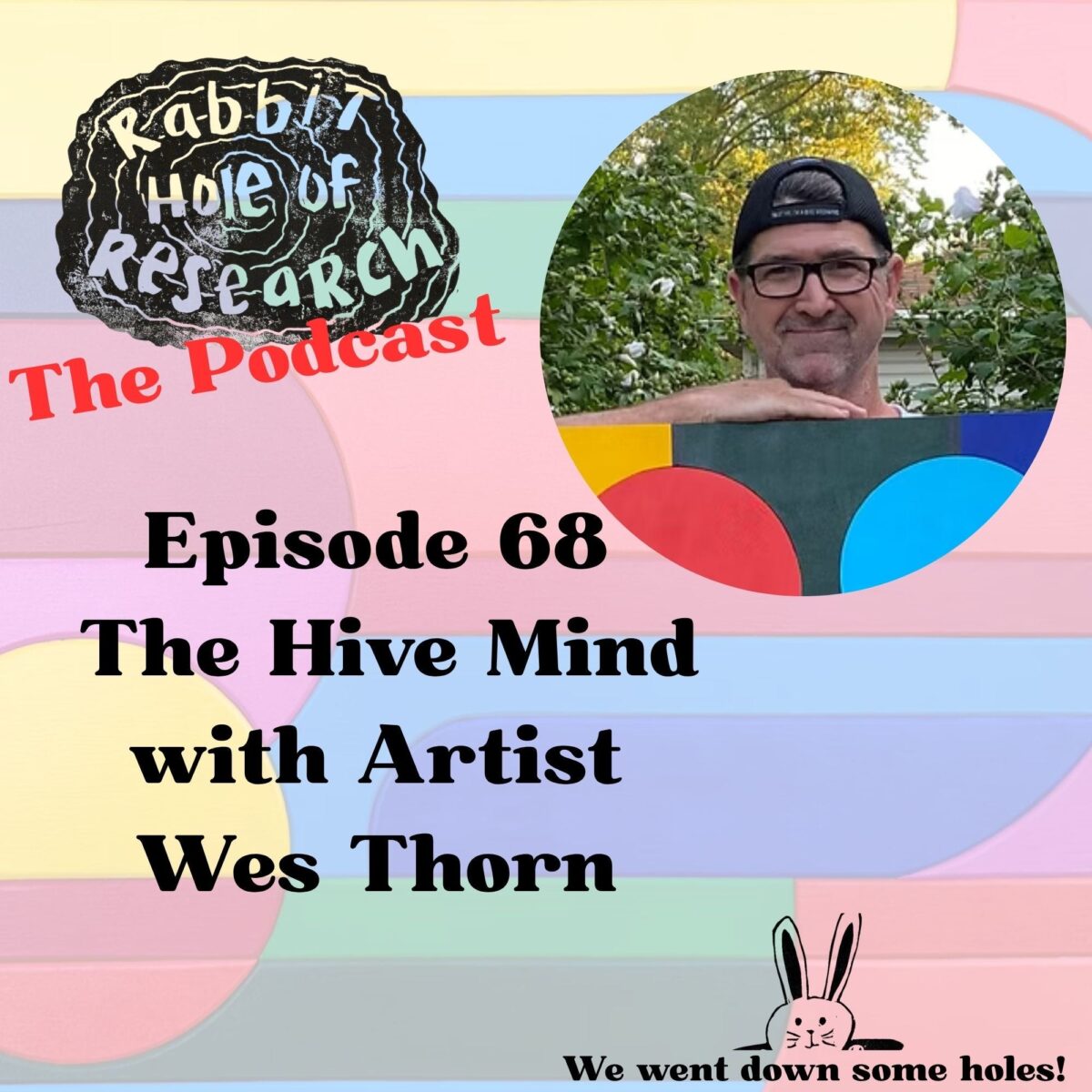
with guest: Wes Thorn
What if the scariest thing about a hive mind isn’t losing yourself, but finding out you never had a self to lose? Resistance may be futile.
Substack, Apple, Spotify, YouTube, Amazon
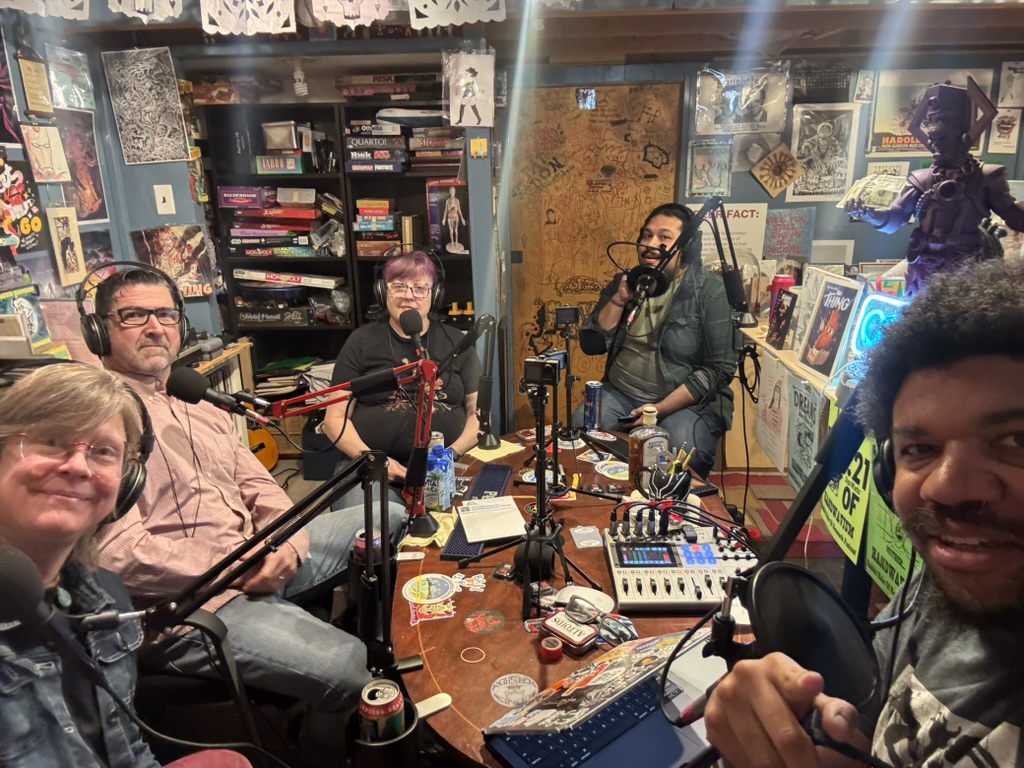
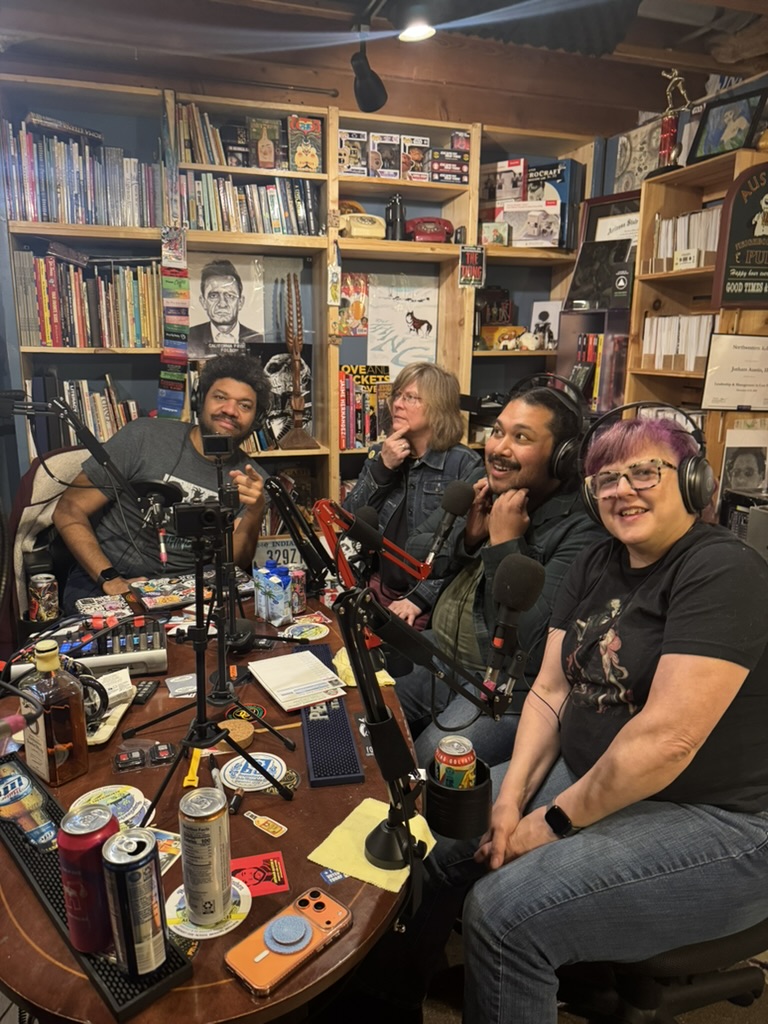
joe: [00:00:00] Hey, welcome back to the Rabbit Hole of Research down here in the basement studio. We are all crewed up. You have me, Joe?
nick: Yeah, I got Nick. We’ve
joe: got Nick. We’ve got Nick Georgia, we’ve got Georgia. And
Wes: And you got Mary.
joe: We’ve got Mary and we have a very special return guest.
Wes: Yeah.
Yay
I’m Wes,
Was here for the, what was the episode I was on last time?
the simulate
geo: right
Wes: the sim the hypo simulation hypothesis.
joe: There you go. Yep. Yep. So, and this one is just as interesting and hard to define and that’s the hive mind. So we’ll be going over
nick: from what I’ve heard this episode is called The Hive mind.
joe: The Hive Mind.
nick: Yeah. That’s what the hive has been telling me.
joe: what the hive’s been telling.
That’s right. Yeah. I was at
geo: trust the hive though.
joe: I was at the door before Nick rang the doorbell.
Wes: Maybe you can,
nick: did ring the doorbell. What are you talking about?
joe: So
Wes: I think the
nick: not my fault the doorbell wasn’t working.
joe: that’s [00:01:00] a different story.
nick: There’s
joe: doorbell in the basement studio.
geo: So
nick: you think
geo: I
joe: my little open.
Let me get y’all into it. Lemme set the mood, okay? Right now you’re having a private thought. Maybe it’s about what you’re going to eat later. Something you never say out loud. Some new project idea, maybe trying to predict what interesting thing I’m gonna say next. But these private thoughts are yours.
That private space, that voice sealed inside your skull, is so fundamental to being human, that we barely notice it. Your body can be touched, your words recorded, your actions watched, but in your head, you are alone. Now imagine that space has a door. And something has its ear to it. Listening, wanting in not necessarily to control you, just to join you, to think with you, to invite you into something larger than yourself.
Would you let them in? Would that be transcendence? What if you had no [00:02:00] choice? Would that be the most terrifying thing you’ve ever heard? But what if I told you that sealed room of a brain isn’t what you think it is? Your brain is 86 billion neurons communicating, making decisions without you. Hello, involuntary nervous system.
And you have little to no say Your gut has 500 million neurons. That’s your enteric nervous system, or the second brain, along with billions of bacterial cells, your gut microbiome making another set of decisions you never agreed to. And that special private voice you think of as you is just a story.
Your brain tells itself slightly after the fact. So if all this communication goes on without you knowing. Right inside your own private cellular space. The question science fiction keeps asking isn’t really whether a hive mind is possible. It’s whether you’d even know if you were already in one.
Wes: Interesting,
Ooh,
geo: Ooh
nick: I mean, we essentially are a hive. Yeah.
Kind
geo: like the simulation [00:03:00] hypothesis.
That your inspiration?
joe: was, yeah, sure. I knew Wes was coming back, and you’ll probably make our way there, but yeah.
Wes: Yeah. I’ve
geo: what’d you
Wes: may have changed my opinions a little
bit on the,
simulation hypothesis since what, over a year ago, but. Let’s talk about the hive mind.
nick: Wait. What? What changed it? You can’t just, you can’t leave it like that.
joe: Yeah.
nick: that.
Wes: That’s another
nick: right?
joe: That’s right.
Wes: So for those who hadn’t listened to the episode that I was on, I was pretty adamant about believing we were probably living in a
joe: a
Wes: simulation,
joe: And that was just for folks to catch up. If you wanna go back and listen. And that was the first episode of season two, so episode 26. So yeah, you can go back and check it out. But yeah, Wes was, he was a defender of Yeah, the simulation.
Wes: Well, I just, I don’t know, it just, I try to always look at things, logic based and based on the evidence that’s [00:04:00] available. And I don’t know. I have my doubts, I have my doubts.
joe: Yeah.
nick: So you haven’t completely stepped away from it, but you’re.
Wes: you’re
nick: Taking a
geo: sure. You’re not as like
joe: That happens. Yeah. You gotta be curious.
Wes: Yeah, I’m not,
mary: I think there’s a good way to test it.
Wes: Oh, that’s, that would be interesting.
mary: End Program.
Wes: Oh, we don’t have access to that.
mary: Oh,
geo: don’t listen.
nick: I had a joke for this, but I feel like it would be very inappropriate
joe: Okay.
geo: They don’t listen to us. Yeah.
mary: All right. Oh, darn
it.
joe: No, I
nick: alt delete.
joe: you went in program. I would like cheat codes, please. So that I can
geo: okay.
joe: Tomorrow I wake up with the Yeah, it’d be awesome.
Wes: I’ve tried
nick: to glitch through walls so many times. It never works. Yeah. I just end up like the Kool-Aid
joe: that explains a lot.
geo: Not
nick: enough.
joe: Okay. Right. But yeah, I think coming back to the hive mind and somewhat that gets into consciousness and what is it and how.
Wes: Yeah,
joe: Undefined. That is, there still is no real good scientific explanation of it.
geo: And there really is [00:05:00] examples of hive mine especially. Right. Especially in
Wes: in nature.
geo: different animals. There,
joe: there are. So I mean, I think there’s, if I can give a, you want me to give a list for jumping right in? So
geo: I’m
nick: bees for one.
geo: yeah. I’m just saying it.
beehive mind.
joe: and they’re, have shared coordination of their activities. Do they have shared consciousness? Right. That’s the, maybe the definition of a hive Mine is that shared consciousness,
geo: was gonna say, is that the definition?
Because
Wes: We don’t even know if insects have consciousness the way we think about it.
joe: right? Yep, exactly.
geo: Or that they don’t,
nick: I mean
joe: that they don’t.
nick: you also don’t know if the person next to you has the consciousness that you do,
geo: Sometimes you, Hey,
Wes: we’re all having our own experience
geo: and I
joe: you infer that your fellow humans have consciousness, right?
By their actions and what they do. So that’s what goes on there. And for those without video, we don’t have video. Nick and Georgia are sitting next to each other, so,
geo: Thank you, Joe.
Wes: grab ass.
joe: yeah. Well you guys are laughing over [00:06:00] at your own private joke and not letting the
nick: private joke. That was a very open one. Georgia immediately went, Hey,
Wes: not appreciating,
geo: appreciating it. I think
Wes: the
joe: mind has a unified brain, right?
So they have a unified.
Wes: So in a, the model that’s most in the pop culture right now, in the pluribus model, it’s just one consciousness.
And you can think of all the humans that are in the hive, mine as just appendages of this one consciousness. That’s what it is.
geo: It’s a single
joe: like your brain. I think you have many neurons, many cells that make it up, but really they’re coordinating themselves to, to act. And the insects use social colonies are ants and bees. And so that’s there, their behavior is coordinated.
mary: They’re just
geo: very good at communication is what
joe: That’s exactly right.
And usually through pheromones, wiggle dances or waggling their bodies to direct
nick: so going to a club, you just see a bunch of people wiggle dancing.
That’s it.
joe: it. Wiggle hands on.
geo: that’s what we’re missing. We need to do more
joe: and the waggles.
geo: wiggle [00:07:00] dances. See the
mary: the Mystery Science theater episode with the Deadly Bees?
geo: No.
joe: no, I haven’t seen that one. And
mary: Mike Nelson dresses in the bee costume. Oh
geo: Oh
mary: yeah. He said, well, bees communicate through movement and odor.
joe: That’s right.
mary: And then there was a little pause. I’ll just be using movement.
joe: So, and he’s just adorable. He gets, he’s, he little bee costume,
geo: bco,
mary: You can see it on YouTube and all his little bee costume. And he wiggles this way. And he wiggles that way. That’s so,
geo: so cool.
mary: yeah.
joe: I think the other one is the networked intelligence. So we think of the web, the worldwide web, the internet distributed computation across many nodes that come back. And then, as Wes was saying, you have the sci-fi kind of model where you lose yourself and you just become one shared mind, one shared, consciousness.
And we can get into consciousness and what
geo: and the n thing about pluribus and,
nick: I mean, you have to go to no spoilers, don’t forget. Right.
geo: I think the interesting thing about Pluribus is you’re questioning as you’re watching it if the individual still [00:08:00] has their individual consciousness, or is it just completely a group consciousness?
And I’m not saying that I could tell by watching yet I don’t think.
Wes: there’s no individual consciousness in the. Human appendages that are part of
geo: I dunno. I think there’s, I think
Wes: there’s one consciousness,
geo: but they’ve showed a few hints at maybe
joe: I
nick: army of darkness. You get a hand that has its own consciousness that gets cut off and then turns into a whole nother body.
Wes: Well, sure. I mean,
nick: saying
Wes: That’s a different universe. I was just talking about that.
joe: Like you have disembodied limbs, so, The Thing on Wednesday, right? That’s a disembodied kind of entity
nick: or phantom limbs, bringing it into a more grounded reality where I had a great uncle who lost his whole leg and he was like, I have an itch on my knee.
And I’m like, you don’t have a knee? And he goes, I do. And I’m like, I don’t know what you’re talking about anymore. It
joe: [00:09:00] back to your brain that’s making up that story for you.
Like it’s something should be there and you should feel something. And now it’s having that there. But yeah. And we’re talking about Pluribus and that show was Apple Plus. You probably
geo: highly
recommend it
Wes: probably
joe: should go. You maybe stop here, go watch some episodes. ’cause we, I can’t guarantee we won’t spoil something.
I watched
nick: I mean, I’ve watched absolutely none of
joe: Yeah. So Nick he’ll yell at us. But the show essentially is we get a message from some other species in the universe. We decode the message it leads to some sort of genetic code. We synthesize that code. And then that leads to everyone who gets access or gets infected with that code.
This piece of genetic material. They didn’t join this hive mine. And the hive’s goal is for happiness, everyone to be maximum define happiness.
Wes: I think that’s a byproduct of it, but I think their genetic imperative is to retransmit the signal. That’s, again, that’s their
joe: Under the guise of happiness [00:10:00] is to, right.
So the conflict in the show is that there are 12 individuals or 13.
Wes: there were 13, but the Kasama decided to rejoin a young Peruvian girl.
Sorry about the spoilers,
joe: but yeah,
geo: It’s okay. It’s still,
joe: show then is you have the main protagonist Carol is, I don’t know, one of the angriest
geo: So it really is a, I think it’s really a character study of Carol
joe: It can be. Yes. Yes.
geo: And then there is other characters, individuality. There are other characters that haven’t been that are also immune.
And now, and at certain points, these people that haven’t been taken into the hive mine are interacting. And that, that also, that’s interesting. It’s very, it’s a really well made
joe: Yeah.
Really good and explores. Yeah. But
geo: does bring up all these interesting
Wes: debates about would you prefer to be unjoin, that’s what they call it, joined or unjoin,
geo: right?
Wes: [00:11:00] Or would you prefer to be part of the hive mind? I see this, I see some upside to it,
geo: right. So you’re go leaning more into joining.
Wes: I don’t know. I’m like, the questions come up. Well, you’ll lose your individuality. And I’m like, well, I’m an artist and I don’t know doesn’t, but you
joe: you lose your creativity,
Wes: I lose
joe: is no creativity. I mean, that’s the, that’s it. That’s the thing about AI and generative
geo: do, I dunno If you lose your creativity because all those people’s skills and thoughts
joe: but it’s not
geo: there. They’re part of the hive mine. So could it also be that everyone in the hive becomes more creative,
joe: the hive just directs their energy?
Wes: all they’re doing. At least in the pluribus model is working towards their goal
joe: Mm-hmm.
nick: And
Wes: And putting the planet back to Right. So
nick: so is this, is that far off of a cult? Like
geo: except it’s
nick: end up getting more hive mine, yes. Than anything
joe: do
geo: That’s a really
joe: The problem is that with the cult, it’s, you don’t truly merge. So at [00:12:00] any moment you can. Am I thinking you can actually unculture yourself and go, hold on. What am I doing?
nick: But like the likeliness of getting into a cult and then getting deep into a cult, you tend to not have that ability
joe: are people And that do though, right?
nick: yourself from the
joe: a small number.
geo: Look at Jamestown, right?
I mean, how did all those people do what they did? It really was like a hive. Mine still
joe: I think that goes more to the Borg model.
So the Borg aren’t. Well, so
geo: okay. What’s the Borg model? So
joe: is a race in the Star Trek
geo: was gonna say Star Trek.
joe: and they’re very technologically advanced. And what they do is any new species they come in contact with, they assimilate into this kind of cyborg ish hive neurological, wet wear hive mind
and you have no, so that it would, initially, it was a true hive mind, but in the, I think it was the First Contact movie, they had a queen all of a sudden, and that [00:13:00] queen had an independent thought outside of the hive. So therefore that’s following more, the Bee model, this u social kind of model, not a true hive mind model.
So BBIS actually is following the true, there is no leader, there is no queen or that we know of. I mean, I could come up not spoiling anything. There could be more things coming later on, but really we haven’t seen that. So in a model presented that’s more true hive, the Borg model
geo: is like a commune, right? Like a, like everybody is equal,
joe: right? So I think
geo: the.
joe: the cult is more like that, that you, where you have a queen
nick: there has to be a main head though. For there to be a hive, someone has to have that central intelligence.
Wes: No,
joe: that’s the whole thing. It’s spread out. Yeah. No head.
nick: there has to
joe: There has to be. So you just have a directive.
Your directive is, and
nick: giving the directive?
joe: It’s
geo: it’s
nick: So something inside you has that directive
joe: and it’s an everybody, so it’s a shared conscious effort.
nick: So it’s a body inside everybody that has
geo: There’s no Jim Jones in the
Wes: There has no, there’s no [00:14:00] cult leader.
joe: There’s
nick: I don’t believe it.
Like I, again, I haven’t seen the show, but I’m already like, there has to be something. Why
geo: it is hard to wrap your mind
joe: think you’re filtering that through, see this is that individual you want. You’re wanna maintain that and you’re like, there has to be a leader because secretly you want be that leader.
Wes: We should have watched
nick: I would make a great cult leader, guys like I understand
joe: and go get episode one, watch to come
Wes: should. We should just go watch it.
mary: Nice cold. There’d be lots of coffee and art.
nick: Well,
mary: It
what
nick: what
geo: think is so interesting is.
Everybody gets everybody’s knowledge, right? So you don’t need to worry about getting a plumber. ’cause every single human being has the plumbing knowledge
Wes: Or fly the space shuttle
geo: or a rock, yeah.
Wes: Perform surgery. Anybody could do it.
joe: There’s no scarcity. So you,
geo: there’s no I wanna say class system, but there’s no hierarchy because everyone is the same.
nick: this is only season one.
Yeah.
joe: season one. Yeah. I wonder what
nick: it two seasons,
joe: a friend [00:15:00] of the show Amron, who did the finance of the future in this kind of hive model, what’s the friction, right?
Because he said every society, you need to have that fri economic friction to move goods and move trades. So in a hive, you actually, we were trying to think of, examples where that broke down and we didn’t in the episode. But now the hive, a true hive mind as set up wouldn’t, you don’t have any economic friction.
You just do whatever you need to do. Oh, I need to,
geo: it’s
joe: a plumber, you just do it.
geo: there really truly was communism or is it Marxism? I get confused on my isms. But this would be the true communism. Like every single person is exactly equal and you know what I mean?
joe: If you a community, yes.
So if you’re
geo: And think about that. And for this show, it’s not just a little community, it’s the whole entire world.
joe: Oh yeah. Whole world here on Earth. But it seems to be connected to their whole Right. Universal seems
geo: to be an alien 22,
joe: Yeah, that’s right. Yep.
Wes: We don’t even know if the [00:16:00] Keplers are still alive. They transmitted that signal 600 years ago.
geo: Wait, can you refresh my memory about what that is?
Wes: So the we know that the Pluribus, the signal or originated from Kepler 22 solar system around that star, and it
geo: that a real star?
Wes: It is. Okay. And it’s 600 and some odd light years away. So we know that the signal has been traveling for at least that long. So, yeah. And we don’t know if the people,
geo: if they’re even still there, if
Wes: the species that sent it is even still alive, we don’t know.
nick: the people or the species on Kepler
joe: Yes. Mm-hmm.
nick: Have this hive mind as well.
Wes: Yes. It’s I
nick: so that means assume that
Wes: that, yes.
nick: Okay. So there,
geo: it could, there could be a leader.
nick: like there’s a leader, Joe.
geo: Oh right. He’s really fighting
joe: don’t know if there’s a leader. No leader has identified themselves. It’s the same. I think if we go back into, my favorite. I’m wearing a shirt, is The Thing. Right. I [00:17:00] think the thing that it is still, it’s functioning under the hive mind mechanism.
geo: don’t think like one Thing is different than another
joe: No, I think they’re all the same Thing. And I, and
geo: We dunno that though. That could be a very
joe: you all were the things, you would just attack me, but you guys are conspiring to hold back. And so that was part of the psychological effort in there that you, The Thing didn’t actually, and that’s why I think the ending kind of reveals itself because if one was The Thing and
geo: the interesting thing about that
why would
joe: attacked?
I think they both were human or both Things.
geo: Okay. You had to get that in.
joe: I got
geo: Okay.
joe: anytime I can. Yes.
geo: Yes.
I think the interesting thing was obviously that story, that show was called The Thing and then we have The Things
joe: right. From their perspective
geo: and
was their perspective.
And obviously there’s not a single thing. There’s many things and it’s like these crazy humans and all their fricking Yeah. Weirdness
joe: us for no reason. We’re here just chilling. We just wanna be friendly, make,
geo: I do think the internet [00:18:00] does feel like a hive mind. Yeah.
nick: Is it a hive mine or an echo chamber
geo: Yeah. I know. I just feel like sometimes, like you were talking about private thoughts and I feel
nick: like
geo: My FI know it’s when you say something out loud and your phone hears it and they send you ads and stuff, but it feels like they even can hear me like when I
joe: It doesn’t work. I’ve asked for particular ads to show up and they didn’t show up.
’cause I wanted to rewatch a commercial and I’m like, show me
nick: are you trying to find?
joe: I don’t know. It was, I
nick: What? Why are you looking for a commercial?
joe: Commercial. Some commercials. They’re, yeah. Or they, something happened. Remember we were watching, I forget what the Tratiors I think,
geo: are you talking about the one where the animals like the car?
I
joe: I don’t know. Okay. That’s a different
nick: All right guys. We’re not sponsored by whoever this commercial is.
geo: right.
joe: I don’t wanna, yeah. They drop us some coins then. We’ll
geo: it happens all the time where you just, it feels like you’re just thinking something and all of a sudden that it’s on your phone.
joe: Yeah.
geo: But I really appreciate like Mary, you’re not on social media.
No. And I think that [00:19:00] is so amazing. That’s so great at this day and age to be like unconnected
joe: would be the Carol of our group.
geo: Yeah.
nick: So
joe: So in the
geo: Carol’s the
joe: pl she was the one that,
geo: Caroley.
she
joe: so you haven’t seen it either, so Yeah, we,
geo: I’m a blank.
joe: All right. You two need to watch episodes by the mini, because that’s a, would really
geo: would like,
nick: for a
geo: would like, you would really Carol, I think. Don’t you think Mary would like
nick: Find it in our budget.
Wes: kinda looks like Carol too.
geo: Okay,
mary: I think so. The thing
joe: boy. Yeah, actually you do.
mary: I don’t deserve, I
joe: don’t deserve that
mary: praise.
geo: Are you Carol?
joe: right.
mary: I’m miming
nick: of you
mary: mask off of off of my face. I don’t deserve that much praise because I’m on YouTube all the time. So that’s basically
joe: social. Social media. Yeah.
geo: Yeah,
joe: but you limit in it. I mean it is, it’s gotten that way.
They want that model where you go and you feed into the
nick: Are you using the, like the
geo: it feeds you an A
nick: feature and all that?
joe: I,
geo: so I,
nick: or are you just watching the long form videos?
mary: I stumbled upon, [00:20:00] so I use Echos as my browser. I
joe: delete the YouTube
mary: app and I watch YouTube through the SIA browser on
geo: I’ve never even heard of the SIA app and
mary: no ads.
geo: ads.
joe: Don’t do that. I
geo: Wow. I don’t know
mary: why, but there are no ads when
geo: I then that definitely
nick: Some browsers do let you do that. So
geo: that
mary: will let you
joe: that. DuckDuckGo
nick: Opera DuckDuckGo, these are all very
geo: These are the ones everybody should be
joe: They’re to tor browsers, so they go, they don’t track you.
Also, they I know DuckDuckGo, some of these other
nick: opera has VPN
joe: they have ai, generative AI kind of features defaulted off versus the other ones Firefox, Google Chrome, that you have to go in and you can turn
Wes: is interesting. I’ve been put off by YouTube because so much content is obviously just AI generated content is
joe: Yeah. Well you get that, right, right,
geo: Yes.
Wes: No, not ads. I mean the whole videos. Yeah. Yeah. So I’ve been avoiding YouTube.
nick: I mean, it really depends on like [00:21:00] you. Knowing your creators
joe: That’s right. Yep.
nick: This is a show that you can contact us and we will message you back. Not even like trying to plug us, but we are real people.
Like we will talk back to you, we will give you very human
joe: are real.
geo: us.
Wes: Please
geo: contact us.
nick: But
joe: Reach out. Yelling us. Tell us what we got
nick: just one of those things like knowing the creators that you’re watching the videos of. And yes. We don’t have video right now, even though we’ve promised that a
joe: Yeah, we did. Yeah.
geo: we have these little cameras
joe: We do. Yeah,
Wes: Hey, I forgot
mary: can see how beer I drink during podcast.
geo: Mary. I wanna get back to the internet thing.
nick: Oh, I thought we were talking about Carol. I
geo: back to the, well in a minute. I want, okay. Mary slash Carol. Yes you can.
mary: Right.
nick: Right? I.
geo: So the fact that this browser is one of the browsers, like Joe talked about, that it’s doesn’t default to generative ai right?
Content. Yes. Do you feel that, do you [00:22:00] feel like most of the things that you get. On your feed and YouTube is real creators or do you feel like there’s a lot of ai?
mary: I think that’s
joe: yes, it’s a browser, not it’s a browser. Not sounds like when you type in a Google,
geo: but do you say that it defaults to the fact that
joe: So when you do Google now you go and you go, tell me something about, hive mind. Let’s use that. Or episode you’re doing some searches, trying to get some research done.
You’ll get an AI generated summary of content that pops up and that then directs where you should go and what you should look at. It has things, there’s ads sometimes embedded in there. The top hits the, with these kind of factors. SEO factors that, that bump up a page, that’s what you get first.
And you usually have to move that out the way to get to the true search results. Research papers,
geo: So like the browser
joe: these other browsers, they don’t pop that up. You get the true search, you get the pages that come up. That’s right. So
geo: it doesn’t affect what you get on YouTube. So you go to
joe: yeah, YouTube is its own
geo: on the browser. [00:23:00] Yes. And that’s where you are watching. So,
mary: and I just noticed that, well, I just noticed that I’m trying
to, I’m trying to wean
myself off
of
of the more egregious
big tech that’s out there.
geo: Mm-hmm. So, including
mary: Gmail and
joe: And Google.
mary: So instead of
geo: using Chrome,
mary: I’ve been using Ecosia.
geo: Mm-hmm.
mary: And Ecosia, when I li and I deleted the YouTube app. I’m trying to,
joe: in my own small
mary: way to starve the beast because
it’s a,
yeah. They’re,
I they a
disproportionate
joe: level of influence.
mary: over.
Yeah, everything right
now.
and and I can’t, we can’t stop it all, but I can do my part
Yeah.
In that to sort of, pull the legs out.
So one of the practical effects is I’ve been able to finally listen to YouTube, like the things I like to listen
joe: to mm-hmm.
geo: without it giving you an a, a,
a, oh,
how do you say that?
Algorithm?
nick: Algorithm?
joe: Yeah. Well, the [00:24:00] algorithm
mary: is still there,
joe: It is.
geo: Okay. I’m not getting
mary: the ads.
geo: Okay.
mary: And I just noticed it. I was, as I was listening to, as I was listening, I usually listen to YouTube.
I like, I put it in my pocket and just
nick: do chores
mary: listen to long form podcasts
joe: like this, like the rabbit hole of research, rabbit hole of research. You can find us.
nick: Wow. We’re really plugging ourselves this
joe: I was gonna, yes.
I’m sorry, go ahead. No, I was gonna bring it back a little bit because one of the things when I did my, the research and.
oh, down
Through my own rabbit holes was coming back to consciousness because I think you have to define that. And that led me to thinking about the, some of the science of Plubirus risk.
How would you have an interlinked hive mind? How would you really do that? That is through this idea of consciousness. The problem is, as I said, there is no real. Definition, there’s 29 theories or so. Some reports have come out Yeah. Of consciousness. Mark Bitman had a
geo: like a single
joe: There is not. It is very, it’s one of the most unsolved problems [00:25:00] in science and
geo: Wow, that’s so interesting.
joe: as well. The problem is like the simulation hypothesis with Wes coming back, going for this, when I started doing my research, it was like, oh, this is a nice end cap because that it, it’s hard to study something if you’re in it.
So our only tool to study consciousness is our consciousness. So you really can’t get outside of that to actually study it. So if we’re in a simulation, we really can’t study if we’re in a simulation because you’re in it. So it that’s always a problem. If you’re in the thing you’re trying to study, how do you study it?
So usually you gotta send something outside of you. And then do it, but Right. We don’t have that. So why,
geo: like science,
a lot of times things, these big breakthroughs come from people that might have been trained in other areas, in
joe: Look at it in a differently way. Right. Different tools. They’re applying tools, but the tool we have really, our consciousness is what
geo: like an, we need like this alien group to come and study us. And then, but would we
Wes: a whole nother
joe: that’s right. Yeah. That’s, would that,
geo: would we trust their,
joe: that’s right. [00:26:00] Their judgment. Are they telling us what’s right? Are we looking at those results? So you’re, I mean, it’s like trying to study.
geo: Would they care? That’s a
joe: that’s the other, it’s like studying, trying to study the water in the ocean.
If you live in the ocean and water is around you and you, what tools do you use to actually figure that out?
nick: like we study the air and we live in the air.
joe: We have a lot of tools, but air is made up of other elements that we have tools to actually monitor and measure what those elements are. So we truly do have other tools to measure these other physical properties.
geo: some, what are some ways that scientists are trying to study consciousness? Can you tell us that?
joe: Yeah, I mean, I think some of it, and what I found was you go and you start, Wes you look like you’re about to jump in or you got
Wes: go ahead. I’m wrapped. Wrapped with your attention.
joe: I was like, you look like I look up and you were like, you’re ready to jump in there.
But I, I think a lot of it is this idea of consciousness that we’re having, these internal thoughts. Then do we have. Techniques that we can [00:27:00] record our internal thoughts or record what we’re thinking or how we’re processing
geo: how certain things in your brain light up
joe: Yeah.
So exactly. And so functional MRI, so this is a magnetic resonance imaging but functional part of it is that they can actually follow blood flow, see different parts of your brain light up, use this as a tool to go, okay, you are, you’re having some conscious thought, you are having some kind of, a higher thought there,
geo: a lie detector?
nick: It
joe: would not be a lie detector
geo: Isn’t that trying to figure out if your thoughts are true.
joe: Well, we, we did an episode on the truth and lie detection. Yeah. That’s measuring, right? That’s right. Yeah. So it’s not measuring consciousness per se, it’s measuring kind of an outward projection of how you’re feeling.
Heart rate breathing rate, respiratory rate. So that’s where you get there. So your fear of
mary: not
being believed.
joe: Right. So,
geo: it’s like your blood
Wes: there’s a whole subculture of people that think that consciousness is non-local.
That it’s [00:28:00] not located in your brain. It doesn’t depend on your brain to be generating it. And
joe: And that’s a noetics
geo: what group? Yeah,
Wes: he said it Noetics
geo: noetics is the
joe: idea that there’s non localized consciousness, that your brain activity alone can explain our conscious behavior. And so Noetics is this kind of idea that all the consciousness think of it like a cloud for your iTunes or Spotify.
So all the music live somewhere and then you recall it and you have recall of that, and you can bring it down and you have access to it. And so Noetics is like your consciousness, everything you know and learn. Are floating somewhere in the uni, in the ether, and then you can pull it
geo: Ah that’s hard to,
joe: That’s hard, dude.
And so one hard, two, two areas where it, people have backed this One is near death experiences and people experiencing things that they see. And there’s a lot of, it’s, there’s some interesting studies where like people have, they describe things and [00:29:00] then some, doctors, they’ll put like signs or papers.
They started putting it on top of a tall shelf. So you go, I’m floating off. Then they go, what was on that paper that was up there? And then they go, what paper? So there’s some interesting things
geo: looking down onto their
joe: but the other interesting. One I found was this what’s called acquired Savant syndrome. And so these are cases where someone had a traumatic brain injury Yep.
Recovered, and then had a phenomenal ability so they could speak perfectly. Another language. They became a a maestro of piano playing or an instrument. And so there was no they couldn’t play before, couldn’t speak the
geo: is somehow they tapped into
joe: That’s right. Like a radio, like they, like a radio station.
They tuned in. Their brain had an opportunity to tune into it.
Wes: Yep.
joe: And so you could, their brain tuned into the frequency that was just right to get that information. And then when they woke up, they all of a sudden could do this amazing thing. Yeah. So I had a few. Derek Amato, he hit his head in the [00:30:00] swimming pool accident and he woke up.
He could play piano at a concert level, never having any lessons. He sees the music as black and white squares flowing through his head. Orlando SRO got hit with a baseball at 10 afterwards. He could remember every day’s weather day of the week, personal events moving forward with perfect AC accuracy.
So yeah, Jason Paget. There’s, I mean, a couple examples I got hit in the head, woke up seeing in fractals and became a mathematician savant. So he had been a fur, a furniture salesman before, no mathematical background, so woke up and he just could do this amazing thing. So this idea of noetics that’s it.
And the, I, the other thing is that our brains have suppressors. They’re actually, we take in a phenomenal amount of information and we really can’t process all that information. And function. And so your brains are actually actively depressing, right?
geo: out this stuff,
joe: What’s happening? So maybe the signal is coming in, but your brain is just filtering the signal out because there’s so much noise.
If I
geo: But I [00:31:00] wish my brain would realize, I would love to do concert p be a concert
joe: That’s why I think in ris, maybe that’s what’s happening. Maybe the genetics signal that got sent this kind of genetic thing was a tuner that allowed it to tune and focus. And so now to focus, now you’re only focusing on one particular thing out of the cloud.
And everyone’s focused on that. And then if that message changes, then everyone focuses on that. So we gotta go and do repair some infrastructure. We all then tune in. Everyone has the skills to do it. We know our jobs. There is no hierarchy. So you just show up. And you were performing heart surgery one minute.
Next minute you’re digging a ditch and fixing the sewer line. And this goes to the, I think the ARC episode where we talked about that. Where at point at Nick, ’cause we had that conversation and I think you had brought something up like this. If you’re the surgeon, then go build a barn. Like we
geo: I
nick: finish the surgery first. Don’t go start digging that.
geo: want the surgeon to hurt their hands, so.
joe: Well, that’s the thing. And this universe,
geo: It doesn’t matter.
Wes: a surgeon. Anybody’s a ditch
geo: I’m, yeah, but [00:32:00] that’s usually not the case.
joe: There’s,
mary: there. Well, when you were talking about consciousness, you know how hard it is to. Study yourself
nick: while you’re
geo: in this
mary: thing. I’m thinking about this through the lens of yoga, which,
I’m
joe: I’m interested in it.
geo: And
nick: wait, is this because you went to yoga today?
joe: No.
mary: I
geo: She actually teaches the yoga.
Wes: Yeah.
mary: So,
joe: Yeah. So, yeah. She’s a yogi. Is that term? Yeah. Yeah. Oh,
mary: I’m a yoga
joe: Okay.
mary: And in, in yoga philosophy the human body is thought of as
joe: layers.
mary: Mm-hmm.
joe: There’s
mary: your physical layer of your body, and then there’s the sensations that body has your level of
joe: attention and your thoughts and feelings.
And then finally, your
geo: consciousness. And
mary: yoga is very interested in teasing out
what is permanent and what is temporary what is your fleeting thoughts and feelings versus your consciousness. Huh.
And you do that through meditation through
geo: practicing
mary: the [00:33:00] postures.
joe: So you know, when you
mary: see people, like through, through movement and through also through
geo: breath, like the wiggle dance,
mary: that’s, what’s that?
geo: Like the wiggle dance?
nick: Absolutely.
mary: Through the wiggle dance.
joe: Back to the wiggle dance through the wiggle dance. What, through, through that you, you sort of tease
mary: out you, yeah. There’s ways to separate that may, not, maybe not
nick: as, is that like the chakras or is that a different
joe: That’s a, that’s more
mary: of a different thing, but it’s more there’s like yoga is yoga philosophy thinks
joe: of the body
mary: Thinks of us as layers.
And like the final, the most inner
joe: layer is the consciousness. And then
mary: you tease out what is your thoughts versus what is real versus
What are your thoughts, which are
joe: are transitory? Interesting. Yeah. Yeah.
nick: No, but I mean not, so your thoughts aren’t real in this, right? So what are your thoughts? Like just
joe: your thought,
mary: your thoughts
nick: Just like fleeing
mary: your thoughts are temporary and what you do when, because we can get overwhelmed in thought, get lost in thought, and
geo: confuse
mary: our [00:34:00] thoughts with reality. And one of the rea and one of the things that we can do to step back from that is to use our breath and, to consciously just remember
joe: To take a breath,
mary: What does it feel like to take a breath end out Right. Right. Probably a warmer exhale
and something like that. Just, it’s almost like a timeout for your
joe: body. Yeah. It reminds me, yeah, go ahead. Go ahead. No, appreciate that. And then
mary: With yoga, we
we get control over our thoughts so that our thoughts don’t control us.
joe: Yeah. It reminds me of the book Lose Your Mind, and I’m slipping on the author right now, but he’s he’s his dad worked on the Manhattan Project and he became like an author actor and he is now an actor coach. And the whole idea is that when you’re going for an audition, you’re going on stage, you’re doing improv, you’re doing all sorts of things your body can take over and sabotage you.
And so he’s teaching people how to take your thoughts and how to use your breathing,
nick: Is this, ’cause you watched Wonderman recently?
joe: this was [00:35:00] not, but it was, we thought about Lose
nick: you watched Wonderman and that’s where you’re getting this
joe: But it
geo: It’s a really good book.
joe: Yeah.
geo: It’s a really good book.
joe: he had that whole premise, and that was the whole thing about breathing, about channeling your thoughts,
geo: taking
joe: letting go
geo: and looking at something in a different way so you realize, oh, that’s my, you know what I mean? Like just your thought shift,
mary: your focus from
geo: thoughts.
Exactly. Back to, and he has a lot of, he has a lot of exercises to do this and stuff. Mm-hmm. Like it’s really good. Yeah.
mary: Oh,
joe: awesome.
geo: I, thanks Sarah. I’ll have to check that
mary: that out.
joe: out.
nick: out.
joe: Yeah, by oh I just looked it up. Josh pe
geo: PECE. I was gonna
joe: lose your mind.
The path to creative invincibility is the
geo: this would not have been, this would not have been helpful at all, but I’m like, his name starts with a J but that would not
joe: would,
nick: man, you really gotta tap into that.
joe: it’s a j Dave High. You had a high mind. Let me pull from the universe. The conscious cloud. But the interesting thing about con, ’cause we talked about it and we do this ’cause we’re human, so [00:36:00] we always have a human-centric point of view, but there are other organisms and one are our plants.
And one can question are plants conscious? Not because like bees ants, they all have a nervous system. They have a brain, so you can make the jump. Okay. Yeah. They are doing things in a court and they do have a consciousness. But plants don’t have a nervous system as we understand a nervous system.
And so are they conscious or do they have conscious thought? Are they, this kind of awareness of their environment? And there’s a lot of evidence that they do.
geo: it does. And it does seem like they’re collective because you have all that root system going down. And I think, I’m especially thinking of mushrooms and fungi.
joe: mushrooms are different. They’re
geo: all, oh yeah. But they have that, they do, they have that interlocking system of roots, and it seems like they all become one.
Mm-hmm.
That’s correct.
joe: Yep. Yep.
geo: much like
the,
joe: they’re
geo: the pluribus.
joe: But then they
nick: becoming one or is it just one?
joe: It’s just one. Usually it’s just one.
[00:37:00] That’s right. And that’s
nick: because what if you replant a different part of it elsewhere? It’s not like it’s still connected. It’s a separate entity.
joe: Now those are two, so there’s two concepts there. One is cloning. So if you, and that’s asexual cloning. So if you take a piece of the plant or the fungal and try to regrow it, then it’s a genetic copy of the original and you’ve made a clone and they could be separate and they’re not there.
I think what George is referring to is the interconnectivity of the actual organisms themselves to form one kind of thinking organism or being, and so in Utah you have the grove of quaking aspen, and it’s considered one. Single organism and it, but it’s like 47, 40 some thousand tree trunks share a single root system.
Wow. And so they go, it’s 80, 90,000 years old, something like that. The oldest living thing on earth. And it’s just there’s no brain, no nervous system, and it, but it’s a unified kind of a organism. And it’s, and sadly it’s currently dying because of [00:38:00] human activity. So, that’s that’s, that there,
geo: It’s gonna,
nick: another AI data
geo: and that’s, I feel like that’s really the motivation of the pluribus. Beings, or however you would say being is to save the world. Like they, they’re really like want to save resources and they wanna be more,
Wes: they won’t
geo: environmentally conscious won’t, they
Wes: even pick an apple.
Even though they picking an apple won’t kill the tree. They won’t,
joe: part doesn’t understand that because there are fruits like that.
So you’re not killing it, but you are. There
geo: are, you’re actually helping
joe: apple. So even if it falls to the ground and you eat it, you still are ingesting, right?
geo: They’re
Wes: with picking up windfall.
joe: know, but it’s still a living. It still is living as it was on the tree. So I think that’s a little, ’cause the cells in the apple are still doing stuff.
I mean, when you have an apple in your fridge, you pull it out, those cells are still biologically active. They’re not, you’re not eating a dead thing.
nick: Can they eat bread? Because bread is yeast and yeast is living,
joe: the yeast is dead in the bread.
nick: But you [00:39:00] had to use the yeast to
joe: did have to
nick: so that means you’re killing it to eat it.
joe: Yeah.
geo: they will
Okay. We’re not gonna go too much into what they eat. Okay.
nick: Wait I have a whole discussion
joe: Yeah, I think so. Yeah, you’re right.
geo: We’re
Wes: Not in the show,
geo: We don’t wanna do,
spoiler.
Wes: No,
joe: this certain a
Wes: not much of a spoiler. They will eat any processed food that already existed prior to their
joe: arrival or create.
Yeah.
Wes: So they’re okay with that.
nick: Are you able to opt out of being part of their cult?
geo: No.
we, you gotta watch the show. You gotta watch
nick: are you then killed? Or is it
joe: No, they don’t kill,
geo: you gotta watch the show because
joe: people, 13 people who originally were not susceptible to this
geo: they didn’t get so
joe: they could not be, so Carol, the main protagonist she did not become
geo: so she is the main character and she,
joe: figure out
geo: struggle is how much does she wanna fight against this? And how much did, because her, yeah. So,
nick: no matter what she does, they [00:40:00] won’t retaliate or No.
geo: no,
Wes: they won’t retaliate.
geo: There’s
fine, there’s some fine
joe: She pushes the envelope.
geo: There’s some fine lines and some interesting, I don’t wanna say blue
nick: for some good anarchy. Carol
geo: say, I don’t wanna
joe: would have a lot in common. I think. So it’s like you would love Carol.
geo: would love Carol. Yeah. Yes. Interesting. And there’s some loopholes that she’s trying to
joe: to exploit.
geo: but then they, but the chive mind is trying to exploit some kind of loopholes
joe: and that this questions okay. I don’t
geo: don’t, yeah. No,
joe: But I was gonna say back to the fungal point, that’s the Mical networks that they have underneath.
And so I think there’s a number, I think organ, there’s one of the largest interconnected fungal masses.
geo: makes
joe: makes that you have
geo: the last of us so scary because that’s fungal based.
And fungi, the
joe: controlling like a hive mine
geo: and that is like as far as like organisms of the earth, they have the greatest Right.
right.
nick: Fungal
joe: Organisms. Yeah. Greatest one. Sorry.
geo: [00:41:00] That is the greatest number of. Beings on earth is fungal. I
joe: know. I
geo: I
Wes: don’t know. There’s a lot of insects.
There’s a lot
joe: of insects, but
geo: I don’t know. I think fun. I think
joe: would be, but microbial just has, I think they have the numbers there because even in like us,
geo: are you talking about an extreme of
joe: We have no, this normal files,
nick: you just had to get that one in. Didn’t.
joe: But even, I mean, so it’s funny
geo: We’re a normal file.
joe: even in like insects, they have microbes that are live on them and interact with them. Fungals. So every species has their own group of kind of microbes, their own
geo: the highest percentage, but I could totally be wrong.
I don’t know,
joe: Per species, I think you’re just
geo: maybe, could you say the more complex they’re the most,
joe: I don’t know. I mean, all right. I don’t wanna offend the fungal
nick: I do, let’s go burn them all down. No
geo: No,
joe: no, yeah.
geo: fungal is our friend. A
joe: a lot of, I mean, there’s a lot of. Organisms on earth that have a lot of numbers and they’re just smaller so they can reproduce.
Are we [00:42:00] talking about, do you take each cell of the being and say, that’s a
geo: so easy to grow.
joe: So
geo: if you just get a
joe: per volume
geo: you get a dark like a box and you just a little,
joe: they need to eat though. Yeah. Everything needs to eat.
geo: and that’s true.
joe: Fungi
geo: I feel like they were pretty easy to grow. They are.
They are.
joe: they are,
geo: they’re tasty.
joe: easy to grow. Yes. I’m not gonna say that. And then people write those. These are the hardest things I’ve ever grown in my life. So, okay.
geo: I had an idea, but, oh my gosh. I’m, I think I might have forgot. Sorry.
joe: Some other interesting things I had that I thought was cool and still lack nervous systems is the slime mold.
And their problem solving, how they can come together at these they will go and sort of the most famous thing was that they took the a map of Tokyo and they put food sources in all the major stops.
geo: Okay.
joe: Okay. And then they put slime mold on, and then the slime mold found the most efficient route to all of the.
Food sources that they put on all the stops. Darn. And that [00:43:00] mirrored the actual subway the station their transportation system. So they were looking, so they used that as a, can we figure out a more, they were trying to figure out a more efficient way. ’cause the slime mold was going to,
nick: what is a slime mold? What is this? I’m sorry.
Did you explain that?
joe: I didn’t. Yeah. So I
geo: No, you didn’t.
nick: Okay. I was like, yeah, wait I have slime in my car. Can I go get that and it’ll eat things? Well,
joe: It’s a single cell
nick: What? You don’t have slime in your
geo: Oh, you mean
joe: on a sec. Go ahead. No, they can.
nick: is
mary: explaining.
joe: Slime mold is a single celled organism. Amoebas are slime molds they were originally classified as fungi, becasue they make spores, but they’re not. So that’s hence the mold part of
geo: they’re not extremophiles,
joe: not extreme of files their family would be Protist the kingdom of Protista
so there’s different kingdoms instead of fungi, animal, or plant . And so that’s
geo: what do they look like? Can we like post a picture when the show notes
joe: picture. They’re these little, I mean they’re like amoebas these little. Slimy things. I’m showing everyone in
geo: oh. They’re colorful.
joe: They are colorful, and they will, [00:44:00] they’ll, they’re individuals, but then they’ll come together as a multicellular organism at differnt parts of their life cycle . especially when food is scarce or replicating They’re they’re predators, so they actually will engulf other organisms to eat them. They’ll form a slimy kind of mass. They’ll find food and they’ll act like large amoebas. They’ll come together, but they’re just an individual selves and they’ll group together communicate and then do their work and live their best lives.
So
Wes: so we could make an argument that these are hive mind
joe: That’s exactly right. That was my point. But I guess I gotta explain what a slime mold is to you. Sorry.
nick: didn’t know what
geo: I’ve never heard of a slime mold.
joe: but they have no kind of central command.
geo: so cool.
joe: have one mission. That’s to live, that’s to survive, that’s to eat, that’s to replicate.
And they just move. They just move forward. So it was really
Wes: perfect harmony. Yes,
joe: harmony. And they mirror, so humans figured out this is the most, efficient, railway system. And then you actually ask them, oh, go find it. They’re not going to, they can’t, they don’t have, they’re not gonna dilly [00:45:00] dally.
They wanna make the straightest easiest line to these kind of
Wes: Yeah. It’s almost like we asked an AI to figure it out for us. I mean, and in, and a hive mind is a Georgia mentioned, it’s like communism.
It’s also like an ai intelligence.
joe: It is. And ai, we, I mean, I wanna be careful ’cause we always say intelligence and it’s a predictive model based on math and
geo: what you put in is what you get out’s, right?
joe: you put in things and then it’s going to go, what’s the highest, what’s, if it’s making a sentence, it goes, what’s the predicted word that should come next? Right. So, if you go the, excuse me the ball bounced down the stairs as it’s writing that sentence, it goes the ball.
Then it has to choose what did that ball do? It’s not gonna put Bumblebee in because that doesn’t make sense. So it’s predicting you rule things out and then you construct a sentence that way. And that sentence is just based on the information that was put in. So the material that was put in the point at what humanity had contribute to that information.
[00:46:00] That’s it. But it has no sensory, it can’t create it, can’t look
geo: say slim old over ai? That’s what I’m,
joe: are I
nick: I
geo: I vote slim. Old.
Wes: At least it’s organic. Right?
joe: Different organ, different episode I think. But yeah, that’s you can
nick: versus ai.
joe: go there. Yeah, let’s set it up. That’ll
nick: be our next episode. We’ll win.
geo: So, I did think of my point. I think the biggest thing is the question of individuality. And if we wanna lose our individuality and our consciousness, and this makes me think of. Invasion of the Body Snatcher. And I think that’s very similar to Plubirus.
That idea of, and actually they could be fungi ’cause they’re plants. Well I know fungi iss not plants, that connect. I know. But that connective thing, and then they make the pods and stuff. Right.
joe: I was gonna say, avatar also follows the world of avatar.
nick: The last Airbender
joe: No, the Avatar. James Cameron, avatar with the planet. It’s all in connected.
And they [00:47:00] can take their little hair loops and connect into the organism. It’s, but this a tree and it’s the whole planet is
geo: I guess that gets into the whole thing, like connecting in with nature.
nick: I thought you were going with the colonization view of that. I was like, wait, where are we going with this?
joe: No, but I think that’s the horror of all this, and in a psychology and fiction is losing your autonomy,
nick: but that’s colonization, like to a T what this
geo: is. Mm-hmm.
nick: you’re taking over someone’s personality.
You’re taking over their views, you’re taking over their. Do
geo: you think you know better and you think that you should take over, oh this culture that doesn’t know
nick: to America, calling them savages. Right.
geo: Which, when they’re actually have a lot better take on how
nick: And is that is that where this pleis is coming from?
Are they thinking that the way we were now that we are savages and that we need to be changed? If not we are going
geo: but
nick: to these
joe: in here and say something, is that in those models there that you’re [00:48:00] bringing up, Nick, where we went somewhere at, other humans went to another place
nick: I was gonna say we
Wes: I was gonna say we,
joe: and they did it.
Us right now, we,
nick: Joe, I think you and I had, it’s been a long ride,
joe: have been along for the ride, but not in the way we weren’t making decisions.
nick: Yikes. Joe. Gotta dodge that bullet.
geo: Yeah. Which side of a colonization were you on? I’m
joe: what I’m saying there. But I was gonna say that those decisions in those narratives were set up. To justify doing something that people would find morally objectable.
Right.
geo: And taking over the land. Taking over what
joe: Reason to kill ’em. Right, right. That was
geo: take over their land and take over the resources and make, basically make money.
joe: not necessarily hive. I think that’s, that goes into this economic friction.
nick: the idea
joe: you don’t have that
geo: But
nick: is getting the people behind you,
geo: the motivation of the pluribus
nick: entity is gonna be with a problem taking over.
geo: So you are back to the there is some [00:49:00] alternative motive.
nick: Yes, I am. That is a very hard stance for me not to get off of.
Wes: Yes, you’re right. In the pluribus model, we find out, I’m gonna try to do this
nick: without
Wes: spoilers, that the hive mind is, they say they cannot lie, but they didn’t say they cannot manipulate.
So we think that maybe the hive mind is manipulative even though it can’t lie or kill. So
joe: yeah,
Wes: what you’re suggesting is not out of the question.
nick: Thank you. That’s all I need to hear.
joe: But you gotta have, you gotta have some motive, right? So that motive has to be there. ’cause you go through all this and you want to have some, even cult leaders had a motive to do what they did that could be powered, that could be for, free love or whatever
geo: mentally ill and they
joe: they wanted something out of that. So that’s the thing about the hive mind and this consciousness when you tap into it and when people join it. And then can they unjoin? ’cause you do, that’s this idea of Indi[00:50:00]
geo: And I think that can be, like Nick said, very difficult to unjoin a cult
joe: and we’re at bread, I mean, we are autonomous at some level.
Like we do come together we do. Work together. I think, what is it, 150, you’re gonna have close relations. Everything after that is in the periphery. So we do work, we are social organisms and animals, right? But we are, we also have our own thoughts and we
geo: But I do think that you could be in maybe a cult-ish religion. You could be really in it deep.
You’ve been born into this and this is all, that affects how you think
nick: And then trying to get out of that religion, you have people that will just disown you,
geo: right?
nick: that same, your problem. So
geo: your whole being relates to
joe: your sense of
nick: you need,
geo: Yeah.
joe: selfhood is that question. And is your self hood, do you ignore yourself hood or do you join group hood? I guess if we’re gonna,
mary: would argue that AOC cult is [00:51:00] not a hive mind. It’s a
hierarchy.
geo: Exactly. Yeah,
joe: Touched on that.
Yeah.
nick: it emulates a hive Mine. They have the person at the hi art.
geo: they want there to be a hive mind and they’re controlling it.
joe: it. So I think that’s why it separated Hive. I said that I think hive minds, there is no controller, so I think you just have a collective group, so a you social kind of group. And in a true hive mind, there is no.
Wes: agenda,
nick: don’t think there can ever be a true hive
geo: but I think going back to Nick’s point, and going back to Wes’
nick: has to have that main,
geo: he’s saying there has to be some sort of end game.
joe: like the slime
nick: a motherboard
geo: there has to be a motivation.
nick: your computer.
You have to have the motherboard to, run everything through it. To run any process. It has to go through
joe: I think you’re thinking about this from a very humanistic point of view, human-centric point of view.
nick: we are humans as far as I know,
joe: the problem with studying any of this. Our consciousness is that we are filters through, we, our tools are limited.
And [00:52:00] so really it’s about let’s, what would it look like outside of that? What would it be if we didn’t have selfhood as our driving factor? You’re our driving impetus
geo: But I do think it’s cultural. I think there’s certain cultures that are very much more into the collective than the individuality. I do think
joe: but still at some level I think money. I think status, I think you, you start off with these very high moral morals. And then what happens is these things aren’t factored in and they corrupt the system. It’s one of the reasons I think communism as it’s set up, it failed because certain people then will take advantage of the system.
geo: And there’s always,
nick: which is what a,
geo: the wealthy part.
joe: is a little better because it factors in that everyone can make it
nick: oh, I thought it was initially corrupt
geo: it’s It has a lot,
joe: unless you run away.
geo: of problems too, right.
joe: Unless capitalism runs away and then a few people take everything and then they keep telling people that they have a chance to get things right.
So
Wes: I think we’re there
joe: are right. We are there and all these systems
geo: the
joe: we’re [00:53:00] going up against.
nick: I feel with capitalism, you get the corruption already ingrained into it to begin with. So you walk into it with the idea, alright, this is corrupt from the start,
geo: You
nick: but at least we know the corruption.
joe: right.
That’s the idea. Yeah, that exactly. But. But once a few people
nick: is where the hive mind comes from, the corruption is ingrained in it,
joe: But no that’s not a hive mind, I mean a hive mind. Right, right. Let’s say that now you collected in with someone else, so you share their thoughts. Really, you’re the same body, you’re an autonomous body, so you go and you’re just doing, you have the same mission, the same idea as the same knowledge.
There is no, you can’t get ahead. You can’t fall behind because anytime I learn something new, you’ve learned it. So I really don’t have a competitive edge. I
geo: really hard to wrap our mind around that,
joe: that’s the thing you have I think if it’s
nick: thinking of something having, just being all so good and nothing wrong. I’m so sorry, Wes. I feel like we’ve just cut you up for a minute. But, having that idea that this pleiss is [00:54:00] so above all that it does no bad, that it’s only thing in life is to do good.
Add something to
Wes: to this. She one of the joined members gives an analogy to one of the Unjoin people. Carol. She says if you saw somebody drowning, would you. Ask for consensus. No, you would just save them so they see the unjoin humans as drowning. Okay. So
joe: Right. Right.
Wes: that’s the analogy they give.
joe: They don’t have, I mean, as in the show, as it’s
nick: by the way, I do that you, when you said Carol, you gestured at Mary in
joe: our video here.
nick: That was a great just,
joe: but that’s the hive mind. As a setup you’re really just one. So we all would be on this podcast with equal knowledge and then just taking turns talking
nick: this conversation would go nowhere.
joe: would probably be a very boring, ’cause everyone else would know, right? I mean, that’s so let’s say you had micro hive minds.
So you had your close [00:55:00] associate group and you 20 people would all have the same knowledge, the same
geo: I think that’s what a co-op is supposed to be.
joe: That’s exactly it. Except you go one step level where every thought, every decision is innate. It’s just should we play Scrabble tonight?
There’s no question. It’s not even asked. It’s yes, we’re setting up the Scrabble board. We’re playing. That’s the level, I think in the you social kind of model where there is a queen or king leader. Then they dictate, then you go to them and they go, yes, we’re playing Scrabble tonight. And then everyone plays Scrabble.
So the right, the Scrabble, the cult of Scrabble. But then,
nick: if someone initiated that idea and everyone else agreed right away, because it’s already, that idea is that one person that’s initiating that
joe: The idea is just, and there is not an
nick: that you think that’s, it’s the unknown.
joe: the idea.
There. There is no thought, there is no thinking. You just do.
mary: I love when
joe: you get choke up on this.
nick: Yeah, this one is great. This one is like one of those ones where it’s
joe: I
mary: love it.
joe: You gotta suspend [00:56:00] your brain for a second and just go
geo: is like Carol, I
Wes: I’ve had a lot of conversations with people and this is where people get hung up on this show, is they cannot wrap their brain around.
nick: Who would wanna be in part of this? Don’t think
Wes: about it. They give you something to do. They give you a place to sleep. They give you three squares a day.
geo: I don’t know. You
joe: know, they don’t give you squares.
They’re just, it’s just
nick: is this jail?
geo: I think.
No, watch
joe: filtering it through
Wes: jail. You’re out in a world doing
joe: I think western’s still filtering it through human experience really. They just go to gymnasiums, they lay down when they’re tired and then they go, right. Yeah. They come together and then when tasks are required in their area, they just go, I’m gonna go do this task.
I’m just gonna go. Right. And they eat. They don’t eat. Eating isn’t time. It’s when you’re metabolically needed to eat. So you have this whole process. So really you disassociate all of our human social constructs into just existing .
geo: And I think it’s funny because I think, I’m sorry, Mary. No, it’s [00:57:00] okay. Go ahead. But I think it’s funny because I think this show really brings out, like some people would be like, oh yeah, I wanna be in the I mind and other people.
Oh no, that’s horrible. I do think it just really gets at this like very unique thing that some people like, and some people don’t like.
joe: Right. Exactly.
geo: And there is
nick: a benefit to
joe: collectively or are working collectively. There is.
mary: Mm-hmm.
joe: One of the lines of capitalism is that you
nick: can do
geo: everything all by yourself.
joe: And that’s
mary: just,
geo: and that’s just not true. And
joe: going back to yoga there’s a con, there’s a concept in yoga that’s called No Self.
geo: And it’s hard to, it’s hard to explain exactly.
joe: But
geo: it,
nick: the way
geo: I see it, and I,
joe: and forgive me, I may be wrong, but we are,
mary: This being called Mary
Jones is the product
of everything
nick: that
mary: came before us. Mm-hmm. Mm-hmm. Back to the
last
universal, common ancestor, who’s,
And so
we, [00:58:00] so what I
of mine, mine own, it’s actually
just a collective of
my ancestors.
right?
We,
and then as a collective,
well it’s, it is beneficial for to do things collectively,
people, our resources and to be more social.
One of,
one of the exact, and of things
that’s that dictators or
authoritarians like to is to ban groups of people.
And
some that would, extreme strength in numbers, There’s strength in
numbers
there. Author authoritarians love
to ban large gatherings
or
or even
any gatherings. There’s
are,
I me the name name, but of them, like
More
than two people
together
together outlawed. Mm-hmm.
Because
if get
people together.
it’s
not so much in that
the mind.
We, we think
of it as some like just a [00:59:00] thought that originates or throughout the
But there
ideas life that
hold and we of them as sort spontaneously generating. But what is somebody generated they think they either wrote
it down or they
it somebody else, and for whatever reason it, boy, it
just.
catches on like wildfire.
But some, in,
in
a human model, has
express it. They can’t just think it.
joe: Right,
right. We don’t all have that. Right. But I would like to, yeah.
mary: before we leave
nick: today,
mary: I would like ask people what their. like to see before we, I’m gonna, I’m gonna do go viral so to speak.
joe: I’m gonna do before we do that. Sure. And final thoughts. ’cause I think there’s a couple probably people have a couple questions asked a group we’re not, we don’t share hive mind. But I wanted go through the literature. I like to do this the example of the hive [01:00:00] mind because I think in fiction and narrative fiction you do set this kind of individual versus, loss autonomy.
And so I have some, my little list
geo: and then there’s a whole other rabbit hole that we can’t go into ’cause it’s too late.
But mind reading and mind control.
joe: Oh yeah. Like the episode we did on that. So,
geo: cues. Yeah. Anyway, sorry. Go ahead Joe.
joe: so I had, and if someone has something earlier, please chime in. I had the first men in the moon HG Wells literature in 1901.
I think that was the
geo: oh no, I knew about one that was in 19 hundreds.
Sorry. It
joe: the yeah,
geo: just kidding.
joe: it had the it had insect like aliens with kind of a biological caste system. They weren’t exactly emerged it consciousness, it was more like a u social kind of environment. And it was really the first kind of where fiction biology, came together to form to see what the society would be like.
We move forward by the last and First Men. Olaf [01:01:00] Stapleton, 1930 first known use of the term group Mind in science fiction. And it goes through billions of years of human evolution and they develop some sort of telepathy kind of thing where they’re going through and, this, the group mind is an evolutionary endpoint of humans that we get there.
And then we’re all running there. 1950 James h Schmitz, second night of summer, first use of Hive Mine as a science fiction concept. What year was that? Excuse me. And so 1950 and it was originally in the Galaxy of Science Fiction magazine. And so that was the.
Official people’s official birth a year that I found of that where you go in there you go forward, you have a lot of these are more insect base. The Mid Witch Cuckoos by John Windham, who also did the Night of the Triffids my favorites of 1957. This book alien Children Born in a Small English Village, share a [01:02:00] collective mind and use it to protect themselves from the humans around them.
That might sound familiar because that was the premise for Village of the Dam. So that was the same story there. So we jumped the film and TV Invasion of Body Snatchers, classic pod people emotionless. Collective kind of mind they go through, almost like ris, they just have their jobs, they do what they do and they go forward.
You have a few humans left that they want to assimilate The Thing we mentioned that 82. Yeah, go for it.
nick: Is severance the same model or No, it’s another show I have not
joe: no. Severance is not No,
Wes: that’s a totally different thing. But I am very eager to talk about that one too.
geo: That’s, we keeps
joe: ping me about a Severance episode. We’re waiting for the next season to drop and then we will probably jump into
nick: actually watch that one. I swear. I mean, I’ll watch this one too eventually. But yeah, if we just need to get that subscription,
joe: Where’s our Apple sponsorship? A
nick: collective mind
geo: subscription. I think that
nick: the
mary: Thing is an, the thing I was gonna say, 82 the [01:03:00] Hive Mind. Absolutely. That’s right. Because every single part of it is its own distinct. Yeah.
Feature that they all come together
joe: and I think like Georgia pointed out the thing John Carpenter’s, the thing is told from the perspective of the humans trying to assess out who is become a thing, who’s actually losing their autonomy and becoming part of the collective. Peter Wells did The Things where it was from the things point of view.
So a really different take on how that would look and feel for that story. So,
oh, interesting.
Yep. Then The Stuff, one of my favorite B sci-fi movies, 19 five. It’s about a parasitic organism that people eat and then they become a collective
geo: marshmallow goo
joe: marshmallow go very similar to Plumas.
’cause people have, they eat or ingest the genetic signal the Star Trek Borg that, that’s in there. The X-Files, the black oil, remember that’s there. It’s an alien
nick: oh, I forgot about that.
One episode
joe: infects humans and works towards colonizing them. The matrix [01:04:00] is part of humans are farmed and they’re tethered into a collective mine.
So you have, right, so you have collective kind of hive thinking and a simulation, so that merges into
Wes: with a high, yeah, with high poss
joe: Yep. So those are ones that we go all up to a pls on Apple
nick: you missed Rick and Morty too,
joe: I’m sure I missed quite a bit and
nick: go
joe: maybe people will write in and let me know where, but I’m just hitting some highlights, the big.
A landmark, a merging of ideas, I thought. But you’re right. I could go on for probably another 20, 30 minutes of listing.
nick: I thought that was your whole thing today. You were gonna go
mary: through
nick: everything that’s ever showed up.
joe: Oh boy. Yeah, that’s right. Yeah, no, I just wanna get people some things to think about go back, watch the movie, think about what we’ve talked about.
And even getting to, I think Mary’s question on that you were trying to lead into, I wanted to have that so people can go out, watch RIS and see what we’re talking about. Give us your opinions. I think it’s
geo: kind, and hopefully it’ll come out on DVD and you can get in the library. Not just apples, but Exactly. Ready for physical media. [01:05:00] But
mary: yeah. One the things
I is interesting,
especially in our culture, the
thing that fear, at least
been the big fear
for
the last
70 plus years at least, is working together collectively.
Right. seems to
to
because we would cut out a lot of middlemen, we would cut out a lot of people that are like money grabbing
Yeah,
Yeah, they
entities in our culture, the, this, the, don’t know what
we aspire
to
is to be cowboy, to
be alone. to be
self-sufficient,
self-sufficient, self-contained
and
then,
then
the culture is giving little things like
working together is suspicious.
I won’t,
joe: right, Yeah,
mary: right. Yeah, yeah.
nick: exactly.
joe: Yeah. So socialism collective, collectively working together, it just, it sparks a fear in people. And I think that’s very interesting. I think the thing that it’s fearful is that you’re gonna miss out, right? Because, I mean, ’cause we are, we live in a capitalist. I mean, we’re all we’re all good Americans.
We all were born as [01:06:00] capitalists. We’re good. That’s our society. Maybe you’re
nick: man,
joe: you’re a good capitalist also. You spend your dollars buying things. So, but that’s who we are. And so in that type of society. You can really then take people and even some of our divisive politics, I think, I don’t get into politics that on this show we can talk in private,
nick: You don’t? I thought we had a whole episode of that.
geo: I
joe: don’t, but you know, you have people. I think the thing is that you see people at the top of the heap and then they say you one day you could be like me. And this is why you shouldn’t do these things that could benefit you right now to get you on your way to that.
And it’s really interesting because we bought into this kind of, this group, think that this is the path, this is the way we
geo: to be successful.
joe: we become successful. And individuality is a lot of that. Like we can do it on our own. We can beat a lone wolf, we can beat a cowboy. And that’s bred into American kind of almost all narratives breed into that.
And it’s this journey that we are [01:07:00] stronger as an individual. Then as a group. And that’s, it’s really interesting. And in movies, the horror of a lot of them is losing that and what happens, right, right. When you lose that and it is, it’s scary. You don’t trust That’s right.
geo: the
joe: It’s a Nick point that someone’s in the lead position so we all know that happens.
Right.
nick: bad
joe: and it’s a,
nick: There are no,
geo: so, Mary, your question is, I don’t know if I totally understand your question.
nick: is your question? That’s not
joe: a question. I, it’s not more
geo: of
mary: a question. Were you asking me if I was a cowboy?
think it’s,
joe: I’m not a cowboy. It’s okay.
mary: I
geo: mean, I think it’s
mary: right to be suspicious of
nick: my mother was a cow.
geo: Well,
nick: I think it’s
joe: and my dad was a boy.
geo: that q that people shut up
mary: are suspicious of
of of things believe of cute
theories are 100% into something like you anon
where see
who is
actually
feeding
this into thehy V. It’s
and there’s.
joe: no,
geo: no. Incred incredulity
joe: that.
But anyway, but what I
geo: wanted to say is there any [01:08:00] idea
joe: or
geo: any bit of self, any bit of expression that you wish that you could
joe: send out into the world that that would catch on into
geo: the headline? Empathy. Empathy. Yes.
joe: Research podcast. The Rabbit Hole of Research podcast.
geo: We Wish.
nick: Yes. Third plug for this episode.
geo: We
nick: I think it’s at
geo: of listeners
Wes: Smash that subscribe button. That’s
joe: right. Yeah. The get us out there. Well, how about
mary: you, Wes?
joe: What, what
what,
mary: would, idea
do you think that
should be out into the wider world?
Wes: Yeah. Empathy. It’s the thing that we’re missing right now and the divisiveness in our country right now is at an all time high.
I don’t think it’s been this divided since Vietnam. Sure.
joe: Yeah. Civil rights movement, I think. Yeah.
Wes: Civil rights movement. Vietnam, I think Vietnam and civil rights movement were happening at the same time. It’s just, okay I’m biased and I don’t wanna, I don’t wanna scare away people that aren’t necessarily thinking the way I think, so
geo: that’s okay.
joe: Yeah. We’re not a, we’re not a conscious mind. So that’s a, this is what we are here for. Be curious.
Wes: Yeah. [01:09:00] There’s a lot of things going on that I think the brute problem right now is nobody really knows what’s true and what’s not true. I think the way the information is right. Distributed now that nobody really knows who’s telling the truth.
Right.
joe: Yeah. And
geo: And that’s a good plug for our one episode.
joe: Yeah. Our pro. Yeah. We
nick: Our only one
joe: Episode on,
nick: only have one
geo: no. We have an episode on
joe: we do.
geo: Yes. That I think you will enjoy. I think you’ll enjoy that one. Wes. I
joe: enjoyed it. If you haven’t,
Wes: I’ll have to check it out. I’ll listen to it on the way home.
geo: but
I think, yeah, more or less. Accept acceptance and understanding of others.
But I’m merely excited. Like this year we’re going to, well we’ve, we have been doing a garden, but I think that’s a perfect example of different people coming together and have a goal in mind and growing things and sharing, yeah.
nick: Our own little commune.
joe: Yeah.
nick: Our own little cult. Is this the beginning of our cult? You will
joe: first Yeah.
geo: will not be the leader. Okay.
joe: I think
I’m the leader. Alright.[01:10:00]
nick: Alright.
Wes: All
joe: I was gonna say, yeah.
geo: about you, Mary? Did you say
mary: I added something more, more specific in mind.
was thinking I actually
heard say
this wouldn’t have you,
the last time that they had the Powerball was hit a billion dollars.
It did, yeah. A couple times now.
yeah. A couple times then
A couple times though.
and then they
talked about, this person
is gonna such such money after taxes. someone said, why just tax all billionaires like lottery winners. Yeah. think Yeah, help that. That’s to my point, that, yeah, we don’t do that because people go, one day I’m
joe: be
geo: people have the
joe: And I don’t want to get taxed like that. Oof. And then they don’t think about it though. Even if you get taxed like that. So you get taxed at whatever, even 50% of all your money go, you still have 500 million bucks in a bank. That’s it’s so you’re not gonna be struggling like the rest of us here.
So it’s one of these things that, it’s really, yeah.
geo: I can’t afford that planet I was gonna buy.
joe: that’s, it’s one of the things. It’s so much money, the numbers are so big. It’s like talking about the speed of light. It’s such an astronomical number that our brains really can’t [01:11:00] comprehend. When you start thinking billions, trillions of dollars in money,
geo: you have way,
joe: you really can’t
nick: And how are you gonna spend all that? You’re not gonna do anything with it. And we’re very
joe: deferential to the people at the top That’s right. This hierarchy. And at the same time, the suspicion is being bred that
mary: we start to work together.
joe: Mm-hmm.
mary: Wrong.
joe: Well, I think it’s I
nick: like Bernie Sanders when I go the top 1% Exactly. Of all the,
joe: Well, I think it’s like any,
mary: yeah,
joe: anything.
When you look at or try to model, and I think Andy J Pizza talks about this in this podcast Creative Pep Talk is that when you try to model yourself your creative career, art, writing, whatever that may be, any career it’s very hard to, we wanna look at the one hit wonders and go, they came out the gate, they did big stuff, they got splashed around.
They made, it became
nick: became a
joe: but really, you should be looking at the people and not even the people. You look at a Stephen King, he’s here, but look at his early career. What was he doing at the beginning of his career? Cocaine where you’re at. [01:12:00] Okay, let’s
nick: is that not where we were going?
Is that not where we were
joe: I’m talking about building his craft, building his
geo: He
joe: Working. He worked to earn where he is at. So if you look at that point and go, I’m gonna do that right now, then you would fail. So everything, so really that’s the problem that we have. We don’t look at where people started. Even these billionaires and trillionaires, no one looks at, oh, they got a super head start.
Like they, they inherited a hundred million bucks. So of course they’re gonna have a, a trillion dollars by now. Later in their life. They inherited this money. They inherited something that was done. Go back to that person that they inherited from. What did they start from? How did they work their butts off?
How did they use the leverages of
geo: and is that really, should that really be our goal to be this,
joe: If it that. Well, but if it is your goal, go back there and understand that. But that’s I’m just saying that’s the thing that we don’t do. We look at, and the thing that’s propagated and put in front of us is the shiny coins, and that’s what you should go for.
But really to get to that [01:13:00] level,
geo: but really there’s so much more to life than having all this wealth and making those human connections,
joe: I, Georgia a
geo: making those memories segue,
joe: ’cause I got, I do have the a question.
geo: Oh.
joe: would you join? Did the Hive?
geo: I haven’t
joe: the show yet. I mean, that’s just what we talked, you, we
Wes: I want a 48 hour trial. Please gimme a 72 hours or
joe: it’s one and done. You join.
nick: I’m causing a
joe: Or you look out like you, I
geo: think you’re No right Nick.
nick: I’m a definite No. I’m causing ruckus for everyone involved,
joe: Nick’s being taken out?
nick: I probably would. Yeah. Yeah.
Wes: just speaking question. In the pluribus model, no, because there was a ton of stuff I would like to do
joe: I think that’s the, that’s a true hive. I actually, I think, I mean, give credit, I think that’s a true hive model. I like the Borg model, but the true hive model. We know in season one, season two could have some
geo: I think, to be
nick: I’m giving all the spoilers
joe: talking about, no, there is no leader. [01:14:00] Everyone shares consciousness.
Everyone shares, thought, everyone shares. There is no kind of economic, financial gain or scarcity. We are all in one, essentially one body with different appendages. As Wes, he laid that out perfectly earlier.
Wes: Well, they talk about, everybody’s happy. Right? But
joe: right.
nick: what is happy at
geo: what does that mean?
Wes: What concept of happiness are they?
joe: it’s all, it’s a monolith. Right? It’s, there is no, everyone’s happy because you all think the same. So whatever pleasures me, pleasures you, pleasure. It’s all a very,
geo: once you are the hive mind, you don’t even care then at that point?
Wes: point. Right.
geo: And people who, and I wanna
joe: mind, take advantage of this and get.
geo: some days I would
nick: Yep.
geo: some days I don’t wanna join.
nick: pleasured by everyone over here.
Wes: No, there’s a guy that like has a harem.
geo: I said some days I would wanna join and other days I wouldn’t.
joe: So you gotta decide right now in the episode.
We had a good discussion.
geo: I’m in the more, not join today.
joe: maybe the mini will [01:15:00] do it. I
nick: feel like, I think I’m giving everyone
geo: needs to
joe: to be had. Mary, how about you and your yoga? Are
geo: have enough info, I think. Think that I would like
nick: to,
mary: I would like know more about the collective.
Yeah. I would have some questions. I like joining collective. I like joining collective efforts. The rabbit hole of
research is a collective
effort. It is, we are Stay
nick: no, we’re a cult. Thank you. But
joe: one idea, but.
Wes: And Joe’s the leader, or Nick’s
mary: the
nick: he’s only the puppet man.
joe: No. Right. But I love it. I it people don’t have video. Yeah. But I noticed Mary for the whole episode, had a name tag on it
nick: thought I saw that and I’m like,
joe: talking about individuality and joined a collective.
She rips it off
geo: Well,
joe: yeah, I wish
nick: there from the start?
geo: I
joe: was, yeah,
mary: I realized they still had
my name tag down Midwest
slide.
I car show. noticed it. I was like, that this is being recorded. If this
joe: survives is, if this survives
the edit. This thing that, that got me in yeah, exactly. It was really funny
Wes: I thought, where’s my name tag?
joe: right name. And I just
nick: realized, I thought she put that on for the pictures before the [01:16:00] show
joe: that I still had
nick: it
on and I’m
mary: like, oh,
geo: heaven’s sake,
mary: why do you still have this anyway?
But, and so just to be fair, I’ll answer. Right. I would not, I don’t think I would join
nick: Wow. I’m shocked consciousness. Yeah. You
geo: you like being an individual too much.
joe: do. I love being an individual. I’m sorry.
nick: Joe, I thought you
joe: I would’ve to go with
geo: he’s a cowboy
joe: a, if it’s a centric, the u social model of collective, then I would want to be not a drone worker, but the actual, I’m gonna be the king.
geo: oh.
nick: you wanna be, all right. There we go.
joe: Alright.
nick: why you’re trying to get everyone into on it.
geo: on that.
mary: in though. It’s be
gone on that
joe: note. Start a cult. Yeah. The cult of Joe.
nick: Well thank you so much Wes, for being here again.
Wes: Thank you for having me.
nick: Sorry, I had to cancel the last episode,
joe: I’m
nick: that last recording day
joe: Norovirus. Norovirus is trying to get you into the collective probably,
nick: but I won.
geo: He fought. He fought that
joe: and
nick: gave it. Hell.
joe: Excellent. All right, so you got me, Joe?
nick: Got Nick still
geo: Georgia
nick: still[01:17:00]
geo: you
mary: got married still.
Wes: and Wes is your guest Today we, and
nick: And we went down some
geo: some
joe: and we’re still US
geo: some collective holes. Stay or whole Say you we.
joe: We love y’all.
nick: Bye-Bye.
“Stay curious, stay safe… Love Y’all!”
Subscribe and Share our Substack newsletter to get email updates, never miss an episode, and spread the word!! Don’t forget to give us 5 stars or a like!